
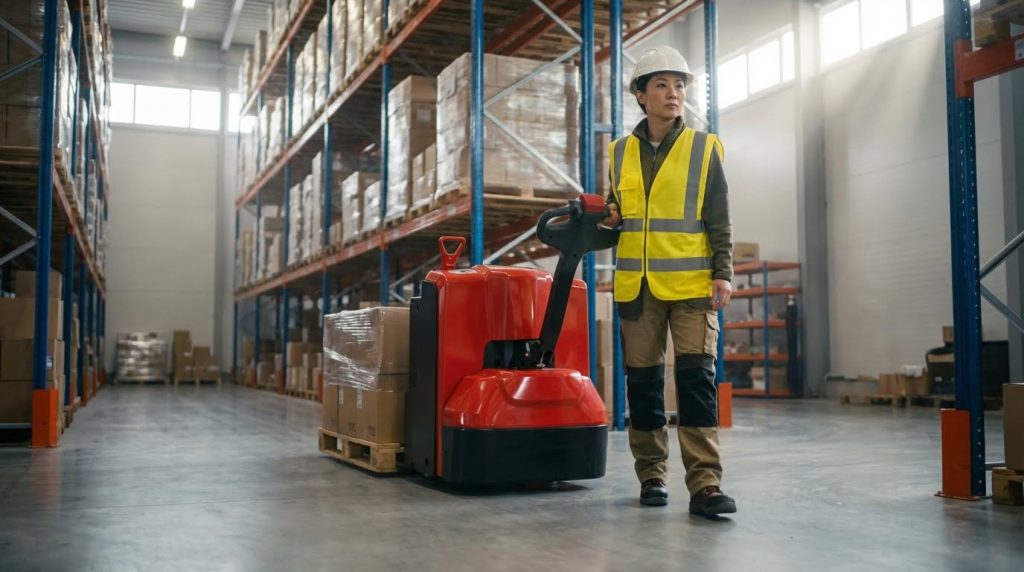
Learning how to operate an electric pallet jack safely and efficiently starts with understanding its core components, controls, and load limits. This guide walks operators and supervisors through inspections, operating sequence, ramps, battery care, hydraulics, and predictive maintenance so daily work stays fast, stable, and injury‑free. If you are searching for how to operate a battery pallet lift in real-world warehouse conditions, you will find step‑by‑step, standards‑aligned practices here.
Core Functions And Safety Features Of Electric Pallet Jacks
Electric pallet jacks move and lift palletized loads using an electric drive, electric-hydraulic lift, and integrated safety controls, and understanding these core functions is the first step in learning how to operate a battery pallet lift safely and efficiently.
| Core Function / Feature | What It Does | Typical Spec / Detail | Operational Impact |
|---|---|---|---|
| Electric drive unit | Propels the jack forward and reverse via a traction motor | Tiller-mounted throttle, variable speed control documented for standard walkies | Reduces operator fatigue on 20–50 m runs and improves productivity in busy aisles. |
| Hydraulic lift circuit | Raises and lowers forks using an electric pump and cylinder | Lift just enough for ground clearance to maintain stability during travel | Prevents pallet drag, protects floor, and keeps center of gravity low. |
| Forks and chassis | Support and carry palletized loads | Fork length commonly around 1,150 mm to suit standard pallets on most models | Ensures full pallet entry and stable support for 1,500–4,000 kg loads. |
| Battery pack | Supplies electrical energy to drive and lift systems | Lead-acid or lithium-ion battery options commonly used | Determines run time between charges and supports multi-shift operation when correctly charged. |
| Emergency reverse button | Reverses travel briefly if the operator is pinned | Mounted on tiller head as a belly or “belly-back” button for quick access | Prevents crush injuries when working close to walls or racking. |
| Horn and warning devices | Alert pedestrians and other operators | Horn on tiller; additional lights/alarms where fitted must function correctly | Improves visibility and communication in blind intersections or noisy warehouses. |
| Access control | Prevents unauthorized use | Key switch or PIN access on most electric pallet jacks noted as standard | Limits operation to trained personnel, reducing incident risk. |
| Rated load capacity | Defines maximum safe load | Typically 1,500–4,000 kg at specified load center distance for powered pallet jacks | Guides safe loading and stacking to keep stability within the truck’s design envelope. |
| Stability geometry | Keeps combined center of gravity within stability triangle | Triangle formed by drive wheel and load rollers underpins safe operation | Explains why sudden braking, high forks, or off-center loads cause tip or skid events. |
- Chassis and forks: Structural frame and load arms – They keep the load stable; damage here directly increases tip and drop risk.
- Drive motor and gearbox: Convert battery power into wheel torque – They control acceleration; harsh inputs can break traction on smooth floors.
- Hydraulic pump and cylinder: Provide vertical lift – Slow, smooth lift protects pallets and minimizes sway in tight racking.
- Tiller head controls: House throttle, lift/lower, horn, and emergency reverse – Good familiarity here shortens reaction time in near-miss situations.
- Battery and cabling: Power storage and distribution – Healthy batteries avoid undervoltage cut-outs that can stop a loaded truck in a ramp or doorway.
- Wheels and load rollers: Carry and steer the truck – Flat-spotted or damaged wheels increase stopping distance and vibration.
💡 Field Engineer’s Note: When operators complain about “weak” lifting, I first check battery state and hydraulic oil level. Low voltage or low oil often mimics major failure but takes minutes, not hours, to correct.
Main components and control layout
The main components and control layout of an electric pallet jack are designed so the operator can steer, lift, and brake intuitively while keeping a safe body position around the moving chassis and forks.
| Component / Control | Location | Function | Operational Impact |
|---|---|---|---|
| Tiller arm | Extends from drive end of chassis | Primary steering and control lever | Determines turning radius and safe walking position beside the truck. |
| Twist or thumb throttle | On tiller head | Controls forward and reverse speed for electric drive | Fine control prevents jerky starts that can shift a 1,500–4,000 kg load. |
| Lift / lower buttons | On tiller head | Activate electric-hydraulic lifting circuit | Allow one-handed control, so the other hand can stabilize stance or signal pedestrians. |
| Emergency reverse (belly) button | Rear of tiller head | Briefly drives truck away from operator when pressed to avoid crushing | Critical when backing near walls, loading docks, or columns. |
| Horn button | On tiller head | Audible warning to pedestrians | Essential at aisle intersections and when exiting blind storage rows. |
| Key switch / PIN pad | Near battery or control panel | Enables truck operation | Restricts use to trained staff who know how to operate a battery pallet lift correctly. |
| Battery indicator | Instrument panel or tiller | Shows remaining charge | Helps plan charging so the jack does not stall mid-shift under load. |
| Drive wheel | Under drive unit | Provides traction and steering | Its contact patch and condition strongly affect braking distance on smooth concrete. |
| Load rollers | At fork tips | Support pallet and ease entry | Reduce impact when entering pallets and crossing dock plates or expansion joints. |
- Neutral / brake position: Many tillers brake when raised fully up or fully down – This “dead-man” function stops the truck if the operator lets go.
- Travel height habit: Operators should travel with forks just clear of the floor – This keeps the center of gravity low and reduces risk if an emergency stop is needed.
- Side-stance positioning: Standing slightly to the side and behind the tiller – Gives clear view of forks and load while avoiding the crush zone at the truck’s rear.
How to quickly learn a new control layout
Before moving a load, power on the truck in an open area. Practice: slow forward and reverse, gentle steering, lift and lower without a pallet, and using the emergency reverse button. Only then approach a pallet.
💡 Field Engineer’s Note: When training new staff, I insist they can find the horn and emergency reverse button with their eyes closed. In tight spaces, you do not have time to look down at the controls.
Walkie, rider, and walkie-rider control modes
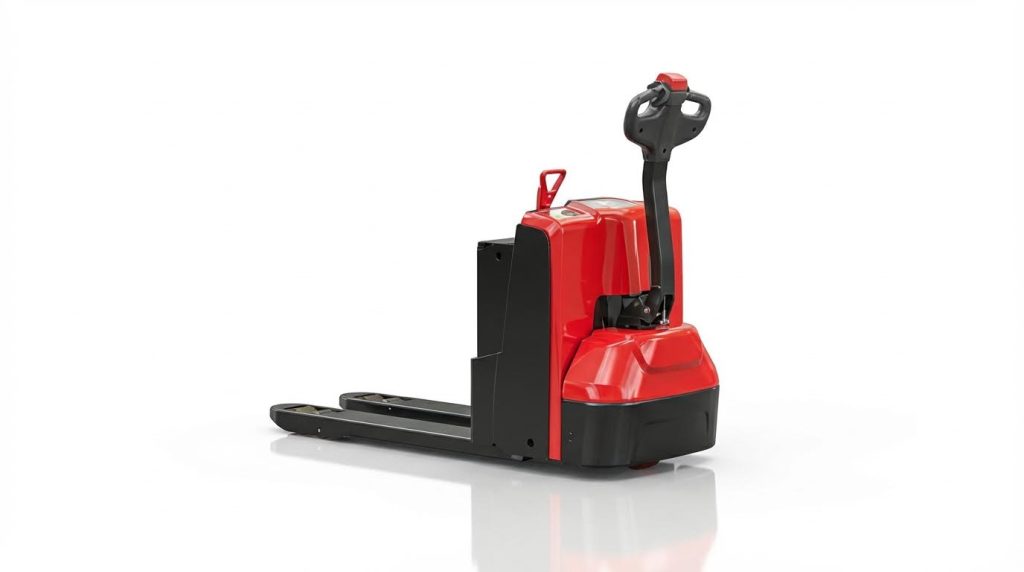
Walkie, rider, and walkie-rider electric pallet jacks all share similar controls, but their operating modes change the operator’s position, speed profile, and safety margins around pedestrians and obstacles.
| Control Mode | Operator Position | Typical Use Case | Key Safety Considerations | Best For… |
|---|---|---|---|---|
| Walkie | Operator walks ahead or beside the truck using the tiller for speed control | Short runs, tight aisles, loading/unloading single pallets | Maintain side stance, keep clear of pinch points, and travel at low speed near pedestrians. | Small warehouses and delivery vehicles where space is limited. |
| Rider | Operator stands on an integrated platform | Longer horizontal transport runs | Stable stance on platform, both hands on controls, extra caution at higher speeds. | High-throughput docks and cross-docking lines. |
| Walkie-rider (platform) | Operator can walk alongside or ride on flip-down platform in hybrid mode | Mixed-distance work with frequent stops | Choose walking mode in congested areas; use riding mode only where visibility and clearance are good. | Operations that mix tight picking aisles with longer transfer routes. |
- Walkie mode speed: Lower maximum speed and closer pedestrian interaction – Ideal where operators constantly step on and off to adjust pallets or scan labels.
- Rider mode speed: Higher travel speed with dedicated platform – Demands stricter route control and separation from foot traffic.
- Hybrid flexibility: Walkie-rider units allow quick switch between walking and riding – Optimizes productivity while maintaining control in confined spaces.
- Visibility requirement: Standards emphasize clear view of path and load – Operators should slow or switch to walking when the load blocks forward visibility.
Choosing the right mode for your route
Use walking mode in aisles under about 2.5 m wide, around blind corners, and near picking staff. Switch to rider mode only on clear, marked travel lanes where you can maintain a stable stance and see at least several meters ahead.
💡 Field Engineer’s Note: Many near-misses with rider pallet jacks happen when operators stay on the platform into congested pick aisles. I recommend a simple rule: if you could touch racking on both sides, step off and use walkie mode.
Battery, Hydraulic Care, And Predictive Maintenance
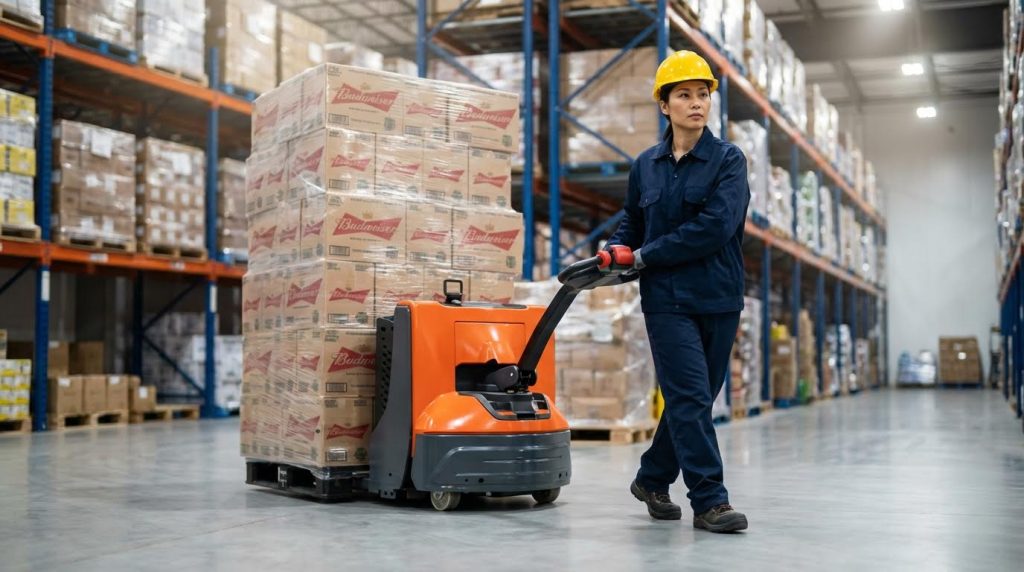
Battery and hydraulic care are the backbone of how to operate a manual pallet jack safely, while predictive maintenance prevents sudden failures and costly downtime. Treat this section as your daily, weekly, and annual reliability playbook.
Daily and scheduled maintenance routines
Daily and scheduled maintenance routines keep an hydraulic pallet truck within safe operating limits, extend component life, and dramatically cut unplanned stoppages. Think in layers: daily checks, weekly inspections, and quarterly to annual deep maintenance.
| Interval | Key Tasks | What You Check/Do | Operational Impact |
|---|---|---|---|
| Every shift (daily) | General condition and safety | Clean exterior, inspect power cord, look for leaks, damage, loose parts, test controls and brakes Daily maintenance tasks OSHA pre‑shift inspection | Catches issues before they become breakdowns; keeps the truck OSHA-compliant and safe to dispatch. |
| Daily (battery & hydraulics) | Energy and lift system health | Check battery charge and visible condition, look for hydraulic oil leaks, inspect hoses and fittings Pre-use checks | Prevents mid-shift power loss and unsafe lifting caused by leaks or low oil. |
| Weekly | Fasteners and wear | Re-check component functionality, tighten fasteners, look for oil leaks, unusual wear, overheating or sparks in electrics Weekly inspection tasks | Stops small looseness or heat issues from turning into structural or electrical failures. |
| Quarterly | Electrical system | Secure wire connections, test all switches, verify insulation resistance > 0.5 MΩ Electrical system maintenance | Reduces risk of short circuits, nuisance faults, and sudden loss of drive or lift. |
| Every 6 months | Mechanical system | Tighten fasteners, check wheel rotation, verify smooth fork lifting, confirm noise level ≤ 75 dB Mechanical maintenance | Improves ride quality, reduces vibration damage, and keeps operators comfortable on long shifts. |
| Annually | Hydraulic system | Inspect for internal/external leaks, replace hydraulic oil with ISO L‑HV32 (‑5°C to 40°C) or L‑HV15 (‑10°C to ‑5°C), dispose of old oil correctly Hydraulic system maintenance | Maintains smooth lifting in all seasons and avoids pump wear from contaminated or wrong‑grade oil. |
- Daily cleaning and visual check: Wipe the truck, check for leaks and damage – this reveals problems long before they cause a shutdown.
- OSHA-style pre‑shift inspection: Check brakes, steering, controls, forks, wheels, and safety devices – this aligns with powered industrial truck rules and prevents unsafe dispatch.
- Weekly fastener and leak check: Tighten bolts and look for oil traces – loose or leaking parts often precede major failures.
- Scheduled electrical tests: Inspect wiring and insulation resistance – this avoids intermittent faults and fire risk.
- Hydraulic oil and seal review: Inspect annually and when performance drops – clean, correct‑grade oil keeps lift speed predictable under load.
How this supports safe daily operation
Consistent routines mean the pallet jack behaves the same way every time an operator touches the tiller. That predictability is what actually keeps “how to operate a manual pallet jack” safe in real warehouses, not just theory.
💡 Field Engineer’s Note: In cold rooms below 0°C, wrong hydraulic oil grade makes forks crawl or refuse to lift at all. Standardize oil type by temperature zone and label the truck clearly to stop well-meaning techs topping up with the wrong viscosity.
Battery technologies and charging best practices
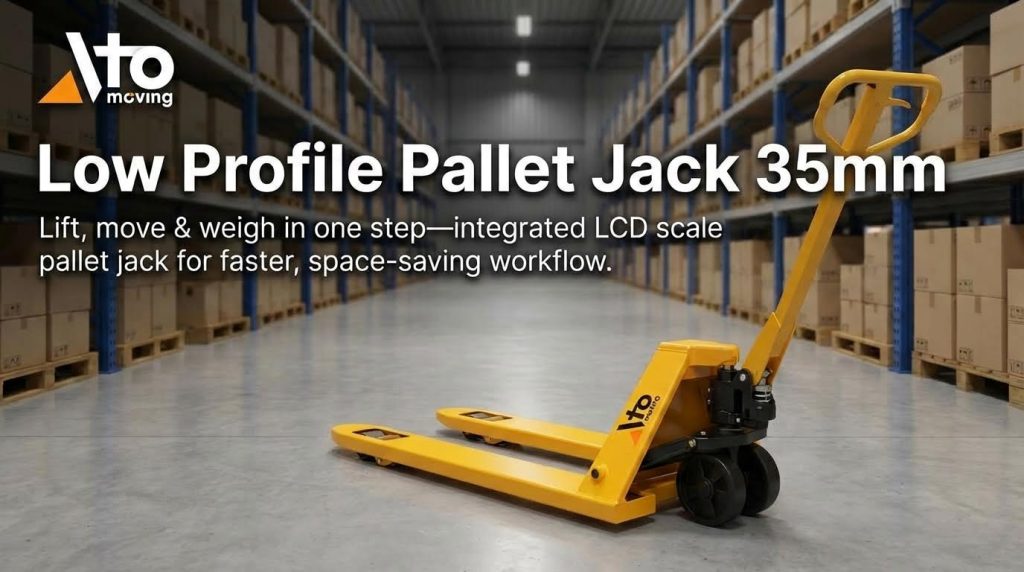
Battery technologies and charging best practices determine how long your pallet jack runs per shift, how many years the pack lasts, and how often you suffer mid‑aisle dead trucks. Treat the battery as a consumable asset, not a black box.
| Battery Topic | Best Practice | Key Technical Point | Operational Impact |
|---|---|---|---|
| Daily battery inspection | Walk‑around before use | Check case damage, swelling, loose terminals, dirt or corrosion on connectors Battery care | Prevents sudden power loss and reduces fire or arc risk when the truck hits bumps. |
| Charge level management | Avoid deep discharge | Start charging when capacity reaches about 20–30% to avoid deep discharge events Charging guidance | Extends battery life and keeps lift and travel speed consistent near end of shift. |
| Clean connections | Keep terminals clean and tight | Remove dust and corrosion from terminals and connectors regularly Terminal cleaning | Reduces voltage drop and heat, avoiding nuisance undervoltage alarms and connector failures. |
| Battery health monitoring | Replace aging packs | Watch for frequent undervoltage alarms or obvious capacity loss, then schedule replacement Battery capacity loss | Prevents trucks dying mid‑task, which blocks aisles and disrupts picking routes. |
| Storage conditions | Cool, dry parking | Store trucks in cool, dry areas to reduce thermal stress on batteries Battery storage | Slows battery aging and keeps range predictable across seasons. |
| Charger reliability | Verify charger status | Replace malfunctioning chargers immediately when they fail to start or complete charge cycles Charger issue | Prevents a “fleet” of half-charged trucks caused by one faulty charging point. |
- Daily visual battery check: Look at the case, cables, and plug before you move – this stops damaged packs going into service.
- 20–30% charge rule: Schedule charging when the indicator hits roughly one quarter – this avoids deep discharges that kill batteries early.
- Clean, tight terminals: Include connector cleaning in weekly routines – poor contacts create heat, arcing, and random shutdowns.
- Monitor alarms and runtime: Track when undervoltage alarms start appearing – this is your early warning that the pack is at end of life.
- Protect from heat and moisture: Park away from wash‑down spray and heat sources – thermal and moisture stress both shorten battery life.
How battery care ties into safe operation
When operators learn how to operate a manual pallet jack, they must also learn how to park and charge it correctly. A well‑maintained battery keeps acceleration and braking predictable, which directly affects pedestrian and load safety.
💡 Field Engineer’s Note: Many “mystery” lift or drive faults trace back to weak batteries and dirty connectors, not bad controllers. Before you authorize an expensive electronics swap, put a known-good, fully charged battery on the truck and re-test under load.
Final Thoughts On Reliable Daily Operation
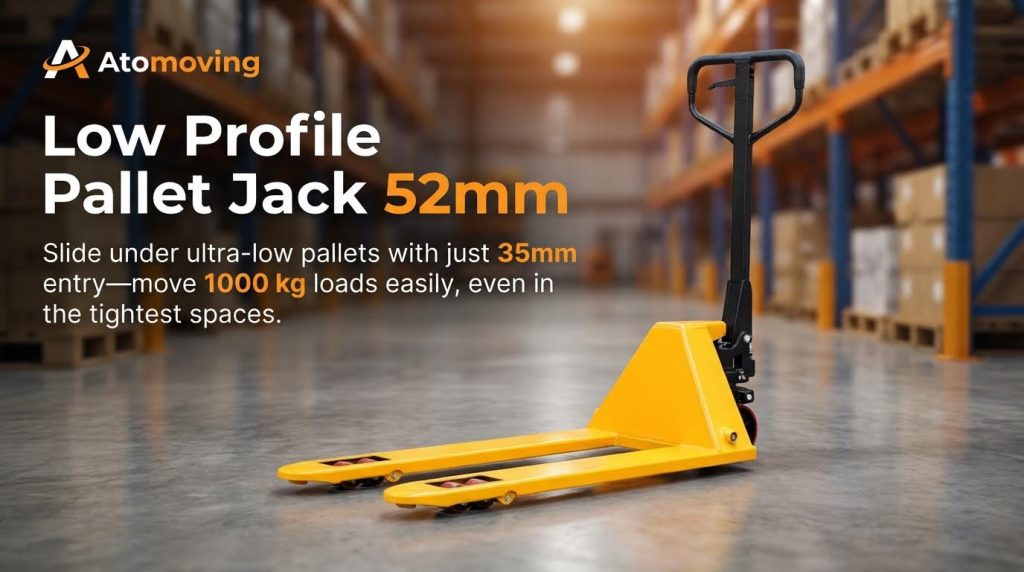
Reliable daily operation comes from treating every shift as a repeatable process: inspect, operate within limits, and maintain on schedule. If you want to master how to operate a battery pallet lift, consistency beats speed every time.
In practical terms, “reliable” means three things working together every day:
- Safe operator habits: Consistent pre-use checks, low-speed travel, and correct load handling reduce sudden failures and incidents.
- Equipment within limits: Staying under rated capacity and respecting gradeability keeps the stability triangle intact and hydraulics unstressed.
- Planned care, not crisis repairs: Daily, weekly, and scheduled maintenance prevent small issues (oil weeps, loose fasteners, weak batteries) from turning into breakdowns.
If you are training teams on how to operate a battery pallet lift, build your SOPs around these pillars and tie them to measurable checks: pre-shift inspection completion, incident-free hours, and on-time maintenance tasks. That is what keeps pallet jacks productive, predictable, and safe over thousands of operating hours.
💡 Field Engineer’s Note: When reliability starts to slip, it almost always shows up first in “soft” symptoms—slower lift, hotter batteries, more frequent charger use, or operators avoiding certain ramps. Treat these as early warning signals and schedule a focused inspection before a failure takes a truck out of service mid-shift.

Safe, efficient electric pallet jack use depends on three linked areas: sound design, disciplined operation, and planned care. Geometry, capacity, and stability limits set what the truck can do. Operator habits decide whether the truck stays inside those limits. Maintenance keeps the original design performance available every shift.
When operators understand the stability triangle and rated capacity, they choose fork height, speed, and routes that keep the center of gravity low and inside the support base. That one choice prevents most tip, skid, and dropped‑load events. Clear control layouts and emergency features then give operators fast, predictable responses when conditions change.
Battery and hydraulic care close the loop. Healthy packs and clean oil keep lift speed, braking, and traction consistent from the first pallet to the last. Predictive checks on wiring, wheels, and fasteners turn early warning signs into planned repairs instead of mid‑shift failures.
For operations and engineering teams, the best practice is simple: write standard work that links operator training, pre‑shift inspections, and maintenance intervals into one system. Audit it with hard data, not impressions. Do that, and your Atomoving pallet jacks will run safely and reliably, day after day, without surprises.
Frequently Asked Questions
How to Operate a Battery Pallet Lift?
To operate a battery pallet lift, ensure it is turned off and disconnected from the power source before starting. Use the control handle to maneuver the pallet lift, either pushing or pulling depending on the model. For electric pallet jacks, pulling is typically more common and efficient. Always follow safety guidelines and ensure proper training before use. Pallet Jack Guide.
Do You Need Certification to Operate an Electric Pallet Jack?
Yes, according to OSHA standards, workers must be trained and certified to operate an electric pallet jack safely. Certification involves formal instruction, practical training, and a performance evaluation. Online courses are available that allow you to complete the formal instruction requirement at your own pace. OSHA Certification.
How to Reset an Electric Pallet Jack?
If your electric pallet jack stops functioning correctly, first turn it off and disconnect it from the power source. Locate the reset button near the battery compartment and press it for 10-20 seconds. Afterward, reconnect the power and test the pallet jack to ensure it operates correctly. Reset Instructions.
What Should You Do if the Battery Dies on an Electric Pallet Jack?
If the battery dies, ensure the pallet jack is turned off and unplugged to avoid accidents. You can manually move it by pushing or using a chain to tow it to a safe location for maintenance or recharging. Always prioritize safety when handling heavy equipment. Safety Tips.