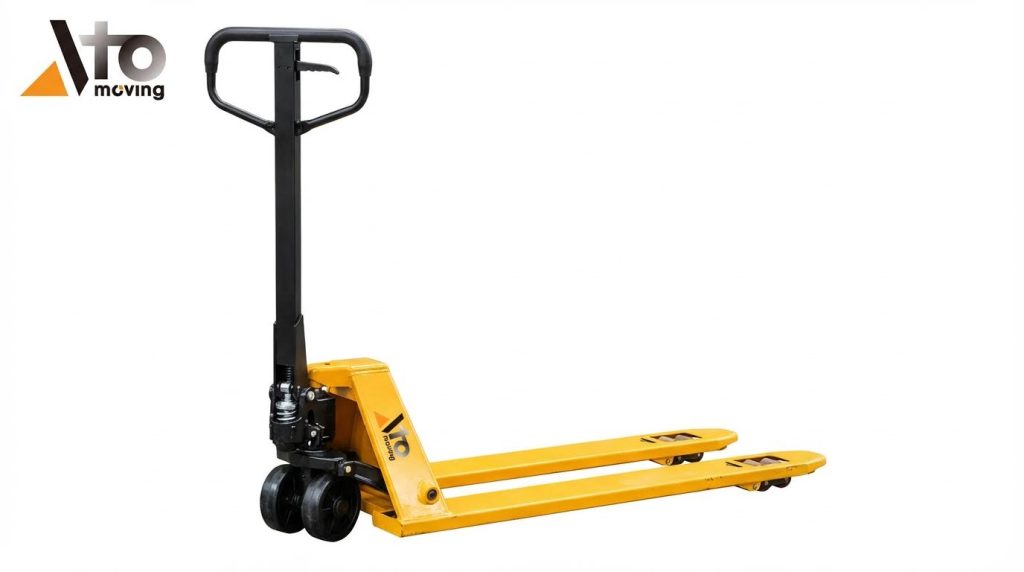
Safe truck loading with electric pallet jacks is about matching the right ramps or liftgates with disciplined driving procedures and OSHA‑compliant training. This guide explains how to lift an electric pallet jack into a truck, control risk on ramps, and keep both operators and freight protected. You will see practical load limits, setup steps, and battery safety practices translated into real-world operations. Use it as a field-ready reference for supervisors, trainers, and operators.
Technical Procedures For Ramps, Docks, And Liftgates
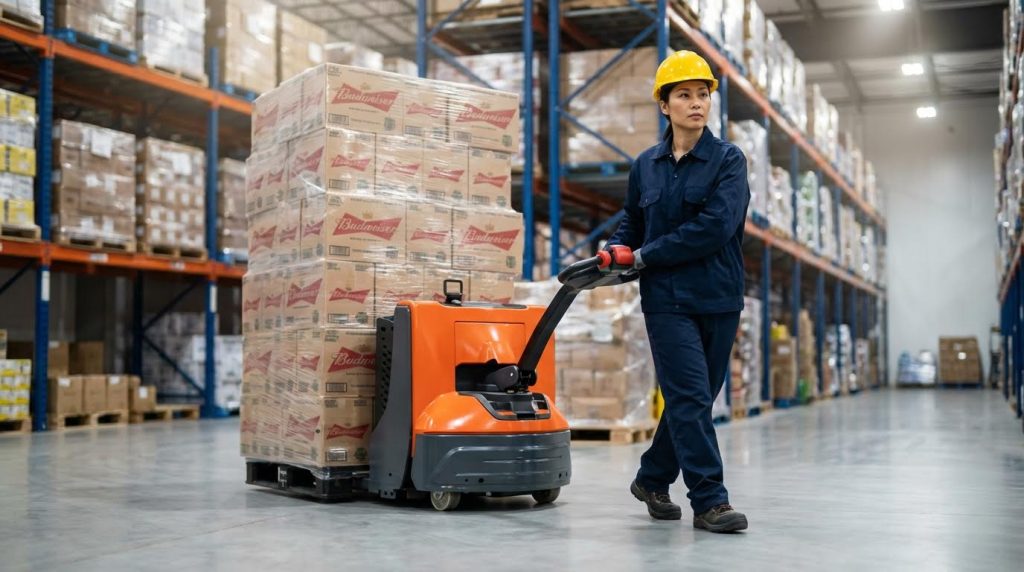
This section explains how to lift an electric pallet jack into a truck safely using ramps, dock levelers, and liftgates, focusing on setup, driving technique, and securing procedures that comply with Class III powered industrial truck rules.
Ramp And Dock Leveler Selection And Setup
Ramp and dock leveler choice for loading an electric pallet jack into a truck must balance capacity, slope, and secure attachment so the jack, operator, and load stay stable across the gap between floor and truck bed.
| Equipment Type | Key Specs / Considerations | Typical Capacity Range | Best For… | Operational Impact |
|---|---|---|---|---|
| Portable Loading Ramp | Non‑powered incline; must lock to truck and floor; anti‑slip surface | At least pallet jack + max load (often ≥3,000 kg) | Ground‑to‑truck loading where no dock exists | Allows you to drive the jack into trucks in yards or temporary sites, but slope must be gentle to avoid rollback |
| Dock Leveler (Hinged or Vertical) | Bridges 100–300 mm height gap; lip length must fully cover truck bed | Commonly ≥6,000 kg for pallet jacks and loads | Fixed docks with frequent truck traffic | Gives a smooth transition for forks and drive wheels, reducing impact shocks and tip‑over risk when entering the trailer |
| Truck‑Mounted Liftgate | Hydraulic platform folds from truck; needs level ground and even loading | Must exceed pallet jack + load weight (often 750–2,500 kg) | Street or yard loading with no dock access | Lets you raise the jack and pallet from ground to bed height, but platform size and edge protection control roll‑off risk |
Before choosing how to lift an electric pallet jack into a truck, verify the combined weight of truck, jack, and maximum pallet load does not exceed the rated capacity of the ramp, leveler, or liftgate as emphasized in loading equipment guidance.
- Capacity Match: Confirm equipment rating ≥ pallet jack weight + maximum pallet (often up to ~2,300 kg for the load alone) – Prevents structural failure under dynamic braking and starting loads.
- Secure Attachment: Lock portable ramps to the truck and chock wheels – Stops ramp movement that can open a dangerous gap under the jack.
- Slope Control: Keep ramp gradients as shallow as site allows (ideally ≤10–12%) – Reduces rollback and minimizes strain on drive motor and brakes.
- Anti‑Slip Surface: Ensure tread plate or grating is clean and dry – Improves tire grip, especially with wet pallets or cold storage condensation.
- Approach Alignment: Align ramp or leveler square to the truck bed – Prevents side loading of forks and reduces risk of trailer edge strikes.
Dock levelers should create a smooth transition so the jack’s small load wheels do not strike a step, which can destabilize a tall pallet when maneuvering into the truck.
How to verify a ramp or leveler is ready
Check that locking pins or chains are engaged, side curbs (if fitted) are intact, the lip fully overlaps the truck bed by at least 100 mm, and there is no visible bending, cracking, or oil leakage around pivot points.
💡 Field Engineer’s Note: On older yards, you often find improvised steel plates used as “ramps.” Avoid using them with electric pallet jacks; the concentrated wheel loads and lack of positive anchoring make plate kick‑out and sudden edge drop a real tip‑over hazard.
Step‑By‑Step Driving Technique Into The Truck

The safest way to drive an electric pallet jack into a truck is to approach straight, keep forks low, travel slowly up the ramp or leveler, and follow Class III powered industrial truck operating rules for slopes and confined spaces.
| Step | Action | Key Checks / Controls | Operational Impact |
|---|---|---|---|
| 1 | Pre‑use inspection | Check forks, wheels, hydraulics, and controls for defects; verify battery charge and connectors | Prevents failures mid‑ramp and complies with OSHA pre‑operation inspection expectations for electric pallet jacks |
| 2 | Prepare the load | Keep total load within rated capacity (often up to ~2,300 kg); wrap and band unstable pallets | Reduces chance of load shift or collapse when crossing the ramp or leveler as required by safe load handling guidance |
| 3 | Position at ramp/leveler | Center forks with truck entrance; forks fully under pallet; mast and tiller in control position | Ensures straight entry so you do not clip door frames or trailer edges when loading |
| 4 | Set fork height | Lower forks to just clear floor (about 20–50 mm) for travel | Follows best practice to keep forks low while moving, improving stability and reducing trip hazards for powered pallet trucks |
| 5 | Drive up the ramp | Use low speed; keep load upgrade if manufacturer specifies; avoid turning on the slope | Minimizes tipping and loss of traction; aligns with guidance not to turn powered pallet jacks on ramps |
| 6 | Cross into trailer | Maintain steady throttle; watch for leveler lip and trailer floor joints | Reduces impact loads on small load wheels and prevents jolts that can shift tall or stacked loads |
| 7 | Stop and park | Once fully inside, stop on level floor, set brake, and neutralize controls | Prevents unintended movement while you position or secure the load and jack |
When planning how to lift an electric pallet jack into a truck using a ramp or dock leveler, operators must be trained and certified on Class III powered industrial trucks under OSHA 29 CFR 1910.178, which requires formal instruction, hands‑on practice, and evaluation for electric pallet jack use as outlined in OSHA’s pallet jack guidance.
- Speed Discipline: Use the lowest practical travel speed on ramps and at the dock plate – Gives you time to react to pedestrians, floor defects, or trailer bounce.
- Body Position: Keep a safe distance from the jack and never stand between jack and dock edge – Mitigates crush hazards highlighted for powered pallet jacks.
- Visibility: If the load blocks your view, travel in the opposite direction (load trailing) with a spotter – Reduces collision risk in tight trailers and blind dock entries.
- Pedestrian Control: Clear the ramp and dock area of bystanders before driving – Aligns with traffic management and hazard mitigation principles for powered equipment areas.
- Emergency Stop Readiness: Keep one hand on the controls and know the location of the emergency reverse/stop button – Allows quick reaction if the jack surges or loses traction.
💡 Field Engineer’s Note: In refrigerated trailers, condensation makes wood floors slick. Reduce speed further and avoid sudden throttle changes; I have seen jacks slide sideways on wet planks even when the ramp itself had good traction.
Securing The Pallet Jack And Load For Transport
To secure an electric pallet jack and its load for transport, you must park on level floor, set brakes, lower forks, and use straps or chains to tie down the jack and pallets so nothing can move during transit.
| Item | Securing Action | Key Details | Operational Impact |
|---|---|---|---|
| Electric pallet jack (unloaded) | Park and tie down | Brake set; forks fully lowered; frame strapped or chained to floor rings or wall rails | Prevents the jack from rolling into doors or cargo if the truck brakes hard or corners sharply as recommended for securing pallet jacks in trucks |
| Loaded pallet on jack | Stabilize and secure | Prefer to off‑load pallet to floor; if left on jack, add straps and chocks around wheels | Reduces risk of combined jack‑plus‑load movement that can punch through other cargo stacks |
| Other trailer cargo | Segregate from jack | Use dunnage or padding between jack and freight; avoid fragile items near jack | Prevents cosmetic and structural damage from metal edges and vibration rubbing during travel |
Guidance on how to lift an electric pallet jack into a truck stresses that once inside, you must engage the parking brake and then secure the jack with straps or chains to the truck structure before closing doors, verifying that it cannot shift as part of safe transport procedures.
- Fork Position: Lower forks flat to the deck and avoid pointing tips toward doors – Stops forks from spearing freight or doors if the jack moves.
- Wheel Control: Use chocks or wedge blocks at drive wheels on sloped or flexible trailer floors – Adds redundancy if the parking brake loosens or fails.
- Tie‑Down Angles: Run straps or chains at opposing angles (fore‑aft and side‑to‑side) – Locks the jack against movement in all directions during braking and cornering.
- Padding and Separation: Place cardboard, foam, or timber between jack and nearby cargo – Protects finished goods from dents and abrasion from the steel chassis.
- Final Stability Check: Try to rock the jack and pallets by hand before closing doors – If you can move them, the load is not secure enough for road shocks.
Where to position the jack inside the truck
Place the electric pallet jack against a bulkhead or side wall, away from doors and clear of emergency exits. Avoid locations over weak floor sections or near concentrated axle loads to keep trailer weight distribution balanced.
💡 Field Engineer’s Note: Do not rely on “neutral and against the wall” for securing. In hard braking, even a 1,500 kg jack can shear cheap E‑track fittings. Use rated anchor points and tensioned load binders, especially on long‑haul routes with mixed road conditions.
Equipment Selection, Batteries, And Maintenance
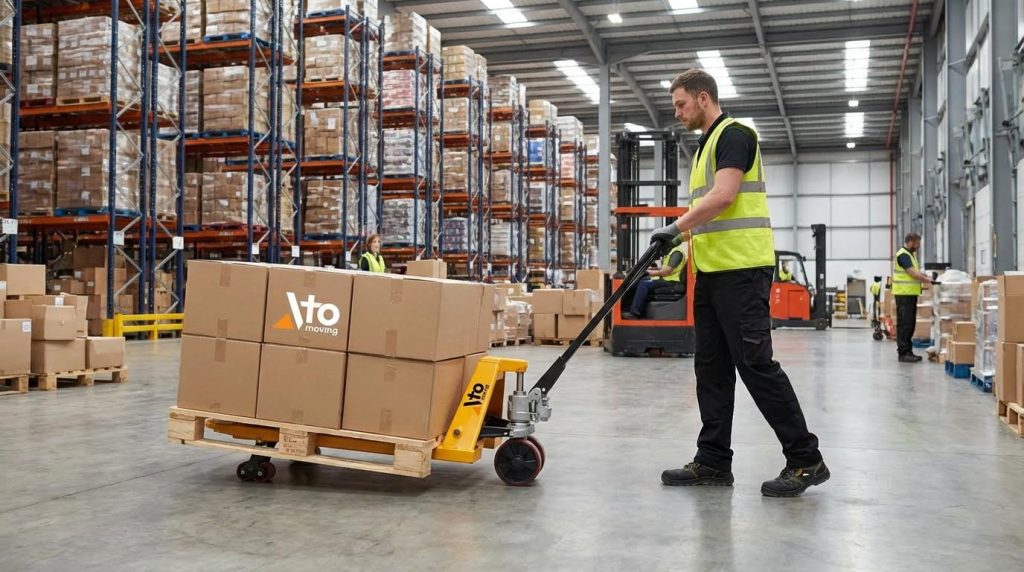
Safe, efficient truck loading with electric pallet jacks depends on correctly matched ramps or liftgates, healthy batteries, and disciplined maintenance. This section ties equipment choices and upkeep directly to how to lift an electric pallet jack into a truck without incidents.
Choosing Ramps, Liftgates, And Truck Interfaces
To choose ramps, liftgates, and truck interfaces, match their rated capacity and geometry to the pallet jack weight, load weight, and truck height, then verify secure attachment and surface traction before you drive into the truck.
| Interface Type | Typical Use Case | Key Capacity / Geometry Factors | Operational Impact When Loading a Truck |
|---|---|---|---|
| Portable Loading Ramp | Ground-to-truck loading with no dock | Must support pallet jack + max load; gradual slope; secure attachment to truck | Provides a controlled path for how to lift an electric pallet jack into a truck using its own power, but only if the ramp is rated and fixed securely (ramp guidance). |
| Dock Leveler | Warehouse dock to truck bed | Capacity ≥ pallet jack + load; lip length sufficient to bridge gap; compatible with truck bed height | Creates a smooth transition, reducing impact loads and tipping risk when driving in and out of the truck (dock leveler description). |
| Vehicle Liftgate | Ground-to-truck vertical lifting | Platform size ≥ pallet jack footprint; capacity ≥ equipment + load; stable, non-slip deck | Allows vertical lifting of the pallet jack and load when no dock or long ramp is available, but requires strict load positioning and securement. |
| Forklift as Lifting Device | Lifting pallet jack into truck as cargo | Fork length and capacity must suit pallet jack; secure rigging points | Useful when the jack cannot self-drive into the truck, but adds rigging and crush hazards if not planned correctly (loading equipment options). |
When planning how to lift an electric pallet jack into a truck, always calculate the combined mass: truck-rated jack (often 1,500–2,300 kg capacity) plus the maximum pallet load, then compare this to ramp, dock leveler, or liftgate ratings. Ramps and levelers must be securely attached, with the pallet jack aligned square to the entrance before you drive slowly up and into the truck to avoid tipping or imbalance (maneuvering guidance).
- Confirm Rated Capacity: Check ramp, dock leveler, or liftgate plates for capacity and compare to pallet jack + load – this prevents structural failure under dynamic loading.
- Check Surface Traction: Look for serrated or high-friction surfaces – this mitigates wheel spin and uncontrolled rollback when driving into or out of the truck.
- Secure Connections: Use pins, chains, or locking lips on ramps and levelers – this avoids ramp shift that can drop wheels into the dock gap.
- Match Geometry: Ensure ramp length keeps slope modest and leveler lip fully lands on the truck bed – this keeps the pallet jack from bottoming out or stalling on the transition.
- Plan Travel Path: Keep forks low and centered, and approach square to the truck opening – this reduces side loads that can twist forks or destabilize the load (safe load handling).
How to verify if your existing ramp is suitable
First, read the ramp’s data plate for capacity and intended equipment type. Next, measure the truck bed height and ramp length to estimate slope; keep it gentle enough that the pallet jack can climb without stalling. Finally, test-fit with an unloaded jack to confirm clearance and traction before moving full loads.
💡 Field Engineer’s Note: Treat portable ramps like any other lifting device: if the rating tag is unreadable or missing, do not use it for powered equipment. In practice, many “mystery ramps” at small sites have unknown capacities and worn traction, which is a common root cause of jack rollbacks and deck failures during truck loading.
Li‑Ion Batteries, Charging, And Ventilation Safety
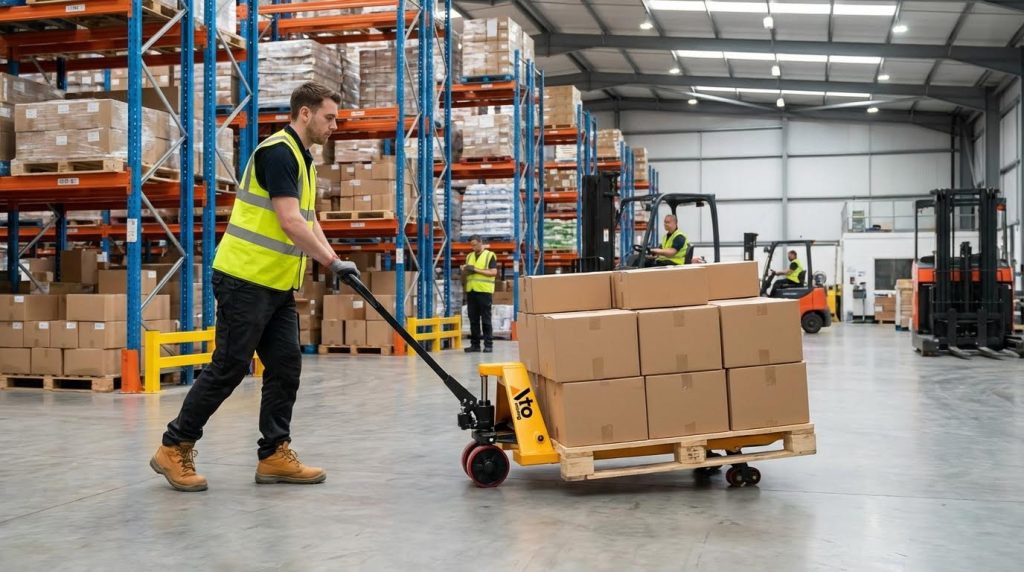
Li-ion battery safety for pallet jacks in truck loading hinges on correct charging, ventilation, and inspection, because battery failure or fumes can disable the jack mid-ramp and expose operators to fire, explosion, or health hazards.
| Battery / Charging Aspect | Key Practice | Why It Matters When Loading Trucks |
|---|---|---|
| Pre-Use Charge Level | Ensure battery is fully charged before loading operations (preparation before loading) and avoid full discharge (battery protocol). | Prevents the jack from stalling halfway up a ramp or liftgate, where recovery is difficult and dangerous. |
| Charging Area Ventilation | Provide adequate ventilation and PPE in charging zones, with eyewash available for exposure incidents (battery charging safety). | Reduces inhalation risk from fumes and supports emergency response, especially in enclosed dock areas. |
| Terminal and Cable Condition | Inspect terminals, wiring, and connectors for corrosion, fraying, or damage; clean terminals regularly (electrical checks). | Prevents intermittent power loss or arcing during high-load operation on ramps and dock levelers. |
| Battery Handling and Removal | Use hoists or mechanical aids for battery handling to avoid strain and accidents (battery handling). | Prevents dropped batteries and musculoskeletal injuries when swapping packs between shifts. |
| Storage Environment | Store pallet jacks in a cool, dry area away from extreme temperatures and direct sunlight (storage conditions). | Improves Li-ion battery life and reduces performance drop that could show up as weak torque on ramps. |
Before you even think about how to lift an electric pallet jack into a truck, complete a battery-focused pre-use inspection: check charge level, confirm no leaks or swelling, inspect connectors, and verify all controls operate correctly (pre-operation inspection). A weak or damaged battery can cause sudden loss of drive or lift function when maneuvering on a ramp or liftgate, which is where you have the least margin for error.
- Follow Proper Charge Cycles: Avoid running Li-ion packs to full depletion and recharge them according to manufacturer guidance – this stabilizes performance during high-demand tasks like ramp climbing (charging protocol).
- Keep Battery and Compartment Clean: Remove dust and debris after use and keep vents clear – this helps cooling and reduces the risk of electrical faults (cleaning recommendation).
- Inspect Electrical Wiring: Check for cracked insulation, loose plugs, or exposed conductors – this prevents shorts and unexpected shutdowns during loading runs (electrical component check).
- Provide Ventilated Charging Zones: Charge jacks away from tight corners of the dock and ensure airflow – this keeps fumes away from operators and nearby truck bays (ventilation requirement).
- Tag Out Defective Units: If a battery or charger shows damage, tag the jack out of service – this prevents operators from discovering faults halfway up a ramp under load (removing defective equipment).
Link between battery health and ramp performance
Electric pallet jacks draw peak current when starting and climbing. A marginal Li-ion battery might still move the truck on flat floors but will sag on ramps, causing slow response or stalling. Monitoring run-time, charge acceptance, and any unusual voltage alarms helps you replace packs before they fail in the middle of a truck-loading maneuver.
💡 Field Engineer’s Note: In real loading docks, most “mystery stalls” on ramps trace back to undercharged or heat-soaked batteries, not mechanical failure. Build a rule into your shift change: no jack goes onto a ramp or liftgate unless it started the shift with a documented full charge and passed a quick functional test under load.
Final Thoughts On Safe Electric Pallet Jack Truck Loading
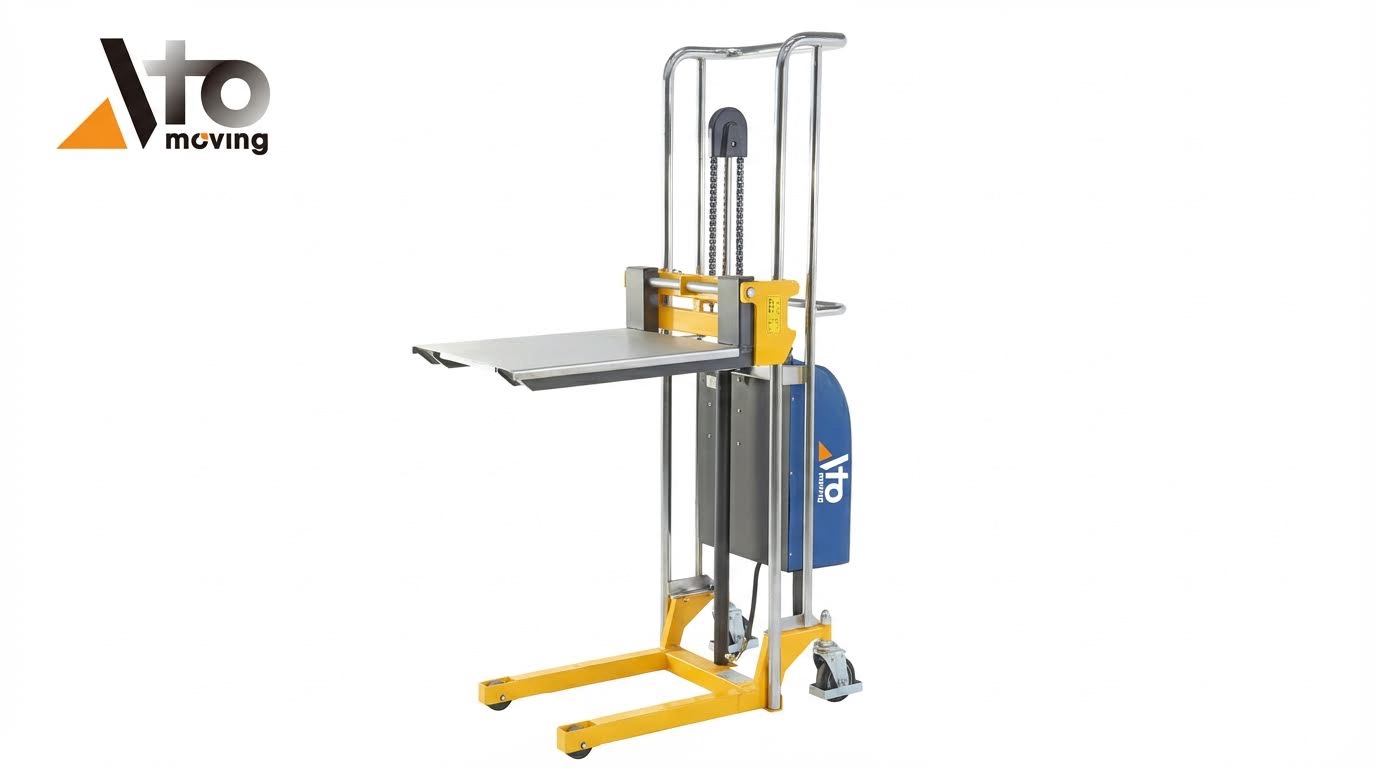
Safe truck loading with electric pallet jacks comes down to three things: the right equipment, disciplined procedures, and trained operators who respect load limits and gradients every single time. If you understand how to lift an electric pallet jack into a truck using ramps, docks, or liftgates and you secure both the jack and the load correctly, you dramatically cut the risk of tip-overs, crush injuries, and cargo damage.
When you step back, the safest answer to how to lift an electric pallet jack into a truck is a structured system, not a one‑off trick. You select a ramp, dock leveler, or liftgate that can support the combined weight of jack plus load, you align straight to the truck, and you move at walking speed with forks low and load stable. You then lock the parking brake and strap the jack down so it cannot move during transport. Typical best‑practice steps include pre‑inspection, careful maneuvering up the ramp, and secure tie‑down.
No loading method is safe if the operator is not trained to OSHA Class III standards. Electric pallet jacks fall under powered industrial truck rules, so operators must be at least 18 years old, formally trained, and evaluated on the actual equipment and environment where they work. OSHA requires documented training, hands‑on practice, and periodic re‑evaluation for Class III trucks. Treat uncertified use as a hard stop, not a gray area.
Long‑term safety also depends on respecting the machine’s limits and keeping it in good shape. Most electric pallet jacks handle up to about 2,300 kg, but that rating assumes level ground, centered loads, and forks 20–50 mm off the floor during travel. Overloading, uneven stacking, or turning on ramps all increase tip and crush risk. Combine that with neglected wheels, leaking hydraulics, or weak batteries and you get a jack that behaves unpredictably exactly when you are near the truck edge.
From a maintenance and battery standpoint, a clean, inspected, fully charged jack is a safety device, not just an uptime issue. Routine checks for wear, electrical damage, and battery condition, along with proper storage and charging cycles, keep braking, acceleration, and steering consistent. That consistency matters most when you are on a ramp, at a dock lip, or on a liftgate platform with only a few hundred millimeters between “under control” and “over the edge.”
- Make procedures non‑negotiable: Standardize pre‑checks, approach angles, travel speeds, and tie‑down methods – this turns individual habits into repeatable system safety.
- Engineer the interface: Choose ramps, dock levelers, and liftgates with capacity and surface grip that exceed your heaviest jack‑plus‑load scenario – this builds margin against real‑world abuse.
- Invest in people: Keep Class III training current and task‑specific – trained operators spot bad loads, bad floors, and bad gradients before they become incidents.
- Protect the power source: Manage charging, ventilation, and terminal cleanliness – stable battery performance means predictable traction and braking at the truck edge.
💡 Field Engineer’s Note: If you only change one thing, enforce a rule that no one drives an electric pallet jack into a truck on a ramp or liftgate unless the combined jack‑plus‑load weight and ramp capacity are confirmed and written into the job plan. Most serious loading incidents I have seen started with “we assumed it would be fine.”
Safe truck loading with electric pallet jacks depends on three linked elements: engineered interfaces, disciplined technique, and reliable power. Capacity, slope, traction, and attachment are not abstract specs. They decide whether the jack stays stable or slides, tips, or breaks through a weak ramp or leveler. When you match ramp or liftgate ratings to the real combined weight of jack and load, you convert structural limits into a safety margin.
Driving and securing procedures then protect that margin. Straight approaches, low forks, slow travel, and no turning on slopes keep the center of gravity inside the wheelbase. Proper parking, wheel control, and cross‑braced tie‑downs turn the jack into fixed cargo, not a loose projectile during hard braking. OSHA‑compliant Class III training ties all of this together so operators understand why rules exist and when to stop the job.
Battery health and maintenance close the loop. A clean, fully charged, inspected jack delivers predictable torque and braking on ramps and liftgates. For operations and engineering teams, the best practice is clear: treat ramps, jacks, and batteries as one integrated system, lock in standard procedures, and verify capacity before every loading plan. That system approach is how Atomoving customers keep people, freight, and trucks safe shift after shift.
Frequently Asked Questions
How to Lift an Electric Pallet Jack into a Truck?
To lift an electric pallet jack into a truck, you can use a forklift for assistance. A forklift can easily lift and transport the pallet jack, especially if it’s too heavy to move manually. This method is ideal for longer distances or uneven surfaces. Pallet Jack Moving Guide.
What is the Lifting Capacity of an Electric Pallet Jack?
An electric pallet jack can lift loads to heights ranging from 15 cm to over 50 cm, depending on the model. These machines are commonly used in warehouses and distribution centers where frequent lifting is required. Pallet Jack Height Guide.
Do Electric Pallet Jacks Use Hydraulics?
Yes, electric pallet jacks rely on hydraulic systems to lift and move heavy loads efficiently. These systems are essential for their operation in material handling environments like warehouses and factories. Hydraulic Mechanisms Explained.