Modern e‑commerce operations need warehouse picking solutions that cut travel time, boost accuracy, and scale without exploding labor costs. This guide explains what are the best warehouse order picker solutions for e-commerce fulfillment by comparing manual, semi-automated, and automated models, and showing how technologies like voice picking, AMRs, and WMS-driven routing transform real-world throughput, labor effort, and customer service quality.
Core Warehouse Picking Models For E‑Commerce
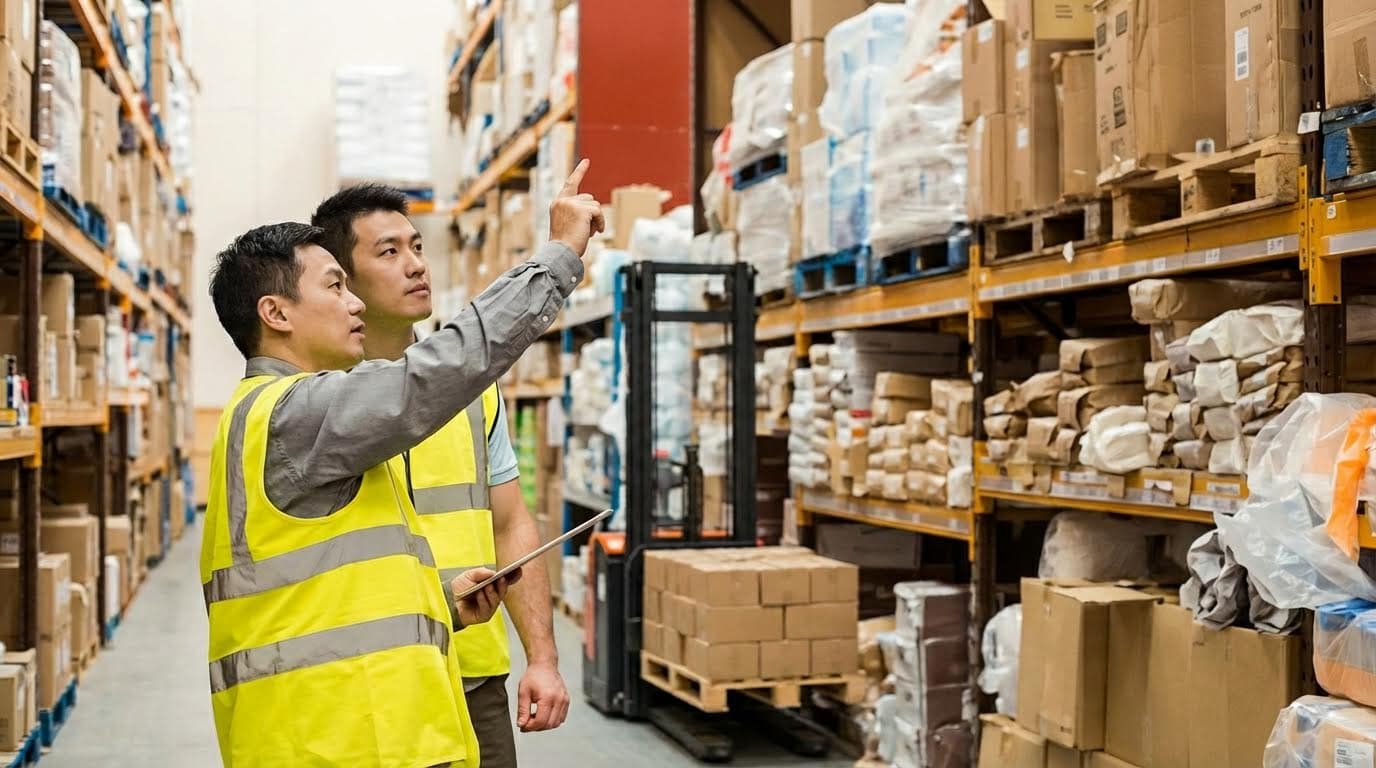
Core warehouse picking models for e‑commerce range from fully manual to highly automated flows, and the best choice depends on order profiles, labor costs, and how aggressively you must answer “what are the best warehouse picking solutions for e-commerce fulfillment” for your operation.
Manual, semi-automated, and automated flows
Manual, semi-automated, and automated picking flows differ mainly in walking distance, labor effort, accuracy, and scalability, and you should design around how much human travel you can afford per order line.
At a high level, manual flows push people to the inventory, while automated and semi-automated flows bring inventory or instructions to people. That shift is what cuts travel time, raises throughput, and stabilizes service levels.
| Picking Model | Typical Technologies | Key Performance Characteristics | Operational Impact |
|---|---|---|---|
| Manual | Paper lists, basic RF scanners | High walking distance; slower order processing; higher error risk for each pick | Low capex but limited scalability; best for very small or low-SKU operations |
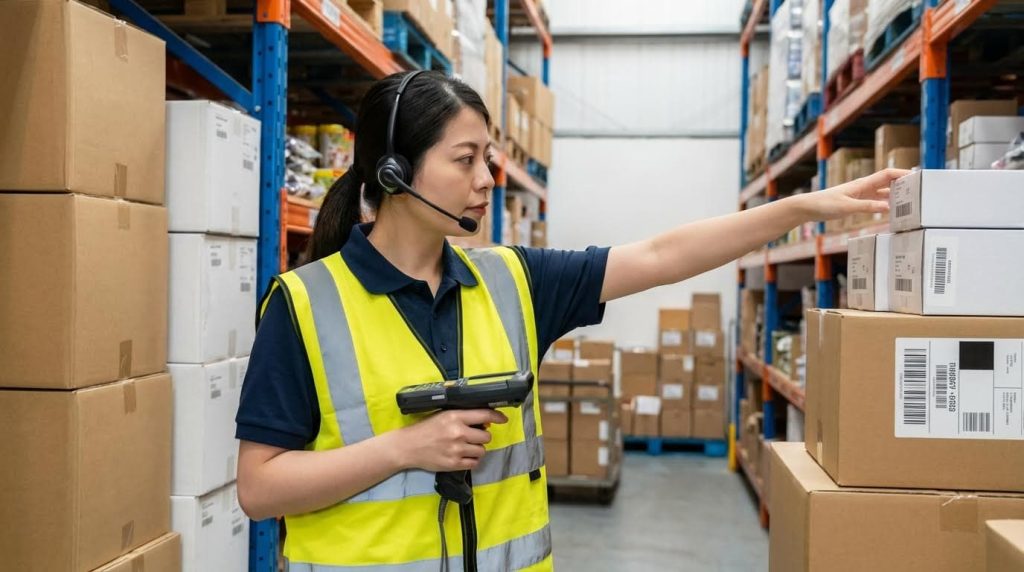
| Semi-automated | Voice picking, RF, intelligent batching, routing | 15–35% productivity gain; accuracy ≈99.9%; travel reductions of 30–50% when routing is optimized in the WMS | Good bridge step for growing e‑commerce sites; reuses existing racking and layout |
| Automated | AMRs, goods-to-person, robotic item retrieval | Throughput up to 1,100 units/hour; up to 85% reduction in manual labor dependency; ROI ≈1.5 years in some cases when volumes are high | High capex but highly scalable; ideal for dense, high-volume, multi-shift e‑commerce nodes |
- Manual flows: Pickers walk to every SKU location – simple to start, but walking dominates cost and limits speed.
- Semi-automated flows: Systems optimize instructions and routes while people still move – big gains without rebuilding the building.
- Automated flows: Robots or shuttles move goods; people mainly stay at ergonomic stations – max throughput and consistency.
How manual walking distance impacts picking design
In manual operations, a picker can walk 19–24 km (12–15 miles) per shift, which directly slows order processing and drives fatigue-related errors and injuries. Reducing travel is usually the single fastest way to improve e‑commerce fulfillment performance. Case data shows this clearly.
- Step 1: Map your current flow – document how orders move from release to ship and where people walk or wait.
- Step 2: Quantify walking and touches – measure average meters walked per line and scans/touches per item.
- Step 3: Identify semi-automation candidates – look for zones where voice or RF routing can cut backtracking.
- Step 4: Reserve automation for dense volume – focus AMRs or goods-to-person on the highest-hit SKUs first.
💡 Field Engineer’s Note: In real projects, the fastest “automation” win usually comes from better routing and batching, not robots. Once you cut 30–50% of travel with smarter paths, you see clearly which zones truly justify AMRs or goods-to-person investment.
Key performance metrics for picking design
The key performance metrics for picking design are travel time share, lines or units picked per hour, accuracy rate, labor dependency, and ROI, because they show which warehouse picking solution is truly “best” for your e‑commerce fulfillment profile.
| Metric | What It Measures | Typical Ranges / Impacts | Design Implication |
|---|---|---|---|
| Travel time share | % of pick time spent walking vs actually picking | Often 50–70% of total picking time in manual operations before optimization | High share means layout, batching, or routing must change before adding more labor. |
| Lines / units per hour | Throughput per picker or per system | Automated systems have reached ≈1,100 units/hour in case studies with AMR-based batch picking | Core sizing metric for labor, AMR fleets, and workstation count. |
| Picking accuracy | Correct lines / total lines picked | Manual often <99%; voice and automation can reach ≈99.9% with error rates ≈0.08–0.1% when well-implemented | Directly impacts returns, rework, and customer satisfaction. |
| Labor dependency | Share of throughput tied to human walking and handling | Automation can cut manual labor dependency by up to 85% in some deployments in high-volume sites | Critical in tight labor markets or multi-shift operations. |
| Order processing speed | Time from wave/release to order ready to ship | Manual is slower due to travel and errors; automated flows shorten cycle times significantly in the same footprint | Determines if you can hit same-day or next-day cutoffs reliably. |
| ROI / payback period | Time to recover automation or system investment | Some automation projects reached ROI in ≈1.5 years without major building changes | Key filter when comparing semi-automated vs fully automated options. |
- Travel time: 50–70% of picking time in many manual warehouses – if you do not measure it, you will over-hire instead of redesigning flows.
- Accuracy: Push toward ≥99.5% as a minimum, 99.9% where returns are costly – this often justifies voice or scanning upgrades.
- Throughput per m²: Units/hour per square meter – crucial where building expansion is not possible.
- Cost per line: Total fulfillment cost divided by order lines – lets you compare manual vs AMR vs goods-to-person on equal footing.
Using metrics to choose the “best” solution for your site
To answer what are the best warehouse picking solutions for e-commerce fulfillment in your specific building, benchmark your current travel share, accuracy, and units/hour, then model semi-automation and automation scenarios against those baselines. Combine this with realistic order growth and labor cost forecasts to see which option delivers the lowest cost per line at your 3–5 year horizon.
💡 Field Engineer’s Note: When we redesign picking, we always treat “travel time share” and “error cost per line” as hard constraints. If a proposed solution does not cut travel below about half of total pick time and does not push accuracy toward 99.8–99.9%, it rarely delivers the ROI that the spreadsheet promised.
“”
Matching Picking Solutions To Your Operation
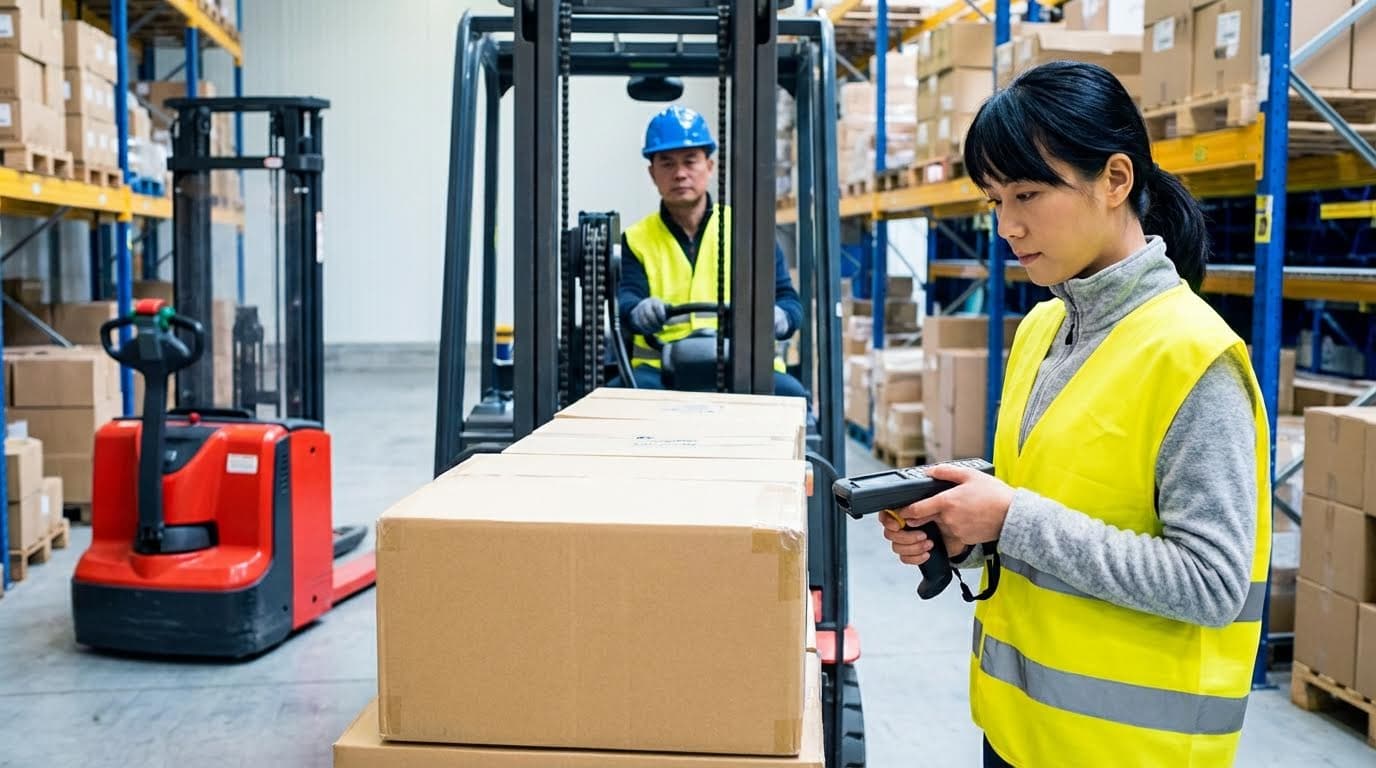
Matching picking solutions to your operation means engineering a flow where order profiles, SKU mix, storage layout, and total cost all align to answer “what are the best warehouse picking solutions for e-commerce fulfillment” for your specific site, not in general.
The goal is to turn abstract technologies into a concrete, right-sized design that hits your throughput, accuracy, and safety targets with a payback your finance team can accept.
Profiling order, SKU, and storage characteristics
Profiling orders, SKUs, and storage is the first hard filter to narrow down what are the best warehouse order picker solutions for e-commerce fulfillment in your building.
You want to quantify how work actually flows today, not how it looks on a process map.
| Profiling Dimension | What To Measure | Typical Ranges | Operational Impact On Picking Design |
|---|---|---|---|
| Order lines per order | Average and 95th percentile lines/order over 3–6 months | 1–3 lines (D2C) vs 10–50 (B2B/wholesale) | Low-line orders favor batch / zone / goods-to-person; high-line orders favor zone or wave picking. |
| Units per line | Single-piece vs case vs inner-pack share | 1–2 units/line for most e‑commerce | High single-piece share pushes toward person-to-goods with strong routing or AMRs to cut walking. |
| SKU velocity profile (ABC) | Lines per SKU per week; classify A/B/C | Top 10–20% SKUs often generate 60–80% of lines | Fast movers should sit closest to pack to cut travel, which can be 50–70% of pick time according to warehouse studies. |
| Physical SKU characteristics | Size (mm), weight (kg), fragility, orientation limits | Small items (≤200 mm), bulky (>800 mm), heavy (>20 kg) | Determines bin vs pallet storage, need for ergonomic aids, and whether goods-to-person totes are viable. |
| Storage medium mix | % of SKUs in shelving, carton flow, pallet racking, mezzanines | Highly variable by operation | Dense small-parts storage favors automation; scattered pallet storage favors RF/voice with routing optimization. |
| Daily order volume and peaks | Lines/day and units/day; peak season multiplier | 2×–5× peak vs average is common in e‑commerce | High, spiky peaks often justify automation and AMRs that scale without hiring waves of temps. |
| Travel distance per picker | Average meters walked per shift from WMS or time studies | Manual pickers can walk 19–24 km per shift (12–15 miles) | High travel distance signals big ROI from routing, batching, voice, or AMRs to bring goods closer. |
| Required service levels | Cut-off times vs ship times; same-day share | Same-day vs next-day vs standard | Tighter SLAs demand faster, more predictable picking, pushing you toward voice, automation, or goods-to-person. |
- Order Profile: Map how many orders fall into “single-line, single-unit” vs “multi-line” buckets – this dictates whether you design around speed of singles or efficiency of multi-line batches.
- SKU Velocity: Build an ABC curve from WMS history – this lets you place A-items in golden zones near pack to slash walking time.
- Cube & Weight: Capture SKU length, width, height (mm) and weight (kg) – this ensures bins, totes, and AMR payloads are correctly sized.
- Storage Topology: Draw a simple scaled map of zones and aisle lengths – this shows where routing algorithms or zone picking will have the largest impact.
- Demand Seasonality: Chart daily lines for at least 12 months – this reveals if you need flexible, scalable automation or if manual with light tech is enough.
How to practically collect a good picking profile in 2 weeks
Export 3–6 months of order history, including order ID, SKU, quantity, and timestamps. Combine this with a location master (SKU to bin), then run simple pivots: lines per order, orders per SKU, and lines per location. Walk the floor with this data and mark hot zones, long-walk zones, and congestion points. You do not need a full digital twin to make strong design decisions; a spreadsheet plus a site walk is enough to shortlist picking models.
💡 Field Engineer’s Note: When your A-items sit in high bays or far from packing, you are paying twice: once in travel time and once in mis-picks under fatigue. Re-slot your top 5–10% SKUs into waist-height locations within 10–20 m of pack first, then worry about automation; this alone can rival early-stage tech gains in walking-heavy operations.
Evaluating TCO, scalability, and safety compliance

Evaluating total cost of ownership (TCO), scalability, and safety is how you turn a short list of options into a defensible answer to what are the best order picking machines for e-commerce fulfillment for your CFO and safety officer.
You compare manual, semi-automated, and automated concepts on lifecycle cost, peak handling, and risk, not just equipment price.
| Dimension | Manual / RF / Paper | Voice-Directed / Optimized Routing | AMRs / Goods-to-Person Automation | Operational Impact |
|---|---|---|---|---|
| Capex | Low (RF guns, carts, racking) | Medium (voice devices, software licenses) | High (robots, shuttles, conveyors, workstations) | Automation needs higher upfront spend but can deliver up to 65% annual cost savings in some cases according to automation case studies. |
| Labor cost and effort | High walking and fatigue; heavy dependence on headcount | 15–25% productivity gain; 35%+ in strong cases for voice-directed picking | Up to 85% reduction in manual labor dependency with robots in some deployments based on reported results | Labor savings often dominate TCO, especially where wages and turnover are high. |
| Throughput potential | Constrained by walking; speed varies with fatigue | Higher and more consistent lines/hour per picker | Automated systems have reached 1,100 units/hour in case studies in retail operations | Defines whether you can meet future peak volumes without expanding the building. |
| Accuracy and returns | Higher error risk; mis-picks and short-ships | Accuracy near 99.9% with voice and multiple checks in well-configured systems | Barcode and system checks drive near-perfect accuracy | Fewer errors cut return handling and protect customer satisfaction. |
| Scalability | Limited by hiring, training, and floor congestion | Scale by adding devices and licenses | Scale by adding robots or modules; case study used 16 robots for batch picking integrated to WMS in a retail warehouse | Critical for fast-growing e‑commerce where volume may double every 2–3 years. |
| Payback / ROI | Minimal capex but ongoing high opex | Fast ROI from labor and error reduction | Automation projects have achieved ~1.5-year ROI in some cases without major building changes | Shorter ROI windows make it easier to secure investment for advanced picking solutions. |
| Safety and ergonomics | Long walks, repetitive bending, and carrying loads | Hands-free operation; better focus on walking paths | Goods brought to ergonomic stations; reduced pushing and pulling loads | Better ergonomics reduce injuries and align with safety regulations and internal policies. |
| System integration and data | Limited real-time visibility; manual reconciliations | Voice and RF integrate via APIs for near real-time updates in modern deployments | Robotic systems stream events and KPIs in real time | Real-time dashboards allow proactive management of bottlenecks and SLA risks. |
- Include All Cost Buckets: Model hardware, software, maintenance, IT, and training over 5–10 years – this prevents “cheap” manual options from hiding high ongoing labor and error costs.
- Quantify Travel Time: Use WMS data or studies showing travel is 50–70% of picking time in manual operations – then price the savings from routing, voice, or AMRs.
- Stress-Test Peak Scenarios: Run models at Black Friday or promotion volumes – this checks if your chosen solution can handle short bursts without breaking SLAs.
- Check Safety and Compliance: Ensure clear walkways, rated racking, and training are maintained as you change flows per warehouse safety guidance – automation must not create new blind spots or pinch points.
- Plan Integration Early: Use APIs and phased rollouts to tie new picking tech into your WMS and shipping stack following proven integration practices – this avoids disruption when you go live.
Quick TCO checklist for comparing picking concepts
For each candidate solution, fill a one-page sheet: (1) Capex by category (equipment, IT, construction); (2) Annual labor hours and cost at steady state; (3) Expected accuracy and return rate; (4) Maintenance and support fees; (5) Training hours per new hire; (6) IT and integration workload; (7) Expected ROI and payback in years using conservative volume growth. Use identical assumptions across options so you can defend why one approach is truly the best warehouse picking solution for your specific e‑commerce fulfillment profile.
💡 Field Engineer’s Note: Many teams under-budget integration and change management, then over-spend on “rush fixes” during peak. When you evaluate AMRs or voice, ring-fence 10–20% of project budget and several weeks of schedule specifically for integration testing, user training, and safety walk-throughs; this is usually the difference between a smooth ramp and a painful, low-ROI launch.
Final Considerations For Future-Ready Picking Systems
The best warehouse picking system is not a fixed template. It is a design that matches your order profile, SKU mix, and labor reality while cutting travel and errors. Manual, semi-automated, and automated flows each have a clear role. Manual works for low volume. Semi-automation with voice and smart routing lifts productivity without heavy rebuilds. AMRs and goods-to-person unlock high, stable throughput when density and peaks justify the spend.
Engineering teams should treat travel time share, accuracy, and cost per line as hard constraints, not afterthoughts. If a concept does not push walking down and accuracy toward at least 99.5–99.9%, it will not support tight e‑commerce service levels. At the same time, operations leaders must evaluate TCO over 5–10 years, including labor, returns, safety, and integration effort.
The most robust path is usually phased. First, profile work and re-slot fast movers. Next, deploy routing, RF, or voice. Finally, target automation on dense, repeatable volume, using proven platforms such as Atomoving order pickers. This staged approach builds a future-ready picking system that scales with demand, protects workers, and delivers reliable next-day or same-day fulfillment at a defensible cost.
Frequently Asked Questions
What are the different types of warehouse picking?
Warehouse picking strategies are essential for improving fulfillment speed and accuracy. The most common methods include discrete picking, where one order is picked at a time; batch picking, which involves picking multiple orders simultaneously; cluster picking, where multiple items for different orders are picked in one pass; zone picking, where pickers are assigned specific zones; and wave picking, which batches orders into waves based on specific criteria. Effective Picking Strategies.
How to improve picking in a warehouse?
Improving warehouse picking can be achieved by focusing on key performance indicators (KPIs) such as pick rate per hour, which measures how many items are picked in an hour, and picking accuracy rate, which tracks the percentage of correctly picked orders. Reducing travel time between picks and lowering the cost per picked order also contribute to better efficiency. Implementing technology like barcode scanners or RFID systems can further streamline the process. Warehouse KPI Guide.
Which software is best for warehouse management?
Choosing the right Warehouse Management System (WMS) is crucial for e-commerce fulfillment. Leading options often include features like real-time inventory tracking, automated picking processes, and integration with other supply chain systems. While specific brands vary, look for solutions that emphasize scalability, ease of use, and robust customer support. Top WMS Options.