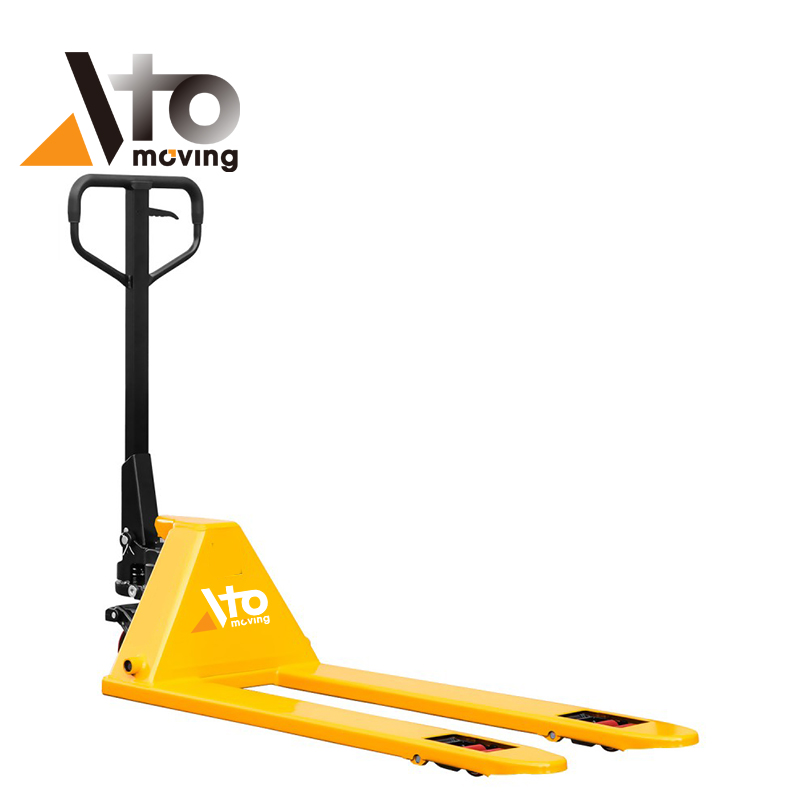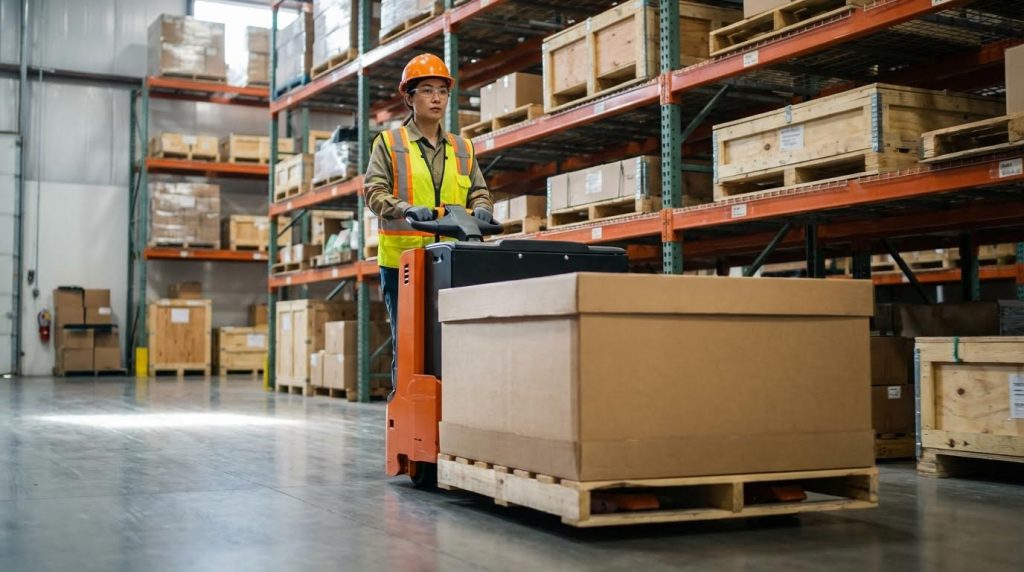
Manual pallet jacks typically weigh 55–123 kg depending on fork length, frame design, and capacity rating, and this tare weight directly affects safety, ergonomics, and floor loading. This guide explains how much a manual pallet jack weighs in real applications, why it weighs that much, and how to choose the right weight range for your building, vehicles, and operators.
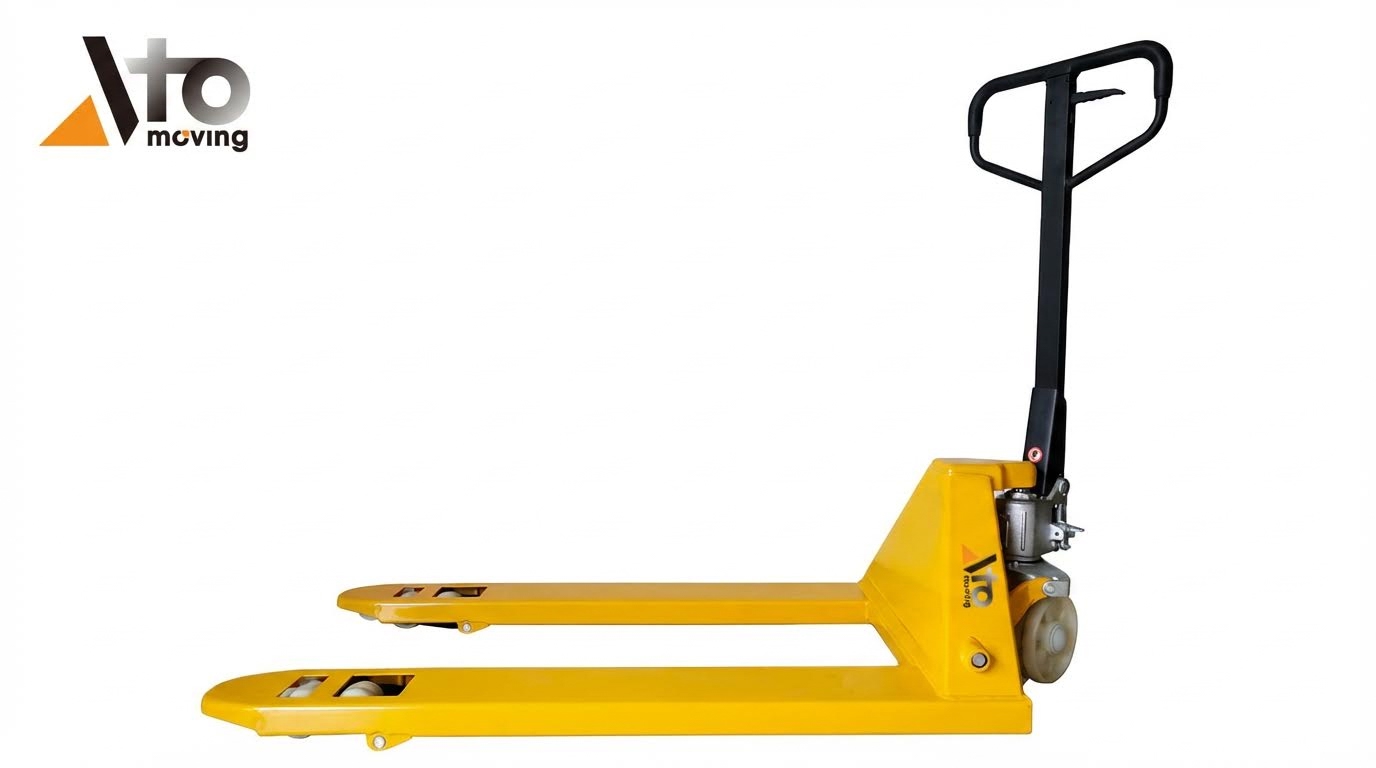
Understanding Manual Pallet Jack Weight And Design
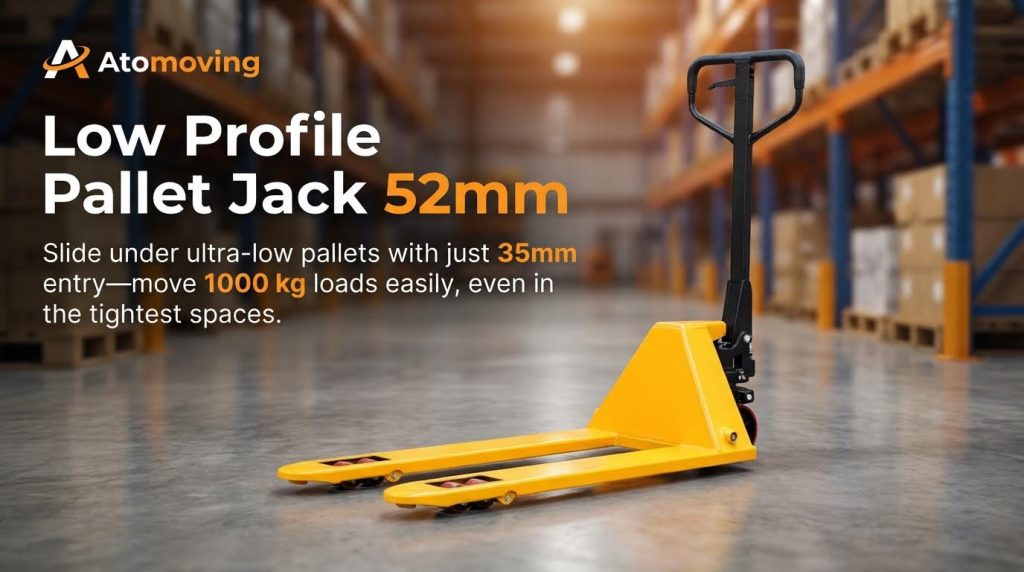
Manual pallet jack weight typically falls between 65–90 kg, and that mass comes mainly from fork geometry, steel thickness, and the chassis layout that delivers a 2,000–3,000 kg rating. If you are asking “how much does a manual pallet jack weigh,” the engineering answer always links back to capacity, fork length, and durability requirements. This section explains how those pieces fit together so you can read a spec sheet and instantly understand what the numbers mean in your building.
💡 Field Engineer’s Note: When comparing models, do not just pick the lightest unit; below about 65–70 kg, many designs start to lose torsional stiffness, which shows up later as twisted forks and chronic steering misalignment under real warehouse abuse.
Typical weight ranges and key dimensions
Manual pallet jacks usually weigh 55–123 kg depending on fork length and design, while keeping load ratings around 2,000–3,000 kg. To understand how much does a manual pallet jack weigh in practice, you must link tare weight to fork size and the duty cycle of your site.
| Manual pallet jack type | Typical truck weight (kg) | Typical fork length (mm) | Typical capacity (kg) | Operational impact / Best for… |
|---|---|---|---|---|
| Short-fork manual jack | 55–62 kg | 600–950 mm | Up to 2,500–3,000 kg | Very tight spaces, small vans, production cells; easier to lift into vehicles by hand or with a tail lift. Weight and length ranges |
| Standard manual jack | 65–90 kg | Approx. 1,150–1,200 mm (45–48 in) | 2,000–3,000 kg | General warehouse use; sized for standard 1,000 × 1,200 mm pallets and most dock and aisle layouts. Typical tare and rating |
| Long-fork manual jack | 82–123 kg | 1,500–2,500 mm | Up to 2,500–3,000 kg | Double-deep pallets, long loads, or two pallets at once; higher dead weight affects ramp work and floor loading. Extended fork data |
These ranges align with broader industry descriptions that list manual pallet jacks around 80–180 lbs (roughly 36–82 kg), with most heavy-duty designs clustering near the upper end to support higher capacities. Typical weight band
Fork dimensions also drive weight. Common fork lengths run from 36–72 in (about 915–1,830 mm) with widths between 400–685 mm, and some industrial models stretch fork length to 1,300–3,000 mm for special pallets and long loads. Standard fork sizes Extended forks
- Shorter forks: Less steel volume – lower tare weight and easier pivoting in narrow aisles.
- Standard forks: Balanced length and mass – best compromise for mixed pallet fleets.
- Long forks: More steel and higher bending moments – require heavier sections to avoid sagging under 2,500–3,000 kg loads.
How to quickly estimate jack weight from a spec sheet
Look for three numbers: rated capacity (kg), fork length (mm), and any mention of “reinforced” or “heavy-duty” frames. Above 2,500 kg capacity or beyond 1,500 mm fork length, expect the truck itself to be closer to 80–120 kg, not 60–70 kg. This rule-of-thumb helps you forecast floor loading and van tail-lift limits before the truck even arrives on site.
How frame geometry and steel thickness add mass
Frame geometry and steel thickness add mass because engineers must resist bending, twisting, and impact loads from up to 3,000 kg pallets. The heaviest contributors to manual pallet jack weight are the forks, fork heels, drawbar, and the central chassis weldment.
Standard manual trucks in the 65–90 kg band use welded steel forks and a torsion-resistant chassis to carry 2,000–3,000 kg without permanent deformation. Designers rely on U-channel sections, box beams, and pressed ribs to raise section modulus (bending stiffness) while still controlling mass. Frame and steel design
- Fork heel region: Thickened plates and gussets – absorbs impact when pallets are dropped or struck, preventing cracking.
- Fork tips and top skins: Pressed ribs and formed channels – increase stiffness without simply adding flat plate thickness.
- Drawbar and pivot block: Solid or box-section components – handle steering forces and shock loads from towing or curb transitions.
- Cross braces between forks: Welded bars or channels – stop the forks from “scissoring” apart under side loads.
High-tensile steels allow manufacturers to trim plate thickness in low-stress areas while still meeting safety factors set by regional standards, yet critical zones remain heavy. Use of stronger steels That is why two jacks with the same capacity can differ by 5–10 kg: one may use more advanced forming and higher-strength material, while another simply adds thickness everywhere.
- Thicker steel: Raises tare weight linearly – each extra millimetre across long fork sections quickly adds several kilograms.
- Optimized geometry: Uses ribs and channels – delivers stiffness with less mass, improving maneuverability.
- Reinforced stress points: Local plates and gussets – add weight only where fatigue cracks usually start.
Why “over-light” frames are a red flag
If a manual pallet jack claims a 2,500–3,000 kg rating but weighs closer to 55–60 kg with standard 1,150–1,200 mm forks, that usually means the frame has minimal safety margin. Under real conditions—off-center loads, hitting dock plates, or pulling on slight ramps—those thin sections can permanently bend. Once forks are no longer level, wheel loads spike and steering effort rises, shortening wheel and bearing life.
Engineering Factors That Influence Jack Weight
Engineering factors like fork geometry, capacity rating, wheel design, and stability requirements largely determine how much does a manual pallet jack weigh and how safely it carries 2,000–3,000 kg loads.
When you ask “how much does a manual pallet jack weigh,” the honest answer is: it depends on the engineering choices behind it. The forks, frame, wheels, and stability margins all add or remove kilograms, and each change has a direct impact on safety, rolling effort, and floor loading.
Fork length, width, and capacity rating
Fork length, width, and rated capacity are the first design levers that drive manual pallet jack weight up or down.
Longer, wider, and higher-capacity forks need more steel, which directly adds mass but also controls deflection and permanent bend under load.
| Parameter | Typical Range / Example | Effect on Jack Weight | Operational Impact |
|---|---|---|---|
| Fork length | 900–1,800 mm common; up to 3,000 mm for special pallets standard ranges and long-fork options | Short forks (600–950 mm) ≈ 55–62 kg; long forks (1,500–2,500 mm) ≈ 82–123 kg length vs weight | Shorter trucks suit vans and tight cells; longer forks carry double pallets but are heavier to pull and turn. |
| Fork width over forks | ≈400–685 mm (15.8–27 in) width range | Wider fork spread adds some steel mass in the cross-braces and heel regions. | Wider units stabilize wide pallets; narrow units fit small skids and block pallets with tight openings. |
| Rated capacity | Up to about 2,500 kg (5,000 lbs) for many manual jacks capacity reference | Higher rating requires thicker fork sections, gussets, and cross-members, pushing weight toward 75–90 kg and above capacity vs structure | Supports 2–3 tonne loads without permanent bend; heavier truck is slightly harder to man-handle when empty. |
Standard manual pallet jacks around 65–90 kg use welded steel forks and torsion-resistant chassis to support 2,000–3,000 kg without permanent deformation. Engineers combine U-channel sections, box beams, and pressed ribs to increase stiffness without adding unnecessary mass. Structural design measures keep the truck light enough for manual use while still meeting safety factors from regional standards.
- Short forks (600–950 mm): Less steel, lower tare mass – Ideal for delivery vehicles and tight production cells.
- Long forks (1,500–2,500 mm): More steel, higher tare mass – Best for long or double pallets; expect heavier steering effort.
- Higher capacity rating: Thicker fork plates and reinforcements – Reduces risk of fork sag or cracking under 2–3 tonne loads.
💡 Field Engineer’s Note: When operators complain a jack is “too heavy,” check fork length and capacity. A 2,500 mm, 3,000 kg-rated truck will always feel heavier than a 950 mm light-duty unit, but that extra steel is what keeps forks from permanently bending in real-world abuse.
How fork dimensions affect “how much does a manual pallet jack weigh” in your spec sheet
As a quick rule of thumb, moving from a short 900–1,000 mm fork to a long 1,800–2,000 mm fork typically adds several kilograms of steel and shifts the center of gravity forward. This not only increases tare weight but also changes how the truck feels when you pivot it in a narrow aisle. Always pair fork length with your average pallet length and turning space instead of defaulting to “longer is better.”
Wheel materials, bearings, and rolling resistance
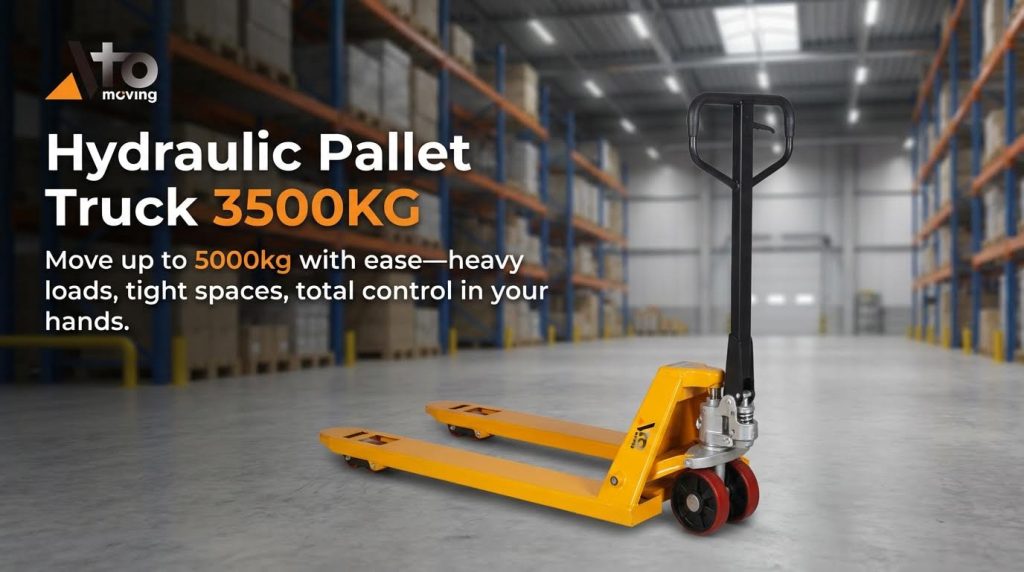
Wheel material, wheel size, and bearing quality add a modest amount of weight but have a huge impact on rolling resistance and operator effort.
Most of the mass in a manual pallet jack sits in the steel frame, but wheels and bearings decide how that mass feels when you push or pull it across the floor.
| Component | Typical Options / Data | Effect on Weight | Operational Impact |
|---|---|---|---|
| Load & steer wheel material | Polyurethane or nylon wheels are common on manual pallet trucks wheel options | Different polymers change weight slightly; steel hubs add more mass. | Polyurethane gives quiet, floor-friendly rolling; nylon offers very low rolling resistance on smooth concrete. |
| Wheel design | Tandem load rollers vs single; compact steer wheels with ≈200° rotation for tight turns steering design | Tandem rollers and larger hubs add a little weight. | Tandem rollers bridge floor joints better and reduce point loading; 200° steer angle improves maneuverability in narrow aisles. |
| Bearings | High-quality bearings and bushings for low rolling resistance bearing design | Bearings add minor mass compared with the frame. | Good bearings cut push/pull force, especially with 2,000+ kg loads, and reduce wear and maintenance. |
| Off-road wheels | Larger pneumatic or semi-pneumatic tires on rough-terrain trucks weighing 200–220 kg off-road configurations | Much heavier wheel and axle assemblies vs standard compact rollers. | Enable operation on gravel, meadows, and uneven yards but significantly raise tare weight and rolling inertia. |
- Low-friction wheels: Nylon or high-quality polyurethane – Reduce operator push/pull force more than shaving a few kg off frame weight.
- Good bearings: Precision bearings and self-lubricating bushings – Maintain low rolling resistance over the truck’s life.
- Rough-terrain sets: Large pneumatic wheels and reinforced axles – Add tens of kilograms but are essential off smooth concrete.
💡 Field Engineer’s Note: In practice, operators feel bad wheels more than a “heavy” frame. A 90 kg jack with fresh polyurethane wheels often pushes easier than a 70 kg jack with flat-spotted, dry bearings, especially above 1,500 kg payload.
Why wheel choice matters more than a few kilograms of jack weight
From a physics standpoint, rolling resistance on small, hard wheels over imperfect floors dominates the force you need to move a loaded jack. That is why switching from worn nylon to quality polyurethane or renewing bearings can cut required push force by more than 20–30%, while trimming 5 kg of frame weight barely changes the numbers.
Stability, floor loading, and safety standards

Stability requirements, floor load limits, and compliance with safety standards also drive how much a manual pallet jack weighs and how its mass is distributed.
Engineers do not just add steel randomly; they place mass where it improves stability, spreads wheel loads, and satisfies structural safety factors without over-stressing floors or operators.
| Factor | Typical Data / Design Approach | Effect on Jack Weight | Operational Impact |
|---|---|---|---|
| Base tare weight | Manual pallet jacks typically ≈65–90 kg for standard designs weight range | Enough mass for stability and strength without overwhelming operators. | Provides a stable platform for 2–3 tonne loads; still moveable by one person on level floors. |
| Stability and load rating | Manual trucks around 75–90 kg commonly support 2–3 tonne ratings using low lift height and long wheelbase stability vs weight | Heavier frames and reinforcements resist tipping and structural deformation. | Reduces risk of rollover when starting, stopping, or cornering with heavy pallets. |
| Floor loading | Truck tare (65–90 kg manual; 200–350 kg electric) plus payload passes through small wheel contact patches floor load discussion | More mass increases point loads at wheels. | Weak slabs, tiles, or poorly detailed joints can crack or chip under concentrated wheel loads. |
| Safety factors & standards | Regional standards require safety margins on structural strength and stability; undersized frames are not acceptable. | Meeting safety factors often means thicker steel in high-stress zones. | Prevents hidden fatigue cracks and sudden failures during daily logistics operations. |
- Stability mass: Sufficient frame weight and wheelbase – Keeps the center of gravity inside the support polygon during acceleration and braking.
- Controlled floor loading: Tandem rollers, correct wheel material – Spreads load and avoids damaging joints and tiles.
- Safety compliance: Adequate steel thickness and weld quality – Reduces risk of structural failure under dynamic loading.
A typical manual pallet jack around 65–90 kg, plus a 2,000 kg pallet, can create very high contact pressures at the small load wheels. Industrial floors designed for pallet traffic use thicker slabs, reinforcement, and controlled joints specifically to handle these concentrated loads. Floor design guidance emphasizes that wheel diameter, material, and spacing are just as important as the jack’s bare weight.
💡 Field Engineer’s Note: If you operate on mezzanines, older slabs, or tiled floors, do not chase the lightest jack at all costs. Instead, verify floor capacity and wheel contact pressures; sometimes a slightly heavier truck with tandem rollers is actually kinder to your floor than a lighter unit on tiny hard wheels.
Linking jack weight to your risk assessment
When you document “how much does a manual pallet jack weigh” for risk assessments, include: jack tare weight, maximum payload, total wheel loads, and floor ratings. This connects engineering data to real-world hazards like slab cracking, joint spalling, and tip-over risk on ramps, and it gives safety teams a clear basis for operating limits.
Matching Pallet Jack Weight To Your Application

Matching manual pallet jack weight to your application means balancing jack tare mass, payload, floor limits, and ergonomics so you stay within vehicle, building, and operator constraints while still moving pallets efficiently and safely. When people ask “how much does a manual pallet jack weigh,” the practical answer is usually 65–90 kg for standard models, but the right choice depends heavily on where and how you use it.
- Standard manual jack weight: Around 65–90 kg – Light enough for vans and shops, strong enough for 2,000–3,000 kg loads.
- Short-fork manual jacks: About 55–62 kg – Best when you must lift the jack into vehicles or work in tight cells.
- Long-fork / heavy-duty manuals: Roughly 82–123 kg – Better stability for long or two-pallet loads, but heavier to reposition.
- Electric walk-behind jacks: Typically 180–320 kg – Excellent for long runs and heavy cycles but demand stronger floors and docks.
💡 Field Engineer’s Note: When in doubt between two models, check the heaviest real pallet you move, then verify total weight (jack + load) against your weakest interface: tail lift rating, dock leveler capacity, or mezzanine floor limit. That bottleneck usually decides the correct jack weight range.
Vehicle transport, docks, and building constraints
Vehicle transport, docks, and building constraints set a hard upper limit on how heavy your pallet jack plus typical payload can be before you overload floors, axles, or lifting devices. You must treat the jack’s own weight as part of the live load, not as “free.”
- Know the tare weight: A typical manual pallet jack weighs 65–90 kg, while electric units often reach 200–350 kg before adding load according to engineering guidance – This mass always rides with every pallet.
- Account for worst-case payload: Manual trucks regularly handle 2,000–2,500 kg loads per manufacturer data – So a “2.5 tonne pallet” is really 2,565–2,590 kg once you include the jack.
- Check tail lifts and dock levelers: A 200 kg electric pallet jack carrying a 2,000 kg pallet adds about 2,200 kg to the deck per field examples – Critical for tail lift and dock leveler group loading.
- Respect vehicle axle limits: Transport planners must include jack tare weight plus payload when checking van or trailer axle loads as noted in logistics guidance – Prevents fines and structural damage.
- Consider floor point loading: Dead weight plus payload transfers through small wheel contact patches, creating high point loads that can chip weak concrete or crush tiles according to floor design notes – Heavier jacks amplify this risk.
- Mind ramps and gradients: Heavier trucks improve traction on ramps but increase required braking force and risk on steep slopes per engineering analysis – Too heavy on a steep ramp can overpower an operator.
| Use Case | Typical Jack Type | Approx. Jack Weight | Key Constraint | Operational Impact |
|---|---|---|---|---|
| Parcel vans / small trucks | Short-fork manual | 55–70 kg | Tail lift rating, manual lifting into vehicle | Light jack is easier to manhandle and keeps axle loads down. |
| Standard docks and trailers | Standard manual | 65–90 kg | Dock leveler and floor load | Balances strength for 2–3 tonne pallets with manageable floor stress. |
| Heavy distribution centers | Electric walk-behind | 180–320 kg | Dock and ramp capacity | Ideal for high throughput; needs engineered floors and ramps. |
| Mezzanines and light floors | Light manual or short-fork | 55–75 kg | Slab thickness and live load limit | Reduces point load at joints and on thin slabs. |
How to check if your floor can support a pallet jack
Ask for the floor’s design live load rating (kN/m²) and any point-load limits at joints. Then calculate total weight (jack + heaviest pallet) and divide by the effective wheel footprint. If you are close to the limit, choose a lighter jack, smaller loads, or larger-diameter / softer wheels to spread the load.
💡 Field Engineer’s Note: When a site has cracked joints or hollow-sounding slabs, I usually specify the lightest manual pallet jack that still meets capacity, and I avoid electric units until a structural engineer signs off on axle and point loads.
Ergonomics, TCO, and maintenance planning
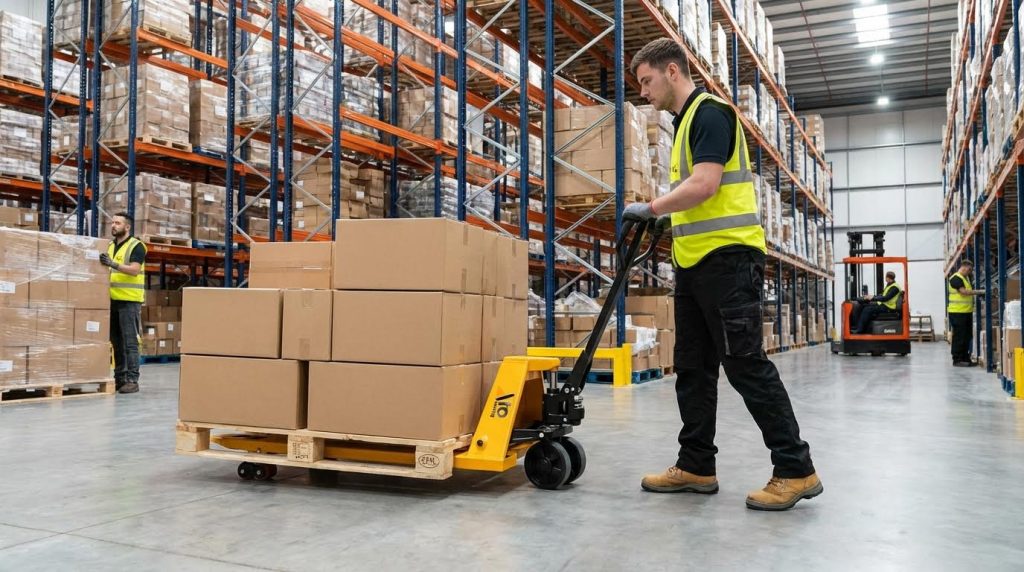
Ergonomics, total cost of ownership (TCO), and maintenance planning are all strongly influenced by how much a manual pallet jack weighs relative to load, travel distance, and duty cycle. Heavier, overbuilt trucks can cut long-term failures, but they also increase push forces and floor wear.
- Operator effort vs. jack weight: Manual pallet jacks typically weigh 80–180 lbs (about 36–82 kg) according to equipment data – Every extra kilogram increases starting and rolling effort, especially on imperfect floors.
- Load capacity vs. human limits: Manual jacks may be rated up to 4,400–5,500 lbs (about 2,000–2,500 kg), but practical capacity is lower because push/pull forces become excessive for operators as ergonomic studies show – Do not size only by steel strength.
- Manual vs electric ergonomics: Electric pallet jacks maintain consistent push/pull force regardless of load and significantly reduce musculoskeletal strain per comparative tests – Worth their extra weight in high-frequency use.
- Weight and lifecycle cost: Heavier electric pallet trucks consume more energy per cycle, especially on long routes or ramps, but additional mass often comes from thicker steel and larger bearings that extend fatigue life under heavy duty according to lifecycle analysis – TCO is a trade-off between energy, wear, and durability.
- Maintenance workload: Planned maintenance includes wheel replacement, lubrication, hydraulic seal checks, and fastener torque inspections; ignoring these tasks increases rolling resistance and operator effort per field recommendations – A slightly heavier, better-built jack can reduce unplanned downtime.
- Environmental and health aspects: Manual pallet trucks offer a pollution-free environment due to zero fuel consumption according to product descriptions – Good for indoor air quality, but you must manage ergonomic risk for heavy loads.
| Scenario | Recommended Jack Type | Typical Jack Weight | Ergonomic Impact | TCO Consideration |
|---|---|---|---|---|
| Occasional moves, short distance | Standard manual | 65–90 kg | Acceptable effort if loads stay below ~1,500–2,000 kg. | Lowest purchase price and simple maintenance. |
| High-frequency moves, long routes | Electric walk-behind | 180–320 kg | Greatly reduced strain; better for multi-shift work. | Higher upfront cost but lower injury and labor costs. |
| Retail or tight aisles | Short-fork manual or compact electric | 55–80 kg (manual) / 180–250 kg (electric) | Manual OK for light pallets; electric preferred for heavy stock. | Balance maneuverability with maintenance of powered components. |
| Rough floors / outside yards | Off-road manual pallet truck | 200–220 kg | Heavier to start moving but smoother over rough ground. | More robust frame and wheels reduce damage and call-outs. |
- Step 1: Map your heaviest realistic pallet weight and average travel distance – This defines whether manual effort is acceptable or if you need powered assistance.
- Step 2: Count daily cycles per operator – High cycles push you toward heavier, powered jacks despite higher tare weight.
- Step 3: Compare injury and downtime costs with the price gap to electric – Often the payback period is shorter than expected.
- Step 4: Choose wheel materials and maintenance intervals – Low-rolling-resistance wheels and regular lubrication keep push forces within ergonomic limits.
💡 Field Engineer’s Note: In sites where operators complain that “the pallets are getting heavier,” the root cause is often dry bearings and worn wheels, not the pallet itself. A modestly heavier, better-built jack with a strict maintenance routine usually beats buying more of the cheapest light units.
Final Considerations When Specifying Jack Weight
When you ask how much does a manual pallet jack weigh, the real decision is how that tare weight interacts with your floors, vehicles, operators, and duty cycle. Final specification should balance safety margins, ergonomics, and long-term operating cost.
Check Total System Weight, Not Just The Jack
The key engineering check is always “jack weight + payload” versus vehicle, dock, and floor limits. The pallet jack’s own 65–90 kg mass is small compared with a 2,000–3,000 kg pallet, but it still matters for structural checks.
- Vehicle decks: Include jack tare plus typical pallet mass when checking van or trailer axle and deck ratings – prevents overloading light commercial vehicles.
- Tail lifts and dock levelers: Use combined weight (for example, 75 kg jack + 1,500 kg pallet ≈ 1,575 kg) – avoids exceeding platform group load capacity.
- Ramps and gradients: Heavier trucks improve traction but increase braking force demand – reduces rollback risk when correctly matched to slope.
- Floor slabs and mezzanines: Concentrated loads at small wheels can damage weak concrete or light mezzanine decks – protects joints and tiles from crushing.
A typical manual pallet truck weighs 65–90 kg, while electric units often reach 200–350 kg before adding load. This dead weight plus payload transfers through a small contact patch at the steering and load wheels, creating high point loads that can chip joints or crush tiles on under‑designed floors. Engineered industrial slabs use thickness and reinforcement to manage these stresses.
💡 Field Engineer’s Note: When approving pallet jacks for a mezzanine, ask for the exact jack tare weight and wheel size, then have a structural engineer check point loads at the wheel contact patches—not just uniform floor load in kg/m².
Balance Weight, Capacity Rating, And Safety Margins
The safest pallet jack is rarely the lightest one; you want enough steel and weld length to handle real-world dynamic loads with margin. Truck tare weight, frame section, and capacity rating must align so you do not run at the edge of the design envelope.
- Typical manual jack weight: 65–90 kg for standard designs – supports 2,000–3,000 kg loads without permanent deformation.
- Short, light units: 55–62 kg with 600–950 mm forks – great for tight vans but best for moderate loads.
- Long-fork units: 82–123 kg up to 2,500 mm forks – extra mass stabilizes long pallets and reduces bending.
- Off-road designs: 200–220 kg with large wheels and gusseted frames – survive gravel yards and uneven ground.
Standard manual trucks that weigh 65–90 kg use welded steel forks and a torsion-resistant chassis to support loads of 2,000–3,000 kg without permanent deformation, often using U-channel sections, box beams, and pressed ribs to raise stiffness while controlling mass. High-tensile steels let designers reduce plate thickness in low-stress regions and still meet safety factors.
Why “too light” can be a red flag
A manual pallet truck around 75–90 kg with a 2–3 tonne rating relies on low lift height and a long wheelbase to stay stable. Electric pallet jacks and stackers, often weighing 180–400 kg, use battery mass and robust masts to keep the center of gravity inside the support polygon during stacking. Undersized equipment creates serious hazards; a pallet truck weighing only 60 kg but rated for 2 tonnes risks structural deformation and rollover under dynamic conditions. Always question unusually low tare weights for high capacities.
Consider Ergonomics, Effort, And Operator Fatigue
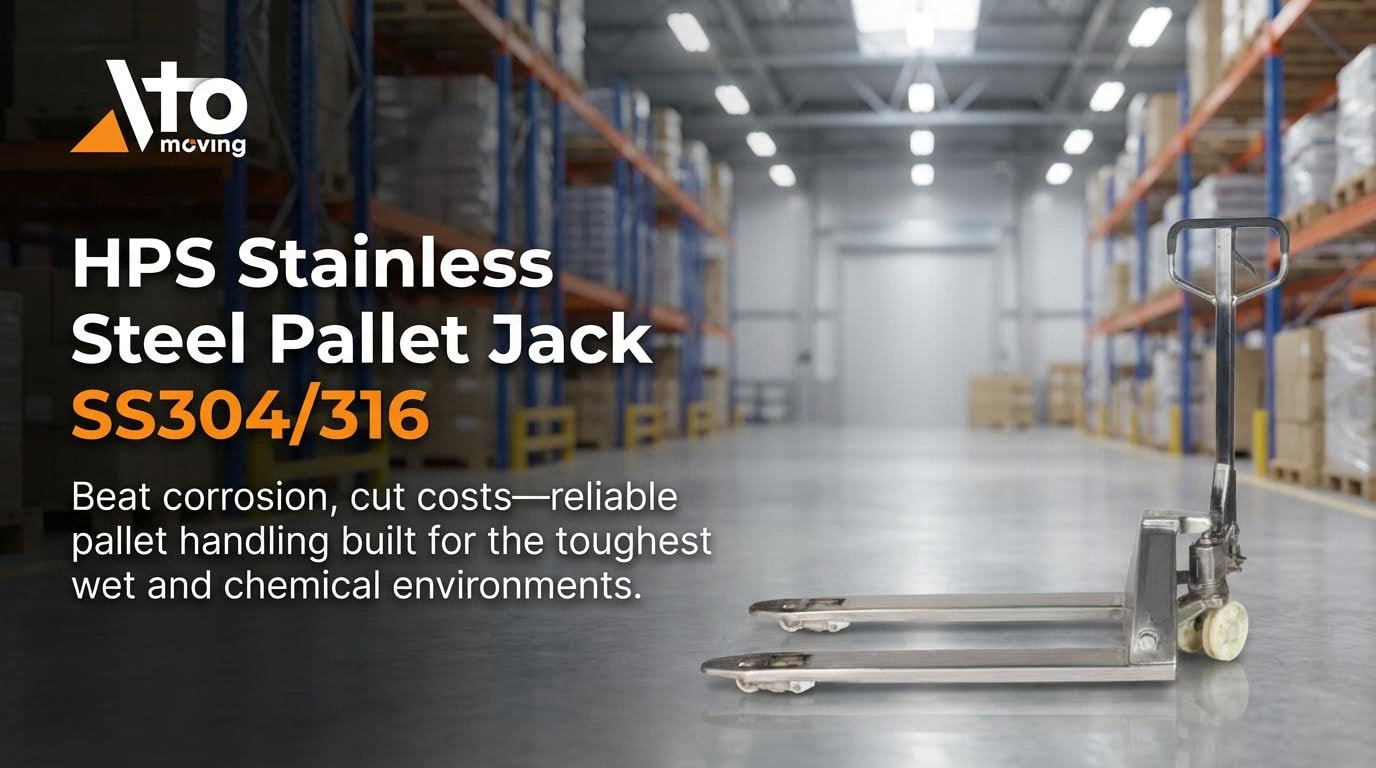
From an ergonomics perspective, a few extra kilograms of jack weight are often acceptable if they reduce rolling resistance and improve handle geometry. Operator fatigue usually comes more from poor wheels, bad floors, and overloading than from jack tare alone.
- Manual effort limits: Manual pallet jacks depend on human push/pull and pumping – efficiency drops sharply as load approaches 2,000–2,500 lbs (≈900–1,100 kg).
- Electric alternatives: Electric pallet jacks, weighing 180–320 kg, maintain consistent push/pull force regardless of load – reduces musculoskeletal strain on long routes.
- Handle and control layout: Ergonomic handles and neutral lever positions reduce wrist and shoulder load – operators work longer with less fatigue.
- Wheel material choice: Polyurethane or nylon wheels with quality bearings lower rolling resistance – more impact on effort than shaving 5 kg off jack weight.
Manual pallet jacks typically weigh between about 80–180 lbs (≈36–82 kg), which makes them compact and maneuverable in tight aisles, but they still require significant physical effort at higher loads. Electric pallet jacks, at roughly 300–600 lbs (≈135–270 kg), add mass but remove most of the push/pull burden from the operator.
💡 Field Engineer’s Note: If your risk assessments show frequent pallets above 1,000–1,200 kg or long travel distances, the limiting factor is operator strain, not how much does a manual pallet jack weigh—plan for powered assistance or task redesign.
Account For Lifecycle Costs Linked To Jack Weight
Heavier pallet trucks usually cost more upfront but often deliver longer fatigue life and lower unplanned downtime. Jack weight influences energy use, wheel wear, and maintenance intervals, especially in electric models.
- Steel mass vs durability: Extra kilograms often come from thicker forks, gussets, and stronger drawbars – extends life in harsh logistics duty.
- Wheel and bearing wear: Higher dead weight increases bearing loads – cheap light trucks can eat wheels faster if under-specified.
- Energy consumption (electric): Heavier electric trucks consume more energy per cycle, especially on ramps – affects battery sizing and charging infrastructure.
- Planned maintenance: Regular wheel replacement, lubrication, and hydraulic seal checks keep rolling resistance low – protects operators from creeping effort increases.
Truck weight influences lifecycle cost through wear, energy use, and maintenance frequency. Heavier electric pallet trucks consume more energy per cycle, but that mass often comes from thicker steel sections, larger bearings, and stronger masts that extend fatigue life. Ignoring routine inspections increases rolling resistance, which raises operator effort and energy consumption.
💡 Field Engineer’s Note: When comparing quotes, normalize price by kg of steel and rated capacity; a slightly heavier, better-built jack often pays back through fewer wheel changes and less downtime.
Use Weight As A Screening Tool, Not The Only Spec
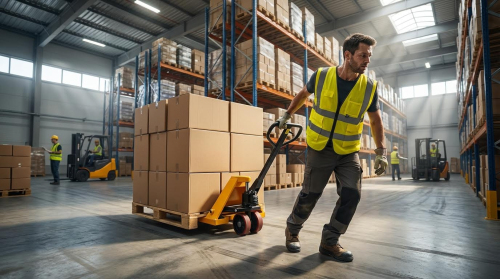
In final selection, treat “how much does a manual pallet jack weigh” as a screening question that quickly filters unsuitable designs. The decision still must include fork size, capacity, wheel type, and environment.
- Flag outliers: Extremely light jacks for high capacities deserve extra scrutiny – may hide thin steel or marginal welds.
- Match to pallet and aisle geometry: Shorter, lighter jacks suit vans and tight production cells – longer, heavier models stabilize oversized loads.
- Check compatibility with handling system: Combine jack weight and typical load with racking, docks, and lifts – avoids hidden overloads in the material flow.
- Plan for growth: If load sizes will increase, choose a slightly heavier, higher-capacity jack now – reduces need for early replacement.
Quick rule-of-thumb for spec reviews
For standard warehouse work on good concrete, a manual pallet jack in the 65–90 kg range with 2,000–2,500 kg rating and polyurethane wheels is a robust baseline. Heavier or specialized designs are justified for long forks, outdoor yards, or high-intensity multi-shift use.
Final Considerations When Specifying Jack Weight
Manual pallet jack weight is not just a catalog number; it is a control knob for safety, ergonomics, and lifecycle cost. Fork geometry, steel thickness, wheel design, and stability requirements all add mass, but they also prevent bending, tip-over, and floor damage when you move 2–3 tonne pallets.
Operations teams should treat tare weight as part of the live load. Always check “jack + heaviest pallet” against tail lifts, dock levelers, floors, and vehicle axles. A standard 65–90 kg jack usually offers the best balance for warehouses with good concrete and pallets up to about 2,000–2,500 kg. Shorter, lighter units suit vans and weak floors. Long-fork or off-road designs justify higher weight where stability and rough ground demand it.
Do not chase the lightest frame at high capacity. Undersized jacks often twist, crack, or overload wheels, which raises push forces and maintenance costs. Instead, pick a design with enough steel in the forks and chassis, quality wheels and bearings, and proven compliance with safety factors.
The most robust approach is simple: define your heaviest realistic load, floor and vehicle limits, duty cycle, and ergonomic targets. Then choose a manual or electric jack whose weight, capacity, and wheel set work together as a system. Atomoving can help you apply these checks and lock in the right specification from day one.
Frequently Asked Questions
How much does a manual pallet jack weigh?
A standard manual pallet jack designed to lift 5,000 lbs typically weighs between 185 and 200 pounds. The exact weight can vary depending on the manufacturer and model specifications. For example, a 5000 lb pallet jack generally falls within this range.
How much does a 6000 lb pallet jack weigh?
A pallet jack with a 6,000 lb capacity, such as the Vestil PM6-2748, weighs approximately 212 pounds. This information is consistent across product specifications for heavy-duty models. For more details, you can refer to the product page.