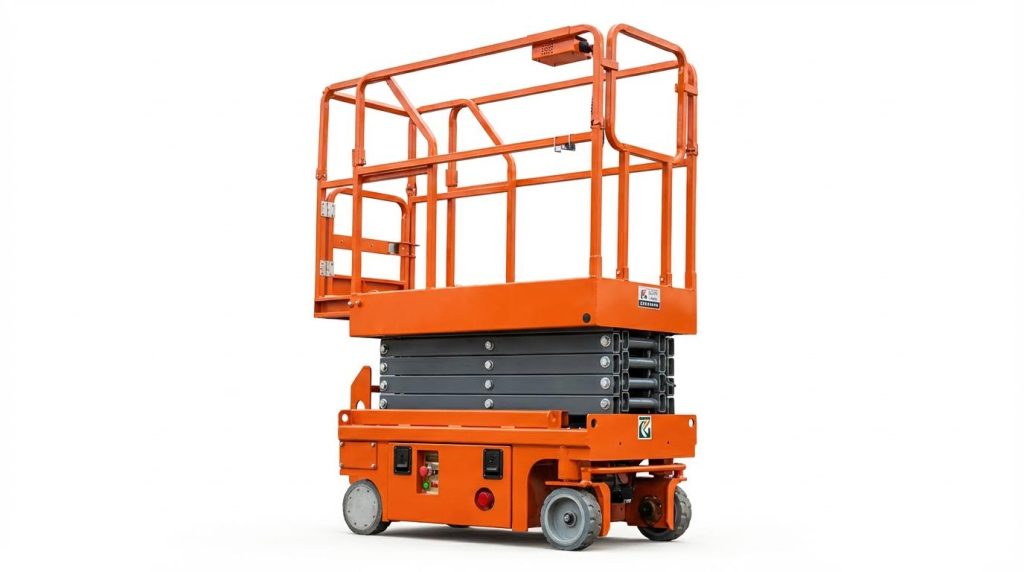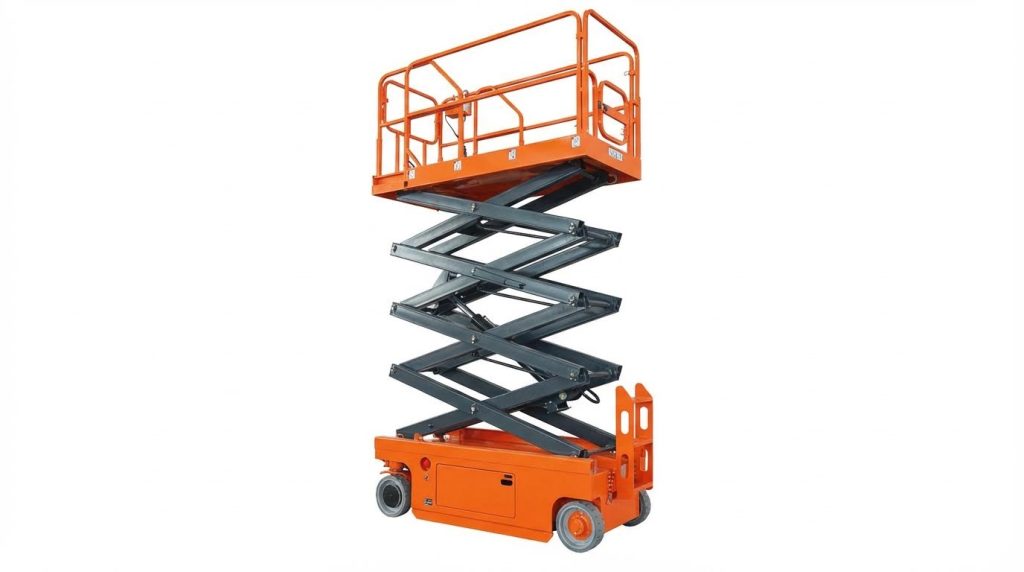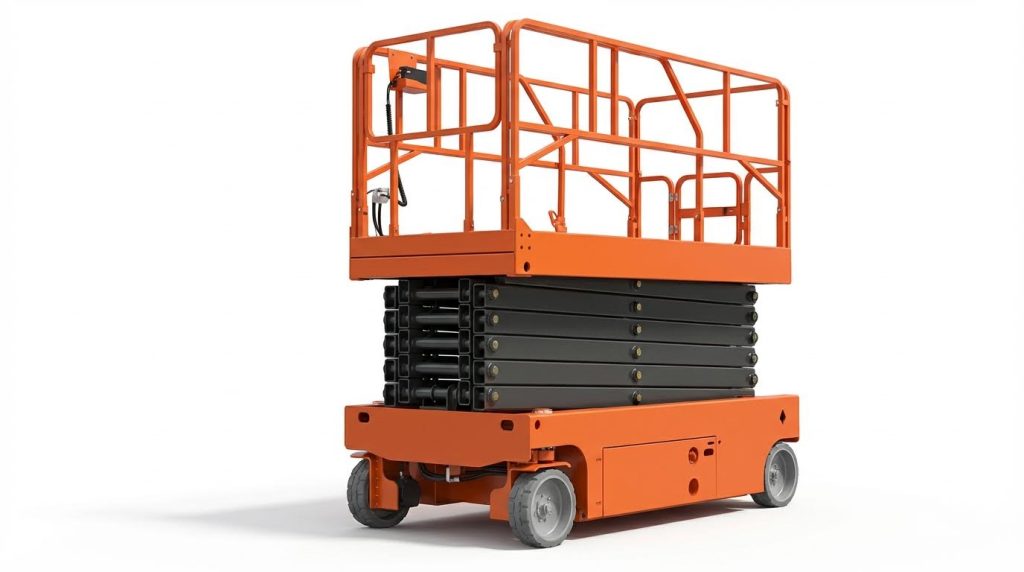
Safe use of scissor platform extensions and decks is about respecting capacity limits, controlling stability, and following a disciplined inspection and operating routine every time. This guide explains how to extend scissor platform lift decks safely, how extensions affect load, and how to keep operators within regulatory limits while still working efficiently at height.
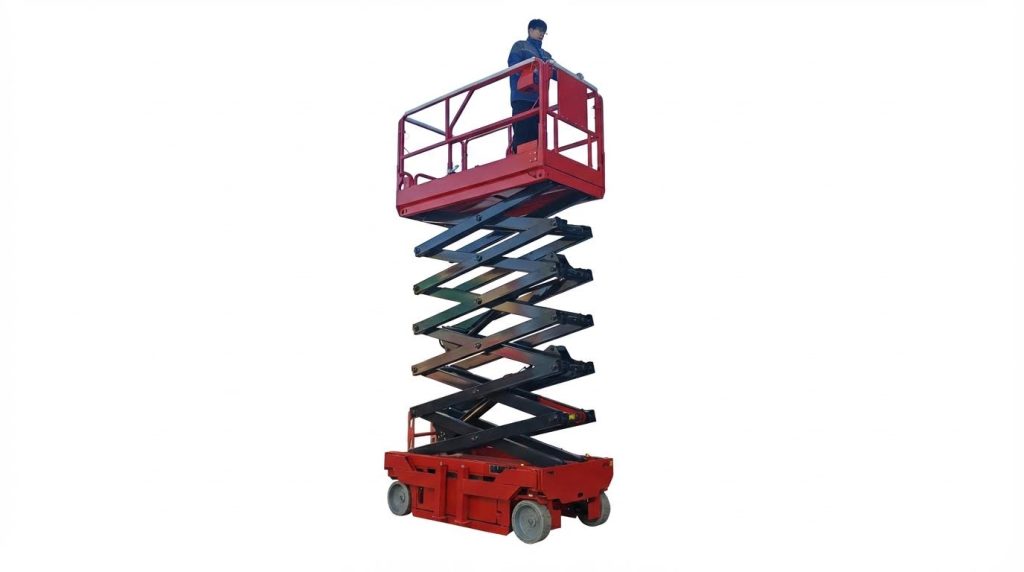
Fundamentals Of Scissor Lift Platforms And Extensions
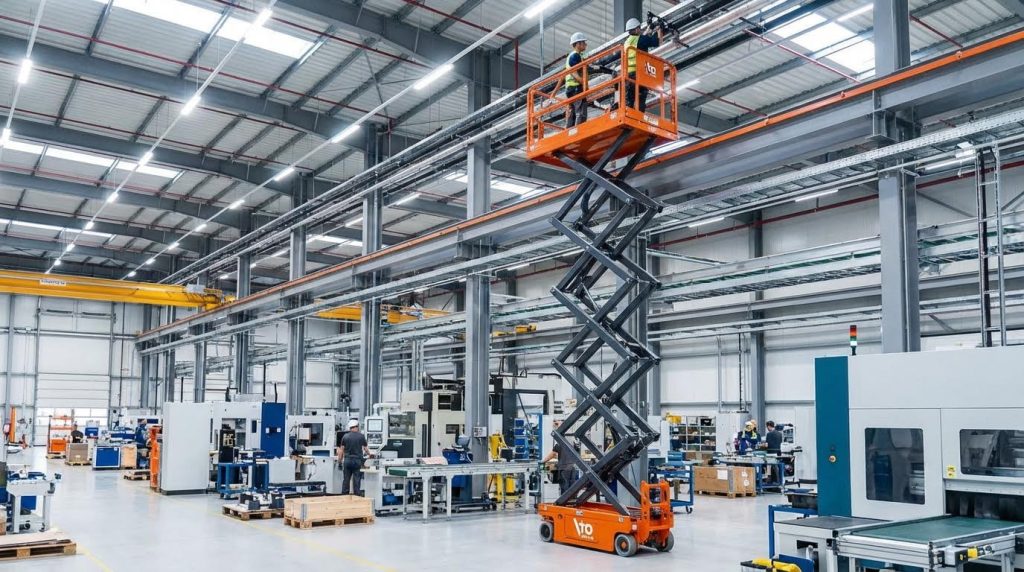
Scissor lift fundamentals explain how the main deck and extensions are built, move, and stay stable so you know exactly how to extend scissor platform surfaces without breaching capacity, geometry, or regulatory limits.
At this level you are not yet pushing buttons; you are understanding why the platform, extension deck, guardrails, and structure are shaped and rated the way they are, and which rules govern their safe use.
Platform geometry and extension types
Platform geometry and extension types define how far you can safely reach out from the chassis and how to extend scissor platform lift decks without overloading or destabilizing the machine.
Most modern scissor lifts use a rectangular work deck with one or more integrated extensions that slide or fold out to increase reach beyond the base footprint.
| Feature | Typical Range / Option | Engineering Effect | Operational Impact |
|---|---|---|---|
| Main platform length | Approx. 1.8–3.0 m | Defines basic work envelope over chassis | Enough space for 2–3 people plus tools on indoor units |
| Main platform width | Approx. 0.8–1.8 m | Controls stability across the narrow axis | Narrow decks fit aisles; wider decks give more side‑to‑side reach |
| Single slide‑out extension stroke | ≈0.9–1.5 m added length | Creates a cantilever load on scissor pack and chassis | Lets you reach over obstacles without moving base |
| Large multi‑section extensions | Up to ≈6.0 m total platform length increase (reference) | Big increase in overturning moment and deflection | Suited to large façades; usually on heavy rough‑terrain models |
| Extension deck capacity | ≈119–225 kg where main deck may be up to ≈750 kg (reference) | Lower rating to limit bending and tip‑over risk | Often only 1 person plus light tools allowed on extension |
| Guardrail height | ≈1,070 mm (42 in) top rail, ≈530 mm (21 in) mid‑rail (reference) | Prevents falls and large object ejection | Operators must stay inside rails, never stand or climb on them |
From a mechanics standpoint, every millimeter you extend the deck moves the live load further from the scissor stack and chassis, increasing bending moments and reducing stability margins.
Manufacturers therefore design extension mechanisms and capacities very conservatively, and you must respect the separate load rating plate for the extension, not just the main platform rating.
- Slide‑out extension: Deck section rolls forward on rollers or sliders – Simple, fast way to extend reach with linear motion and clear floor surface.
- Flip‑out (fold‑out) extension: Section hinges up and out from the main deck – Good where stowed length must remain short but extra reach is occasionally needed.
- Dual extensions: Extensions at both ends of the platform – Gives two work faces without moving the base machine, saving time in long bays.
- Fixed long deck: Longer main platform without moving sections – Fewer moving parts but requires more aisle space and turning radius.
To correctly apply how to extend aerial platform decks in the field, you must understand that extension loads are treated as concentrated, eccentric loads acting at the far edge, not evenly spread across the whole platform.
This is why extension ratings are usually much lower and why operators must avoid piling materials at the very outer edge of the deck.
How extension geometry changes load paths
When you extend the deck, the load path shifts from nearly vertical compression through the scissors to a combined compression and bending case.
The cantilevered section creates a moment at the platform–scissor interface, which the upper frame, pins, and welds must resist; this is what the lower extension capacity is protecting.
💡 Field Engineer’s Note: On long extensions, even a few extra boards or a small pallet of tiles can push the cantilever well past its intended bending moment. Always read the separate extension capacity plate and mentally add a 20–30% personal safety margin instead of working right on the limit.
Regulatory framework and safety standards
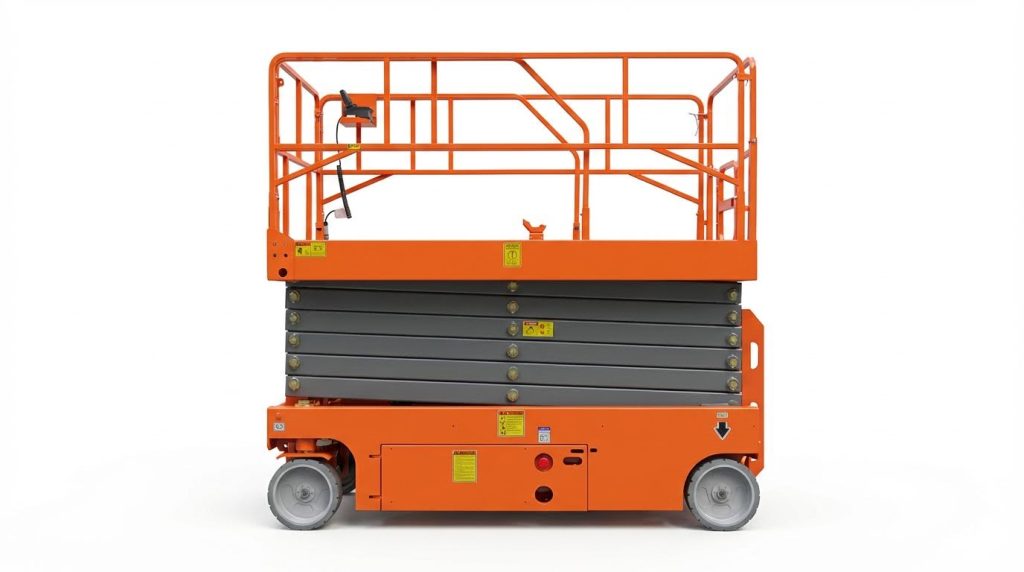
The regulatory framework and safety standards for scissor lifts set mandatory rules on design, guardrails, load ratings, and operation so that when you extend a scissor platform lift you still maintain fall protection and stability.
These rules tie platform geometry and extension behaviour to specific limits on wind, ground conditions, guardrail dimensions, electrical clearance, and operator training.
- Guardrail and fall protection rules: Platforms must have a complete guardrail system with top rail around 1,070 mm and mid‑rail around 530 mm above the deck (reference) – You stand on the deck only, never on rails, even when using an extension.
- Load rating enforcement: Regulations require that the total weight on the work platform never exceeds the manufacturer’s rating (reference) – This includes personnel, tools, and materials on both the main deck and any extension.
- Firm, level support surface: Scissor lifts must operate only on firm, level ground free of holes, slopes, bumps, or debris (reference) – This becomes even more critical when an extension is out and the center of gravity has shifted.
- Wind and weather limits: Outdoor‑rated units are typically limited to wind speeds below about 28 mph (≈12.5 m/s) (reference) – Extended platforms catch more wind, so you must be stricter with this limit when the deck is out.
- Electrical clearance: A minimum approach distance of at least about 3 m (10 ft) from power lines and other live electrical sources is required (reference) – Extensions change the reach envelope, so you must re‑check clearances after extending.
- Stability and movement rules: Many instructions and standards restrict or prohibit driving while elevated, especially with an extension deployed (reference) – Dynamic forces on an extended deck can quickly erode stability margins.
- Operator training: Operators must be trained on load limits, positioning hazards, and safety systems before use (reference) – Training must explicitly cover how to extend scissor lift platform decks and interpret the extension capacity labels.
Design standards such as EN 280 and ANSI A92 (referenced by manufacturers) require that stability is verified in worst‑case conditions, including maximum extension, rated load on the extension, and defined wind speeds (reference).
They also control allowable platform deflection so that, even with someone standing at the outer edge of an extension, guardrail heights remain compliant and trip hazards at joints are limited (reference).
Where inspections fit into the rules
Regulators and manufacturers require a pre‑operation inspection before extending or raising the platform.
This includes checking structural members, guardrails, decals, hydraulic hoses, and safety devices such as tilt alarms and emergency stops (reference), ensuring the lift is fit for safe extension.
💡 Field Engineer’s Note: When you deploy an extension, you effectively redraw the machine’s “safety envelope.” Always pause and re‑check wind, ground, and overhead clearances after extending. The conditions that were safe with a retracted deck can become non‑compliant the moment you slide that platform out.
Engineering Limits: Capacity, Stability, And Safe Operation
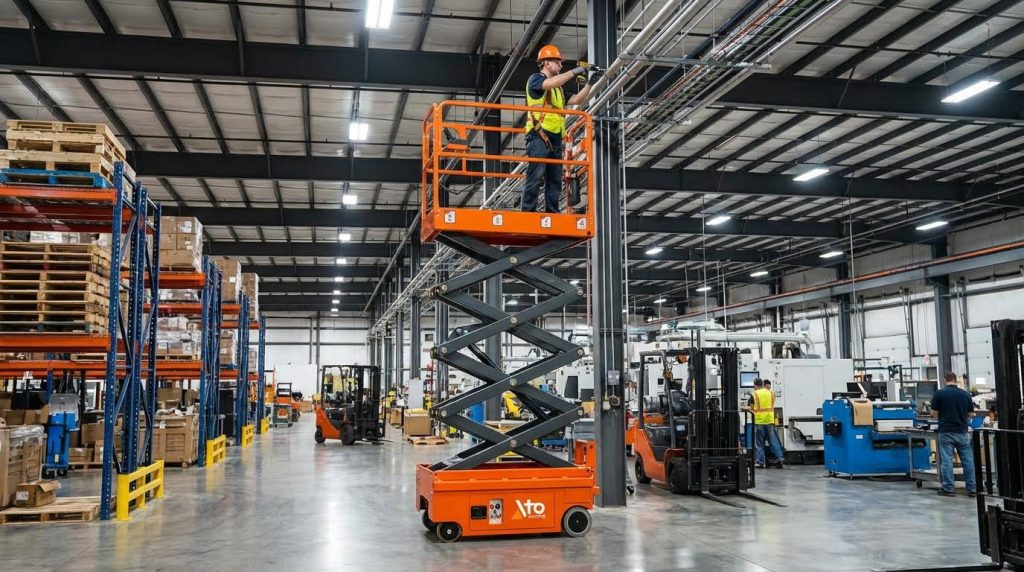
Engineering limits for scissor platform extensions are defined by rated load, stability against tip-over, and strict pre-use inspection so you know exactly how to extend scissor lift platform safely and within design margins.
When you plan how to extend scissor lift platform for a task, you must treat capacity, stability, and inspection as one system. If any of the three is weak, the whole setup becomes unsafe, even if the extension “physically fits.”
- Capacity: Main deck and extension each have their own rating – protects structure and hydraulics from overload.
- Stability: Extension shifts the center of gravity outward – controls tip-over risk, especially at height.
- Inspection: Daily checks catch cracks, leaks, and failed safety devices – prevents sudden failures while elevated.
💡 Field Engineer’s Note: If you are close to capacity with the extension out, treat any slope, pothole, or sudden steering input as a potential tip-over trigger. Build in at least a 20–30% “human error” margin under the nameplate rating.
Load ratings for main decks and extensions
Load ratings for main decks and extensions define how much weight you can carry on each part of the platform without overstressing the structure or destabilizing the lift.
The first rule for how to extend scissor lift platform safely is to know that the extension almost always has a lower rating than the main deck. The nameplate rating for the entire platform never “upgrades” the extension rating.
| Platform Area | Typical Rated Load Range | Reason For Difference | Operational Impact |
|---|---|---|---|
| Main platform (base deck) | Up to about 750 kg total load (example reference) | Load is closer to scissor stack and chassis; lower bending moment. | Can carry several people plus materials if weight is centered and within rating. |
| Extension deck | About 119–225 kg typical range (example reference) | Cantilevered section creates higher bending and deflection at outer edge. | Often safe for one person with light tools or materials, not for multiple workers or heavy pallets. |
| Total platform system | Manufacturer’s overall platform rating (people + tools + materials) must never be exceeded | Protects structural members, pins, cylinders, and tires from overload. | Plan headcount and material drops so you stay within both total and extension ratings. |
- Separate ratings: Treat main deck and extension as separate zones – you cannot “borrow” capacity from the base deck to overload the extension.
- Dynamic loads: Walking, pushing, or dropping materials adds impact – keep static weight well below the posted limit.
- Standards compliance: Ratings are validated under standards like EN 280 or ANSI A92 – do not improvise extra supports or jacks under the extension.
Regulators state that the platform load must never exceed the manufacturer’s rating, because overloading directly reduces stability and increases tip-over likelihood. This applies to both the base deck and any extended section.
How to calculate safe working load when using an extension
Add the mass of every person, tool, and material on the main deck and on the extension. Compare:
- Main deck total vs. main deck rating.
- Extension area total vs. extension rating.
- Combined total vs. overall platform rating.
You must be within all three limits at the same time.
Center of gravity shift and tip-over risk
Center of gravity shift and tip-over risk describe how extending the deck moves the combined mass outward, which reduces the stability margin and makes the lift more sensitive to slopes, wind, and impact.
When you decide how to extend scissor lift platform for reach, remember you are also extending the overturning lever arm. The scissor stack and chassis were designed for a specific envelope of center-of-gravity (COG) positions; working outside that envelope is what causes tip-overs.
- COG moves outward: Every kilogram on the extension acts at a longer lever arm – overturning moment grows faster than the added weight alone suggests.
- Height multiplies risk: The higher the platform, the more sensitive it becomes to small COG shifts – minor movements can swing the COG outside the safe base polygon.
- Surface quality: Regulations require firm, level ground for stability – holes, bumps, and slopes reduce the effective support area and increase tip-over risk.
Stability also depends on environmental limits. Outdoor-rated scissor lifts are typically limited to wind speeds below about 28 mph (≈12.5 m/s); beyond this, side loads on the extended platform can drive the COG past the tipping line, especially with the deck extended and loaded. OSHA highlights wind and uneven ground as core tip-over drivers.
- Driving while elevated: Some machines may be driven when raised, but only on flat, clean floors and at low speed – driving with the extension out multiplies tipping forces and is a common cause of incidents.
- Struck-by hazards: Keeping the lift from being hit by other vehicles is essential – a side impact on a fully extended, loaded deck can instantly push the COG past the base and cause overturn.
Practical COG control tips when using extensions
To keep the COG inside the safe zone when the extension is out:
- Keep the heaviest materials closer to the main deck, not at the extreme edge.
- Limit the number of people allowed to stand on the extension at once.
- Avoid sudden movements, pushing, or pulling on structures from the extended edge.
- Never use forklifts, cranes, or other equipment to “help” raise or pull the platform into position since this bypasses the designed load path.
Pre-use inspection and functional testing
Pre-use inspection and functional testing verify that the structure, hydraulics, controls, and safety devices are intact before you extend or raise the platform.
Before deciding how to extend scissor lift platform for a job, you must first confirm that the lift is mechanically sound. A cracked weld under the extension track or a leaking cylinder can turn a routine task into a catastrophic failure once you are at 10 m height.
- Walkaround structural check: Inspect scissor arms, welds, pins, guardrails, and the extension mechanism for cracks, deformation, or corrosion – these are early signs of fatigue that can grow under load.
- Hydraulic and power systems: Check hoses, cylinders, and fittings for leaks or damage; confirm fluid levels and battery charge – leaks can cause sudden sinking or uncontrolled descent if not addressed.
- Safety devices: Verify emergency stop, tilt alarm, brakes, steering, limit switches, and guardrail gates – OSHA requires guardrails and gates to be functional before use to prevent falls and runaways.
- Step 1: Position and secure – park on firm, level ground, set parking brake, and engage chocks or stabilizers to ensure baseline stability before any elevation.
- Step 2: Control familiarization – read all labels at ground and platform controls, identify lift, drive, steer, and emergency functions so there is no confusion under stress during operation.
- Step 3: Function test at low height – raise and lower a few centimetres, steer and drive slowly on level ground to confirm smooth hydraulic response and correct control orientation before going higher.
- Step 4: Extension test unloaded – extend and retract the deck with no personnel or materials to ensure the rollers, locks, and limit switches operate properly.
- Step 5: Verify labels and ratings – confirm that capacity plates and warning labels are legible so operators can see the separate ratings for the main deck and extension before loading.
Regulatory guidance stresses that operators must be trained to inspect safety features, including guardrails and safety chains, before each use. If any part of the guardrail system is damaged, the lift must be removed from service until repaired by a qualified technician.
Daily vs. scheduled vs. predictive maintenance
Daily checks focus on obvious issues: tires, leaks, guardrail latches, alarms, and emergency stops. Scheduled maintenance follows the manufacturer’s intervals for deeper inspection of welds, pins, rollers, limit switches, and relief valves. Predictive maintenance uses usage hours, fault codes, and inspection data to adjust service intervals and prevent failures before they occur, especially on heavily used lifts with frequent platform extension cycles.
Practical Use Cases And Selection Of Deck Extensions
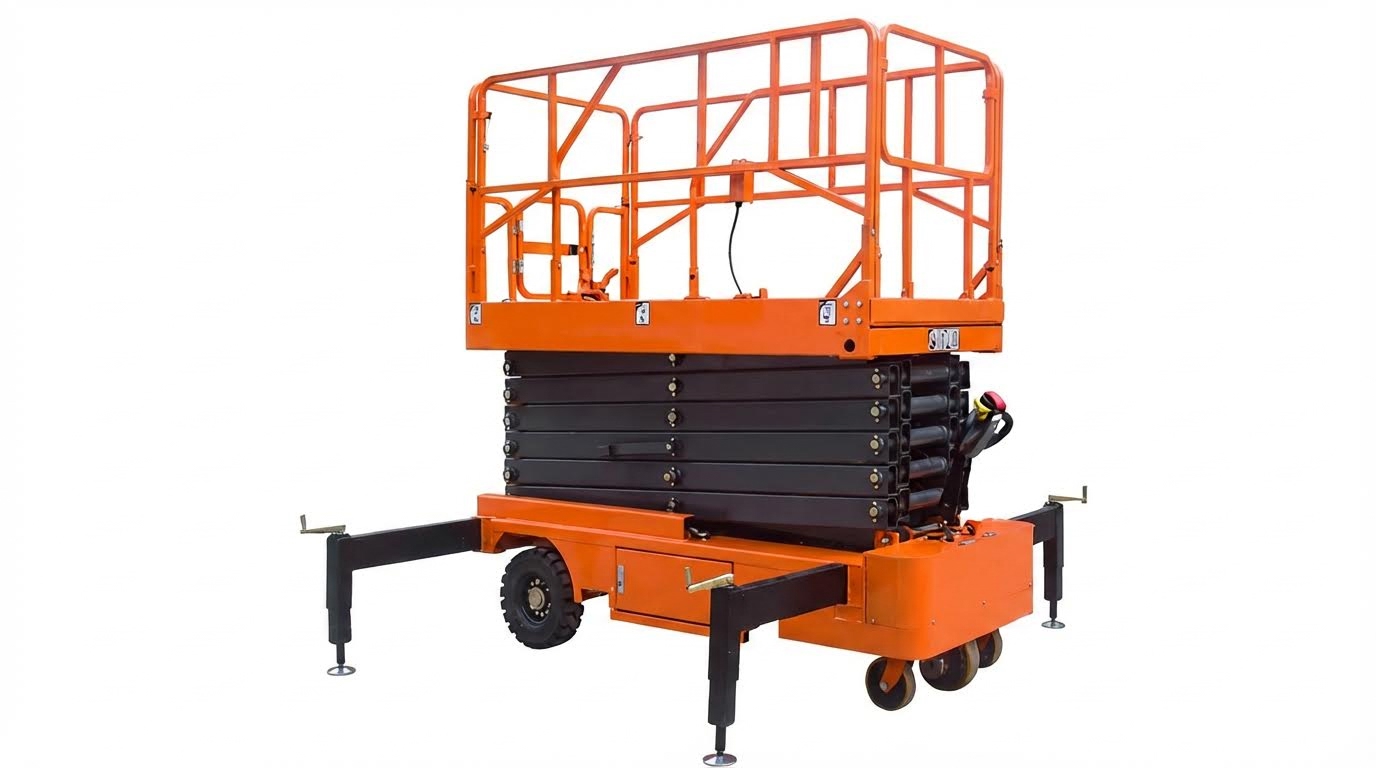
This section explains how to extend scissor platform decks safely in real jobs by matching extension type, capacity, and site controls to the task so you avoid overloads, instability, and workflow bottlenecks.
When planning how to extend scissor platform lift decks, you must think about task geometry, people, tools, and site constraints together. Platform length, extension stroke, and reduced extension capacity all affect stability, reach, and how many trips you need.
- Define the task envelope: Measure height, horizontal reach, and working width – So the extended deck actually reaches the work without leaning or overreaching.
- Confirm extension capacity: Compare people + tools + materials to the lower extension rating – Prevents overload and loss of stability at the cantilever.
- Check surface and environment: Verify level, firm ground and wind limits – Maintains stability when the center of gravity shifts outward.
- Integrate with site traffic: Plan where the base will sit and how others move around it – Reduces collision and crushing risk.
💡 Field Engineer’s Note: On tight sites, crews often “cheat” by stacking materials on the extended edge. That small extra load at 1.0–1.5 m overhang can consume the entire stability margin, especially in wind or if someone leans hard on the guardrail.
Matching platform size and extension to the task
Choosing how to extend scissor platform lift decks starts with matching platform length, width, and extension stroke to the work area so operators can stay inside the guardrails and within rated capacity.
Platform extensions typically increase platform length by about 0.9–6.0 m, using slide-out or flip-out mechanisms that create a cantilever beyond the main chassis. This extra reach lets you work over obstacles such as conveyor lines, parapets, or mezzanine handrails without moving the base machine every few minutes. However, the extension deck almost always has a lower load rating than the main platform because of increased bending moments and deflection at the overhang. Typical examples show main platforms rated around 750 kg while extensions are limited to about 119–225 kg. That difference must drive how you assign people and tools.
| Use Case | Typical Platform Width × Length (m) | Extension Type & Stroke (m) | Likely Extension Rating | Operational Impact / Best For… |
|---|---|---|---|---|
| Indoor maintenance in narrow aisles | 0.8–1.0 × 2.0–2.5 | Single slide-out, 0.9–1.2 | Lower than main deck (often ~120–200 kg) | Reach over racks or machinery without moving base; keep 1 person + light tools on extension. |
| Facade or cladding work | 1.2–1.8 × 2.5–3.5 | Single long slide-out, up to ~1.5–2.0 | Moderate (e.g. 150–225 kg) | Work over edge beams or parapets; good for 2 workers alternating between main deck and extension. |
| Large construction decks | 1.8–2.4 × 3.5–4.5 | Dual extensions, front and rear, 1.0–1.5 each | Each extension lower than main deck | Two work faces without moving base; ideal for repetitive tasks along facades or under soffits. |
| Material transfer from mezzanine | 1.0–1.5 × 2.5–3.0 | Slide-out with roller top | Strictly limited for load at edge | Roller tops allow sliding boxes/panels across guardrail line; reduces manual lifting strain. |
For each job, you should first map the “work envelope”: vertical height, horizontal offset, and width of the work face. Then you pick a base platform length that covers most of that envelope, and an extension stroke that covers the rest without forcing workers to lean outside guardrails. Longer extensions help avoid frequent base repositioning but also increase overturning moments, so you must stay well inside the rated load and wind limits.
- Short, narrow platforms: Best in congested indoor areas and narrow aisles – Less side clearance needed, easier maneuvering.
- Longer platforms with modest extension: Best where you can park close to the work – Good stability with enough reach for most maintenance.
- Dual extensions: Best on large, open slabs – Two working edges without rotating or relocating the base.
How to quickly size a platform and extension in the field
Measure the horizontal distance from the closest safe base position to the work face. Subtract the base platform length to estimate the extension stroke you need. If that required stroke is close to the maximum extension, either move the base closer or choose a larger platform so you are not operating at the mechanical and stability limit all day.
Because extension decks carry lower loads, “who stands where” matters. One common safe pattern is to keep the heaviest person and any bulk materials on the main deck, and allow only one person plus light tools on the extension. This respects the lower extension rating while still using the reach benefit.
- Mark zones on the floor: Tape or paint “extension only” zones – Visual reminder to keep heavy items back on the main deck.
- Tool storage near the mast: Store heavy toolboxes close to the center – Reduces bending moment at the overhang.
- Use roller tops for transfer: Slide materials instead of carrying – Cuts manual handling and keeps people stable.
Integrating extensions with site safety and workflows
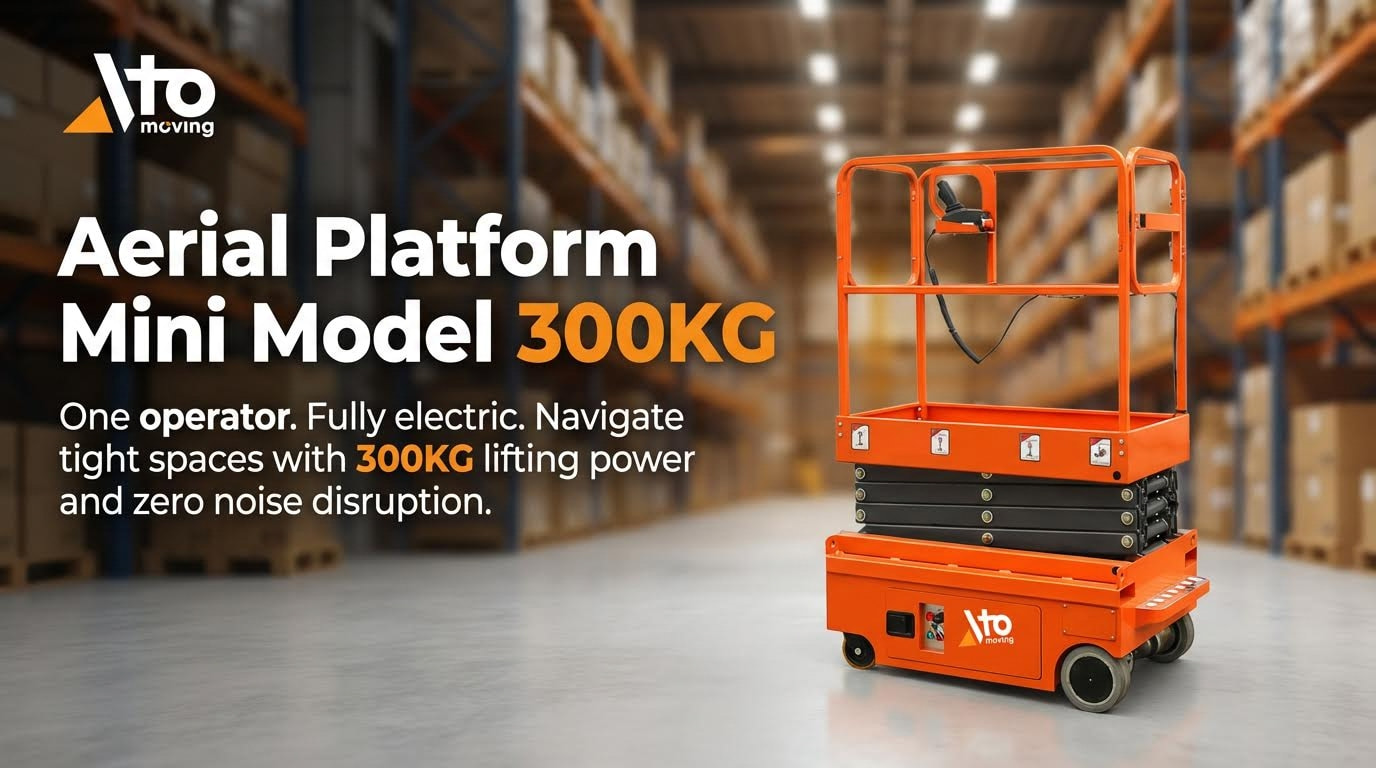
Using scissor lift extensions efficiently means integrating how to extend aerial platform decks with site traffic control, fall protection, and maintenance routines so stability and guardrail protection are never compromised.
When you extend the deck, you change the machine’s footprint in the air but not on the ground, so the center of gravity shifts outward and stability margins shrink. Manufacturers reinforce scissor arms, pivot pins, and chassis to handle these higher overturning moments, and they verify stability in worst-case conditions such as maximum extension, rated load, and wind. Designers also control platform deflection so guardrail height and toe-board effectiveness stay within standards. But on site, stability still depends on how you park the machine, route people and vehicles, and enforce load limits.
| Aspect | Key Practice When Using Extensions | Operational Impact |
|---|---|---|
| Ground conditions | Use firm, level surfaces free of holes, debris, and slopes. | Prevents tilting that combines with the outward load shift and increases tip-over risk. |
| Wind and weather | Respect outdoor wind limits (commonly up to about 12.5 m/s or 28 mph). | Reduces sway and dynamic loading on extended decks. |
| Traffic control | Barrier off the area around the base; manage vehicle routes. | Prevents collisions that can destabilize a fully extended platform. |
| Fall protection | Ensure guardrails and gates are intact and latched before extending. | Maintains compliant fall protection as people move toward the edge. |
| Load management | Never exceed the lower extension rating; keep loads centered. | Preserves stability margins and keeps deflection within design limits. |
Guardrails are the primary fall protection on scissor lifts, and they must be in place and in good condition before you extend the platform. Requirements include a top rail height around 1.07 m above the deck and an intermediate rail to prevent large objects from passing through. Operators should only use the designated gate for entry and exit and never climb on or over the guardrails. If any guardrail component is damaged or loose, the lift should be removed from service until repaired. This is especially critical when the deck is extended, because workers tend to stand closer to the edge and may lean against the rails.
- Pre-use guardrail check: Walk the perimeter, shake each post, and test the gate latch – Ensures the barrier will actually hold when someone leans or stumbles.
- Stay off the rails: No standing or using rails as ladder rungs – Prevents falls and keeps the center of mass inside the guardrail footprint.
- Keep work within easy reach: Position the base and extension so tasks are within arm’s length – Avoids dangerous overreaching outside the guardrail.
Positioning the extended platform relative to overhead obstructions and power lines is another critical piece of workflow planning. Operators must maintain at least about 3.0 m clearance from electrical power sources and avoid passing under or near fixed objects where a moving scissor lift could trap the platform. Training should cover how to spot crushing and electrocution hazards when moving or extending the platform near fixed structures or vehicles. On busy sites, you should integrate scissor lift movements into the overall traffic management plan so no forklifts, trucks, or other MEWPs pass under or near an extended deck.
- Define a “no-go” zone: Use cones or barriers around the lift base – Stops vehicles from striking the chassis while the deck is extended.
- Plan extension direction: Extend away from live traffic lanes and overhead hazards – Reduces exposure to crushing and contact risks.
- Limit elevated travel: Only drive while elevated if the manufacturer permits and surface is flat and clear – Minimizes dynamic loads on the extended deck.
💡 Field Engineer’s Note: When you schedule work, group tasks by location and height so the crew can extend the platform once and work a full bay before retracting and relocating. This cuts the number of extension/retraction cycles, reduces congestion around the base, and makes it easier to keep barriers and exclusion zones in place.
Finally, integrating extensions into daily and scheduled maintenance keeps the mechanisms safe and smooth. Daily checks should include scanning for oil leaks, verifying guardrails and gates latch properly, and testing emergency stops and alarms. Scheduled maintenance at manufacturer intervals should cover welds, pins, rollers, limit switches, hydraulic fittings, and the extension slide or hinge components. Regular inspections of hydraulic, electrical, and structural parts are essential for long-term safe operation. On fleets with telematics, usage hours and fault codes can help you plan inspections around actual duty cycles instead of just calendar time.
- Lubricate slides and pins: Keep extension rollers and hinges clean and lubricated – Prevents jerky motion that can unbalance workers.
- Inspect for deformation: Look for bent rails, cracked welds, or sagging at the extension joint – Early signs that the deck has been overloaded.
- Use data for planning: Review usage and alarms monthly – Targets inspections on the hardest-used machines and extensions.
Final Thoughts On Safely Extending Scissor Lift Platforms
Safe use of scissor lift extensions depends on one simple idea: geometry, capacity, and condition always work together. Extension decks change load paths and move the center of gravity outward. This reduces stability and raises the stakes on every mistake. When you respect the lower extension rating, you protect the structure from overload and keep deflection within design limits, so guardrails still give full fall protection at the edge.
Regulatory rules turn these engineering limits into clear on-site actions. You must work on firm, level ground, stay within platform and extension ratings, control wind and traffic, and maintain electrical clearance. Daily inspection then closes the loop. Crews check welds, hydraulics, guardrails, and safety devices before they extend or elevate, so hidden defects do not appear at full height.
The best practice for operations teams is to treat extension use as a planned system, not a last-minute reach. Choose the right platform and stroke for the task, assign people and materials by zone, and lock these rules into training and permits. When you apply these principles with Atomoving equipment, extensions become a controlled engineering tool, not a source of surprise risk.
Frequently Asked Questions
How to Extend the Platform on a Scissor Lift?
To extend the platform on a scissor lift, ensure the equipment is on a flat, stable surface. Use the control panel to raise or lower the platform safely. Avoid overextending the platform beyond its designed limits, as this can affect stability. For specific instructions, consult the manufacturer’s manual Scissor Lift Guide.
Can a Scissor Lift Extend Vertically and Horizontally?
Most scissor lifts are designed to extend vertically only, using a straight-up-and-down motion. Horizontal extension is typically not possible unless the model includes an additional feature like a telescopic or articulating boom. Always check the specifications of your equipment before use.
What Safety Precautions Should Be Taken When Extending a Scissor Lift?
Before extending a scissor lift, inspect the surrounding area for hazards such as overhead power lines or uneven ground. Ensure the load is centered to prevent tipping. High winds and bad weather conditions should also be avoided. For more safety tips, refer to Scissor Lift Safety Tips.