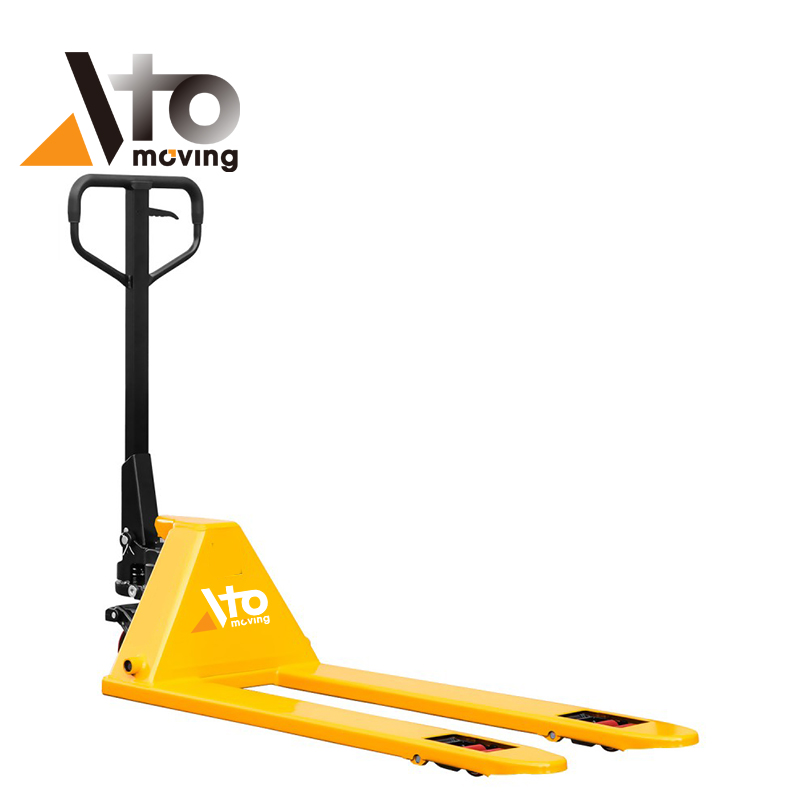
If you’re asking “why won’t my pallet jack go down,” this guide explains the hydraulic, mechanical, and environmental reasons behind it. You’ll learn how the lowering circuit really works, how to diagnose faults step by step, and when to repair versus replace. We focus on measurable checks, safe procedures, and maintenance habits that keep your pallet jacks lowering smoothly and safely in real-world warehouse conditions.
How A Pallet Jack Lowers And Typical Failure Modes
A pallet jack lowers by opening a small hydraulic valve that lets oil flow from the lift cylinder back to the reservoir in a controlled way. When that flow is blocked or distorted, operators start asking “why won’t my pallet jack go down” because the forks stay up, creep down in jerks, or only move with heavy force on the handle.
At a system level, a manual pallet jack combines a compact hydraulic power unit with a simple mechanical frame. The lowering function depends on clean oil, a free-moving piston rod, and a correctly adjusted control linkage that fully opens the release valve when you select the “lower” position. Any problem that stops pressure from bleeding off the lift cylinder will keep the forks raised even with the lever pulled to “down”.
Hydraulic lowering circuit fundamentals
The hydraulic lowering circuit is a controlled leak path that dumps cylinder pressure back into the reservoir so the forks can descend safely under load.
When you move the control handle to “lower”, an internal valve opens and connects the high-pressure side of the lift cylinder to the low-pressure oil tank. The load on the forks pushes the piston down, forcing oil through this valve at a metered rate so the descent speed stays predictable and within safety limits.
In a healthy circuit, the oil level in the reservoir sits a short distance below the top, and the oil appears clear and uniform. Low or contaminated hydraulic oil reduces effective stroke volume and introduces air pockets into the pump inlet, which disrupts both lifting and lowering behavior. Technicians typically expect the oil level to sit roughly 25–40 mm below the reservoir top, and any dark, milky, or particle-laden appearance signals contamination that demands a change and flush.
Air trapped in the hydraulic system also affects valve and cylinder behavior, causing spongy or unresponsive lowering. With the lever in the “LOWER” position, cycling the handle several times helps push air back into the reservoir until only solid oil returns, restoring a stable, predictable descent path. Bleeding air by pumping the handle in the lower position until a steady stream of oil appears is a standard procedure to recover consistent lowering performance.
💡 Field Engineer’s Note: In cold rooms or winter loading docks, thickened oil can make the jack feel “stuck up” even when the valve opens. If the pallet jack has been stored raised, a thin rust film on the piston rod plus cold, viscous oil can combine to hold the ram in place until you cycle it several times to warm and re-lubricate the seals.
How the lowering valve actually meters speed
Inside the pump block, the lowering valve usually has a small orifice or tapered seat. When you pull the handle to “lower”, the linkage lifts a pin or rotates a cam that cracks this valve open. The orifice size and spring preload control how fast oil can escape, which keeps descent speed within safe limits even under a near‑rated load.
Control handle, linkage, and valve interaction
The control handle and linkage translate your hand movement into precise motion of the lowering valve; if that motion is incomplete or misaligned, the valve never opens fully and the forks stay up.
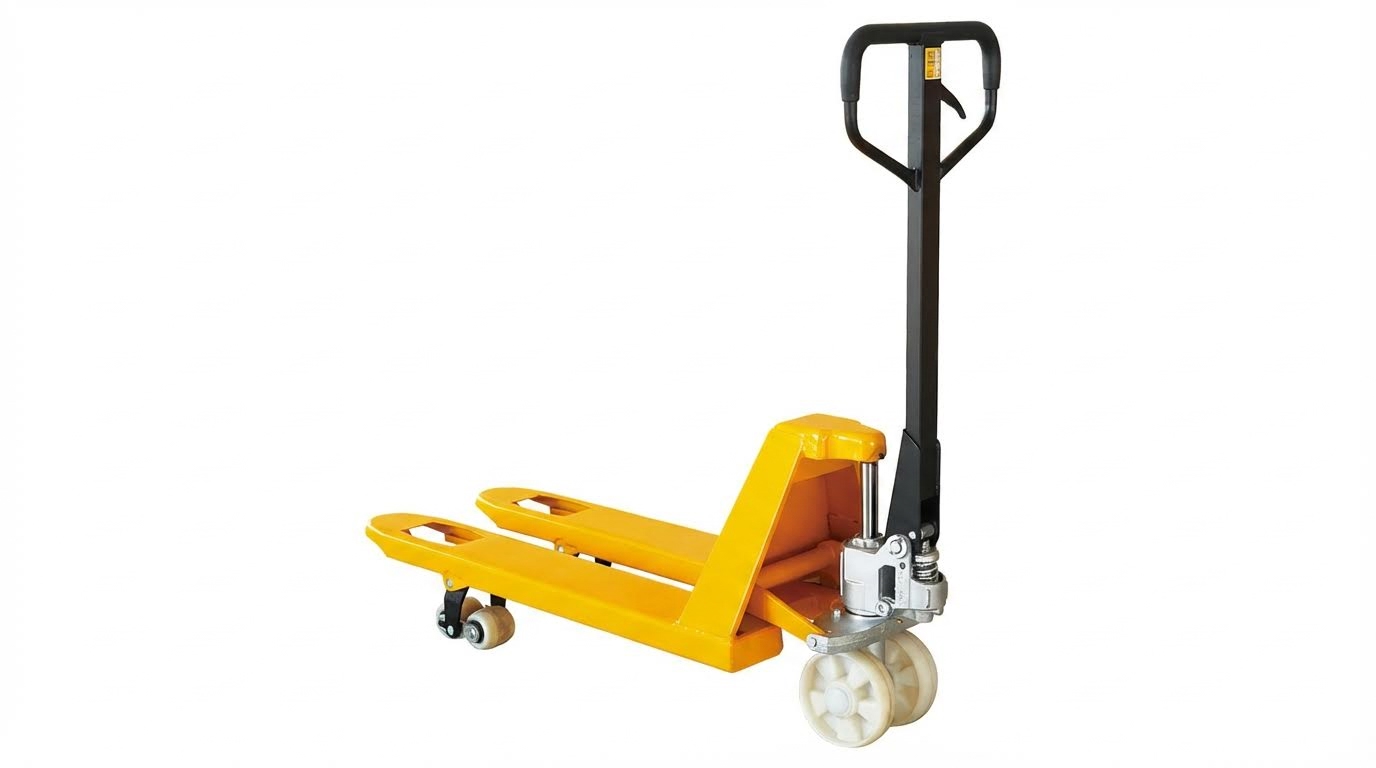
Manual pallet jacks rely on a three-position handle: lift, neutral, and lower. Internally, a series of pins, rods, and cams connect that handle to the small release valve in the hydraulic unit. When you select “lower”, the linkage must move the valve arm through its full travel to create an open path back to the reservoir.
Handle / Linkage Condition
Root Cause
Symptom (Why won’t my pallet jack go down?)
Best For… (Quick Field Diagnosis)
Misadjusted lowering rod or screw
Incorrect setting after repair or wear in joints
Handle moves to “lower” but forks do not move
Jacks that recently had parts replaced or serviced
Insufficient handle travel
Bent handle, interference, or debris at pivot
Forks begin to lower only at extreme handle angle
Units with visible damage or tight turning impacts
Clear three-position feel: The handle should click or settle positively into lift, neutral, and lower – Ambiguous positions often signal worn or misadjusted linkage.
Direct valve movement: Watch the valve arm while moving the handle – Any lag, slack, or partial motion points to linkage wear or missing hardware.
Even resistance: Resistance should feel smooth, not notchy – Sharp jumps can indicate corrosion or debris at pivots or the valve stem.
Quick field test for linkage issues
Unload the jack and safely chock the wheels. While a second person moves the handle between neutral and lower, watch or feel the valve arm on the pump block. If the arm barely moves or stops short of its end position, the issue is mechanical linkage, not the hydraulic core.
💡 Field Engineer’s Note: Many “mystery” no‑lower complaints trace back to bent handles from pushing sideways on heavy loads. The geometry change is small, but on short-stroke valve linkages a 1–2 mm loss at the cam can be enough to keep the valve from unseating, so always inspect for subtle bends at the handle base.
Safety checks before any troubleshooting
Safety checks before troubleshooting ensure the pallet jack, load, and work area are stable so a sudden release or drop does not injure the technician.
Any time you investigate why a pallet jack will not go down, you must assume the forks could suddenly drop once you free a jam or open the valve. That means controlling the load, stabilizing the jack, and verifying basic structural integrity before you touch the hydraulic or linkage system.
Isolate energy and stabilize: Remove the load whenever possible and chock the wheels – This prevents unexpected movement if the forks suddenly descend.
Inspect structure first: Check the frame, handle, forks, and wheels for deformation or cracks – Bent forks or twisted frames can bind and then release unpredictably.
Check for visible leaks: Look for oil around the pump housing, ram, and seals – Active leaks indicate weakened components that might fail under shock.
Confirm control travel: Ensure the control lever moves through lift, neutral, and lower without binding – A stuck handle can snap free suddenly when forced.
Clear mechanical obstructions: Remove debris under forks and around wheels before opening valves – What feels like a hydraulic fault is often a simple mechanical jam.
If you see deep cracks in the fork heel, a severely twisted frame, or oil spraying under pressure from any hose or seal, stop work immediately. Tag the pallet jack out of service and follow your facility’s lockout and reporting procedure. Continuing to troubleshoot a structurally compromised jack risks sudden collapse under load.
💡 Field Engineer’s Note: In busy docks, operators sometimes wedge blocks under raised forks to “hold” a stuck load. Before touching the hydraulic system, always remove these makeshift supports with the area clear of people; once you free the valve or jam, the forks can drop the full stroke in under a second if the load is still present.
Systematic Troubleshooting: Jack Won’t Go Down
This section gives a step-by-step, field‑tested process to answer “why won’t my manual pallet jack go down” and to separate simple external issues from deeper hydraulic faults.
Goal: Quickly restore safe lowering – while avoiding unnecessary pump rebuilds or full jack replacement.
Method: Check handle, linkage, obstructions, oil, then internal components – moving from easiest to hardest faults.
Safety First: Always unload and chock before work – lowering faults can release suddenly once freed.
💡 Field Engineer’s Note: In real warehouses, over 50% of “stuck up” manual pallet jacks I saw were either in the wrong handle position or mechanically jammed, not hydraulically failed. Always rule out the simple, external causes before touching the hydraulic unit.
Verifying handle positions and valve adjustment
The first step when asking “why won’t my manual pallet jack go down” is to confirm the handle actually moves the lowering valve through its full travel.
Three‑position check: Verify clear LIFT, NEUTRAL, and LOWER detents – uncertain positions often mean the lower valve never opens.
Linkage motion: Watch the cam/rod at the pump while moving to LOWER – you must see a firm, full stroke on the valve arm.
Free movement: Feel for binding, rust, or play in pins and joints – lost motion means the handle moves but the valve does not.
Return springs: Ensure springs snap the handle back from LOWER/RAISE to NEUTRAL – weak springs can leave the valve half‑seated.
On most manual pallet jacks, a misaligned operating handle or linkage prevents the lowering cam from fully pulling the valve, so the forks stay up even though the user thinks the jack is in “lower.” Correcting the operating handle setting per the service procedure usually restores the connection between handle and valve, and you should again see three distinct positions with clear valve arm travel. Handle misalignment and valve travel are a common root cause when a pallet jack will lift but not lower.
How to do a quick linkage test without tools
Park the unloaded jack on level ground. Stand to the side, not in front of the forks. Move the handle from NEUTRAL to LOWER while watching the valve arm at the pump block. If the arm barely moves, or moves late in the handle stroke, the linkage needs adjustment before you suspect internal hydraulic faults.
Fine valve adjustment: Slightly tighten the lowering valve screw if the jack will not go down, or loosen if it will not lift – this re‑centers the valve seat.
Functional test: After adjustment, confirm the jack both lifts and lowers smoothly through the full fork stroke under a moderate test load.
Guidance from service sources recommends adjusting the lowering valve if the pallet jack fails to lift or lower, tightening the screw gently for lowering issues and loosening for lifting issues, and always leaving the truck stored unloaded and fully lowered afterward. Proper lowering valve adjustment and storage help prevent recurring “won’t go down” complaints.
Identifying mechanical jams and fork obstructions
If the handle and valve are working, the next likely answer to “why won’t my manual pallet jack go down” is a mechanical obstruction in the forks, wheels, or linkage.
Under‑fork debris: Check for boards, shrink‑wrap, or pallet deck slats jammed under the fork tips – these can physically hold the forks up.
Wheel binding: Inspect load rollers and steer wheels for flat spots, embedded metal, or seized bearings – a locked wheel can mimic a hydraulic lock.
Frame and push‑rod area: Look around push rods, rocker arms, and connecting frames for bent steel or rust build‑up – distortion can jam the lowering motion.
Chains and guides (for powered / high‑lift types): Verify chains, rollers, and mast guides are not kinked or misrouted – binding here can stop forks from coming down.
Typical field issues include debris under the forks, stuck load wheels in closed pallets, rusted wheel frames, or bent parts around the push rod and rocker arm that lock the mechanism and stop the jack from lowering. Clearing obstructions and removing rust often fixes a jack that appears “hydraulically locked” but is actually mechanically jammed, and technicians are advised to inspect for kinks, misrouted chains, or damaged rollers that can jam the fork carrier until the binding is corrected. Mechanical obstructions around wheels and linkage are therefore a critical checkpoint before opening the hydraulic unit.
When worn wheels contribute to “won’t go down” symptoms
Inspection guidelines note that load rollers and steer wheels with more than about 6 mm diameter loss increase rolling resistance and can drag or wedge in pallet entry points. When a wheel jams in a pallet or floor defect, the operator may feel the jack “stuck up,” even though hydraulics are trying to lower. Restoring correct wheel diameter and replacing damaged rollers in matched pairs helps prevent this false hydraulic symptom. Wheel wear limits and tracking behavior highlight the link between roller condition and overall jack movement.
Rust removal and lubrication: Clean rust from wheel frames, rocker pivots, and push‑rod joints, then lubricate – this restores free articulation for lowering.
Structural inspection: If the frame or fork blades are visibly bent, treat this as a structural failure, not a hydraulic fault – replace the jack rather than forcing it down.
💡 Field Engineer’s Note: On older trucks, I often found a “won’t go down” complaint caused by a bent push rod after impact with a dock or rack. Forcing the handle just twisted more steel. Once you see significant deformation in load paths, stop and tag the jack out of service.
Hydraulic oil level, contamination, and air ingress
Once you have ruled out handle issues and mechanical jams, the next major cause of “why won’t my manual pallet jack go down” is incorrect or degraded hydraulic oil and trapped air in the circuit.
Oil level check: Confirm the reservoir oil sits just below the filler opening (typically about 25–40 mm) – too low encourages air ingestion, too high can restrict volume changes.
Oil condition: Look for dark, milky, or particle‑laden fluid – this signals contamination and higher risk of valve sticking.
Air symptoms: Note “spongy” feel, jerky lowering, or delay before forks move – these often indicate air pockets in the pump or cylinder.
Maintenance guidance explains that low hydraulic oil levels reduce available stroke volume and introduce air pockets into the pump inlet, while dark, milky, or particle‑laden oil indicates contamination that requires a complete oil change and system flush to avoid damage to the pump, ram, and O‑rings. Technicians are advised to keep the oil level roughly 25–40 mm below the reservoir top for reliable operation. Oil level and contamination guidelines directly affect both lifting and controlled lowering performance.
Air trapped in the hydraulic system changes how the lowering valve and cylinder respond, often causing unresponsive or jerky action. Recommended bleeding procedures call for unloading the forks and pumping the handle 15–20 strokes to purge air back into the reservoir, then testing with a moderate load within rated capacity; persistent issues after bleeding usually indicate low oil level or internal leakage. Air ingress and bleeding steps are therefore essential when diagnosing inconsistent lowering.
Routine hydraulic oil maintenance interval
Service recommendations state that hydraulic oil levels should be checked about every six months and replaced at least once per year, using specialized hydraulic oil with viscosity around 30 cSt at 40°C (ISO VG32) and a total capacity of approximately 0.4 L in typical manual jacks. Low or contaminated oil can impair both lifting and lowering behavior, so this interval is a preventive defense against “won’t go down” failures. Hydraulic oil maintenance practices outline these checks.
Bleeding procedure (manual jack):
Step 1: Remove all load and place the jack on level floor – prevents sudden movement when air clears.
Step 2: Put the operating lever in the LOWER position – opens the path back to the reservoir.
Step 3: Pump the handle repeatedly (15–20 strokes) – this cycles oil and drives air to the tank.
Step 4: Recheck oil level and top up if needed – air removal often exposes prior low‑oil condition.
Step 5: Test lift and lower with a moderate pallet within capacity – confirms stable, bubble‑free operation.
💡 Field Engineer’s Note: In cold rooms below 0°C, even “correct” oil can thicken enough that lowering feels stuck for the first few cycles. I always ask operators if the problem is worse at shift start; if yes, oil grade and ambient temperature go on the suspect list.
Piston rod, seal wear, and internal bypass faults
If handle, mechanics, and oil are all correct, the remaining reasons “why won’t my manual pallet jack go down” usually involve piston rod condition, seal damage, or internal valve/bore wear.
Piston rod surface: Inspect exposed rod for rust, pitting, or scoring – rough surfaces drag through seals and can seize on retraction.
External leaks: Look for oil weeping around rod seals, valve plugs, and joints – this hints at broader seal degradation inside.
Lowering behavior: Note if forks drop only in small jerks, or not at all – this points to valve seating issues or restricted return flow.
Hydraulic component analyses explain that rust or damage on the exposed piston rod can make the seals drag and prevent smooth retraction, especially after the truck sits for long periods with the forks raised, while worn or cracked seals and internal components can change how the valve seats and how oil returns to the tank, causing the truck to stay up or move only in small jerks. Piston rod corrosion and seal condition are therefore key indicators when external checks do not explain the fault.
Within the pump block, O‑ring and valve seal failures can cause abnormal internal bypass or blockage, disturbing pressure balance and sometimes blocking flow back to the reservoir. After bleeding air and verifying oil level, technicians typically replace damaged O‑rings, clean grooves, and install correctly sized replacements; if leakage or malfunction persists, worn valve seats or ram seals are suspected, which require more extensive repair. Seal replacement procedures and escalation criteria help decide when a pump rebuild is justified.
When internal damage makes replacement more economical
Cost analyses note that if faults localize to simple items like O‑rings or minor seal kits, pump repair usually stays within one to two labor hours. However, when the ram or pump piston shows pitting, scoring, or corrosion, a full hydraulic rebuild becomes complex and total costs often approach the purchase price of a new manual pallet jack, which pushes many operators toward replacement instead of repair. Pump rebuild versus jack replacement guidance is useful once you confirm the fault is deep inside the hydraulic unit.
Seal and rod corrective actions:
Light rust only: Carefully polish the rod and lubricate, then cycle under no load – may restore smooth lowering if seals are intact.
Cracked or hardened seals: Install a correct seal kit and flush oil – prevents further internal bypass or sticking.
Severely pitted rod or scored bore: Plan for cylinder or pump replacement – surface damage will quickly destroy new seals.
💡 Field Engineer’s Note: Any time I saw rust rings on the rod exactly at the “parked” height, I knew the truck had been stored raised for months.
Repair Decisions, TCO, And Preventive Maintenance
This section explains how to decide between repairing or replacing a pallet jack, and how maintenance, environment, and digital tools affect long‑term cost when you ask “why won’t my pallet jack go down?”.
When a pallet jack refuses to lower, the immediate fault is only part of the story; the bigger question is lifecycle cost, downtime risk, and safety exposure over several years. Smart repair decisions and structured preventive maintenance usually save more money than squeezing a few extra months out of a failing jack.
When to rebuild the pump versus replace the jack
Choosing to rebuild the hydraulic pump or replace the entire pallet jack depends on fault severity, labor cost, and remaining structural life.
Most “why won’t my pallet jack go down” cases trace back to the hydraulic unit or the control linkage, so you need a clear decision framework instead of guessing on the shop floor.
Condition / Symptom
Typical Root Cause
Recommended Action
Cost / Time Pattern
Operational Impact
Jack won’t lower, oil clean, no visible damage
Minor valve sticking, linkage misadjustment, O‑ring wear
Minimal downtime; economical if frame and wheels are still sound
Slow, jerky lowering with visible external leaks
Seal failure, contaminated oil, possible internal bypass
Flush oil, replace O‑rings, inspect ram and valve seats
Oil change plus seal kit; labor grows if ram needs polishing
Good option if jack is under 5–7 years and structurally straight
Heavily pitted or scored piston rod / pump piston
Corrosion, long‑term neglect, dirty oil
Full hydraulic rebuild or component replacement
Complex rebuild; total cost often approaches new jack price for manual units
Often better to replace jack for reliability and warranty
Frame twisted, forks bent, wheels badly worn
Overloading, impact damage, long service life
Replace complete jack
Structural repair plus hydraulic work rarely makes economic sense
New jack restores tracking and reduces push/pull force
Frequent repeat failures after prior repairs
Underlying wear throughout hydraulic group and linkage
Replace jack, keep old unit for parts
Chasing intermittent faults burns labor and creates downtime
Improves uptime; simplifies spare parts strategy
Rebuild when: Faults are localized to seals, O‑rings, or simple valve issues – you restore full function with low parts cost.
Replace when: The piston rod, ram, or pump bore show pitting or scoring – rebuild cost approaches new jack value.
Check structure first: Inspect forks, frame, and handle for bending or cracks – no point rebuilding hydraulics on a bent chassis.
Consider age and duty cycle: High‑use jacks in loading docks wear faster – replacement can reduce chronic downtime.
Factor safety and compliance: Visible leaks and erratic lowering raise risk – new equipment may be the safest option.
Quick TCO checklist before you spend on a rebuild
Before approving a hydraulic rebuild, compare: 1) parts + labor vs new jack price, 2) expected remaining life (years or operating hours), 3) cost of one day of downtime, 4) safety or compliance gaps that a new jack would close.
💡 Field Engineer’s Note: If the jack already had one major hydraulic repair and now again “won’t go down,” I usually stop at 60–70% of new‑jack cost. Beyond that, replacement is cheaper than chasing marginal gains on a tired hydraulic group.
Environmental impacts and cold‑weather operation
Environment—especially low temperatures, moisture, and contamination—has a direct impact on whether a pallet jack lowers reliably and how long its hydraulic system survives.
Cold storage and outdoor yards are where operators most often ask “why won’t my pallet jack go down,” because oil viscosity, rust, and dirt all work against smooth lowering.
Environmental Factor
Effect on Hydraulic / Mechanical Parts
Preventive Action
Operational Impact
Cold temperatures (near or below 0°C)
Hydraulic oil thickens; valves and seals move sluggishly; lowering becomes slow or sticks
Use oil with correct viscosity (e.g., ISO VG32, ~30 cSt at 40°C) and keep jacks parked indoors when possible per maintenance guidance
Improves response in cold rooms and reduces “stuck in the air” complaints
High humidity / corrosive atmosphere
Rust on exposed piston rod; seals drag or seize; jack may not lower smoothly
Store forks fully lowered, lubricate exposed rod, avoid long‑term storage with forks raised to limit corrosion
Extends seal life and keeps lowering force predictable
Dust, dirt, pallet debris
Contaminants enter oil, damage valve seats and O‑rings, cause internal bypass and erratic lowering
Reduces sudden failures and keeps control feel consistent
Wet or chemically aggressive floors
Accelerated wheel and roller wear; corrosion of frames and linkages
Inspect wheels for flat spots, cracks, and >6 mm diameter loss, and replace pairs together to avoid tracking issues
Maintains low push forces and prevents forks from binding during lowering
Heavy, continuous usage
Faster wear of seals, piston rods, and valve components; higher chance of stuck‑up condition
Shorten inspection and oil‑change intervals; schedule seal replacement proactively
Prevents unplanned stoppages in peak shifts
Cold‑start behavior: Expect slower lowering on the first few cycles in cold rooms – warm oil flows better after a few strokes.
Parking practice: Always store the jack unloaded and fully lowered – this minimizes rod exposure and rust riskas recommended.
Fluid management: Check oil level regularly and keep it roughly 25–40 mm below reservoir top – prevents air ingestion that can affect lowering behaviorin hydraulic units.
Obstruction control: Keep aisles and pallet bottoms clear of debris – many “hydraulic” no‑lower complaints are actually mechanical jamsaround wheels and push rods.
💡 Field Engineer’s Note: In cold stores, I often spec slightly more frequent oil changes than in ambient warehouses. Cold, contaminated oil is the fastest way to end up with a pallet jack that will lift but refuses to come down smoothly under load.
Digital tools for inspections and predictive maintenance
Digital tools turn pallet jack maintenance from reactive firefighting into a predictable, data‑driven process that directly lowers the risk of “jack won’t go down” failures during busy shifts.
Even for simple manual pallet jacks, structured digital records of inspections, oil changes, and failures help you decide when to rebuild, when to replace, and where operator practices are creating avoidable damage.
Digital Tool Type
Key Functions
Typical Data Captured
Operational Impact / Best For…
Fleet management software
Centralizes asset list, service history, and work orders
Best for multi‑site fleets that want data‑driven service intervals and TCO tracking using failure history
Mobile inspection apps
Standardizes pre‑shift and periodic checks
Leak observations, oil level, wheel damage, handle function
Best for enforcing daily checks that catch leaks and linkage issues before jacks get stuck up in production
Digital PM schedules
Automates reminders for oil changes, seal checks, wheel replacement
Planned vs completed tasks, overdue items, technician notes
Best for shifting from breakdown maintenance to condition‑based work on high‑use units
Failure analytics dashboards
Highlights recurring fault modes across the fleet
Counts of “won’t go down,” “won’t lift,” leak events, wheel failures
Best for targeting root causes like poor storage, cold‑room issues, or specific operator habits
Standardize inspections: Use checklists that include oil level, visible leaks, handle travel, and wheel condition – this directly reduces unexpected no‑lower events.
Tag root causes: Log whether each failure was hydraulic, mechanical obstruction, or linkage – this guides training and stocking of the right spare parts.
Link to environment: Flag jacks assigned to cold rooms or harsh areas – schedule tighter PM for these high‑risk environments.
Close the loop: Review failure data quarterly – adjust oil‑change intervals and rebuild/replace thresholds based on actual history.
Example digital inspection points for “won’t go down” prevention
A simple digital checklist can ask: 1) Does the control handle clearly click into LIFT/NEUTRAL/LOWER? 2) Any oil leaks at pump, ram, or hose? 3) Are forks fully lowering to floor without load? 4) Any debris or damage around load wheels and push rods? Capturing these answers daily prevents most surprise issues.
💡 Field Engineer’s Note: Once sites start tagging every “why won’t my pallet jack go down” ticket in their maintenance app, patterns show up fast—often one cold room, one shift, or one storage habit is responsible for most of the trouble. Fix that pattern, and your hydraulic problems drop sharply.
Final Engineering Considerations And Best Practices
This section distills why your pallet jack won’t go down into clear engineering rules and daily practices that prevent repeat failures and unplanned downtime.
If you are asking “why won’t my pallet jack go down,” the root cause is almost always a mix of hydraulic condition, linkage adjustment, environment, and maintenance discipline rather than a single mysterious fault.
Design Limits You Should Respect Every Day
Design limits define the safe window where the lowering system works predictably and does not surprise operators with stuck or free‑fall forks.
Rated capacity only: Stay within the nameplate load in kg – overloading bends linkages and deforms forks, which later bind and stop the jack lowering smoothly.
Keep gradients low: Use manual pallet jacks on floors with minimal slope (ideally <2%) – steep ramps force wheels and linkages into side-load, causing jams when you try to lower.
Floor quality matters: Avoid potholes, expansion gaps >10–15 mm, and broken concrete – impacts transfer into the pump block and can crack valve seats or shear pins.
Temperature window: Standard hydraulic oil is optimized around 0–40°C – below this, oil thickens and the lowering valve may respond slowly or stick.
Parking position: Always store with forks fully down and unloaded – this protects the exposed piston rod from rust that later tears seals and blocks smooth retraction.
💡 Field Engineer’s Note: If a pallet jack lives in cold storage or outdoors, treat “slow to go down” as an early warning. Thicker oil plus minor valve contamination often shows up first as sluggish lowering long before it refuses to move at all.
Hydraulic Health Rules That Prevent “Won’t Go Down” Faults
Hydraulic health is the backbone of predictable lowering, because the jack can only descend if oil flows freely and cleanly back to the reservoir.
Keep oil at correct height: Maintain hydraulic oil roughly 25–40 mm below the reservoir top as recommended – too low encourages air ingress and erratic lowering.
Use proper viscosity: Choose ISO VG32 oil with viscosity about 30 cSt at 40°C for typical manual jacks – wrong grade can make the lowering valve either sluggish or too abrupt.
Change oil on schedule: Replace hydraulic oil at least annually and any time it turns dark, milky, or gritty to avoid pump and valve damage – contamination is a leading cause of sticky lowering valves.
Bleed air correctly: With forks unloaded, cycle the handle 15–20 strokes in the lower position to purge air – this restores consistent, non‑jerky lowering.
Inspect for external leaks: Check around the pump block, ram, and fittings – visible leaks usually mean internal bypass too, which can change how the lowering valve behaves.
How clean oil directly affects “won’t go down” complaints
Dirty oil carries fine particles that score valve spools and seats. In the lowering circuit, this can leave the valve either unable to open (forks stuck up) or unable to close fully (creeping down). Clean oil keeps valve clearances within design tolerance so the handle position matches fork behavior.
Control Handle And Linkage Best Practices
Handle and linkage best practices ensure the mechanical command you give (“lower”) actually reaches the hydraulic valve with full travel.
Verify three positions daily: Operators should feel clear detents for lift, neutral, and lower – mushy or missing detents often mean misadjusted linkage that never fully opens the lowering valve.
Adjust per service manual: If the jack lifts but will not go down, slightly tighten the lowering valve screw; if it will not lift, slightly loosen it following the manufacturer’s procedure – small turns only, to avoid over‑correcting.
Eliminate excessive play: Replace worn pins, bushings, and bent rods in the handle linkage as recommended – slop in the mechanism reduces stroke and can leave the valve half‑closed.
Lubricate moving joints: Apply light grease or oil at pivot pins and cams – dry joints corrode and bind, so the handle moves but the valve does not.
Protect from impacts: Train operators not to use the handle as a lever against racks or docks – this commonly bends the valve actuation rod and later prevents proper lowering.
💡 Field Engineer’s Note: When diagnosing “why won’t my pallet jack go down,” watch the valve arm while someone moves the handle to LOWER. If the arm does not hit its stop, fix linkage and adjustment before touching the hydraulic core.
Mechanical Obstruction And Wheel Condition Controls
Mechanical controls focus on rolling gear and fork path, because many “hydraulic” lowering complaints are actually physical jams.
Clear the fork path: Check under forks for pallet stringers, nails, or floor debris – even a 5–10 mm obstruction can wedge a load wheel and make the jack feel hydraulically locked.
Inspect load and steer wheels: Look for flat spots, embedded metal, cracks, and loose tread as part of regular checks – damaged wheels can jam in pallet entry points and stop lowering.
Watch diameter loss: Replace wheels when diameter loss exceeds about 6 mm from nominal as recommended – undersized wheels change fork geometry and can cause scraping or binding on the pallet deck.
De‑rust moving frames: Clean and lubricate wheel brackets, push rods, and rocker arms to avoid mechanical lock-up – rusted joints can mimic a seized hydraulic cylinder.
Check for bent steel: Sight along forks and wheel frames – impact‑bent steel can twist the geometry so the fork tips dig into the floor when you try to lower.
Quick isolation: hydraulic vs mechanical cause
Unload the jack and try lowering. If it still will not go down, crack the lowering valve slightly per the service procedure. If forks now drop, the issue was valve/linkage. If they remain stuck, look for physical binding at wheels, forks, or push rods before assuming an internal hydraulic fault.
Environmental And Storage Practices
Environmental and storage practices stabilize the conditions around the hydraulic circuit and steel structure, so components age slowly and predictably.
Control moisture exposure: Avoid long-term outdoor storage or washdown without drying – water promotes rust on the piston rod and inside wheel bearings, which later blocks smooth lowering.
Temperature planning: In cold rooms, allow the jack to acclimate and use oil suited for low temperatures to prevent sluggish valves – this keeps response consistent through shifts.
Forks-down policy: Make “forks fully lowered when parked” a site rule as recommended – this protects the ram and reduces accidental trip hazards.
Lubricate exposed rod: Apply a light protective film on the piston rod before seasonal downtime – this prevents pitting that later chews seals and interferes with lowering.
Segregate heavy-use units: Assign high‑duty jacks to planned maintenance rotations – heavy cycles accelerate wear on seals and linkages tied directly to lowering performance.
💡 Field Engineer’s Note: If one area (like a freezer dock) keeps producing jacks that won’t go down, treat it as an environmental problem, not a product problem. Upgrade oil, storage habits, and inspection frequency specific to that zone.
Inspection And Digital Maintenance Framework
An inspection and digital maintenance framework turns random “won’t go down” failures into predictable, scheduled work with minimal disruption.
Standardize checklists: Use a daily pre‑use checklist covering oil leaks, handle function, wheel condition, and full lowering stroke as part of preventive maintenance – this catches early symptoms.
Use mobile inspection apps: Record defects with photos and timestamps – patterns in “jack won’t go down” reports often point to specific shifts, areas, or operators.
Track hours and cycles: Log approximate operating hours and lift cycles per unit using fleet tools – this lets you schedule oil changes and seal inspections before failure.
Classify failure modes: Tag each work order as hydraulic, linkage, wheel, or structural – data quickly shows which failure type dominates your “won’t go down” incidents.
Close the loop with training: Feed inspection and repair insights into operator training – teaching what causes jams reduces abuse and extends jack life.
Example PM intervals for manual pallet jacks (typical usage)
Daily: Visual leak check, handle function test (lift/neutral/lower), quick roll test, full lift and lower with no load.
Monthly: Wheel and roller inspection, linkage lubrication, check for bent forks or frames.
6–12 months: Hydraulic oil level check, oil replacement if dirty, detailed seal and ram inspection.
Intervals should tighten for high‑throughput docks or harsh environments.
💡 Field Engineer’s Note: The cheapest pallet jack in your fleet often becomes the most expensive if you run it to failure repeatedly. A simple digital log of oil changes, seal kits, and wheel swaps almost always pays back in avoided emergency downtime.
Final Engineering Considerations And Best Practices
A pallet jack only lowers safely when hydraulics, mechanics, and environment all stay within their design window. The lowering valve must see clean oil at the right level, a smooth piston rod, and a clear return path. The handle and linkage must deliver full valve travel without slack, bends, or rust. Wheels, forks, and push rods must roll and articulate freely without debris or distortion.
When any one of these pillars drifts out of tolerance, the result is the same question on the floor: “why won’t my pallet jack go down?” The answer usually lies in basic engineering discipline, not exotic faults. Treat oil as a critical component, not a consumable. Protect the piston rod by parking forks down. Keep linkage tight and adjusted with small, controlled changes. Replace bent or heavily worn structures instead of forcing them back into service.
Operations and engineering teams should lock in three habits: structured inspections, environment‑specific maintenance, and data‑driven repair/replace decisions. Use digital tools to track failures, link them to conditions, and refine intervals. Over time, this approach cuts “stuck up” events, reduces push forces, and extends the service life of Atomoving pallet jacks while keeping lowering behavior predictable and safe for every shift.
Frequently Asked Questions
Why won’t my pallet jack go down?
If your pallet jack is not lowering, it could be due to issues with the hydraulic system. Common causes include trapped air in the system, low hydraulic fluid levels, or worn seals and valves. To address this, check the hydraulic fluid level first and refill if necessary. If the problem persists, inspect for air bubbles in the system and bleed the air out. Worn components may need replacement. Hydraulic Jack Troubleshooting Guide.
How do I maintain my pallet jack to prevent issues?
Regular maintenance can prevent many common pallet jack problems. Here are some tips:
Check and refill hydraulic fluid regularly.
Bleed the hydraulic system to remove trapped air.
Inspect seals and valves for wear and replace them as needed.
Ensure moving parts are lubricated to avoid unnecessary friction.