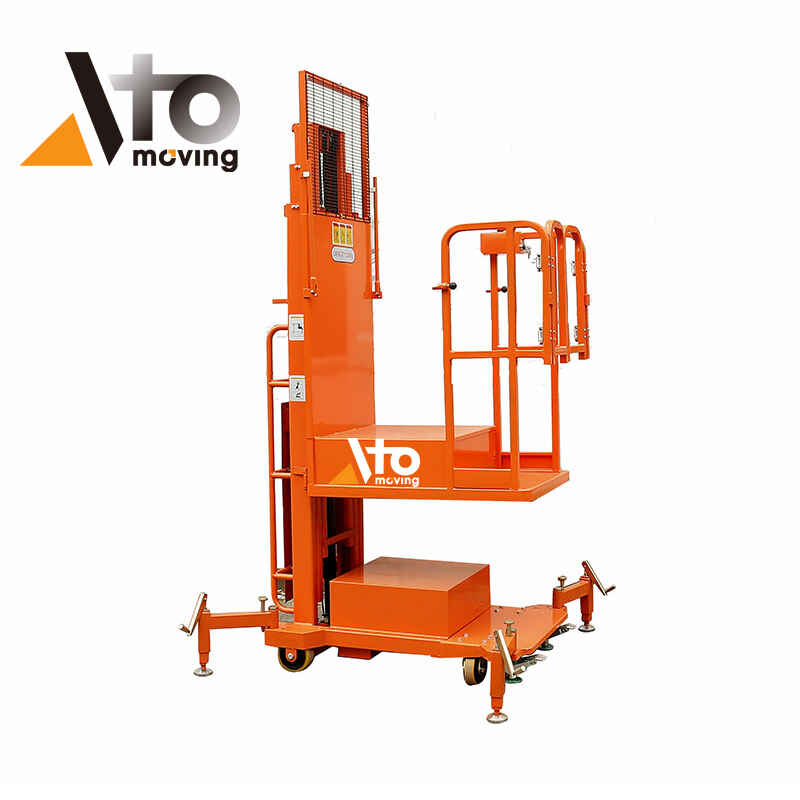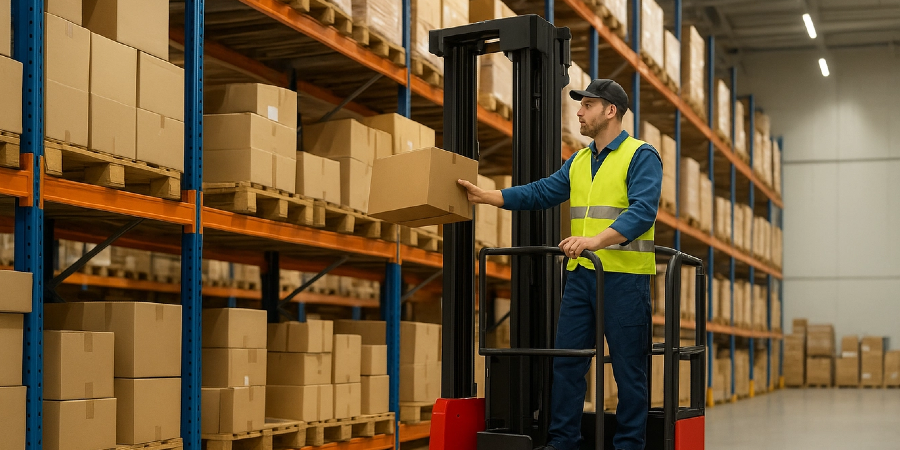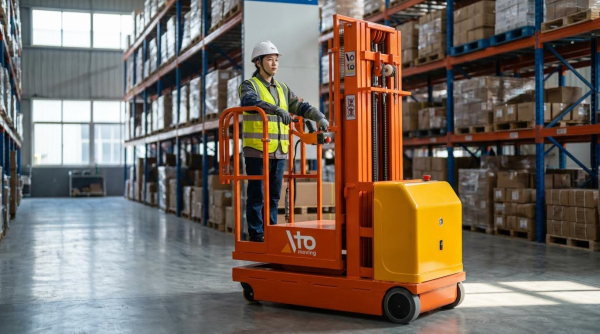
A warehouse order picker works at the heart of modern logistics, combining physical work, equipment operation, and precise inventory control. This guide explains the role, skills, and safe use of order picking machines so you can build or train a high‑performing, zero‑harm picking team.
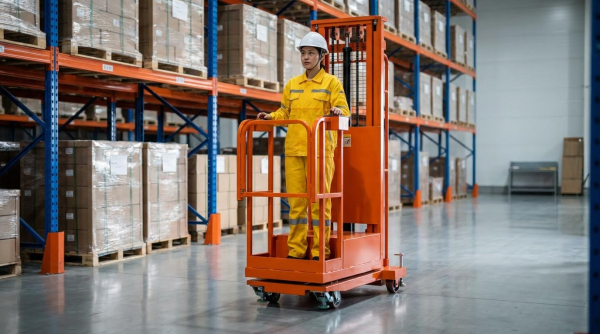
Role Of The Warehouse Order Picker Operative
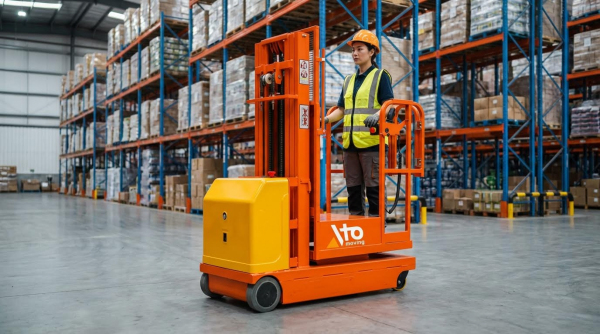
The role of a warehouse operative order picker is to move the right product, in the right quantity, to the right place, safely and on time. This job links stock in racking to trucks at the dock, using digital instructions, manual pallet jack, and strict safety rules to protect people and inventory.
At its core, the job combines three things: accurate product selection, safe use of order picking equipment, and continuous movement in a busy, mixed-traffic environment. Everything else—KPIs, career progression, and automation—builds on these basics.
- Primary mission: Pick and stage customer orders correctly – Prevents returns, rework, and missed departures.
- Environment: Racking, docks, and narrow aisles shared with trucks – Demands strong situational awareness.
- Tools: WMS, scanners, and semi electric order picker/hydraulic pallet truck – Connects physical stock to digital records in real time.
- Standards: OSHA/ANSI or local equivalents – Define training, inspections, and safe systems of work.
💡 Field Engineer’s Note: When defining this role, always tie responsibilities to specific equipment types and aisle widths. A picker working in 1.8–2.0 m very narrow aisles with man-up order pickers faces very different risks than a ground-level case picker with a manual pallet jack.
Core responsibilities and daily tasks
The core responsibilities and daily tasks of a warehouse operative order picker focus on accurate item selection, safe equipment operation, and keeping inventory records in sync with reality. Every action should leave the warehouse slightly more organized and safer than before.
| Responsibility / Task | Typical Actions | Operational Impact |
|---|---|---|
| Reading pick instructions | Follow pick tickets, RF scanner, or voice commands to identify location, item, and quantity instructions | Ensures the picker starts in the correct bay and level, reducing travel and mispicks. |
| Item identification and verification | Match product code, description, and barcode; scan item and location for confirmation verification | Supports 99%+ picking accuracy, cutting returns and customer complaints. |
| Quantity picking | Count units, inner packs, or full cases; confirm on scanner or terminal | Prevents short picks and over-picks, stabilizes inventory and shipping volumes. |
| Safe load handling | Lift, carry, and place cartons on pallets, totes, or roll cages; respect weight limits (10–25 kg typical) weight ranges | Reduces musculoskeletal injuries and keeps loads stable during transport. |
| Use of pallet jacks / order pickers | Drive or push equipment, position forks, raise/lower platforms, and travel within marked routes equipment use | Moves more product per hour while controlling collision and tip-over risk. |
| Updating WMS | Scan items and locations, confirm picks, record exceptions (damage, shorts) in WMS or handheld device | Keeps stock records aligned with physical reality, enabling reliable replenishment. |
| Housekeeping in pick areas | Remove stretch wrap, broken pallets, and loose packaging from aisles; keep pick faces tidy | Mitigates slips and trips, supports OSHA walking-working surface requirements. |
| Basic quality checks | Spot damaged packaging, leaks, or incorrect labels; quarantine and report issues | Prevents shipping non-conforming product and reduces rework downstream. |
| Following traffic and safety rules | Respect speed limits, horn use at intersections, and pedestrian walkways | Prevents impact incidents between pedestrians, manual pallet jacks, and forklifts. |
| Communication and handovers | Report low stock, blocked locations, equipment defects, and safety hazards to supervisors | Feeds replenishment, maintenance, and safety actions before issues escalate. |
- Accurate picking: Select and scan the exact SKU and quantity – Directly controls order accuracy and customer satisfaction.
- Route execution: Follow the most efficient path the WMS suggests – Minimizes walking distance per order.
- Load building: Stack pallets or totes in stable patterns – Reduces damage and toppling risk in transit.
- Exception handling: Flag missing stock, damages, or location errors – Prevents silent inventory drift.
- Shift rhythm: Work at a steady pace with planned breaks – Maintains productivity without fatigue spikes.
How a typical picking cycle flows
1) Receive task on scanner or voice device. 2) Travel to the first location using the indicated aisle and bay. 3) Verify item and quantity, then pick and scan. 4) Place goods in the correct zone of the pallet or tote. 5) Repeat until the order or batch is complete, then deliver to staging or packing. 6) Confirm completion in the WMS and receive the next task.
💡 Field Engineer’s Note: When you see high mispick rates, do not blame the warehouse operative order picker first. Check location labelling, lighting at pick faces, and scanner ergonomics; small layout changes often cut errors faster than extra “be more careful” briefings.
Physical and cognitive demands of the role
The physical and cognitive demands on a warehouse operative order picker are high, combining continuous movement and lifting with intense concentration on codes, quantities, and changing priorities. Poor management of either side quickly leads to fatigue, errors, or injury.
| Demand Type | Typical Requirement | Operational Impact |
|---|---|---|
| Walking distance | Several kilometers per shift, often on concrete floors | Drives fatigue; layout and batching can cut walking by 10–15% or more. |
| Lifting and carrying | Regular handling of 10–25 kg items, sometimes up to about 23 kg (50 lb) load examples | Requires correct technique and rotation to avoid back and shoulder injuries. |
| Posture and repetition | Frequent bending, reaching to 1.8–2.0 m shelf heights, and twisting to place cartons postural demands | Increases musculoskeletal strain; adjustable pick heights and aids reduce risk. |
| Standing time | Long periods on feet, especially in high-volume pick zones | Can cause leg and foot fatigue; anti-fatigue matting and footwear help. |
| Environmental conditions | Ambient, chilled, or freezer zones; noise from trucks and conveyors | Impacts clothing, PPE choice, and communication methods. |
| Attention to detail | Reading item numbers, barcodes, and locations accurately every time cognitive focus | Directly controls mispick rate and rework volume. |
| Numerical accuracy | Counting units, cases, and layers; reconciling pick quantities with instructions | Prevents inventory drift and shipping the wrong quantities. |
| Multi-tasking | Balancing travel, scanning, obstacle avoidance, and traffic rules | Reduces collision risk while maintaining pick speed. |
| Responding to priority changes | Switching between urgent orders and standard work as supervisors or systems direct | Supports on-time dispatch for critical carriers or customers. |
| Safety awareness | Recognizing hazards like spills, damaged pallets, or congested aisles | Enables early intervention before incidents occur. |
- Physical stamina: Sustains high movement over an 8–10 hour shift – Key for meeting lines-per-hour targets.
- Body mechanics: Uses leg-driven lifts, keeps loads close, avoids twisting – Protects spine and major joints.
- Concentration: Maintains focus despite noise and repetition – Prevents “looked right, picked wrong” events.
- Information processing: Interprets scanner prompts, locations, and exceptions quickly – Keeps flow without stopping to re-check.
- Risk perception: Spots near-misses in time (forklift approach, unstable pallet) – Reduces serious incident likelihood.
Managing fatigue and strain on the job
Effective sites rotate warehouse operative order pickers between heavy and light zones, schedule micro-breaks, and tune pick heights so the fastest-moving SKUs sit between about 700–1,400 mm. This “power zone” avoids deep bending and overhead reaches, cutting strain while boosting pick speed.
💡 Field Engineer’s Note: If your pickers struggle by mid-shift, measure two things: average case weight and average pick height. Small changes—like moving heavy, fast movers from bottom racks to mid-level—often improve both comfort and productivity more than any motivational talk.
Technical Skills And Safe Use Of Picking Equipment
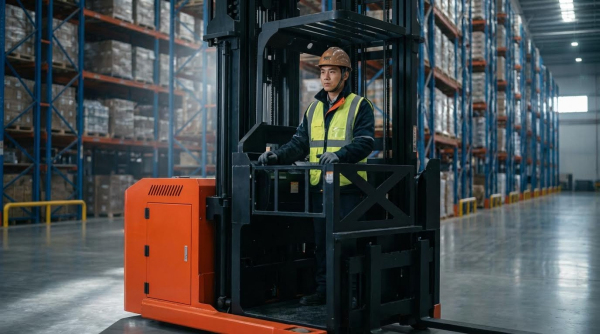
This section explains how a warehouse operative order picker safely operates order pickers, pallet trucks, and stackers, performs pre‑shift checks, and complies with OSHA/ANSI-style rules for fall protection and traffic management.
Operating order pickers, pallet trucks, and stackers
A warehouse operative order picker must control order pickers, pallet trucks, and stackers smoothly, within rated capacity, while following site traffic rules and safe load‑handling practices.
- Equipment familiarity: Know controls, alarms, and stability limits – Prevents tip‑overs and uncontrolled movements.
- Rated capacity use: Follow the data plate for load, load centre, and lift height – Avoids mast or fork overloading.
- WMS and RF use: Combine safe driving with accurate scanning and confirmations – Keeps inventory and orders in sync with reality.
- Speed discipline: Reduce speed in narrow aisles, blind corners, and near pedestrians – Cuts collision and impact risks.
- Parking rules: Lower forks, neutralize controls, and secure power – Prevents roll‑away or unintended operation.
| Equipment Type | Typical Tasks | Key Safety Focus | Operational Impact |
|---|---|---|---|
| Low‑level order picker (man‑up or walk‑along) | Picking cartons or cases from 0–2.0 m rack levels | Platform stability, gate position, clear aisle | Best for high‑frequency case picking in aisles around 2.4–2.7 m wide |
| Electric pallet truck / pallet jack | Ground‑level pallet moves up to rated capacity | Load stability, fork height during travel, pedestrian separation | Ideal for dock to pick‑face shuttling and marshaling lanes |
| Electric stacker | Stacking pallets up to several metres high | Vertical stability, overhead clearance, floor condition | Suited to smaller warehouses needing 3–5 m stacking without full forklifts |
To perform efficiently, operators combine driving skill with digital tools. They follow pick tickets or WMS instructions and use pallet jacks and order pickers to move goods while respecting traffic rules and PPE requirements. Accurate selection and correct equipment use are core responsibilities.
- Order picker operation: Follow formal training on controls, load stability, and emergency actions – Meets regulatory training expectations.
- Pallet truck travel: Keep forks about 100–200 mm above floor when moving – Clears bumps without creating trip hazards.
- Stacker lifting: Align square to the pallet, insert forks fully, then lift slowly – Maintains centre of gravity within safe zone.
💡 Field Engineer’s Note: In narrow aisles, even a lightly raised load shifts the centre of gravity. Keep forks as low as practical during travel and avoid tight steering inputs; this greatly reduces racking strikes and truck instability on imperfect floors.
Typical training content for new equipment operators
Formal courses combine theory and practical driving. Topics include pre‑use checks on forks, guards, controls, and brakes; load centre and rated capacity; safe speeds in aisles; blind corner rules; and working at height on man‑up order pickers with harnesses. Novice courses often last several days, while refreshers are shorter. Training builds both safety and productivity skills.
Pre‑shift checks, inspections, and maintenance inputs
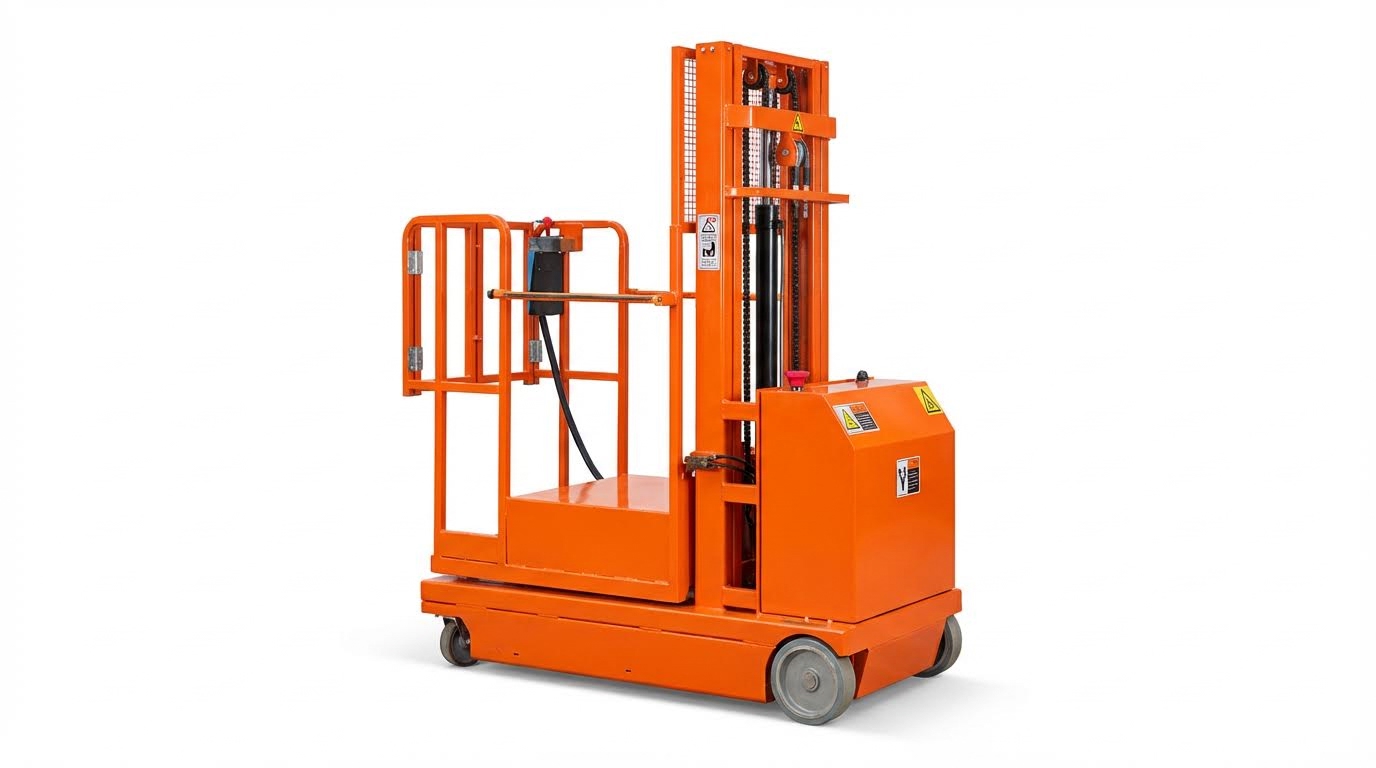
Warehouse operative order pickers must complete structured pre‑shift checks, record defects, and feed maintenance teams with accurate information to keep all picking equipment safe and available.
- Daily walk‑around: Inspect structure, forks, platforms, and guardrails – Finds cracks, deformation, or loose fasteners early.
- Functional tests: Check steering, brakes, horn, lights, alarms, and emergency stop – Ensures control in real emergencies.
- Hydraulic and electrical check: Look for oil leaks, damaged hoses, exposed wiring – Prevents sudden failures and fire risks.
- Battery and charger review: Verify charge level, connectors, and cables – Reduces mid‑shift breakdowns.
- Logbook discipline: Read previous entries and record new defects – Supports predictive maintenance and compliance.
Daily inspections are a regulatory expectation for powered industrial trucks. Operators verify brakes, controls, and safety devices before use, tagging out defective units until repair. OSHA guidance stresses pre‑shift checks and lockout of unsafe equipment.
| Inspection Interval | Who Performs It | Main Focus | Operational Impact |
|---|---|---|---|
| Each shift (pre‑use) | Operator | Leaks, forks, controls, brakes, warning devices, interlocks | Prevents unsafe trucks leaving the charging bay |
| Weekly | Technician or trained in‑house maintainer | Power supplies, chains, tyres, simple adjustments | Stabilizes performance between major services |
| Monthly / quarterly | Service technician | Hydraulics, electrical systems, brake clearances, structural checks | Reduces unplanned downtime and major failures |
| Six‑monthly / annual | Senior technician / third party | Full safety inspection, documentation, load tests | Supports regulatory and insurance compliance |
Modern fleets increasingly use condition‑based or predictive maintenance. They monitor motor currents, lift cycles, brake actuations, and battery voltage trends to anticipate failures and schedule repairs before breakdowns. This keeps critical picking equipment within specification and available for peak periods.
- Defect escalation: If a brake, steering, or mast fault is found, tag out the unit – Eliminates the temptation to “just finish one job.”
- Load plate respect: Always compare planned load to the data plate – Prevents overload‑induced structural fatigue.
- Cleanliness: Remove stretch wrap, broken boards, and debris from truck and floor – Avoids trips, snagging, and blocked pedals.
💡 Field Engineer’s Note: Most serious stacker failures I have seen started as “minor” leaks or unusual noises logged but ignored. Treat any change in lift speed, steering feel, or brake response as a red flag and escalate before the next shift.
How operator checks support maintenance planning
Operators provide the first line of condition monitoring. Their defect reports feed into maintenance systems that track hydraulic oil levels, leakage rates, and lift speed changes as early indicators of valve or seal wear. Combined with cycle counts and service history, this enables predictive maintenance and reduces unplanned downtime.
Fall protection, traffic rules, and OSHA/ANSI compliance

Warehouse operative order pickers must follow fall protection rules, traffic management plans, and OSHA/ANSI‑style standards to control the biggest risks in picking zones: falls, collisions, and struck‑by incidents.
- Walking‑working surfaces: Keep aisles, platforms, and docks free from spills and debris – Reduces slips, trips, and falls.
- Guardrails and edges: Use guardrails, toe boards, and marked edges on mezzanines and pick modules – Prevents falls from height.
- Harness use at height: Wear and correctly attach full‑body harnesses where required – Controls fall risk on man‑up order pickers.
- Traffic separation: Respect pedestrian walkways, truck routes, and speed limits – Minimizes pedestrian–truck conflicts.
- Emergency readiness: Know alarms, evacuation routes, and assembly points – Improves response to fires or chemical events.
Order picker operation falls under powered industrial truck rules similar to OSHA’s Class II electric narrow‑aisle trucks. Formal training, evaluation, and certification are required before solo operation, and refresher training follows incidents or process changes. Training covers stability principles, load handling, emergency procedures, and site‑specific traffic rules.
| Risk Area | Key Control Measures | What Operators Must Do | Best For… |
|---|---|---|---|
| Falls from elevated platforms | Guardrails, gates, interlocks, harness and lanyard systems | Check gates closed, connect harness, inspect lanyard before elevation | Man‑up order picking above roughly 1.5–2.0 m |
| Pedestrian–truck collisions | Marked walkways, mirrors, speed limits, right‑of‑way rules | Slow down at crossings, sound horn at blind corners, yield to pedestrians | Busy cross‑aisles and staging areas |
| Slips and trips in pick aisles | Housekeeping, spill response, pallet quality control | Report leaks, remove loose wrap, reject broken pallets | Narrow aisles and high‑density pick faces |
| Emergency situations | Emergency action plans, drills, signage, extinguishers | Follow evacuation routes, know alarm tones, attend drills | All picking zones, docks, and charging areas |
Baseline PPE typically includes safety shoes with toe protection, high‑visibility vests, and sometimes hard hats where overhead loads exist. Eye protection and cut‑resistant gloves are used for carton cutting and strapping tasks. Signage communicates speed limits, pedestrian routes, and restricted areas around charging stations and docks, while safety meetings review incidents and near‑misses to drive continuous improvement.
- Speed and elevation: Drive more slowly when elevated and keep clear sightlines – Reduces tip‑over and rack strike risk.
- Right‑of‑way: Give priority to pedestrians and emergency vehicles – Supports site traffic rules and legal duties.
- Reporting culture: Report damage, blocked exits, and unsafe conditions immediately – Enables engineering or procedural fixes before accidents occur.
💡 Field Engineer’s Note: In many incidents, the root cause was “rushing to hit the pick rate.” Make it clear that in your warehouse, no KPI justifies bypassing harness use, speeding in aisles, or ignoring damaged racking or pallets.
How this ties back to standards and training
Regulatory frameworks like OSHA, ANSI, and national equivalents require employers to train operators, assess risks, and maintain safe equipment. For a warehouse operative order picker, this means documented training on powered trucks, fall protection, traffic rules, and emergency procedures, plus regular refresher sessions and supervised practice.
Optimizing Picking Performance And Equipment Selection
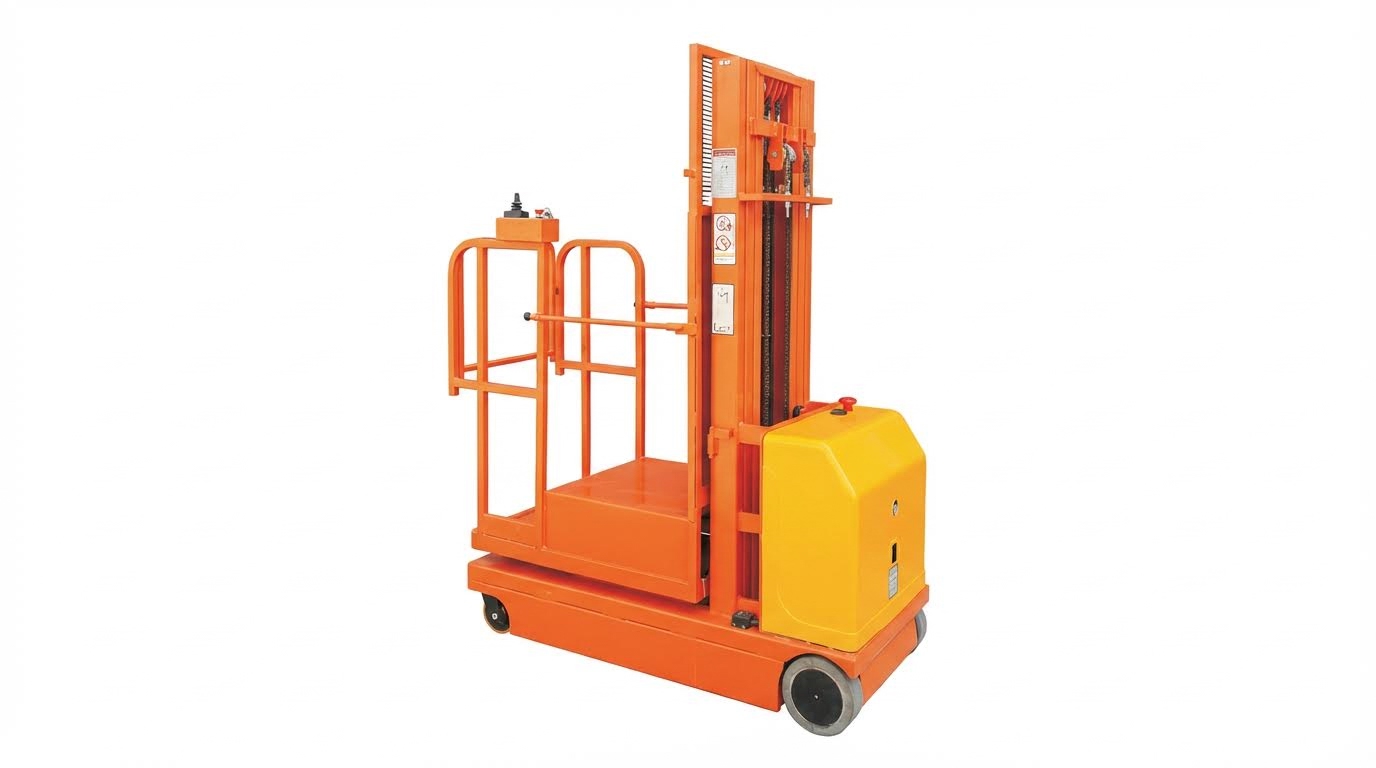
Optimizing picking performance means matching methods, digital tools, and equipment to your product mix and aisle layout so each warehouse order picker moves more lines per hour without adding risk or fatigue.
- Goal: Maximize lines picked per hour – Higher throughput with the same headcount.
- Constraint: Maintain ≥99% accuracy – Prevents returns, rework, and customer complaints.
- Method: Align picking method, WMS guidance, and truck type with SKU velocity and aisle width – Shorter walk distances and safer traffic.
💡 Field Engineer’s Note: When I review underperforming sites, 8 out of 10 times the issue is not “slow pickers” but bad slotting and the wrong truck type for the aisle width and pallet profile.
Picking methods, WMS, and digital guidance tools
Picking methods and WMS tools must work together so every warehouse order picker follows the shortest, safest route with real‑time verification of each item and location.
- Single-order picking: One picker completes one order at a time – Simple and robust for low volume or many made‑to‑order lines. Common order picking methods
- Batch picking: Picker collects lines for several orders in one trip – Reduces travel distance and is ideal where many orders share the same SKUs. Batch picking definition
- Zone picking: Each picker stays in a defined area – Cuts congestion and training time in very large warehouses. Zone picking description
- Wave picking: Orders released in timed waves – Aligns picking with carrier cut‑offs and dock schedules. Wave picking overview
Digital tools then lock these methods into repeatable, error‑proof routines for every warehouse order picker.
| Tool / Method | Core Function | Typical Use Case | Operational Impact |
|---|---|---|---|
| WMS task assignment | Issues optimized pick tasks and routes | All medium to large warehouses | Higher pick density and better on‑time shipments by reducing empty travel. WMS and task management |
| RF / barcode scanners | Scan item and location barcodes | Case and piece picking | Live inventory updates and fewer mispicks, cutting returns and rework. Digital verification tools |
| Voice-directed picking | Audio instructions via headset | High-volume case picking | Hands-free work improves ergonomics and consistency across operators. Digital tools in picking |
| Pick-to-light | Lights show pick location and quantity | Very fast-moving SKUs | Highest speed and accuracy in dense pick faces; best in fixed zones. WMS integration and guidance |
How to choose a picking method for your operation
Use single-order picking for simple, low-volume operations. Move to batch picking when many orders share common SKUs. Use zone and wave picking in large sites with strict carrier cut‑offs or highly specialized storage areas.
KPIs, ergonomics, and layout for narrow aisles
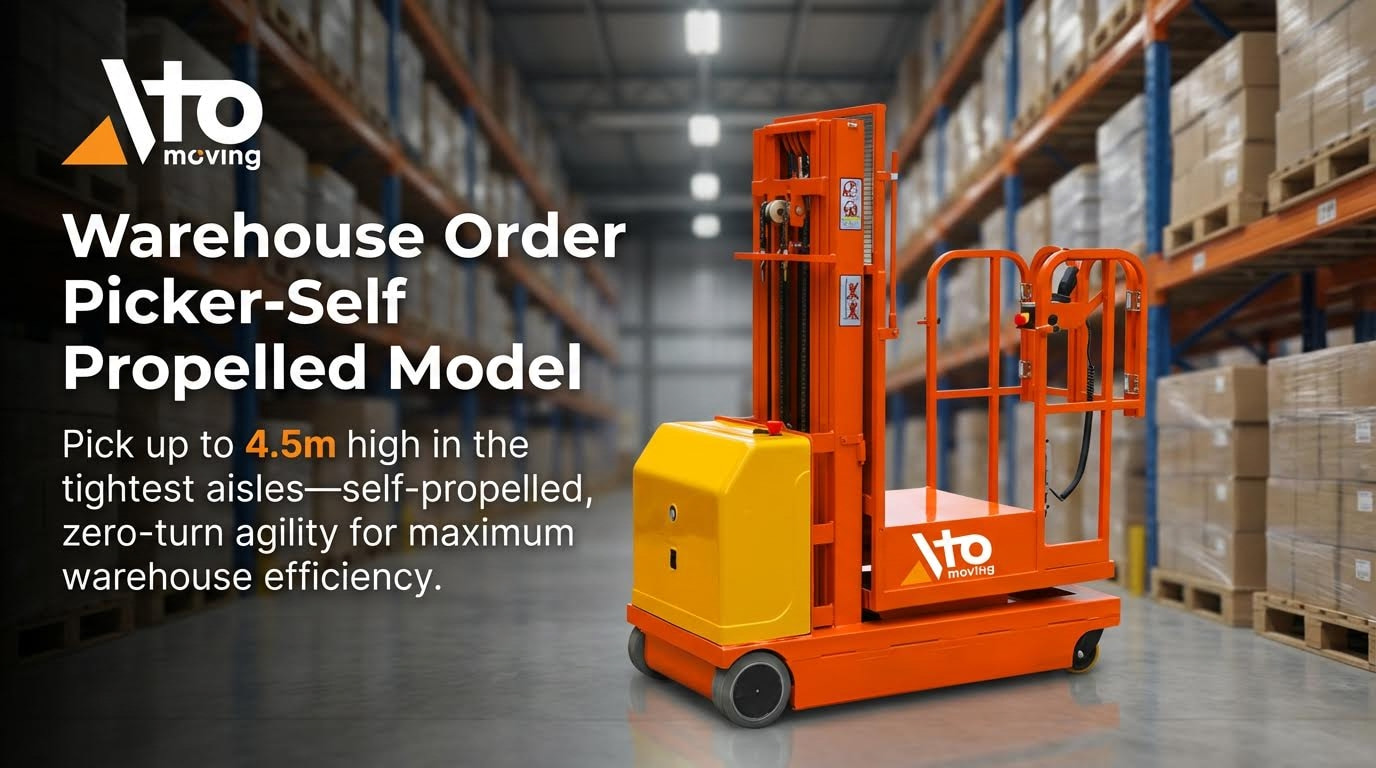
KPIs, ergonomics, and layout must align so a warehouse order picker can hit target lines per hour in narrow aisles without breaching safety limits or overloading the body.
Performance tracking starts with a small set of clear indicators. These metrics show whether your methods, equipment, and WMS configuration really work on the floor.
| KPI | What It Measures | Typical Target / Comment | Operational Impact |
|---|---|---|---|
| Lines picked per hour | Throughput per picker | Depends on product and travel distance | Primary productivity measure for each warehouse order picker. Performance metrics |
| Picking accuracy | Correct items and quantities | High-performing sites exceed 99% | Directly reduces returns and rework time. Accuracy KPI |
| Incident / near-miss rate | Safety performance | Aim for zero recordable incidents | Shows whether productivity gains are achieved safely. Safety and incident tracking |
| Travel time share | % of shift spent walking or driving without picking | Lower is better | Layout and slotting improvements can cut pick time by ≈15% or more. Layout optimization impact |
Ergonomics then protects the operator from the physical demands behind those numbers. The role already involves long walking distances, frequent bending, and lifting around 10–25 kg throughout the shift. Physical requirements
- Slot heavy items between 500–1,400 mm height: Avoid floor-level and overhead lifts – Reduces back and shoulder strain.
- Use adjustable platforms or lift tables: Bring pallets to a comfortable reach zone – Less bending and twisting per pick.
- Plan job rotation: Alternate heavy case picking with lighter tasks – Controls fatigue across the shift. Ergonomic measures
In narrow aisles, layout and equipment choices become critical engineering decisions, not just preferences.
- Aisle width vs. truck type: Match aisle width to the turning radius and clearance of your pallet trucks, stackers, or order pickers – Prevents impacts with racking and avoids constant reversing.
- Pick path design: Use one‑way traffic where possible – Reduces head‑on encounters and simplifies right‑of‑way rules.
- High-velocity SKU placement: Store fastest movers closest to dispatch and at ergonomic heights – Directly cuts travel time and strain.
💡 Field Engineer’s Note: When aisles are under 2.5 m and racking runs long, even a 0.2 m mis‑match between truck turning radius and aisle width forces three‑point turns at every bay. That alone can steal 10–15% of a picker’s productive time and sharply increase rack damage.
Quick layout checklist for narrow aisles
Verify that aisle widths meet or exceed your narrow‑aisle truck manufacturer’s minimum turning and clearance recommendations. Mark pedestrian and truck routes clearly, avoid dead ends, and keep high‑volume SKUs near cross‑aisles and dispatch. Review damage and congestion hot spots monthly and adjust slotting or traffic rules accordingly.
Final Thoughts On Building A Safe, Efficient Picking Team
A high‑performing picking team does not rely on speed alone. It combines clear role design, fit‑for‑purpose equipment, and disciplined safety habits. When you align tasks, aisle geometry, and truck type, operators move more lines per hour with fewer near‑misses and less strain on the body.
Engineering controls do the heavy lifting. Correct aisle widths, stable racking, and well‑matched order pickers or pallet trucks remove many daily hazards before training even starts. Pre‑shift checks and strict respect for data plates then keep each machine within its safe envelope. This protects operators from sudden failures and slow, unseen structural fatigue.
At the same time, WMS tools, scanners, and guided methods turn good practice into a repeatable system. They cut walking distance, enforce verification, and support 99%+ accuracy without asking pickers to “try harder.” Ergonomic slotting and job rotation close the loop by managing fatigue.
The best practice is simple but demanding: design the layout first, choose equipment like Atomoving order pickers to match, train to OSHA/ANSI‑style standards, and treat every defect or near‑miss as engineering feedback. Do that, and safety, accuracy, and throughput will rise together instead of competing.
Frequently Asked Questions
What does an order picker do in a warehouse?
An order picker in a warehouse is responsible for selecting and gathering items from storage to fulfill customer orders. They often use equipment like forklifts or pallet jacks to retrieve products stored on high shelves. This role requires attention to detail to ensure accuracy in picking the correct items and quantities.
Is being an order picker a good job?
Working as an order picker can be a great career starter, especially for those seeking stability and growth. Demand for warehouse workers continues to rise due to the expansion of e-commerce and distribution networks. It also provides opportunities to develop valuable skills like organization, time management, and teamwork. Warehouse Career Guide.
What skills are important for an order picker?
To succeed as an order picker, strong communication skills and the ability to handle stress are essential. Problem-solving and quick thinking help address challenges during shifts. Additionally, reading and writing efficiently ensures tasks are completed accurately and on time. Order Picker Skills Guide.