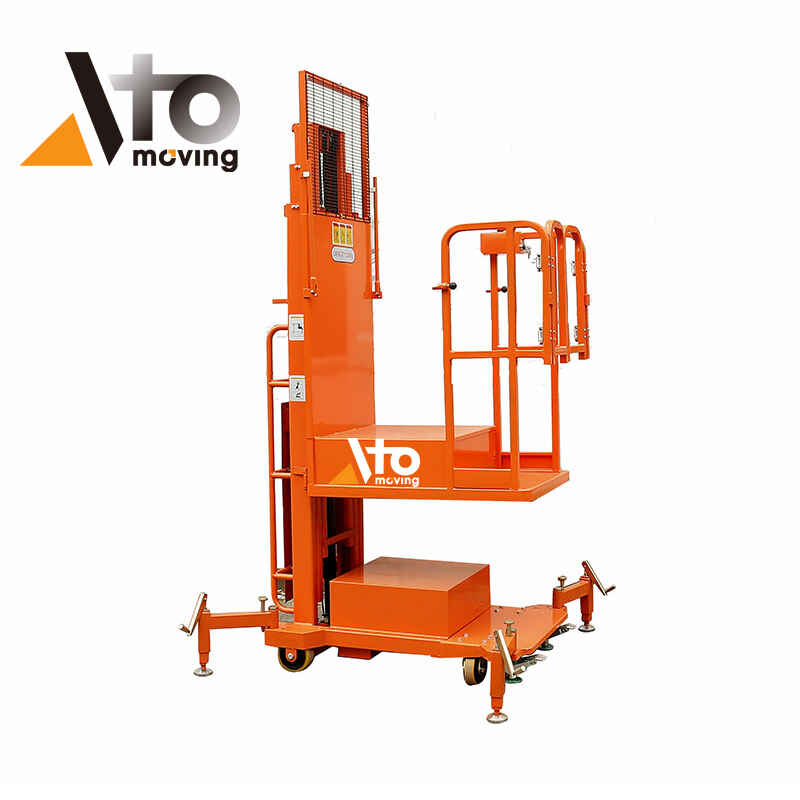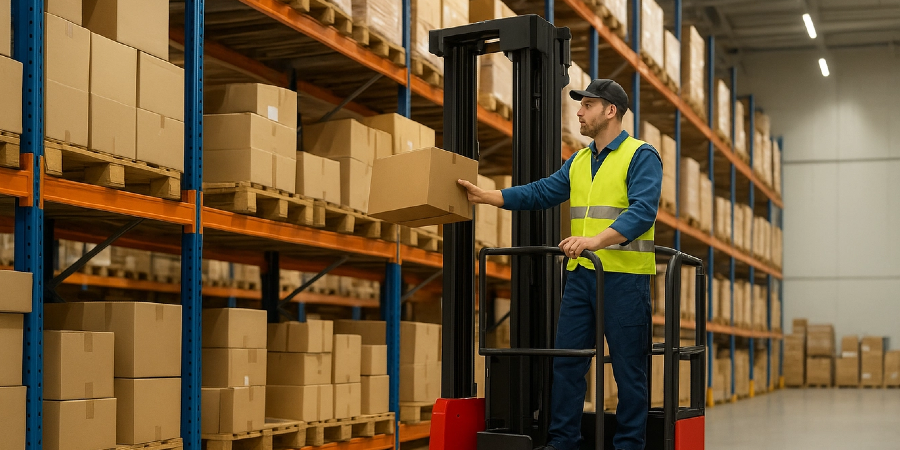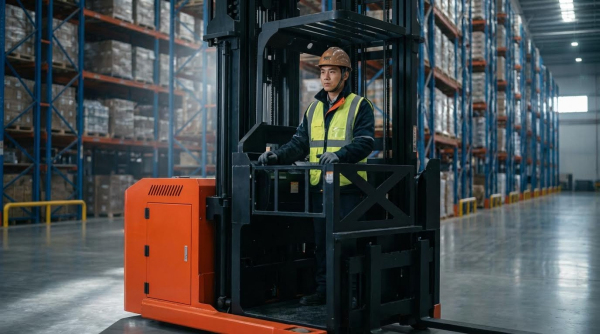
Warehouse order picking procedures and safety policies defined this article’s structure, from workflow design to compliance impacts. The complete outline covered efficient picking workflows, operator safety on order picker equipment, and technology-enabled performance control. It also addressed returns, kitting, value-added services, and concluded with best-practice summaries and regulatory implications. Together, these sections provided a practical, systems-level view of how to make order picking accurate, fast, and safe in modern warehouses.
Designing Efficient Order Picking Workflows
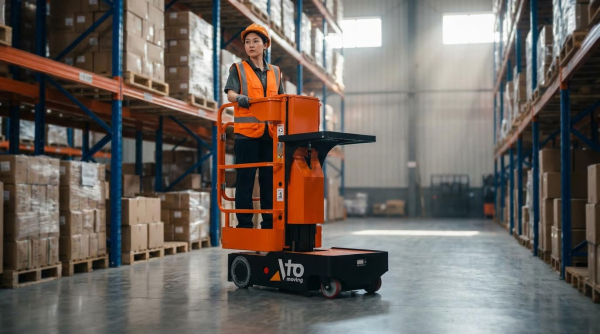
Efficient order picking workflows relied on a clear end-to-end view of how goods and information moved through the warehouse. Engineers structured flows from receiving to storage, replenishment, picking, consolidation, packing, and shipping to minimize handling touchpoints and delays. Digital systems such as warehouse management systems (WMS) and enterprise resource planning (ERP) platforms coordinated material movements with real-time data capture. Well-designed workflows reduced walking distances, prevented congestion, and created predictable, repeatable processes that supported high accuracy and throughput.
Mapping End-To-End Material And Data Flows
Mapping end-to-end flows started with a detailed process map from dock doors to outbound staging. Engineers documented each activity: receiving, quality checks, put-away, replenishment, picking, sorting, packing, loading, and returns handling. For each step, they defined material paths, data capture points, and required confirmations, such as RF scans, label applications, and quantity verifications. They identified handoffs between teams and systems, including WMS, ERP, and transport management. This mapping exposed bottlenecks, redundant moves, and non-value-adding checks, enabling redesign of layouts, staffing, and system logic to reduce cycle time and error risk.
Material flow diagrams typically showed separate lanes for inbound, outbound, and returns to avoid cross-traffic. Data flow diagrams captured how SKUs, locations, and orders updated in real time, including exception paths for damages, shorts, and mislabels. Engineers aligned physical staging zones with system statuses, such as “received,” “quality hold,” “cross-dock,” or “ready to ship,” to avoid inventory mismatches. The result was a synchronized physical and digital flow where operators followed clear routes and the system provided unambiguous instructions and validations.
Slotting, SKU Velocity, And Storage Media Selection
Slotting strategies used SKU velocity, cube, and handling characteristics to position inventory for minimal travel and safe ergonomics. High-velocity SKUs moved to ground-level pick faces near packing or shipping areas to reduce walking time and vertical reaches. Medium-velocity items occupied mid-aisle locations, while slow movers shifted to higher levels or more compact storage. Continuous profiling of SKU velocity, based on order history and forecasts, ensured that slotting remained aligned with demand patterns and seasonal shifts.
Engineers selected storage media by combining cube utilization with required pick rates. Carton flow racks supported high-line-count case picking, while pallet racking suited single-SKU pallets and bulk demand. Shelving with bins, dividers, and totes handled small parts and e-commerce items, enabling dense storage with clear visual organization. Ground-level storage improved productivity but required careful traffic planning to avoid congestion. Decisions also considered replenishment frequency, as deep-lane or high-density systems reduced space but could increase restock effort if not matched to velocity.
Good slotting policies avoided mixing SKUs in a single primary pick location to reduce mis-picks and scanning errors. Engineers also grouped frequently co-ordered SKUs where appropriate, balancing reduced travel against potential confusion. They evaluated cube movement velocity, not just order lines, to ensure that high-volume cubic flows had short, unobstructed paths. Periodic audits and WMS-driven slotting recommendations kept the layout responsive to new SKUs and product lifecycle changes.
Choosing Batch, Zone, Wave, And Cross-Docking
Choosing a picking method depended on order profile, SKU count, and service-level requirements. Batch picking grouped multiple orders into a single pick tour, reducing travel distance when orders shared SKUs. This method worked well for high-order-count, small-line orders, especially in e-commerce operations. Zone picking assigned operators to defined areas; each picker collected only the SKUs in their zone, and a downstream consolidation step assembled complete orders. This reduced congestion and walking but required robust consolidation controls and clear staging.
Wave picking combined time-based releases with batch or zone logic. Planners released waves aligned with carrier cutoffs, dock capacity, and labor availability, smoothing workload and avoiding last-minute congestion. Wave configuration in the WMS considered order priorities, shipping methods, and product constraints. Cross-docking bypassed storage entirely for selected SKUs or orders, moving product directly from receiving to outbound staging. It suited predictable, fast-moving flows or pre-allocated inbound loads, but required tight coordination of appointment scheduling, labeling, and dock assignments.
Engineers often mixed methods within one facility. For example, pallet picking supported wholesale orders, while batch or zone picking handled piece-pick e-commerce lines. They evaluated trade-offs using metrics such as lines picked per hour, travel distance per line, and error rates. Proper method selection, combined with clear work instructions and
Order Picker Equipment And Operator Safety Rules
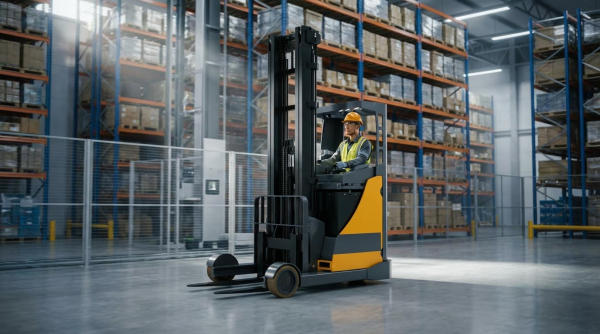
Order picker safety rules formed the backbone of compliant warehouse operations. They controlled how equipment operated, how operators behaved, and how risks were mitigated at height and at ground level. A structured rule set aligned OSHA requirements, manufacturer instructions, and site-specific risk assessments into one coherent system. This section detailed those rules across training, inspection, loading, and traffic management.
OSHA Classification, Training, And Certification
OSHA classified order pickers as Class II electric motor narrow aisle lift trucks. This classification triggered the powered industrial truck standard, which required formal training, evaluation, and authorization before operation. Training programs covered controls, stability principles, load charts, emergency procedures, and site traffic rules. Employers documented both classroom and practical evaluations, then issued written authorization restricted to specific truck types and environments. Refresher training followed incidents, near misses, or observed unsafe behavior, and also after significant process or layout changes. Job hazard analyses supported training content by identifying site-specific risks such as congested aisles, mezzanines, or mixed pedestrian traffic. Compliance with OSHA training requirements reduced incident rates and provided clear legal defensibility in the event of an accident.
Pre-Use Inspections, Maintenance, And Lockout
Operators performed pre-use inspections at the start of each shift and after any incident. They checked forks, mast, platform, guardrails, chains, hydraulic hoses, steering, brakes, horn, emergency stop, and fall-arrest anchor points. They also verified batteries or chargers, tires, and all safety interlocks. If they found defects, they tagged the truck out of service and reported it, in line with lockout and control-of-hazardous-energy procedures. Qualified technicians then performed corrective maintenance following the manufacturer’s specifications and documented the work. Scheduled preventive maintenance typically occurred at fixed hour intervals, such as every 250 operating hours, and at least semi-annually. Third-party inspections and audits validated that maintenance practices met regulatory and insurance requirements. Robust inspection and lockout practices prevented catastrophic failures during elevation and travel.
Load Capacity, Stability, And Fall Protection
Every order picker carried a rated capacity plate that specified maximum load, load center, and allowable attachments. Operators compared estimated load mass with the plate values and refused loads that approached or exceeded limits. They centered loads on the platform, kept the heaviest side toward the mast, and avoided stacked configurations that could shift. Exceeding capacity or moving with an elevated, off-center load significantly reduced the stability margin and increased tip-over risk. When platforms raised operators to high rack levels, fall protection became critical. Facilities typically required full-body harnesses with lanyards attached to approved anchor points on the truck. Operators adjusted harnesses for proper fit and kept lanyards clear of pinch points and moving components. They remained fully tied off whenever the platform was elevated, including during slow repositioning between bays.
Traffic Management, PPE, And Pedestrian Safety
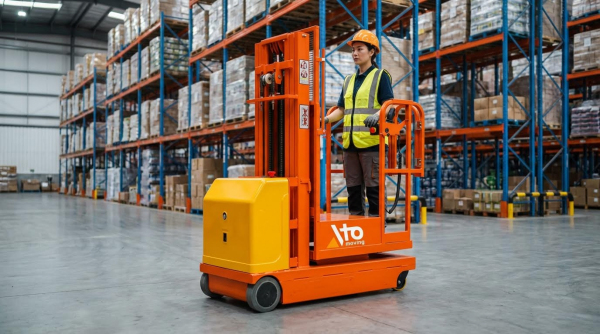
Pallet jacks operated in mixed-traffic environments that included pedestrians, pallet jacks, and forklifts. Facilities therefore defined traffic lanes, right-of-way rules, and speed limits, often marked with floor paint and signage. One-way aisles reduced head-on conflicts, while designated staging and cross-docking zones minimized random truck movements. Operators sounded horns at intersections, blind spots, and rack ends, and reduced speed in high-density picking zones. PPE policies typically required hard hats, safety glasses, high-visibility vests, and slip-resistant safety footwear. Gloves were selected based on handling tasks, such as cartons, pallets, or metal components. Pedestrian walkways used contrasting colors, guardrails, or barriers to separate people from powered equipment. Training emphasized eye contact and clear signals between operators and pedestrians, especially near docks and consolidation areas. Effective traffic management and PPE use reduced struck-by, caught-between, and fall-from-height incidents.
Technology, Automation, And Performance Control
Technology in warehouse order picking had shifted from simple barcode scanning to tightly integrated cyber-physical systems. Automation and digital control tools supported higher throughput, reduced errors, and improved traceability across inbound, storage, picking, and outbound flows. Effective deployments always linked equipment, software, and people through clearly defined processes and KPIs. This section examined core technologies and control practices that structured high-performance, compliant picking operations.
WMS, RF Scanning, Voice And Pick-To-Light Systems
A modern Warehouse Management System (WMS) acted as the control layer for inventory, locations, and work execution. It generated optimized pick tasks, enforced picking strategies, and synchronized receiving, replenishment, picking, and shipping. RF scanning tied physical movements to WMS records in real time using barcode or 2D code verification. This reduced mispicks, supported lot and serial tracking, and enabled accurate cycle counting.
Voice-directed picking systems guided operators via headsets, issuing step-by-step instructions and capturing confirmations verbally. This kept hands and eyes free, improved ergonomics, and typically increased pick accuracy while reducing training time. Pick-to-light systems used light modules and displays mounted on racks to indicate the correct location and quantity. They performed best in high-throughput, dense pick zones with relatively stable SKU profiles.
Both voice and light-directed systems integrated with WMS task management and inventory files. The WMS assigned work, while the guidance layer handled operator interaction and confirmation logic. Selecting among RF-only, voice, or pick-to-light required analysis of order profiles, SKU counts, labor costs, and required accuracy levels. Hybrid deployments, for example RF plus voice, often balanced flexibility and capital expenditure.
Goods-To-Person, ASRS, Conveyors, And Cobots
Goods-to-person systems reversed traditional walking-intensive picking by bringing totes or trays to fixed workstations. Automated Storage and Retrieval Systems (ASRS), such as shuttle or mini-load systems, stored high-density inventory and sequenced totes to pick stations. These systems reduced walking time, improved ergonomics, and increased line throughput, often reaching payback within roughly 18 months in suitable operations. They required precise slotting logic based on SKU velocity and cube utilization.
Conveyors linked receiving, storage, picking, consolidation, and shipping areas, reducing manual transport and balancing flows between zones. Integrated diverts and accumulation sections supported batch, wave, or zone picking by routing cartons or totes to the correct stations. Control systems monitored jam conditions, motor loads, and sensor states to maintain safe operation and uptime. Preventive maintenance plans and guarding around pinch points were essential for compliance and safety.
Collaborative robots (cobots) and mobile robots augmented human pickers rather than replacing them outright. They transported totes, followed pickers, or presented items at ergonomic heights, thereby reducing fatigue and travel. Integration with WMS ensured that robots received tasks, reported status, and updated inventory in real time. A robust risk assessment, including speed and separation monitoring, ensured safe human–robot interaction in mixed-traffic aisles.
KPIs, Cycle Times, And Data-Driven Optimization
Performance control relied on clearly defined, measurable KPIs that reflected cost, speed, accuracy, and safety. Typical metrics included order picking accuracy, internal order cycle time, lines picked per labor hour, and fulfillment cost per order. Additional indicators such as OTIF (On Time In Full), inventory turnover, and accidents per 200 000 work hours supported broader operational and safety oversight. The WMS and connected systems captured the necessary timestamps and event data automatically.
Analyzing cycle times across receiving, put-away, replenishment, picking, sorting, packing, and loading identified bottlenecks. Managers used this data to rebalance labor, adjust picking strategies, or reslot fast-moving SKUs closer to shipping. Predictive analytics and business intelligence tools helped forecast demand, determine staffing needs, and tune reorder points. These tools also supported what-if analyses for changes in order profiles or SKU counts.
Continuous improvement programs used KPI dashboards and exception reports to prioritize actions. Automated reporting reduced manual data handling errors and provided near real-time visibility for supervisors. Combining quantitative data with operator feedback yielded deeper insights into ergonomic issues and process friction. This closed-loop approach ensured that technology investments translated into sustained gains in productivity and compliance.
Returns, Kitting, And Value-Added Service Controls
Returns processing required dedicated workflows and areas to prevent inventory loss and misplacement. A structured process received, inspected, and dispositioned returns as restock, rework, scrap, or secondary channel. WMS support for returns captured reason codes, linked items
Summary Of Best Practices And Compliance Impacts
Efficient warehouse order picking relied on tightly engineered workflows, appropriate equipment, and disciplined safety practices. Facilities that mapped end‑to‑end flows from receiving to shipping reduced non‑value‑adding steps and walking time, while slotting based on SKU velocity shortened pick paths and improved cycle times. Structured picking strategies such as batch, zone, wave picking, and cross‑docking aligned labor use with demand patterns and minimized handling touchpoints. Integration of WMS, ERP, RF scanning, and pick‑path optimization tools provided real‑time visibility, guided operators, and increased accuracy.
Technology adoption, including pick‑to‑light, voice systems, goods‑to‑person solutions, ASRS, conveyors, and cobots, shifted warehouses toward higher throughput with lower ergonomic risk. However, these systems required rigorous configuration, preventive maintenance, and clear exception handling to avoid creating new bottlenecks. Data‑driven management using KPIs for picking accuracy, OTIF performance, cycle time, and incident rates enabled continuous improvement and supported decisions on labor planning, storage media, and automation investments. Returns processing, kitting, and value‑added services worked best when standardized, measured, and physically separated where appropriate to protect inventory integrity.
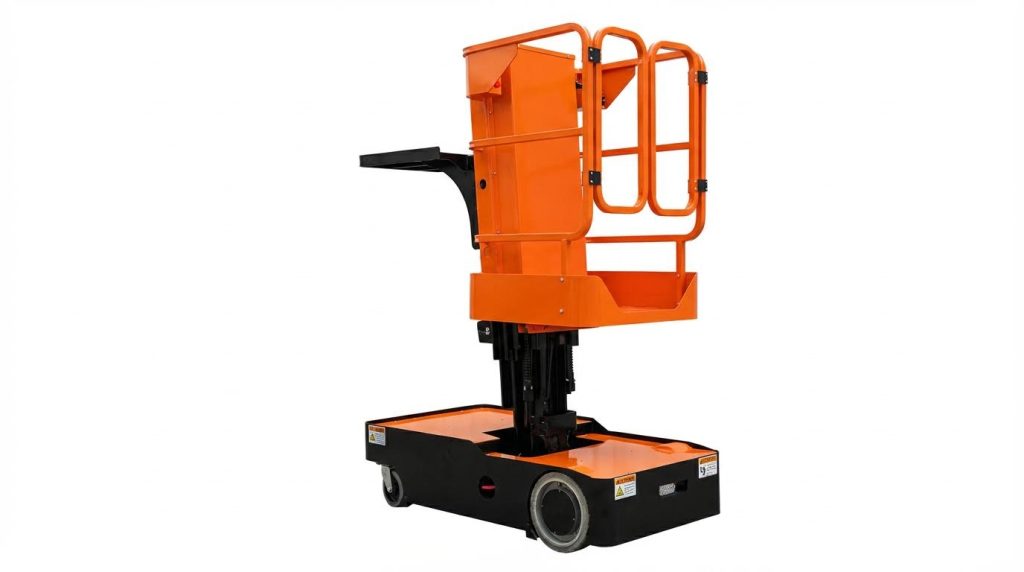
From a compliance standpoint, order pickers fell under OSHA Class II powered industrial trucks, so employers needed documented operator training, evaluations, and refresher programs. Pre‑use inspections, lockout for defective equipment, fall protection at height, PPE use, and defined traffic lanes reduced incident likelihood and supported regulatory compliance. Future‑ready operations periodically reviewed layouts, slotting rules, and technology stacks as SKU profiles, e‑commerce volumes, and service expectations evolved. Organizations that balanced automation with human‑centric design, maintained robust safety cultures, and used analytics for decision‑making achieved resilient, scalable, and compliant warehouse order picking operations.