Industrial facilities relied on 200 L (55-gallon) oil drums that often weighed 180–360 kg, creating significant handling risks. This article outlined how to assess those risks, interpret regulations, and apply proper PPE for compliant drum operations. It then compared manual, assist-mechanized, and fully powered drum handling solutions, from trucks and dollies to forklifts, stackers, and overhead systems. Finally, it connected these technologies into integrated drum handling systems, highlighting best practices, automation trends, and practical implementation guidelines for safe, efficient material flow.
Risk Assessment, Regulations, And Drum Safety
Risk management for oil drum handling started with understanding weight, stability, and product hazards. Facilities that handled 55-gallon drums needed structured assessments, documented procedures, and trained operators. Regulatory expectations from OSHA, EPA, and fire codes defined minimum controls, while site standards often exceeded them. Effective programs linked risk assessment, equipment selection, PPE, and storage design into one coherent system.
Understanding Drum Weights And Stability Limits
A standard 55-gallon oil drum could weigh between 180 kg and 360 kg. This mass made manual lifting or uncontrolled rolling unacceptable from an ergonomic and stability standpoint. Risk assessments evaluated not only drum weight but also center of gravity, floor friction, and ramp gradients. Stacking limits were critical: guidance discouraged more than two drums high and two wide, due to variable drum strength and dimensions. Uneven pallet loading, such as three-drum patterns, reduced stability and required additional restraints or alternative layouts. Engineers also considered dynamic loads during transport, including braking, turning, and floor irregularities, when defining speed limits and equipment selection.
Hazard Identification, SDS Review, And Labeling
Before moving any drum, operators needed to know exactly what it contained. Procedures required reading labels and reviewing the Safety Data Sheet (SDS) to identify flammability, corrosivity, toxicity, and reactivity. Unlabeled or illegible drums were treated as hazardous by default until positively identified and relabeled. Inspections checked for leaks, missing bungs, damaged chimes, and deformed shells that could fail under handling loads. For flammable or reactive contents, planners specified compatible equipment, such as spark-resistant tools or non-sparking drum handlers, and controlled ignition sources in the handling area. Clear, durable labeling with hazard pictograms, UN numbers, and content descriptions supported emergency response and spill control planning.
OSHA, EPA, And Fire Code Considerations
OSHA standards governed material handling practices, ergonomics, and the use of powered industrial trucks around drums. Requirements covered operator training, inspection of handling equipment, and safe stacking heights that avoided ladders and unstable tiers. EPA regulations applied when drums contained hazardous substances or oils with spill-reporting thresholds, driving secondary containment, drainage control, and spill response planning. Fire codes and NFPA guidance influenced storage layouts for flammable and combustible liquids, including separation distances, ventilation, and maximum allowable quantities per control area. Compliance strategies integrated all three frameworks, using documented risk assessments, standard operating procedures, and periodic audits to verify that storage, transfer, and internal transport of drums stayed within regulatory limits.
Required PPE For Oil And Chemical Drum Handling
PPE specifications depended on the drum contents and the handling task. Baseline protection typically included safety footwear with toe protection, chemical-resistant gloves, and eye or face protection to guard against splashes during leaks or drum tilting. For corrosive or toxic chemicals, facilities added chemical suits or aprons, extended-cuff gloves, and sometimes respiratory protection based on SDS recommendations and air monitoring. Face shields complemented safety glasses when opening bungs, connecting pumps, or using dumpers and mixers. Risk assessments also considered crush and pinch hazards to hands and feet when using drum trucks, forklifts with attachments, and below-hook devices. Training emphasized correct donning, doffing, and inspection of PPE so that it remained a reliable final barrier after engineering and administrative controls.
Manual And Assist-Mechanized Drum Handling
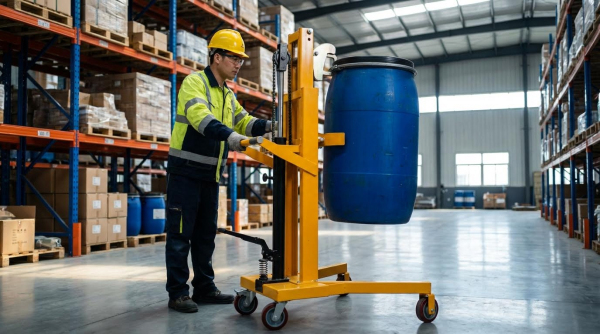
Manual and assist-mechanized methods bridged the gap between pure manual handling and fully powered systems. These approaches reduced musculoskeletal loading while retaining flexibility in tight spaces and short moves. They relied on correct technique, suitable handling aids, and strict adherence to stability limits for 200 L oil drums. This section focused on practical field methods that aligned with safety guidance and regulatory expectations.
Approved Manual Techniques For Upending Drums
A full 55-gallon oil drum typically weighed between 180 kg and 360 kg. Personnel therefore needed a formal risk assessment before authorizing any manual upending. When a drum lay on its side, the preferred method used a drum lifter bar that engaged the chime and provided mechanical leverage. The operator positioned the bar, kept feet clear of pinch points, and walked the drum upright in a controlled arc.
If no lifter bar existed and the risk assessment allowed manual upending, the operator crouched facing the drum. They kept the back straight, feet apart, and grasped the chime on both sides with a secure grip. The lift came from the legs and hips, not the spine, while keeping the drum close to the body to reduce bending moments. Supervisors limited this method to lighter drums, short-duration tasks, and teams of two where possible.
Before any upending, workers inspected the drum for leaks, deformed chimes, or missing bungs. They confirmed contents and hazards by reading the label and Safety Data Sheet and treated unmarked drums as hazardous by default. PPE included safety footwear, gloves compatible with the product, and eye and face protection where splashing or venting could occur. The work area remained level, dry, and free of obstacles to prevent sudden loss of control.
Drum Trucks, Dollies, Cradles, And Lifters
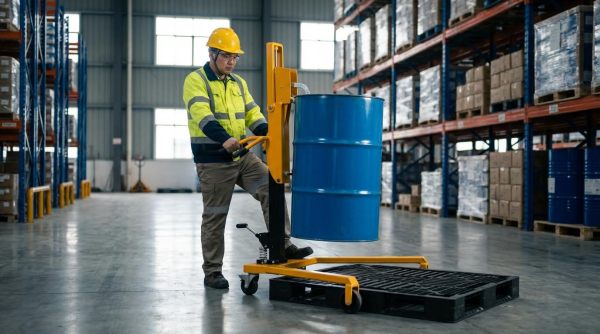
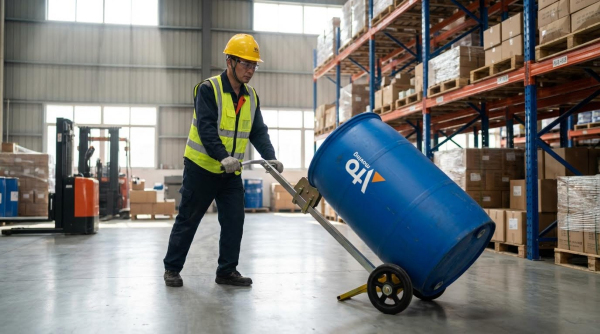
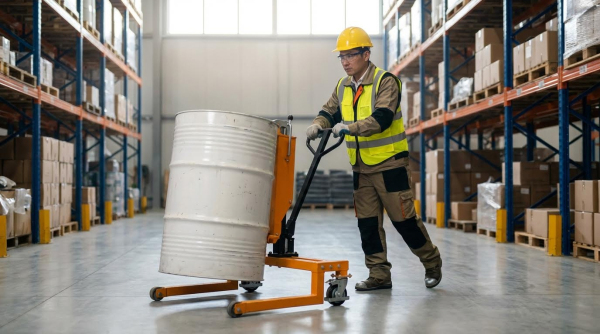
Assist-mechanized devices significantly reduced manual lifting forces while remaining simple to deploy. Drum trucks used a two- or four-wheel cart-like frame that clamped or hooked the drum, then allowed the operator to tilt and roll it. For 30–55 gallon drums, typical drum trucks handled loads up to about 450 kg, with pneumatic wheels for rough floors and non-marking polyurethane wheels for coated concrete. Stainless-steel or spark-resistant variants supported corrosive or flammable products.
Drum dollies supported vertical drums on a wheeled ring or frame, providing low-cost horizontal transport across flat floors. Units for 55-gallon drums often rated up to 450 kg to 450 kg and kept the drum’s center of gravity low, improving stability. Operators pushed from the side, kept speeds low, and avoided thresholds or ramps that could cause tipping. For frequent transfers, facilities standardized dolly sizes to match their predominant drum diameters.
Cradles and drum lifters managed controlled tipping between vertical and horizontal orientations. A cradle allowed an operator to lever a drum from upright into a horizontal position for draining or mixing, without bearing the full weight. Mechanical or below-hook drum lifters engaged the rim or body for vertical or horizontal lifting using hoists or cranes. Selection considered drum material, chime geometry, maximum mass, and whether rotation or pouring control was required.
Engineering and safety teams evaluated each device against the drum’s weight, floor conditions, and chemical compatibility. They ensured rated capacities exceeded the maximum filled drum mass with a safety margin. Locking mechanisms, brakes, and secure gripping features helped prevent accidental release during movement or tilting. Training covered correct attachment points, pre-use inspection, and emergency response in case of a dropped or leaking drum.
Rolling, Chocking, And Controlled Ground Movement
Controlled rolling on the floor remained a traditional method but required strict limits and safeguards. Operators rolled drums only on smooth, level surfaces and never on or off pallets, docks, or truck beds, due to crush and fall hazards. Hands stayed on the drum’s sidewall, away from the chime, to protect fingers and toes from being trapped. Where gradients or uneven transitions existed, facilities specified mechanical aids instead of free rolling.
Chocks and wheel blocks stabilized drums during temporary stops or when working on slight slopes. Wedges, cradle blocks, or V-shaped supports prevented unintentional movement when a drum lay on its side for draining or inspection. For vertical drums, ring stands or containment pallets provided lateral restraint and spill control. Pallets used for stacked drums were inspected for nails, splin
Powered Equipment And Automation For Drum Movement
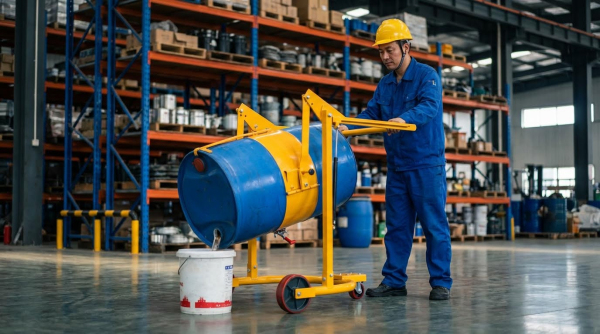
Powered equipment increased throughput and reduced manual handling risk in drum operations. Engineers selected solutions based on drum mass, flow rate, and layout constraints. Correct integration required attention to stability, containment, and regulatory limits on stacking and access. The following subsections describe key equipment families and their application envelopes.
Forklifts, Attachments, And Securement Methods
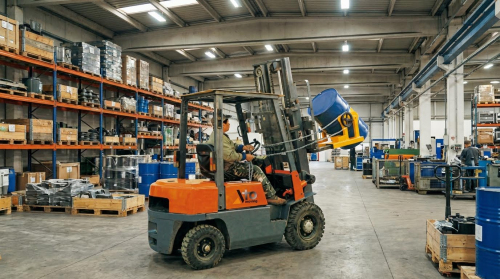
Forklifts moved drums efficiently but required purpose-designed attachments for safe operation. Mechanical drum grabbers, clamp-style handlers, and racker attachments allowed the truck to pick up, rotate, rack, or pour 55-gallon drums without direct manual contact. Operators avoided placing loose drums directly on forks, because sudden stops could eject unrestrained drums and cause loss of containment. Facilities used fork-mounted drum carriers with positive engagement, rated capacities above the maximum drum weight, and where necessary spark-resistant contact surfaces for flammable contents. Procedures also specified low travel height, limited speed, and inspection of pallets for damage that could compromise drum integrity during forklift handling.
Drum Stackers, Rackers, Dumpers, And Mixers
Dedicated drum stackers and rackers handled vertical and horizontal placement in storage racks while controlling drum orientation. Barrel rackers positioned drums horizontally on racks to increase storage density yet still respected recommended limits of two drums high and two wide for inspection access and stability. Powered and manual dumpers, including forklift-mounted and self-contained units, tilted drums in a controlled manner for dispensing, reducing the risk of uncontrolled pours or ergonomic strain. Drum rollers and tumblers mixed drum contents with the bungs closed, preventing worker exposure and contamination while handling liquid masses up to approximately 1 000 kilograms and dry charges near 400 kilograms. Selection criteria included drum diameter range, rotation speed control, enclosure requirements, and compatibility with corrosive or flammable materials.
Cranes, Below-Hook Devices, And Overhead Systems
Overhead cranes and hoists supported drum handling where floor access was constrained or vertical travel dominated. Below-hook drum handlers attached to hooks or trolleys and provided clamping, lifting, and controlled rotation for pouring or positioning. These devices offered manual or powered rotation, 360-degree pour control, and optional spark-resistant features for explosive atmospheres. Engineers verified that below-hook devices carried rated capacities exceeding the combined mass of drum and contents, typically up to 800 pounds for full 55-gallon drums. Overhead monorails or bridge cranes reduced forklift traffic in congested areas, but required strict inspection regimes, defined lift paths, and tagout procedures to protect personnel beneath suspended loads.
Cobot, AGV, And Digital Twin Integration Trends
Collaborative robots (cobots) and automated guided vehicles (AGVs) started to appear in drum logistics to reduce repetitive manual moves. AGV-based drum movers transported pallets or single drums between filling, storage, and dispensing areas using programmed routes and integrated safety scanners. Cobots, typically combined with specialized grippers or assist fixtures, supported tasks such as bung removal, labeling, or valve actuation rather than full-mass lifting. Digital twins of drum handling lines allowed engineers to simulate traffic patterns, queue times, and stacking schemes before deployment, improving layout and reducing near-miss potential. Future systems likely combined real-time tracking of drum identity, condition, and contents with automated routing logic, while still requiring clear human override and emergency procedures.
Summary And Best Practices For Drum Handling Systems
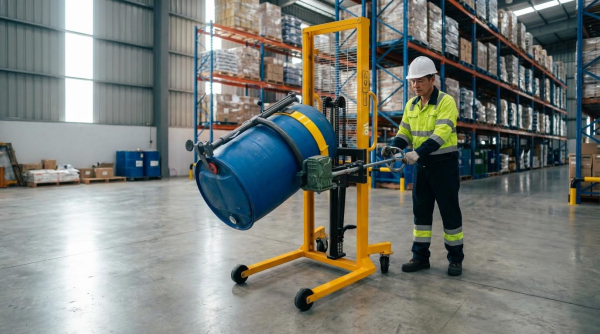
Industrial facilities handled 55-gallon drums that often weighed 180–360 kilograms and contained flammable or corrosive liquids. Effective drum handling programs therefore integrated risk assessment, engineered equipment, and operator training into one system. The safest facilities standardized procedures from receipt, internal transport, storage, to dispensing and disposal, and verified them against OSHA, EPA, and fire code requirements.
Key technical findings indicated that manual handling of full drums should remain the last resort. Facilities reduced injuries and spills by prioritizing drum trucks, dollies, cradles, and lifters for short moves, and forklifts with purpose-built attachments for longer runs and vertical handling. Best practice storage limited stacks to two drums high and two wide on sound, defect-free pallets or racks, enabling visual inspection and minimizing load eccentricity and instability. Operators wore PPE matched to the contents and the Safety Data Sheet, including hand, foot, eye or face, and sometimes respiratory protection.
From an implementation standpoint, sites benefited from standardizing a small set of drum handling devices with clearly defined use cases, inspection routines, and lockout rules. Periodic training and refreshers on upending techniques, attachment securement, and spill response reduced incident rates. Planners also considered flow paths, floor conditions, and exclusion zones for overhead handling when selecting drum stackers, below-hook gear, or automated movers.
Looking forward, greater use of powered handlers, AGVs, and cobot-assisted systems will continue to reduce manual exertion and exposure. Digital twins of drum storage areas and handling routes will support layout optimization, throughput analysis, and what-if safety studies. However, even with advanced automation, facilities will still need robust labeling, SDS management, conservative stacking limits, and disciplined PPE and inspection practices to maintain a balanced, resilient drum handling strategy.