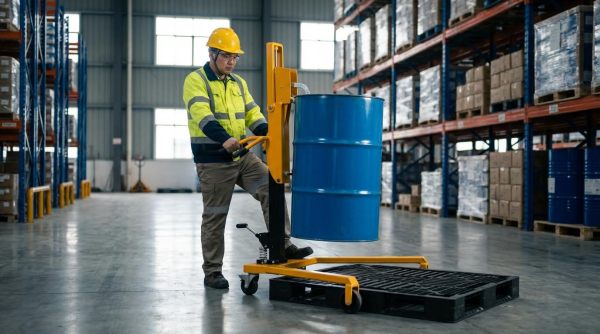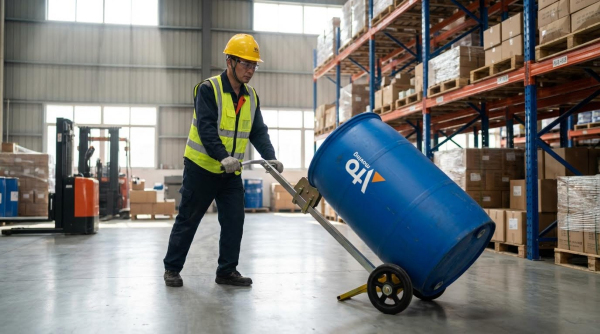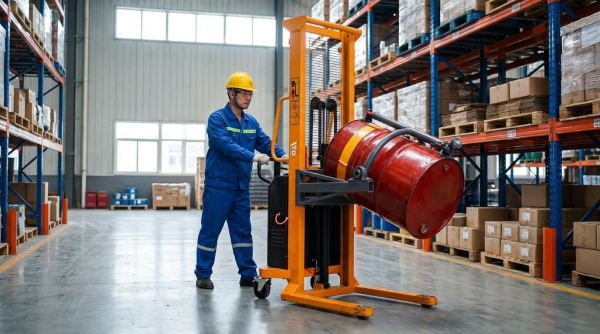
Drum lifters and drum hoists allowed plants, warehouses, and terminals to move heavy drums with controlled, repeatable handling. Engineers used these devices with overhead cranes, hoists, and forklift barrel grabber to lift, tilt, and position steel, plastic, and fiber drums safely. This article outlined the main industrial drum lifter types, their typical load ratings, and how to select devices that match drum geometry and lifting equipment. It also described how to use a drum handler safely through correct rigging, inspection, and maintenance practices, then closed with a concise summary of best-practice guidance for drum lifting safety.
Drum Lifter And Hoist Types For Industry
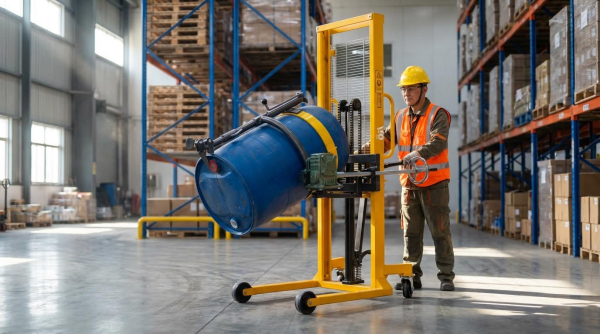
Industrial users who search for how to use a barrel lifter usually need to understand which lifter type fits their drums, hoists, and workflows. Drum lifters and drum hoists connected to cranes, monorails, or fork attachments allowed safe handling of steel, plastic, and fiber drums when operators matched device geometry, load rating, and drum orientation needs. This section explains the main categories of drum lifters used in plants, warehouses, and chemical facilities, focusing on typical capacities, compatible drum types, and safe use envelopes. Understanding these options helped engineers and safety managers specify equipment that minimized manual handling while keeping operations compliant with lifting standards.
Vertical Drum Lifters And Grabbers
Vertical drum lifters and grabbers held drums in an upright position for lifting, transfer, and vertical placement. Typical designs used 2-point or 3-point contact arms that engaged the top lip or chime of 30- and 55-gallon closed-head drums. Rated capacities usually ranged from 450 kilograms to about 700 kilograms, depending on construction and contact configuration. Operators who wanted to know how to use a forklift drum lifter in vertical mode attached the lifter’s main ring or shackle to an overhead hoist hook, centered the grabber above the drum, then lowered until the arms seated under the chime. A controlled vertical lift kept the drum plumb, which was essential for moving filled liquid drums into containment pallets or process lines.
Horizontal Drum Lifters And Barrel Slings
Horizontal drum lifters and barrel slings supported drums on their side for storage, loading into racks, or salvage overpacking. Chain barrel lifts and mechanical slings typically accepted 30- and 55-gallon steel drums and carried rated loads up to about 900 kilograms. Designs used chime hooks or shaped saddles that locked around the drum circumference to prevent rolling during lift. When learning how to use a electric drum stacker in horizontal applications, operators positioned the sling around the drum at the designated balance points, attached the sling ring to the hoist, then applied a slow test lift to verify that the drum remained stable. This configuration allowed precise placement into horizontal cradles or overpacks while keeping personnel clear of pinch and crush zones.
Saddle, Tilting, And Pouring Drum Attachments
Saddle and tilting drum attachments supported the drum body in a cradle and allowed controlled rotation for decanting liquids. These devices commonly handled 30- and 55-gallon steel, plastic, or fiber drums with capacities around 450–450 kilograms, depending on the tilt mechanism. The saddle held the drum’s cylindrical surface, while side trunnions or gear mechanisms enabled rotation using a handle, chain wheel, or geared drive. For operators investigating how to use a drum lifter for pouring, the correct method involved securing the drum in the saddle, confirming clamp engagement, then lifting the entire assembly with a hoist or forklift-mounted hook. Once suspended at the desired height above the receiving vessel, the operator rotated the drum in a controlled manner to manage flow rate and prevent splashing or overfilling.
Bucket And Small-Container Lifting Devices
Bucket and small-container lifting devices extended drum-lifting concepts to pails and smaller vessels used in batch processes. Typical bucket lifters accommodated 5–6.5 gallon pails with rated capacities around 90 kilograms, using adjustable upper bails or frames to grip the handle and upper rim. These devices attached to hooks on chain hoists or overhead cranes and allowed controlled tipping for emptying powders, granules, or liquids into mixers or reactors. In practice, anyone learning how to use a drum lifter for small containers followed the same principles as full-size drum handling: verify container compatibility, check rated load, attach the bail to the hoist hook with the latch closed, then perform a trial lift before moving over equipment or personnel. This ensured predictable container behavior despite smaller size and potentially higher center-of-gravity shifts during pouring.
Load Limits, Ratings, And Selection Criteria
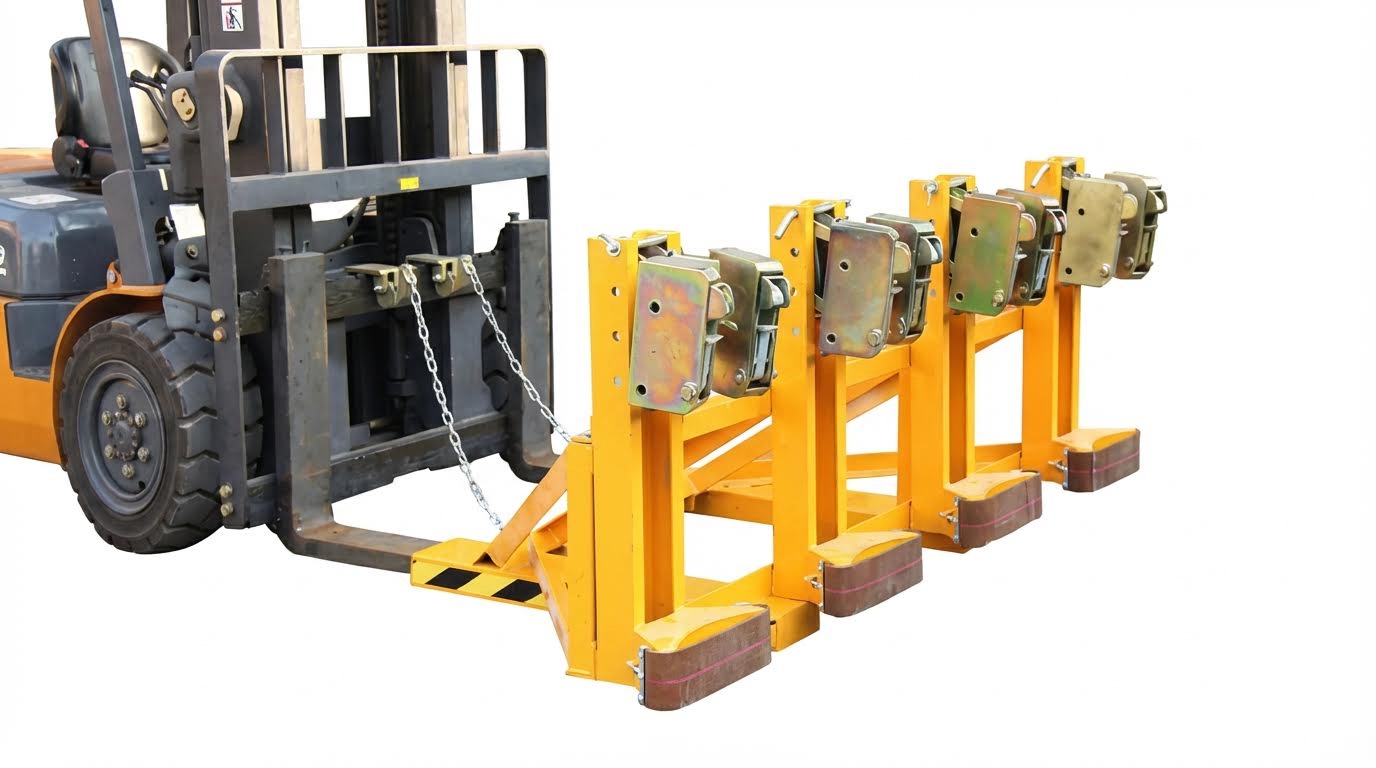
Understanding load limits and ratings is central to learning how to use a drum lifter safely and efficiently. Engineers and safety managers must match device capacity, drum geometry, and rigging interface to each lifting task. Proper selection reduces mechanical overstress, prevents dropped loads, and supports compliance with international and national safety standards.
Typical Capacities For 30- And 55-Gallon Drums
Most industrial drum lifters for 30- and 55-gallon drums operated within a capacity range of 450 kg to 900 kg. Chain-type vertical grabbers that engaged the top chime typically carried rated loads around 450 kg to 1 000 kg for closed-head drums. Horizontal barrel lifters and slings often reached higher ratings, up to about 900 kg or 2 000 lb, due to dual-point or multi-point support. Crane-mounted drum beams and saddle lifts for 55-gallon steel drums sometimes reached 680 kg to 700 kg or 1 500 lb, especially when designed for both crane hooks and fork tines. When learning how to use a drum lifter, operators had to treat the lowest-rated component in the system as the governing capacity, including hooks, shackles, and hoist.
Matching Drum Geometry, Chime, And Head Type
Correct matching of lifter type to drum geometry determined whether the grip stayed secure under dynamic loading. Closed-head steel and plastic drums with a pronounced top chime worked well with rim-grabbing vertical lifters and three-arm overhead grabbers. Open-head drums with removable lids required devices that cradled the shell, such as saddles or band clamps, because top-chime-only lifters could deform or dislodge the lid. Fiber drums needed lifters that distributed contact pressure over a larger area to avoid crushing the sidewall. Engineers specifying how to use a forklift drum grabber in a process line had to confirm drum diameter range, chime profile, and head configuration against the manufacturer’s compatibility tables before approval.
Safety Factors, Standards, And Rated Load Marking
Drum lifters and hoist-attached devices were typically designed with safety factors between 4:1 and 5:1 relative to the rated working load limit. Grade 80 or higher alloy chain on drum lifters complied with prevailing OSHA and ANSI provisions for overhead lifting hardware. Each device required permanent rated load marking in kilograms, plus identification of orientation limits, such as vertical or horizontal use only. Users learning how to use a drum lifter safely had to treat the rated load as an upper bound, never as a target for routine operation. Periodic load testing, often at 100% to 125% of rated capacity under controlled conditions, verified that the equipment still met the design safety factor after service.
Integration With Cranes, Hoists, And Fork Attachments
Drum lifters frequently interfaced with overhead cranes, manual chain hoists, electric wire-rope hoists, or fork-mounted beams. The top lifting eye or bail had to match the hook throat opening and latch style while maintaining full hook seating without point loading. When integrating with fork attachments, engineers checked fork section modulus, spacing, and locking mechanisms to prevent sliding or rotation during travel. The complete lifting system capacity equaled the minimum of crane, hoist, rigging hardware, and drum lifter ratings. Safe procedures for how to use a forklift barrel grabber also required keeping the hoist body and chain clear of the drum shell, maintaining a straight load path between hook and drum center of gravity, and verifying that travel speeds and acceleration did not induce swinging or side loading beyond design assumptions.
Safe Operation, Inspection, And Maintenance
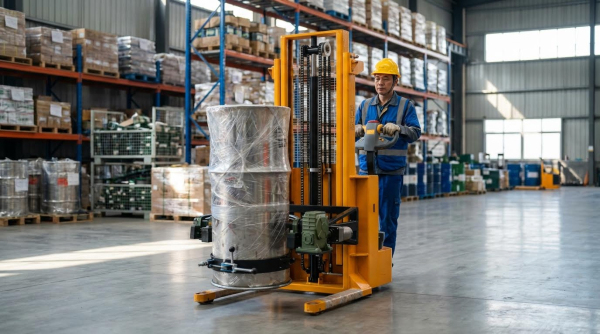
Safe operation of drum lifters starts with understanding how to use a barrel lifter within its rated capacity and geometry limits. Operators must combine correct rigging, disciplined inspections, and structured maintenance to control risk. This section explains how to apply hoist and rigging best practices specifically to vertical grabbers, horizontal lifters, saddles, and bucket devices. It also covers how inspection intervals, wear management, and digital tools support long-term reliability.
Rigging Practices And Operator Training Needs
Operators must know the exact rated load of the drum lifter, hoist, and supporting structure before rigging. Training should cover drum types, including 30- and 55-gallon steel, plastic, and fiber drums with closed heads and top lips. Personnel must understand which lifters work only with closed-head drums and why open-head drums are unsuitable. Rigging practice should always align the hoist hook, lifter, and drum center of gravity in a straight, vertical line.
When learning how to use a drum lifter, operators must verify that all arms, jaws, or saddles fully engage the drum chime or shell. They should avoid side pulls, shock loading, or dragging drums while suspended. Training must include standard hand signals or radio protocols for communication with crane or hoist operators. Procedures should prohibit workers from standing under suspended drums or moving drums over occupied work areas.
Formal training should reference applicable OSHA and ANSI provisions for overhead lifting and below-the-hook devices. Practical exercises should include vertical grabbers, horizontal slings, and tilting saddles to demonstrate different stability behaviors. Supervisors should document competency, including pre-use checks, correct attachment methods, and emergency response actions. Refresher training is advisable after near-miss events, equipment modifications, or process changes.
Pre-Use Checks, Periodic Inspection, And Testing
Pre-use checks focus on obvious defects that could affect the next lift. Operators should examine hooks, shackles, and lifter frames for cracks, deformation, or missing fasteners. They must confirm that latches, locking pins, and spring-loaded arms move freely and return to their locked position. Labels showing rated load, drum size range, and orientation limits must remain legible.
Periodic inspections require a more detailed review by a designated person. Inspectors should measure wear on load-bearing pins, bushings, and pivot points against manufacturer limits. They should check welds on frames, arms, and saddles for fatigue cracks, especially near high-stress corners. Coatings should be evaluated for corrosion that could reduce cross-section or hide damage.
Testing practices should follow local regulations and standards for below-the-hook lifting devices. Service load tests often apply a percentage above rated load under controlled conditions to verify structural integrity and brake performance. Drum tilters and pourers may require functional tests of rotation mechanisms with water-filled drums. All inspection and test results should be recorded, with clear criteria for repair, removal from service, or disposal.
Chain, Hook, And Structural Wear Management
Chain and hook integrity is critical for safe drum lifting. Operators should check chains for kinks, twists, elongation, or stiff links caused by rust or debris. Grade and size markings on chains and hooks must remain visible to confirm compatibility with the lifter and hoist. Any sign of “popping” or uneven motion during lifting indicates internal damage or contamination.
Hooks must retain proper throat opening and tip alignment. Inspectors should look for deformation, nicks, or cracks, especially at the saddle and latch area. Latches must close completely and resist unintended opening under vibration. Hooks that exceed allowable throat opening or show cracks under magnetic particle or dye penetrant testing must be removed from service.
Structural components of drum lifters, such as arms, saddles, and frames, require systematic wear management. Contact points that grip the drum chime or shell should maintain designed profiles and friction surfaces. Excessive wear can reduce engagement depth and allow slippage during tilting or horizontal lifting. Lubrication of pivot joints and cleaning of contact surfaces help control wear and maintain predictable friction behavior.
Predictive Maintenance And Digital Monitoring
Predictive maintenance uses data to anticipate failures before they occur. For drum lifting systems, this can include monitoring hoist running hours, number of lifting cycles, and cumulative lifted mass. Sensors on electric hoists can log overload events, over-temperature conditions, or brake slip incidents. These data points help maintenance teams schedule component replacement based on actual usage instead of fixed calendar intervals.
Digital inspection tools improve consistency and traceability. Mobile applications can guide inspectors through standardized checklists for chains, hooks, lifters, and controls. They can store photos of suspected defects and trend changes in wear or corrosion. Cloud-based records support compliance audits and make it easier to link inspection findings to specific serial numbers and locations.
Integrating condition monitoring with inventory management allows faster response when a drum lifter approaches its wear limits. Maintenance planners can pre-stage replacement chains, hooks, or lifter assemblies to minimize downtime. Predictive analytics can identify which operating areas generate higher wear rates, prompting process changes or alternative equipment selection. Combined, these practices create a closed-loop system that continuously improves drum lifting safety and reliability.
Summary Of Best Practices For Drum Lifting Safety
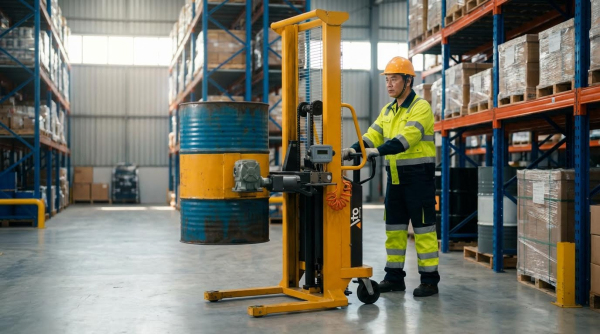
Safe drum handling depends on understanding how to use a barrel lifter correctly, selecting the right attachment, and keeping hoists maintained. Operators should always verify that the lifter, hoist, and rigging are rated above the drum mass, including liquid contents and any residues. They should match the device to the drum type, such as closed-head 30- or 55-gallon drums with a top chime, and avoid using chime-grip devices on open-head drums. Clear labeling of rated load, combined with visible inspection tags and documented service history, helps supervisors control risk during daily operations.
When planning how to use a drum lifter, supervisors should require formal rigging and hoist training, including sling selection, center-of-gravity awareness, and safe working load concepts. Operators should never stand under suspended drums, move drums over personnel, or leave a suspended drum unattended. They should use agreed hand or radio signals with crane operators and maintain a straight line between suspension point and load hook to avoid side loading. Pre-use checks should cover hooks, latches, chains, and drum-contact points for deformation, cracks, or corrosion, with immediate removal from service if any defect appears.
Maintenance teams should apply preventative programs based on manufacturer instructions and relevant OSHA and ANSI requirements for overhead lifting equipment. They should clean, inspect, and lubricate chains, gears, and bearings at defined intervals, and perform periodic load tests and brake tests to validate performance under rated capacity. Digital logging of inspections, repairs, and sensor data from modern hoists supports predictive maintenance and early detection of wear trends. As drum lifters integrate more with cranes, fork attachments, and automated systems, facilities should balance new technology adoption with rigorous procedural controls, ensuring that every new device still follows fundamental lifting safety principles.