Oil drum handling equipment and safe moving techniques determine how to move oil drums without spills, injuries, or downtime. This article covers core safety principles, equipment options for lifting and pouring, and engineering criteria for selecting and maintaining drum systems. It explains how load dynamics, regulations, ergonomics, and design choices interact in real facilities that handle flammable or hazardous liquids. By the end, you will understand how to specify, operate, and maintain oil drum handling solutions that keep people safe and processes efficient.
Core Principles Of Safe Oil Drum Handling
Understanding core principles is the first step in learning how to move oil drums safely and efficiently. These principles govern how operators evaluate drum loads, assess liquid hazards, comply with regulations, and protect their own bodies during repetitive handling tasks.
Load Characteristics: Weight, Center Of Gravity, Slosh
Oil drums typically weigh between 200 kg and 300 kg when full, so accurate weight data is essential before any move. Operators should verify drum mass from labels, safety data sheets, or site inventory systems, and then confirm that handling equipment has at least a 25% capacity margin. The center of gravity for upright drums lies on the drum axis, but it shifts quickly when the drum tilts or when contents move. Liquid slosh increases dynamic loads during acceleration, braking, and turning, which can overload casters or destabilize trucks. To control slosh, operators should move at low speeds, avoid sudden direction changes, and use equipment that keeps drums as vertical as possible until positioned. When drums are partially filled, free surface effects become more pronounced, so risk controls must be stricter than for completely full drums.
Risk Assessment For Liquids, Hazards, And Spill Zones
Before deciding how to move oil drums, supervisors should complete a task-specific risk assessment. This assessment should classify the liquid by flammability, toxicity, and reactivity, using safety data sheets as the primary reference. Planners then define spill zones along the intended route, including slopes, thresholds, drains, and confined spaces where vapors could accumulate. Controls include selecting sealed drum handling attachments, setting low speed limits, and keeping spill kits and absorbents at defined response points. Facilities should also design drum traffic routes that avoid ignition sources, high pedestrian density, and areas without secondary containment. Clear marking of drum lanes and emergency stop zones helps operators anticipate hazards and maintain safe separation distances.
Regulatory And Standards Context (OSHA, ATEX, ANSI)
Safe oil drum handling must align with occupational safety and equipment standards. In the United States, OSHA regulations require employers to control hazardous energy, prevent overexertion, and manage flammable liquids through proper storage, transfer, and spill control. ANSI standards provide design and performance criteria for drum trucks, lifters, and lifting attachments, including stability, load rating, and labeling requirements. In explosive atmospheres, equipment must comply with ATEX classifications, typically equipment group II for industrial sites and zones such as zone 1 for areas with occasional explosive atmospheres. That means drum handling systems must limit mechanical sparking, surface temperatures, and static discharge, and they must use certified components for brakes, casters, and hydraulic systems. Documented conformity and periodic inspections support both regulatory compliance and internal safety audits.
Ergonomics And Injury Prevention In Drum Work
Manual handling of oil drums exposes workers to high compressive forces on the spine and significant shoulder loading. Facilities should therefore minimize direct lifting, tilting, or rolling of drums and instead use engineered aids such as drum dollies, and powered lifters. When operators must position drums manually, they should push rather than pull, keep hands away from pinch points at chimes and pallets, and maintain neutral wrist posture. Adjustable handles, low rolling resistance casters, and powered lift or tilt functions reduce peak forces and repetitive strain. Training should cover body posture, safe walking speeds, and communication signals between team members. Regular review of near-miss reports and discomfort complaints helps engineers refine routes, floor conditions, and equipment selection to reduce cumulative musculoskeletal risk over time.
Equipment Options For Lifting, Moving, And Pouring Drums
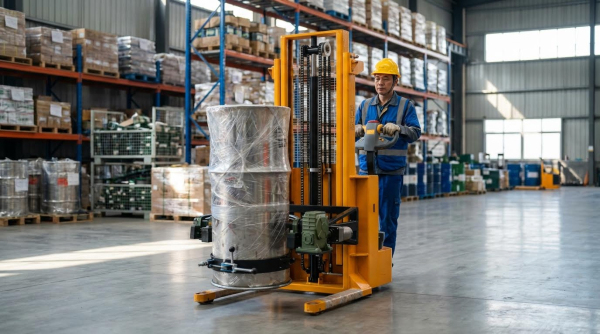
Understanding how to move oil drums safely starts with selecting the right mechanical aids. Different equipment types address vertical lifting, horizontal transport, and controlled pouring, while limiting manual handling and reducing spill risk.
Drum Lifters, Stackers, And Below‑Hook Devices
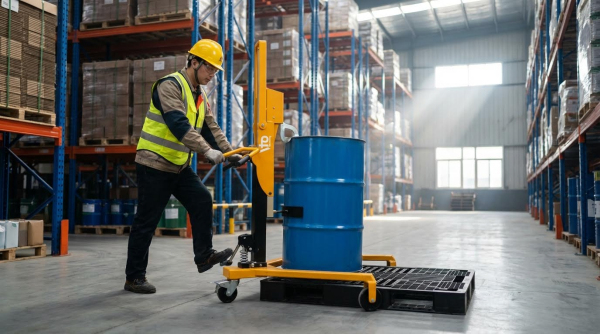
Drum lifters and stackers handle the vertical dimension of how to move oil drums in confined plants or warehouses. Typical capacities range from 450 kg to 900 kg, matching standard 200–210 L oil drums with safety margins. Manual, hydraulic, or electric lift mechanisms raise drums from floor to pallet height or to multi-tier racking. Below-hook drum lifters interface with overhead cranes or hoists and use positive mechanical grabs, web straps, or clamp rings to secure the drum shell. Operators must match grab geometry to drum diameter and rim profile, especially when mixing steel, plastic, and fiber drums. For process integration, stackers with tilt or rotation heads allow lifting and decanting into reactors or mixing vessels without re-rigging the drum.
Drum Trucks, Dollies, And Mobile Trolleys
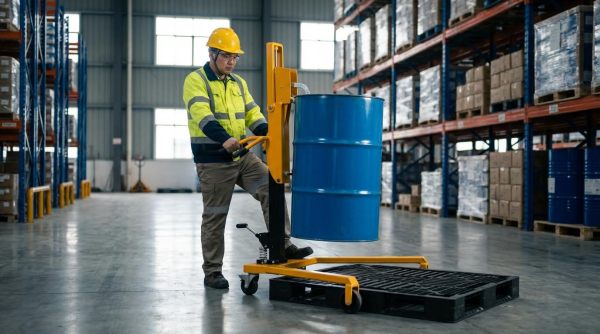
Drum trucks, dollies, and mobile trolleys address horizontal transport when planning how to move oil drums between storage, decanting, and loading zones. Drum dollies place the drum on a low, circular platform with swivel casters that provide 360° maneuverability in tight aisles. They suit short moves on smooth floors and reduce the risk of base corrosion from direct floor contact. Drum trucks use a tilting frame and wheels to convert the drum into a hand-truck style load, enabling one operator to tip and roll a 200 L drum over longer distances. Mobile trolleys combine a wheeled chassis with gripping or clamping arms, often with a small integrated lift stroke. Side-grip trolleys improve stability because the drum center of gravity stays between the wheelbase, which reduces overturning risk on uneven floors. Specifying polyurethane-tired swivel casters improves traction and protects coated concrete surfaces.
Rotators, Tumblers, And Controlled Pouring Systems
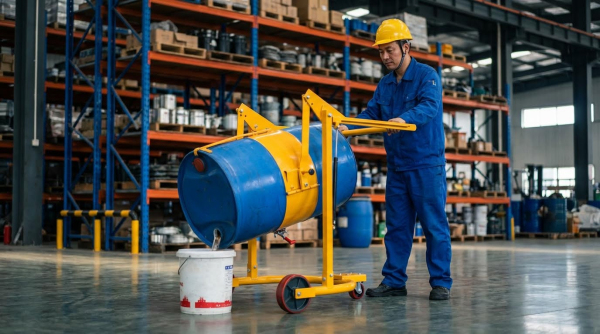
Rotators and tumblers solve the problem of how to move oil drums when the goal includes mixing, homogenizing, or decanting viscous liquids. Drum rotators support the drum on rollers or in a cradle and rotate it around its axis to re-suspend settled solids or blend additives without opening the drum. Typical systems handle up to about 450 kg and use guarding and interlocks to prevent access to rotating parts. Tumblers can operate at higher rotational speeds or with oscillating motion to achieve more aggressive mixing, which is useful for coatings or high-solids slurries. Controlled pouring systems, including drum pourers and tipper heads, allow the operator to tilt the drum through a defined angle using a crank, gearbox, or powered actuator. Fine control of rotation angle and speed reduces surge flow, limits slosh-induced instability, and improves dosing accuracy into smaller vessels or dosing hoppers.
Forklift, Crane, And AGV Integration For Drums
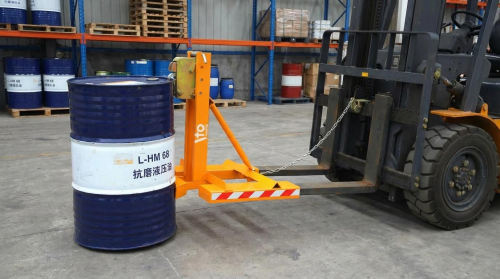
Forklift, crane, and AGV integration is central to large-scale strategies for how to move oil drums efficiently across a site. Forklift-mounted drum clamps or rim-grip attachments let operators pick drums directly from the floor or pallets without leaving the seat, improving throughput on loading docks. Attachments with rotation capability allow lifting, transporting, and pouring in one sequence, but require derating the forklift capacity according to the attachment manufacturer’s data. Crane-integrated drum grabs and below-hook carriers are suitable for congested process areas where overhead handling avoids floor-level traffic. Automated guided vehicles (AGVs) or autonomous mobile robots can carry specialized drum frames or palletized drum loads to support lights-out or low-staff operations. For AGV use, drum frames must positively locate each drum to withstand acceleration, braking, and cornering without shifting. Across all integrations, facilities should define traffic routes, floor bearing capacities, and clearances to prevent collisions and maintain compliance with lifting and transport standards.
Selection, Design, And Maintenance For Oil Drum Systems
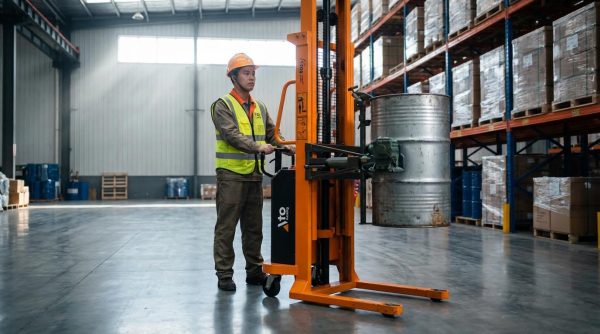
This section explains how to move oil drums safely by aligning equipment choice, engineering design, and preventive maintenance. Engineers should treat the drum, the fluid, and the operating environment as a single system when specifying drum movers, pumps, and lifting devices.
Matching Equipment To Drum Type, Size, And Environment
Engineers should first define drum geometry and content before selecting any handling system. Standard oil drums typically hold 200–210 liters and weigh up to 350 kg when filled, so equipment must provide at least a 25% safety margin on rated capacity. Clamping mechanisms must suit the shell profile and material, for example, steel-band or rim clamps for steel drums and cradle or belt grips for thin-wall plastic drums. For mixed fleets of 20–55 gallon drums, adjustable jaws and quick-change saddles reduce setup time and misfit risks.
Environmental conditions strongly influence how to move oil drums efficiently. Cold yards increase oil viscosity and rolling resistance, so designers should specify larger-diameter wheels and higher push–pull limits. Indoors, narrow aisles require compact drum trucks or dollies with high-maneuverability swivel casters to maintain safe turning radii. For chemical plants or refineries, engineers should consider floor flatness, ramp gradients, and spill containment layouts when choosing drum lifters, stackers, and rotators.
Process requirements also define equipment choice. Where operators only reposition drums over short distances, low-profile dollies or two-wheel drum trucks usually suffice. For frequent vertical transfer to racks or process inlets, hydraulic drum lifters or stackers with precise lowering control reduce impact loads on both drums and floors. If drums require mixing or decanting, integrated rotators or tumblers with controlled tilt angles allow safe agitation and pouring without manual handling.
ATEX, Hygienic, And Corrosion‑Resistant Design Choices
When moving oil drums in potentially explosive atmospheres, equipment must comply with ATEX and related standards. Designers should select drum movers classified for equipment group II and suitable zone categories, with surface temperatures below the auto-ignition temperature of the handled fluids. Spark control requires non-sparking contact surfaces, conductive wheels, and verified earthing points to dissipate static charges during rolling and lifting. Control circuits and sensors must use intrinsically safe or explosion-proof designs where specified by the area classification.
Hygienic and corrosion-resistant designs become critical in food, beverage, and pharmaceutical applications that also use oil-based ingredients or lubricants. Stainless steel frames with smooth welds and minimal crevices allow thorough cleaning and reduce microbial harborage. Designers should avoid exposed threads in product zones and choose sealed bearings and stainless fasteners to withstand frequent washdown. For outdoor depots or marine terminals, hot-dip galvanized or coated steel with sealed hydraulic components increases service life under salt or chemical exposure.
Seal and hose materials must match the oils and additives in use. Nitrile or Viton elastomers typically resist mineral oils and many synthetic lubricants, but engineers must verify compatibility with specific detergents, solvents, or corrosion inhibitors. Where cross-contamination is a risk, color-coded or dedicated drum pumps and transfer lines reduce mixing errors. Clear documentation of the intended zone rating, cleaning regime, and chemical exposure conditions helps maintenance teams preserve the original compliance throughout the equipment life.
Casters, Hydraulics, And Structural Design Considerations
Wheel and caster selection strongly affects how to move oil drums with low operator effort. Swivel casters with polyurethane treads usually provide a good balance of load capacity, floor protection, and rolling resistance for smooth concrete floors. For rough or damaged floors, larger-diameter wheels reduce shock loads and help maintain stability under dynamic conditions. Engineers should calculate push–pull forces at full load and keep them within ergonomic guidelines, typically below 200 N for sustained manual effort.
Hydraulic systems enable controlled lifting of heavy drums but require robust design. Cylinders, hoses, and fittings must be rated well above maximum working pressure, with safety factors aligned to relevant standards. Flow-control or counterbalance valves should limit descent speed to prevent sudden drops if a hose fails. For manual hydraulic stackers, handle geometry and pump displacement should provide smooth lift with reasonable stroke forces, avoiding repetitive-strain risks during intensive use.
Structural frames must resist combined vertical, lateral, and torsional loads. Engineers should consider worst-case scenarios such as off-center drum loading, sudden stops, and small impacts with obstacles. Finite element checks or conservative section sizing help maintain deflection within limits that preserve drum grip and wheel alignment. Guarding around pinch points, rotating drums, and hydraulic linkages reduces entrapment hazards. Clear sightlines and low center of gravity improve operator control, especially when maneuvering in congested aisles or near spill containment equipment.
Preventive Maintenance For Drums, Pumps, And Lifters
Preventive maintenance is central to safe, repeatable oil drum handling. Operators should perform pre-use checks on drum trucks, lifters, and pumps, looking for cracked welds, bent frames, leaking seals, and flat-spotted wheels. Hydraulics require regular inspection of cylinders, hoses, and connections for seepage, corrosion, or abrasion. Maintaining correct fluid levels and replacing hydraulic oil at defined intervals preserves lift performance and reduces internal wear.
Drum pumps that transfer oils need structured maintenance schedules. Daily checks should confirm that hoses remain flexible, without kinks, splits, or discoloration that indicate chemical attack. Monthly inspections should focus on seals, O-rings, and check valves, replacing components that show swelling, hardening, or leakage. Quarterly deep cleaning with compatible degreasers removes residue that could cause sticking valves or inaccurate flow, while avoiding high-pressure sprays that force moisture into seals.
Rolling equipment, including dollies and drum trucks, benefits from periodic lubrication of pivot points and wheel bearings. Technicians should verify caster swivel action, wheel fastener tightness, and brake function. Corroded or deformed components that affect tracking or stability require immediate replacement. For storage, keeping equipment dry and protected from ultraviolet exposure slows degradation of elastomers and hoses. Recording inspections, repairs, and part replacements in a simple log supports regulatory compliance and gives engineers data to refine replacement intervals and improve overall system reliability.
Summary: Optimizing Safe, Efficient Oil Drum Handling
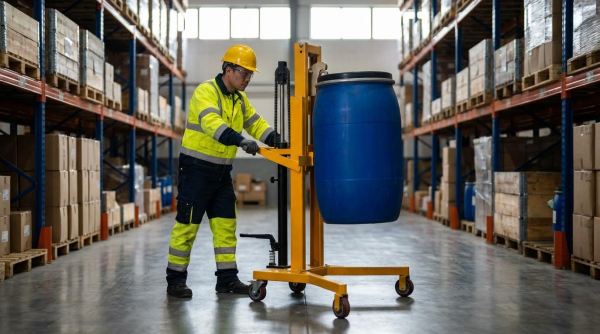
Knowing how to move oil drums safely required a structured approach that combined engineering controls, procedures, and training. Facilities that applied core principles such as understanding drum weight, center of gravity, and liquid slosh reduced tip‑over and spill risk significantly. Systematic risk assessments around spill zones, ignition sources, and incompatible chemicals supported compliance with OSHA, ATEX, and ANSI requirements while limiting environmental impact.
Optimized operations used purpose‑designed equipment instead of manual handling. Drum lifters, trucks, dollies, rotators, and controlled pouring systems allowed single operators to move typical 200–210 liter drums weighing up to several hundred kilograms with controlled acceleration, braking, and tilt. Integration with forklifts, cranes, and automated guided vehicles enabled repeatable, low‑strain material flow from receiving to storage, processing, and waste handling. Correct selection of casters, hydraulics, and structural members improved maneuverability in tight aisles and extended equipment life.
From a design and selection perspective, matching equipment to drum material, size, and environment was essential. ATEX‑rated, hygienic, or corrosion‑resistant constructions supported explosive, cleanroom, or caustic conditions without sacrificing durability. Preventive maintenance programs for drums, pumps, and lifters that included seal inspection, hydraulic checks, and structural verification lowered life‑cycle costs and reduced unplanned downtime. These programs also helped keep lifting and dispensing systems within their original performance envelope.
Looking ahead, the way industry decided how to move oil drums continued to evolve toward more automation, better ergonomics, and higher data visibility. Sensor‑based overload protection, interlocks, and condition monitoring supported safer, leaner operations. However, even as technology advanced, fundamentals remained constant: respect the load, control the motion path, protect the operator, and maintain the equipment. Operations that balanced investment in modern drum handling technology with rigorous procedures and training achieved the best combination of safety, efficiency, and regulatory compliance. For instance, integrating tools like the forklift barrel grabber or drum dolly could streamline workflows further.