Facilities that search for how to handle hazardous material drums safely need clear, practical rules that work on the floor, not just on paper. This article follows the full lifecycle of hazardous drums, from compliant storage and pressure control to safe movement, transfer, and spill response.
You will see how OSHA and transport rules shape drum layouts, fire protection, and containment design, and why PPE and engineering controls must match specific chemical and biological risks. The middle sections compare manual and powered drum stacker equipment, including options for classified areas where ignition control and static management are critical. The final summary ties these topics into a simple, defensible standard that EHS, engineering, and operations teams can apply to keep people, assets, and the environment safe while handling hazardous material drums.
Regulatory Requirements For Hazardous Drums
Regulatory rules answer a core question for safety teams: how to handle hazardous material drums safely without breaches or fires. This section explains the main OSHA and DOT duties for storage, pressurized systems, spill control, and labeling. It links practical warehouse decisions to legal duties so engineers can design layouts, barriers, and procedures that pass audits and protect workers.
OSHA And DOT Rules For Drum Storage
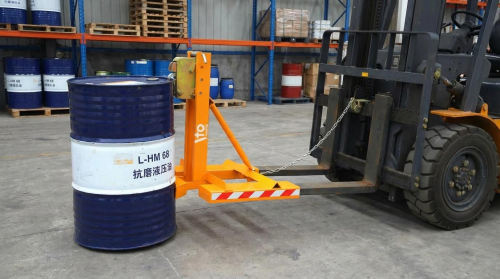
OSHA and DOT rules focus on location, separation, and impact protection. Pressure vessels, drums, and containers with 110 litres or more of flammable or toxic liquid must sit in out-of-the-way areas or behind guards. This reduces collision risk from forklift barrel grabber and trucks. Facilities must not store these drums near open flames, hot metal, or other heat sources. Fire extinguishers sized and rated for the hazard must stay in the same area and remain ready for instant use.
Safe storage plans should include clear aisle widths, marked traffic routes, and fixed barriers around high-risk zones. Engineers should map drum rows so operators can inspect every side without climbing or unsafe reaches. Before any move, staff should inspect drums for dents, corrosion, or leaks where access allows. If stacks block access, crews must relocate drums to a safe, open area and then inspect them before further handling.
Pressurized Systems, Relief, And Fire Protection
Regulators banned the use of pressure to empty shipping drums and containers. Pressurizing drums to push out contents can rupture shells or fittings. When teams build temporary pressurized piping for hazardous liquids or gases, they must fit a relief valve and a bypass. These parts limit pressure and give flow paths that avoid line bursts and sudden releases.
Facilities must keep pressurized drums and vessels away from ignition sources. That includes open flames, hot surfaces, and heaters. Fire protection must match the fuel load and gas type. Extinguishers and other fire systems must meet 29 CFR 1910 Subpart L. They must stay charged, visible, and easy to reach. In layouts, engineers should place extinguishers near exits and likely ignition points but outside the highest risk release zones.
Spill Containment, Diking, And Salvage Drums
Spill control rules define how to handle hazardous material drums safely when leaks occur. Drums with 208 litres or more of flammable or toxic liquid must sit inside dikes or pans that hold at least 35 percent of their total volume. This capacity reduces spread during a single drum failure. Employers must run a spill containment program as part of the safety and health system. The program should cover isolation, collection, and recovery of the full spill volume during major events.
Salvage drums and absorbents must stay on hand wherever leaks, ruptures, or overfills are possible. These salvage containers must meet DOT specs for transport. When a drum risks rupture during movement, teams should transfer contents to a sound container instead of dragging or lifting a weak drum. Transfer tools and pumps must be rated for the specific chemical and area classification. This avoids sparks and material attack on seals and hoses. Careful soil removal and detection tools are required before crews expose buried drums, to avoid punctures and uncontrolled releases.
Labeling, Unknown Contents, And Documentation
Label rules protect workers during every drum move and transfer. Any unlabeled drum must be treated as hazardous until tests confirm the contents. Workers must not open or handle such drums casually. Employers must warn exposed staff about the likely hazards before any movement or transfer. That includes toxicity, flammability, reactivity, and pressure risks.
Once identified, drums must carry clear, durable labels that match safety data sheets and transport documents. Labels should show chemical name, hazard class, and key warnings. Documentation must track drum origin, tests, transfers, and final disposal. This record trail supports both compliance and incident reviews. When crews plan how to handle hazardous material drums safely, they should build label checks into every step: receipt, storage, loading, and shipment. This reduces mix-ups, wrong connections, and incompatible stacking in shared containment areas.
PPE And Engineering Controls For Drum Operations
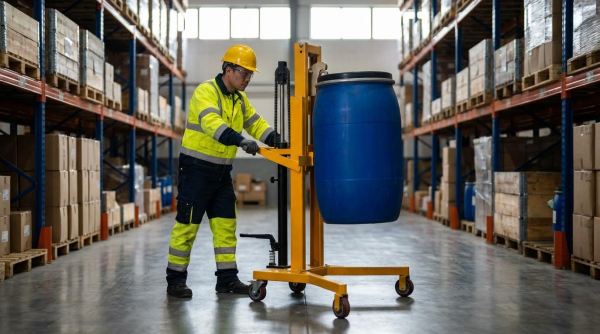
PPE and engineering controls define how to handle hazardous material drums safely in daily operations. Good design limits exposure at the source, while correct PPE protects workers from the remaining risk. This section links PPE choices with ventilation, static control, and procedural systems so plants can meet compliance and keep incident rates low.
PPE Selection For Chemical And Biological Hazards
PPE selection starts with a task-based risk assessment for each drum operation. Engineers classify hazards by state (liquid, solid, vapor), route of exposure, and splash potential. For corrosive or solvent drums, chemical-resistant suits, gloves, and boots must match the specific chemical breakthrough data from the glove and garment charts. For biological drums, operators add fluid-resistant gowns or coveralls and cut-resistant inner gloves if sharps are possible.
Respiratory protection depends on vapor, mist, or aerosol levels relative to exposure limits. Typical options include half-mask respirators with organic vapor or P100 filters, or air-supplied systems in high unknown concentrations. Face shields must always pair with chemical goggles when opening, venting, or sampling drums due to upward splash risk. Facilities should standardize PPE kits for common tasks such as sampling, transfer, and spill response to avoid improvisation.
Fit testing, donning and doffing drills, and decontamination steps are essential. Operators should inspect gloves and suits for pinholes or delamination before each drum-handling shift. Damaged PPE must be removed from service immediately and documented to support continuous improvement.
Ventilation, Containment, And Ignition Control
Engineering controls reduce vapor and aerosol exposure before PPE is needed. Local exhaust hoods, drum venting stations, or enclosed filling cabinets capture vapors at the bung or pour point. For high-volatility liquids, designers size airflow to keep concentrations well below lower explosive limits and occupational exposure limits. Where drums are opened or sampled indoors, airflow direction should always draw air away from the operator breathing zone.
Containment devices such as fume hoods, glove boxes, or enclosed pump modules isolate hazardous streams. These systems work best with clear loading procedures, interlocks, and visual alarms for airflow loss. For flammable or toxic drums, ignition control is critical. Equipment inside the containment zone should use explosion-protected components and non-sparking tools. Hot surfaces, open flames, and unclassified electrical devices must stay outside the classified area around drum operations.
Fire extinguishers sized and rated for the specific hazard must remain within immediate reach of drum transfer points. Facilities should position extinguishers so operators do not pass potential spill zones to reach them. Routine checks confirm pressure, access, and inspection tags stay current.
Static Control, Bonding, And Grounding Practices
Static control is central to how to handle hazardous material drums safely when liquids can ignite. Flowing, splashing, or filtering flammable liquids can generate static charges on drums, hoses, and operators. Bonding connects conductive parts together so no dangerous voltage difference can build up. Grounding links this bonded group to earth so charges can dissipate safely.
During drum filling or emptying, operators should bond the source and receiving containers before opening any bung or valve. A typical arrangement uses dedicated bonding cables with spring clamps on clean metal contact points. Grounding cables then connect the bonded system to a verified plant ground. Visual indicators or test points help maintenance teams confirm continuity.
Flow control also matters. Lower flow rates, submerged fill pipes, and minimal free-fall distances reduce charge generation. Non-sparking drum openers and tools further cut ignition risk at the bung. Written procedures should forbid plastic funnels or unbonded flexible hoses in flammable liquid service unless they include static-dissipative design and verified grounding paths.
Training, Permits, And Procedural Controls
Even strong engineering controls fail without disciplined procedures and training. Facilities should maintain written drum-handling procedures that cover inspection, sampling, opening, transfer, and emergency response. Workers must learn to treat unlabeled or unknown drums as hazardous until analysis confirms contents and compatible PPE and controls. Pre-job briefings should review product hazards, transfer steps, and spill boundaries before any movement.
Permit systems help manage higher-risk tasks such as hot work near drum storage, confined space entry into tank vaults, or temporary transfer setups. Each permit should define isolation steps, ventilation checks, gas testing, and required PPE. Supervisors must verify that salvage drums, absorbents, and overpack options are ready before handling damaged or leaking containers.
Training programs should include hands-on drills for spill response, bonding and grounding, and correct use of drum cart and pumps. Refresher sessions reinforce lessons from near-miss reports and audits. Clear signage at drum areas, color-coded PPE stations, and simple checklists at transfer points help operators apply training in real time and maintain consistent, compliant practice.
Drum Handling Equipment And Design Selection
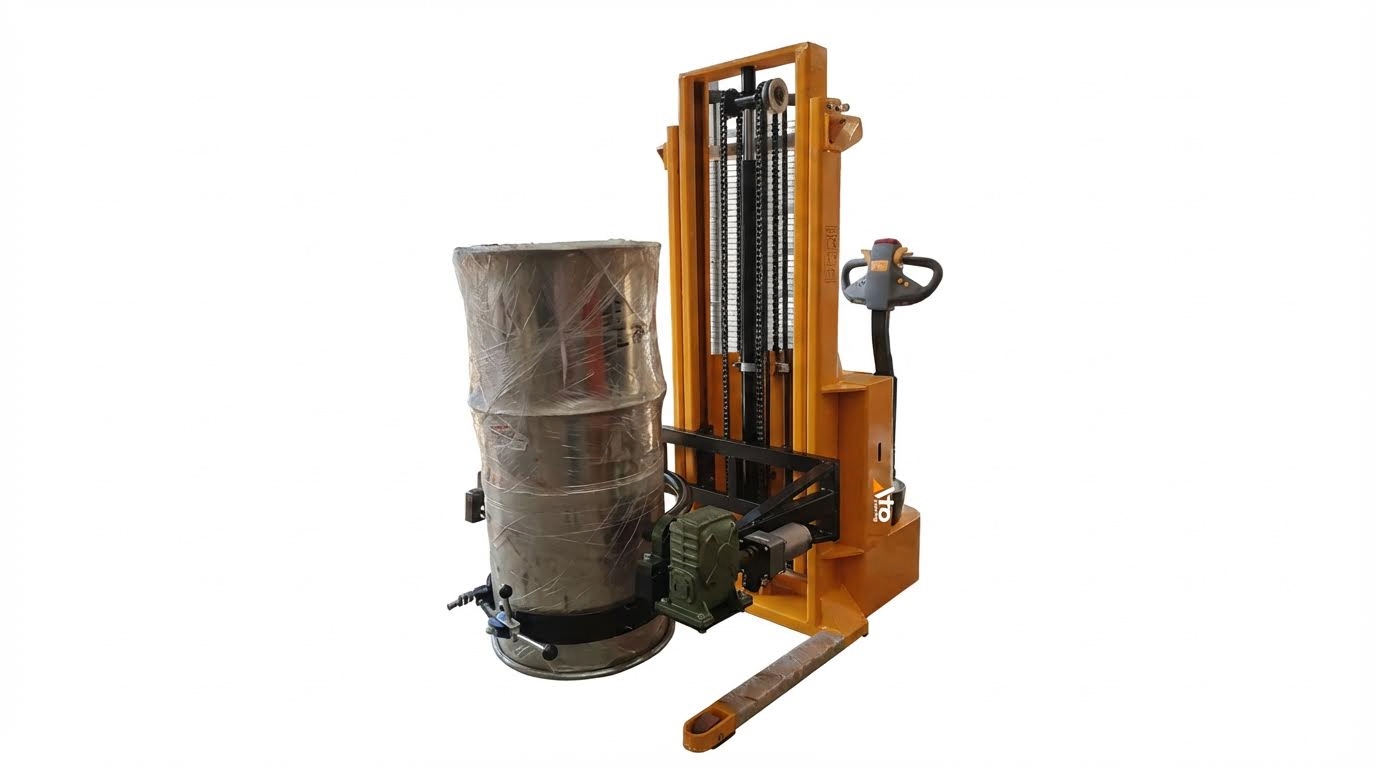
Safe equipment selection is central to how to handle hazardous material drums safely. Engineers must match tools to drum weight, contents, area classification, and transfer method. Design choices affect impact risk, spill probability, and worker exposure. This section links equipment types to practical control of mechanical and chemical hazards.
Manual, Powered, And Ex-Rated Drum Movers
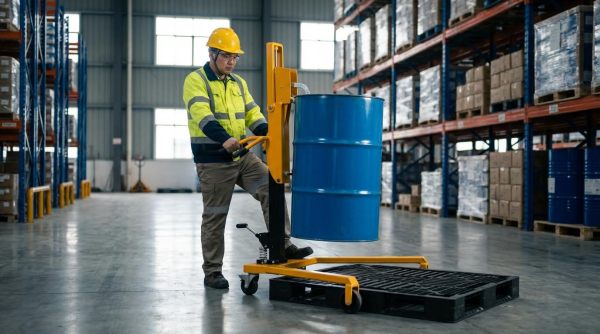
Manual, powered, and explosion-rated movers each suit different risk levels. Manual devices such as dollies, trolleys, and hand pallet trucks fit low throughput areas with short travel distances. They reduce manual lifting but still rely on operator control and good floor conditions. Powered drum trucks and stackers support higher drum counts and longer routes. They lower musculoskeletal strain and improve speed, but they need clear aisles and trained operators.
In zones with flammable vapors, ex-rated movers are essential. These use non-sparking components and controlled surface temperatures. They limit ignition sources from friction, static, and electrical parts. When selecting any mover, engineers should check typical drum masses from 200 kilograms upward and confirm braking, wheel material, and center-of-gravity stability.
Lifting, Tipping, And Transfer System Design
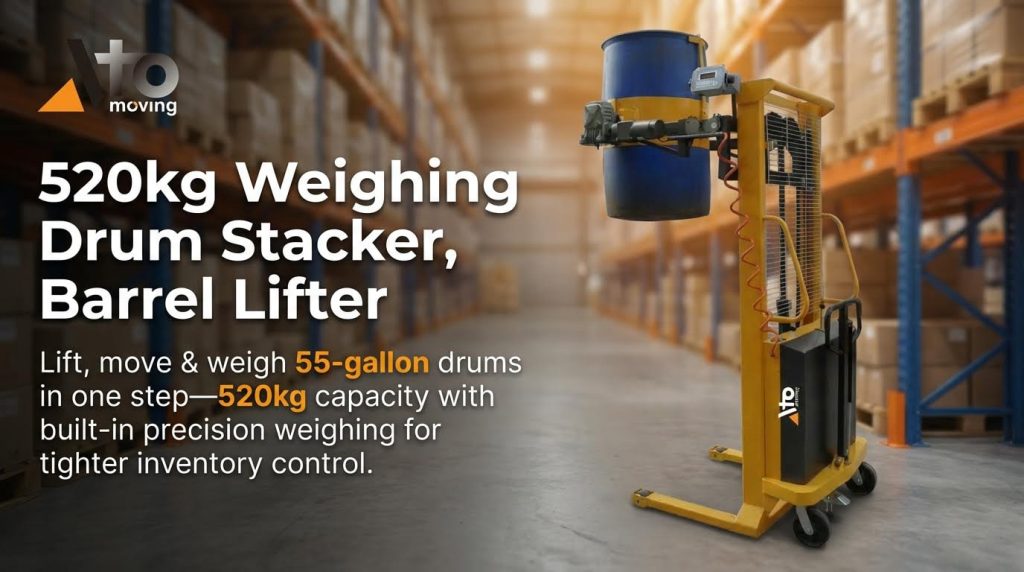
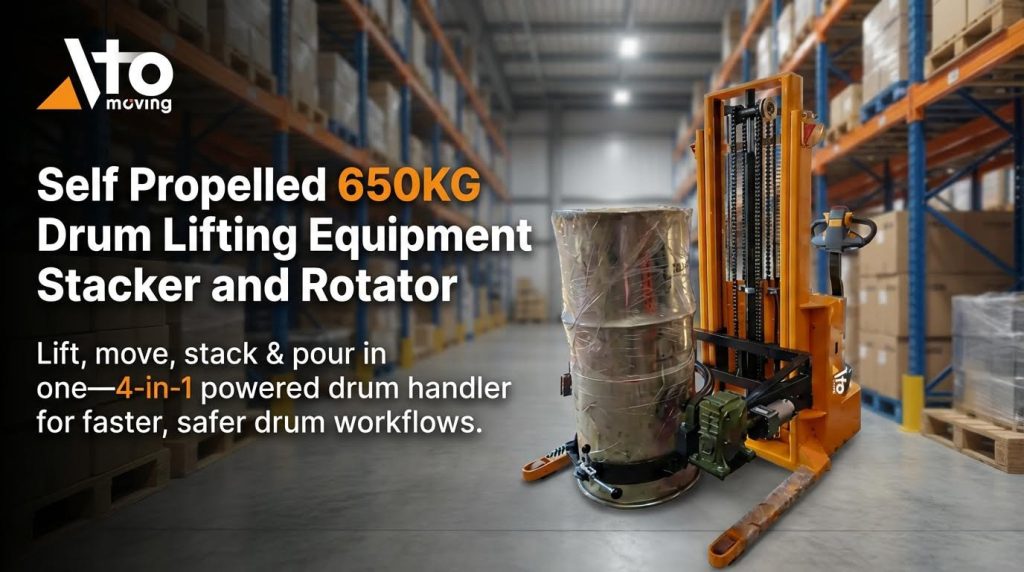
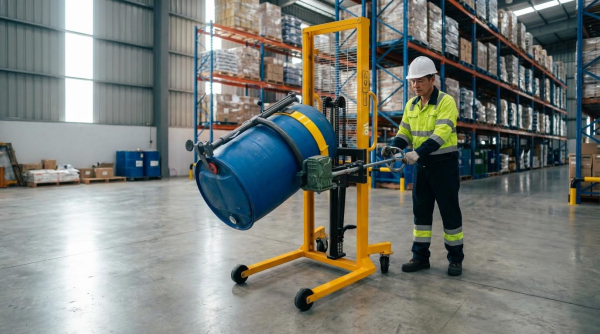
Lifting and tipping systems must control the drum through the full motion path. Vertical lifts using clamps, tongs, or band grips should hold the drum below its chime and prevent slip under shock loads. Designers should verify rated capacity at least 25 percent above the heaviest filled drum. For tipping and pouring, controlled rotation is critical. Gear-driven or hydraulic rotators allow slow, precise decanting and reduce splash and vapor release.
Transfer systems must never pressurize drums to push product out. Regulations required that pressurized piping include relief and bypass to prevent rupture and release. Typical safe designs use gravity drain, low-shear pumps, or vacuum systems rated for the chemical. Hoses and seals must be compatible with the substance and grounded where flammable liquids flow. Valves need clear open and closed indication and protection from impact by trucks or pallets.
Spill Pallets, Sumps, And Secondary Containment
Secondary containment is a core part of how to handle hazardous material drums safely. Spill pallets and sumps catch leaks, drips, and overfills before they spread. For flammable or toxic liquids in drums of 200 litres or more, guidance required that dikes or pans enclose at least 35 percent of total stored volume. Designers often size sumps to hold the largest single drum plus a margin for fire water or foam.
Engineers should match containment material to the chemical group. Steel works well for oils and fuels but may corrode with acids. High-density polyethylene suits many corrosive liquids but not all solvents. Low-profile pallets reduce loading height and tipping risk. Grated tops keep drums above collected liquid, improving inspection and pump-out. Mobile trays and small sumps help control drips during internal transport and loading operations.
Inspection, Maintenance, And Predictive Monitoring
Inspection and maintenance keep drum handling systems reliable over time. Operators should check grabs, chains, wheels, and hydraulic parts for wear before each shift. Any crack, deformation, or fluid leak is a stop condition. Regulations advised that drums be inspected for integrity before movement whenever possible. Stacked or buried drums should be relocated to allow inspection before handling.
For high-risk areas, predictive monitoring adds another layer. Simple counters track lift cycles to plan part replacement before failure. Load cells can flag overloads or off-center picks. In some plants, sensors monitor sump levels and send alarms when leakage starts. Fire extinguishing equipment that meets 29 CFR 1910 Subpart L should stay close to storage and transfer points. A documented maintenance program, with clear acceptance criteria and lockout steps, ties these elements into daily operations.
Summary Of Safe, Compliant Drum Handling Practices
Safe handling of hazardous material drums starts with strict compliance. Facilities must treat every drum as a potential source of fire, toxicity, or environmental release. The core question is how to handle hazardous material drums safely while meeting OSHA and transport rules.
Engineering practice showed several consistent themes. Drums should never be pressurized to empty them. Temporary transfer systems that handle hazardous liquids or gases must use pressure relief and bypass lines sized for worst-case blockage. Storage areas must separate drums from open flames, hot metal, and other ignition or heat sources. Large drums that hold flammable or toxic liquids need physical guards or location control to prevent impact damage.
Spill control remains a critical design point. Dikes or pans around 55-gallon class drums should hold at least 35% of total volume. Sites need salvage drums, absorbents, and a written containment program that can isolate full spill volume during a major event. Fire extinguishers that match the hazard class must stay in the immediate area and remain ready for use.
Operational practice focuses on inspection, labeling, and worker protection. Teams should inspect drums before movement whenever possible and relocate inaccessible stacks for inspection. Unlabeled drums must be treated as hazardous until tested and marked. Workers need training on contents, PPE, and emergency actions before any transfer task. Future systems will add more sensors and predictive monitoring, but disciplined inspection, conservative layouts, and fit-for-purpose equipment like hydraulic drum stacker, forklift drum grabber, and drum dolly will stay at the core of safe, compliant drum handling.