Warehouses that ask how to implement voice picking technology in a warehouse need a clear engineering roadmap, not just a software purchase. This article follows a full lifecycle approach, from process assessment and business case modeling through workflow design, integration, and operator training.
You will see how to map material flows, quantify accuracy and labor baselines, and build a defensible ROI before any hardware warehouse order picker order. The middle sections explain how to design voice dialogs, select integration paths to WMS and ERP, engineer WLAN and security, and choose robust devices and headsets for demanding environments.
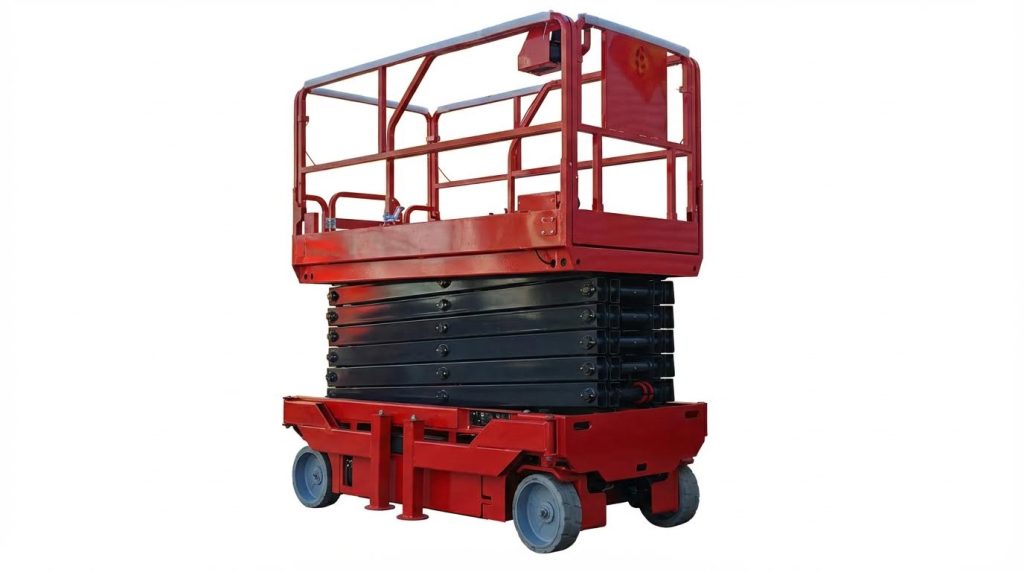
The implementation part focuses on configuring systems, piloting and tuning KPIs, and managing change and safety on the floor. The final section summarizes long-term engineering considerations so industrial engineers, IT, and operations teams can scale voice picking as warehouse networks, automation levels, and AI capabilities evolve. For instance, integrating scissor platform solutions or aerial platform systems may enhance operational efficiency.
Assess Warehouse Processes And Business Case
Engineering teams that study how to implement voice picking technology in a warehouse should start with a hard look at current processes. This section explains how to map flows, quantify baseline performance, and translate gaps into a solid business case. The goal is a data-backed decision on whether voice is the right fit, at the right scale, for the site.
Map Material Flows And Picking Workload
Start with a process map from receiving to shipping. Show every handoff, storage area, and picking zone. Include manual, semi-automated, and automated steps.
For each step, document:
- Order types and lines per order
- Units per line and handling units
- Travel paths and typical distances
- Touch points with scanners, paper, or terminals
Classify picking methods by area. Examples include discrete, batch, zone, and wave picking. Record shift patterns and peak periods. Capture workload profiles by hour and by day. Identify congestion points, queue build-ups, and rework loops. These hotspots usually deliver the fastest gains from voice guidance.
Quantify Current Accuracy, Labor, And Error Costs
Next, build a clean baseline. Separate metrics by process type and by zone. Use at least several weeks of data to smooth peaks.
Key indicators include:
- Picking accuracy: line and order level
- Error rate by cause: mis-pick, short, over, wrong location
- Lines picked per labor hour and per full-time equivalent
- Training time for new pickers to reach standard performance
Voice picking in other sites increased productivity by up to 20% and pushed error rates close to 0.08%. Traditional paper picking reached error rates up to 1.5%. Use these external benchmarks only as a reference band. Then calculate your own cost of errors. Include returns handling, re-picking, credits, transport, and customer penalties. Add overtime, temporary labor, and quality checks linked to low accuracy.
Identify Voice-Ready Processes And Constraints
Not every process suits voice. Focus first on high-volume, repeatable tasks with clear instructions, such as case or each picking. Check that location naming, product IDs, and quantity units are simple to speak and hear.
List constraints that could limit adoption:
- Very noisy areas that reduce recognition quality
- Processes that need constant visual checks or paperwork
- Complex kitting or value-added services with long instructions
- Regulatory steps that still require signatures or printed labels
Assess IT and infrastructure limits. Voice picking needs stable WLAN coverage in all pick paths if you want real-time updates. Identify dead zones, latency issues, and old handhelds that cannot support new clients. Decide where multimodal devices with scanners or screens are essential, for example for serial capture or lot verification. These findings shape the first deployment scope.
Build ROI, Payback, And Investment Justification
Now convert engineering findings into a financial case. Use your baseline to model realistic benefits, not generic vendor promises.
Typical benefit levers include:
- Higher lines per hour per picker
- Lower error rate and related rework costs
- Shorter training time and faster ramp-up for seasonal staff
- Reduced quality checks and fewer audits
For each lever, estimate impact ranges. For example, test scenarios with 10%, 15%, and 20% productivity gains. Use standard financial tools: payback period, net present value, and internal rate of return. Many warehouses achieved payback in less than one year, but you must validate this with your own cost base.
Include one-time costs such as software licenses, integration, WLAN upgrades, and devices. Add ongoing support, maintenance, and change management. Stress-test the model for demand growth, extra sites, and future AI features. A clear, conservative ROI model helps leadership decide how to implement voice picking technology in a warehouse and where to start the rollout.
Design The Voice-Enabled Picking Workflow

Designing the workflow is the core step in how to implement voice picking technology in a warehouse. At this stage you convert business goals into concrete dialogs, data flows, and device choices. A good design links voice tasks to WMS logic and IT standards. It also defines how operators work hands-free while keeping safety and accuracy high.
Define Voice Dialogs, Tasks, And Exception Handling
Start from the current picking process map and convert each step into a simple voice dialog. Keep each dialog short and consistent to reduce cognitive load and speech errors. Typical tasks include logon, assignment of a picking batch, travel to location, confirmation of check digit, quantity entry, and completion. Use fixed command patterns so operators learn them fast.
Design exception paths with the same care as normal flows. Typical exceptions include short picks, location empty, product damage, wrong barcode, and system timeouts. For each exception define three items: trigger phrase, data to capture, and follow-up action in WMS. This structure ensures that voice dialogs do not block work when reality differs from the plan.
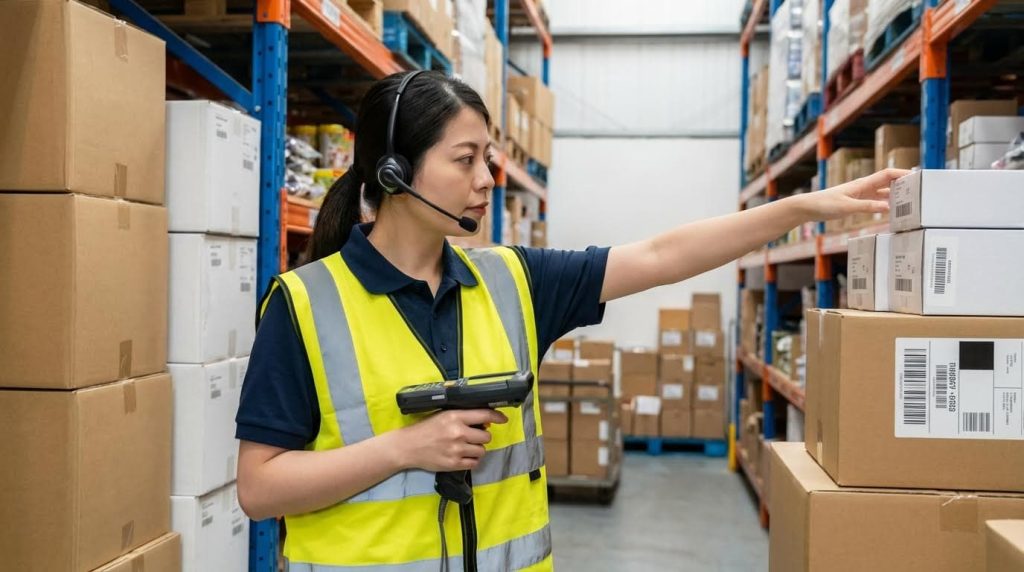
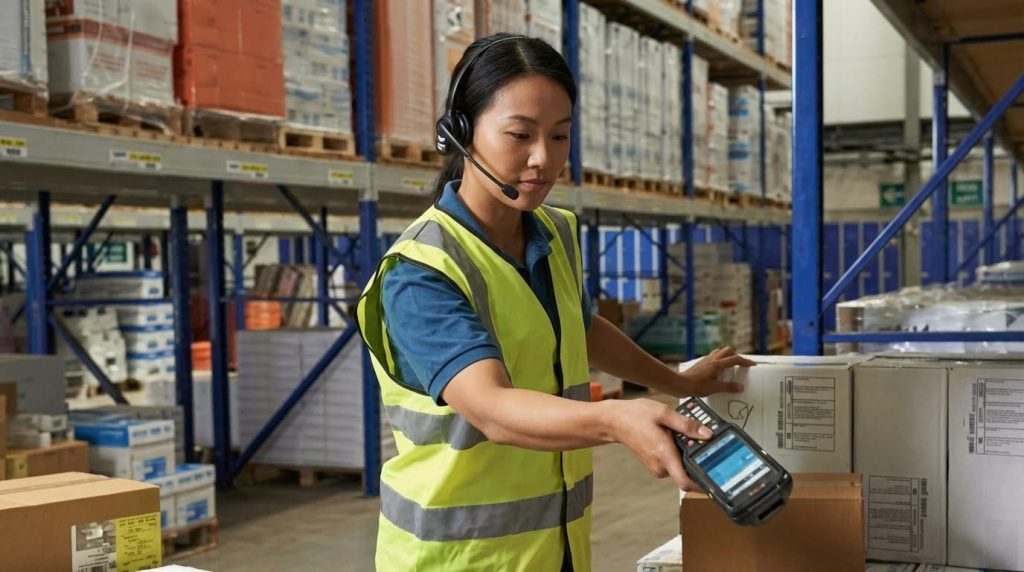
When you plan how to implement voice picking technology in a warehouse, include multimodal inputs. You can combine voice with barcode scans or screen prompts for high-risk steps. This approach keeps accuracy high while still giving operators hands-free travel between picks.
Select Integration Approach With WMS And ERP
The integration pattern drives both performance and project risk. Common options are:
- Direct integration between voice system and WMS via standard APIs
- Middleware that translates between voice layer and several back-end systems
- Tight coupling with a single platform such as SAP EWM
Direct integration reduces latency and supports real-time inventory updates. It suits sites that use one main WMS and need fast responses. Middleware helps groups that run several WMS or ERP instances. It allows one voice layer to serve different sites with shared dialogs and logic.
Define which system owns each business rule. Typical rules include task creation, route sequence, cartonization, and priority. Keep complex logic in the WMS where planners already work. Use the voice layer mainly for task execution and operator interaction. This split simplifies testing and later upgrades.
Plan for standard interfaces where possible. Modern voice systems supported standard modules for SAP WM or EWM and other WMS platforms. Using existing connectors cuts custom code and speeds deployment.
Specify Data, WLAN, And Security Architecture
Voice picking is sensitive to network quality and data design. Real-time guidance needs stable WLAN coverage in every aisle, dock, and staging area. Perform a professional site survey. Then design access point placement for full coverage and roaming without audio dropouts.
Define data flows between devices, voice server, WMS, and ERP. Key objects include tasks, locations, handling units, and confirmations. Use compact payloads to keep latency low. Decide which data stays on the device for short periods and which always comes from the server. This choice affects resilience during brief WLAN outages.
Security must follow current best practice. Typical measures include:
- User authentication linked to corporate identity systems
- Encrypted traffic between devices, voice server, and WMS
- Role-based access control for functions like task override or inventory change
Plan regular software updates and security monitoring. Include voice devices in existing patch and mobile device management tools. When you define how to implement voice picking technology in a warehouse, align security controls with your wider WMS and IT policies.
Choose Hardware: Devices, Headsets, And Peripherals
Hardware must match the warehouse environment and the chosen workflow. You can use three main device types: dedicated voice terminals, rugged multimodal handhelds, and managed consumer smartphones. Dedicated voice units work well in harsh or cold stores. Multimodal devices support scanning and screen prompts in complex processes. Managed consumer devices lower unit cost but need extra cases and management.
Headset choice affects user comfort and recognition quality. Use noise-cancelling headsets in busy docks or automated areas. In freezer zones choose insulated or in-helmet options. Test both wired and wireless models. Wireless headsets improve freedom but need battery and interference checks.
Peripherals can raise accuracy and speed when used selectively. Typical options are ring scanners, wearable scanners, and wrist displays. Combine them with voice for check digit capture or carton labeling. Always keep total weight and cable routing in mind to protect ergonomics and safety.
Run field tests with several operator profiles before final selection. Measure pick rate, error rate, and user fatigue for each hardware set. Use these results to choose the smallest set of device types that still covers all warehouse areas and tasks.
Implement, Integrate, And Train Operators
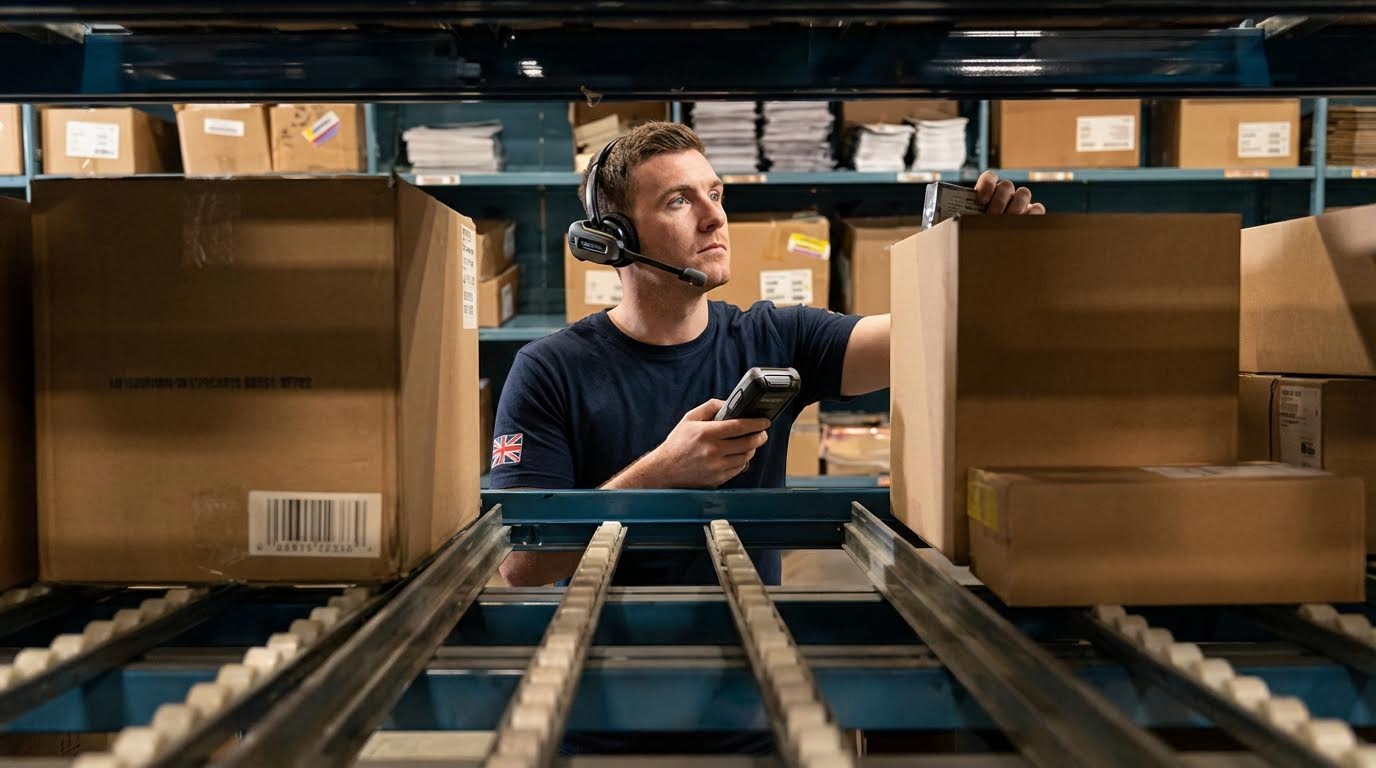
Engineering teams that study how to implement voice picking technology in a warehouse must treat rollout as a controlled change program. This phase links design decisions with real operations, IT constraints, and workforce adoption. A structured approach reduces integration risk, protects WMS stability, and delivers the expected gains in accuracy and labor efficiency.
Configure WMS, Middleware, And Voice Profiles
Configuration starts with stable WMS processes. Define storage bins, work centers, and picking strategies in the WMS or SAP EWM before adding voice. Voice middleware then maps these existing tasks to voice dialogs and task types through standard APIs or RF frameworks. Platform-independent voice solutions with standard interface modules reduce custom code and simplify long-term support.
Engineers should configure:
- Task routing rules for which picks go to voice users.
- Priority queues by order type, carrier cut-off, or zone.
- Device and RF profiles that control screen layouts and prompts.
Modern systems often use speaker‑independent recognition, so they do not need individual voice training. Instead of per-person tuning, define warehouse-wide vocabularies and short, unambiguous commands. Security settings must include user authentication, encrypted communication, and role-based access to protect both the WMS and voice middleware.
Pilot, Measure KPIs, And Refine Process Logic
A controlled pilot is the safest way to prove how to implement voice picking technology in a warehouse. Start in one picking area, product family, or shift. Keep the legacy method available as a fallback during the first weeks. Define baseline KPIs from the old process, then compare them to the pilot.
| KPI | Baseline Method | Voice Target Range* |
|---|---|---|
| Order picking accuracy | Up to 1.5% error rate | Near 0.1% error rate |
| Productivity | 100% | Up to 120% lines/hour |
| Training time for new pickers | 100% | Down to 15–20% of baseline |
*Targets based on reported industry results; validate for each site.
Analyze exceptions such as stock-outs, location mismatches, or misreads. Adjust voice dialogs, confirmation rules, and task sequencing to reduce backtracking and dead travel. Continuous feedback from operators helps refine prompts and shorten interactions without losing safety or accuracy.
Train Staff, Manage Change, And Address Safety
Training focuses on workflow, not technology details. Most modern systems only need short sessions to explain log-on, headset use, and how to respond to prompts. Multi-language support lets temporary and seasonal workers reach target productivity faster, with less classroom time and supervision.
Change management is critical. Explain to operators how voice picking shifts their work from paper or RF scanning to guided tasks and real-time confirmation. Involve experienced pickers as key users in the pilot to build trust. Address concerns about monitoring by clarifying which performance data the system records and how the company will use it.
Safety must improve, not just stay neutral. Voice picking keeps hands and eyes free, but engineers must still check walking routes, congestion points, and warehouse order picker interactions. Update safety instructions to cover headsets, volume limits, and situational awareness near vehicles and conveyors. Supervisors should monitor early shifts for unsafe workarounds and correct them quickly.
Plan Scaling, Maintenance, And AI Enhancements
Scaling plans should exist before the pilot ends. Capacity planning covers concurrent users, WLAN coverage, and server load. IT teams must define patch cycles for mobile devices, voice middleware, and WMS interfaces. A clear asset plan for headsets, batteries, and spare devices reduces unplanned downtime.
Long-term maintenance includes regular security audits, user access reviews, and software updates to keep encryption and authentication current. Monitor KPIs monthly to detect drift in accuracy or productivity. Root causes may include damaged microphones, poor network coverage, or process changes not reflected in dialogs.
AI features can gradually enhance the system. Examples include dynamic task assignment based on real-time workload, predictive alerts for congestion, and voice analytics to detect frequent misunderstandings. Edge processing and offline capability help in weak network zones. Integrating voice with future robotics or automated storage systems allows hybrid workflows where humans handle exceptions and high-variability tasks while machines execute repetitive moves.
Summary And Long-Term Engineering Considerations
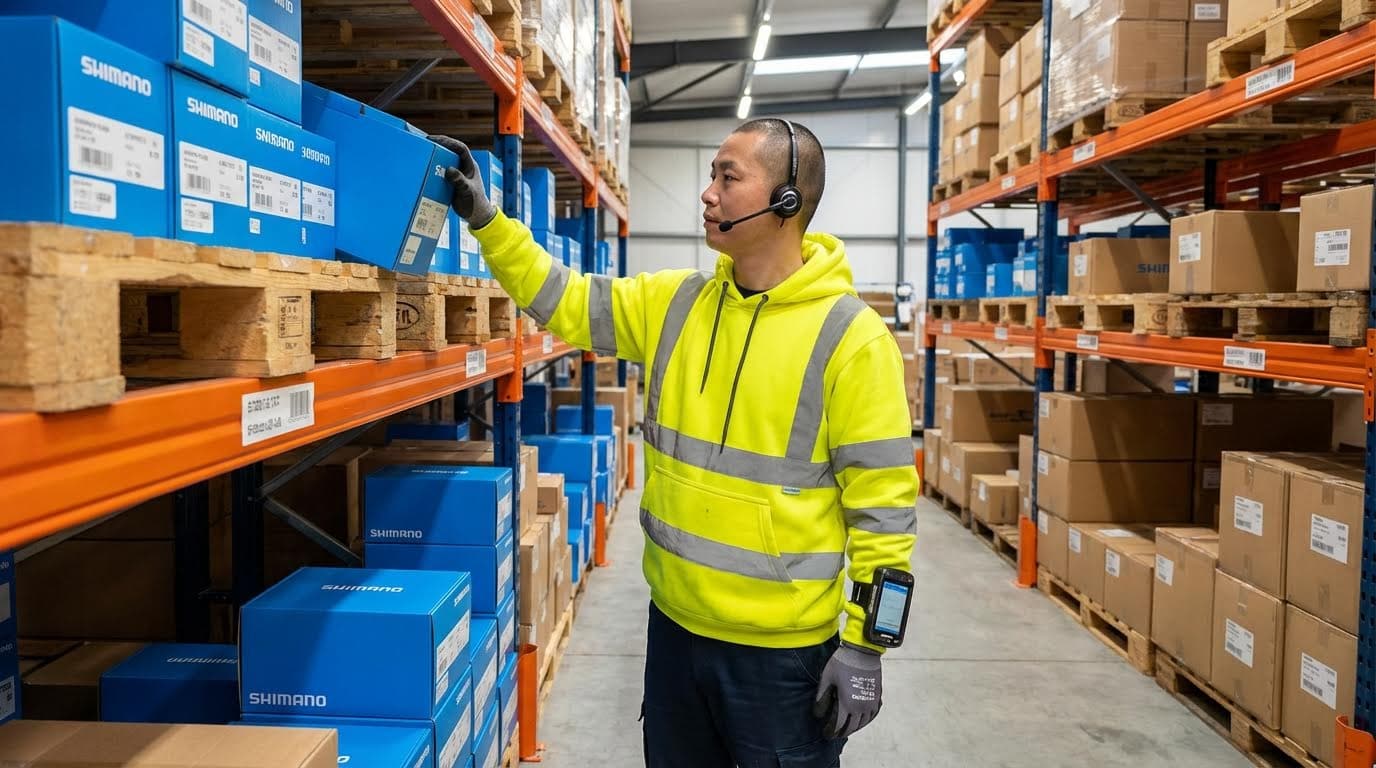
Engineering teams that study how to implement voice picking technology in a warehouse usually see clear gains. Field data showed productivity increases close to 20% and error rates near 0.1% with mature systems. These gains came from hands-free work, faster training, and better system guidance. The business case stayed strongest where picking dominated labor hours and error costs.
Long term, the main design risk sat in integration and lifecycle cost. Stable interfaces to WMS and ERP limited future upgrade pain. Platform-independent voice layers and standard APIs reduced lock-in and eased migration to new hosts or cloud services. Engineers also had to plan WLAN coverage, device replacement cycles, and software update windows to avoid peak-time disruption.
Security engineering became more important as voice picking tied into cloud, IoT, and mobile devices. Teams implemented strong authentication, end-to-end encryption, and role-based access. Regular security audits and patching cycles protected WMS data and voice middleware. SOC2-aligned vendors and hardened cloud platforms helped meet corporate IT standards.
Looking ahead, AI and edge processing will reshape voice workflows. Speaker-independent engines already removed long voice training. Future systems will add predictive task assignment, real-time labor balancing, and tighter links to warehouse order picker and order picking machines. Engineers should design today’s solution with modular layers, clear interfaces, and data standards so future AI and robotics can plug in without a full re-implementation. Additionally, tools like the manual pallet jack continue to play a critical role in material handling efficiency.