Electric pallet jacks answer a core question in warehouse design: how high will an electric lift pallet jack lift, and over what range can it safely move loads. This article explains the key engineering dimensions, from fork sizes and lift heights to travel speed, gradeability, and aisle layout impacts across typical warehouse and logistics settings.
You will see how load capacity, duty cycles, and battery systems affect runtime, cooling demands, and lifecycle cost. The article then compares standard, low-profile, high-lift, narrow-aisle, and long-fork variants, including options for cold storage, hygienic, and corrosive environments, as well as walkie and rider use cases. The final section links these technical factors to real-world selection, integration, and future trends so engineers and operations teams can specify electric pallet jacks that match throughput, safety, and space constraints.
Core Dimensions, Lift Heights, And Travel Performance
Engineers who ask how high will an electric lift pallet jack lift must link lift height to fork geometry, gradeability, and aisle design. Core dimensions define which pallets you can handle, how close you can rack, and what slopes you can climb without overloading the drive system. Travel performance and braking then set realistic throughput and safety margins for each shift. This section explains those links so layout, equipment sizing, and safety rules stay aligned.
Standard Fork Sizes, Widths, And Clearances
Most electric pallet jacks follow standard pallet patterns. Typical fork length is about 1 200 mm, matched to 1 200 mm × 1 000 mm or 1 200 mm × 800 mm pallets. Common overall fork widths are about 560 mm and 680 mm, which align with standard stringer gaps and block pallet openings.
Lowered fork height is usually 80–90 mm. Raised fork height is typically 180–200 mm, which answers the basic question of how high an electric high lift pallet truck will lift in floor-level work. That stroke is enough to clear damaged boards, dock plates, and expansion joints while keeping the center of gravity low.
| Parameter | Typical value |
|---|---|
| Fork length | 1 000–1 150 mm |
| Overall fork width | 560 or 680 mm |
| Lowered fork height | 80–90 mm |
| Maximum lift height | 180–200 mm |
| Recommended pallet length | 1 000–1 200 mm |
Engineers should also allow side clearances. Aisle and rack designs usually include at least 150 mm extra width beyond the pallet to avoid contact and product damage.
Typical Lift Heights, Gradeability, And Speed
Standard electric pallet jacks lift between 180 mm and 200 mm at the fork tips. High-lift pallet trucks exist, but they are a different category and not suitable for travel with the load raised high. For normal models, this modest lift height keeps loads stable during transport and loading.
Gradeability depends on load. Typical values are about 8% when loaded and up to 20% when empty. On ramps, operators should keep forks just high enough to clear the floor, never at full stroke, to reduce overturn risk.
Travel speed varies by capacity and control logic:
- Loaded travel speed often ranges from 5.0 to 5.5 km/h.
- Unloaded speed can reach 6.0 to 10.0 km/h on some rider units.
Lift speeds are usually 40–50 mm/s with a load and slightly faster when empty. These values help planners estimate cycle times for dock-to-rack or line-feed runs.
Turning Radius, Aisle Width, And Layout Impacts
Turning radius for electric pallet jacks usually falls between 1 700 mm and 1 900 mm for standard fork lengths. Right-angle stacking distances of about 2 100–2 300 mm are common for 1 200 mm pallets. These numbers show why designers can reduce aisle widths compared with counterbalance forklifts.
Well-matched pallet jack and pallet dimensions can cut aisle width needs by roughly 15–20%. That gain comes from shorter wheelbases and tighter steering angles. However, the operator platform and tiller head add length, so design teams must use the manufacturer’s right-angle stack and minimum aisle data, not just pallet size.
When planning layouts, consider:
- Minimum aisle for 90° entry into racks.
- Extra clearance at cross-aisles for turning.
- Dock approach space to avoid jack overhang outside trailers.
Good layouts reduce shunting moves and product damage and allow safe use of the full lift height without striking rack beams or dock structures.
Noise, Braking, And Operator Safety Factors
Modern electric pallet jacks run below about 70 dB(A) at the operator’s ear. This low noise level improves communication and reduces fatigue in high-density picking zones. Quiet drive systems also help in retail, food, and night-shift operations where noise limits apply.
Most units use electromagnetic service brakes plus regenerative motor braking. When the operator releases the tiller, automatic braking usually engages in less than a second. Some designs include a dead-man function and an emergency belly button that reverses direction briefly to prevent crush injuries.
Key safety-related factors that interact with lift height include:
- Travel interlocks that limit speed when forks are raised.
- Anti-roll-back control on ramps at or near maximum gradeability.
- Stable wheelbases sized for the rated load center, usually 600 mm.
Training should stress that even though an manual pallet jack only lifts about 200 mm, that height is enough to cause serious instability if operators corner too fast or handle off-center loads. Clear rules on maximum travel speed, ramp use, and pedestrian separation are as important as the equipment specification itself.
Load Capacity, Duty Cycles, And Power Systems
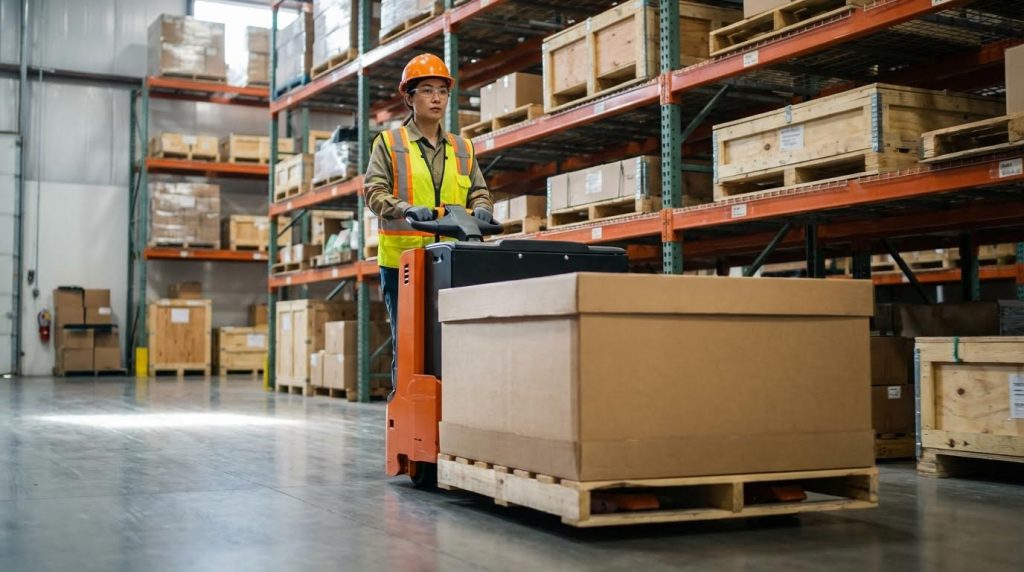
This section explains how load capacity, power systems, and duty cycles limit performance of electric pallet jacks. Engineers who ask how high will an electric lift pallet jack lift also need to match batteries, motors, and maintenance plans to the real work profile. Correct sizing protects stability, runtime, and lifecycle cost across warehouse, retail, and manufacturing use.
Capacity Ranges, Load Centers, And Stability
Electric pallet jacks typically handle loads from about 1,500 kilograms up to roughly 3,600 kilograms. Heavy stand-on units reach about 5,000 kilograms with a 600 millimetre load center. Most electric pallet jacks lift only enough to clear the floor and pallet deck. Typical lift height is about 200 millimetres, with lowered fork heights near 80 to 90 millimetres. That small stroke answers the query how high will an electric lift pallet jack lift for ground-level transport tasks.
Stability depends on keeping the load center close to the rated value. Long or poorly stacked pallets shift the center forward and reduce the safe capacity. Engineers should review these points during selection:
- Check rated capacity at the stated load center, often 600 millimetres.
- Confirm fork length versus pallet length to avoid overhang.
- Verify wheelbase and track width for high-capacity models.
High lift heights above 200 millimetres require different equipment, such as stackers or reach trucks. Using a low-lift pallet jack for raised storage positions increases tip risk and breaks design assumptions in stability calculations.
Battery Types, Voltages, And Runtime Planning
Most electric pallet jacks use 24 volt battery systems. Common lead-acid packs range from about 150 ampere hours to 240 ampere hours. Higher capacity packs support heavier loads and longer duty cycles. Typical runtime spans three to eight hours, depending on load, travel distance, and lift frequency.
Engineers plan runtime by matching battery energy to the duty cycle. A simple approach is to group applications into three bands:
| Duty level | Daily use pattern | Battery focus |
|---|---|---|
| Light | Short moves, low lift cycles | Smaller Ah, slow overnight charge |
| Medium | Regular loading and put-away | Standard Ah, one shift per charge |
| Heavy | Multi-shift, frequent lifts | High Ah or lithium-ion, fast or opportunity charge |
Lithium-ion options support opportunity charging and shorter charge times. They suit high-throughput sites that cannot park trucks for full overnight charges. Lead-acid batteries still fit lower-intensity work where cost per unit is critical and charging windows are predictable.
Drive And Lift Motors, Duty Cycles, And Cooling
Electric pallet jacks use separate drive and lift motors. Typical drive motors range from about 0.7 kilowatts to 2.2 kilowatts. Lift motors usually fall between 1.2 kilowatts and 2.5 kilowatts. Higher power supports steeper gradeability and faster lift speeds, such as 40 to 50 millimetres per second.
Duty cycle describes how long a motor runs under load versus rest. High-duty sites with constant shuttling and lifting heat motors and controllers faster. Designers should check:
- Rated duty class of drive and lift motors.
- Expected lift cycles per hour and average lift height.
- Ambient temperature, especially in enclosed docks or cold stores.
Cooling relies on motor design, controller heat sinks, and airflow around the truck. Overloading or sustained grade work can push temperatures above design limits and trigger protective cutbacks. Correctly matching power to the route profile keeps travel speed, lift speed, and braking response consistent during long shifts.
Maintenance, Lifecycle Cost, And Uptime
Lifecycle cost depends on planned maintenance for the powertrain and hydraulic system. Lead-acid batteries require water checks, terminal cleaning, and equalization charges. Lithium-ion packs reduce routine service but need correct charger pairing and thermal monitoring. Wheel and bearing inspections protect stability, especially near maximum capacity and lift height.
Key cost drivers include battery replacement intervals, motor and controller life, and hydraulic seal wear. Facilities that run heavy-duty cycles should track:
- Operating hours per truck and per battery.
- Number of charge cycles and depth of discharge.
- Unplanned stops due to low voltage or thermal limits.
Good uptime planning links spare batteries, chargers, and scheduled service windows to throughput peaks. Telematics and hour meters help align maintenance with actual use, not just calendar dates. This approach keeps electric pallet jacks available when docks are busiest and protects the return on investment over several years of operation.
Application-Specific Configurations And Sizing
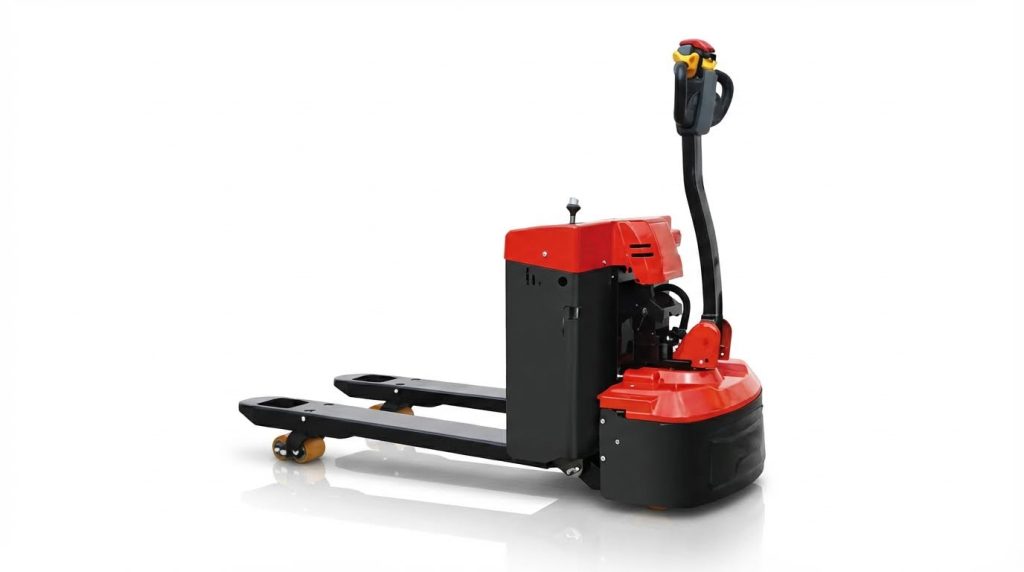
Application-driven sizing answers a common question in projects: how high will an electric lift pallet jack lift for each variant. Most units only raise pallets enough for transport, while some designs support higher lift for work positioning or dock transitions. Engineers must link lift height, fork geometry, and environment to the actual handling task. The following sections compare key configurations and their best-fit uses.
Standard, Low-Profile, And High-Lift Variants
Standard electric pallet jacks usually lift from about 85 millimetres lowered height to roughly 200 millimetres raised height. This range clears most 1,000 by 1,200 millimetre pallets and dock plates without overstressing fork tips. It also keeps the centre of gravity low, which improves stability during travel and braking.
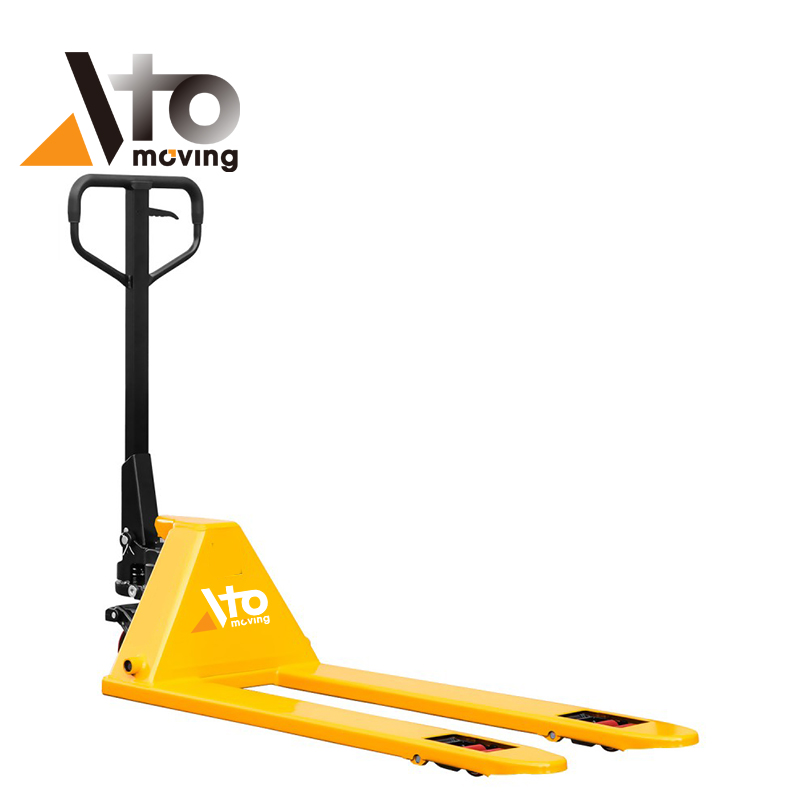
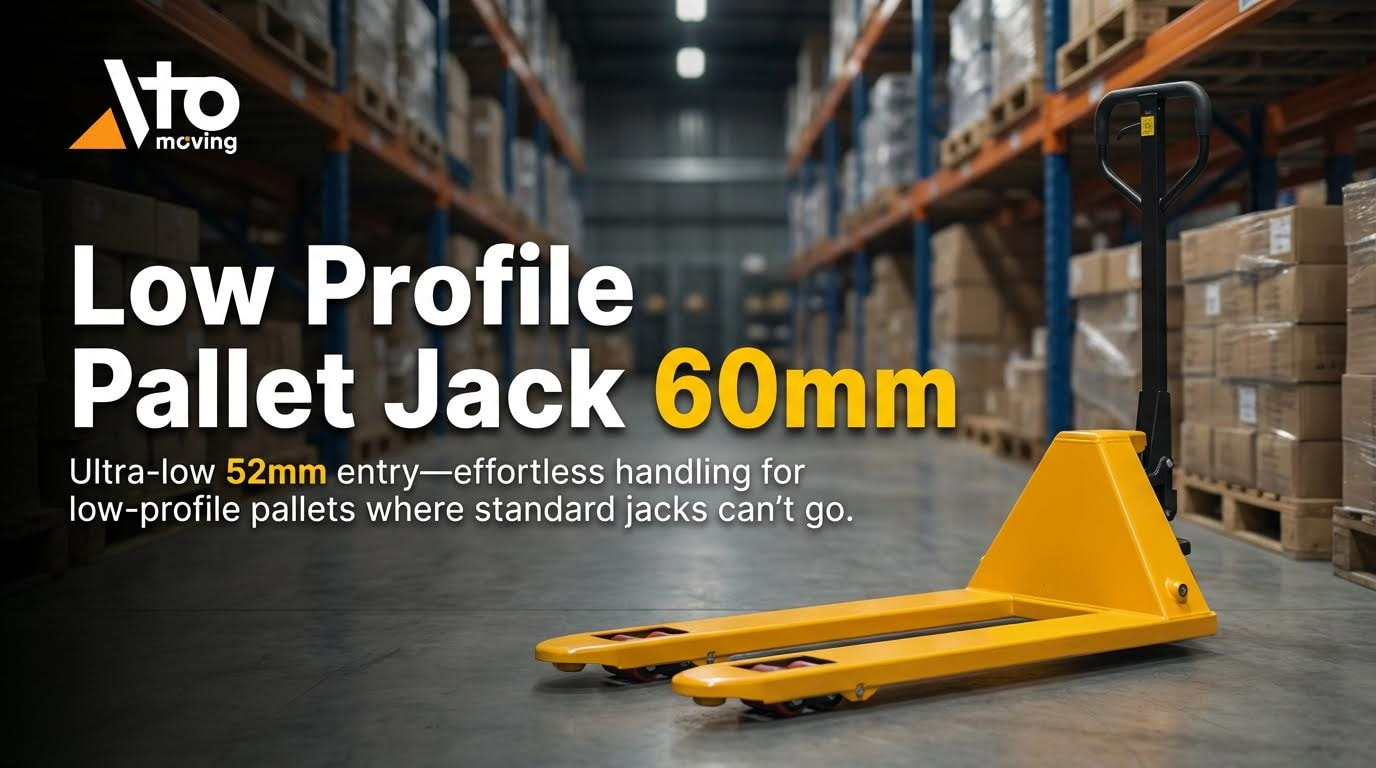
Low-profile variants use thinner forks and lower entry heights, sometimes close to 60–75 millimetres. They handle non-standard skids or damaged pallets where standard forks cannot enter. Trade-offs include reduced capacity and higher fork deflection, so engineers should derate loads in specifications.
High-lift pallet trucks raise loads significantly higher, often in the 300–400 millimetre range and above for specialised models. These units support ergonomic picking or feeding workstations rather than long-distance travel. Designers should check platform stiffness, mast guidance, and wheel loading, because lateral stability drops quickly as lift height rises.
Narrow-Aisle, Long-Fork, And Custom Designs
Narrow-aisle electric pallet jacks minimise overall width, with some models close to 500–530 millimetres across the forks. These designs work in aisles around 2,100–2,300 millimetres when paired with short fork lengths. Lift height usually stays near the 200 millimetre range, since the main goal is clearance, not stacking.
Long-fork versions extend fork length up to 2,400 millimetres or more. They move double pallets or long loads like lumber packs. Engineers must review floor flatness and ramp transitions carefully, because long forks increase bottoming risk at full lift height.
Custom designs address non-standard pallets, oversized loads, or unusual lift requirements. Typical changes include extended forks, ultra-narrow widths, or non-standard raised heights. These options often add 20–30% cost, so projects should justify them with throughput gains or reduced damage.
| Configuration | Main goal | Typical max lift height |
|---|---|---|
| Standard | General pallet transfer | ≈200 mm |
| Narrow-aisle | Aisle width reduction | ≈200 mm |
| Long-fork | Two pallets / long loads | ≈200 mm |
| High-lift | Work positioning | >300 mm |
Cold Storage, Hygienic, And Corrosive Environments
Cold storage applications often run at temperatures down to about −25 degrees Celsius. Lift systems must use low-temperature hydraulic oil, sealed electrics, and heated control areas. At these temperatures, lift speed slows, and maximum grade handling can drop, so designers should allow margin in performance calculations.
Hygienic environments, such as food or pharma, favour stainless steel or coated frames with smooth welds. Typical lift heights stay near standard values, because the main design driver is cleanability, not extra reach. Closed fork tips and drain paths help prevent liquid entrapment under pallets at full lift.
Corrosive environments, such as chemical plants or coastal docks, require special paints, stainless fasteners, and protected cylinders. Engineers should specify IP-rated enclosures for drive and lift motors. Regular inspection of fork thickness at the heel is critical, because corrosion there can reduce safe capacity even at modest lift heights.
Walkie Vs Rider Use Cases And Travel Distances
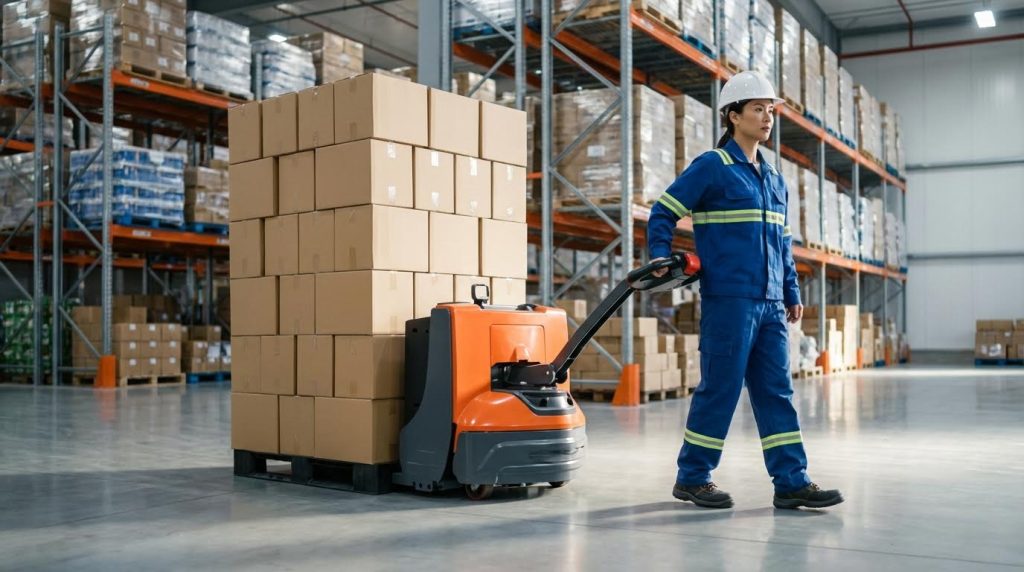
Walkie electric pallet jacks suit short travel distances and tight backrooms. Operators walk beside or behind the truck, so typical runs stay under 90–100 metres per move. Lift height remains low, around 200 millimetres, since the unit mainly shuttles pallets between racks, docks, and staging areas.
Rider pallet jacks add a stand-on or fold-down platform. They support longer runs, often above 90 metres and up to several hundred metres per cycle. Travel speeds can reach 8–10 kilometres per hour unladen, so stable low lift heights are important for safety.
When choosing between walkie and rider, engineers should compare facility size, aisle width, and pallet turns per shift. A simple rule is to use walkie pallet truck for dense, compact zones and riders for main corridor transport. In both cases, the answer to how high will an manual pallet jack lift is similar for horizontal transport tasks: just enough to clear floor irregularities and dock transitions, not to reach racking beams.
Summary: Selection, Integration, And Future Trends

Electric pallet jacks answered the question how high will an electric lift pallet jack lift with a very specific range. Typical units raised forks from about 85 millimetres to roughly 200 millimetres, while high‑lift and specialty versions reached about 300 millimetres or slightly more. This limited lift suited ground‑level pallet transfer, dock work, and low‑level staging rather than high racking. Selection therefore depended less on lift height and more on load capacity, aisle width, gradeability, and duty cycle.
From an engineering view, integration focused on matching fork size to pallet standards, checking floor flatness, and confirming aisle geometry for the turning radius. Power systems shifted toward 24 volt batteries with higher amp‑hour ratings, plus opportunity charging and telematics. These features cut downtime and helped planners size fleets based on real travel distance and lift cycles per shift. Facilities also used noise limits, braking performance, and emergency stop behaviour as safety benchmarks.
Future trends pointed toward higher energy density batteries, faster charging, and broader use of lithium‑ion packs. More units included regenerative braking, on‑board weighing, and data logging that linked to warehouse systems. However, the basic lift envelope stayed modest, so engineers still paired electric pallet jacks with stackers or forklifts for work above roughly 200 to 300 millimetres. A balanced strategy used each truck type in its best height band, which kept capital cost and maintenance under control while protecting throughput and safety.