Understanding how a pallet jack lifts helps engineers design safer, more efficient warehouses and factories. This article explains how a pallet jack transfers handle force into fork lift using simple hydraulics and robust mechanical linkages.
You will see how the core components guide the load path, how the hydraulic circuit multiplies force, and how manual and electric systems differ in duty and control. Later sections compare design choices, sizing, and maintenance strategies, including diagnostics, repairs, and predictive monitoring approaches used on modern pallet trucks.
Core Components Of A Pallet Jack Lift System
Understanding how a pallet jack lifts starts with its core mechanical and hydraulic parts. These components guide the load from the pallet deck, through the frame, into the hydraulic circuit, and finally to the floor contact points. Each element must align so the jack raises a pallet a few centimetres with low input force, yet still carries loads that often exceed 2 tonnes. The following sub-sections break down the structure that makes this possible.
Forks, Linkages, And Load Path
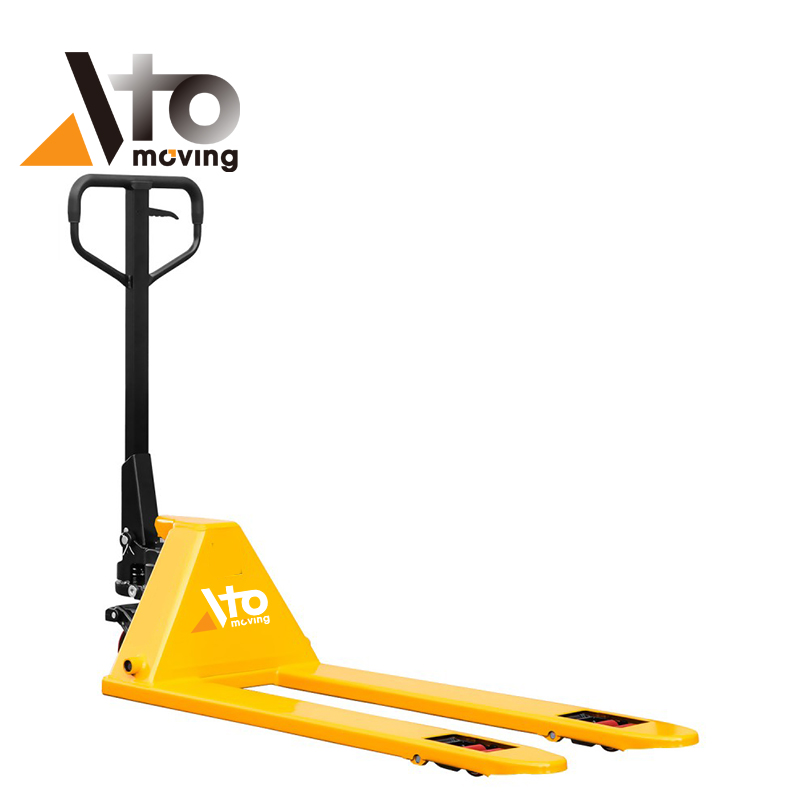
The forks support the pallet and transfer weight into the chassis. Typical fork sections use steel plate with formed tips so the entry wheels slide under low deck boards. The load path runs from pallet to fork, then through pivoting linkages into the steer wheel axle block.
When the operator pumps the handle, the hydraulic cylinder extends and pulls a set of lift links downward. These links rotate the fork arms around their pivot pins and raise the fork tips relative to the wheels. The geometry converts small cylinder stroke into several centimetres of fork lift. Correct pin alignment and tight clearances keep the load path straight, which reduces bending and uneven tyre wear.
Hydraulic Pump, Cylinder, And Reservoir
The hydraulic group is the heart of how a hydraulic pallet truck lifts. A small hand pump draws hydraulic fluid from the reservoir and sends it into a single-acting lift cylinder. Check valves in the pump body hold pressure during each return stroke of the handle.
As pressure builds, the cylinder ram moves and drives the lift linkage. Typical systems raise the forks from about 75 millimetres to at least 190 millimetres, enough for floor clearance but not for stacking. The reservoir volume must cover full cylinder extension plus return flow without drawing air. Seal quality, surface finish of the ram, and valve seating all control how long the jack can hold a load without drift.
Wheels, Axles, And Steering Geometry
The wheel set decides how efficiently the jack carries the load once lifted. Load wheels under each fork tip support the pallet weight and roll along the floor. Steer wheels at the tiller end carry part of the load and provide the turning function.
Wheel material selection depends on floor type. Polyurethane suits smooth indoor concrete, while nylon handles rougher surfaces but transmits more vibration. The axle layout uses a simple bogie or single wheel per fork, linked to the frame by pins. Steering geometry relies on a central pivot above the steer axle. The long handle gives mechanical advantage so the operator can turn a loaded jack in tight aisles with modest effort.
Control Handle, Valves, And Safety Features
The control handle ties the operator to the hydraulic and mechanical systems. Its motion performs three tasks: pumping, steering, and valve control. A small lever on the handle routes the internal valve to lift, neutral, or lower positions.
In lift mode, handle strokes drive the pump and close the return path. In lower mode, the lever opens a metered valve so fluid returns from the cylinder to the reservoir and the forks descend in a controlled way. Neutral isolates the pump and lets the jack roll without changing fork height. Safety features often include an overload valve that limits maximum pressure, plus a dead-man or emergency stop on powered models. These elements ensure that when people search how a low profile pallet jack lifts, the answer includes both force generation and controlled, predictable stopping of that motion.
Hydraulic Operation: From Pump Stroke To Lift

Hydraulic operation explains how a manual pallet jack lifts a loaded pallet with a compact system. The handle stroke drives a pump, which builds pressure in a sealed fluid circuit. This pressure pushes a ram in the lift cylinder and transfers force into the fork linkage. Correct operation, fluid care, and air removal keep the lift smooth, safe, and predictable.
Single-Acting Bottle Jack Fundamentals
A pallet jack uses a single-acting bottle jack as its core lifting unit. The pump only drives the ram in one direction, which is upward. Gravity lowers the load when a valve opens and releases pressure. This simple layout reduces parts and improves reliability in harsh warehouse use.
The pump section contains a small piston, inlet check valve, and outlet check valve. Each handle stroke draws fluid from the reservoir and pushes it into the cylinder above the ram. The reservoir stays at low pressure, while the cylinder chamber holds high pressure during lifting. The jack body mounts between the fork frame and steering axle so the ram motion converts into fork rise.
Because the jack is single-acting, sealing quality is critical. Worn seals allow internal bypass and cause creeping or loss of lift. Regular inspection of ram surface finish and seal condition helps prevent sudden downtime.
Fluid Pressure, Force Multiplication, And Lift Height
Hydraulic operation shows how a pallet jack lifts heavy loads with modest handle effort. The pump piston has a small area, while the lift ram has a larger area. Pressure in the fluid is the same in both, so force scales with area. This gives a mechanical advantage similar to a lever but inside the fluid.
Typical hydraulic pallet truck use system pressures in the same range as other light industrial hydraulics. This range allows lifting loads around 1–5 tonnes without oversized parts. The fork lift height is small, usually under 0.2 metres, so stroke length stays compact. Designers balance ram diameter, stroke, and linkage ratio to reach this height with reasonable handle travel.
Lift speed depends on pump volume per stroke and operator cadence. A larger pump raises the forks faster but needs more effort per stroke. A smaller pump feels lighter but needs more strokes to reach full height. Engineers size components for common pallet weights and duty cycles, not rare overload cases.
Manual Vs. Electric Pumping And Drive Systems
Manual pallet jacks rely on human power for both pumping and travel. The operator swings the handle to build pressure and then pushes or pulls the load. This layout keeps the unit light, low cost, and easy to service. It suits short distances and moderate lift frequency.
Electric pallet jacks keep the same basic hydraulic circuit but replace the hand pump with a motor-driven pump. A small electric motor spins a gear or vane pump that feeds the lift cylinder. Buttons on the tiller command lift and lower functions through solenoid valves. This reduces operator effort and improves cycle time during busy shifts.
Some electric units also power the drive wheels. A traction motor provides forward and reverse motion through a gearbox on the steer axle. The operator controls speed with a throttle on the handle. This combination of powered lift and drive fits long travel paths, ramps, and high throughput docks.
When choosing between manual and electric, engineers consider load mass, travel distance, and shift length. Manual units work well for low utilisation. Electric systems justify their higher cost where fatigue, productivity, or slope handling are critical.
Bleeding Air And Maintaining System Pressure
Air in the hydraulic circuit weakens how a pallet jack lifts and holds loads. Air compresses under pressure, so the forks feel spongy and may not reach full height. Symptoms include erratic lift speed, noisy operation, and sudden drop in lift range. Bleeding removes trapped air and restores solid hydraulic response.
Typical bleeding steps include fully lowering the forks and supporting the jack on level ground. The technician then opens the bleed or release valve and cycles the handle. Fluid flow carries air back to the reservoir until only solid fluid exits. After closing the valve, the reservoir level is checked and topped up with the specified hydraulic oil.
Maintaining system pressure also depends on leak control and seal health. External leaks show as oil on the floor or around fittings. Internal leaks show as slow sinking under load or failure to reach rated capacity. Regular checks of hose fittings, pump body, and ram gland reduce unplanned failures.
Service teams should follow the manufacturer’s pressure settings and fluid type. Using oil with the wrong viscosity can slow response or cause cavitation. Pressure that is too low limits capacity, while pressure that is too high accelerates wear and raises safety risk.
Design Choices, Sizing, And Maintenance
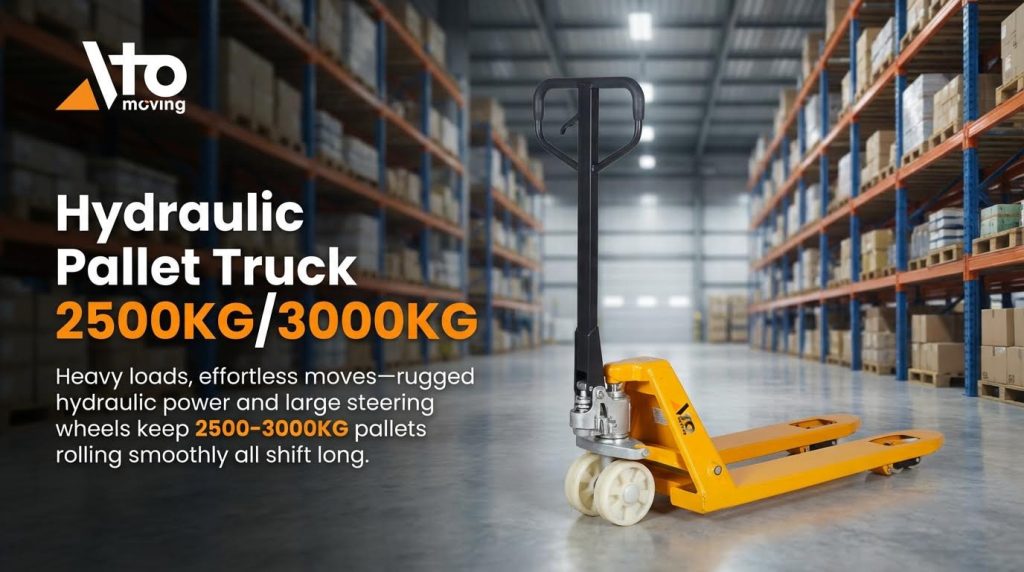
Design choices decide how a pallet jack lifts, how long it lasts, and where it can work. Engineers link capacity, fork layout, wheel material, and power type to a target duty cycle and floor condition. Maintenance strategy then protects the hydraulic system so the jack keeps lifting at rated load with stable control.
Capacity, Fork Geometry, And Wheel Materials
Rated capacity must exceed the heaviest pallet plus packaging and any attachments. Engineers also apply a safety margin to cover dynamic effects from starting, stopping, and uneven floors. Overloading reduces how a pallet jack lifts, causes fork deflection, and can overload the hydraulic cylinder.
Fork geometry controls entry, stability, and clearance. Key choices include:
- Fork length: short forks turn easier; long forks support long or double pallets.
- Fork width over forks: must match regional pallet standards to keep load stable.
- Lowered and raised height: lowered height near 75 mm lets forks clear deckboards; raised height near 190 mm gives transport clearance.
Wheel material changes rolling resistance and wear. Polyurethane wheels suit smooth indoor floors and give low noise. Nylon wheels roll easier under high load but transmit more shock. Steel or hard plastic wheels resist cuts but can damage weak floors. Wheel diameter also affects how a pallet jack lifts over thresholds; larger wheels climb gaps and cracks better.
Duty Cycle, Environment, And Power Selection
Duty cycle describes how often the jack lifts and travels during a shift. Manual jacks fit low to medium duty where operators move short distances and lift a few times per load. Electric lift and electric drive models fit high duty cycles where frequent starts and long runs would exhaust operators.
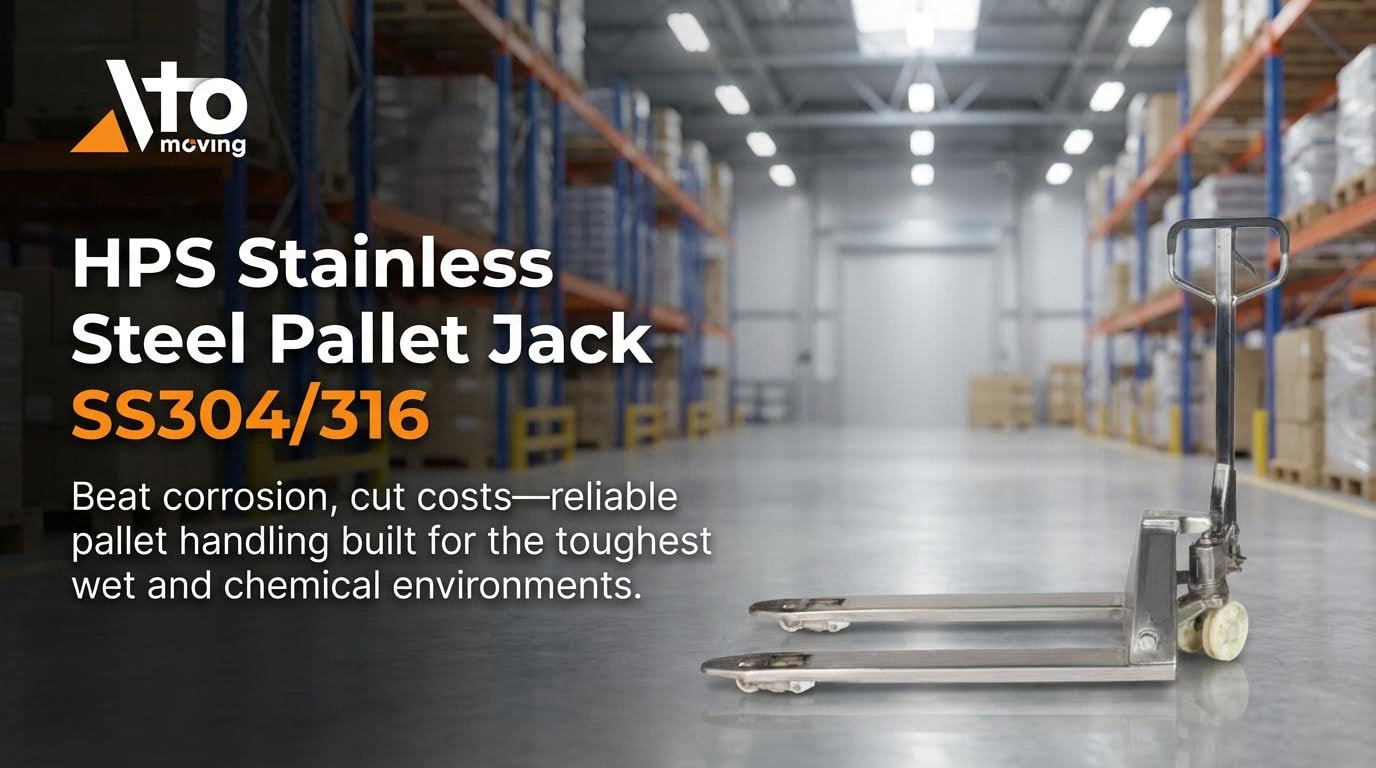
Environment drives material and sealing choices. In cold storage, low temperature oils keep the hydraulic system responsive so the jack still lifts at normal speed. Stainless steel frames and axles resist corrosion in washdown or food areas. In abrasive or dirty sites, sealed bearings and covered pump units protect moving parts from grit that would change how a pallet jack lifts and lowers.
Power selection balances capital cost, energy use, and throughput. Electric units cut operator effort and keep lift speed more constant across the shift. Manual units avoid batteries and charging but demand more force as load and slope increase.
Failure Modes, Diagnostics, And Field Repairs
Typical failure modes link directly to how a pallet jack lifts. Common issues include loss of lift height, slow lifting, or drifting down under load. Root causes often sit in three areas: hydraulic leakage, air in the system, or mechanical wear in linkages and wheels.
Basic diagnostics follow a structured path:
- Check hydraulic fluid level and look for leaks at seals, hoses, and the reservoir.
- Inspect forks and linkages for bending, cracked welds, or loose pins.
- Spin and load the wheels to detect flat spots, broken bearings, or misaligned axles.
If the jack will not lift, low oil, worn pump pistons, or damaged cylinder seals are likely. Spongy lifting often means trapped air, which changes how a pallet jack lifts with each pump stroke. Field repairs usually replace seals, O-rings, and wheels, then refill and bleed the hydraulic circuit. Technicians should follow service manual torque values and use clean containers for new oil to avoid new contamination.
Predictive Maintenance, Sensors, And Atomoving
Predictive maintenance aims to detect changes in how a pallet jack lifts before a breakdown stops a line or dock. Instead of fixed time intervals, service actions follow actual usage and condition data. This approach reduces unplanned downtime and avoids early part replacement.
Sensors can track several indicators: pump handle strokes, lift cycles, travel distance, and temperature of the hydraulic unit. Abnormal patterns, such as more strokes needed to reach the same lift height, can signal internal leakage. Load cells or pressure sensors can log peak loads and flag repeated overload events that shorten cylinder and fork life.
Atomoving solutions can integrate these signals into fleet dashboards. Planners then see which jacks show reduced lift performance or rising fault rates. Maintenance teams can schedule seal kits, oil changes, or wheel replacements before operators notice that the pallet jack lifts slower or drifts. This data-driven method supports safer handling, better energy use, and longer asset life while keeping lift performance close to design values.
Summary: Key Takeaways On Pallet Jack Lifting Systems
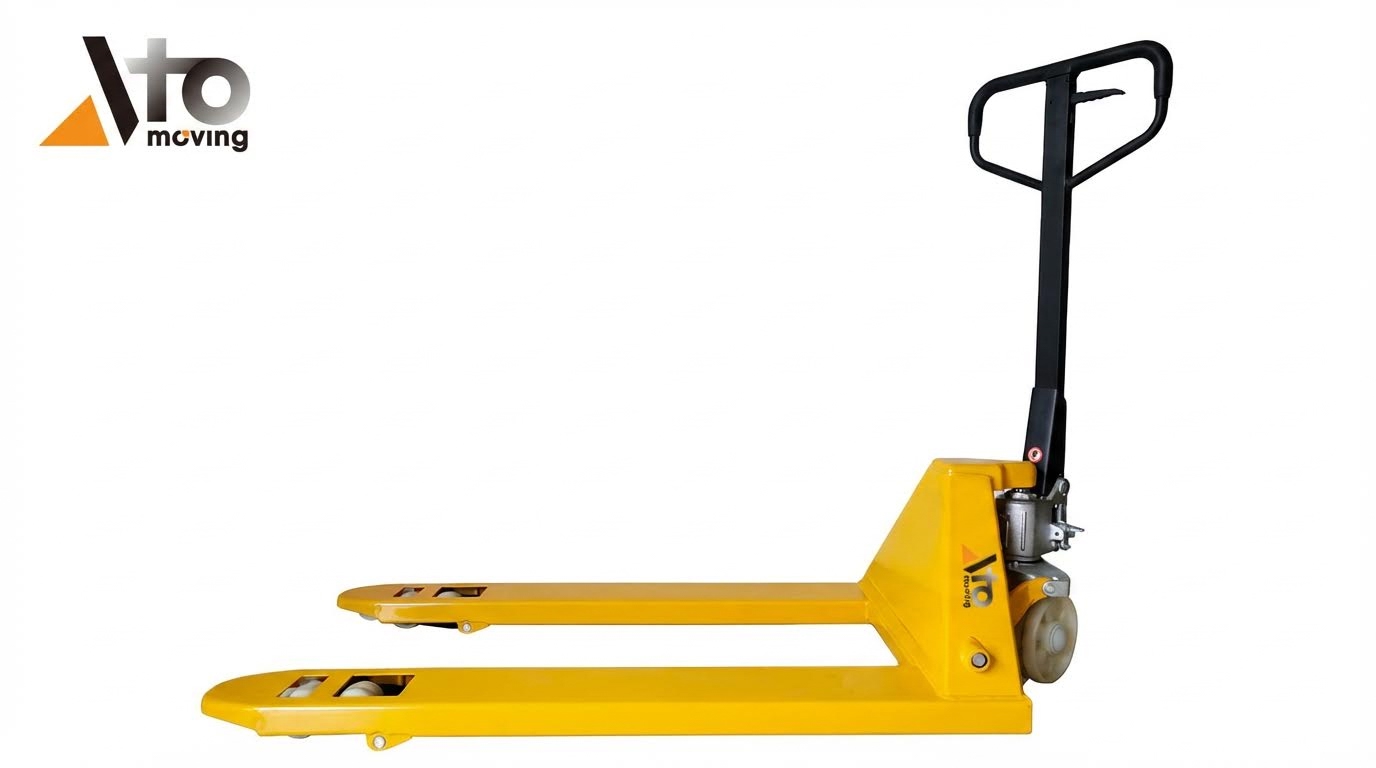
Understanding how a pallet jack lifts starts with the hydraulic bottle jack. The pump, cylinder, and reservoir convert small handle strokes into high pressure. That pressure drives the ram and linkage, which transfer force into the forks and then into the pallet load path.
Manual pallet jacks use hand pumping to raise loads a few centimetres for rolling transport. Electric units add powered pumps and drive wheels to cut operator effort and support higher duty cycles. Typical rated capacities range from roughly 1 tonne to 5 tonnes, but lift height stays low, so these trucks do not replace stackers or forklifts.
From an engineering view, safe operation depends on correct sizing and condition of forks, wheels, seals, and valves. Hydraulic failure modes usually trace back to leaks, worn seals, contaminated fluid, or trapped air. Simple checks of fluid level, visible leaks, and lift response solve most field issues.
Future pallet jack designs increasingly add sensors, pressure monitoring, and basic connectivity. These tools support predictive maintenance and reduce unplanned downtime. However, the core physics of how a pallet jack lifts has stayed the same: controlled hydraulic pressure, short lift travel, and a robust mechanical load path sized for warehouse floors and standard pallets.