Operations that search for how to lift a heavy pallet safely need more than good technique. They need the right mix of pallet jacks, lift tables, stackers, and engineered controls sized to the load, pallet type, and floor conditions across the site.
This article walks through core risks in heavy pallet lifting, then compares manual jacks, high-lift jacks, scissor tables, and special-environment carriers. It then explains how ergonomic height control, digital monitoring, rack design, and OSHA-compliant training work together to cut injuries and downtime. The final section shows how to integrate these elements into one safe, efficient pallet-lifting standard that supervisors, engineers, and operators can apply every shift.
Core Risks In Heavy Pallet Lifting Tasks
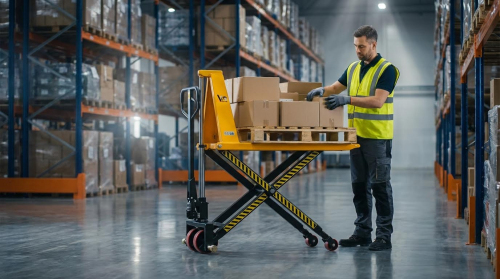
Heavy pallet lifting exposes workers and equipment to repeat high loads. Poor control of these loads leads to strains, crush injuries, and dropped pallets. Anyone asking how to lift a heavy pallet safely must first understand the main risk sources. These include ergonomic overload, manual lifting limits, and mechanical failures under real warehouse conditions.
Ergonomic Hazards In Pallet Picking And Stacking
Ergonomic risk rises fast when workers bend, reach, and twist around heavy pallets. In grocery and cold storage warehouses, workers often place 36–45 kilogram cartons on the lowest pallet layer. They bend at the waist and reach forward, which pushes disc pressures in the lumbar spine far above safe limits. Repetition across a full shift multiplies the risk of chronic back injury.
To reduce these hazards when deciding how to lift a heavy pallet, engineers focus on load height and body posture. Raising the pallet base with extra empty pallets or high-lift jacks cuts trunk flexion. Height-adjustable pallet jacks or lift tables keep the work zone near elbow or waist height. This keeps loads close to the body and shifts effort from the spine to the legs.
Key ergonomic controls include:
- Keep the bottom layer off the floor by at least 200–300 millimetres where possible.
- Use power equipment for horizontal moves over long distances.
- Train workers to avoid twisting under load and to move the feet instead.
These measures lower peak forces on joints and reduce fatigue, while keeping pallet throughput high.
Manual Lifting Limits And Team-Handling Thresholds
Safe manual limits are central when planning how to lift a heavy pallet. Most safety programs set conservative single-person limits for routine lifts, often around 20–25 kilograms under ideal posture. Above this range, risk grows if the worker twists, reaches, or repeats the motion often. Loads over 23 kilograms at floor level with forward reach usually exceed ergonomic guidelines.
For pallet work, individual cartons or components may stay within limits, but stacked weight and awkward shape change the picture. Long or unstable items increase required grip force and control effort. This turns a moderate mass into a high-risk lift. Clear rules help:
- Require team lifting once item weight exceeds the site limit, often 23–25 kilograms.
- Prohibit solo lifting of pallets or skids themselves; use jacks, stackers, or forklifts.
- Shift to mechanical aids when load size blocks vision or safe footing.
Team handling reduces per-person load but adds coordination risk. Workers need training on shared commands, synchronized lifting, and setting loads down in tight rack spaces. Written thresholds and signage near pick zones support consistent decisions during busy shifts.
Common Failure Modes And Incident Scenarios
Typical incidents during heavy pallet lifting follow recurring patterns. Understanding these patterns guides both equipment choice and safe methods for how to lift a heavy pallet. The first group involves human overload. Workers overestimate strength, lift a corner of a loaded pallet, or try to free a jammed pallet jack by brute force. These actions often cause acute back strains or shoulder injuries.
The second group involves equipment and floor conditions. Flat-spotted wheels on pallet jacks increase push and pull forces and can cause sudden jerks. Worn floors with ruts or broken concrete create impact loads and loss of control during turns. Under these conditions, an operator may lose grip, and the pallet can shift or topple.
Common technical failure modes include:
- Stack collapse from damaged or undersized pallets under heavy loads.
- Load shift due to poor wrapping or uneven stacking patterns.
- Tip events when lifting off-centre loads with narrow equipment.
Incident reviews often show missing basics: no pre-use checks, ignored wheel damage, and no clear rule on when to stop and get mechanical help. Robust inspection routines, floor repair programs, and clear stop-work authority sharply cut these failure rates and support safer heavy pallet lifting.
Selecting The Right Pallet Lifting Equipment
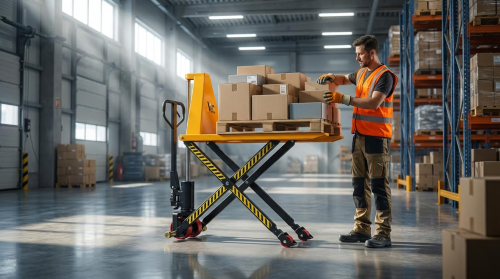
Safe answers to how to lift a heavy pallet always start with equipment choice. The wrong tool increases push forces, awkward postures, and tip‑over risk. The right mix of jacks, stackers, lift tables, and special carriers lets operators move heavy pallets with minimal manual lift. This section explains how each option works, where it fits, and how to match it to pallet, load, and floor conditions.
Manual Jacks, High-Lift Jacks, And Stackers
Manual pallet jacks suit short moves on good floors when operators only need to raise loads about 75–200 millimetres. They remove the need to lift the pallet itself, but still leave operators bending to pick cartons from the bottom layer. Typical models lift less than 200 millimetres, so they do not solve low pick positions by themselves.
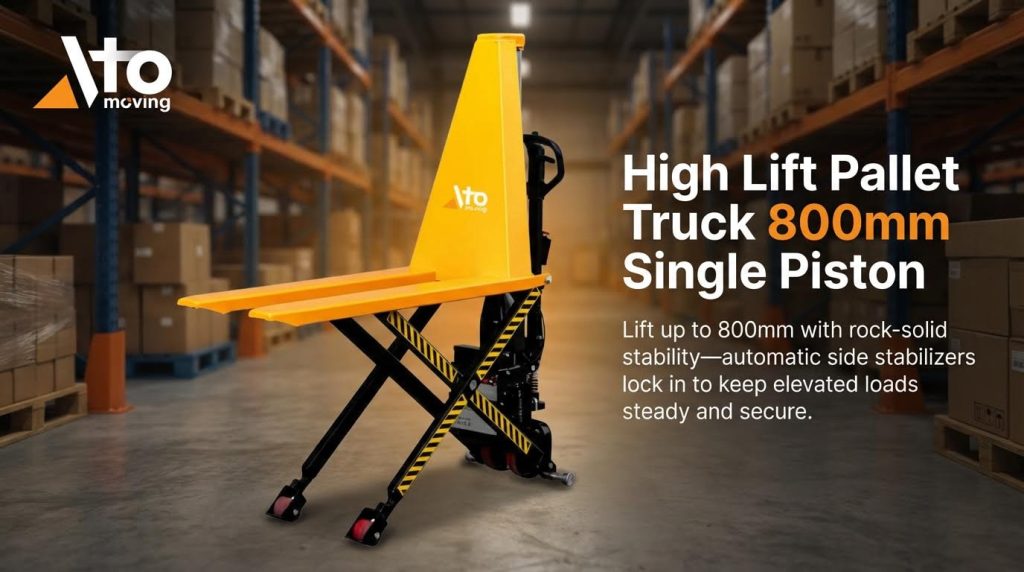
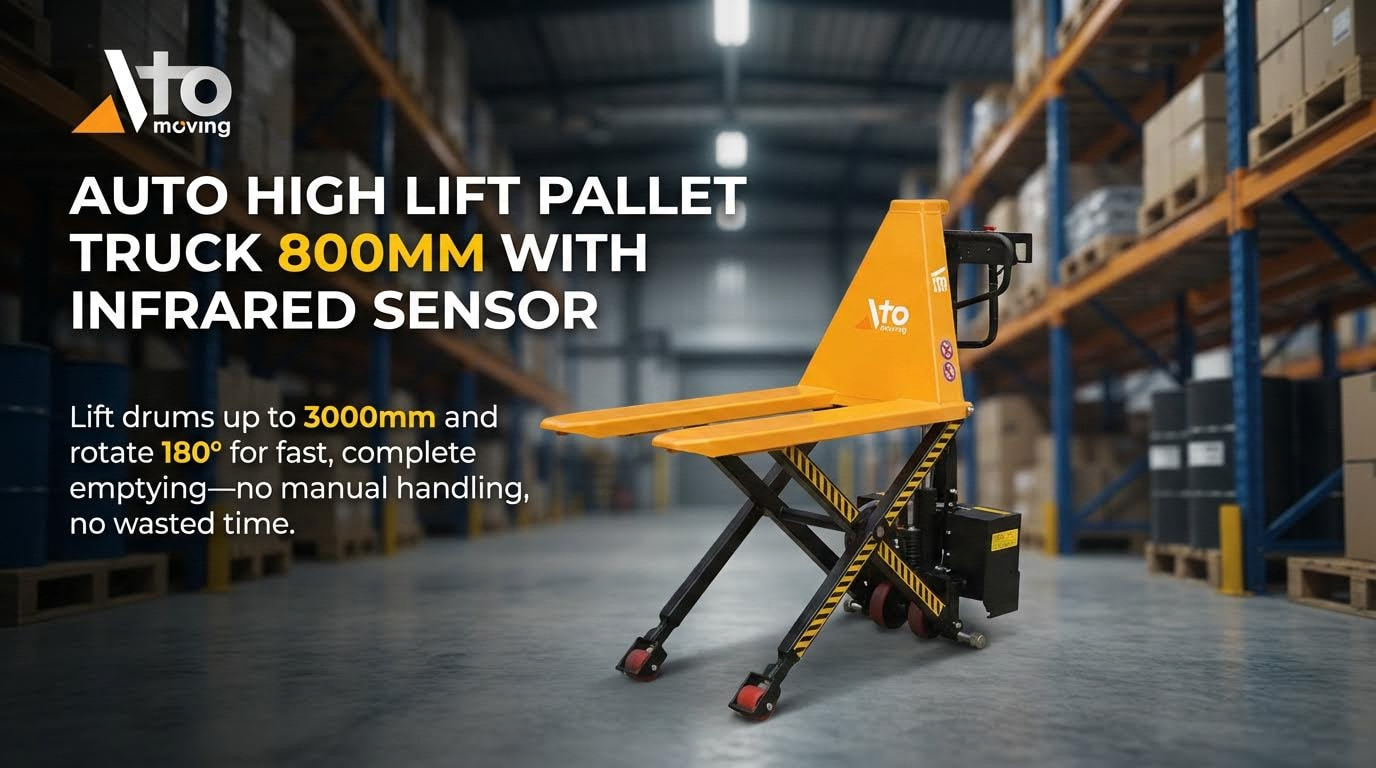
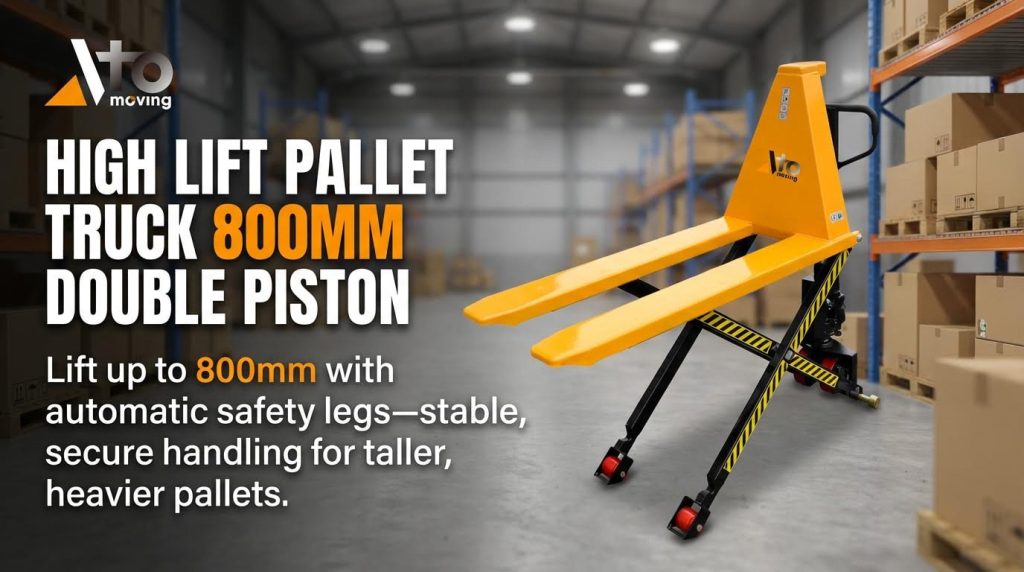
High-lift pallet jacks extend lift height up to about 800 millimetres. This lets workers build or break down pallets at near waist height. It cuts forward bending and keeps boxes closer to the body, which is key when planning how to lift a heavy pallet safely at a workstation.
Stackers add vertical mast guidance and higher lift heights for racking. They handle full pallets into lower rack levels without forklifts. When selecting between these three, compare:
- Required lift height at pick and drop points
- Travel distance and duty cycle per shift
- Floor flatness and slope
- Need for operator ride-on vs walk-behind
Scissor Lift Tables And Workstation Feeding
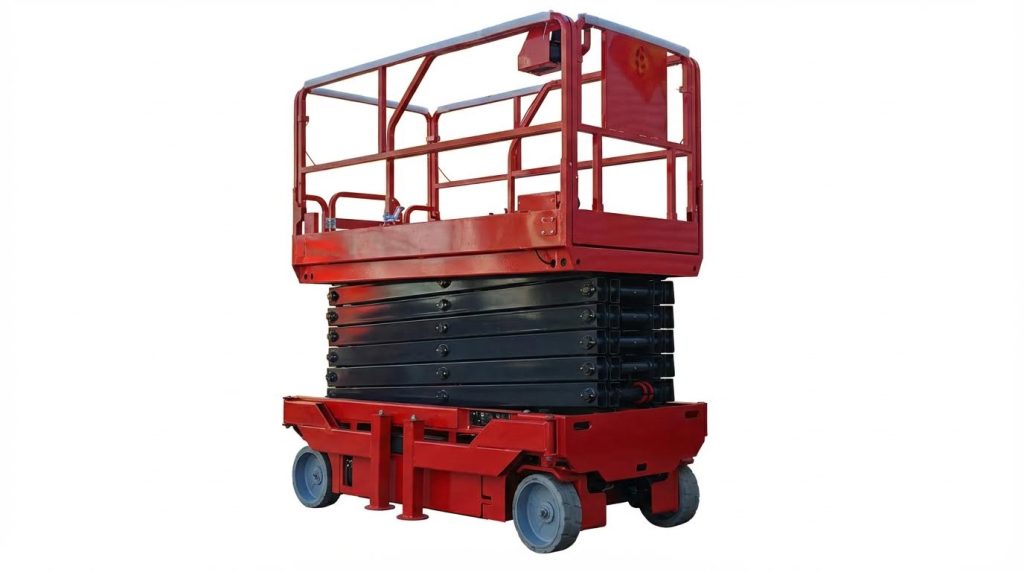
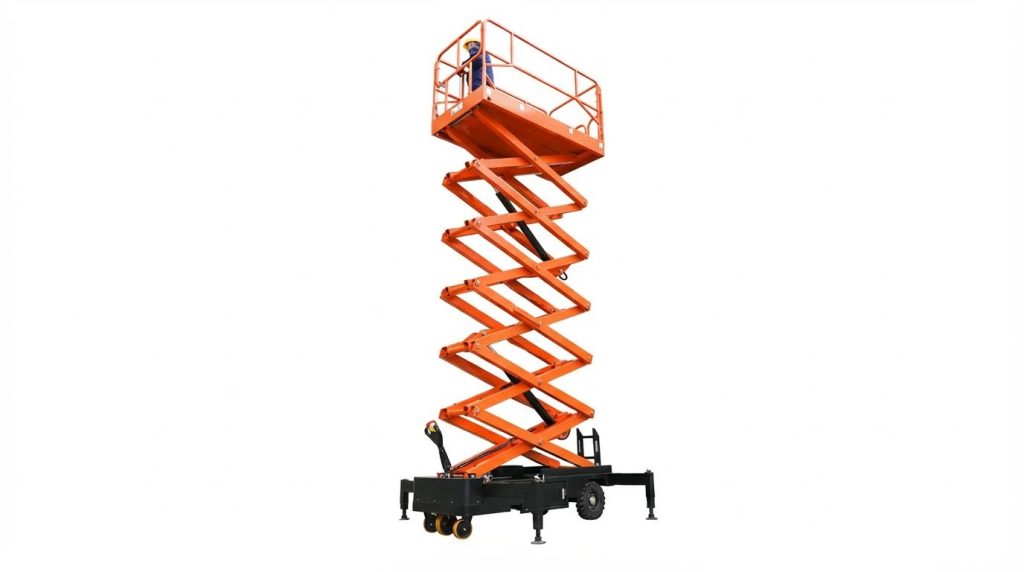
Scissor lift tables work best where the pallet stays in one zone and operators work around it. High-lift scissor designs can position loads from floor level to comfortable reach height with fine control, sometimes within ±1 millimetre. This precision helps when operators stack fragile or unstable cartons.
In pallet building lines, lift tables keep the top layer between knee and elbow height. That reduces trunk flexion and allows leg-driven lifts when workers handle individual cases. Compared with bending to floor level, facilities reported faster cycle times and fewer back complaints.
For heavy pallets, a common method is to place a pallet turntable or palletizer on the lift table or on jack forks. Workers then rotate the pallet instead of twisting their backs. Key selection points include table capacity, platform size, and whether the top surface must accept hand trucks or jacks.
Explosion-Proof And Special-Environment Carriers
In flammable or dusty zones, standard powered pallet trucks can create ignition risks. Explosion-proof pallet carriers use protected electrics, sealed enclosures, and compliant braking systems. Typical units in this class lift around 2 000 kilograms and use polyurethane wheels to limit floor damage and noise.
These carriers often support 360‑degree steering and long horizontal reach, which helps in tight process areas. When planning how to lift a heavy pallet in such spaces, engineers must check area classification, ventilation, and local electrical codes before specifying equipment.
Cold stores, corrosive plants, and food areas need other special builds. Stainless steel or coated frames resist corrosion. Low-temperature hydraulics and electronics stay functional in freezers down to around −30 °C. Selection should balance safety rating, environment, and maintenance skill on site.
Matching Equipment To Pallet, Load, And Floor
Correct matching starts with the pallet itself. Adjustable‑fork jacks handle Euro, US, and non-standard pallets by varying fork width, often between roughly 540 and 685 millimetres. This matters where mixed pallet sizes would otherwise force manual restacking.
Next, engineers review load mass, centre of gravity, and stability. They select equipment with rated capacity above the heaviest pallet, including pallet weight, plus a safety margin. For unstable loads, tools that keep the pallet level and allow smooth starts and stops reduce tip risks.
Floor quality strongly affects how to lift a heavy pallet safely with wheeled gear. Flat, well-maintained floors lower push and pull forces and prevent wheel flat spots. Rough floors, ramps, and thresholds may require larger diameter wheels, all-terrain jacks, or powered trucks.
The table below helps frame decisions.
| Aspect | Preferred Equipment |
|---|---|
| Short moves, good floors, low lift | Manual pallet jack |
| Workstation feeding, waist-height picking | High-lift jack or scissor lift table |
| Racking to low–medium levels | Manual or powered stacker |
| Explosive or classified zones | Explosion-proof pallet carrier |
| Mixed pallet sizes | Adjustable-fork pallet jack |
Final selection should also consider operator strength, training level, and task frequency. Where push or pull forces stay high even with good tools, powered assistance becomes a control measure, not a convenience.
Engineering Controls For Safer, Smarter Handling
Engineering controls give a repeatable answer to the question of how to lift a heavy pallet safely. They reduce bending, overreach, and shock loads instead of relying only on worker strength. Good controls also protect racks, floors, and equipment so rated capacities remain valid over the full life of the system.
When you plan how to lift a heavy pallet, start with layout and equipment interfaces. Keep travel paths smooth and level to cut push–pull forces and truck vibration. Then add digital monitoring and clear rules so operators can spot unsafe loads or damage before a failure occurs.
Ergonomic Height Control And Adjustable Forks
Height control is the first engineering answer to how to lift a heavy pallet without back strain. Workers get hurt when they pick at ankle height or above shoulder height. Raising the working zone into the knee-to-elbow band cuts bending and awkward reach.
Key options include:
- High-lift pallet jacks and scissor tables that bring the pallet to waist height for picking.
- Adjustable fork pallet jacks that change fork width to match Euro, US, and non-standard pallets.
- Stacking empty pallets or using pallet positioners to lift the first layer off the floor.
Adjustable forks help when you must lift a heavy pallet that is non-standard. Correct fork spread keeps the load close to the truck carriage and reduces tip risk. It also limits point loading on deck boards and reduces broken pallets that can drop a corner unexpectedly.
For design, define target working height ranges and pallet types by zone. In freezer or corrosive areas, use stainless or coated equipment rated for low temperatures. This prevents stiffness, flat spots on wheels, and high push forces that stress hands and shoulders.
Predictive Maintenance And Digital Monitoring
Predictive maintenance supports every plan for how to lift a heavy pallet with powered trucks. Poorly maintained jacks and forklifts raise push forces, steering effort, and stopping distance. Flat-spotted wheels and worn hydraulics also increase vibration into the operator.
Effective programs usually combine:
- Daily inspection checklists for brakes, steering, forks, wheels, and hydraulics.
- Logged service intervals tied to hours, not only calendar dates.
- Simple fault reporting tools, such as QR codes on each unit.
Digital monitoring can track impacts, overload events, and travel paths. Impact sensors on trucks highlight rack strikes that may not be reported. Telematics can flag trucks that often exceed speed or carry near-rated loads.
For heavy pallet lifting, use sensors or scales when practical. These help operators avoid exceeding truck or attachment capacity. Maintenance records should stay available during audits to show that lifting equipment stayed within OSHA expectations for safe condition.
Rack Design, Load Ratings, And OSHA Compliance
Rack design is central to any engineered method for how to lift a heavy pallet and store it overhead. The rack must support static pallet weight plus dynamic forces from truck entry, braking, and impact. Most failures trace back to unknown capacities or damaged components left in service.
Key design and control steps include:
| Aspect | Good practice |
|---|---|
| Beam capacity | Use manufacturer load tables and add a 15–20% safety margin. |
| Frame life | Design for 15–20 years with impact protection and corrosion control. |
| Signage | Post clear load limits per bay and per level in kilograms. |
| Protection | Use column guards, end-of-row barriers, and, where needed, mesh decking. |
OSHA required that powered trucks not operate when any safety-related defect existed. This applied directly when they lifted heavy pallets into racks. Operator training had to cover correct fork spacing, mast tilt, and travel speed in aisles.
Plan rack geometry around equipment. Check aisle width against truck type and load length. Verify that top beam levels clear sprinklers and that truck mast height can safely place and retrieve full pallets without mast binding or ceiling strikes.
Training, Traffic Management, And Work Rotation
Even strong engineering controls fail if people do not know how to lift a heavy pallet correctly. Training must connect posture, equipment limits, and site rules into one clear method. Workers should practice leg-driven lifts, neutral spine, and no twisting with a loaded pallet.
Traffic management reduces collision risk when moving heavy pallets. Typical controls include marked travel lanes, one-way aisles, and defined crossing points for pedestrians. Speed limits and horn use rules further cut impact energy if a collision occurs.
Work rotation supports the engineering controls. Repeated heavy lifts or constant pallet jack use can still overload muscles, even with good tools. Rotating staff between picking, driving, and lighter tasks reduces fatigue and error rates.
Link training, traffic rules, and rotation to your written procedure for how to lift a heavy pallet. Include when to switch from manual handling to equipment and when to call for team lifting. Reinforce these rules in refreshers, incident reviews, and pre-shift talks so safe methods stay front of mind.
Summary: Integrating Safe, Efficient Pallet Lifting
Safe heavy pallet lifting depends on smart engineering controls and disciplined work methods. Facilities that ask how to lift a heavy pallet need a joined-up approach. The best results come when equipment choice, rack design, and operator training work as one system. This section pulls those threads together into a practical roadmap.
From an engineering view, the first rule is simple. Avoid manual lifting of full pallets whenever possible. Use pallet jacks, stackers, lift tables, or forklifts to take the weight. When workers must handle cases on or off pallets, height control is critical. Keep the working zone between roughly knee and elbow height using high-lift jacks, scissor tables, or stacked empty pallets. This cuts bending and twisting, which drive most back injuries.
To turn this into daily practice when planning how to lift a heavy pallet, focus on four actions:
- Set clear limits for manual handling and require team lifts above those limits.
- Match lifting equipment to pallet type, load weight, and floor condition.
- Maintain trucks, jacks, and racks to their rated capacities and inspect them often.
- Train operators on posture, traffic rules, and early fault reporting.
Future trends will add more sensors, digital monitoring, and ergonomic automation. Yet the core principles will stay the same. Keep loads stable, keep forces low on the body, and keep equipment within its design envelope. Sites that apply these basics see fewer injuries, less damage, and smoother flow, even as pallet weights and order volumes rise.
Frequently Asked Questions
What is the best way to lift a heavy pallet without a forklift?
Manual pallet jacks or electric pallet jacks are safe and efficient tools for lifting and moving heavy pallets when a forklift is unavailable. These devices allow you to easily transport pallets around a facility. Forklift Alternatives Guide.
How can I safely lift a heavy pallet manually?
To lift a heavy pallet manually, use your legs and knees instead of your back to avoid injury. Follow these steps:
- Place your feet shoulder-width apart for a stable base.
- Keep your upper back straight and maintain a neutral posture.
- Bend your knees and lift with your legs, not your back.
What equipment can be used to move a heavy pallet on uneven surfaces like dirt?
If working on dirt or uneven terrain, using a tractor with chains or straps is an effective solution. Secure the pallet with multiple straps to distribute weight evenly and drag it slowly. Pallets are not very strong, so ensure proper support during movement. Tractor Pallet Moving Tips.