Understanding how much an electric pallet jack weighs is critical for safe design, correct sizing, and efficient warehouse planning. This guide explains the typical weight ranges, the components that add the most mass, and the engineering trade-offs between tare weight, load capacity, and battery choice. You will also see how jack weight affects safety, maintenance, and floor loading so you can match the equipment to your aisles, racking, and transport limits. If you are asking “how much does an electric pallet jack weigh,” this article walks through the numbers and the physics behind them in practical, operator-focused terms.
What Determines Electric Pallet Jack Weight?
Typical weight ranges by jack type
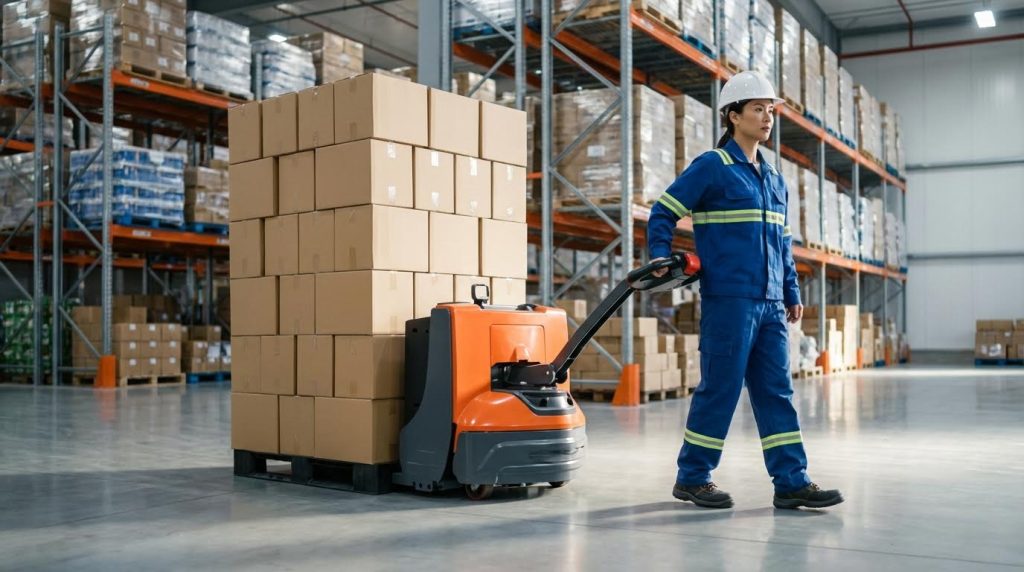
When people ask how much does an electric pallet jack weigh, the answer depends strongly on the jack type and duty class. Walk-behind electric pallet jacks typically fall in the 180–320 kg range (about 400–700 lb) for units rated around 2–2.5 tons load capacity according to common walk-along specifications. Lightweight all-terrain or compact designs with around 1000 kg capacity can be as low as roughly 280 kg, while heavier rider-style or high-capacity units can approach the upper end of the 180–900 kg band (400–2000 lb) as the structure and battery scale up for example, in lightweight and heavy-duty models across typical electric pallet truck ranges. By comparison, manual pallet jacks usually weigh only 68–113 kg (150–250 lb), which highlights how much mass the traction motor, hydraulics, and battery add in powered designs relative to manual units. From an engineering standpoint, this extra tare weight is not just a penalty; it also provides stability and ground friction so the drive wheel can transmit tractive effort without slipping when moving loads in the 2–3 ton range.
Typical weight bands by equipment type
| Equipment type | Typical tare weight range | Typical capacity range |
|---|---|---|
| Manual pallet jack | ≈ 68–113 kg (150–250 lb) standard models | ≈ 2–3 tons manual hydraulic types |
| Walk-behind electric pallet jack | ≈ 180–320 kg (400–700 lb) walk-along electric | ≈ 2–2.5 tons |
| General electric pallet jack range | ≈ 180–900 kg (400–2000 lb) including larger units | ≈ 0.5–3 tons, depending on design |
Core components that add most of the mass
The answer to how much does an electric pallet jack weigh is largely driven by a few heavy subsystems. As with manual trucks, the welded steel frame and forks typically contribute the majority of the structural mass; in non-powered jacks, these elements alone can exceed 70% of total weight due to the high-strength steel sections required to carry multi-ton loads without permanent deformation based on typical manual jack construction. Electric models then add a traction motor, pump motor, gearbox, and control electronics, which introduce dense steel and copper assemblies and can add well over 50 kg combined on mid-capacity walk-behind units. The single largest variable is usually the battery: lead-acid packs for electric pallet jacks commonly weigh around 60–70 kg (130–150 lb), while lithium-ion packs of similar energy content are much lighter at roughly 20–30 kg (45–65 lb) typical battery weight bands. This means two jacks with identical capacity and geometry can differ in tare weight by 40 kg or more purely due to battery chemistry, which directly affects maneuverability, floor loading, and transport cost.
- High-strength frame and forks: Thick plate and formed sections increase bending stiffness and fatigue life but add substantial mass.
- Drive and lift system: Electric motors, gear reduction, and hydraulic pumps use dense metals and contribute a significant share of the added weight over manual designs.
- Battery pack: Lead-acid provides inherent counterweight but is heavy; lithium-ion reduces jack weight and improves handling but at higher capital cost due to lower mass per kWh.
- Running gear and options: Larger drive wheels, reinforced casters, longer forks, and protective guards all incrementally increase tare weight to meet specific application demands as part of customization and durability upgrades.
Why extra weight can be beneficial
From a design perspective, sufficient self-weight acts as a counterbalance and ensures adequate friction between the drive wheel and the floor. This helps prevent wheel slip and tipping when accelerating, braking, or turning with heavy pallets, especially on less-than-ideal floor conditions as described in tare weight engineering principles. The goal is to concentrate mass low and within the wheelbase, so the jack remains stable while still being light enough for operators to control safely when unladen.
Engineering Trade-Offs: Weight, Capacity, And Battery
Tare weight vs. load capacity and stability
When people ask how much does an electric pallet jack weigh, they are really asking how much self-weight is needed to safely carry the rated load. Typical walk-along electric pallet jacks weigh roughly 180–320 kg with load capacities around 2–2.5 tons (400–700 lbs, 2–2.5 tons). This tare weight acts as a counterweight and provides friction between the drive wheel and the floor, which prevents wheel slip and tipping when accelerating, braking, or turning under load Engineering principle behind tare weight. If the truck is too light for its rating, stability margins shrink and structures approach their yield limits, especially with off‑center or dynamic loads Safety hazard of lightweight pallet jacks.
- Higher load capacity generally requires heavier frames, forks, and axles to resist bending and fatigue Load capacity and pallet jack weight relationship.
- Insufficient tare weight can lead to rollover during sharp turns or on uneven floors, even if the rated capacity is not exceeded Safety hazards of excessively light pallet jacks.
- Heavier trucks are more stable under load but increase push/pull forces when empty and raise shipping costs Impact of pallet jack weight on shipping costs.
From an engineering view, the “right” tare weight is a compromise: just enough mass for traction and stability at rated capacity, but not so much that maneuverability, ergonomics, and logistics costs suffer.
Lead-acid vs. Li-ion battery weight and performance
Battery choice is one of the biggest answers to how much does an electric pallet jack weigh. Lead-acid batteries in walk-along units typically weigh about 60–70 kg, while comparable lithium-ion packs are about 20–30 kg Battery weight contribution in electric pallet jacks. That means Li-ion is roughly one-third to one-half the mass of lead-acid for similar energy content Impact of battery types on electric pallet jack weight. This weight saving improves maneuverability, reduces floor loading, and can make the truck easier to transport between sites.
- Lead-acid: Heavier, lower upfront cost, adds useful counterweight for traction but increases total truck mass and maintenance needs.
- Li-ion: Lighter, supports fast and opportunity charging, and typically offers 2+ hours of runtime per charge depending on voltage and capacity Battery specifications.
Reducing battery weight can require the designer to compensate with heavier steel sections or ballast if traction or stability margins become too low. Conversely, in very tight or weight-sensitive applications (mezzanines, elevators, tail-lifts), the lighter Li-ion configuration can be a key enabler even if it slightly reduces the natural counterweight effect.
Impact on safety, maintenance, and floor loading
The weight of an electric pallet jack directly affects risk, upkeep, and building infrastructure. Heavier units offer better stability under load but can increase operator fatigue when maneuvering empty and amplify impact forces into racking, dock edges, or obstacles during collisions Safety considerations related to pallet jack weight. Lighter trucks are easier to steer and push but can become unstable with high or offset loads if the tare weight is not matched correctly to capacity Safety hazard of lightweight pallet jacks.
- Maintenance: Heavier trucks and higher capacities drive higher stresses in wheels, bearings, and welds, which typically means more robust maintenance programs and closer inspection of wear components Maintenance requirements based on pallet jack weight.
- Floor loading: Total load on the slab equals jack tare weight plus pallet load. Concentrated wheel loads from heavier equipment can accelerate floor wear and may exceed limits on mezzanines or older concrete.
- Logistics and freight: Heavier electric units significantly increase freight cost compared with lighter manual trucks, because most carriers price LTL shipments by weight Impact of pallet jack weight on shipping costs.
In practice, engineering teams balance these factors by starting from the required load capacity and duty cycle, then optimizing frame design, battery chemistry, and component selection so that the finished truck is heavy enough to be safe and durable, but no heavier than the application and building structure can economically support.
Matching Jack Weight To Your Application
Warehouse layout, aisles, and transport constraints
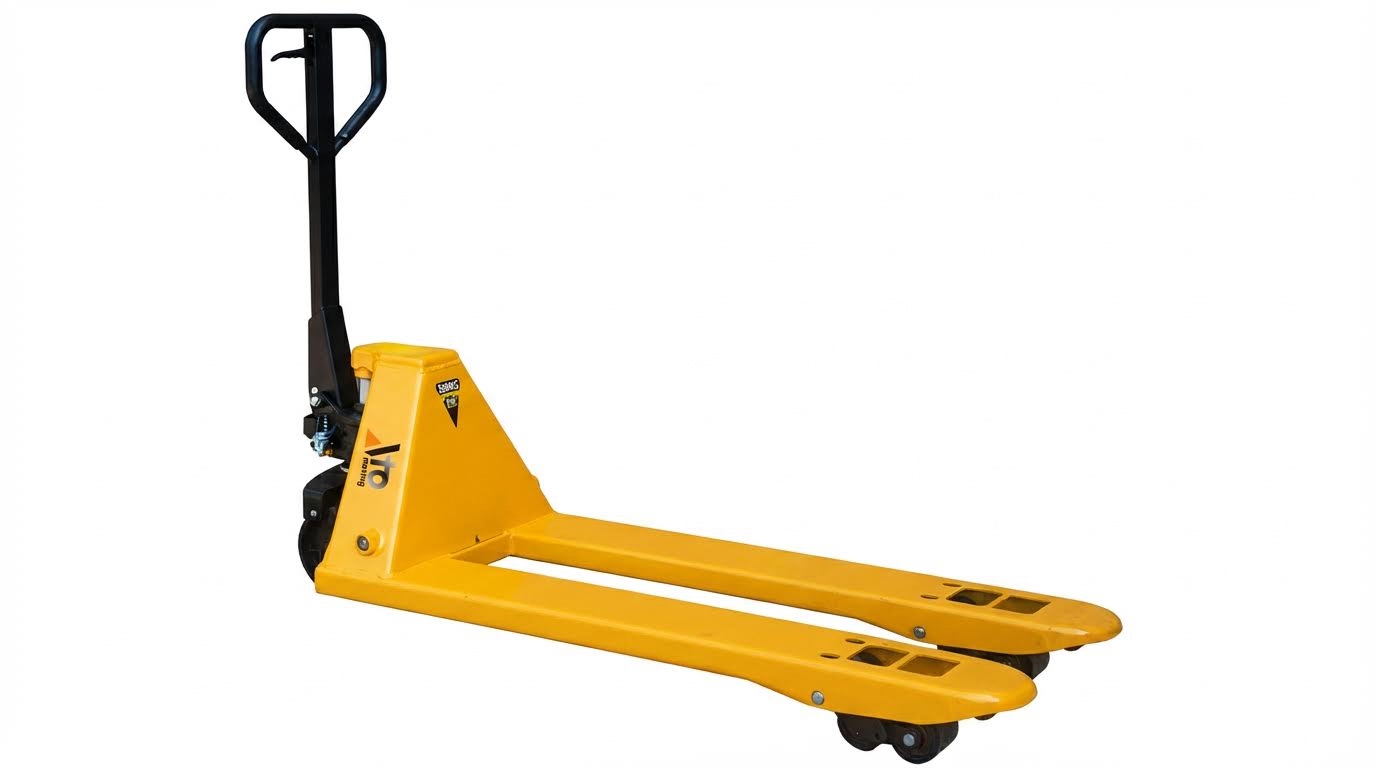
When you ask how much does an electric pallet jack weigh, the right answer depends heavily on where and how it will run. Walk-along electric pallet jacks typically weigh about 180–320 kg and carry 2–2.5 tons, so they already add significant dead weight into your system compared with manual units. In tight aisles, a more compact, lighter jack improves turning clearance and reduces the risk of contacting racking, especially where turning radii are already close to the 1353 mm range quoted for some compact electric models in manufacturer data. However, a heavier jack offers more traction and stability when you run at higher travel speeds or over dock plates and uneven joints.
- Aisle width and turning: In very narrow aisles, prioritize shorter fork lengths and compact chassis. This can matter more than shaving a few kilograms of weight, as long as the jack still has adequate tare mass for stability.
- Floor ratings and mezzanines: On older slabs, mezzanines, or raised platforms, total wheel loads from a 180–320 kg jack plus cargo can approach or exceed floor design limits. Always check floor loading against worst-case loaded axle weight, not just the empty truck mass.
- Internal and external transport: If you routinely lift the jack into trucks, containers, or service elevators, every extra 50–100 kg increases handling complexity and sometimes pushes you into higher-capacity lift equipment or stricter transport rules.
When a heavier jack is actually better
Where you move close to rated capacity over long distances, a heavier chassis improves traction, braking, and directional stability. The extra mass helps maintain friction between drive wheel and floor, reducing wheel slip on smooth concrete or ramps according to engineering guidance.
Selection tips: balancing TCO, ergonomics, and compliance
From an engineering and operations standpoint, you should treat jack tare weight as a design variable that affects cost, safety, and productivity over the life of the asset. Electric pallet jacks generally fall in the 180–900 kg range, with lighter walk-along units at the lower end and higher-capacity or ride-on types at the upper end due to batteries, motors, and controls. When you evaluate how much does an electric pallet jack weigh, link that number to three lenses: total cost of ownership (TCO), operator ergonomics, and regulatory or internal compliance.
- TCO (acquisition, energy, and freight):
- Heavier trucks use more material and typically cost more upfront, and they can increase freight cost when you ship units between sites; for example, a 570 lb electric unit costs more to ship than a 175 lb manual jack under weight-based tariffs according to freight cost comparisons.
- Lithium-ion batteries cut 30–40 kg or more versus lead-acid in many small trucks, which improves energy efficiency and reduces wear on floors and wheels, but raises purchase price due to higher battery cost.
- Ergonomics and safety:
- Heavier jacks are more stable under load and less prone to rollover, but they are harder to maneuver in manual push/pull situations, which can increase strain and injury risk if operators often move them unpowered or on gradients per safety analyses.
- Extremely light electric units with high rated capacity can be unsafe: insufficient tare weight raises the chance of tipping or structural overload when turning or braking with near‑rated loads as engineering case studies show.
- Compliance and internal standards:
- Match the jack’s rated capacity and tare weight to your company’s material handling policies, especially for ramps, docks, and confined spaces. Many internal standards limit combined equipment plus load weight on mezzanines or in elevators.
- Document the typical service weight range for your fleet (for example, 180–320 kg walk-along electrics) and use it in risk assessments, floor loading checks, and emergency response planning.
Practical selection checklist
When choosing between models with different weights but similar capacity, rank these questions: (1) Is floor loading or transport a hard constraint? If yes, favor the lighter unit with adequate stability. (2) Are you running near capacity, at higher speeds, or on ramps? If yes, accept more tare weight for traction and braking. (3) Do operators manually reposition units often? If yes, consider lighter chassis and lithium batteries to reduce push forces and fatigue.
“”
Final Thoughts On Electric Pallet Jack Weight
Electric pallet jack weight is not just a catalog number. It is a core design variable that links structure, battery, safety, and building limits into one system. Frame geometry, steel thickness, and battery chemistry together decide how much traction, stability, and runtime you get, and how much stress you push into floors, wheels, and welds. Too little tare weight cuts safety margins and raises rollover risk. Too much weight drives up freight cost, floor wear, and manual handling effort when trucks move unpowered.
The best practice is to start from your real loads, duty cycle, and routes, then work backward. Confirm floor ratings, ramp slopes, aisle widths, and any elevator or mezzanine limits. Choose a capacity that covers your heaviest pallet with margin, then select the lightest jack that still delivers stable handling at that rating. Use lithium-ion where weight, uptime, or ergonomics are tight, and accept heavier lead-acid or steel sections when traction and robustness matter more.
Engineering and operations teams should treat tare weight as a controlled parameter, review it in risk assessments and purchase specs, and align it with site standards. This approach lets you deploy Atomoving and other electric pallet jacks that are safe, efficient, and fit for your building over the long term.
Frequently Asked Questions
How much does an electric pallet jack weigh?
The weight of an electric pallet jack depends on its design, battery size, and load capacity. On average, most models weigh between 185 kg to 600 kg (407 lbs to 1,322 lbs). For example, heavy-duty models with larger batteries can weigh up to 600 kg, while standard models typically range from 185 kg to 300 kg. Electric Pallet Jack Guide.
What factors influence the weight of an electric pallet jack?
Several factors affect the weight of an electric pallet jack:
- Battery size: Larger batteries add more weight.
- Build quality: Heavy-duty frames increase durability but also weight.
- Load capacity: Higher-capacity jacks often require stronger materials, making them heavier.