To understand how to improve picking in warehouse operations, you must redesign three things together: the physical layout, the slotting logic, and the picking process and labor model. This guide explains how changes in aisle design, storage media, slotting rules, and technology directly cut travel distance, boost pick rate, and improve accuracy, so you can increase throughput without simply adding more people or more square meters.

Redesigning Warehouse Layout For Faster Picking

Redesigning warehouse layout is the fastest structural lever for how to improve picking in warehouse operations because it cuts walking distance, removes congestion, and aligns storage with your equipment and SKU profile.
A good layout makes every pick shorter, safer, and more repeatable. The focus is on aisle geometry, storage media, and ergonomics that support high pick rates without breaking safety rules.
Aisle width, travel paths, and truck selection
Aisle width, travel paths, and warehouse order picker work together to reduce picker travel distance while keeping storage density and safety within acceptable limits.
The goal is to match your material handling equipment to the aisle geometry, then design pick paths that minimize backtracking and crossing flows.
| Aisle Type | Typical Clear Width | Required Equipment | Best For… | Operational Impact |
|---|---|---|---|---|
| Wide aisle | ≈ 3.6 m and above (≥ 12 ft) | Standard counterbalance trucks | Bulk storage, mixed pallet handling | Easy maneuvering, lower storage density, simpler training for picking |
| Narrow aisle | ≈ 1.8–3.0 m (6–10 ft) | Reach trucks, articulated trucks | Higher pallet density, moderate pick activity | More storage in same footprint but needs skilled operators and clear traffic rules for safety |
| Very narrow aisle (VNA) | ≤ 1.5 m (≤ 5 ft) | Guided turret trucks, AGVs, shuttles | High-density pallet storage with automation | Maximizes storage per m² but usually separates pallet storage from person-to-goods picking zones for throughput |
- Define equipment first: Choose pallet trucks, reach trucks, or AGVs – this sets minimum aisle width and turning radius.
- Separate pick and replenish paths: Use one-way loops for pickers and separate forklift aisles – reduces conflict points and delays.
- Shorten main travel corridors: Place shipping, receiving, and fast-pick areas near each other – cuts deadhead travel between tasks.
- Use angled or cross aisles: Add diagonals or cross-overs in long aisles – lets pickers exit earlier and reduces backtracking for speed.
- Optimize software pick paths: Configure WMS to generate serpentine or loop paths – minimizes walking distance per pick tour across orders.
💡 Field Engineer’s Note: When you narrow aisles to gain storage, verify floor flatness and rack alignment. Reach trucks and VNAs lose speed quickly on uneven floors, and operators will slow down or refuse tight aisles if they feel unstable.
How to choose aisle width for a redesign
Start from your longest load plus truck length, add safety clearance (typically 200–300 mm each side), and check manufacturer turning specs. Then validate with a physical test bay before committing to full-rack re-layout.
Storage media, rack design, and vertical space use
Storage media, rack design, and vertical space use determine how many SKUs you can store within easy reach versus buried in reserve, which directly affects picking speed.
The aim is to keep fast movers in high-access, high-visibility locations and push slow movers into higher or deeper storage without hurting replenishment.
| Design Lever | Typical Application | Impact on Picking | Operational Impact |
|---|---|---|---|
| Selective pallet rack | Mixed SKU pallets, low–medium density | Direct access to every pallet | Simple, flexible, good where SKUs change often; supports fast re-slotting. |
| Carton flow / gravity flow | Case or each picking of fast movers | Product automatically presents to pick face | Reduces walking in aisles and keeps golden zone full for high-velocity SKUs. |
| Static shelving | Small parts, low–medium movers | Low cost, manual access | Good for dense small items if heights are set to ergonomic ranges. |
| High bay / VNA rack | Reserve storage for pallets | Slower direct picking, better for reserve | Pairs well with forward pick areas where only top movers are kept at low levels. |
- Separate forward pick from reserve: Use floor-level and first beam levels as forward pick, higher levels as reserve – keeps pickers in the fastest zone most of the shift.
- Use vertical “golden zone” wisely: Place fast-moving SKUs roughly between 800–1,400 mm from floor – this waist-to-shoulder band minimizes bending and reaching for speed and safety.
- Push slow movers up or down: Store C-items in upper beams or low toe-kick shelves – frees prime golden-zone space for high-velocity SKUs to improve picking.
- Match storage media to SKU size: Use dividers, bins, or carton flow for small items – reduces search time and mis-picks in each locations.
- Design for replenishment routes: Ensure reach trucks can refill forward pick faces without blocking pickers – prevents congestion during busy waves.
💡 Field Engineer’s Note: In many redesigns, the biggest gain in how to improve picking in warehouse operations comes from creating a small, dense forward pick area for the top 5–15% of SKUs by volume; this often carries 50–70% of order lines with very short walk distances.
Checking vertical space utilization
Measure clear height to the lowest obstruction, then compare current top beam height. Many sites leave 1–2 m of unused vertical space. Adding one beam level can shift slow movers off prime pick faces and free capacity without expanding the building.
Ergonomic pick faces and safety compliance
Ergonomic pick faces and safety compliance ensure that higher pick rates do not come at the cost of injuries, fatigue, or regulatory issues.
Well-designed heights, reaches, and clearances let workers sustain performance across full shifts while maintaining accuracy.
- Set ergonomic pick heights: Keep most picks between roughly 700–1,500 mm – this reduces bending, overhead reaching, and fatigue for operators.
- Minimize double handling: Design pick faces so the picker touches each item once – shortens cycle time and reduces strain from unnecessary moves.
- Use clear labeling and lighting: Large, legible labels and good lux levels – cut search time and mis-picks, especially on night shifts.
- Respect safe reach distances: Avoid deep shelves where workers must lean over 600–700 mm – prevents awkward postures and back injuries.
- Keep travel paths obstruction-free: Maintain 1,000–1,200 mm pedestrian walkways – supports safe two-way movement and emergency egress.
Ergonomic improvements like raising pick faces and optimizing reach distances were shown to reduce strain and maintain consistent performance across shifts, which directly supports sustained picking efficiency over time in real operations.
💡 Field Engineer’s Note: When you redesign pick faces, walk the new layout with actual operators and have them simulate full totes and heavy items. They will quickly show you which bays are too low, too high, or too deep long before any ergonomics audit does.
Safety and compliance checkpoints in a layout redesign
Before locking in a new layout, verify emergency exit routes, fire equipment access, and maximum rack heights with local codes. Then review traffic separation between pedestrians and trucks, and ensure signage and floor markings match the new travel paths.
Advanced Slotting Strategies To Cut Travel Time
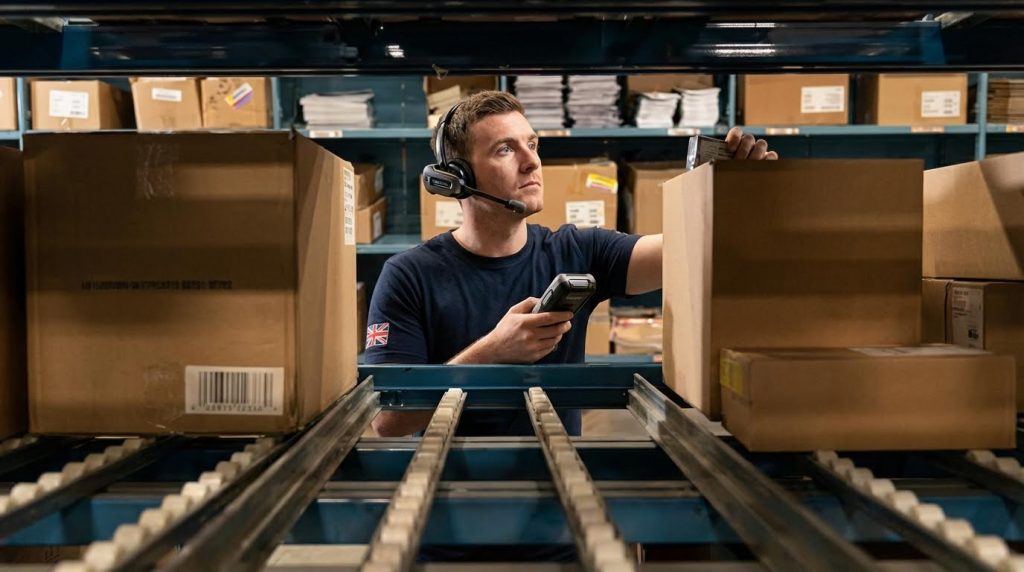
Advanced slotting strategies cut picker travel distance by placing the right SKU in the right slot at the right time, which is the fastest lever for how to improve picking in warehouse operations without adding headcount or automation. Smart use of ABC, affinity, golden zone, and dynamic rules can reduce walking by 20–40% while improving ergonomics and accuracy.
- Goal: Minimize travel per order – More lines picked per hour with the same labor.
- Constraint: Cubic capacity and replenishment limits – Slots must be pick-efficient and refill-efficient.
- Method: Use data-driven rules, not tribal knowledge – Aligns layout with actual order patterns.
- Cadence: Re-slot on a fixed schedule – Keeps the layout in sync with demand shifts.
| Slotting Tactic | What It Does | Typical Impact | Operational Impact |
|---|---|---|---|
| ABC slotting | Places high-velocity SKUs in best locations | Travel reduction 15–30% when applied rigorously based on case examples | Pickers stay near docks and main pick modules; fewer long walks to slow-mover zones. |
| Affinity slotting | Groups SKUs often ordered together | Order assembly time cut by reducing zig‑zag paths through co-location | One short stop replaces multiple distant stops for common order bundles. |
| Golden zone slotting | Places fast movers at mid-height | Pick efficiency and ergonomics improved by reducing bending and reaching | Higher sustained pick rate per picker with less fatigue and lower injury risk. |
| Dynamic slotting | Moves SKUs as velocity and demand change | Put-away labor cut up to 24% in some projects when system-directed | Layout stays optimized for current season, promotions, and new product launches. |
💡 Field Engineer’s Note: In most brownfield warehouses, I see travel, not pick speed, as the main bottleneck. Treat every meter of walking as waste unless a specific slotting rule justifies it, then design slotting to cut that waste first.
ABC, affinity, and golden zone slotting
ABC, affinity, and golden zone slotting are the core rule set for how to improve picking in warehouse layouts without major capex. Together they decide which SKUs get the closest, most ergonomic, and most bundled locations.
- ABC slotting: Classifies SKUs by demand and assigns prime locations to high-velocity items.
- Affinity slotting: Groups SKUs that appear together on the same orders.
- Golden zone slotting: Uses ergonomic height bands to place the most-touched SKUs.
How to build a basic ABC slotting model
1. Export 6–12 months of order lines by SKU. 2. Rank SKUs by order line count or units picked. 3. Classify roughly top 20% as A, next 30% as B, remaining 50% as C. 4. Map A SKUs into the shortest travel locations; push C SKUs to upper, lower, or remote storage.
| ABC Class | Typical Share of SKUs | Typical Share of Volume | Recommended Location Strategy | Operational Impact |
|---|---|---|---|---|
| A | ~20% | ~60–80% of order lines per ABC best practice | Closest to packing, in golden zone, shortest pick paths. | Maximizes time spent picking instead of walking. |
| B | ~30% | ~15–30% of order lines | Mid-distance locations, still accessible but not premium. | Balanced between travel time and storage density. |
| C | ~50% | ~5–10% of order lines | Upper/lower rack levels or remote zones. | Frees prime space for A SKUs while keeping slow movers available. |
- ABC analysis: Uses order history and SKU movement to decide slot priority instead of guesswork.
- Affinity slotting: Reduces cross-aisle travel by co-locating items that are commonly picked together in the same zone or bay.
- Golden zone height: Typically from about 750–1,500 mm off the floor, where pickers can work with neutral spine and shoulders.
Golden zone vs non-golden zone placement
Place your top 10–20% fastest SKUs in the golden zone of your primary pick faces. Put heavier cartons (over ~15–20 kg) between knee and mid-torso height to avoid over-shoulder lifts. Reserve very low and very high levels for C SKUs or full-case picks handled with mechanical assistance.
- Ignore ABC and affinity: Layout drifts toward random, and pickers walk far for high-volume SKUs.
- Ignore golden zone: Workers bend or reach for most picks, which slows them down and increases injury risk over long shifts.
Fixed vs dynamic slotting and WMS rules
Fixed and dynamic slotting define how static or fluid your locations are, while WMS rules enforce the logic at scale. The right mix depends on SKU count, velocity volatility, and system maturity.
| Approach | Definition | Best For | Pros | Cons |
|---|---|---|---|---|
| Fixed slotting | Each SKU has a permanent primary pick location with a set capacity. | Stable assortments and predictable demand. | Simple to train; easy for pickers to memorize; fewer location errors. | Layout becomes outdated as velocity changes; wastes golden-zone space on declining SKUs. |
| Dynamic slotting | System adjusts locations based on real-time or periodic demand data and velocity. | High-SKU, high-change environments like e-commerce. | Keeps fast movers in prime slots; adapts to seasonality and promotions automatically. | Requires strong WMS logic and discipline; more change for operators to absorb. |
| Hybrid slotting | Fixed slots for A SKUs, dynamic or floating slots for B/C SKUs. | Most mid-sized warehouses. | Stability where needed, flexibility where it pays most. | Requires clear rules to avoid confusion at the pick face. |
- WMS-directed put-away: Uses rules to choose the best slot based on velocity, weight, dimensions, and zone constraints instead of manual decisions.
- Zone-based slotting rules: Keep refrigerated, hazardous, or small-parts SKUs in dedicated zones to reduce cross-traffic.
- Replenishment rules: Balance pick-face capacity vs. refill frequency so pickers are not waiting on stock.
Key WMS rule types to configure
1. Slot eligibility: which SKUs can go in which locations by weight, hazard, and size. 2. Velocity tiers: mapping A/B/C to specific zones and levels. 3. Affinity groups: SKUs that should be co-located. 4. Replenishment triggers: min/max or days-of-cover thresholds for each pick face.
💡 Field Engineer’s Note: When moving from manual to WMS-directed dynamic slotting, pilot one zone first. Validate travel distance and replenishment hits, then roll out. Going “big bang” with untested rules is the fastest way to paralyze a warehouse for a week.
Velocity analysis, seasonality, and re-slotting cadence
Velocity analysis, seasonality planning, and a disciplined re-slotting cadence keep your slotting model from going stale. This is where many sites fail: they design well once and then let reality drift away from the layout.
- Velocity analysis: Reviews SKU movement regularly to identify new A/B/C classes and candidates for re-slotting as demand shifts.
- Seasonality: Rotates seasonal SKUs into prime locations ahead of peak and pushes them back after to keep travel low.
- Re-slotting cadence: Sets a fixed schedule (monthly, quarterly) to execute physical moves.
| Activity | Typical Frequency | Data Used | Operational Impact |
|---|---|---|---|
| Velocity refresh | Monthly for fast-changing, quarterly for stable operations | Order lines, units picked, and touches per SKU from WMS history | Identifies SKUs that “graduated” into A class or dropped to C. |
| Seasonal re-slot | Pre-peak (e.g., quarterly or before major campaigns) | Forecasted demand and past seasonal spikes by SKU | Ensures peak SKUs sit in golden zones and near pack-out. |
| Full slotting audit | At least annually | Travel distance KPIs, slot utilization, replenishment delays per best practice | Resets layout when business mix or footprint has changed significantly. |
Practical re-slotting playbook
1. Run velocity and affinity reports. 2. Simulate new slotting using a spreadsheet or digital twin to estimate travel savings before moving anything. 3. Plan moves in small batches per aisle or zone to avoid chaos. 4. Update WMS locations first, then physically move product. 5. Brief operators and update maps or handheld prompts.
💡 Field Engineer’s Note: The best signal that your re-slotting cadence is too slow is when pickers start building their own “shadow logic” for shortcuts. When operators’ tribal routes outperform the system path, your slotting model is already out of date.
Process, Technology, And Labor Model Optimization

This section explains how to improve picking in warehouse operations by aligning pick methods, technology, and labor models so you cut travel time, boost accuracy, and control cost per order in a measurable way.
Pick methods: discrete, batch, wave, and zone
Choosing the right pick method is the fastest lever for improving throughput, travel distance, and labor utilization in a given warehouse profile.
| Pick Method | How It Works | Best For… | Operational Impact |
|---|---|---|---|
| Discrete picking | One picker completes one order at a time from start to finish. | Low order volume, high order value, many unique SKUs. | Simple to manage; longer travel distance per order and higher cost per pick. |
| Batch picking | Picker collects lines for multiple orders in a single tour, then orders are sorted. | Many small orders sharing common SKUs. | Reduces travel per order; needs good sorting process and scanning discipline. |
| Wave picking | Orders are released in time-based “waves” by carrier, cut-off, or zone. | Operations with strong shipping cut-off times and dock constraints. | Improves dock utilization; risk of congestion if waves are poorly sized. |
| Zone picking | Warehouse divided into zones; each picker stays in one zone. | Large footprints where travel dominates pick time. | Can cut travel distance by ~20% and raise orders/hour by ~15% when well designed. Documented case data |
- Align method to order profile: Analyze average order lines and common SKUs – this ensures you minimize walking instead of just changing labels on the process.
- Combine methods by area: Use discrete for bulky items and batch or zone for small picks – you avoid slowing the whole building down to the speed of the worst-fit method.
- Use data, not opinion: Measure picks/hour, lines/hour, and travel time per order before and after – this proves which method actually improves how to improve picking in warehouse operations.
How to pilot a new pick method with low risk
Start with one SKU family or one physical aisle. Run the new method for 1–2 weeks, track KPIs, and only then roll out. This avoids building-wide disruption if assumptions are wrong.
💡 Field Engineer’s Note: When you introduce zone picking, redesign replenishment first. If replenishment carts block 1.8–2.0 m aisles during peak picking, the theoretical 15–20% travel reduction disappears in congestion and waiting time.
Picking technologies and automation options
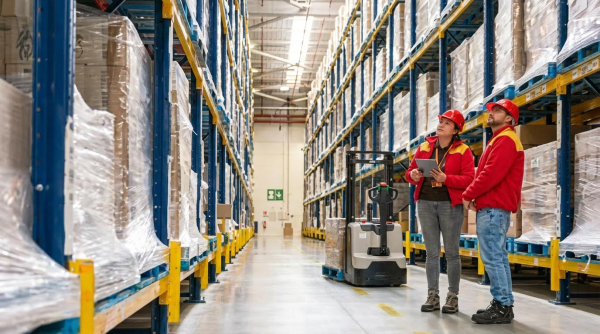
Picking technology should be selected to remove search time, walking, and manual data entry, not just to “go high-tech.”
| Technology | Main Function | Typical Use Case | Operational Impact |
|---|---|---|---|
| Pick-to-light / Put-to-light | Lights and displays show location and quantity to pick or put. | High-volume small items, fast-moving e‑commerce SKUs. | Cuts search time and errors; supports very high lines/hour. Documented as a key efficiency driver |
| Voice-directed picking | Headset gives verbal instructions; picker confirms by voice. | Hands-busy environments, chill or freezer where screens fog. | Hands-free work, consistent pace, improved accuracy vs paper. Source notes hands-free benefits |
| Mobile scanning & wearables | Scanners or ring readers verify item and update WMS in real time. | Most manual pick operations moving off paper. | Improves inventory accuracy and reduces discrepancies and mis-picks. Evidence of real-time accuracy gains |
| AMRs / goods-to-person systems | Robots or shuttles bring totes or racks to a fixed workstation. | High order volume where walking dominates pick time. | Reduces operator travel, improves ergonomics and accuracy, and can cut labor dependency by up to ~50% when well applied. Case project target |
| Vertical lift modules (VLMs) | Automated high-bay storage delivering trays to an access opening. | High-value, small parts where floor space is constrained. | Reduces footprint and walking while improving ergonomics and security. Documented as part of automation strategy |
- Start with low-tech fixes: Clean 5S workstations and clear labeling often deliver 20–30% efficiency before any automation spend. One study showed ~30% efficiency gain from 5S – this is the cheapest way to improve picking in warehouse environments.
- Match tech to constraint: If errors are the main issue, focus on scanning and confirmation. If walking dominates, evaluate AMRs or zone/batch redesign first.
- Use WMS rules smartly: Configure system-directed paths and dynamic slotting so technology actually reduces travel, not just digitizes the same bad routes. Guidance on pick path and slotting
When to justify automation with a business case
Build a simple model: current picks/hour, labor cost per hour, and error cost. Simulate realistic productivity gains from the chosen technology and compare payback over 3–5 years, including maintenance and IT support costs.
💡 Field Engineer’s Note: Before you add robots, stabilize basic processes. AMRs moving to poorly slotted SKUs or congested aisles just automate chaos; you lock in bad design and make later changes more expensive.
KPIs, digital twins, and labor cost modeling
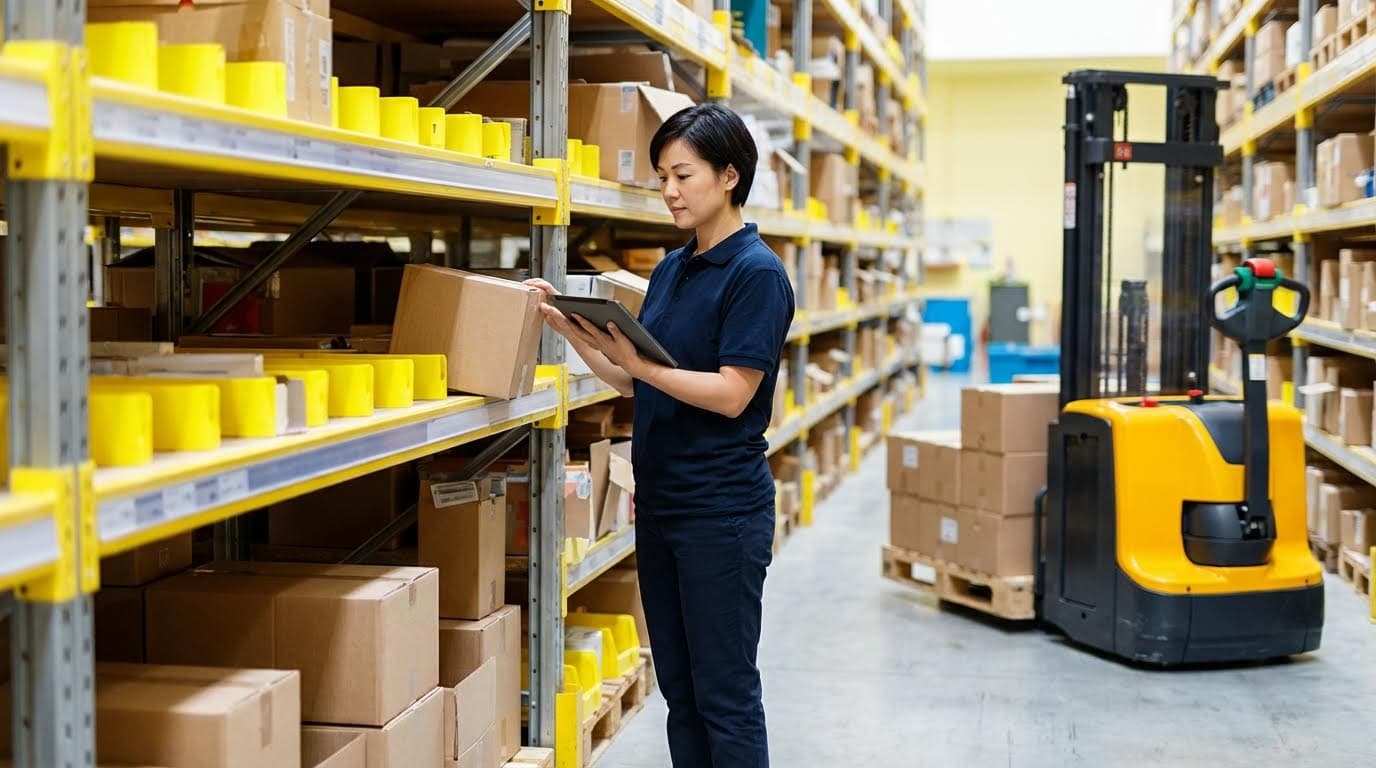
Robust KPIs, simulation, and labor models turn layout and process ideas into quantified improvements in cost per pick, throughput, and service level.
| KPI / Tool | What It Measures or Does | How It Improves Picking | Operational Impact |
|---|---|---|---|
| Pick rate | Lines or units picked per labor hour. | Shows productivity by method, zone, or technology. | Used to compare discrete vs batch vs zone picking and guide process changes. |
| Accuracy rate | Correct picks as a percentage of total picks. | Reveals training, slotting, or technology issues. | Key KPI in most optimization programs. Source lists accuracy as a core metric |
| Labor utilization | Percentage of time workers spend on value-added tasks. | Highlights wasted walking, waiting, and searching. | Supports decisions on zoning, batching, and staffing levels. Discussed as a key KPI |
| Cost per pick | Total picking-related cost divided by number of picks. | Combines productivity, errors, and rework into one metric. | Best way to compare process and technology scenarios in business cases. |
| Digital twins / simulation | Virtual model of warehouse layout, flows, and rules. | Tests new slotting, travel paths, or automation before deployment. | Reduces risk of disruption and focuses investment on proven gains. Evidence of digital twin benefits |
| Labor model | Time standards and activity-based costing for all pick tasks. | Quantifies impact of process and layout changes. | One documented model showed annual labor savings equivalent to 100,000 soles after improvements. Case example |
- Define a small KPI set: Track pick rate, accuracy, cost per pick, and travel distance – this keeps focus on the few numbers that actually describe how to improve picking in warehouse operations.
- Use continuous improvement cycles: Re-slot high-velocity SKUs, adjust pick paths, and refine workstations regularly; case studies showed immediate gains from such tweaks. Documented continuous-improvement results
- Refresh slotting and velocity analysis: Review SKU movement routinely so fast movers stay in golden zones and slow movers move out of prime space, sustaining earlier gains. Evidence of ongoing analysis benefits
How to build a basic labor model in practice
Time each core task (walk 50 m, scan, pick 1 unit, place on pallet, exception handling). Multiply by average occurrences per order. Apply wage rates, then rerun the model for new layouts or methods to estimate savings before you invest.
💡 Field Engineer’s Note: Always validate modeled gains with a live trial. A labor model might assume 60 picks/hour, but if congestion, rework, or training gaps pull real performance down to 40 picks/hour, your ROI and payback period will be very different from the spreadsheet.
Final Thoughts On Holistic Picking Optimization
Improving warehouse picking is not about one big fix. Real gains come when layout, slotting, and process design all support the same goal: less walking, safer motions, and faster, more accurate picks.
Layout choices set the physical limits. Correct aisle widths, clear travel paths, and a well-designed forward pick area cut wasted distance and congestion. Rack design and golden-zone use then decide how much of that footprint turns into fast, ergonomic pick faces instead of hard-to-reach storage.
Slotting rules turn data into daily efficiency. ABC, affinity, and golden-zone slotting keep the right SKUs in the best locations as demand shifts. Fixed, dynamic, or hybrid slotting only works if you run velocity reviews and re-slot on a defined cadence, supported by disciplined WMS rules.
Process and technology choices lock in the benefit. Pick methods, scanning, and any automation must match the real constraint, not a trend. KPIs, digital twins, and labor models let teams test options on a screen before they move a single rack.
The best practice is clear: treat picking as a single, integrated system. Start with basic layout and slotting, prove gains with data, then scale with technology that fits your operation and Atomoving’s engineered solutions.
Frequently Asked Questions
How to improve picking in a warehouse?
Improving picking efficiency starts with optimizing your warehouse layout. Store high-demand items closer to the packing area to reduce travel time. Organize products by type, size, or demand to speed up the picking process. Warehouse Efficiency Tips.
- Implement zone picking to divide the warehouse into sections and assign pickers to specific zones.
- Use batch picking to handle multiple orders at once, reducing repeat trips.
- Create hot zones for frequently picked items to minimize picker movement.
How to reduce warehouse picking errors?
To reduce picking errors, assess your order profiles and devise efficient processes. Implement slotting in warehouse racks and use the A-B-C SKU strategy to organize inventory based on priority. Regularly examine and optimize your warehouse layout. Picking Accuracy Guide.
- Train pickers on correct techniques and technology usage.
- Maximize material storage at efficient levels to avoid confusion.
- Ensure every picker is well-versed in warehouse best practices.