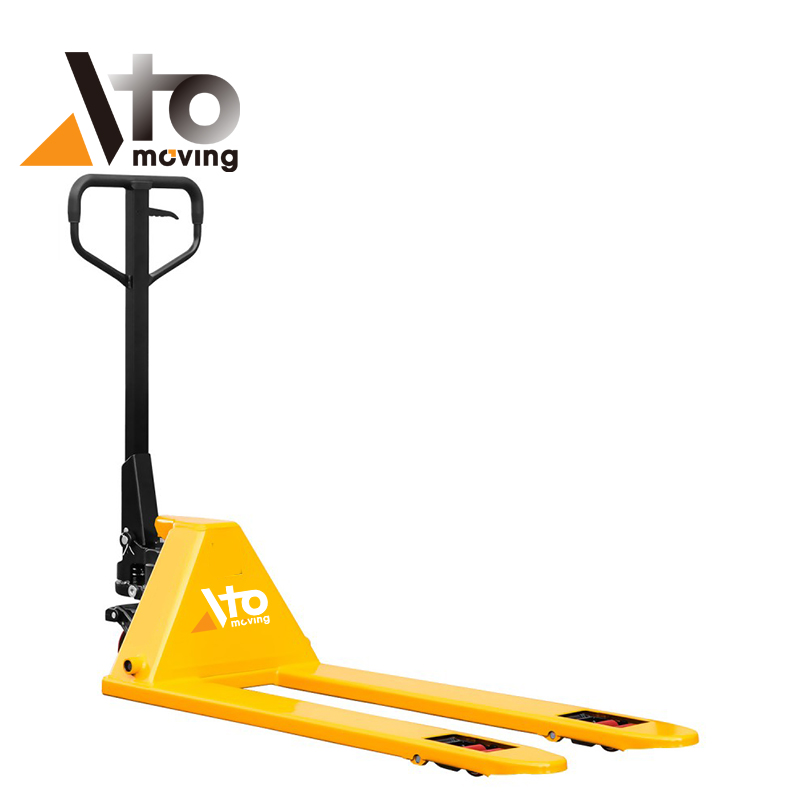
Choosing the right pallet jack width is a fundamental engineering decision that affects safety, load stability, and aisle utilization. This guide explains how wide is a pallet jack in real-world terms, from standard 27-inch models for 48×40 pallets to narrow-aisle and low-profile variants for tight or specialized layouts. You will see how fork spacing, overall width, turning radius, and clearance interact with pallet design, racking, and docks to shape equipment performance. Use these dimensions and trade-offs to specify pallet trucks that match your operation instead of forcing your operation to work around the wrong truck size.
Defining Pallet Jack Width And Core Dimensions
What “width” means on a pallet jack
When engineers ask “how wide is a pallet jack,” they are usually talking about more than one dimension. In practice, you should distinguish three different widths:
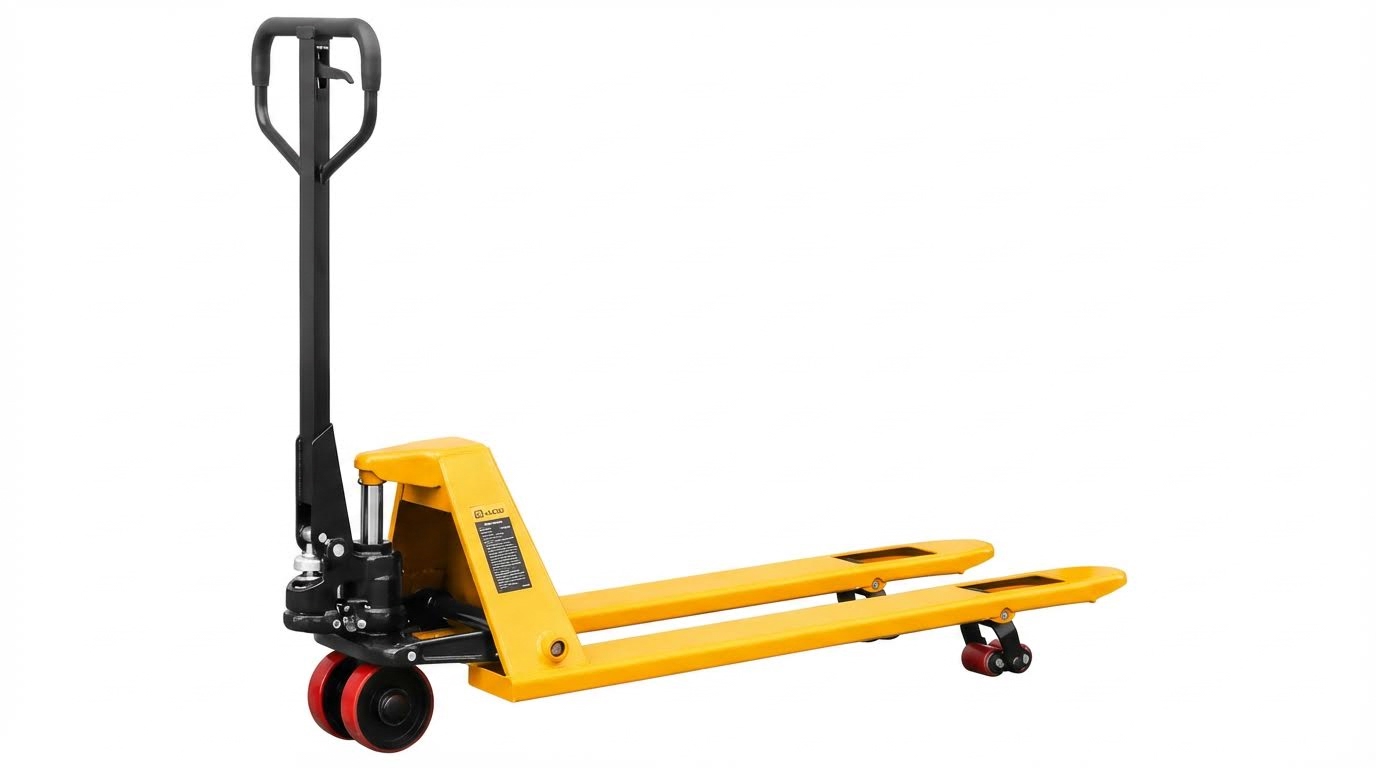
- Width over forks (fork spread) – the distance from the outside of one fork to the outside of the other. On standard manual units this is commonly around 27 inches for handling 48 x 40 pallets 27 inches wide by 48 inches long. This is the key dimension for pallet compatibility.
- Distance between forks – the clear gap from inside face to inside face. Typical adjustable designs allow the fork spacing to place the forks under the pallet stringers; common ranges are 20–27 inches between forks on standard models width between forks typically ranges from 20-27 inches.
- Overall equipment width – the widest point of the jack, often at the handle or steering wheel hubs. This is the dimension you compare to aisle widths, doorways, and truck bodies for clearance checks overall width (widest point, usually the handle).
For most layout and racking decisions, “how wide is a pallet jack” should refer to both the fork spread (for pallet fit) and the overall width (for aisle and doorway fit). A standard reference configuration is 27 inches overall fork width with a 48 inch fork length for general warehouse use standard pallet jacks (27″W x 48″L).
Why this matters in engineering terms
Using the correct width definition avoids common mistakes such as specifying a jack that fits your pallets but not your dock plates, or one that fits the aisle but cannot pick up your most common pallet type. For accurate design, always record fork width, distance between forks, and overall width separately.
Standard width ranges for common pallet sizes
Standard pallet sizes drive the practical answer to “how wide is a pallet jack” in most facilities. The table below summarizes typical fork widths matched to common pallet formats.
| Pallet type / typical size | Typical pallet jack fork width | Notes |
|---|---|---|
| North American GMA, 48 x 40 | 27 in overall fork width | Industry standard jack size for general warehouse use standard pallet jacks measure 27 inches wide by 48 inches long |
| Euro / smaller export pallets | About 21 in overall width | Low‑profile or narrow models around 21 inches wide and 42 inches long are common for tight spaces and Euro pallets low-profile models measure 21 inches wide with a fork length of 42 inches |
| Oversized / industrial pallets | 30 in overall width | Heavy‑duty jacks around 30 inches wide and 60 inches long suit wider or heavier pallets heavy-duty models are 30 inches wide, with a fork length of 60 inches |
| Narrow‑aisle / specialty pallets | ≈20 in or less overall width | Special narrow‑aisle units can be as slim as about 20 inches to work in very tight aisles narrow-aisle models are as slim as 20 inches wide |
Across these types, the clear distance between forks generally falls in the 20–27 inch range so the forks sit correctly under pallet stringers or blocks width between forks typically ranges from 20-27 inches and must match the pallet’s stringer or block placement. For typical 48 x 40 pallets, specifying a 27 inch wide, 48 inch long jack provides a good baseline, while operations with mixed or non‑standard pallets often need a mix of 21 inch, 27 inch, and 30 inch widths to cover all loads efficiently.
Quick engineering check for width selection
As a rule of thumb, select a fork width slightly less than the pallet overall width but wide enough that each fork sits well inside the outer stringers. Then confirm that the jack’s overall width is at least 6 inches less than your narrowest aisle or doorway to preserve maneuvering clearance allow at least 6 inches of width clearance.
Engineering Dimensions: Types, Ranges, And Trade-Offs
Standard, low-profile, and narrow-aisle widths
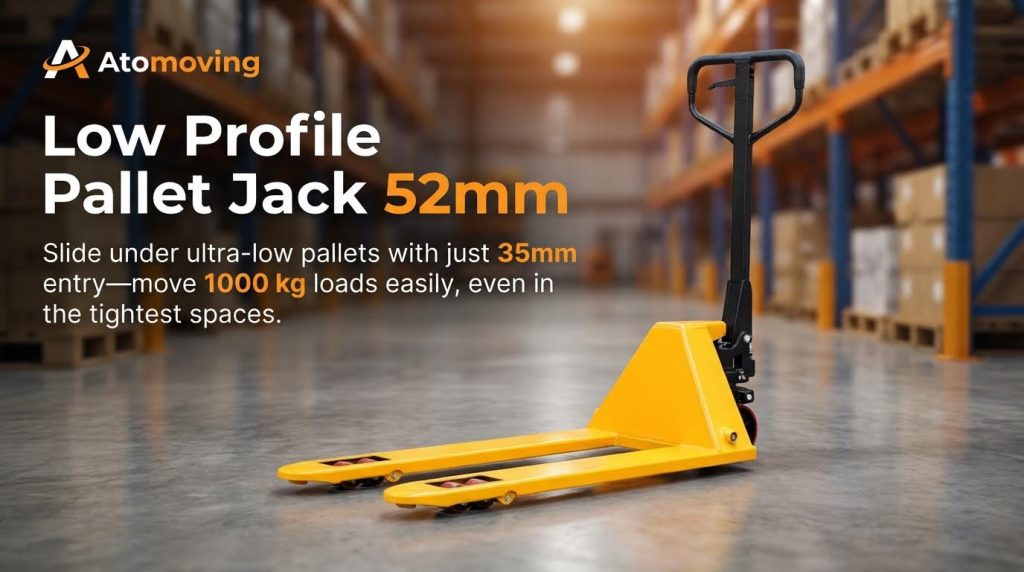
When engineers ask how wide is a pallet jack, they are usually comparing three width families: standard, low-profile, and narrow-aisle. Standard hand pallet jacks typically have an overall fork width around 27 inches with a 48-inch fork length, optimized for 48×40 GMA-style pallets standard pallet jack 27 in × 48 in. Low-profile units narrow that footprint and reduce fork height to engage thinner decks and Euro-style pallets; common low-profile sizes are about 21 inches wide with 42-inch forks and reduced minimum fork height 21 in × 42 in low-profile and 55 mm minimum height ranges 55 mm minimum fork height. Narrow-aisle and specialty slim models go further, with overall widths down to about 20 inches for tight rack tunnels or machinery access narrow-aisle models as slim as 20 in wide. The trade-off is straightforward: wider equipment improves lateral stability and compatibility with larger pallets, while narrower and low-profile designs sacrifice some stability margin and capacity to gain clearance in height- and space-constrained applications.
Typical width and capacity ranges by type
| Type | Typical overall width | Typical fork length | Capacity range |
|---|---|---|---|
| Standard | ≈27 in | 48 in | ≈2,500 kg class |
| Low-profile | ≈21 in | 42 in | ≈2,000 kg class |
| Narrow-aisle / slim | ≈20 in and below | Variable | From light duty up to several thousand kg |
Data adapted from warehouse size guides and low-profile specifications. Standard vs low-profile dimensions and low-profile jack data.
Fork geometry, wheel layout, and load stability
Engineering choices in fork geometry and wheel layout directly answer how wide is a pallet jack in terms of usable support under the pallet. On many standard units, the distance between forks is adjustable roughly 20–27 inches to line up beneath pallet stringers or blocks and keep the center of gravity between the load rollers 20–27 in fork spacing. Fork length is commonly 48 inches on standard models and 42 inches on low-profile versions, which must extend at least two-thirds of pallet length to avoid tip-over and deck breakage under load measurement guidelines for fork length. Wheel sizing and placement also matter: steering wheels around 6.75–7.75 inches in diameter and 2 inches wide, combined with load rollers about 2.9–3 inches in diameter and 3.6 inches wide, form a stable support polygon at each fork tip steering and load roller dimensions. As capacity rises toward 5,500 lb and beyond, designers often increase fork section thickness, roller width, and sometimes overall width to reduce bending stress and deflection under rated loads 5,500 lb load capacity.
- Wider forks and rollers improve lateral stiffness but demand wider pallet openings.
- Narrow forks concentrate load on smaller deck areas, increasing risk of deck damage if pallet quality is poor.
- Wheel material (nylon, rubber, polyurethane) tunes rolling resistance and shock transmission into the load and operator wheel type options.
Clearance, turning radius, and safety compliance
Width interacts with height clearance and turning radius to determine whether a pallet jack can operate safely in a given aisle or dock layout. Standard units with 27-inch width typically need at least 6 inches of side clearance, so a 36-inch aisle is a practical minimum for straight-through travel and basic maneuvering 36 in minimum doorway and 6 in clearance. Low-profile jacks reduce fork height to around 55 mm minimum and use compact chassis designs, which can bring turning radius down near 1,265 mm on some models, improving maneuverability in dense storage ≈1,265 mm turning radius. Engineering guidelines often assume at least 12 inches of extra space beyond the pallet jack footprint for safe turning, with additional 8–10 inches required for ride-on or electric versions to account for the operator platform and body envelope clearance and electric model allowances. From a safety and compliance perspective, undersizing width relative to pallet size can push the combined center of gravity outside the wheelbase during cornering or ramp work, while oversizing width can breach egress clearances and minimum aisle requirements in code-regulated areas.
Clearance and maneuvering quick-reference
- Allow ≈6 in total lateral clearance beyond pallet jack width for straight travel.
- Allow ≈12 in additional space for turning at aisle ends or intersections.
- Verify lowered height (3–4 in for standard, less for low-profile) against pallet entry height to avoid impact and deck damage lowered and raised height ranges.
Matching Pallet Jack Width To Your Operation
Aligning jack width with pallets, aisles, and docks
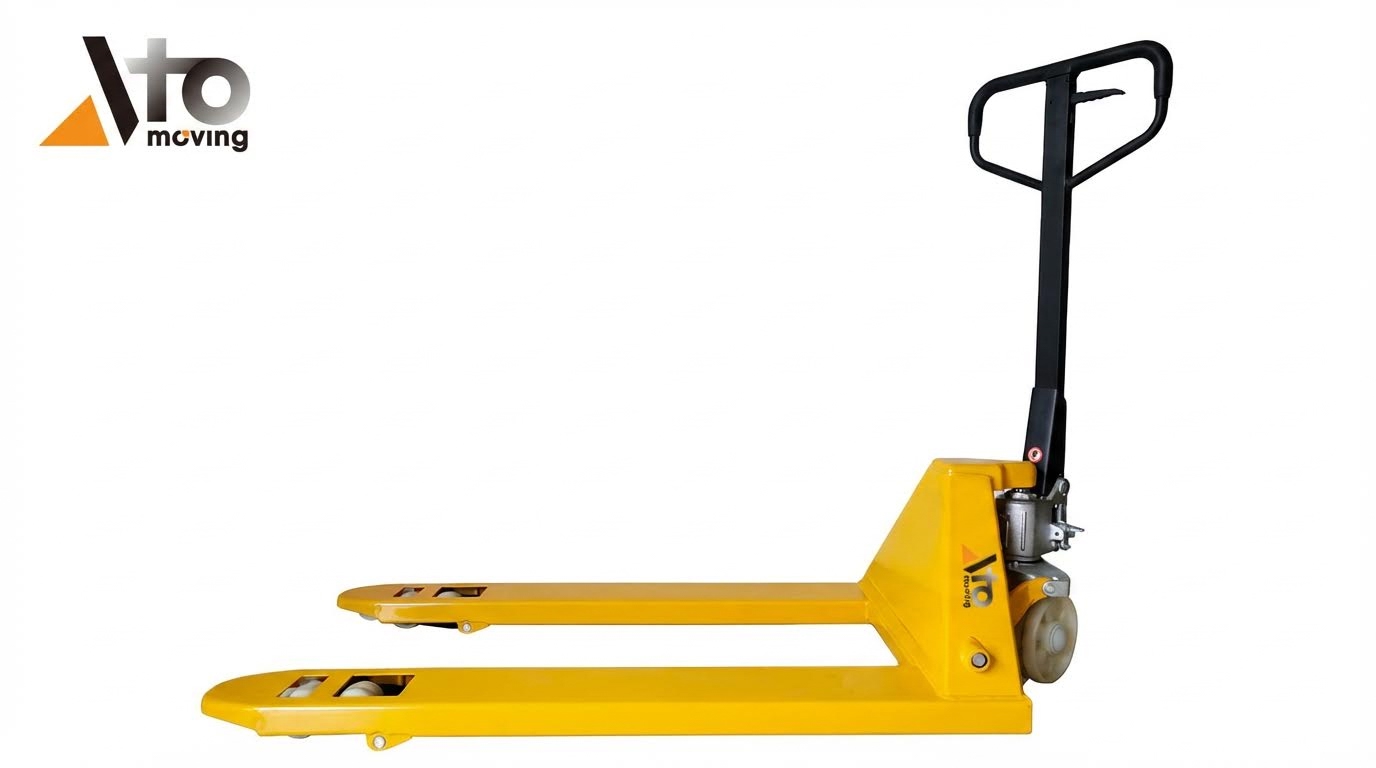
To decide how wide is a pallet jack for your site, start from the pallet, then work outward to aisles and docks. Standard pallet jacks are about 27 inches wide overall with fork lengths around 48 inches, sized for 48 x 40 pallets and 36 inch minimum doorways standard pallet jack dimensions. Narrow and low-profile units run closer to 20–21 inches wide for tight aisles, Euro pallets, or congested production cells low-profile pallet jack sizes. Heavy-duty or extra-wide models reach about 30 inches in width to support oversized or 48 x 48 pallets, where you may also need fork lengths of 54–60 inches for stability pallet truck sizes by type.
- Pallet interface: Check the distance between pallet stringers or blocks and match it to the fork spread, which typically ranges from 20–27 inches on adjustable models width between forks.
- Aisle and doorway fit: Maintain at least 6 inches of lateral clearance beyond the pallet jack’s overall width to allow safe travel and turning in aisles and doorways clearance space requirements.
- Dock and trailer compatibility: Confirm the jack width works with dock plates, trailer door openings, and any on-truck liftgates so the wheels stay fully supported.
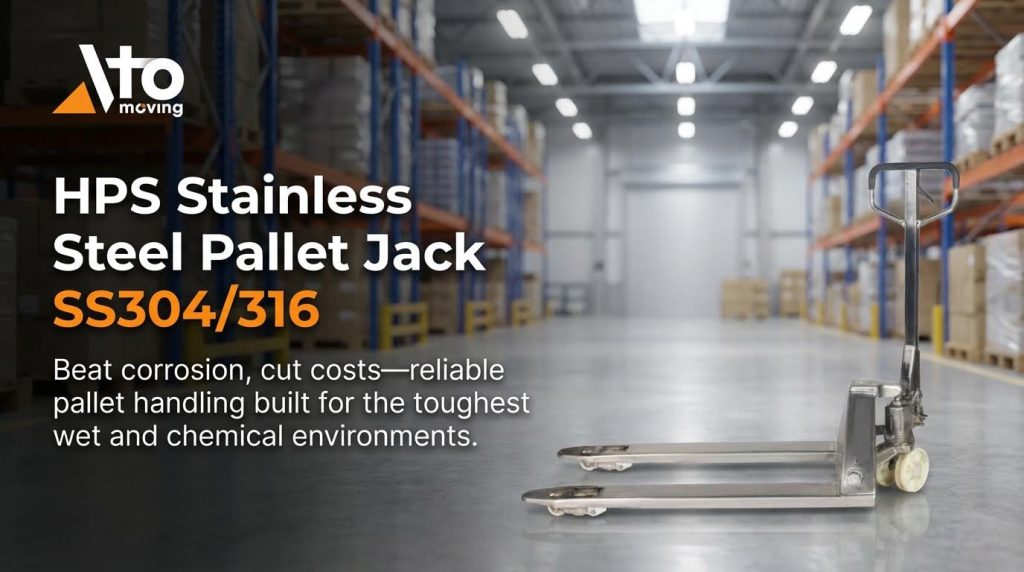
- Special environments: For food, pharma, or corrosive areas, stainless models may have slightly different overall widths and clearances that must still align with pallets and aisles specialty pallet jack sizes.
Quick reference: typical pallet jack widths vs. application
| Typical overall width | Typical use case |
|---|---|
| ≈20–21 in | Narrow aisles, Euro pallets, tight production cells |
| ≈27 in | General warehouse, 48 x 40 pallets, standard doors |
| ≈30 in | Oversized / industrial pallets, 48 x 48 or wider |
Selection checklist for procurement and engineers
When specifying how wide is a pallet jack for a new purchase, use a structured checklist so width aligns with safety, throughput, and lifetime cost. Correctly matched pallet jack dimensions can improve handling efficiency by about 30%, cut aisle width requirements by 15–20%, and reduce product damage by over 20% through a better fit to pallets and racking efficiency improvements with proper sizing.
- Pallet and load mapping
- List all pallet types (e.g., 48 x 40, 48 x 48, Euro) and required fork spread ranges.
- Confirm fork length covers at least two-thirds of the longest pallet dimension for stability measurement guidelines.
- Facility geometry
- Measure narrowest aisle, doorway, and dock plate and subtract at least 6 inches to define maximum allowable jack width clearance space requirements.
- Check turning zones and intersections against the recommended 12 inch turning radius allowance.
- Capacity and duty cycle
- Match load rating to your heaviest pallet, with margin; common ranges run from 2,000 kg to 5,000 kg depending on jack type pallet jack size chart comparison.
- For high-frequency use, consider electric units and add 8–10 inches in layout for the operator standing area clearance for electric models.
- Adjustability and future-proofing
- Where pallet mix may change, evaluate adjustable-fork designs with width ranges around 540–685 mm for flexibility across pallet standards intelligent width adjustment.
- Weigh the 20–30% cost premium of custom widths or fork lengths against the savings from avoiding bottlenecks or re-palletizing loads custom pallet jack sizes.
- Safety and ergonomics
- Verify the jack’s overall width, fork width, and handle geometry fit operators’ body positions without forcing awkward angles.
- Ensure the chosen width does not encourage operators to “side-load” pallets or travel too close to racking, which raises tip and impact risks.
Using this checklist, engineering and procurement teams can specify pallet jack width as a controlled design parameter, not an afterthought, and align equipment geometry with pallets, aisles, and docks for safer, faster flow.
“”
Final Thoughts On Specifying Pallet Jack Width
Pallet jack width is not just a catalog line; it is a core design variable that links pallets, floors, and people into one system. Fork spread, overall width, fork length, and wheel layout together decide whether loads stay stable, aisles stay clear, and operators stay safe. If you undersize width for your pallets, the center of gravity drifts outside the wheelbase and risks tip-over, deck failure, and product damage. If you oversize width for your aisles and docks, you lose storage density, block egress, and slow every move.
The best practice is to treat pallet jack width as an engineered fit. Start from real pallet geometry, then back-calculate safe fork spread and length. Next, set maximum overall width from the tightest aisle, doorway, and dock plate, keeping hard clearance margins. Finally, match capacity and duty cycle, and decide where narrow, low-profile, or standard Atomoving models belong in the fleet. When operations and engineering teams follow this method, width stops being a guess and becomes a controlled parameter that supports throughput, protects people, and preserves the building envelope for future changes.
Frequently Asked Questions
How wide is a standard pallet jack?
A standard pallet jack is designed to fit through doorways and aisles, typically having a width of around 540mm to 736mm (21 to 29 inches). The forks, which slide under the pallet, are commonly 800mm to 1200mm (31.5 to 47 inches) apart to accommodate standard pallet sizes. Pallet Truck Size Guide.
What size pallets can a pallet jack handle?
Pallet jacks are built to handle standard pallet sizes, such as 800mm x 1200mm (31.5 x 47 inches), and some models can also accommodate smaller or specialized pallets used in industries like printing. It’s important to match the pallet jack’s fork width with the pallet dimensions for safe and efficient handling. Pallet Truck Size Guide.