If you are searching for how to fix the pallet jack one side won’t lift, this guide walks you through the exact hydraulic and mechanical checks to restore even lifting. You will learn how to separate true hydraulic faults from bent forks, twisted linkages, and misaligned wheels, using simple measurements in millimetres and safe, step-by-step procedures. By the end, you will know when a quick bleed and refill is enough, and when worn seals, rods, or forks make replacement the only safe option.

Understanding One-Sided Lifting Faults
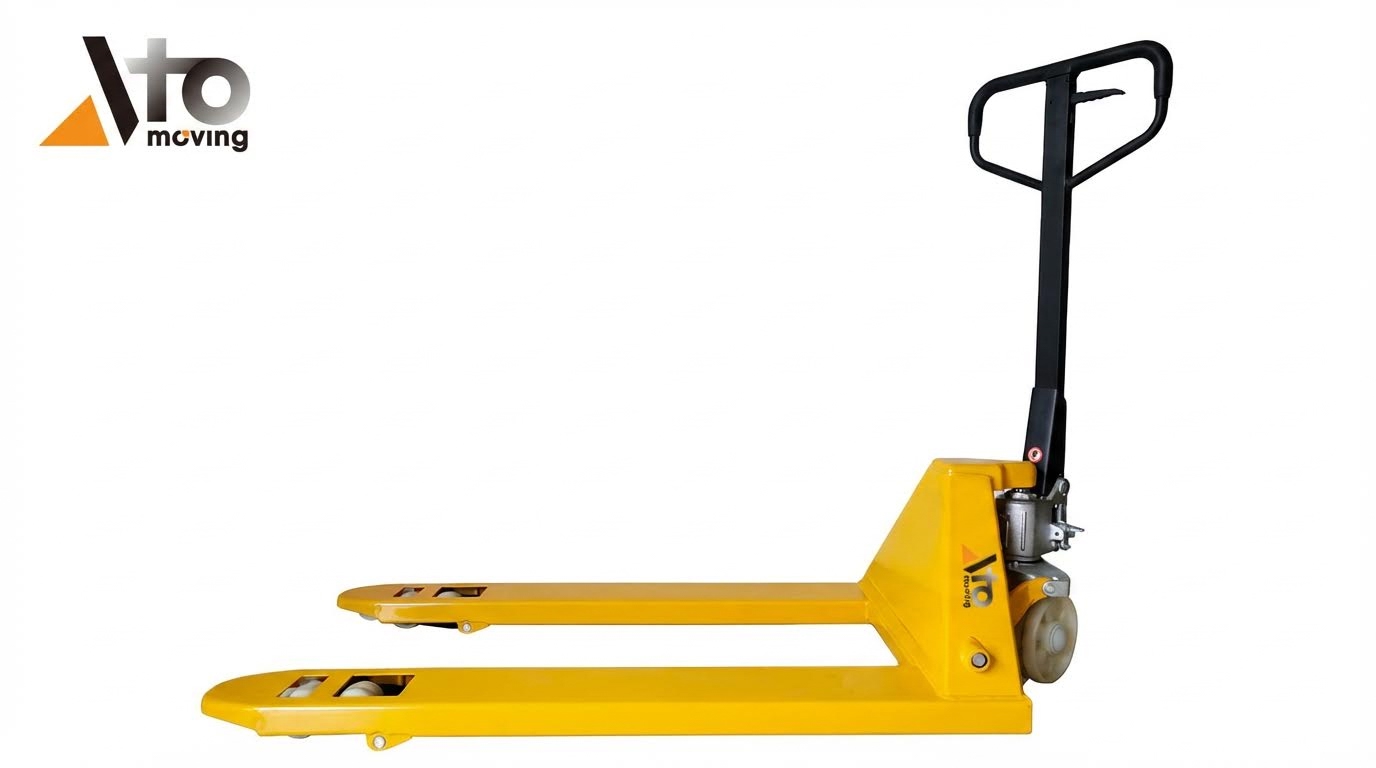
Understanding one-sided lifting is the first step in how to fix the pallet jack one side won’t lift safely and permanently. In almost every case the root cause is either hydraulic imbalance, mechanical geometry error, or a combination of both.
When one fork rises higher or faster than the other, the problem usually sits in three zones: the hydraulic group, the mechanical linkage under the frame, or the forks/wheels and frame alignment. Correctly identifying which zone is at fault prevents wasted parts and repeat breakdowns.
| Fault Zone | Typical Clues | Main Risk | Operational Impact |
|---|---|---|---|
| Hydraulic | Spongy lift, slow rise, won’t hold height | Internal leakage or air in oil | Load tilts during lift; unsafe stacking |
| Mechanical linkage | One fork lower at rest, uneven motion | Worn or twisted rods, bellcranks, bushings | Jack “crabs” under pallets; hard steering |
| Forks/wheels/frame | Bent fork, different wheel diameters | Permanent geometry error | Even good hydraulics still lift unevenly |
💡 Field Engineer’s Note: In workshops, more than half of “hydraulic problems” on one-sided lifts turned out to be bent forks or worn linkage. Always rule out simple geometry faults before stripping the pump.
Typical symptoms and failure patterns
Typical symptoms and failure patterns tell you very quickly whether you are dealing with a hydraulic, mechanical, or structural issue. Reading these patterns well is the fastest way to narrow down how to fix the pallet jack one side won’t lift.
- Symptom: One fork higher at rest: One fork sits several mm higher with no load – strong sign of mechanical or fork geometry fault, not hydraulics.
- Symptom: Jack feels spongy when pumping: Handle moves easily with “springy” feel – often air in hydraulic oil or low fluid level. Hydraulic fault patterns
- Symptom: One fork rises slower under load: Both start together but one lags – possible internal leakage or restriction on one side of the hydraulic group. Uneven rising clues
- Symptom: Won’t hold level height: Forks lift evenly then one side slowly sinks – likely leaking check valve or worn piston seals.
- Symptom: Binding or jerky movement: Jack “jumps” as you pump, or handle is stiff – indicates bent linkage, dry bushings, or debris around wheels/rollers.
- Symptom: Visible twist or bent parts: Fork blade twisted, frame not square, torsion bar visibly rotated – permanent structural distortion causing uneven lift even with perfect hydraulics.
| Observed Symptom | Likely Root Cause | Quick Check | Operational Impact |
|---|---|---|---|
| Spongy lift, both forks move | Air in hydraulic circuit, low oil | Bleed 10–20 strokes with lever in lower; check oil 25–40 mm below fill port | Unpredictable lift, poor control |
| One fork lower at rest by >5 mm | Bent fork, twisted linkage, worn bushings | Measure fork tip heights and linkage play | Load tilts before lifting |
| Forks level empty, uneven under load | Internal hydraulic leakage or frame twist | Stage load tests at 25–60% rated load | Unsafe for racking at 2–3 m |
| Jerky lift, hard steering | Debris at rollers, flat-spotted wheels | Spin wheels, inspect for jamming | Operator fatigue, aisle damage |
How to measure “uneven” in millimeters
Park on a flat floor. Fully lower forks. Use a steel rule or tape to measure from floor to fork tip at both sides. A practical pass limit in load tests is less than about 5 mm height difference between fork tips under steady load, as recommended in staged load testing procedures. Load test criteria
Distinguishing hydraulic vs mechanical causes

Distinguishing hydraulic from mechanical causes is the key diagnostic split when you plan how to fix the pallet jack one side won’t lift. You use feel, simple tests, and isolation of components to decide which system to open first.
- Check 1 – Feel of the pump stroke: Spongy, soft stroke with uneven lift – points to air or low oil in hydraulics. Firm stroke with uneven fork heights – points to mechanical or structural issues. Stroke feel vs fault type
- Check 2 – Bleeding response: Set control lever to lower, pump 10–20 times with no load. If lift becomes even, fault was trapped air or low oil. If no change, suspect mechanical or deeper hydraulic wear. Bleeding procedure
- Check 3 – Oil level and leaks: With forks fully lowered, confirm oil about 25–40 mm below reservoir top and inspect for wet pump housings, damp rods, or hose joints – clear hydraulic maintenance issue. Oil level guideline
- Check 4 – Linkage isolation test: Disconnect lifting linkage from the control handle. Pump the pump directly. If forks now lift evenly, the fault is in handle, rods, bellcranks, or torsion bar. If still uneven, the problem is inside pump or cylinder. Linkage diagnosis
- Check 5 – Fork and wheel geometry: Measure fork straightness with a straightedge, compare fork tip heights, and compare load roller diameters. Any permanent bend or diameter mismatch is a mechanical/structural cause. Geometry checks
| Test | Hydraulic Fault Indication | Mechanical/Structural Fault Indication | Best For… |
|---|---|---|---|
| Bleed 10–20 strokes, lever on “lower” | Uneven lift improves or disappears | No change in uneven lift | Quick confirmation of air/low oil issues |
| Handle disconnected from linkage | Uneven persists when pumping directly | Lift becomes even when linkage is bypassed | Separating pump vs linkage problems |
| Fork tip height measurement | Forks level empty, uneven only under load | Forks already uneven with no load | Checking for bent forks or twisted frame |
| Staged load tests (0%, 30%, 60%) | Side sinks or lags as load increases | Same unevenness at all loads | Confirming internal leakage vs hard distortion |
Typical hydraulic wear points vs mechanical wear points
Common hydraulic wear points include pump piston seals, check valves, and O-rings around the lowering valve, which can cause one side to drop or lift unevenly. Hydraulic wear details Mechanical wear usually appears at bellcrank bushings, torsion bars, and pull rod eyelets that stretch or wear oval, upsetting symmetry between both forks. Mechanical wear details
Step-By-Step Diagnosis And Repair
This section gives a structured, workshop-ready process for how to fix the pallet jack one side won’t lift, from safe lockout to hydraulic and mechanical fault finding. Follow each step in order and record results.
- Goal: Prove if the fault is hydraulic, mechanical, or structural – so you only repair what is actually bad.
- Method: Start with safety and visual checks, then hydraulic tests, then linkage and geometry checks – fastest path to root cause.
- Standard: Aim for less than 5 mm fork height difference under load – practical field pass/fail criterion.
💡 Field Engineer’s Note: Always test with forks fully lowered and on a flat, smooth floor first. Uneven slabs or a 2–3% slope will fake “one-side lift” and send you chasing ghosts in the hydraulics.
Safety lockout and baseline visual checks
This step isolates the jack, removes load risks, and uses quick visual cues to spot obvious causes of one-sided lifting before you touch hydraulics.
- Step 1: Park on flat, level ground – prevents floor slope from faking uneven fork heights.
- Step 2: Fully lower forks with no load – removes stored energy and lets geometry faults show clearly.
- Step 3: Chock steer wheels and tag “Out of Service” – stops anyone moving or using the jack mid-repair.
- Step 4: Scan forks and frame for bends or twist – quickly reveals structural causes of uneven lift.
- Step 5: Inspect welds and fasteners – cracked welds or missing bolts shift loads to one side.
- Step 6: Check wheels and rollers for debris – stones or wrap-around plastic can hold one side higher.
Field procedures recommend exactly this kind of lockout and inspection sequence before deeper diagnosis. Guides on uneven lifting and repair procedures both start with this same baseline check.
- Fork comparison: Sight along the top of both forks – look for twist or a “smile”/“frown” curve on one side.
- Height check: Measure fork tip height from floor (mm) left vs right – records baseline offset before repairs.
- Wheel condition: Spin load rollers and steer wheels – rough bearings or flat spots can make one fork climb first.
How to measure fork height accurately
Use a rigid steel rule or tape. Measure from the floor to the top surface of each fork tip, with forks fully lowered and unloaded. Record to the nearest 1 mm. More than 5 mm difference at rest usually indicates mechanical or structural issues, not hydraulics.
Hydraulic checks, bleeding, and fluid service
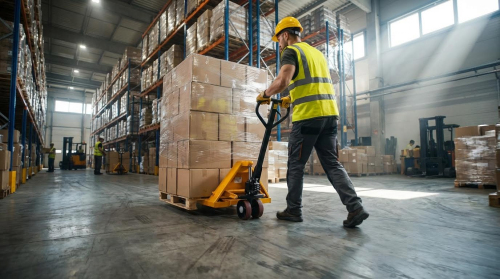
This step confirms whether trapped air, low oil, or internal hydraulic wear is causing the hydraulic pallet truck to lift on one side or feel spongy under load.
- Step 1: With forks fully lowered, check oil level – most jacks need oil about 25–40 mm below reservoir top.
- Step 2: Top up with the specified hydraulic oil if low – low level pulls air, causing uneven or spongy lift.
- Step 3: Set control lever to “Lower” and pump 10–20 strokes – bleeds trapped air back into the reservoir.
- Step 4: Inspect pump, cylinder, hoses, and valve for leaks – external oil shows likely internal seal or valve wear.
- Step 5: Perform a no-load lift test to full height – checks for smooth, even rise left and right.
- Step 6: Repeat with about 25–30% rated load, then 50–60% – verifies fork level under real working conditions.
Technical guidance notes that hydraulic fluid should sit roughly 25–40 mm below the reservoir top, and that bleeding by pumping 10–20 times with the lever in the lower position is the first-line fix for uneven lifting. Uneven lift repair guides and pallet truck repair procedures describe the same ranges.
| Hydraulic Check | Typical Value / Action | What It Tells You | Operational Impact |
|---|---|---|---|
| Oil level | 25–40 mm below reservoir top | Too low = air ingestion; too high = overflow | Correct level stabilizes lift height left/right |
| Bleeding strokes | 10–20 handle pumps, lever on “Lower” | Removes trapped air from circuit | Often cures spongy or uneven lifting |
| No-load hold test | Full height, 60 s | Drop indicates internal leak/valve wear | Fail = unsafe to use under load |
| Loaded hold test | 25–60% rated load, 60–120 s | Fork height difference should be <5 mm | Ensures pallets stay level in operation |
Industry repair articles specify staged load tests: first no-load, then about 25–30% capacity for 60 seconds, then 50–60% capacity for 2 minutes, with an acceptable fork tip difference under 5 mm. Uneven lift testing protocols and load test procedures align on these thresholds.
- Spongy feel: Handle pumps easily with delayed fork motion – strong sign of air or low fluid.
- Uneven rise: One fork clearly lags under load – points to internal leakage or valve imbalance.
- External wet spots: Oil around pump, cylinder, or hose joints – indicates seal, O-ring, or hose failure.
💡 Field Engineer’s Note: If bleeding and correct oil level do not change fork behavior at all, stop. That usually means worn pump piston seals or a leaking check valve, and you are into component repair, not “adjustment.”
When to flush instead of just topping up
If the oil looks dark, milky, or contaminated with metal fines, a full drain and flush is safer than topping up. Contaminated oil accelerates wear on check valves and piston seals, which are already suspect when you have uneven lifting. Service guides specifically recommend flushing in these conditions to protect internal parts.
Mechanical linkage and geometry inspection

This step checks the rods, bellcranks, torsion bar, forks, and wheels so you can separate true hydraulic problems from simple geometry or linkage faults.
- Step 1: With forks lowered, inspect linkage under the frame – look for bent rods, missing clips, or loose pins.
- Step 2: Check bellcrank bushings for play or oval wear – slop here shifts lift stroke to one side.
- Step 3: Compare pull rod lengths and eyelets – stretched or mismatched rods change fork height.
- Step 4: Inspect torsion bar (if fitted) for twist – twisted bar stops equal force sharing between forks.
- Step 5: Measure fork straightness and parallelism – bent blades mimic hydraulic unevenness.
- Step 6: Verify roller and wheel diameters left vs right – different diameters lift one fork sooner.
Repair references highlight that mechanical faults often show as one fork sitting clearly lower at rest, binding motion, or visible twist in the linkage. They recommend disconnecting the lifting linkage from the control lever; if the pump then lifts evenly when operated directly, the fault is in the handle, rods, or bellcranks, not inside the pump. Uneven lifting diagnostics and mechanical fault guides describe this exact separation test.
| Mechanical Item | Typical Fault | Diagnostic Sign | Best For… |
|---|---|---|---|
| Bellcrank bushings | Worn oval or walked out | Unequal fork travel for same handle stroke | Explaining one-side lift with good hydraulics |
| Pull rods and eyelets | Stretched or bent | One fork lower at rest, uneven lift start | Quick visual confirmation with a tape measure |
| Torsion bar | Twisted after overload | Both forks move, but not the same amount | Units used near or above rated capacity |
| Fork blades | Bent tips or twisted blade | Different tip heights even when hydraulics are off | Impacts with dock edges or racking |
| Load rollers | Different diameters / flat spots | One fork starts lifting earlier in the stroke | High-distance travel in rough areas |
- Linkage isolation test: Disconnect the rod from the handle and pump directly – if forks now rise evenly, linkage was the issue.
- Static geometry check: With hydraulics not pumped, compare fork heights – if still uneven, focus on forks, wheels, and frame.
- Matched parts: Replace rods, bushings, and rollers in pairs – keeps geometry balanced left/right.
💡 Field Engineer’s Note: When you replace one worn pull rod or roller, always measure the other side. A “good-looking” old part that is 3–4 mm longer or smaller in diameter will still give you a crooked pallet under load.
Quick fork and frame geometry check
Lay a straightedge or tight string line along the top of each fork from heel to tip. Gaps or rocking show bends. Measure between fork tips and between heels; differences hint at twist. Sight along the frame from the steer wheel end to detect any overall frame twist that could bias one fork.
Final Thoughts On Restoring Even Lift Performance
Fixing a pallet jack that lifts on one side only is really about restoring symmetry. You match hydraulic pressure, linkage motion, and fork geometry so both sides share the load equally. When you measure in millimetres, bleed the circuit correctly, and test at staged loads, you turn guesswork into clear pass or fail decisions.
Hydraulic checks deal with air, low oil, and worn seals that let one side lag or sink. Mechanical inspections then pick up what hydraulics cannot fix: stretched rods, loose bushings, bent forks, and mismatched rollers. Each fault type has a clear pattern. When you follow the sequence in this guide, you find that pattern fast and avoid stripping good pumps or replacing parts at random.
For operations teams, the best practice is simple. Lock out the jack, work on a flat floor, measure fork heights, then follow a standard hydraulic and mechanical checklist. Reject any unit that cannot hold a loaded, level fork height within about 5 mm. For engineering and maintenance leaders, build these checks into routine inspections. That keeps pallet jacks lifting evenly, protects racking and product, and gives operators confidence that every Atomoving unit is safe to use.
Frequently Asked Questions
Why is my pallet jack not lifting on one side?
If your pallet jack isn’t lifting evenly, it could be due to low hydraulic fluid levels or air trapped in the system. Check the fluid level and ensure there are no leaks. Hydraulic Jack Troubleshooting.
- Inspect the hydraulic fluid level and top up if necessary.
- Check for air in the hydraulic system and bleed it out.
- Examine seals and valves for wear and replace if needed.
How do I reset a pallet jack?
To reset your pallet jack, turn it off and unplug it. Press the emergency stop button to release hydraulic pressure, wait 30 seconds, then press it again to reset. Plug it back in and turn it on. Reset Electric Pallet Jacks.
Where is the release valve on a pallet jack?
The release valve is usually located at the base of the handle or near the hydraulic pump. If it’s stuck, try lubricating it with penetrating oil. If damaged, it may need replacement. Pallet Jack Release Valve.