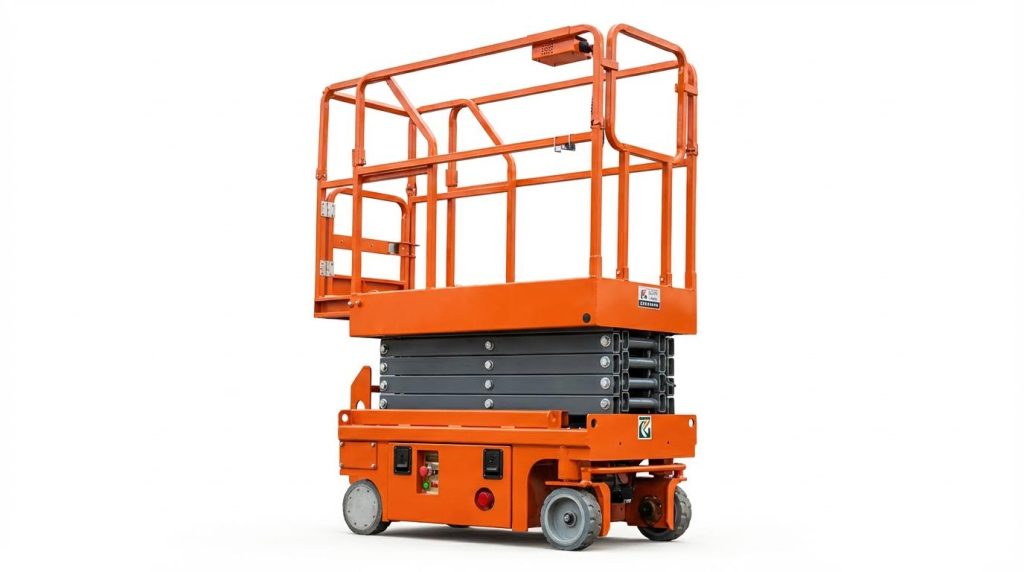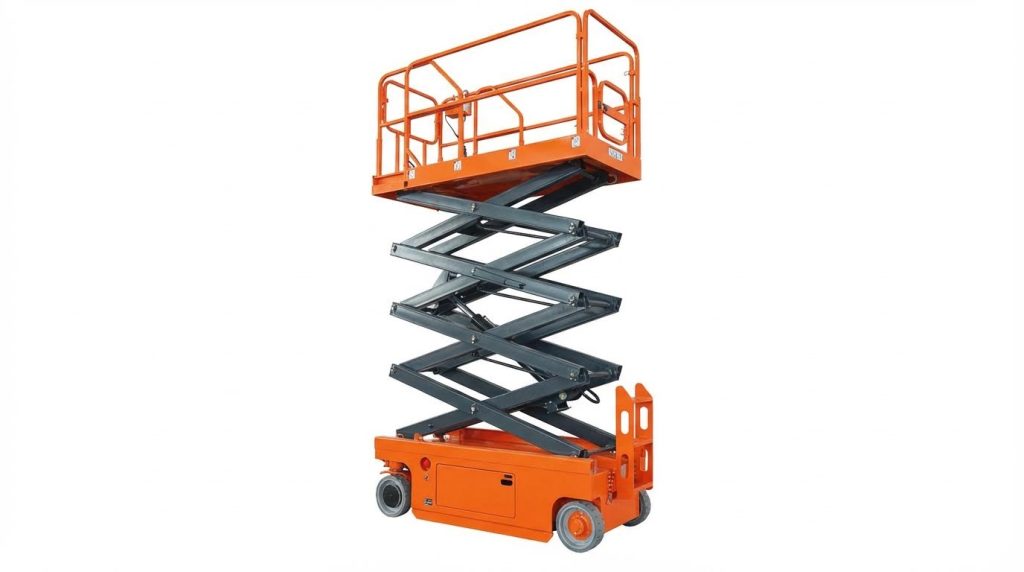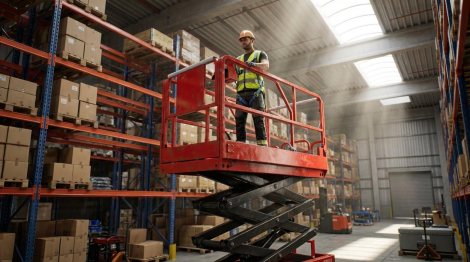
If you have ever asked yourself how heavy are scissor lifts, you are not alone. Scissor lift weight affects floor loading, transport, and where you can safely use the machine. This guide explains typical scissor lift weights by height and type, then links those numbers to engineering factors like platform size, capacity, and power source. Use it as a practical reference when matching lift weight to your building slabs, access routes, and day‑to‑day maintenance needs.
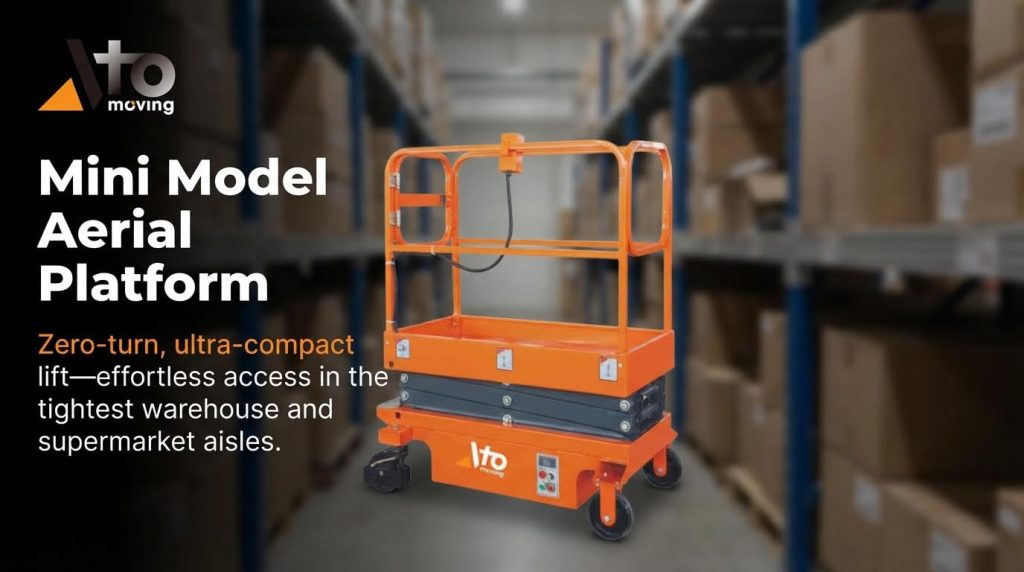
Key Scissor Lift Weight Ranges And Why They Matter
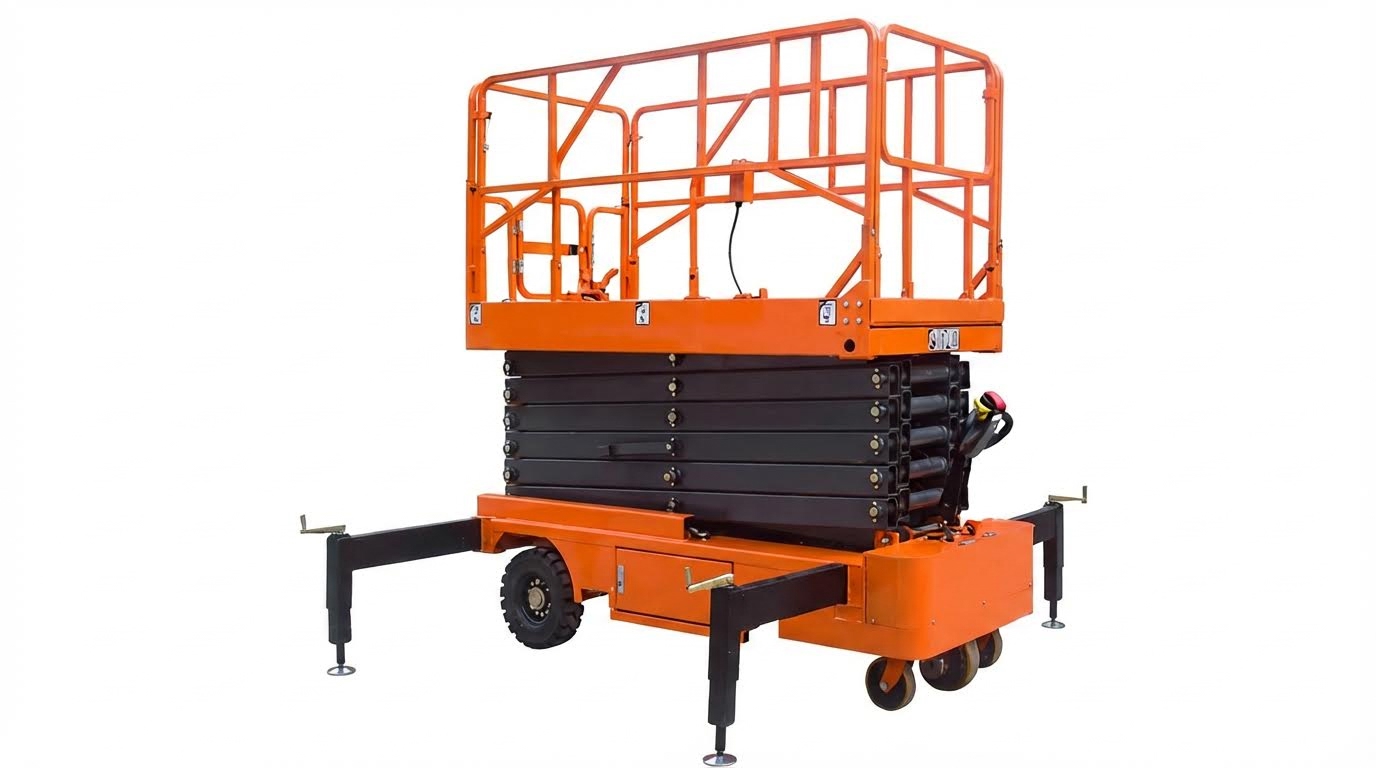
Typical weights by platform height
If you are asking “how heavy are scissor lifts,” the answer depends strongly on platform height and duty class. Small indoor electric units start around 1,500 kg, while large outdoor rough‑terrain machines can exceed 8,000 kg. Typical working ranges by platform height are:
| Platform height | Typical weight range |
|---|---|
| 19 ft (≈ 5.8 m) | About 1,600–2,100 kg for common models and roughly 1,130–1,360 kg in lighter designs by size |
| 26 ft | Approximately 2,220–3,014 kg for typical units and up to about 2,720 kg in heavier builds by size |
| 30–32 ft | Around 2,930–3,300 kg for many models, with some designs between about 2,270 and 3,630 kg by size |
| 38–40 ft | Roughly 2,990–4,900 kg for common heights, and about 3,180–5,440 kg across broader product ranges by size |
| 45–52 ft | Approximately 4,880–8,380 kg for tall models, with many 45–50 ft units in the 4,540–6,800 kg band by size |
Across all heights, compact indoor lifts usually sit around 1,500–4,000 kg, while full‑size and rough‑terrain units commonly reach 5,000–12,000 kg or more for typical categories. From a planning point of view, knowing these ranges answers the core question “how heavy are scissor lifts” and lets you check floor load limits, trailer capacities, and crane or forklift ratings before the equipment arrives.
Why scissor lifts are so heavy
Scissor lifts are intentionally heavy to deliver stability, load capacity, and durability at height. The weight comes from several engineering factors working together:
- Stability against tipping: A heavy base frame and chassis lower the center of gravity and resist overturning moments from wind, outreach, and dynamic movement. Designers use mass in the base to counter the tall, narrow geometry when the platform is fully raised.
- Structural strength for rated capacity: Larger platforms and higher capacities require thicker scissor arms, cross‑members, and pins. High‑capacity tables can weigh from about 160 kg up to roughly 980 kg just for the lift structure itself in industrial designs, and mobile access lifts add a full drive chassis on top of that.
- Power source and drive components: Electric scissor lifts carry multiple deep‑cycle lead‑acid batteries that can add several hundred kilograms, while engine‑driven rough‑terrain units use heavier engines, axles, tires, and hydraulic systems by power source. Crawler scissor lifts may reach around 2,900 kg due to the tracked undercarriage needed for soft or uneven ground on typical models.
- Safety and feature additions: Guardrails, extension decks, toe boards, tool trays, and reinforced platforms all add incremental mass as design factors. Engineers also build in generous safety factors on structural members, which increases steel thickness and therefore overall weight.
From an engineering standpoint, the weight is not wasted; it is a primary part of the stability system. When you evaluate how heavy are scissor lifts for your site, you are really balancing three needs: enough mass for safe operation, low enough weight for your floors and transport, and the right height and capacity for the job.
Engineering Factors That Drive Scissor Lift Weight
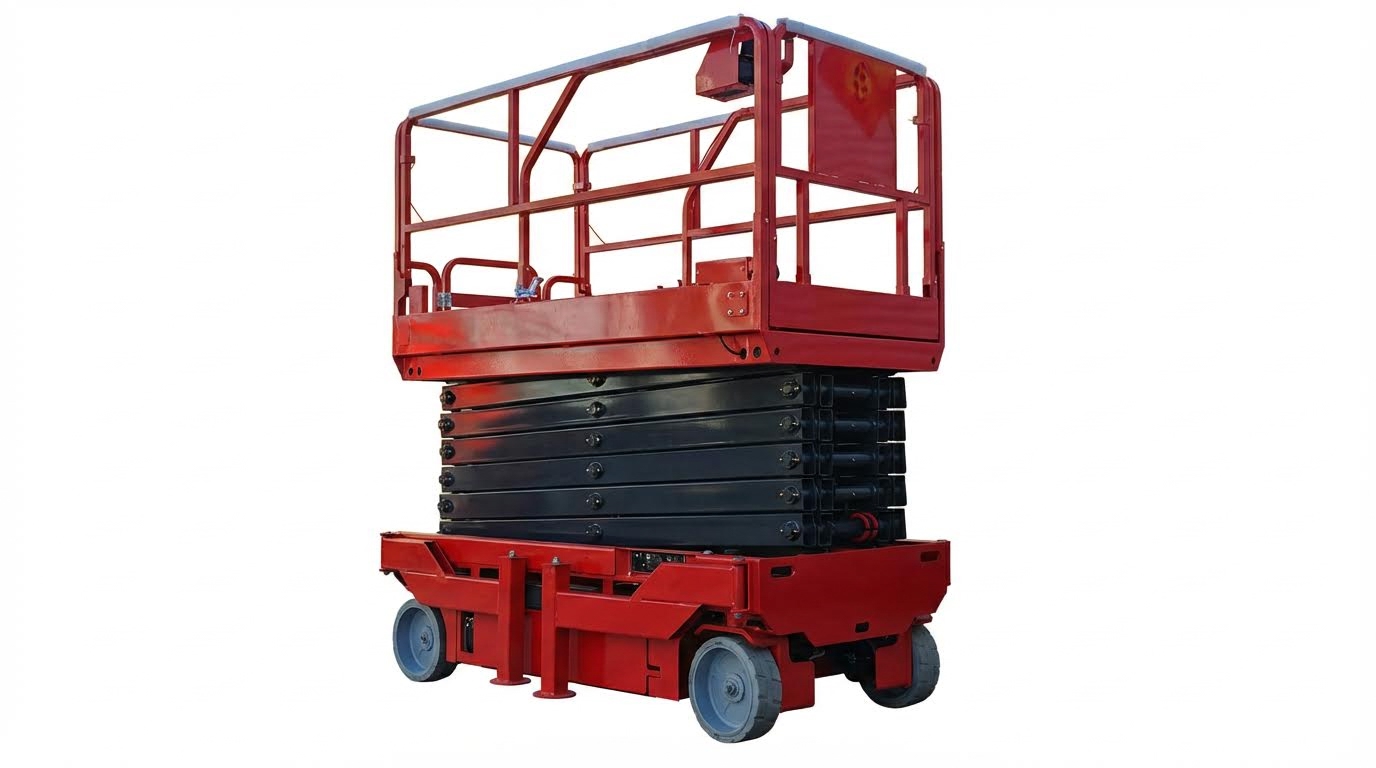
Effect of platform size and rated capacity
When people ask how heavy are scissor lifts, platform size and rated capacity are two of the biggest drivers. As platform length and width increase, the scissor stacks, chassis, and base frame all need more steel to control deflection and keep the center of gravity inside the wheelbase. Larger platforms also allow higher platform capacities, which require thicker arms, larger pins, and stronger cylinders to keep stresses within safe limits. Typical platform capacities range from about 200 kg to 680 kg as platform height and size increase, with higher-capacity models using significantly heavier structures and hydraulics. Documented platform capacities from 200 kg up to 680 kg illustrate how load rating scales with machine mass. Even on fixed scissor lift tables, moving from a 1000 kg to a 2000 kg load rating can push the lift’s own weight from about 160 kg up to roughly 980 kg because of heavier sections and larger cylinders. Published lift table data clearly shows this near-linear increase in structure weight with capacity. In simple terms, every extra kilogram you want to lift safely requires several extra kilograms of steel in the mechanism, so capacity planning is central to understanding how heavy are scissor lifts in your fleet.
Power source: electric vs engine vs crawler
The power source is another major reason similar-height scissor lifts can have very different weights. Electric slab lifts use battery packs that add several hundred kilograms but allow a relatively compact frame, keeping total weights typically in the 2,000–5,000 lb range for many indoor units. Industry summaries place most electric scissor lifts between about 900 kg and 2,300 kg. Engine-driven rough-terrain lifts add an internal combustion power pack, larger hydraulic pumps, heavy-duty axles, and oversized foam-filled or pneumatic tires, which push many models into the 6,000–10,000 lb range or higher. These outdoor units trade higher weight for ground clearance, traction, and stability on uneven surfaces. Crawler scissor lifts go a step further by replacing wheels with track undercarriages; a typical tracked model can weigh around 2,900–2,930 kg depending on rubber or steel tracks. Published crawler lift specs show how the track system alone adds significant mass versus a wheeled chassis. When you compare how heavy are scissor lifts across a job site, remember that power source and undercarriage type often explain large weight differences between units with similar platform heights.
Structural design, materials, and options
Beyond height and power, structural design choices and options also drive scissor lift weight. Heavier-duty designs use thicker scissor arms, larger pins, and wider bases to control deflection and improve stability, which is why compact indoor lifts can be as light as 1,500 kg while full-size models with higher capacities and rough-terrain structures can reach 5,000–12,000 kg or more. Comparisons of compact and full-size units highlight this wide weight spread. Material selection matters as well: high-strength steels allow slimmer sections but still usually result in heavier machines than designs that incorporate aluminum components, though steel remains dominant for durability and cost reasons. Optional features such as extension decks, tilt or rotate platforms, guardrail systems, and integrated tool or material racks all add localized loads that must be carried by the structure, so engineers compensate with more steel in the scissor pack and base. Analyses of lift design note that platform size, frame design, and add-on features all contribute to final machine weight. When facility teams evaluate how heavy are scissor lifts for floor loading, transport, or slab design, it helps to recognize that many “optional” features and structural upgrades can easily add several hundred kilograms to the base specification.
Choosing The Right Lift Weight For Your Facility
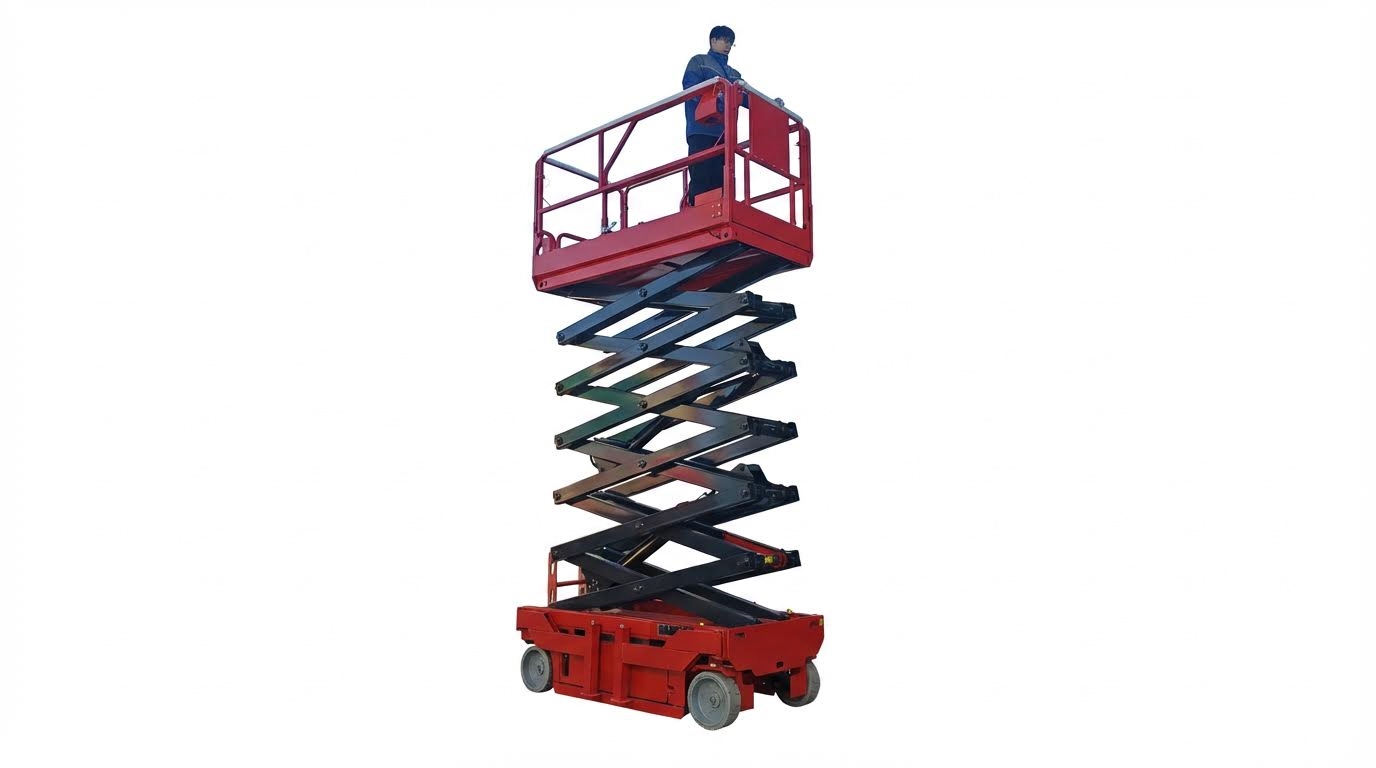
Matching lift weight to floor loading and slabs
When facilities teams ask how heavy are scissor lifts, the floor slab is usually the first constraint. A typical electric 19–26 ft scissor lift can weigh from roughly 1,100 kg up to more than 2,700 kg depending on design and capacity scissor lift weight by size. That mass concentrates into four wheel contact patches, which can easily exceed the allowable point load on light-duty slabs or mezzanines.
- Start by confirming slab thickness, concrete strength, and any design live-load limits (kPa or psf) from drawings or a structural engineer.
- Compare this to the worst-case wheel load from the lift’s manual, not just the overall machine weight.
- Remember that higher-capacity models (for example, 26–32 ft units with 320–450 kg platform ratings) use heavier structures and can weigh over 3,000 kg, increasing floor stresses significantly load capacities by platform height.
On suspended slabs, offices, and older buildings, a compact indoor lift in the 1,500–3,000 lb (about 680–1,360 kg) range is often more realistic than a full-size unit that can exceed 10,000 lb (over 4,500 kg) average weights by type. Where floor capacity is marginal, you may need:
- Shorter lifts with lighter structures.
- Electric instead of rough-terrain units.
- Engineered spreader mats or steel plates to distribute wheel loads.
Quick reference: typical weight vs height
Many standard slab-rated scissors in the 19–32 ft class fall roughly between 1,600 kg and 3,300 kg, while 40–50 ft units can run from about 3,200 kg up to more than 6,800 kg depending on configuration weight ranges by platform height. Always verify the exact model data sheet before committing.
Transport, loading docks, and access constraints
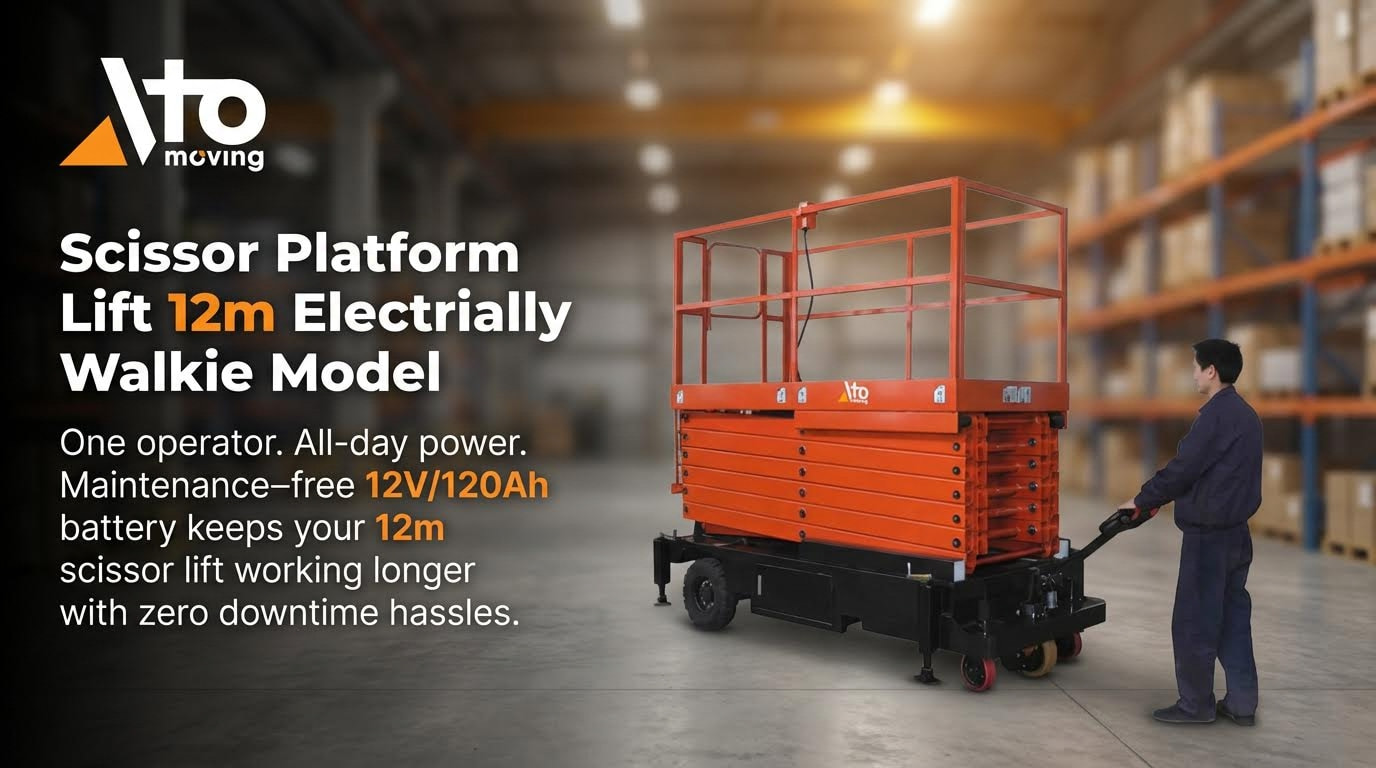
Even if the slab can carry it, you must still move the lift through your site safely. Compact indoor scissors usually weigh between about 1,500 and 3,000 lb, while rough-terrain machines often fall in the 6,000–10,000 lb range, and large full-size units can reach 12,000 lb or more average weights by type compact and full-size scissor lift weights. These figures drive trailer selection, dock design, and route planning from the unloading point to the work area.
- Transport vehicle: Check that the combined weight of lift plus trailer stays under the truck’s rated capacity and any road or bridge limits.
- Loading docks and ramps: Verify dock plates, yard ramps, and internal ramps are rated above the lift’s gross weight and are suitable for concentrated wheel loads.
- Access paths: Confirm clear widths, turning radii, and door thresholds. Some 40–50 ft lifts can exceed 2 m width and weigh from 7,000 to 15,000 lb, which may be too large for tight corridors or light dock equipment common sizes and weights.
Power source also affects logistics. Electric models carry several hundred kilograms of batteries, but usually stay in the lower weight bands; engine-driven rough-terrain units add heavier frames, large tires, and outriggers, pushing them into the upper ranges and demanding more robust transport and dock gear impact of power source on weight. Before you decide how heavy are scissor lifts you can practically use, map the full route from truck to work area and check every structural, dimensional, and equipment limit along the way.
Summary: Using Weight Data In Scissor Lift Selection
Scissor lift weight is not just a catalog number. It is the outcome of height, platform size, capacity, power source, and structural design working together to keep people stable at height. Extra steel in the base and scissor pack lowers the center of gravity, carries higher live loads, and resists wind and movement. Batteries, engines, tracks, and options then add further mass that you must treat as a structural load on your building and transport gear.
For engineering and facilities teams, the key is to treat lift weight as a design input, not an afterthought. Always pair typical weight ranges with your slab data, wheel load limits, dock ratings, and route constraints. Choose the lightest unit that still meets platform height and capacity needs, and favor electric, compact models where floors or access are tight. When in doubt, ask a structural engineer to review worst-case wheel loads, not just gross weight. By combining manufacturer data, conservative load checks, and clear internal rules, you can bring Atomoving scissor lifts into your facility confidently, protect your slabs and docks, and maintain a strong safety margin on every job.
Frequently Asked Questions
How much does a scissor lift weigh?
Scissor lifts come in various sizes and weight categories depending on their platform height, capacity, and design. For example:
- A mini scissor lift, such as the DS-MSL-10 with a 9′ platform height, weighs approximately 1,078 lbs Mini Scissor Lift Specs.
- A 19-foot scissor lift can range from 1,987 lbs (e.g., Pro Series PS-1930) to around 3,800 lbs Scissor Lift Weight Guide.
- Ultra-lightweight models like the Hy-Brid PS-1430 weigh about 1,780 lbs while supporting a platform capacity of 700 lbs Lightweight Scissor Lifts.
The weight of a scissor lift is influenced by its lifting capacity, height, and power source.
Is a scissor lift considered heavy machinery?
Yes, scissor lifts are classified as heavy machinery due to their size, weight, and industrial applications. Factors that contribute to this classification include:
- Weight ranges typically starting at 1,000 lbs for smaller models and exceeding 3,000 lbs for larger units.
- Lifting capacities that often range between 500 lbs and 2,250 lbs Scissor Lift Applications.
- Use in demanding environments such as warehouses, construction sites, and maintenance operations.