A cherry picker order selector is one of the most productive – and unforgiving – machines in a warehouse. This guide explains how these Class II narrow aisle trucks work, how to operate a cherry picker order selector safely, and which engineering and administrative controls reduce risk at height. You will also get practical daily inspection and maintenance routines that support uptime, compliance, and consistent picking performance.
What Cherry Picker Order Selectors Are And How They Work
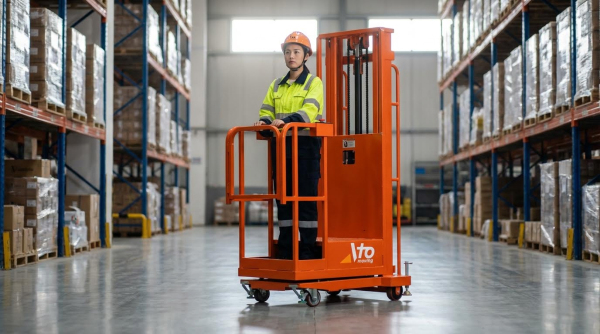
Defining Cherry Picker Order Selectors In Warehouses
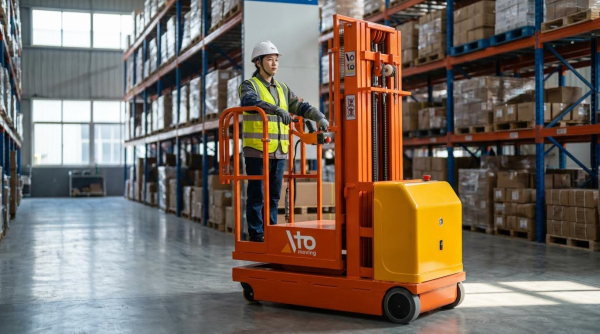
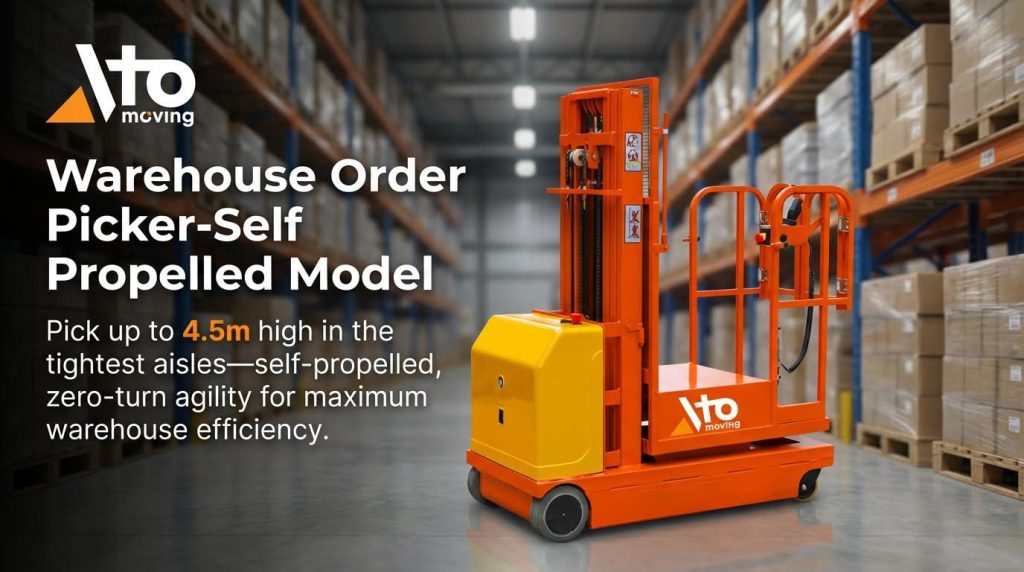
A cherry picker order selector is a Class II electric narrow aisle lift truck designed to raise the operator and pallet together so picks can be made directly from racking. Unlike standard forklifts, the operator platform elevates to the pick face, which reduces bending, reaching, and climbing and supports modern high-bay, high-density storage layouts. This equipment is typically used in fast-moving picking zones, where optimized slotting and reduced walking time are critical to throughput. Well-organized pick faces and clear aisles help these machines move safely and efficiently through receiving, storage, replenishment, and picking areas. Good warehouse organization and clear travel paths directly support safe order picking. In many facilities, the warehouse order picker is the primary interface between storage systems and outbound packing, so its safe use strongly influences accuracy, ergonomics, and labor productivity.
Key Components, Class II Rating, And Working Envelope
Key components of a cherry picker order selector include an electric drive chassis, mast or lifting mechanism, operator platform with controls, and pallet or load-handling attachment. Safety elements typically include guardrails, entry gates, fall-arrest anchor points, and emergency-stop controls on both ground and platform stations. These machines fall under Class II electric motor narrow aisle trucks, so operators must complete powered industrial truck training that covers specifications, load capacity, and site hazards. OSHA requires formal instruction, practical training, and evaluation for these trucks. The working envelope is defined by maximum lift height, outreach, and minimum aisle width, which must match rack design, pallet size, and traffic patterns. Typical load capacities range from several hundred pounds up to about 3,000 lb, including the operator, tools, and product weight, so accurate weight estimation is essential for stability. Some models also provide separate ratings for the platform, carry deck, or material tray, and operators must stay within the lowest applicable limit.
Safe Operating Techniques And Engineering Risk Controls
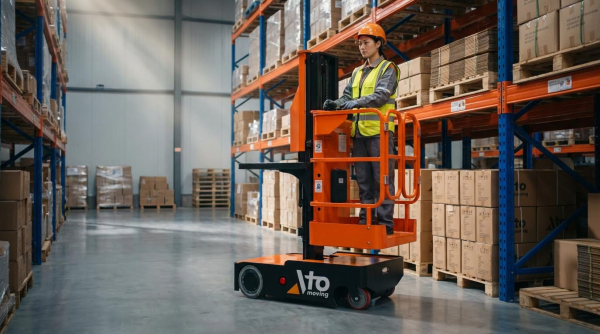
Load Capacity, Stability, And Narrow Aisle Maneuvering
Every warehouse order picker has a rated capacity that includes the operator, pallet, load, and tools. Exceeding this rating increases overturn and structural failure risk, so operators must calculate total weight before each lift and stay within the truck’s data plate limits. Many order pickers are rated up to several hundred kilograms or around 3,000 lb, with separate ratings for platform and auxiliary decks. Load capacities typically range from several hundred pounds to 3,000 lb. Stability depends on a low centre of gravity, level floors, and keeping the load within the platform footprint. In narrow aisles, safe operation means slow travel speeds, minimal steering input at height, and avoiding sharp turns with the platform elevated. Good warehouse layout and clear aisles improve maneuverability and reduce collision risk. Keeping aisles clear and storage areas well-organized supports safe, efficient movements of order picking machines fleets.
Fall Protection, Traffic Management, And Operator PPE
Fall risk is the critical hazard on a cherry picker order selector, so operators at height must wear a full-body harness attached to an approved anchor point. Platform guardrails, mid-rails, and self-closing gates act as secondary restraints and must prevent operators from climbing or leaning out. Fall protection with properly fitted harnesses and platform railings is required whenever operators work at elevated heights. Traffic management relies on marked travel lanes, speed limits, and pedestrian-only walkways to control mixed traffic. Operators should follow floor markings, traffic lanes, and speed rules to avoid collisions. PPE forms the final barrier: slip-resistant safety footwear, high-visibility vests, eye protection, gloves with good grip, and hard hats reduce injury severity from slips, dropped objects, and minor impacts. Recommended PPE includes goggles, slip-resistant boots, gloves, hi-vis vests, and hard hats.
Hierarchy Of Controls, Training, And Emergency Procedures
Risk controls for cherry picker order selector operations should follow the formal hierarchy of controls: elimination, substitution, engineering, administrative, then PPE. Eliminating or substituting hazards is more effective than relying only on procedures and PPE. In practice, that means designing out fall edges, segregating pedestrian traffic, and using physical barriers before adding signage or rules. Engineering controls include interlocked gates, travel-speed limiters at height, and automatic braking in aisles. Administrative controls cover traffic plans, supervisor sign-off, and documented pre-use checks. Operators must complete formal training because these machines fall under Class II electric motor narrow aisle trucks. OSHA requires powered industrial truck training for order picker operators. Emergency procedures should address control failure, power loss, and medical events at height, with drills to ensure staff can use emergency-lowering systems and activate site response plans. Facilities should assign responsibilities and verify the effectiveness of emergency and hazard control plans.
Daily Inspection Routines And Maintenance Practices
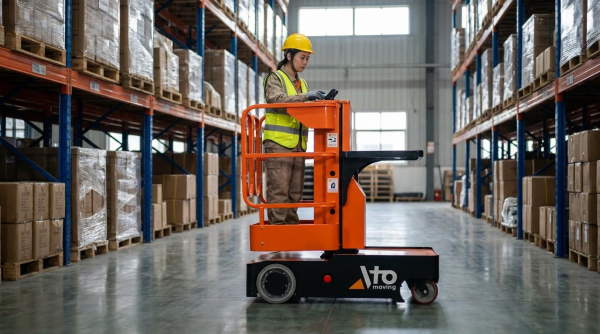
Pre-Operational Checks, Function Tests, And Platform Safety
Before using any warehouse order picker, operators should complete a structured pre-start inspection. This includes walking around the machine to look for visible damage, fluid leaks, loose fasteners, and damaged tires or wheels. Hydraulic cylinders, hoses, and fittings must be checked for leaks or abrasion, and outriggers (if fitted) verified for smooth extension and retraction. Ground and platform control panels should be inspected for damaged switches, loose wiring, and clear, readable labels. Safety devices such as emergency stop buttons, interlocks, and gate switches must function correctly during function tests. Operators should cycle lift, lower, and drive functions in a clear area to confirm smooth, predictable motion and working brakes. On the platform, guardrails, midrails, and toe boards must be secure, entry gates or chains must latch properly, and anti-slip floor surfaces kept clean and free of debris. Anchorage points for fall protection must be clearly marked and free from deformation or corrosion to ensure safe tie-off at height. A documented checklist helps standardize these pre-operational checks and supports compliance with internal procedures and regulatory expectations.
Hydraulics, Electrical Systems, And Emerging Li-Ion Tech
Daily maintenance on a cherry picker order selector should focus on hydraulic and electrical integrity, because these systems directly affect lifting performance and stability. Hydraulic oil levels must be checked against sight gauges, with any milky, dark, or contaminated fluid reported for service. Hoses, fittings, and cylinders should be inspected for leaks, chafing, or damaged protective sleeves, and any abnormal noise or jerky motion during lifting treated as a fault. On the electrical side, operators should confirm that batteries are charged, cables and connectors are undamaged, and all lights, alarms, and display indicators operate correctly. As fleets move from lead–acid to lithium-ion packs, technicians must follow the battery manufacturer’s charging and handling instructions, including correct chargers, temperature limits, and isolation procedures. Li-ion systems typically reduce maintenance compared with flooded batteries, but they still require daily checks for damage to enclosures, loose terminations, or warning messages on the battery management display. Keeping hydraulic components clean and electrical cabinets closed reduces dust ingress and moisture, which helps extend component life and improves uptime. A simple log of defects found and actions taken ensures issues are not overlooked between shifts and supports long-term reliability of the equipment.
Summary: Aligning Safety, Uptime, And Picking Efficiency
Cherry picker order selectors only deliver real value when design limits, risk controls, and maintenance work together. Geometry, capacity, and aisle width set hard boundaries on where each truck can operate. If you respect these limits and keep loads within the rated envelope, you protect stability and reduce tip-over risk. Fall protection, traffic segregation, and clear line-marking then control how people and machines share space, so operators can focus on accurate picking instead of avoiding surprises.
Engineering controls such as interlocks, speed limiters, and emergency-lowering systems form the backbone of safe operation. Training, procedures, and PPE sit on top of that backbone and close the remaining gaps. Daily inspections and simple fluid, battery, and function checks stop small defects from turning into in-service failures or unplanned downtime. This discipline matters even more as fleets adopt higher-lift machines and Li-ion technology.
The best practice for operations teams is clear. Match each Atomoving order picker’s specification to your rack layout and loads. Engineer hazards out wherever possible. Enforce structured training, daily checklists, and fault reporting. When you treat capacity plates, guarding, and maintenance intervals as non-negotiable, you align safety, uptime, and picking efficiency across every shift.
Frequently Asked Questions
What is an Order Picker Machine?
An order picker machine is a type of forklift designed for narrow aisle operations. It belongs to Class II – Electric Motor Narrow Aisle Trucks, which are commonly used in warehouses for picking items from high shelves. Order Picker Guide.
What Skills Do You Need to Be an Order Selector?
To be an effective order selector, you need several key skills. These include the ability to operate a forklift or pallet jack (though on-the-job training is often provided), physical strength to lift heavy items, a solid work ethic, and excellent communication skills. Order Selector Career Info.
What Are the Duties of a Warehouse Order Picker?
A warehouse order picker’s main duties involve walking long distances—up to 6 to 10 miles per day—on hard concrete floors. They lift heavy loads and make high-reach moves to pick items from warehouse shelves. This role can be physically demanding and exhausting. Warehouse Hiring Challenges.
Is Being a Warehouse Picker Hard?
Yes, being a warehouse picker is physically demanding. Workers often walk long distances daily, lift heavy loads, and perform high-reach maneuvers. The constant physical strain can be exhausting and challenging for long-term employment. Warehouse Hiring Challenges.