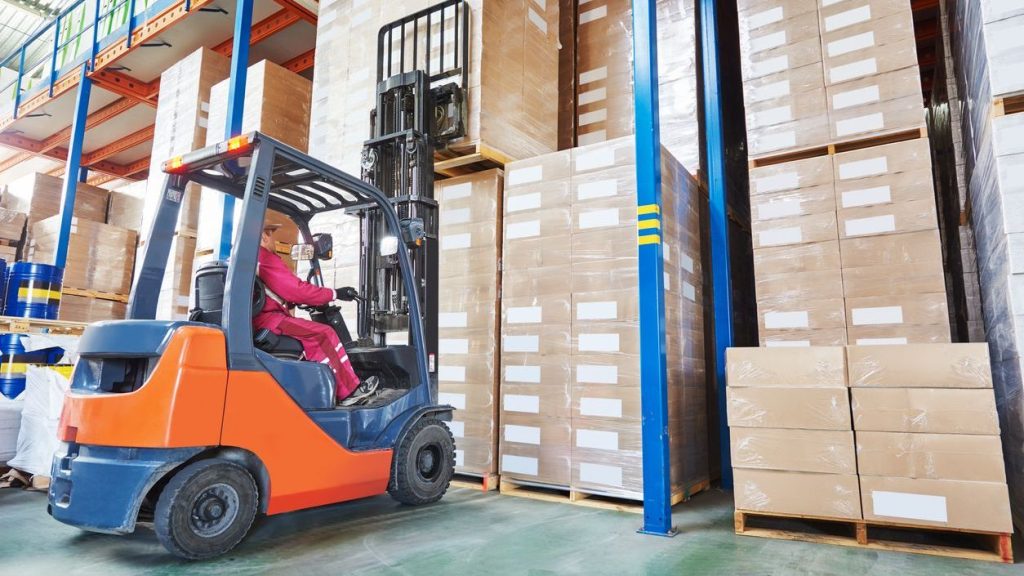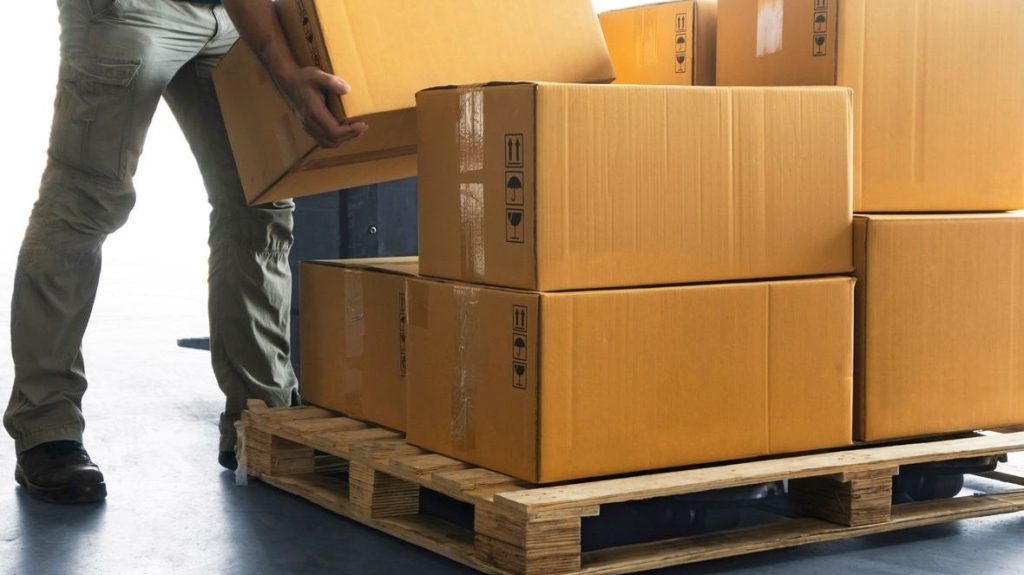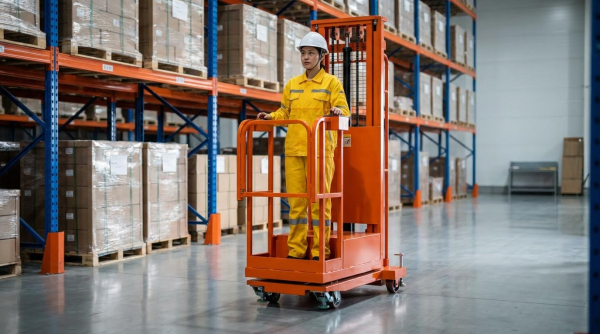
Order picking technology has shifted from simple RF scanners to a layered ecosystem of voice, wearables, automation, and advanced robotics. This article walks through that evolution and explains how each generation of systems impacts safety, labor, accuracy, and throughput. You will see how RF, voice, person-to-goods, goods-to-person, and robotic solutions fit into real warehouse flows, plus what their architectures look like under the hood. Use it as an engineering guide to design or upgrade future-ready warehouse order picker systems that can scale with your operation.
Evolution Of Order Picking Technologies
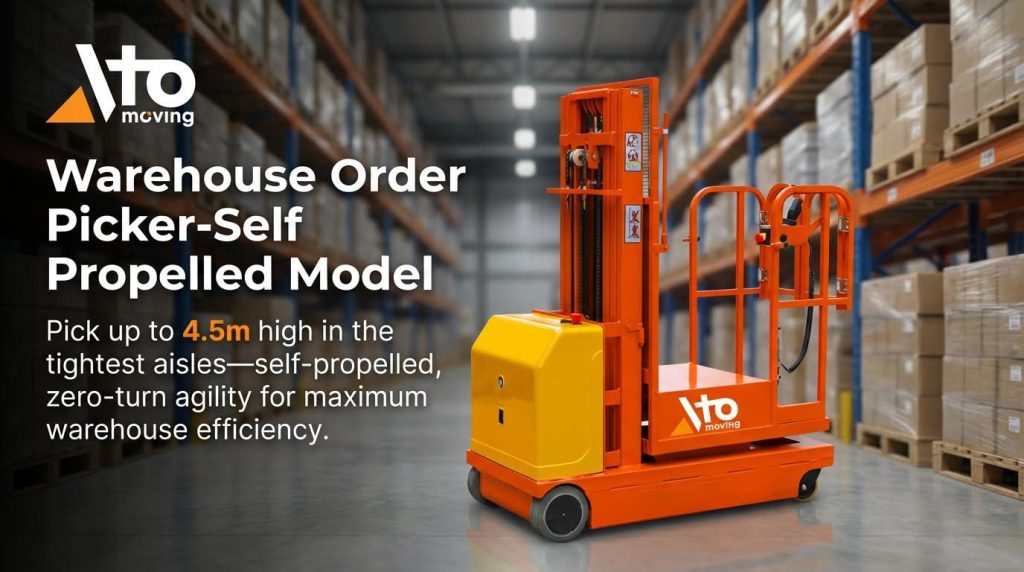
Order picking technology has shifted from basic RF scanning to highly automated, data‑driven systems. The evolution follows two main paths: how instructions reach the picker (RF, voice, wearables) and how goods and people move (person‑to‑goods, goods‑to‑person, and hybrid flows). Understanding this evolution helps engineers benchmark current operations and plan realistic upgrade paths.
From RF Scanning To Voice And Wearables
Instruction and confirmation technologies define how humans interact with the warehouse management system. Each generation reduces touch points, walking, and cognitive load while boosting accuracy and safety.
| Technology | Typical Hardware | Operation Style | Key Advantages | Main Limitations |
|---|---|---|---|---|
| RF Scanning | Handheld RF terminal, barcode scanner | Screen‑driven; scan and key confirmations | Structured, system‑directed process with barcode confirmation; supports complex data entry RF systems provide text instructions and enforce consistent process | Requires frequent stopping, device handling, and data entry; reduces picking rates in piece picking |
| Voice Picking | Headset, belt‑worn or pocket device | Hands‑free, eyes‑up; verbal instructions and confirmations | Saves 2–3 seconds per pick vs RF; accuracy >99%; users trained in hours and reach targets within a week Voice picking improves productivity and accuracy | Voice environment must be tuned for noise; limited rich visual information |
| Wearable Scanners | Ring or wrist scanner, small display or wrist terminal | Hands‑free scanning with minimal device handling | Enables continuous movement and quick barcode capture; reduces micro‑stoppages vs handhelds | Still screen‑dependent; less efficient than fully voice‑driven in some profiles |
| Smart Glasses / AR | Augmented‑reality glasses, optional wearable scanner | Visual overlays show location, SKU, quantity; often combined with voice | Heads‑up guidance, route cues, and visual verification; strong fit for dense, complex locations | Higher device cost, change‑management effort, and network quality requirements |
How these technologies impact core KPIs
RF, voice, and wearables affect three main levers: pick rate, error rate, and training time. Voice systems typically deliver up to 20% productivity gains vs manual methods and RF by removing screen dependency and providing two‑hands‑free operation. Hands‑free and eyes‑free voice picking has been shown to lift productivity significantly. Wearables and AR add incremental gains where pick paths are complex or SKUs are visually similar.
When upgrading order picking technology, engineers usually follow a staged path rather than a leap.
- Start with RF to standardize process and data capture.
- Layer in voice where pick density is high and walking dominates cycle time.
- Add wearable scanners in fast‑moving zones to remove device handling.
- Pilot AR smart glasses in complex, visually confusing, or safety‑critical areas.
Each step should be justified by data: time‑per‑pick, errors‑per‑thousand‑lines, and training hours per new employee before and after the change.
Person-To-Goods, Goods-To-Person, And Hybrid Flows
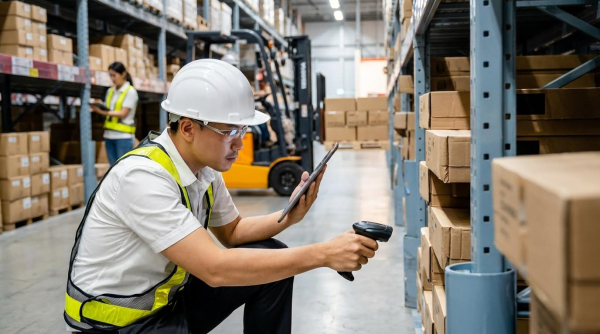
Beyond instruction methods, the biggest leap in order picking technology comes from how people and inventory move. Three basic flow patterns define most modern warehouses: person‑to‑goods, goods‑to‑person, and hybrids that mix both.
| Flow Type | Typical Technologies | How It Works | Performance Characteristics |
|---|---|---|---|
| Person‑To‑Goods | RF / voice, pick carts, AMR guidance | Pickers walk or follow AMRs to storage locations to collect items | Low capex, flexible; travel time dominates labor. System‑directed AMRs can support discrete, zone, batch, and cluster picking to cut walking Algorithms optimize paths and batching |
| Goods‑To‑Person | ASRS, shuttles, carousels, AMRs, pick‑to‑light | Automated systems bring totes, trays, or shelves to ergonomic pick stations | Travel almost eliminated for pickers; 2–3× productivity vs manual; accuracy up to 99.9% as correct items arrive at the station Many facilities report 2–3× throughput and 99.9% accuracy |
| Hybrid | Combination of AMRs, ASRS, conventional racking, conveyor | High‑volume SKUs use goods‑to‑person; long‑tail or bulky items remain person‑to‑goods | Balances capex and flexibility; allows phased automation and targeted ROI by SKU class |
Goods‑to‑person systems are especially powerful where space and labor are constrained.
- Automated storage modules can use up to 90% of vertical space vs 40–60% for shelving, increasing storage density dramatically Vertical systems unlock more cubic capacity.
- One reported goods‑to‑person deployment delivered a 200% increase in pick rates compared to manual methods, with many sites seeing 2–3× more orders per hour.
- Improved ergonomics and reduced bending and lifting have cut injuries by around 50% in some facilities, with lower turnover and higher satisfaction.
- Typical payback windows of roughly 18–24 months have been reported when throughput and labor savings are high enough.
Where person‑to‑goods still makes sense
Despite the performance of goods‑to‑person, person‑to‑goods flows remain optimal when SKU counts are very high, demand is highly skewed or seasonal, or items are oversized and not ASRS‑friendly. In these cases, the best use of order picking technology is to apply smart algorithms, AMRs, and advanced batching to reduce walking distance and idle time. Intelligent pathing and batching can double pick rates and cut walking by half, closing much of the gap without full automation.
Most future‑ready facilities converge on hybrid flows. Fast‑moving, small items migrate into goods‑to‑person and robotic cells, while slower or bulky items remain in optimized person‑to‑goods zones supported by AMRs, voice, and wearables. The right mix is a data problem: engineers should segment SKUs and orders, then match each segment to the most appropriate flow and technology stack.
Technical Deep Dive Into Automation And Robotics
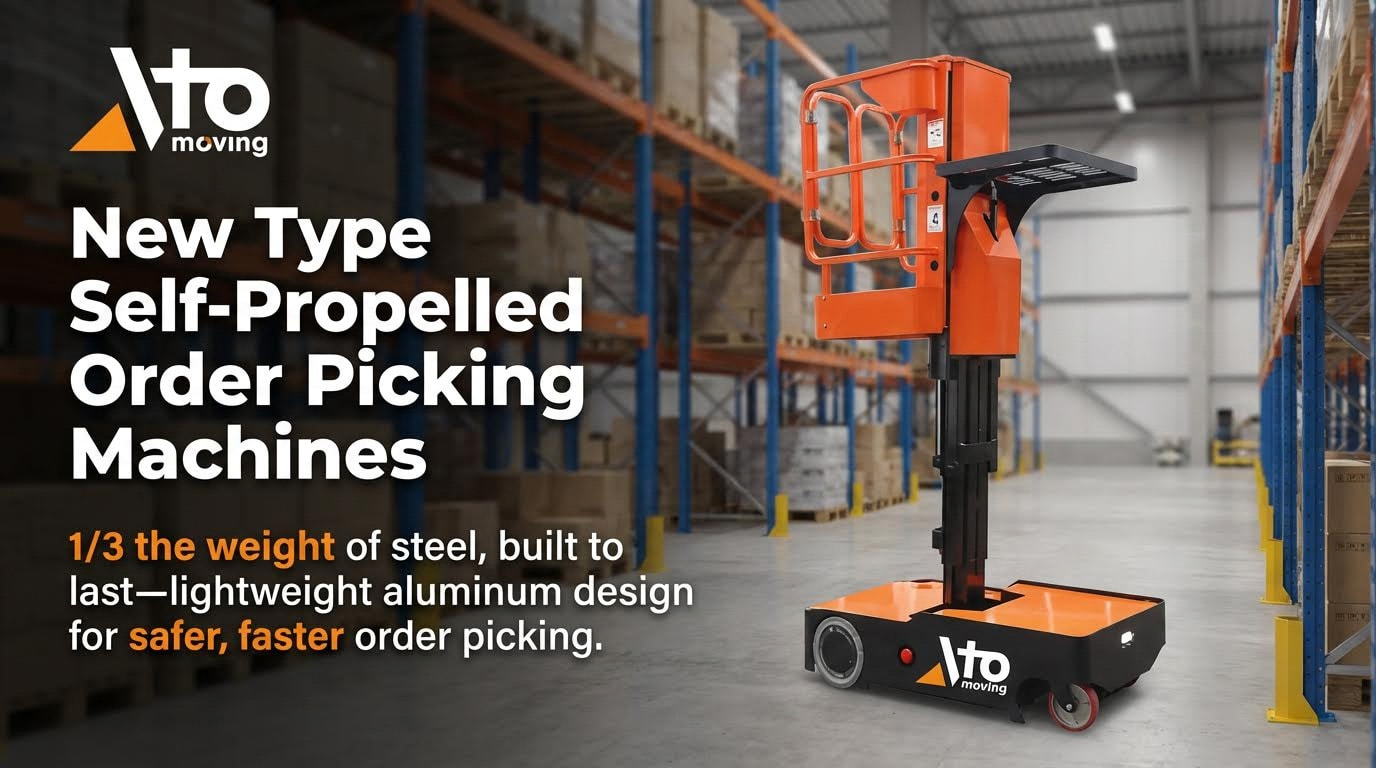
This section breaks down how core automation building blocks fit together inside modern order picking technology. We focus on mechanical architectures, robotic cell design, and the software and data stack that make high-throughput, low-error picking possible.
ASRS, Carousels, Shuttles, And AMR Architectures
These subsystems define how inventory moves to and from pick faces. The right architecture depends on SKU profile, throughput, order patterns, and building geometry.
| Technology | Typical Use In Order Picking Technology | Key Strengths | Engineering Watchpoints |
|---|---|---|---|
| ASRS (cranes, shuttles, VLMs) | High-density goods-to-person storage feeding pick stations | Maximizes vertical space; improves retrieval time by ~50%; can boost space utilization by ~40% cited performance | Higher capex; long implementation; sensitive to SKU dimension variability and load stability |
| Carousels (horizontal / vertical) | Medium-throughput goods-to-person zones, often for small parts | High storage density in constrained footprints; faster than manual shelving cited comparison | Fixed access positions; mechanical wear; less scalable than modular shuttle or AMR systems |
| Shuttle systems | High-throughput tote or tray handling to decoupled pick stations | Good balance of speed, redundancy, and storage density; supports sequencing for palletizing | Complex controls; needs precise racking tolerances and robust maintenance regimes |
| VLMs (Vertical Lift Modules) | Dense storage for slow/medium movers in goods-to-person cells | Can use up to ~90% of vertical space vs. 40–60% for shelving cited range | Access limited to integrated workstations; cycle time constraints at very high order volumes |
| AMRs (tote / shelf movers) | Flexible goods-to-person or person-to-goods transport layer | Layout-flexible; easy to scale; supports rapid reconfiguration as volumes or SKU mix change cited benefits | Fleet management complexity; traffic control; Wi-Fi and mapping robustness are critical |
| AGVs | Repetitive pallet or unit-load transport between zones | Runs on fixed or guided paths; reduces accidents and supports 24/7 operation cited benefits | Less flexible paths than AMRs; integration with people and forklifts needs careful safety design |
From an engineering standpoint, the architecture decision often starts with load unit and flow:
- Load unit: pallet, case, tote, tray, or each-level handling.
- Flow direction: goods-to-person, person-to-goods, or hybrid buffering.
- Required throughput: peak lines/hour per zone and per workstation.
- Redundancy: tolerance for single-point failures (e.g., crane out of service).
Design integration tips for these subsystems
Combine ASRS or shuttles with AMRs or conveyors to decouple storage from picking. Use carousels or VLMs for slower movers to avoid overloading high-speed shuttle aisles. Reserve AGVs for long, repetitive pallet moves while AMRs handle shorter, dynamic tote missions.
Robotic Piece, Case, And Pallet Picking Design
Robotic cells convert stored inventory into shipped orders. Mechanical design, end-of-arm tooling, and upstream buffering all determine real-world pick rates.
| Robotic Function | Typical Cell Role | Core Design Elements | Operational Benefits |
|---|---|---|---|
| Piece picking | Each-level picking from totes or bins into order containers | 6-axis or SCARA robots, vision-guided; adaptive grippers; integrated with ASRS or AMR feed cited concept | Higher accuracy and speed; handles diverse SKUs with AI-driven grasping; reduces manual labor |
| Case picking | Case picking from pallet or flow rack to outbound pallet or conveyor | High-payload robots, vacuum or clamp grippers; case pattern recognition; infeed/outfeed conveyors | Continuous operation; consistent case handling; reduced ergonomic risk for heavy cases |
| Pallet building (mixed or single SKU) | Builds outbound pallets for shipping or storage | Robots synchronized with ASRS; layer-forming or direct stacking; pallet pattern optimization cited role | Optimized cube utilization; stable pallets; higher dock productivity and reduced damages |
Key mechanical and controls considerations when engineering robotic picking into order picking technology:
- Infeed design: Ensure singulation and presentation (e.g., one layer of items in a tote) so vision and grasp planning remain reliable.
- End-of-arm tooling: Use modular grippers or tool changers to handle different surfaces, weights, and fragility levels.
- Cycle time budget: Break down pick cycle into approach, grasp, verify, place, and travel; design reach and stroke to minimize dead time.
- Exception handling: Define clear rules for no-pick, mis-pick, or damaged item detection and routing to human exception stations.
- Human-robot interaction: For cobot cells, design guarded speed zones, safe distances, and clear visual status indicators.
Performance impacts of robotic picking
Automated picking systems that use robotics and AI increase throughput by optimizing workflows and reducing errors, while supporting real-time inventory updates cited benefits. Facilities deploying goods-to-person and robotic solutions often report 2–3× more orders per hour and accuracy approaching 99.9% cited results.
Software, Algorithms, And Data Layer For Picking
Software transforms mechanical assets into a coherent order picking technology platform. The stack typically spans WMS, WES, robot fleet managers, and AI optimization services.
| Layer | Primary Role In Picking | Typical Functions |
|---|---|---|
| WMS (Warehouse Management System) | Inventory truth and order orchestration | Inventory balance; wave/waveless order release; replenishment triggers; lot/serial control |
| WES / WCS (Execution & Control) | Real-time coordination of humans, robots, and equipment | Task creation; routing; conveyor and sorter control; pick-to-light and voice interfaces |
| Robot / AMR Fleet Manager | Navigation and task allocation for mobile robots | Path planning; traffic management; charging; mission prioritization for AMRs and AGVs |
| Analytics & Optimization | Continuous improvement and dynamic tuning | Slotting optimization; labor and asset utilization; predictive maintenance; KPI dashboards |
Modern systems rely heavily on algorithms and data to cut travel and errors.
- Smart path and batch algorithms: Intelligent strategies can double pick rates and cut walking distance by about half by optimizing retrieval paths and batching cited impact.
- Dynamic slotting: Real-time order data drives tote or SKU placement in optimal positions, raising picking efficiency and reducing congestion cited concept.
- AI-powered error mitigation: Machine learning verification can reduce picking errors by around 40% via real-time checks and image or scan validation cited reduction.
- IoT and tracking: Sensor networks deliver up to ~98% tracking accuracy for goods in motion, improving visibility and exception response cited accuracy.
- Dynamic resource allocation: Predictive analytics reassign labor and equipment based on demand, cutting idle time by up to 25% cited benefit.
Data and “dark warehouse” operations
With robust telemetry and control, robots can operate through the night with minimal lighting, effectively supporting dark warehouse concepts cited capability. This requires reliable real-time data, health monitoring of assets, and automated exception workflows so that human teams can review and resolve issues on the next shift.
When engineering the software and data layer, align algorithms with physical constraints: aisle widths, station capacity, robot acceleration limits, and safety zones. Only then does the full automation and robotics stack translate into predictable throughput and accuracy in your order picking machines deployment.
Engineering Criteria For Selecting Picking Solutions
Throughput, Accuracy, And Labor Productivity Metrics
Engineering teams should evaluate every order picking technology against three hard metrics: throughput, accuracy, and labor productivity. The goal is not just “faster picking,” but the best cost-per-order over the system life. The table below summarizes typical directions of impact from common technologies, based on published use cases.
| Technology / Approach | Primary Metric Gains | Typical Improvement Range* | Best-Fit Use Cases |
|---|---|---|---|
| Goods-to-person systems | Throughput, labor productivity, accuracy | 2–3× more orders per hour; up to 99.9% accuracy reported in case studies | High-volume e‑commerce, spare parts, pharma |
| Person-to-goods with AMRs | Throughput, labor productivity | Walking distance cut by ~50%; pick rates up to 2× with smart batching via path and batch optimization | Brownfield sites, variable SKU mix, scalable deployments |
| Voice picking vs RF | Throughput, accuracy | 2–3 seconds saved per pick; >99% accuracy in typical operations | Case and piece picking, ambient or chilled environments |
| Pick-to-light / pick-to-color | Throughput, accuracy | Up to 25% faster and ~40% fewer errors for light-directed systems | High-SKU, fast-moving zones, kitting cells |
| AS/RS (shuttles, VLMs, carousels) | Throughput, space, labor productivity | Throughput +50–100% vs manual; space utilization +40–90% depending on design and vertical utilization | High-density storage, high order lines per hour |
| Robotic piece / case picking | Accuracy, labor productivity | Near-continuous operation; large reduction in manual touches in automated picking cells | Repetitive SKU sets, ergonomically challenging work |
*Ranges are indicative, not guarantees. Always validate with site-specific simulations and pilots.
Key engineering questions for throughput and productivity sizing
To engineer the right order picking technology, you should quantify:
- Required order lines per hour at peak (by zone and by temperature class).
- Required order cycle time (cut-off to ship confirmation) by channel.
- SKU velocity profile: A‑class vs B/C‑class line share and cube share.
- Order profile: lines per order, units per line, case vs each vs pallet.
- Shift structure: number of shifts, overtime policies, seasonal peaks.
These inputs drive the number of pick stations, AMRs, shuttles, or robots required to meet service levels with a safety margin.
Accuracy engineering focuses on how the system prevents, detects, and corrects errors at the lowest possible cost. Modern automated and semi-automated systems use a combination of directed workflows, barcode or RFID confirmation, and sometimes AI vision or weight checks to reach very high accuracy levels.
- Goods-to-person and AS/RS solutions routinely achieve up to 99.9% accuracy by physically constraining the presented SKU and guiding the operator at the bin level. Case examples report 99.9% accuracy
- Voice systems deliver >99% accuracy because operators stay “heads-up” and confirm locations and quantities verbally. Studies show better accuracy than RF
- Pick-to-light and pick-to-color reduce errors by roughly 40%, especially in dense pick faces. Light-directed picking performance data
- AI-based verification and error mitigation can cut discrepancies by ~40% by checking images, barcodes, or weights in real time. AI error reduction results
From an engineering standpoint, you should define a target “cost per error prevented” and design confirmation steps accordingly. High-value, regulated, or customer-critical orders justify more checks; low-value, high-volume flows may favor simpler confirmation to protect throughput.
Labor productivity calculations must include not only picks per hour, but also walking time, indirect tasks, and training curves. Automation and advanced order picking technology reduce walking and non-value-added time by redesigning the physical and logical flow, not just by speeding up individual picks.
- Goods-to-person and AMR-based systems largely eliminate walking, often doubling pick rates by keeping pickers in fixed workstations or short travel radii. Algorithms halve walking distance in some deployments
- Voice and wearables deliver hands-free operation, saving seconds at every pick by removing device juggling and manual data entry. Voice saves 2–3 seconds per pick vs RF Wearables enable hands-free scanning
- Robotic picking cells substitute repetitive manual work and can run extended hours, boosting output per labor hour even when robot cycle times are similar to human picks. Automated piece and case picking examples
How to compare labor productivity between solution concepts
For each concept, calculate:
- Direct labor hours per day (pickers, replenishment, supervisors).
- Indirect labor hours (maintenance, IT support, system monitoring).
- Average units or order lines processed per day.
- Labor productivity = lines per labor hour or units per labor hour.
- Cost per order = (labor cost + energy + maintenance) / orders shipped.
Then stress-test the design for peak scenarios and future growth (e.g., +50% volume) to check whether productivity holds without large step changes in staffing.
Space, Safety, And Regulatory Design Constraints
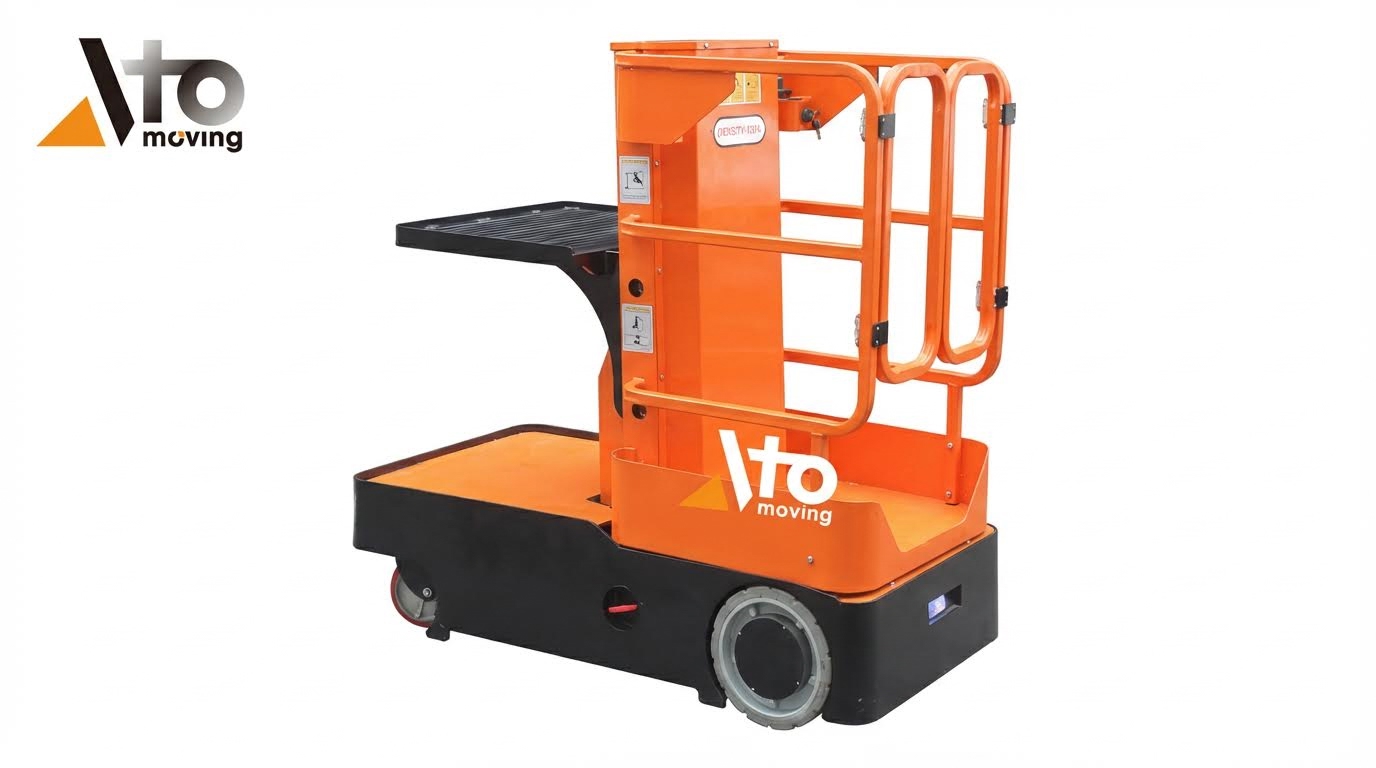
Even the best-performing order picking technology fails if it does not fit within physical, safety, and regulatory constraints. Mechanical, structural, and controls engineering must translate conceptual flows into layouts that respect building limits, safe human-machine interaction, and applicable codes.
| Constraint Category | Key Engineering Questions | Implications for Technology Choice |
|---|---|---|
| Space & building geometry | Clear height, column grid, floor loading, fire zones, dock positions | AS/RS and VLMs exploit vertical height; carousels and AMRs fit low or obstructed spaces; goods-to-person may reduce footprint by up to 40–60% vs shelving by using vertical cube more efficiently in documented projects |
| Safety & ergonomics | Operator reach, lift limits, travel paths, interaction with machines | Goods-to-person and robotic picking remove bending and heavy lifting, cutting injuries by up to 50% in some sites and improving retention; cobots and AMRs require speed and separation monitoring |
| Regulatory / compliance | Fire codes, egress, racking standards, electrical and machine safety | High-density storage must allow fire protection access; dark warehouse operation still needs emergency egress and override; robots and conveyors must meet machinery safety standards and lockout/tagout procedures |
| Operational environment | Temperature, humidity, dust, hygiene, noise | Cold storage favors goods-to-person and voice (no screens); electronics and optical sensors must be rated for the environment; cleaning and wash-down may limit some robotics |
Space engineering starts with a cube utilization study and a zoning strategy. Technologies like VLMs, shuttles, and carousels can use 80–90% of vertical space compared to roughly 40–60% for conventional shelving, enabling either more storage in the same footprint or a smaller building for the same capacity. Vertical utilization examples
- Use AS/RS, VLMs, or high-bay racking where clear height and floor capacity allow tall structures.
- Use AMRs, low-profile shuttles, or carousels where columns, mezzanines, or low roofs constrain height.
- Reserve prime floor-level space for high-throughput pick and pack stations, not static storage.
Safety and ergonomics must be engineered into the layout, not bolted on later. Automated and semi-automated systems can significantly reduce manual handling, but they introduce new risks around moving machinery, energy sources, and human-robot interaction.
- Goods-to-person systems have demonstrated up to 50% fewer workplace injuries and lower turnover by eliminating repetitive bending and carrying. Reported in manufacturing and distribution sites
- Voice and wearable devices keep operators “heads-up” and hands-free, improving situational awareness compared with RF terminals. Voice safety and accuracy benefits Wearable technology in picking
- AMRs, AGVs, and cobots require validated safety functions (speed limits, obstacle detection, emergency stops) and clearly marked human walkways.
Regulatory and standards checklist for picking system design
When selecting and engineering an order picking technology, verify compliance with:
- Local building and fire codes (including sprinkler density, in-rack sprinklers, smoke detection).
- Racking and storage standards for load ratings and seismic design.
- Machinery and robot safety standards for guarding, emergency stops, and safe motion.
- Electrical codes for power distribution, battery charging areas, and emergency shutoffs.
- Workplace safety rules covering ergonomics, noise, lighting, and traffic separation.
For dark warehouses or extended robot-only shifts, add procedures for emergency access, manual override, and safe re-entry of humans into automated zones.
In practice, engineering teams should iterate between performance modeling and constraint checks. Start with throughput, accuracy, and labor models to shortlist concepts, then eliminate or adapt options that cannot meet space, safety, or regulatory requirements. The best order picking technology is the one that balances these dimensions for your specific site, not just the one with the highest theoretical speed.
Final Thoughts On Future-Ready Order Picking Systems
Future-ready order picking systems blend human-centered tools, automation, and data into one coordinated design. RF, voice, and wearables shape how operators receive tasks and confirm work. ASRS, shuttles, AMRs, and robots shape how inventory and containers move. Software and algorithms sit on top and turn these assets into predictable throughput and accuracy.
Engineering teams must treat technology choice as a constrained optimization problem. Target lines per hour, accuracy, and labor cost first. Then check each concept against building geometry, floor loads, fire codes, and ergonomic limits. A solution that ignores aisle widths, egress routes, or safe robot speeds will fail in commissioning, no matter its brochure rate.
The most robust designs converge on hybrid flows. Fast, small SKUs move into goods-to-person and robotic cells. Bulky or slow movers stay in person-to-goods zones supported by AMRs, voice, and wearables. Data-driven slotting and batching keep these zones in balance.
The best practice is to move in stages. Standardize processes, instrument the warehouse, then add automation where the data shows hard constraints. Use pilots, not assumptions, before scaling Atomoving order picking machines or any advanced system across the network.
Frequently Asked Questions
What is order picking in warehouse operations?
Order picking is the process of selecting items from their storage locations in a warehouse to fulfill customer orders. The main goal is to accurately assemble requested items while optimizing efficiency to meet customer demand within specified timeframes. This process is considered the backbone of warehouse operations. Warehouse Operations Guide.
Which technology is commonly used in warehousing to increase picking efficiency?
Voice picking technology is a paperless and hands-free method that uses voice prompts to direct employees to specific warehouse locations for order fulfillment. It improves accuracy and speeds up the picking process by eliminating the need for handheld devices or paper instructions. Voice Picking Benefits.
How can advanced technologies improve warehouse efficiency?
Advanced technologies like Warehouse Management Systems (WMS), automation, and robotics can enhance warehouse efficiency by improving visibility, accuracy, speed, and overall productivity. These tools help streamline operations such as order picking, inventory management, and supply chain planning. Warehouse Efficiency Tips.