If you work around pallets and racking, you have probably asked yourself what is a walkie stacker and when it makes more sense than a forklift. This guide breaks down how these compact machines work, the components that matter, and how to size them correctly for real-world warehouse layouts. You will see where semi electric order picker and fully electric designs fit, what capacities and lift heights are typical, and how to match a walkie stacker to your aisles, loads, and safety requirements. Use it as a practical spec and selection reference before your next equipment decision.
What Is a Walkie Stacker and How Does It Work?
Core function and operating principle
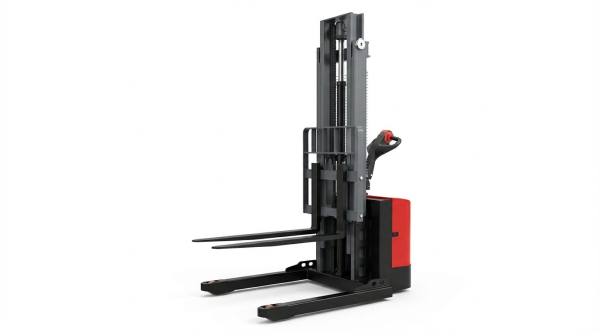
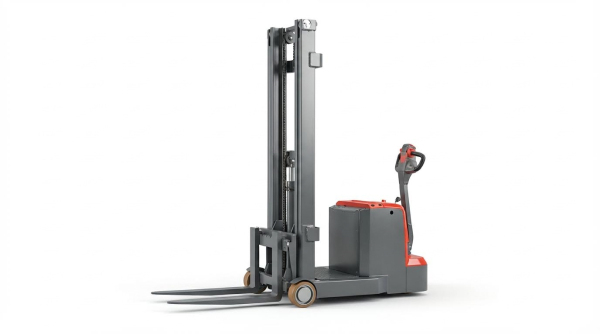
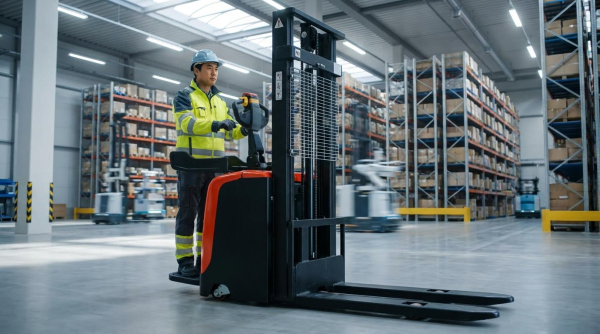
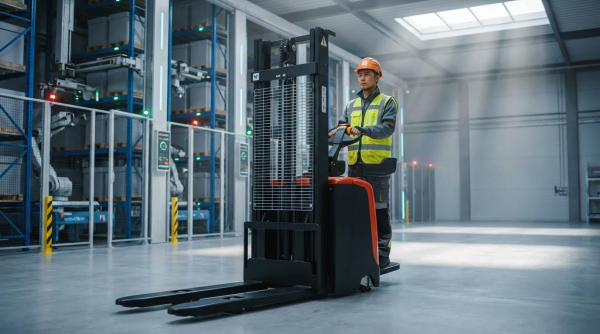
When someone asks “what is a walkie stacker,” they usually mean a pedestrian-operated, powered stacker used to lift and move palletized loads in tight warehouse spaces. The operator walks behind or alongside the machine and controls it using a tiller handle instead of riding on board. This design keeps the truck compact, ideal for narrow aisles and short to medium travel distances. The walkie stacker combines an electric or semi-electric drive with a hydraulic lifting system to raise pallets onto racking or stack them vertically.
Mechanically, a walkie stacker works by converting electrical energy from the battery into hydraulic pressure for lifting and into rotational motion for travel (on fully electric models). The operator uses the handle to command three main actions:
- Travel: forward and reverse movement, either manual (pushed) or powered by an electric drive motor.
- Lift and lower: hydraulic pump raises or lowers the forks to pick up or set down pallets.
- Steering and braking: the tiller steers the drive wheel and activates braking for control and safety.
Key operating characteristics of walkie stackers include compact chassis size, upright mast for vertical reach, and low travel speeds for precise positioning. Their design allows efficient pallet stacking and load handling, supporting continuous workflows in warehouses and logistics centers by enabling rapid pallet stacking and precise load handling. Typical lifting capacities range from about 900 kg to 2000 kg, with maximum lift heights up to around 5400 mm suitable for rack storage and narrow aisle work.
Why walkie stackers are popular in tight warehouses
The compact frame and short turning radius let walkie stackers operate in narrow aisles while still reaching higher racking levels. Adjustable forks and precise speed control further improve space utilization and stacking efficiency in confined areas by optimizing vertical and horizontal warehouse space usage.
Semi-electric vs. fully electric operation
There are two main operating configurations for walkie stackers: semi-electric and fully electric. Understanding the difference is critical when deciding what is a walkie stacker best suited to your warehouse workload and budget. The key distinction lies in how travel and lifting are powered.
| Feature | Semi-electric walkie stacker | Fully electric walkie stacker |
|---|---|---|
| Travel (forward / reverse) | Manual push or pull by operator | Powered electric drive motor |
| Lifting / lowering | Electric lift, manual or electric lower | Fully electric lift and lower |
| Typical use intensity | Low to medium frequency handling | Medium to high frequency, continuous handling |
| Operator workload | Higher – operator supplies pushing force | Lower – machine provides travel power |
| Energy consumption | Lower overall energy use due to manual travel | Higher per hour but better efficiency in heavy-duty cycles |
| Initial cost | Lower purchase price than fully electric units | Higher upfront investment |
| Long-term operating cost | Lower for light-duty use; may rise with intensive manual pushing | Lower cost per pallet moved in high-intensity operations due to better energy efficiency and less labor |
| Best-fit applications | Small to medium warehouses, occasional stacking, short distances where flexibility and low cost matter | Large warehouses and logistics centers with frequent pallet moves and high-intensity duty cycles |
Semi-electric walkie stackers use an electric power unit only for lifting. The operator still pushes or pulls the truck to move it between locations. This configuration keeps the machine simple, reduces battery size, and cuts energy consumption and initial cost compared with fully electric versions. Semi-electric units are well suited to short travel distances, lighter daily throughput, and operations where budget is tight.
Fully electric walkie stackers power both travel and lifting through electric motors and an onboard hydraulic system. They typically include variable speed control and smooth acceleration for precise maneuvering around racks and obstacles with features such as variable speed controls for smoother load handling. Because the machine provides the traction force, operator fatigue drops significantly, making fully electric models ideal for high-intensity warehouse and logistics operations.
- If your team moves pallets occasionally and over short distances, a semi-electric stacker usually offers enough performance with lower purchase and energy costs.
- If your operation runs many pallet movements per shift, a fully electric stacker will typically deliver better productivity, lower operator strain, and more consistent cycle times.
Extra features that enhance both types
Both semi-electric and fully electric walkie stackers may include options like sideshift for faster alignment, programmable performance settings, and onboard diagnostics. These features improve handling precision, adapt machine behavior to operator skill, and reduce downtime by helping maintenance teams identify issues early through advanced control and monitoring systems.
Key Components, Power Systems, and Performance
Understanding the main components of a walkie stacker explains not only how it works, but also how long it will last and how safely it will handle loads. When someone asks what is a walkie stacker, this section answers it in hardware terms: mast, forks, hydraulics, drive system, brakes, and batteries all working together for controlled lifting and travel.
Mast, forks, and hydraulic lifting system
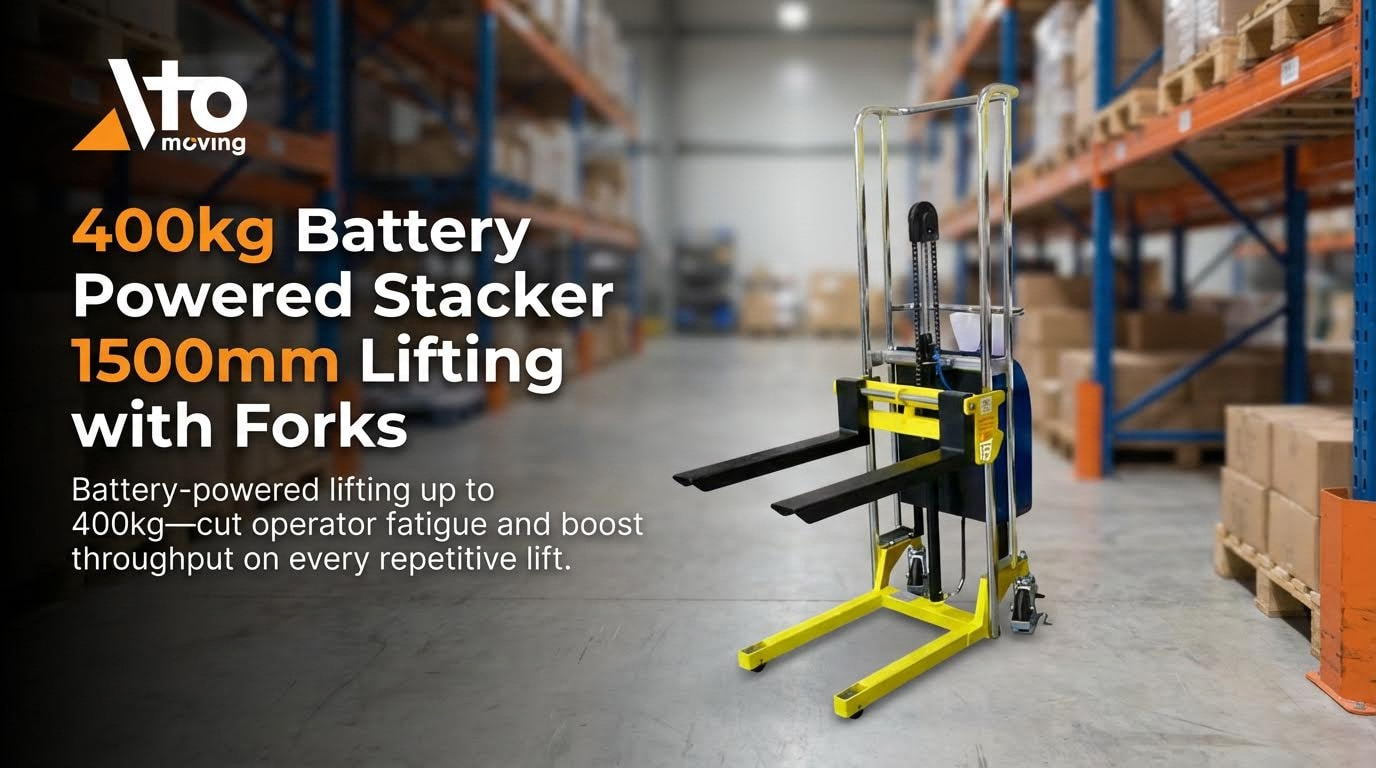
The mast, forks, and hydraulic system convert electrical energy into vertical lifting force. They determine how high, how safely, and how smoothly a walkie stacker can place a pallet.
- Mast: Guides the carriage and forks vertically using nested rails and rollers.
- Carriage: Slides on the mast and carries the forks and load backrest.
- Forks: Support and stabilize pallets; length and width must match pallet size.
- Hydraulic cylinder(s): Provide lifting force via pressurized oil.
- Lift chains: Transfer cylinder motion to carriage travel up the mast.
How the hydraulic lift circuit works
When the operator presses “lift,” an electric motor drives a hydraulic pump. The pump sends oil into the lift cylinder, pushing the piston out and raising the carriage through chains. To lower, a control valve opens, allowing oil to flow back to tank in a controlled way, so the load descends smoothly.
Typical walkie stackers lift about 900–2000 kg with maximum lift heights up to around 5400 mm, which suits rack storage and narrow aisle work. These capacity and height ranges are common in warehouse models. Matching mast and fork ratings to the nameplate is critical when deciding what is a walkie stacker suitable for a given load profile.
| Component | Main function | Typical failure risks | Maintenance focus |
|---|---|---|---|
| Mast rails | Guide vertical motion | Wear, bending, misalignment | Inspect straightness, clean, lubricate contact surfaces |
| Forks | Support pallet/load | Cracks, tip wear, bending | Monthly crack check and deflection check; remove damaged forks |
| Lift chains | Transmit motion to carriage | Elongation, corrosion, link damage | Lubricate every 1–2 months and inspect for uneven wear |
| Hydraulic cylinder | Generate lifting force | Seal leakage, scoring | Check for oil leaks and rod damage; replace seals if leaking |
| Hydraulic hoses | Carry pressurized oil | Aging, cracking, leaks | Inspect regularly and replace at first sign of damage |
Hydraulic cylinders, hoses, and fittings should be inspected for leaks or aging, and hydraulic oil level and quality checked about every 3–6 months. Contaminated or low oil must be corrected promptly to avoid slow or erratic lifting.
Drive unit, wheels, and braking systems
The drive system determines how the walkie stacker accelerates, steers, and stops in tight warehouse aisles. This is a key part of explaining what is a walkie stacker from an operator’s standpoint: it is a pedestrian-controlled, powered truck with an integrated traction and braking module.
- Drive motor and gearbox: Provide tractive effort for forward and reverse travel.
- Drive wheel: Transmits torque to the floor and steers with the tiller.
- Load wheels: Carry the fork tips and stabilize the load at ground level.
- Caster wheels (if fitted): Improve lateral stability and turning behavior.
- Braking system: Often electromagnetic or regenerative, with parking brake function.
Polyurethane drive and load wheels are common because they offer low rolling resistance and good durability on smooth warehouse floors. Robust frames, electromagnetic brakes, and durable wheels are standard design choices to support continuous duty.
| Element | Engineering role | Performance impact | Inspection / maintenance |
|---|---|---|---|
| Drive motor | Converts electrical to mechanical power | Affects travel speed and gradeability | Check for abnormal noise/heat; keep cooling paths clear |
| Gearbox | Reduces speed, increases torque | Influences pulling power and smoothness | Monitor for leaks and unusual vibration |
| Drive wheel | Primary traction and steering | Impacts maneuverability and stopping distance | Inspect tread wear and damage; remove embedded debris |
| Load wheels | Support fork tips and load | Affects stability under load | Replace if flat-spotted or severely worn |
| Electromagnetic brake | Service and parking brake | Controls stopping and holding on slopes | Function test daily; service if stopping distance increases |
Before each shift, operators should inspect for visible damage, leaks, or loose parts and verify that all controls and safety features operate correctly. A structured pre-operation checklist significantly reduces unexpected drive or brake failures. Regular checks of bolts, nuts, wheels, and bearings are essential to keep the travel and braking system reliable. Mechanical components should be inspected and lubricated every 1–2 months, with worn wheels replaced promptly.
Drive and brake behavior on slopes
On inclines, operators must approach slowly, maintain a steady speed, and avoid loose or slippery surfaces. Good practice is to keep a firm grip on controls and let the braking system manage speed, rather than abrupt manual inputs.
Batteries, chargers, and energy efficiency
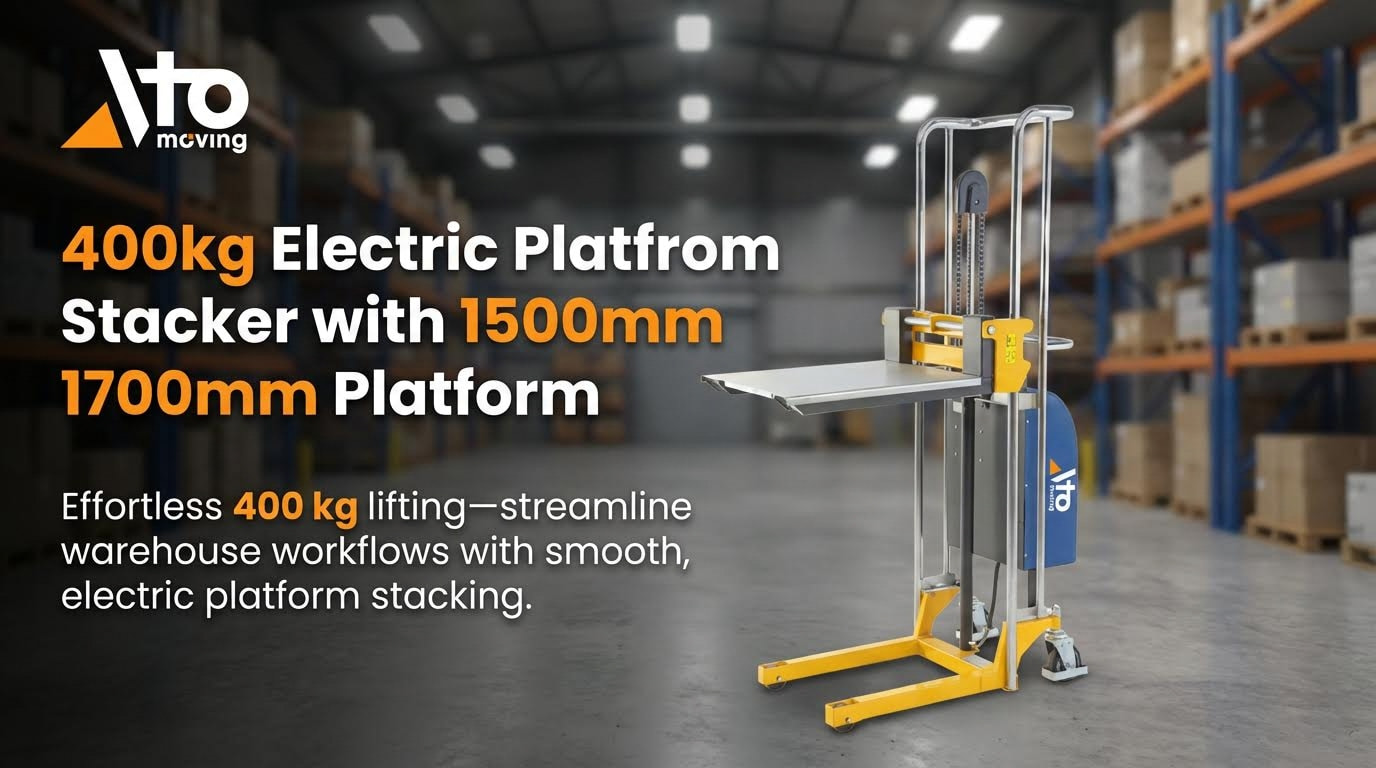
The battery and charger are the energy backbone of a walkie stacker. They determine runtime, charging strategy, and long-term operating cost, especially when choosing between semi-electric and fully electric designs.
- Battery type: Typically lead-acid or lithium-ion, with different cycle life and maintenance needs.
- Battery capacity: Sets expected operating hours per charge.
- On-board or external charger: Controls charge rate and charging convenience.
- Power management: Includes speed control, acceleration limits, and regenerative braking.
Semi-electric order picker units usually have lower energy use and purchase price, but fully electric units offer better long-term energy efficiency and lower operating cost by automating both lift and travel. Over time, the higher efficiency of fully electric systems often offsets their higher initial cost.
| Battery aspect | Typical practice | Effect on performance |
|---|---|---|
| Charge level checks | Check before and after each use | Prevents over-discharge and loss of capacity |
| Lead-acid recharge point | Recharge when below ~20% charge | Extends service life and reduces sulfation |
| Lithium-ion depth of discharge | Avoid full depletion | Maintains cycle life and consistent voltage |
| Storage when idle | Store fully charged; top up every 1–2 months | Prevents deep self-discharge damage |
| Cycle life (approx.) | Lead-acid: ~400–600 cycles; Lithium: ~800–1200 cycles | Defines replacement interval and life-cycle cost |
Battery surfaces must be kept clean and terminals tight to avoid corrosion and short circuits. Regular cleaning and connection checks are essential for both safety and runtime consistency. Electric stackers use their control systems to improve energy efficiency with features like variable speed control and regenerative braking, which also help with smooth, precise handling of multiple pallets in busy warehouses. These systems support continuous pallet stacking with reduced downtime.
Energy efficiency vs. application type
Warehouse order picker units suit small to medium operations with shorter travel distances and lower duty cycles, where minimal energy use per shift matters more than peak throughput. Fully electric units fit high-frequency warehouse and logistics applications, where better long-term energy efficiency and reduced operator fatigue justify the higher initial investment. Choosing between them is a core part of specifying what is a walkie stacker that truly matches your workload.
Warehouse Applications, Sizing, and Selection Criteria
Capacity, lift height, and aisle-width matching
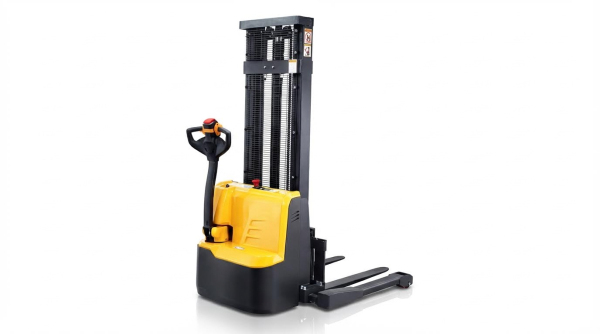
When people ask what is a walkie stacker, the real value shows in how well it fits the warehouse layout and load profile. Correctly matching capacity, lift height, and aisle width prevents damage, downtime, and unsafe operation.
| Selection Factor | Typical Range / Guideline | Engineering Notes |
|---|---|---|
| Rated capacity | ≈ 900–2000 kg capacity data | Choose based on heaviest pallet at the highest lift point, including packaging and attachments. |
| Max lift height | Up to ≈ 5400 mm height data | Match top beam height plus clearance for pallet and deflection. |
| Typical aisle width (rack storage) | About pallet length + stacker length + 200–400 mm clearance | Verify with manufacturer turning radius and add safety margin for operator walk space. |
| Application fit | Rack, bulk, and narrow-aisle storage application note | Compact chassis and vertical reach allow dense storage in tight footprints. |
Use a simple step process to size a walkie stacker to the job.
- Define the heaviest load: Include pallet, wrapping, and any special containers. Add a safety factor of 10–15% instead of sizing exactly at the limit.
- Measure maximum rack height: From floor to top beam, then add pallet height and at least 150–200 mm for safe handling and mast deflection.
- Check travel path and aisle width: Measure the narrowest point, including doorways and transfer areas, not just the rack aisles.
- Match stacker geometry: Compare overall length and turning radius to your aisle width, and ensure you still have working clearance for the operator to walk and turn safely.
- Consider duty cycle: For high-frequency stacking and retrieval, favor fully electric models that automate both lift and travel to reduce operator fatigue and improve throughput duty-cycle guidance.
Why compact walkie stackers suit narrow aisles
Because walkie stackers have a short power unit and the operator walks beside or behind the truck, they need less turning space than ride-on trucks. Their compact design and adjustable forks allow efficient stacking in narrow aisles and high-bay storage, improving space utilization in both vertical and horizontal directions space utilization.
Safety, compliance, and maintenance planning
Any answer to what is a walkie stacker is incomplete without safety and maintenance. These machines are simple to operate but can create high risk if training, inspection, and servicing are weak.
Key safety and compliance priorities in warehouse use are best handled as structured checklists.
- Operator training: Train on controls, load limits, visibility management, and emergency procedures to cut accident risk and equipment damage training guidance.
- Pre-operation inspection: Check for visible damage, leaks, loose parts, correct tire/wheel condition, and confirm all controls, displays, and safety devices function properly inspection checklist.
- Load management: Stay within the rated capacity, secure loads, center the forks under the pallet, and maintain clearance from racks and structures to prevent tipping and impacts load safety.
- Advanced safety features: Use programmable performance levels and real-time monitoring where available to match truck behavior to operator skill and provide early warnings for unsafe conditions advanced features.
| Maintenance Area | Typical Tasks | Suggested Frequency |
|---|---|---|
| Battery system | Check charge level, avoid deep discharge, clean terminals, inspect connections, follow storage and recharge rules for lead-acid and lithium batteries battery tips | Before/after use; storage check every 1–2 months |
| Mechanical components | Inspect bolts, forks, mast rails, wheels, bearings, chains; lubricate rails and chains with correct lubricant; replace worn wheels mechanical checks | Visual checks daily; detailed checks every 1–2 months |
| Hydraulic system | Inspect cylinders, hoses, fittings for leaks or aging; check oil level and quality; top up or replace as required hydraulic maintenance | Leak check regularly; oil check every 3–6 months |
| Electrical system | Test handles, buttons, displays; inspect wiring and connectors; clean electrical box with dry compressed air electrical checks | Quick check before each shift; detailed inspection periodically |
| Formal inspections | Full check of battery, hydraulics, steering, brakes, wheels, and safety devices; record findings and repairs inspection schedule | Every 3–6 months, depending on usage interval example |
In-use safety practices that protect people and equipment
To keep a walkie stacker safe in daily warehouse operation, operators should control speed to match aisle width and load weight, especially in tight or congested areas speed guidance. They should maintain a clear line of sight, use low lift when traveling, and approach slopes slowly with steady speed and firm control to reduce tipping risk incline operation. After use, the forks should be lowered fully, the unit switched off, brakes engaged if fitted, and the charger connected in a designated parking area away from traffic parking procedure.
Final Thoughts on Specifying Walkie Stackers
Choosing the right walkie stacker is a design decision, not just a purchase. Capacity, lift height, and aisle width must work together, or the truck will struggle, damage racking, or create tip risk. Engineers should size against the heaviest pallet at the highest rack position, then add clear safety margin.
The mast, forks, hydraulics, drive unit, and brakes form one stability system. If you overload the forks, run with worn wheels, or ignore hydraulic leaks, you cut that safety margin every shift. Strong maintenance routines and daily checks keep the original design performance intact.
Battery and control choices set runtime and labor cost. Semi-electric units suit short moves and light duty. Fully electric units fit high-frequency work, where lower operator strain and faster cycles justify higher initial spend. In both cases, correct charging and battery care protect uptime.
For operations and engineering teams, the best practice is clear. Start with geometry and load data, select a stacker class that fits the layout, then lock in training, inspection, and service plans. When you follow this sequence and work with a specialist supplier such as Atomoving, walkie stackers deliver safe, predictable performance over their full life.
Frequently Asked Questions
What is a Walkie Stacker?
A walkie stacker, also known as a walk-behind forklift or pallet stacker, is a type of material handling equipment designed to move and lift palletized goods without requiring the operator to ride on the machine. These machines are compact, maneuverable, and commonly used in warehouses, distribution centers, and retail environments Walkie Stacker Guide.
What Class is a Walkie Stacker?
Walkie stackers fall under Class III of powered industrial trucks, which includes electric motor hand trucks or hand/rider trucks. They are further categorized under Lift Code 2: Low Lift Walkie Pallet OSHA Forklift Classes.
Do You Have to Be Certified to Use a Walkie Stacker?
Yes, operators should be trained and certified to use a walkie stacker safely. While it may not require the same level of certification as larger forklifts, proper training ensures safe operation and compliance with workplace safety regulations Walkie Stacker Safety.
What Are Other Names for a Walkie Stacker?
A walkie stacker is also referred to as a pedestrian forklift, electric pallet truck, pallet jack, or straddle truck. These terms are often used interchangeably depending on the specific design and functionality of the equipment Walkie Stacker Guide.