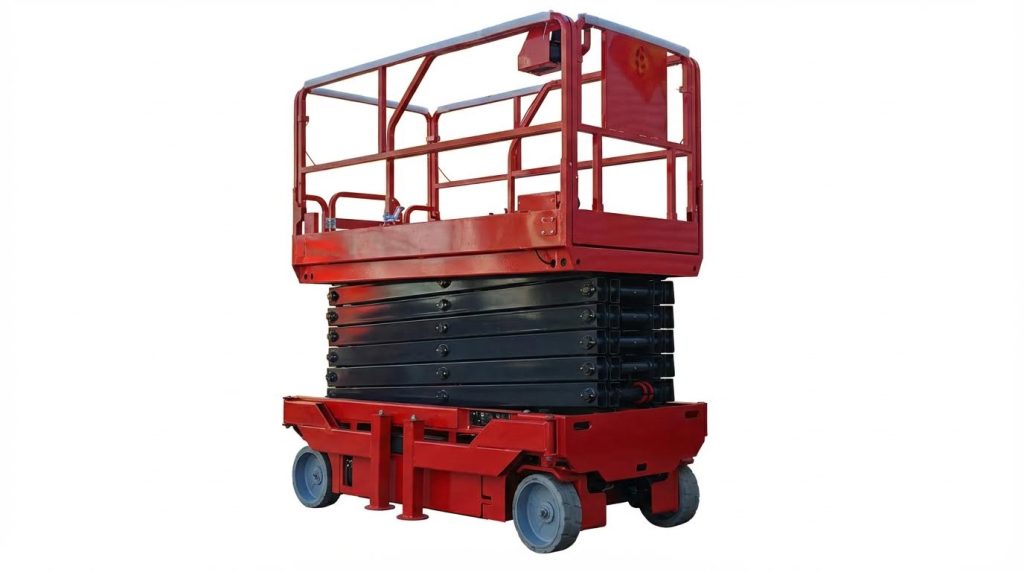
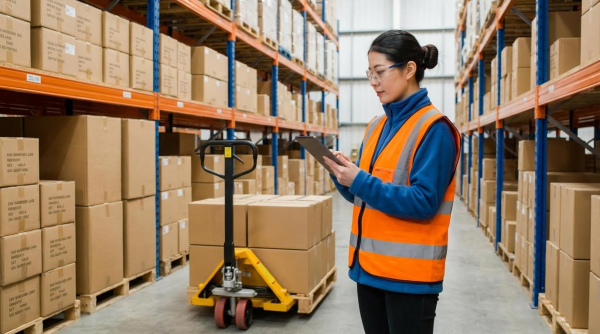
If you are asking “can you use a 24 material lift for a pallet,” the honest answer is: sometimes, but only under tight engineering and safety limits. This guide explains what a 24‑foot material lift is designed to do, where pallets fit within its rated envelope, and where they absolutely do not. You will see how load ratings, pallet size, load center, and standards all interact, so you can avoid unstable stacks, falling loads, and other pallet-handling hazards that cause serious injuries and equipment incidents. By the end, you will know when a 24‑foot lift is a safe, compliant choice for vertical pallet handling—and when you must specify different equipment instead.
What A 24-Foot Material Lift Can And Cannot Do
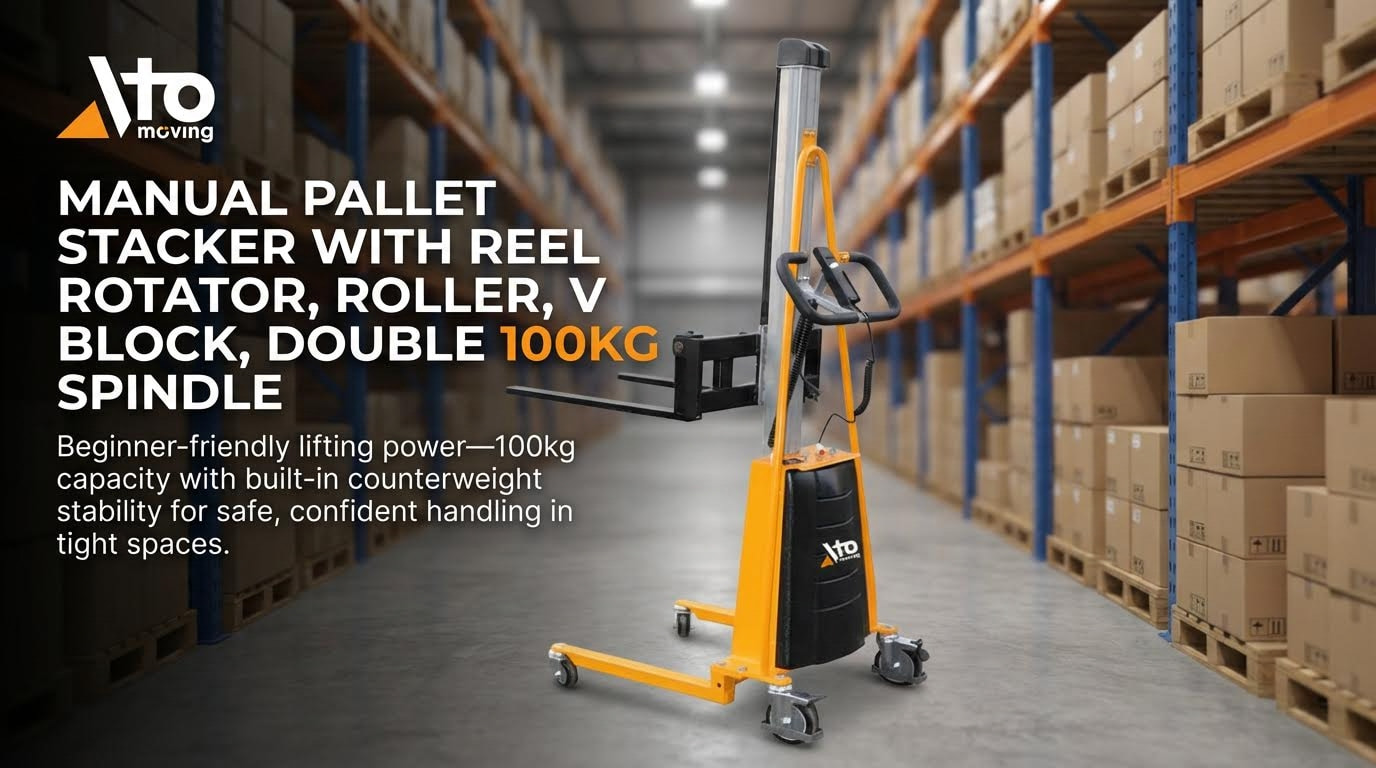
Typical design and load ratings
A 24‑foot material lift is a tall, lightweight vertical mast device, not a general‑purpose manual pallet stacker or forklift. It is designed to raise compact, well‑balanced loads to ceiling level for installation or maintenance, not to shuttle heavy pallets around a warehouse. Before asking “can you use a 24 material lift for a pallet,” you need to understand how these machines are normally built and rated.
| Design aspect | Typical characteristics (24‑ft material lift class) | Engineering implication |
|---|---|---|
| Maximum lift height | About 7–8 m (24–26 ft) | High mast slenderness; stability very sensitive to load position and ground conditions. |
| Rated load capacity (at rated load center) | Roughly a few hundred kilograms (single point or narrow forks) | Capacity only valid at specified load center and on level, firm surfaces. |
| Load type assumed in design | Compact machinery, ducting, beams, panels, HVAC units | Loads expected to be rigid, strapped, and smaller than platform or fork span. |
| Support base | Outriggers and/or wide legs with small wheels or casters | Base must be fully deployed and on sound floor to resist overturning. |
| Power and control | Manual or powered lift; walking operator on ground | Operator relies on ground visibility; no riding position like a truck. |
| Duty cycle | Intermittent lifting, installation tasks | Not intended for continuous pallet handling cycles. |
These ratings assume that the load is centered, does not overhang excessively, and remains stable during the entire lift. If a palletized load is tall, flexible, or loosely stacked, the risk of collapse or shift increases and becomes a recognized hazard under general material‑handling rules because unstable stacks can lead to falling loads and equipment mishaps. From a design‑intent point of view, a 24‑foot material lift can safely raise only those loads that fit within its marked capacity, geometry, and stability envelope; it cannot compensate for poor pallet condition, bad stacking, or misuse.
Why the nameplate rating is not the whole story
The capacity shown on the data plate is determined under controlled test conditions with a defined load center and geometry. Real‑world pallets often exceed that geometry, even if the weight is within the number on the plate. Treat the nameplate as a maximum under ideal conditions, not a blanket approval for any pallet that weighs less.
Pallets, load centers, and stability limits
Whether you can use a 24 material lift for a pallet comes down to one core question: can the combined pallet and load stay within the lift’s stability limits at 24 ft? That depends on pallet dimensions, load center, and how far the center of gravity moves away from the mast.
| Factor | Typical palletized load situation | Effect on a 24‑ft material lift |
|---|---|---|
| Pallet size | Common pallets around 1.0–1.2 m long | Load center often 0.5–0.6 m from fork heel, which may exceed the lift’s rated load‑center distance. |
| Load center (horizontal) | Center of gravity at mid‑length of pallet or further if load overhangs | Increases overturning moment at the mast; effective capacity drops as load center increases. |
| Load height and stacking | Stacked cartons or bags 1–2 m high | Raises overall center of gravity, making the system more top‑heavy and sensitive to sway. |
| Pallet condition | Damaged, cracked, or missing boards are common in circulation | Higher risk of sudden failure or shifting load when raised, leading to falling material and potential crushing injuries. |
| Floor and environment | Busy aisles, potential obstructions, uneven joints | Any slope, soft spot, or contact with obstacles increases side‑load and tipping risk, which general material‑handling rules require you to control under workplace equipment regulations. |
To keep a tall mast stable, the overturning moment from the pallet must stay below the restoring moment from the base and outriggers. As the pallet’s load center moves forward, the overturning moment grows linearly with distance, so even a modest overhang can erase a large portion of the rated capacity. If the pallet stack is unstable or the pallet itself is damaged, the risk is not just tipping of the lift but also a falling load, which general duty and material‑storage rules treat as a recognized hazard that employers must control by keeping materials stacked to prevent sliding or collapse.
- Only consider pallet lifting if the combined weight and load center fall within the lift’s published chart.
- Reject pallets that are cracked, warped, or missing deck boards; they increase the chance of load collapse when elevated and create additional tripping hazards on walkways.
- Keep aisles clear and avoid positioning the lift where obstructions or poor housekeeping could interfere with safe operation as required for safe movement of workers and equipment.
- Include pallet‑on‑lift use in your risk assessment and safe‑system‑of‑work documentation, similar to the way order picking machines operations require formal assessment and defined controls to address likelihood, severity, and control measures.
In engineering terms, a 24‑foot material lift can sometimes raise a small, low, tightly wrapped pallet that fits within its platform and load‑center limits, on a sound floor, with proper restraints. It cannot safely act as a substitute for a hydraulic pallet truck or forklift for routine pallet handling, nor can it tolerate damaged pallets, tall unstable stacks, or any situation where the load center and stability are not clearly controlled.
Engineering Conditions For Safely Lifting Pallets
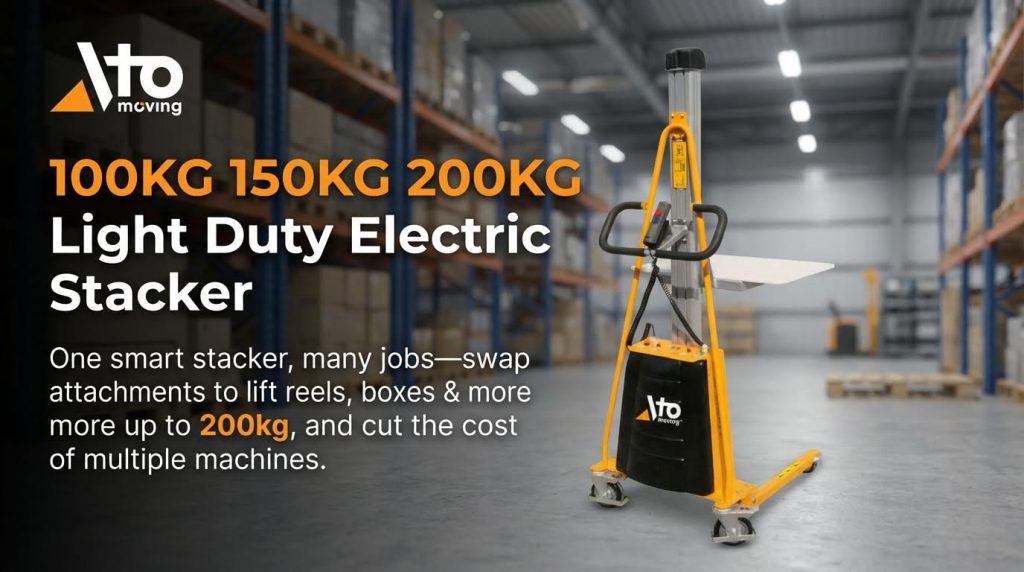
Matching pallet weight and load center to the lift
Before asking “can you use a 24 material lift for a pallet,” you must prove the numbers work. That means matching pallet mass, load center, and lift rating with a clear safety margin.
| Check Item | What You Need To Verify | Typical Engineering Guidance |
|---|---|---|
| Rated capacity at full height | Maximum load the 24‑ft lift can carry at its specified load center | Must exceed pallet + load weight with at least 25–50% margin (project / site policy) |
| Pallet + load weight | Gross weight of goods, pallet, and any dunnage | Weigh or calculate from packing data; never estimate by eye |
| Load center (front–back) | Horizontal distance from fork / platform face to load CG | Must be ≤ rated load‑center distance on the lift nameplate |
| Load center (side–side) | Offset of CG from lift centerline | Keep as close to centerline as possible; avoid significant side offset |
| Dynamic factors | Wind, lift movement, starting / stopping, floor unevenness | Use extra safety margin; operate at low speed and under tight procedural control |
- If the pallet weight is unknown, treat the lift as “not rated” for that load until you obtain verified data.
- If the pallet load center exceeds the lift’s rated load center, you must derate capacity or reject the job.
- Stack height on the pallet (tall, top‑heavy loads) can move the CG outward and reduce stability.
- Damaged or leaning pallets increase the risk of shifting loads and collapses during handling and are a known hazard in pallet operations.
Quick decision logic for “can you use a 24 material lift for a pallet”
If any of these are true, you should not lift the pallet with the 24‑ft material lift:
- Unknown or estimated pallet weight.
- Load center beyond the manufacturer’s rating.
- Pallet or load is visibly damaged, leaning, or poorly wrapped.
- Required safety margin (typically ≥25%) cannot be achieved.
Platform, fork interface, and load restraint
Even when capacity and load center work on paper, the interface between pallet and 24‑ft material lift is often the real limiting factor. You must ensure compatible support, containment, and restraint so the pallet cannot slip, roll, or shed product.
| Interface Aspect | Key Engineering Questions | Good Practice |
|---|---|---|
| Support type | Are you using forks, a solid platform, or a custom attachment? | Use a platform or pallet‑rated fork attachment sized for the pallet footprint. |
| Fork spacing | Do forks align with pallet stringers / openings? | Set forks as wide as possible while fully supporting both pallet stringers. |
| Bearing length | How much of the pallet depth is supported? | Support the full pallet depth where possible; avoid short “tip‑loading.” |
| Anti‑slip / friction | Can the pallet slide on steel under tilt or vibration? | Use anti‑slip surfaces or mechanical stops; keep surfaces clean and dry. |
| Load restraint | What stops product or the pallet from falling off? | Use guard rails, toe‑boards, straps, or nets suitable for the load. |
| Operator exposure | Is any person riding or working under the suspended pallet? | Keep people out from under suspended loads; control access zones. |
- Check that pallets are intact and not cracked, split, or heavily deformed to reduce the risk of collapse and falling loads during handling.
- Verify that the lift’s platform or forks are rated and intended for palletized loads, not just loose materials.
- Use straps, chains, or nets where there is any risk of load shift, especially with shrink‑wrapped or irregular goods.
- Keep aisles and access around the lift clear so obstacles do not snag or destabilize the pallet during movement as required for safe material handling.
Pre‑lift interface checklist
Before lifting a pallet on a 24‑ft material lift, confirm:
- Pallet is structurally sound; no broken deck boards or stringers.
- Forks / platform fully support the pallet footprint and bear evenly.
- Load is stable, wrapped, or banded; no loose cartons at the edge.
- Mechanical stops or rails prevent the pallet from rolling or sliding off.
- Straps or other restraints are in place if the lift will move horizontally.
Regulatory and standards framework (OSHA, LOLER, ISO)
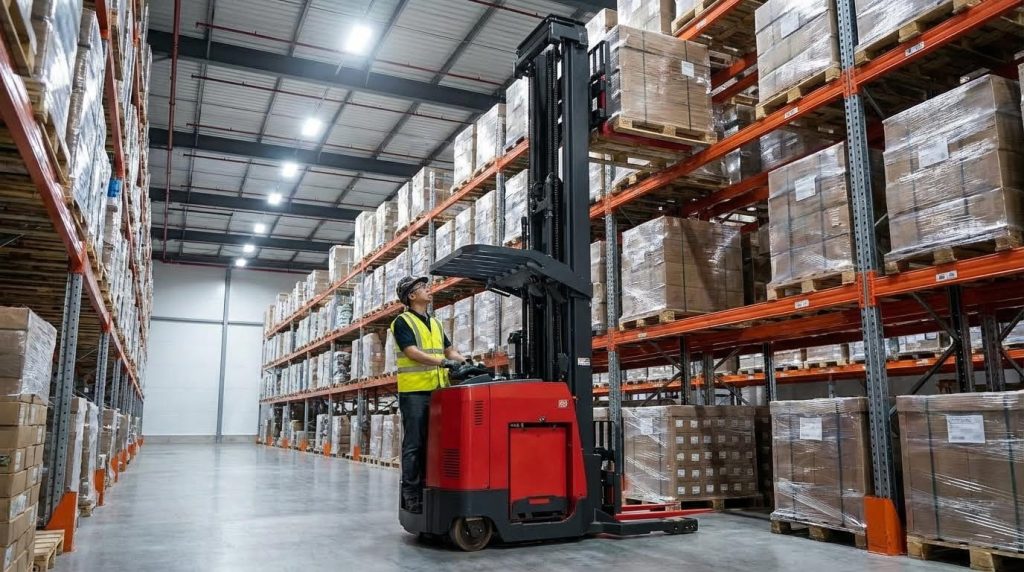
Whether you can use a 24 material lift for a pallet is finally constrained by law and standards, not just engineering judgement. You must align your method with the applicable safety framework in your jurisdiction.
- Under OSHA’s General Duty Clause, employers must control recognized hazards such as falling pallets, unstable stacks, and dropped loads during material handling to prevent serious harm.
- OSHA rules for material handling and storage require materials to be stacked and restrained to prevent sliding or collapse and for aisles to remain clear for equipment movement during pallet operations.
- In the UK, PUWER requires that work equipment be suitable, maintained, and used by trained, competent people, while LOLER mandates thorough examination of lifting equipment at defined intervals to ensure safe lifting operations.
- Standards for industrial trucks and stackers specify that loads must remain within rated capacity and have their center of gravity within allowed limits to avoid instability and tipping when handling pallets.
| Regulation / Standard | What It Implies For Pallets On A 24‑ft Lift |
|---|---|
| OSHA material handling rules | Loads must be stable, secured, and handled with suitable equipment; clear aisles and safe routes are mandatory. |
| LOLER (where applicable) | The 24‑ft lift must be classified as lifting equipment, thoroughly examined, and used within its documented safe working load. |
| PUWER / similar “suitability” rules | The lift must be demonstrably suitable for pallets; ad‑hoc or improvised use is not compliant. |
| Operator training requirements | Only trained, authorized operators may run the lift, with refresher training at defined intervals to maintain competence. |
| Risk assessment duties | You must document hazards, controls, and emergency procedures for pallet lifting operations, and review them periodically as part of your safety management system. |
Practical compliance steps before approving pallet use
Before you sign off that a 24‑ft material lift may be used for pallets, you should:
- Confirm the manufacturer’s documentation allows palletized loads or the specific attachment in use.
- Verify current inspection / thorough examination certificates and maintenance history for the lift.
- Carry out a task‑specific risk assessment covering pallet condition, route, exclusion zones, and emergency procedures in line with local regulations.
- Ensure operators are trained on both the lift and the pallet‑handling method, including load limits and stability.
- Define clear site rules for working under or near suspended pallets and for reporting incidents or near misses to support continuous improvement.
When You Must Not Use A Material Lift For Pallets
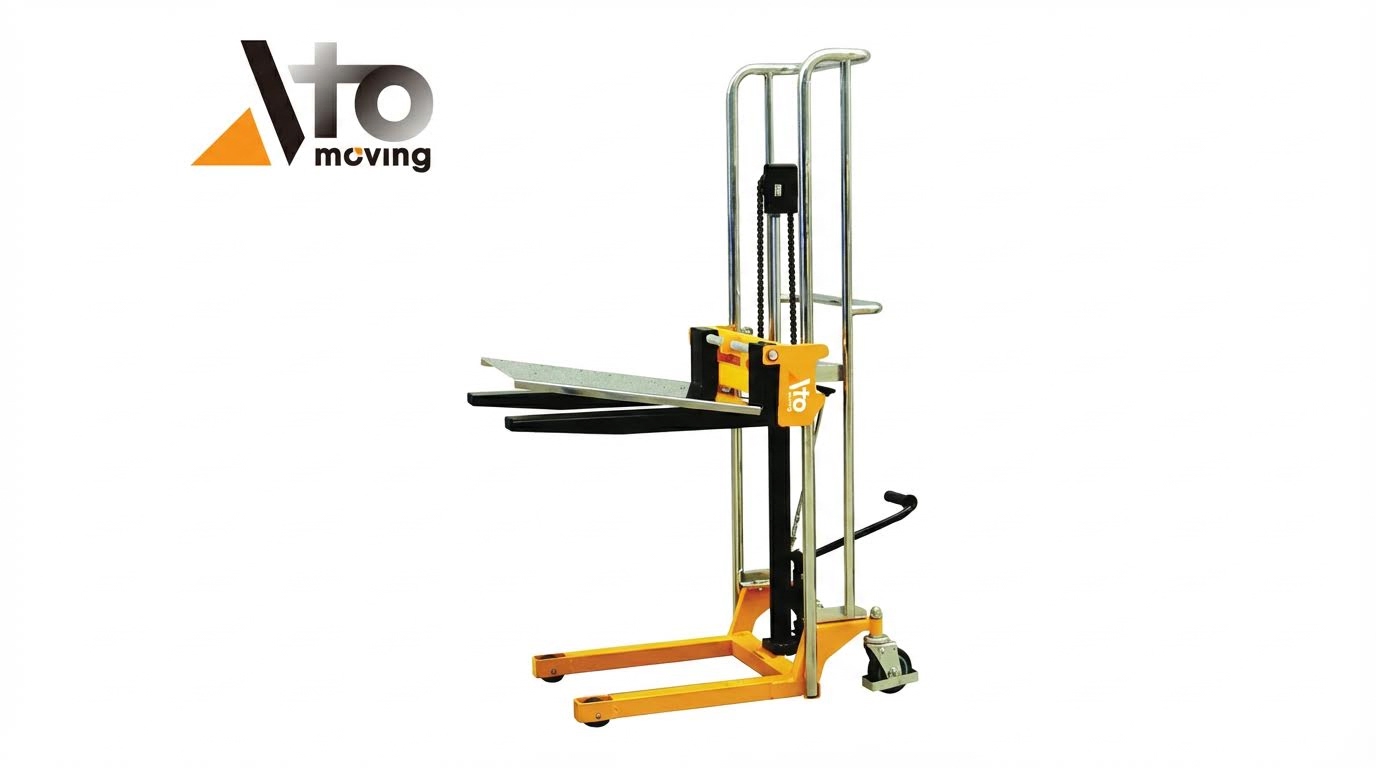
Red flag applications and common misuse cases
Before you ask “can you use a 24 material lift for a pallet?”, you must first identify where it is clearly unsafe or non‑compliant. The following are hard-stop situations where a 24‑foot material lift should not be used for pallet handling, regardless of operator skill.
- Exceeding rated capacity at any height
- Gross pallet weight (load + pallet + any stillage) above the lift’s nameplate rating.
- Load center further out than the rating assumes (e.g., deep pallets, long crates).
- “It lifted it last time” is not evidence of safety; it only shows the margin has not yet been used up.
- Unstable or poorly stacked pallet loads
- Loose cartons, drums, or bags that are not shrink‑wrapped, banded, or otherwise unitized.
- Mixed, offset stacking that can slide or collapse under vibration or tilt, creating falling‑load hazards recognized as a serious pallet‑handling risk.
- Damaged pallets with broken deckboards or stringers that can fail suddenly under point loads and cause load collapse.
- People anywhere under, on, or near the raised pallet
- Workers walking or working under the load path (breach of basic “no one under a suspended load” practice).
- Using the pallet or lift platform as an improvised man‑lift or work platform.
- Standing on the pallet to “steady” or re‑stack product during lifting.
- Side loading, shock loading, or off‑axis handling
- Dragging or side‑pulling a pallet while it is partly supported by the lift.
- Using the lift to “break free” stuck pallets with jerks or impacts (shock loading).
- Lifting where the pallet center of gravity is significantly offset to one fork arm or one side of the platform.
- Use on unsuitable floors, ramps, or edge conditions
- Operating on slopes, dock plates, or uneven floors where the lift can roll, twist, or tip.
- Lifting near mezzanine edges, dock edges, or pits without positive guarding or stops.
- Using the lift as a “bridge” between levels or vehicles.
- Inadequate restraint or guarding of the pallet
- No backstop, side guards, or mechanical restraint to prevent pallet roll‑off.
- Loads that overhang the platform or forks so far that any small tilt can cause a spill.
- Handling round or tall, slender items on pallets without chocks, cradles, or tie‑downs.
- Using the wrong equipment for the environment
- Flammable or explosive atmospheres when the lift is not rated for that zone.
- Cold stores or outdoor use where the lift is not designed for the temperature, moisture, or corrosion.
- Congested walkways where falling or protruding pallets create trip and impact hazards on walking‑working surfaces.
- Bypassing inspections, training, or procedures
- Using the lift with known defects in forks, platform, mast, or controls.
- Untrained personnel improvising pallet lifts, contrary to formal operator‑training expectations for material handling equipment where formal and hands‑on training is required.
- No documented risk assessment for the lifting task, which undermines compliance with general duty and risk‑assessment obligations used for pallet truck operations.
Why these red flags matter for compliance and injury risk
Many of these misuse cases directly increase the chance of falling loads, tip‑overs, or crush injuries. Pallet handling already carried a high rate of strains, sprains, lacerations, and crush injuries from dropped or unstable loads according to pallet‑safety training materials. Using a 24‑foot lift multiplies the energy and consequence of any failure. Under general duty and material‑handling rules, employers must control recognized hazards like unstable stacks, obstructed aisles, and improper use of handling equipment for pallet operations. If you cannot eliminate these red flags with engineering and procedural controls, you should not use a 24‑foot material lift for pallets at all.
Alternative equipment for vertical pallet handling
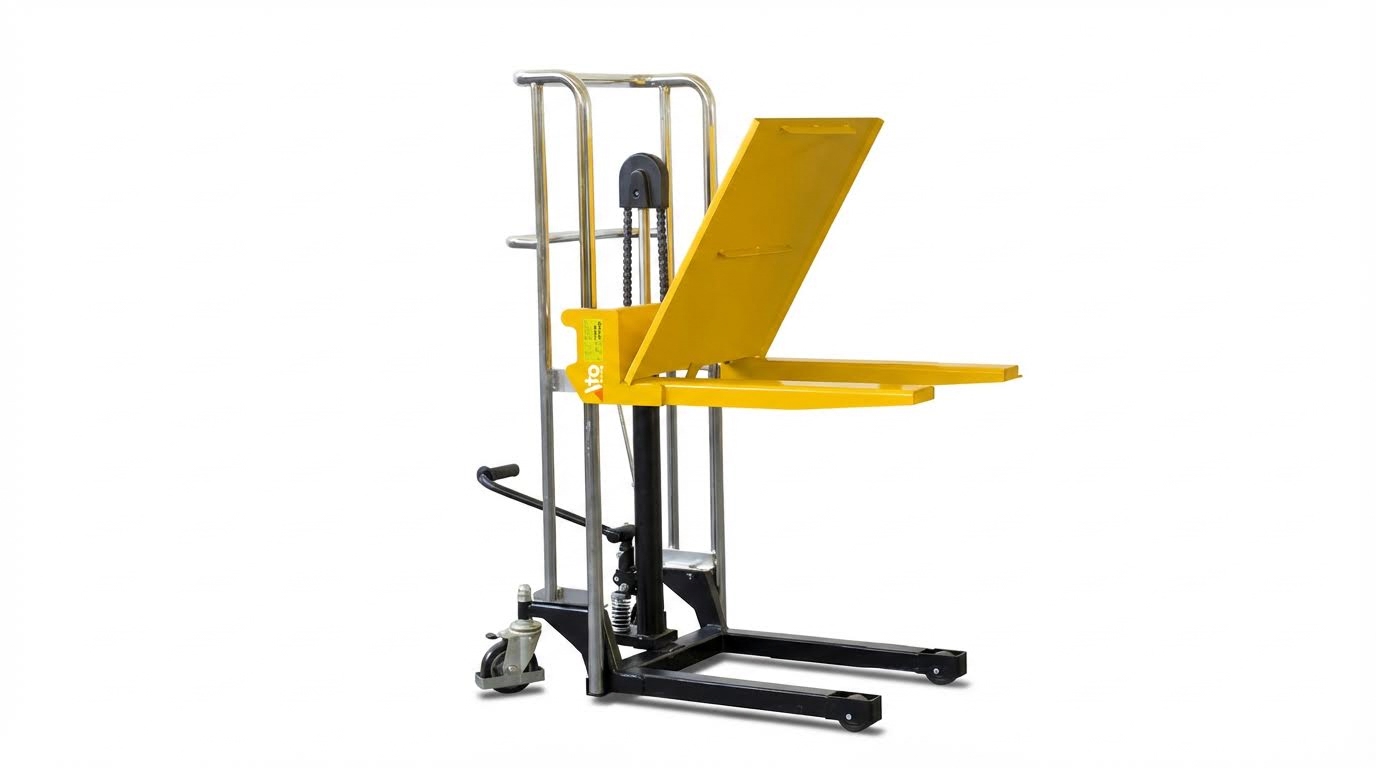
When the risk profile is too high, the right answer to “can you use a 24 material lift for a pallet” is “no—use purpose‑built pallet equipment instead.” The options below are typical alternatives for moving full pallets between levels while staying within good practice and regulatory expectations.
| Alternative equipment type | Best‑fit applications | Key safety advantages for pallet work | Typical limitations / considerations |
|---|---|---|---|
| Forklift or powered pallet stacker | Frequent pallet movements between ground level and racking or low mezzanines. |
|
|
| Fixed vertical reciprocating conveyor (VRC) / pallet lift | Regular pallet transfer between floors or mezzanines on a fixed route. |
|
|
| Goods‑only lift in a shaft or hoistway | Moving pallets between building floors without carrying people. |
|
|
| Dock lift / scissor lift table rated for pallets | Bridging level differences at docks, van loading, or low mezzanines. |
|
|
| Conveyor with vertical lift section | High‑throughput pallet flows in production or distribution lines. |
|
|
For small height differences or occasional handling, combining a compliant dock lift or low‑travel table with pallet jacks can be safer than stretching a 24‑foot material lift beyond its intended envelope. Whatever option you choose, you still need a task‑specific risk assessment, documented inspections, and operator training that cover pallet condition, load stability, and route hazards as is standard for pallet‑truck operations.
Final Thoughts On Specifying Lifts For Pallet Work
Using a 24‑foot material lift for pallets is a narrow, engineered exception, not a general rule. The tall, slender mast and outrigger base can only stay stable when pallet weight, load center, and stacking all sit inside the rated envelope with margin. Once the center of gravity moves forward or upward, overturning forces rise fast and tip‑over or falling‑load risk increases.
Safe use depends on three pillars working together. First, the numbers must work: verified pallet weight, compliant load center, and a clear safety margin at height. Second, the interface must be secure: full pallet support, sound decks, and positive restraint that prevents sliding, roll‑off, or shedding product. Third, legal duties must be met: suitable equipment, trained operators, current inspections, and a task‑specific risk assessment that addresses exclusion zones and emergency response.
Where any of these pillars fail, you must treat the 24‑foot lift as “not suitable” and move to purpose‑built pallet solutions such as stackers, VRCs, or dock lifts from suppliers like Atomoving. The best practice is simple: only approve pallet use on a 24‑foot material lift when you can prove stability, restraint, and compliance in writing; otherwise, select different equipment.
Frequently Asked Questions
Can you use a 24-foot material lift for a pallet?
A 24-foot material lift, such as a scissor lift or boom lift, is not typically designed to handle standard pallets directly. Material lifts are engineered for lifting tools, equipment, or other materials within their weight and size limits. If you’re considering using a material lift for pallet handling, ensure the lift’s capacity and platform dimensions can safely accommodate the pallet’s size and weight.
- Check the lift’s load capacity to ensure it matches or exceeds the pallet’s weight.
- Verify that the platform dimensions can securely hold the pallet without overhang.
- Follow all safety guidelines outlined by OSHA or other regulatory bodies. OSHA Safety Standards.
What are the alternatives for lifting pallets in a warehouse?
If a material lift isn’t suitable for pallet handling, consider using equipment specifically designed for this purpose, such as forklifts or pallet jacks. Forklifts can easily lift and transport pallets, while pallet jacks are ideal for ground-level movement. Always ensure operators are trained and certified before using such equipment. Pallet Jack Certification Guide.