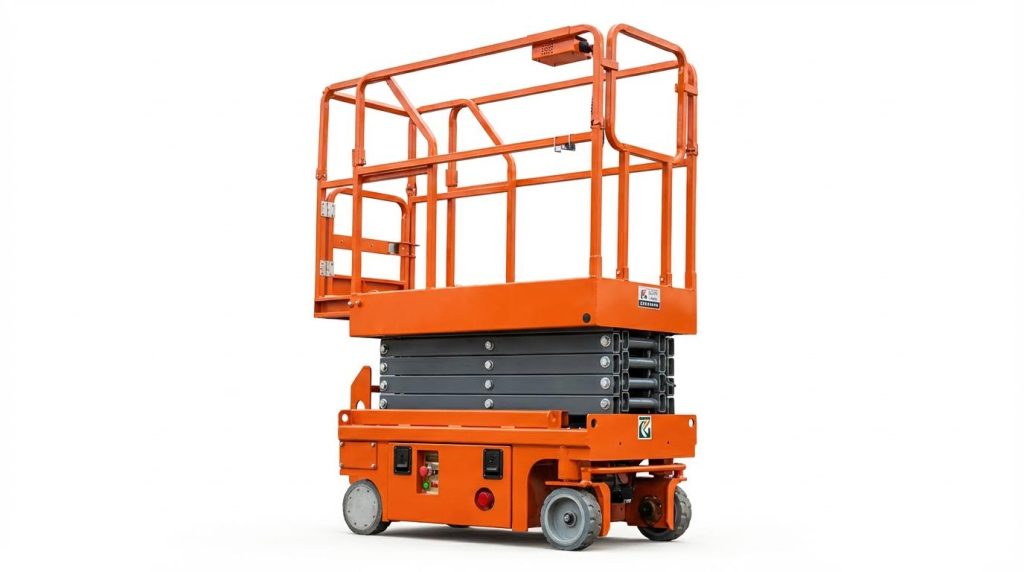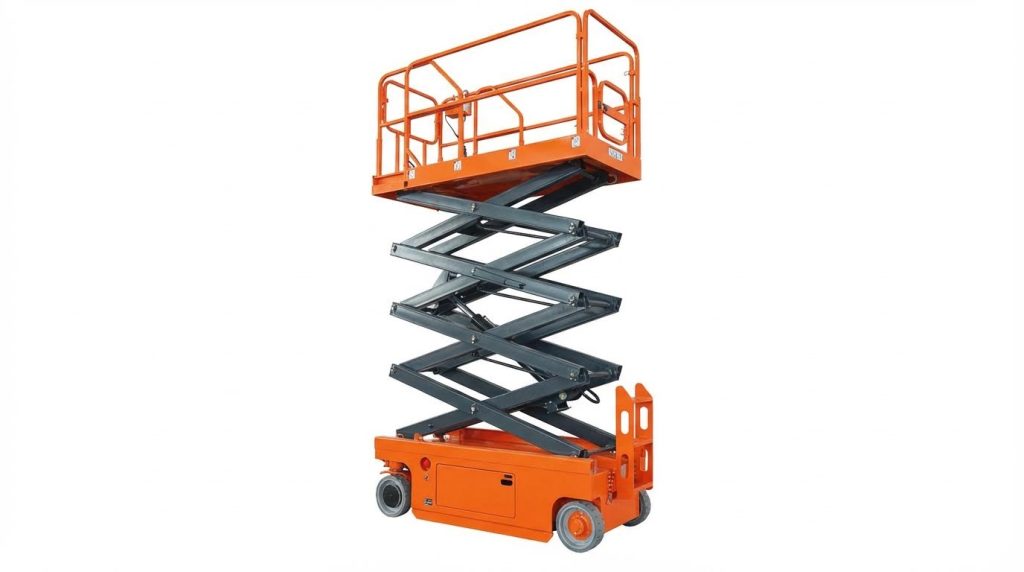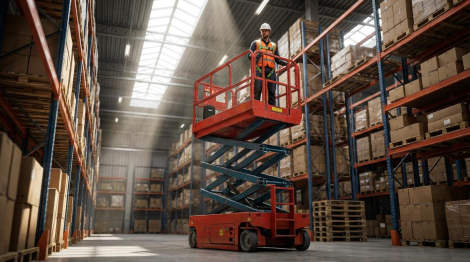
If you are asking “how heavy are scissor lifts?”, the honest answer is: anywhere from about 700 kg to over 7,500 kg depending on height, type, and duty. This guide breaks down typical weight bands, what drives them, and how that affects floor loading, transport, and safe use on real job sites.
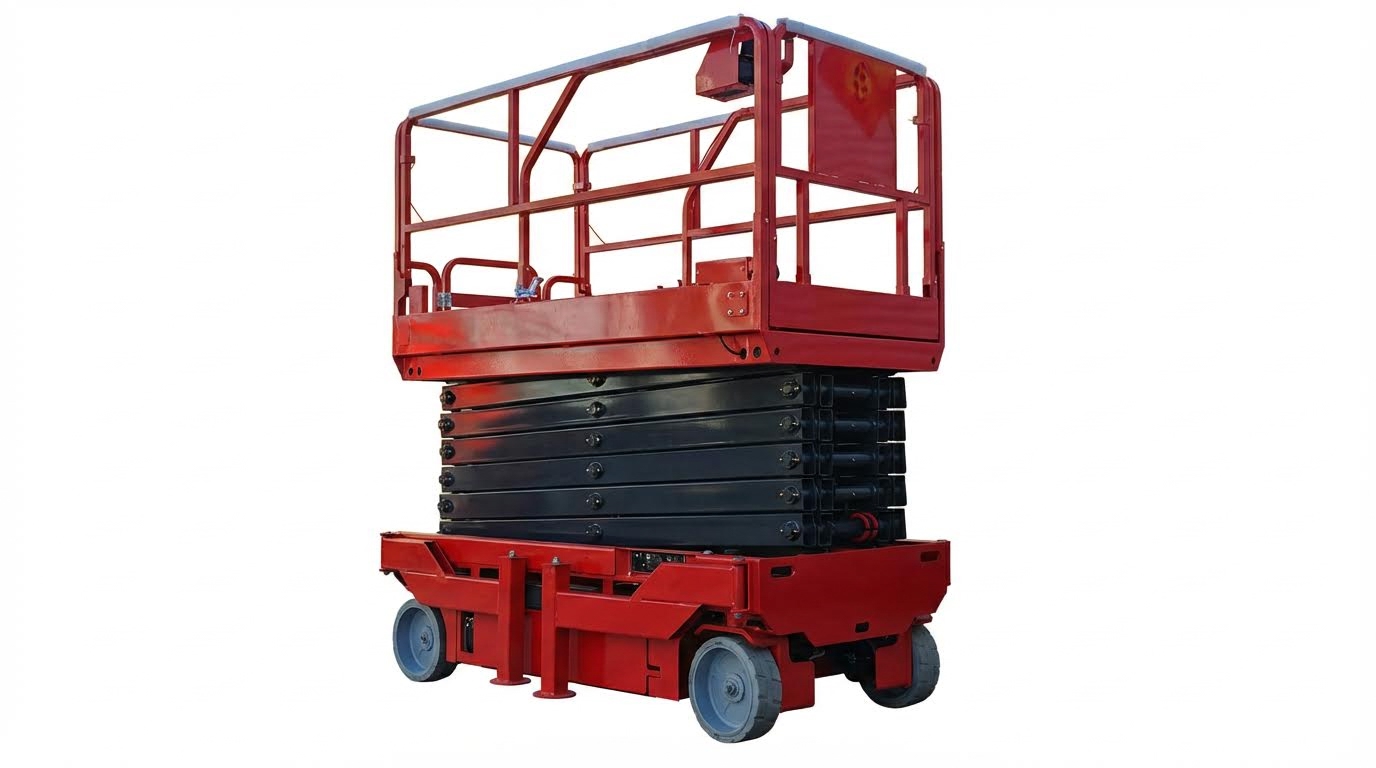
Understanding Scissor Lift Weight And Key Ranges
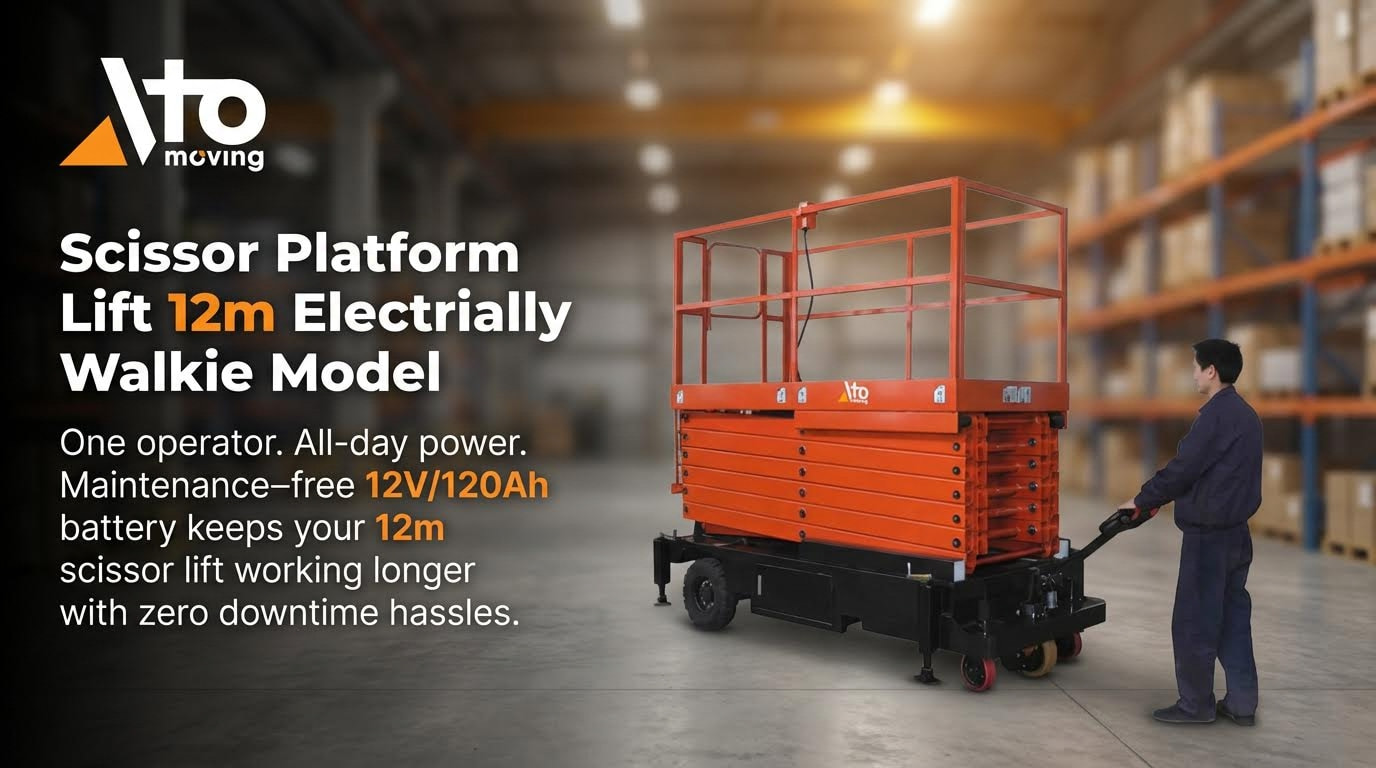
Scissor lift weight ranges from under 500 kg for light tables to over 7,000 kg for tall rough‑terrain units, and that spread is exactly what confuses people asking “how heavy are scissor lifts” for real‑world jobs.
To size correctly, you must separate three things: machine operating weight, platform capacity, and typical weight bands by height and class. This section explains those ranges in simple, job‑site language so you can match lifts to floors, trailers, and access limits.
Typical weight bands by height and class
Typical scissor lift operating weight runs from about 680 kg for small indoor electrics up to around 6,800 kg or more for large rough‑terrain units at 12–18 m platform height. One guide reports platform heights from about 1.8 m to 18.3 m, with small electric models around 680 kg and large rough‑terrain units up to roughly 6,800 kg.
To make “how heavy are scissor lifts” practical, think in weight bands by height and type instead of chasing single model numbers.
| Lift Class / Typical Height | Typical Operating Weight (kg) | Typical Platform Capacity (kg) | Operational Impact / Best For… |
|---|---|---|---|
| Compact indoor / light mobile tables (up to ~3 m) | 110–600 kg (BMT, XPR series) | 50–1,000 kg | Light maintenance, assembly lines, small vans and light trailers can often carry them. |
| Small self‑propelled electric scissor (~3–6 m platform) | ≈680–2,300 kg (typical slab electrics) | ≈225–550 kg (self‑propelled electrics) | Indoor work in warehouses and retail; must check slab rating but usually fine on standard industrial floors. |
| Medium electric / diesel (≈6–10 m platform) | ≈2,300–4,500 kg (typical mid‑range) | ≈350–550 kg (electric), 450–550+ kg (RT) | Indoor–outdoor crossover; may exceed older mezzanine or suspended slab limits. |
| Rough‑terrain (RT) scissor, ≈10–18 m platform | ≈4,500–6,800+ kg (large RT models) | Up to ≈680 kg platform capacity (example 1,500 lb) | Construction sites, uneven ground, outdoor cladding; need heavy trailers and checked ground bearing capacity. |
| Towable mobile scissor lifts (≈4–20 m platform) | Wide range, often 1,000–3,500+ kg (depends on capacity and chassis) | 500–2,000 kg (towable) | Shared fleet units that can be towed by pickups; check towbar and trailer ratings carefully. |
| High‑reach mobile platforms (~18–20 m) | 400–4,500 kg+ (SJY series) | Up to 2–5 tons at 20 m on heavy designs (heavy mobile lifts) | Industrial maintenance and construction where high capacity at height is critical; almost always trucked on heavy trailers. |
Another way to look at how heavy scissor lifts are is by platform height brackets. One industry overview shows that 19 ft (≈5.8 m) units weigh roughly 1,225–3,175 kg, 26 ft (≈7.9 m) units 3,310–6,170 kg, 32 ft (≈9.8 m) units 2,675–7,530 kg, and 40–50 ft (≈12.2–15.2 m) units 3,310–7,710+ kg. These ranges underline how fast weight climbs with height.
- Small electric slab lifts: ≈680–2,500 kg – Usually OK on good warehouse slabs and light trucks.
- Mid‑height electrics and diesels: ≈2,500–4,500 kg – Need checked floor loading and 3.5–7.5 t trucks.
- Large RT units: ≈4,500–7,000+ kg – Need engineered ground, heavy trailers, and clear access.
💡 Field Engineer’s Note: Once you pass about 3,000–3,500 kg machine weight, indoor floor loading and dock plates become the constraint long before “can the lift reach high enough” does. Always run a ground‑pressure check for older slabs and mezzanines.
How to quickly estimate if a floor can take the lift weight
Divide the lift’s operating weight by its wheel contact area to estimate ground pressure. Compare this to the floor’s rated kN/m². If you do not have a rating, treat anything over ~3,000 kg on small tires as a red flag and get an engineer to verify.
Difference between machine weight and platform capacity
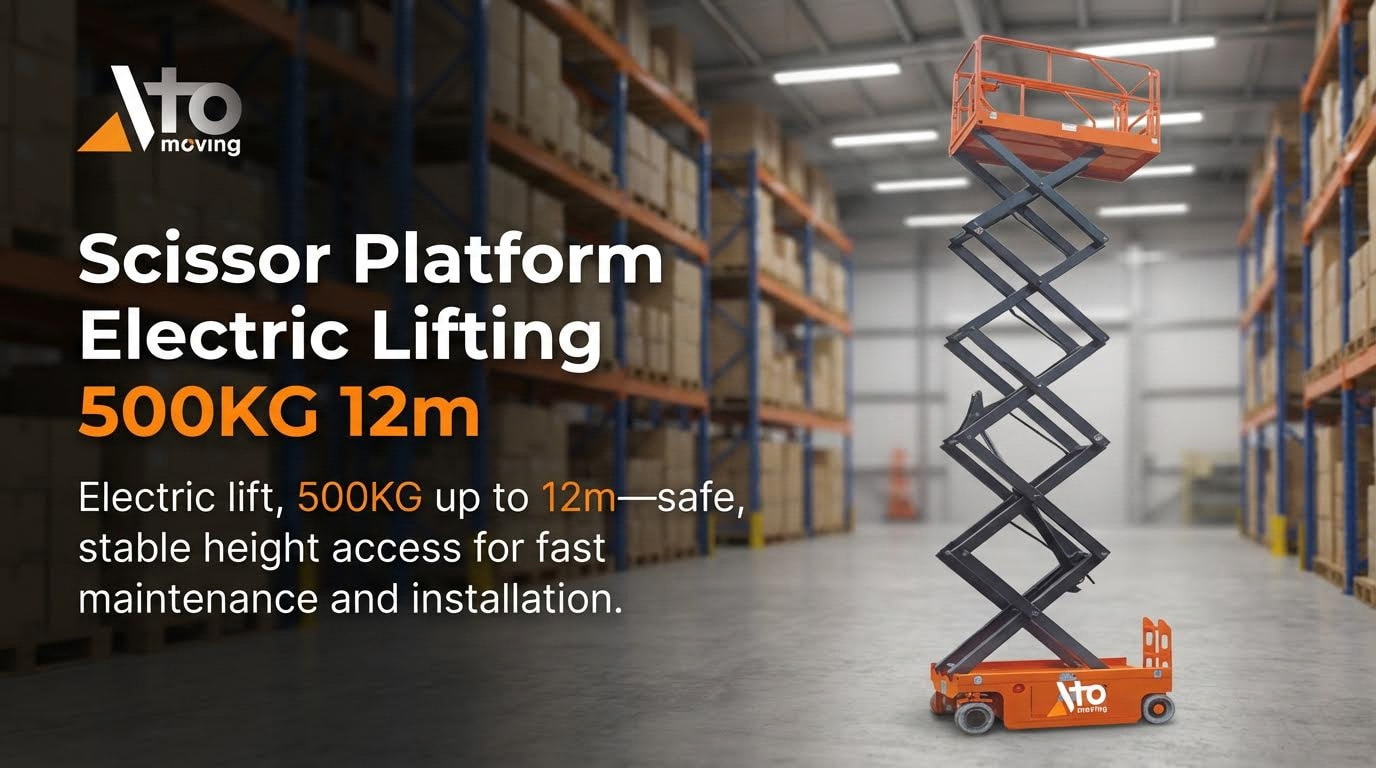
Machine weight and platform capacity are two different numbers: operating weight tells you how heavy the scissor lift is on the floor or trailer, while platform capacity tells you how much load you can safely put in the basket. Confusing the two is one of the most common mistakes when people ask “how heavy are scissor lifts” for planning work.
Operating weight (sometimes called gross machine weight) includes the chassis, scissor structure, power pack, hydraulic oil, and in many cases batteries or fuel. Platform capacity is the rated live load that the elevated platform can carry, including people, tools, and materials, and it is always much lower than the machine weight.
| Parameter | What It Means | Typical Range | Why It Matters |
|---|---|---|---|
| Machine / Operating Weight | Total weight of the lift itself, ready to work. | ≈110–6,800+ kg depending on size and type (small tables to large mobiles); ≈680–6,800+ kg for typical access lifts (small to large models) | Determines floor loading, trailer size, crane capacity, and whether lifts can cross suspended slabs. |
| Platform Capacity (Rated Load) | Maximum live load allowed on the platform. | 50–1,500 kg typical; small electrics ≈227–550 kg (self‑propelled); many RT units up to ≈680 kg (RT examples) | Controls how many people and how much material you can safely lift to height. |
| Capacity vs Height | How platform capacity changes as lifting height increases. | Many hydraulic mobiles manage 2–5 tons at 20 m on heavy designs (heavy mobile lifts); lighter access machines trade capacity for reach. | Higher reach usually means either a heavier machine or a lower platform capacity to keep stresses within safe limits. |
Examples from real machines show the split clearly. One mobile scissor model with 230 kg platform capacity weighs about 600 kg itself; another with 240 kg capacity is also 600 kg. Both examples prove that the lift must be several times heavier than the load it carries to stay stable and structurally safe.
- Do not add them: The platform capacity is already engineered into the machine’s structure and weight – you never “add” the two numbers to size floors or trailers.
- Always include people: When checking platform capacity, count operators, tools, and materials. A rated 230 kg platform can be exceeded by two heavy workers plus gear very quickly.
- Respect side‑load limits: Capacity assumes loads are within the platform, not hanging off the side, which can create dangerous overturning moments even if total kg is under the rating.
💡 Field Engineer’s Note: On site, I size floors and trailers from machine weight, but I write task plans from platform capacity. Mixing those up is how you end up with a lift that the truck can carry, but the job itself overloads at height.
Quick checklist: which number do you use for what?
Use machine weight for: floor bearing checks, dock plates, trailers, cranes, elevators, and access ramps. Use platform capacity for: number of people, tool loads, palletized materials, and method statements. Keep them separate in your calculations and documentation.
Engineering Factors That Drive Scissor Lift Weight
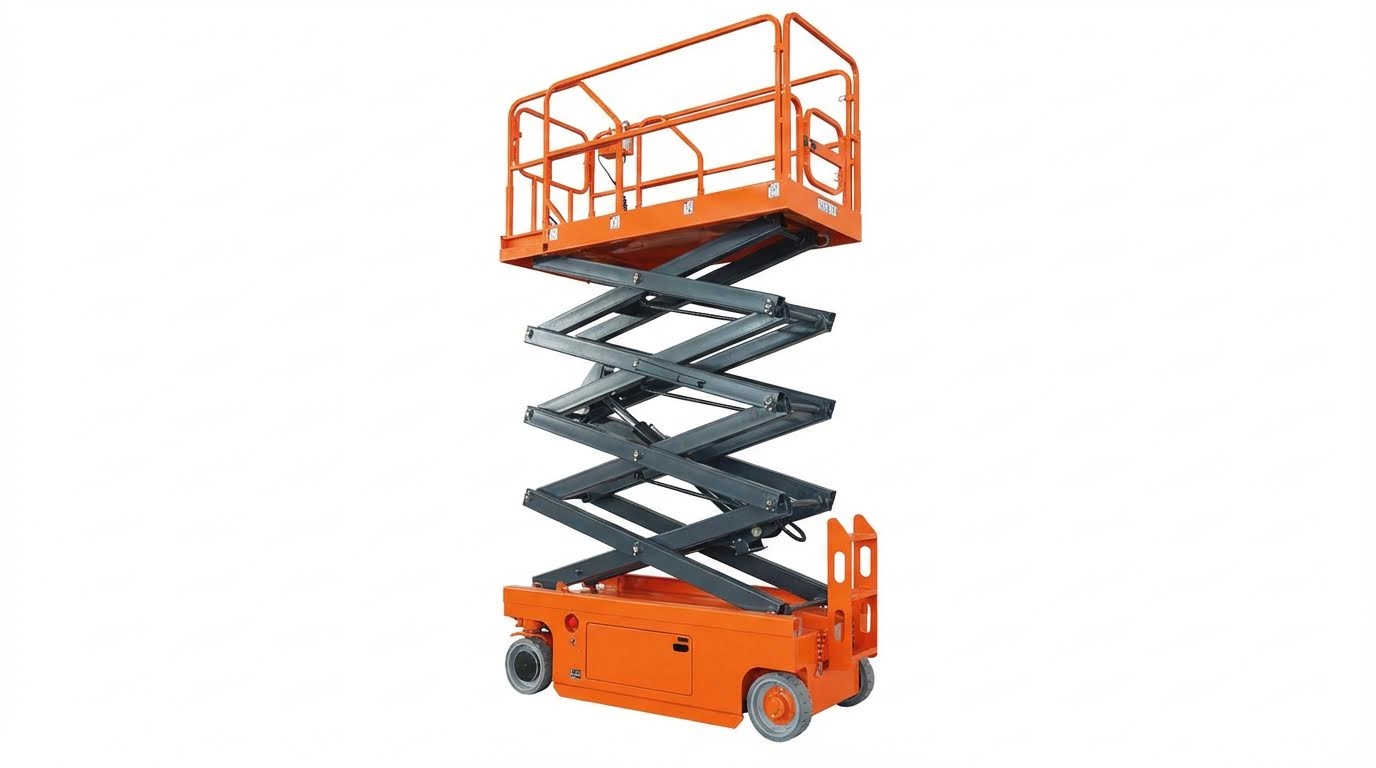
Scissor lift weight is driven mainly by structure, materials, power system, and safety options, which is why answers to “how heavy are scissor lifts” span from a few hundred kilograms to several tonnes. These factors change with height, capacity, and working environment.
To understand how heavy are scissor lifts in real projects, you need to look beyond the spec sheet and break the machine into three big weight blocks: chassis and scissor platform, power and hydraulics, and optional equipment or safety systems.
- Structure and chassis: Largest contributor – controls stability, floor loading, and transport weight.
- Power and hydraulics: Batteries, engines, and cylinders – add dense mass low in the frame.
- Options and safety: Rails, decks, sensors – incremental weight that still matters for trailers and slabs.
💡 Field Engineer’s Note: When a lift feels “too heavy” for a slab or trailer, 80–90% of the problem usually comes from structural steel and powertrain mass, not from small options; check these first when you are near a floor-load or axle limit.
Chassis, scissor structure, and material selection
The chassis and scissor stack are the main reasons scissor lifts get so heavy as height and capacity increase. Taller and higher‑capacity units need more steel section, wider bases, and longer scissor arms to stay stable.
Data from typical mobile and vertical scissor platforms shows how machine weight scales with height and platform size. As you move from compact tables to tall work platforms, the steel structure dominates the total mass.
| Model / Type | Platform size (mm) | Lifting height (m) | Capacity (kg) | Machine weight (kg) | Operational impact |
|---|---|---|---|---|---|
| Small mobile table (BMT series) | 950×500 to 1200×610 platform data | 0.28–1.70 | 300–1,000 | 110–290 weight range | Light enough for manual relocation and light-duty floors. |
| Medium mobile lift (XPR series) | 1,150×700 platform size | 3–13.8 | 230–240 | ≈600 machine weight | Compact chassis; suitable for vans and light trailers. |
| Vertical lift SJY0.3‑4 | 1,500×750 platform size | 4 | 300 | 400 machine weight | Light 4 m work platform for indoor slabs. |
| Vertical lift SJY0.3‑18 | 3,230×1,600 | 18 | 300 | 4,500 machine weight | Very heavy; needs robust floors and heavy trailer. |
| Typical 19 ft work lift | ≈1,800×760 (typical slab) | ≈5.8 | ≈230–350 | 1,225–3,175 (2,700–7,000 lb) weight band | Common indoor unit; must check slab load rating. |
| Typical 40 ft work lift | Larger, often with deck extension | ≈12 | ≈450–680 | 3,310–7,710 (7,300–17,000 lb) weight band | Heavy RT or diesel; demands high floor and trailer capacity. |
This structural scaling is why how heavy are scissor lifts is such a wide‑range question. As you chase more height and capacity, you add thicker steel channels, longer scissor arms, and a wider base to control deflection and tipping.
- Platform size: Larger decks need heavier cross‑members – limits floor point loads and sway.
- Lifting height: Taller stacks need heavier sections – prevents buckling and side‑load failures.
- Capacity rating: Higher kg on the deck demands stronger pins and arms – keeps stress below fatigue limits.
- Material choice: Steel is standard; aluminum saves weight but costs more – used mainly on light indoor units.
Why steel dominates scissor lift weight
Most of the mass in a scissor lift sits in the base frame, scissor arms, and platform beams. Steel offers high strength and stiffness at reasonable cost, but it is dense. Even minor increases in section thickness across all arms add hundreds of kilograms on tall machines.
Power source, batteries, and hydraulic system mass
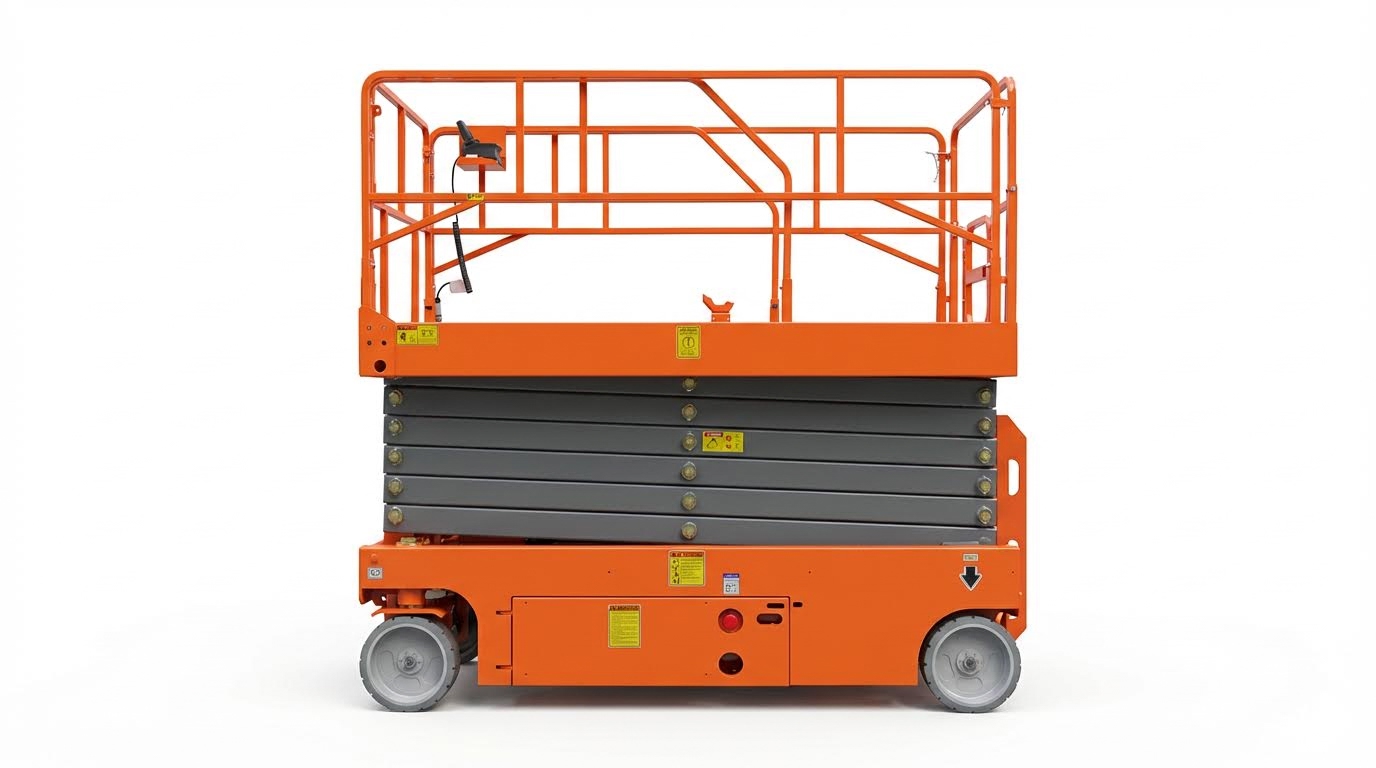
The power source and hydraulic system can easily add several hundred kilograms, especially on larger electric or diesel rough‑terrain lifts. This “dead weight” sits low in the chassis, which actually helps stability but still counts against floor and trailer limits.
Mobile scissor lifts use hydraulic cylinders driven by electric, diesel, or other power sources. The fluid, cylinders, and powerpack all contribute to how heavy are scissor lifts in each class.
| Power / system type | Typical configuration | Related specs | Weight effect | Operational impact |
|---|---|---|---|---|
| Electric, battery powered | 12 V battery, 60–120 Ah packs battery data | Platform heights 3–16 m, capacities 227–550 kg on many indoor units height & capacity | Battery block adds dense mass low in frame. | Good for stability; must account for total kg on suspended slabs. |
| Diesel / rough‑terrain | Engine, fuel tank, larger hydraulic powerpack | Often in 6,000–10,000 lb (2,720–4,540 kg) range for RT units weight band | Heavier engines and bigger axles add substantial weight. | Improves off‑road traction; demands stronger ground and transport gear. |
| Hydraulic cylinders & fluid | Multiple lift cylinders plus hoses and reservoir operating principle | Standard mobile lifts handle 50–1,500 kg loads, up to several tons at low height capacity ranges | Cylinders and oil add tens to hundreds of kilograms. | Necessary for smooth lift; weight is concentrated near pivot points. |
| High‑capacity hydraulic systems | For 2–5 ton loads at ~20 m high capacity example | Some specialized designs up to 50 tons capacity capacity note | Very large cylinders and frames; machine mass runs into many tonnes. | Require engineered foundations and heavy haulage. |
- Battery mass: Larger Ah packs increase runtime – but also raise total machine weight and floor loading.
- Engine and drivetrain: Diesel RT units carry engines, axles, and larger wheels – all dense components that push weight up.
- Hydraulic hardware: More or bigger cylinders for higher loads – adds metal and oil weight directly to the structure.
💡 Field Engineer’s Note: On indoor electric scissors, upgrading to higher‑capacity batteries can quietly add tens of kilograms per block; when you are close to a suspended slab limit, check the exact battery configuration, not just the base model weight.
Why heavier lifts often use more energy
Heavier scissor lifts need more power to start moving and to climb small gradients. This increases current draw on electric units and fuel burn on diesel machines. Over a shift, the extra mass translates into shorter battery runtime or more refuelling, which impacts productivity and operating cost.
Options, add‑ons, and safety systems that add weight
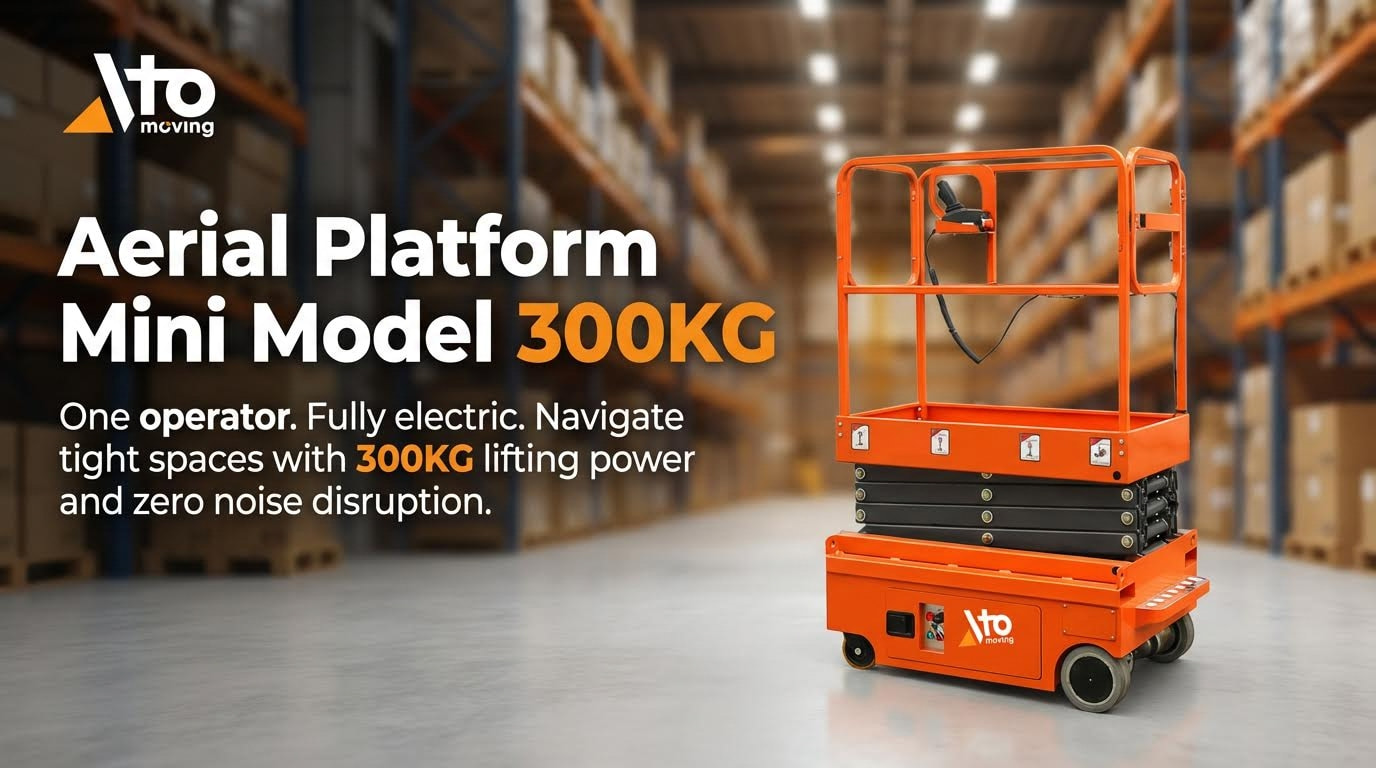
Options and safety systems do not usually double the weight of a scissor lift, but they can easily add 5–15% to the base machine. When you ask how heavy are scissor lifts in real‑world spec, you must include these extras.
Platform extensions, guardrails, and tool handling add both functionality and kilograms. Safety devices and structural reinforcements also increase the operating weight that your floor, trailer, and crane must support.
| Option / feature | Function | How it adds weight | Operational impact |
|---|---|---|---|
| Guardrails and gates | Fall protection, compliance with work‑at‑height rules | Additional steel or aluminum rail sections. | Improves safety; slightly raises center of gravity at platform level. |
| Extension decks | Extend reach over obstacles | Extra platform beams, rollers, and locking hardware. | Higher platform mass reduces net payload; increases total machine kg. |
| Tool trays and material racks | Carry tools, pipes, panels | Bracketry plus higher typical live load on the deck. | Operators tend to load more weight; must stay within rated capacity. |
| Stabilizers / outriggers | Increase stability on uneven ground | Additional legs, pads, and hydraulic components. | Raises transport weight but reduces tipping risk on soft or sloped terrain. |
| Sensors and control systems | Overload, tilt, and height limiting | Small components, wiring, possibly extra brackets. | Minor weight, major safety improvement by preventing overload and misuse. |
| High‑capacity configurations | Higher platform kg rating | Reinforced arms, pins, and platform beams capacity vs weight | Heavier chassis; may move a model into a new trailer or floor‑load class. |
Studies of scissor lift design show that platform size, lift capacity, and materials used are key weight drivers. Larger platforms and higher lift capacities require more robust materials, which increases the overall machine mass. Steel is common for its strength but is much heavier than aluminum alternatives. Design factor discussion
- Safety add‑ons: Rails, sensors, and interlocks – small weight cost for big risk reduction.
- Matching Scissor Lift Weight To Your Application
Matching how heavy are scissor lifts to your site is about floor strength, access, and stability at height, not just platform capacity. You size the machine weight to what your slab, trailer, and terrain can safely handle.
- Start with constraints: List floor ratings, doorway sizes, trailer limits, and ground conditions – this narrows the safe weight band fast.
- Then pick height and capacity: Choose platform height and kg capacity that cover 90–95% of your work – prevents overspecifying a heavier class than you need.
- Check real operating weight: Use the manufacturer’s “operating weight,” not just capacity – this is what your slab and trailer actually see.
- Consider duty cycle: Heavier rough‑terrain units suit long outdoor shifts; lighter electric units suit short indoor runs – better energy use and less wear on floors.
💡 Field Engineer’s Note: When you ask “how heavy are scissor lifts?” for planning, work with a ±10% safety margin on published weights to cover options, batteries, and attachments that often push the real on-site weight higher.
Floor loading, trailers, and site access constraints
Floor capacity, trailer rating, and physical access usually limit how heavy a scissor lift can be long before budget does. You must match operating weight and footprint to the weakest link in your route.
Typical scissor type Operating weight range Where it usually runs Key constraint Operational impact Compact indoor / “slab” electric ≈ 680–2,700 kg (1,500–6,000 lb) weight band Finished concrete slabs, warehouses, malls Slab load rating and floor finishes Light enough for many 100–150 mm industrial slabs if loads are spread. Mid‑size diesel / RT scissor ≈ 2,700–5,400 kg (6,000–12,000 lb) weight band Outdoor construction, yards, slabs with good reinforcement Trailer axle rating and access ramps Needs heavier trailers and better ramps; usually too heavy for mezzanines. Large rough‑terrain scissor ≈ 3,000–10,000+ kg (6,500–22,000 lb) weight band Uneven outdoor sites, civil works Ground bearing pressure and transport Demands engineered ground and high‑capacity low‑bed trailers. Towable mobile scissor lift Varies with height and capacity; many units in 1,000–3,000 kg range for 4–20 m heights example band Sites where self‑propelled weight is a problem Tow vehicle and hitch rating Lets you keep machine weight off delicate slabs and use road‑rated axles. To answer “how heavy are scissor lifts for my floor?” you care about weight divided by contact area, not just total kg. A 4,500 kg mobile unit with a 3,230 × 1,600 mm platform and large chassis footprint spreads load better than a very compact 600 kg table on small wheels example sizes.
- Floor loading: Check slab design load (kN/m²) and any mezzanine rating. – Prevents cracking and long‑term slab damage.
- Wheel and outrigger footprint: Larger tyres or outriggers lower point loads. – Safer on tiles, asphalt, and suspended slabs.
- Route to work area: Measure every corridor, ramp, and doorway. – The narrowest, weakest spot sets your max safe weight and size.
- Trailer and ramp ratings: Compare lift operating weight to trailer GVWR and ramp SWL. – Stops ramp buckling or trailer overloading during loading.
How to quickly screen a lift against a floor or mezzanine
1) Get the lift’s operating weight and wheel layout from the spec sheet. 2) Ask your structural engineer or landlord for slab or mezzanine load rating. 3) If the lift weight divided by its floor contact area is close to the limit, either step down to a lighter electric model or use load‑spreading mats and get a formal sign‑off.
Indoor vs. outdoor use, terrain, and stability at height
Indoor and outdoor environments demand very different answers when you ask how heavy are scissor lifts for the job. Indoors you minimise weight; outdoors you often accept more weight for stability and rough‑terrain performance.
Use case Typical lift type Weight characteristics Best for… Indoor maintenance, warehouses Self‑propelled electric scissor lifts with 3–16 m platform height and 227–550 kg capacity spec range Relatively light: many in 900–2,300 kg band depending on height Working on smooth floors where low ground pressure and zero emissions matter. Outdoor rough terrain, construction Diesel / RT scissor lifts with 6–18 m+ heights and up to 1,000–1,200 lb (≈ 450–545 kg) capacities capacity band Heavier frames and axles: often 3,000–7,000+ kg Uneven ground where extra mass improves traction and wind resistance. High‑reach outdoor work (up to ≈18 m) Mobile hydraulic scissor lifts handling 2–5 tons at 20 m capacity example Very heavy bases (4,000–4,500 kg+ at 18 m) SJY data Situations where stability at maximum height outweighs transport convenience. - Indoor priority – minimise weight: Choose the lightest electric unit that still meets your height and kg capacity. – Reduces floor stress and makes manual repositioning easier.
- Outdoor priority – stability and traction: Extra chassis mass, bigger tyres, and wider track improve stability in wind and on slopes. – Less sway and better gradeability.
- Wind and height: At 12–20 m, heavier bases and wider footprints matter more than small capacity increases. – Helps keep the centre of gravity inside the stability triangle.
- Soft ground: A lighter towable or mobile lift with load‑spreading outriggers can be safer than a very heavy self‑propelled unit. – Lowers risk of sinking or tilting.
Choosing between a heavier RT scissor and a lighter electric unit
If you can pour or protect a smooth access path and your work is mostly on flat, firm ground, a lighter electric scissor often wins on energy use and floor friendliness. If grades exceed a few percent, surfaces are broken, or wind exposure is high, a heavier rough‑terrain machine usually provides the safety margin you need at height, even though it demands stronger ground and heavier transport.
Final Thoughts On Selecting By Weight And Capacity
Scissor lift weight is not a single number to look up. It is the outcome of structure, powertrain, options, and the job environment. As height and capacity rise, steel sections, wider bases, and stronger hydraulics make machines much heavier. That extra mass improves stability and reach, but it also raises floor loads, trailer demand, and access risk.
Safe selection means you always separate machine weight from platform capacity. You size floors, trailers, and access routes from operating weight and footprint. You write task plans from platform capacity, including people, tools, and materials. When you mix those numbers, you either overload the structure or under‑spec the lift for the work.
The best practice is simple. Start from your weakest link: slab rating, mezzanine, ground, or trailer. Then choose the lightest machine that still meets height and platform load for the task. Add a clear margin for options, batteries, and attachments. If in doubt, step down a weight class or use load‑spreading and get an engineer to confirm. Teams that follow this process buy or rent fewer machines, avoid hidden structural damage, and keep operators safer at height with Atomoving scissor platforms.
Frequently Asked Questions
How heavy is a typical scissor lift?
Scissor lifts can vary significantly in weight depending on their size and capacity. For example, smaller models like the Pro Series PS-1930 weigh around 1,987 lbs, while heavier-duty platforms can weigh between 1,780 lbs to 3,800 lbs or more. Scissor Lift Weight Guide.
What factors influence the weight of a scissor lift?
The weight of a scissor lift is influenced by several factors:
- Platform Height: Taller lifts generally weigh more due to additional materials and structural support.
- Platform Capacity: Lifts designed to carry heavier loads are built with stronger, heavier components.
- Power Source: Electric models tend to be lighter than gas or diesel-powered lifts, which require additional weight for engines and fuel systems.
Is a scissor lift considered heavy machinery?
Yes, scissor lifts are classified as heavy machinery, especially when considering industrial models that can carry significant weight and reach substantial heights. These lifts are designed for durability and safety in demanding environments. Scissor Lift Applications.
What is the lightest scissor lift available?
Ultra-lightweight scissor lifts, such as the Hy-Brid 14′ Model PS-1430, weigh approximately 1,780 lbs. These models are ideal for applications where portability and ease of transport are crucial. Lightweight Scissor Lifts.