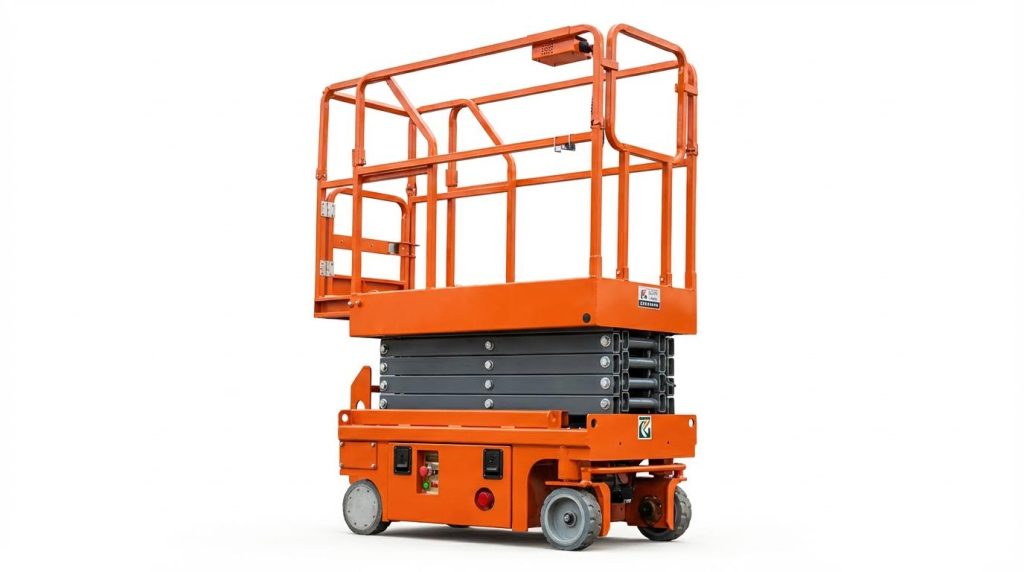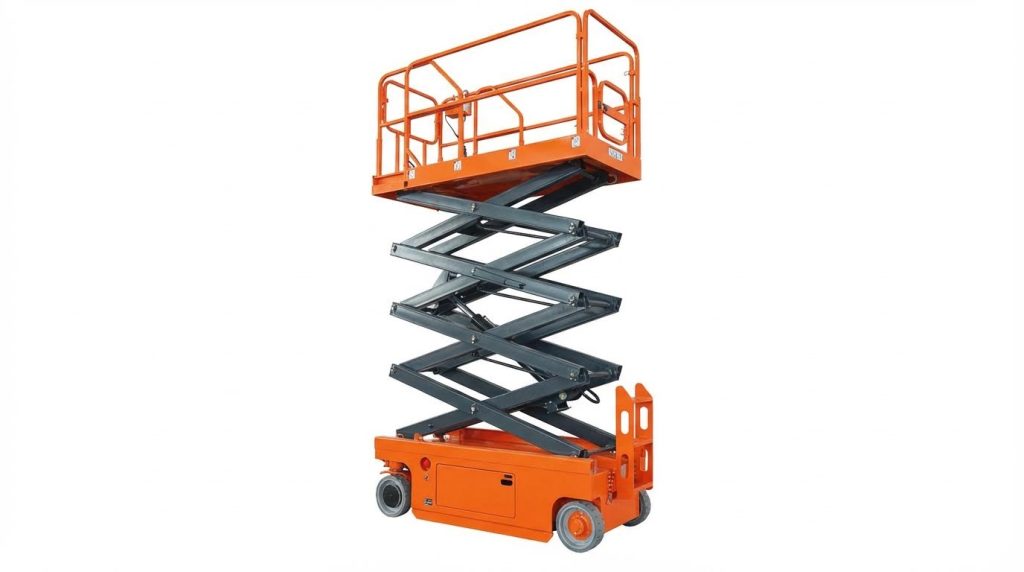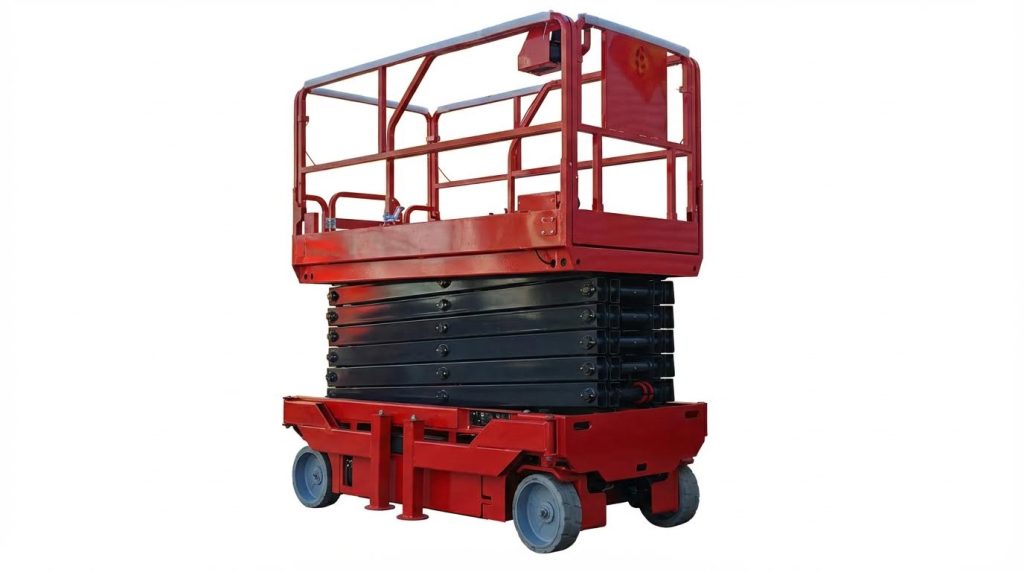
Scissor lift capacity is the safe combination of people, tools, and materials a platform can carry without overstressing the structure or risking a tip‑over. This guide explains how many people can fit on an electric scissor lift, how weight limits really work, and how to load platforms safely for real job sites.
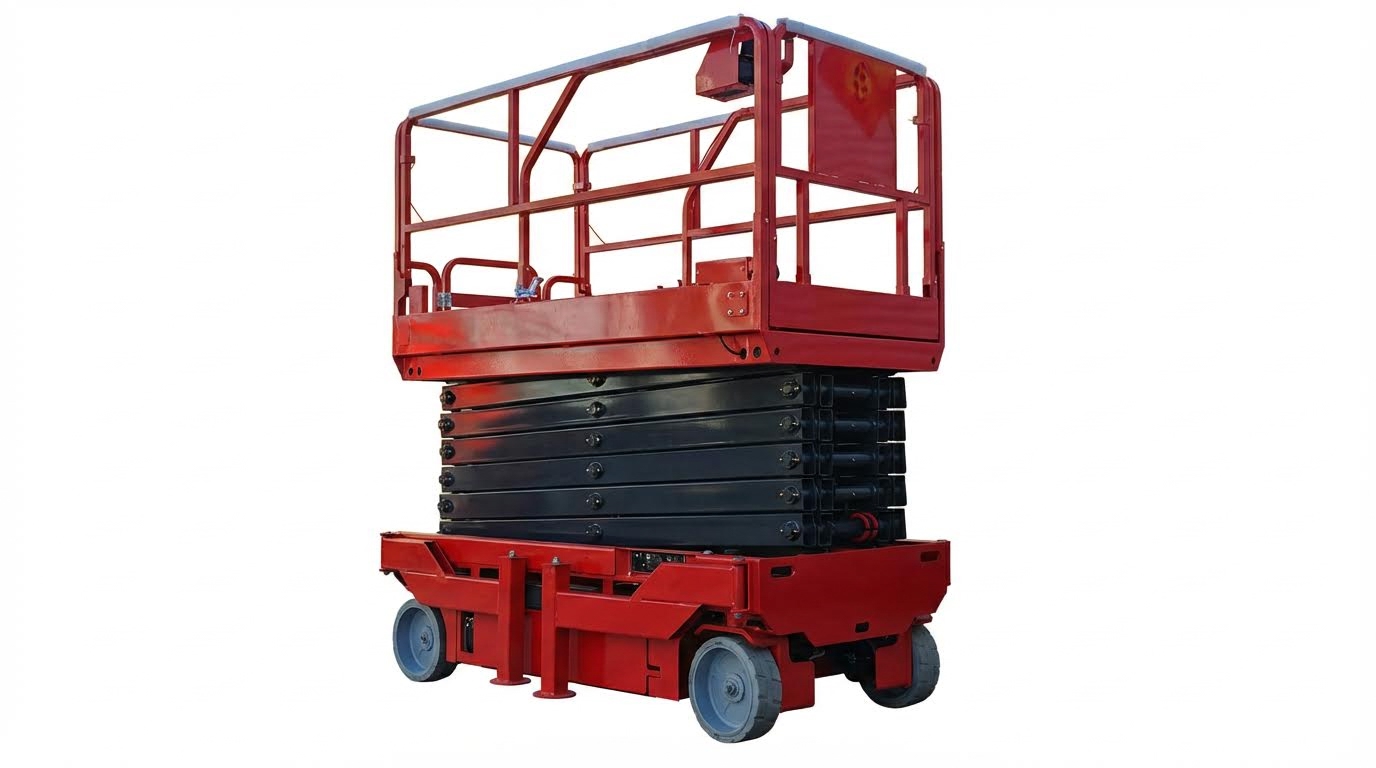
Understanding Scissor Lift Capacity Ratings
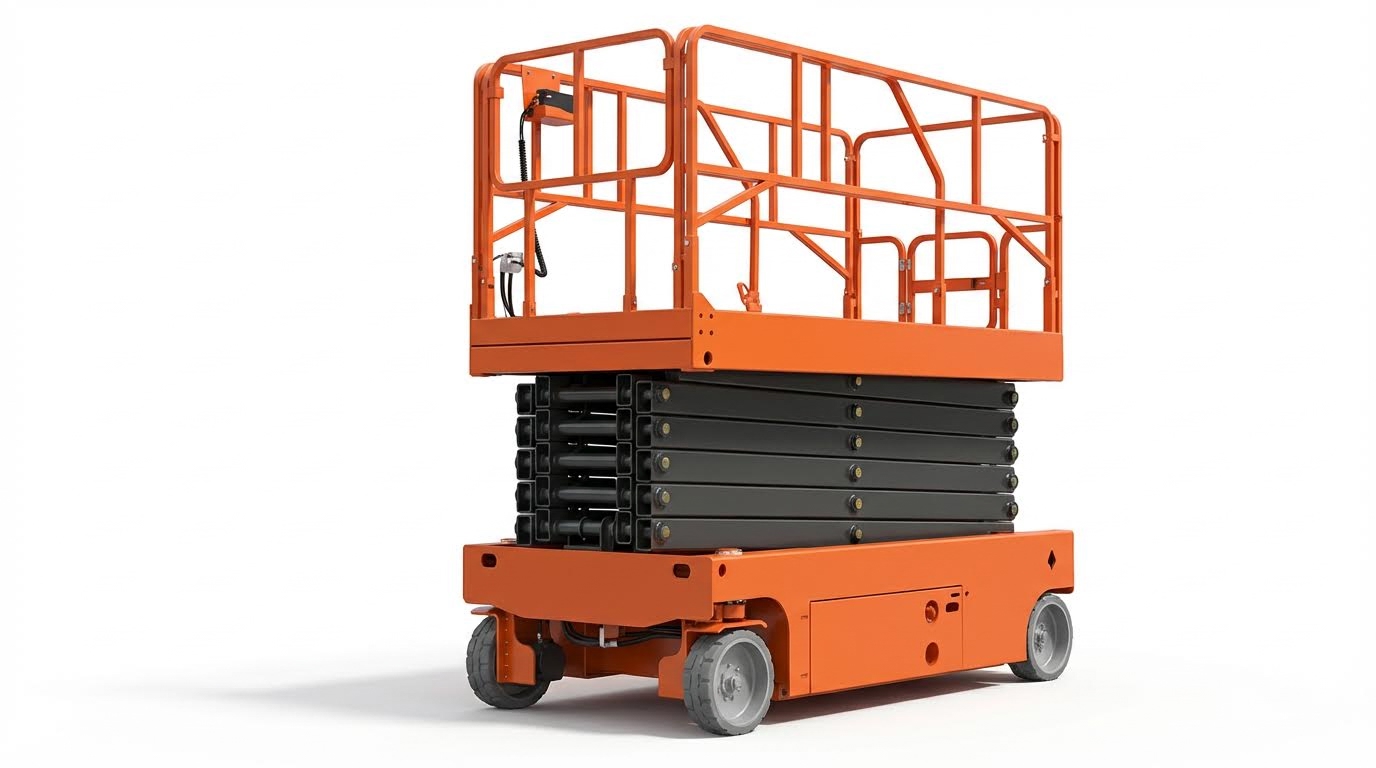
Scissor lift capacity ratings define how much total load the platform can safely carry, including people, tools, and materials. Understanding these ratings is the first step to deciding how many people can fit on an semi electric order picker without breaching safety limits.
Manufacturers test and certify each model to a specific safe working load. That rating assumes level ground, correct use, and that you spread the load reasonably across the platform, not all at one corner.
| Lift Type / Example | Typical Platform Capacity | Typical Working Height | Operational Impact |
|---|---|---|---|
| Compact electric scissor | ≈230 kg | ≈7.8 m working height (compact electric data) | Usually 1–2 people with light tools; ideal for tight indoor spaces. |
| Narrow electric scissor | ≈250 kg | Up to ≈10 m working height (narrow electric data) | 1–2 people plus more tools or heavier fixtures in narrow aisles. |
| Self‑propelled mobile scissor | ≈230–320 kg (self‑propelled range) | ≈6–12 m | Common indoor electric range; typically 1–2 technicians with standard kit. |
| Rough‑terrain diesel scissor | ≈565 kg typical, up to ≈750 kg on high‑capacity models (rough‑terrain capacities) | Up to ≈18 m working height | Supports more people and heavier materials for façade or construction work. |
| General mobile scissor range | ≈150–2,000 kg depending on model (broad capacity range) | ≈0.21–18 m (manual to electric) | Covers everything from light maintenance platforms to heavy-duty material lifts. |
- Rated load is total: People + tools + materials – All weight on the deck counts against capacity.
- Capacity varies by model: 150–2,000 kg ranges exist – You must check the specific data plate on your lift.
- Height and capacity are linked: Higher lifts often restrict load – Extra height increases overturning forces.
- Surface and stability matter: Ratings assume a level, firm surface – Uneven ground can reduce practical safe load.
💡 Field Engineer’s Note: I always treat the stamped platform rating as a hard ceiling and then keep a 10–20% “engineering margin” in real use. That buffer covers hidden weight like wet PPE, heavier‑than‑expected fixtures, or slight floor unevenness you only notice once you are at 10 m.
How capacity links to “how many people can fit on an electric scissor lift”
In practice, you divide the platform capacity by realistic worker weights plus tools. For example, a 230 kg compact electric unit rarely supports more than 2 average workers with light tools once you add tool belts, small parts, and a margin for safety.
What “platform capacity” really includes
Platform capacity includes every kilogram on the deck: people, tools, materials, and installed accessories. It is not just a “people” number, and ignoring tools or materials is a common cause of overloading.
- People: Every person standing on the platform – Body weight plus clothing and PPE all load the structure.
- Tools: Hand tools, power tools, batteries, and toolboxes – These easily add 10–30 kg per worker.
- Materials: Ducting, cable drums, glazing panels, paint, or fixings – Single items can weigh 30–80 kg or more.
- Fitted options: Pipe racks, panel carriers, or material trays – Many are included in the rating but still consume capacity.
- Temporary loads: A worker leaning a ladder or handing up a heavy item – Momentary overloads still stress the structure.
Manufacturers design the scissor stack, platform, and hydraulic system to carry the rated load with a safety factor. Mobile scissor lifts use high‑strength steel in the scissor arms and platform structure to withstand these forces (Q345B manganese steel example).
Modern units also integrate overload protection that prevents lifting or triggers alarms when you exceed the rated platform capacity (overload protection feature). That system assumes you have correctly estimated all weights on the deck.
Simple field method to estimate total platform load
Count people and assume 90 kg per person unless you know actual weights. Add 15–25 kg per person for tools. Then add known material weights from delivery notes or labels. If the sum is close to the platform rating, remove one person or some material and make a second trip.
People capacity vs. weight capacity on lifts
People capacity is a secondary limit that sits under the main weight capacity; you must obey both. That is why the real answer to how many people can fit on an electric scissor lift is “as many as allowed by both the person count and the kilogram rating, whichever is lower.”
- Weight capacity: The maximum total load in kg on the platform – Primary structural limit.
- People capacity: The maximum number of occupants allowed – Controls crowding and stability.
- Space and access: Guardrails, gates, and controls – Limit safe standing room before you ever hit the weight rating.
Typical compact and narrow electric scissors with 230–250 kg capacities usually end up limited to 1–2 people in real work, once you add tools and a safety margin (example capacities). Larger rough‑terrain units with 565–750 kg ratings can safely carry more people plus heavy materials, but they are often outdoors and subject to wind and uneven ground, which still pushes you to be conservative.
Regulators treat scissor lifts as mobile scaffolds in many cases, and stability rules restrict how you move them with people on board. For example, mobile platforms must operate on surfaces within 3° of level and clear of holes or obstructions to maintain stability during movement (stability requirement).
- Never exceed the kg rating: Even if “there’s room” – Overloading risks structural failure or hydraulic issues.
- Never exceed the person count: Even if under the kg limit – Too many people crowd the deck and can shift the centre of gravity suddenly.
- Consider dynamic effects: Walking, drilling, or material handling – Movement increases effective loads and tipping forces.
💡 Field Engineer’s Note: When supervisors ask “Can we put three people up there?”, I check the nameplate for both the kilogram rating and the pictogram showing allowed occupants. If the lift is rated for 2 persons, I stop at 2 even if the math says the total weight is under capacity—because sudden movement or one person carrying a heavy item can push the system past its tested limits.
Quick checklist before deciding how many people can go up
1) Read the platform decal: note both kg and person symbol. 2) Estimate total weight (people + tools + materials). 3) Confirm floor is level and firm. 4) Check wind and weather if outdoors. 5) If in doubt, send fewer people and make extra trips with materials.
Engineering Factors That Determine Safe Load
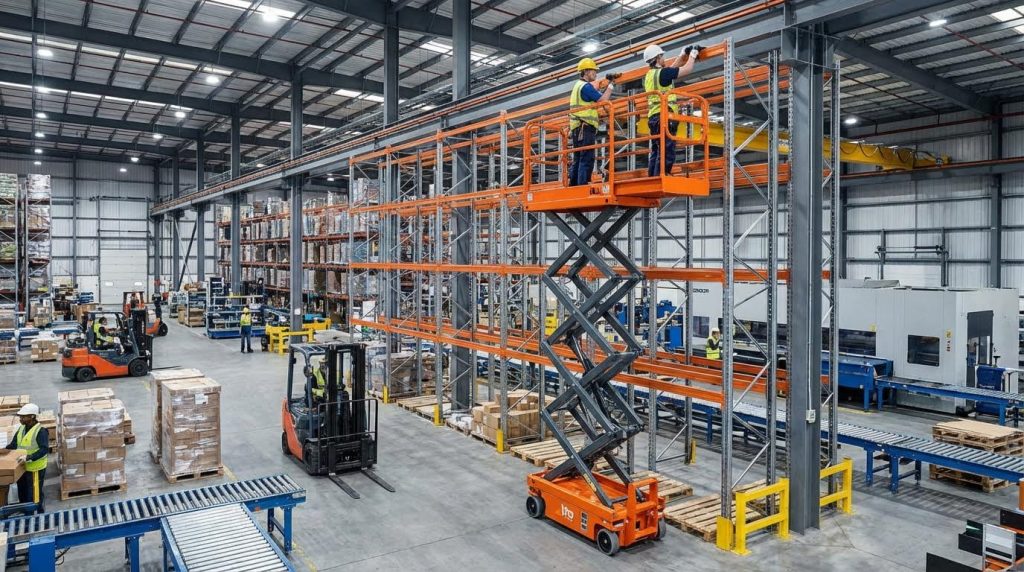
Engineering factors that determine safe load on an scissor platform are the strength of the scissor stack, the load path into the chassis, and how the load affects stability and tipping risk. These factors ultimately control how many people can fit on an electric scissor lift within its rated capacity.
To understand why the nameplate capacity is non‑negotiable, you need to see how forces travel through the scissors, into the base, and down to the tyres or outriggers. That same geometry also sets strict limits on where people can stand and how tools are stored on the platform.
Structural design and load paths in the scissor stack
Structural design and load paths in the scissor stack decide how much total weight the lift can safely carry and at what height. The platform, scissor arms, pins, and base frame all share the load.
Most electric scissor lifts fall in the 230–320 kg platform capacity range for self‑propelled indoor models, with rough‑terrain or diesel units reaching 565–750 kg and beyond. Typical platform capacities and working heights show how structure and height are linked.
| Model Type | Typical Platform Capacity (kg) | Working Height (m) | Structural Implication | Operational Impact |
|---|---|---|---|---|
| Compact electric scissor | ≈230 kg | ≈7.8 m | Lighter scissor stack and base frame sized for indoor slabs. | Best for 1–2 people with light tools on smooth, level floors. |
| Narrow electric scissor | ≈250 kg | Up to ≈10 m | Taller stack with reinforced columns to control deflection. | Fits tight aisles while still supporting 2 people plus tools. |
| Self‑propelled mobile scissor | ≈230–320 kg | ≈6–12 m | Scissor and chassis balanced for drive at height. | Allows travel at height in large indoor spaces like malls. |
| Diesel rough‑terrain scissor | ≈200–565 kg | ≈4–16 m | Heavier scissor arms and deep chassis for outdoor loads. | Handles 2–4 people with heavier tools on uneven ground. |
| High‑capacity rough‑terrain scissor | Up to ≈750 kg | Up to ≈18 m | Very robust stack, wide base, often outriggers. | Suited to multiple workers and heavy materials at height. |
On the component level, the scissor lift structure uses high‑strength steels and carefully sized pins to keep stresses within safe limits. For example, some mobile scissor lifts use Q345B high‑strength manganese steel rectangular tube for the scissor arms, with the whole machine shot‑blasted and painted for durability. High‑strength shear fork materials and surface treatment help the structure resist bending and fatigue.
The load path runs from the platform deck into the scissor cross‑members, through the pivot pins, and down into the base frame. The hydraulic cylinder, high‑pressure steel tubing, and electro‑hydraulic proportional control system manage how that load is lifted and lowered, ensuring controlled speed and preventing rapid descent if a line fails. Hydraulic design and overload protection features protect both the structure and the people on the platform.
- High‑strength scissor arms: Q345B steel tubes – Carry repeated up‑down cycles without cracking.
- Robust pins and bushings: Sized for combined shear and bending – Keep joints tight, reduce wobble at height.
- Reinforced base frame: Wide, stiff chassis – Spreads load into tyres or tracks to prevent local floor overload.
- Hydraulic circuit design: Proportional control and rupture protection – Prevents shock loading of the structure.
- Overload protection: Integrated safety systems – Stops lifting if rated capacity is exceeded.
💡 Field Engineer’s Note: Treat the platform capacity as a structural limit, not a suggestion. Even “just one more person” can push a compact 230 kg electric scissor over its fatigue design margin, especially if they carry heavy tools.
How structural limits relate to how many people can fit on an electric scissor lift
The structural capacity sets the total kg allowed on the platform. To work out how many people can fit on an electric scissor lift, you divide that capacity between body weight, tools, and materials. For a 230 kg compact unit, two 80 kg workers plus 70 kg of tools already reach the limit; adding a third person would overload the structure even if there is still floor space.
Stability, center of gravity, and tipping risk
Stability, center of gravity, and tipping risk decide whether the lift stays upright when loaded, raised, and sometimes driven. These factors often limit safe loading before the steel structure does.
Scissor lifts are effectively tall, narrow towers when fully raised. The platform weight, the number of people, and where they stand all shift the combined center of gravity (COG). As the scissor stack rises, the COG goes up and the overturning moment increases, while the stabilizing base width stays the same. That is why rough‑terrain models use wider bases, higher capacities, and sometimes outriggers, while compact electric units stay narrow and carry less weight.
| Factor | Typical Design Feature | Stability Effect | Practical Impact on People Count |
|---|---|---|---|
| Base width and wheel track | Wide chassis on rough‑terrain; narrow on indoor units | Wider base increases tipping resistance. | Narrow indoor lifts often limited to 1–2 people to keep COG inside the footprint. |
| Platform height | Working height from ≈7.8 m to 18 m | Higher platforms magnify any side load. | At full height, even small movements by 2–3 people can create significant sway. |
| Terrain type | Tracks or 4WD for snow, mud, uneven ground | Improves contact but cannot fix steep slopes. | On rough terrain, capacity may be de‑rated, reducing safe people count. |
| Outriggers or pothole protection | Self‑leveling outriggers or deployable stabilizers | Increases effective base width and reduces tipping risk. | Allows higher loads or more people when properly deployed. |
| Movement while elevated | Self‑propelled drive at height | Dynamic forces from starting/stopping affect stability. | Manufacturers may restrict travel speed or capacity when driving elevated. |
Regulatory guidance treats scissor lifts as mobile scaffolds in many cases and sets strict stability conditions. Surfaces must be within about 3° of level and free of pits or obstructions, and the height‑to‑base width ratio during movement is generally limited to 2:1 unless the design proves higher stability. Outriggers, where fitted, must be installed on both sides, and movement speed is limited to roughly 0.3 mph (about 0.13 m/s). Stability requirements for mobile scaffolds and aerial lifts underline that tipping, not structural failure, is often the first risk.
- Keep loads centered: Stand near the platform middle – Reduces side loading and tipping moment.
- Respect slope limits: Only use on near‑level ground – Side slopes stack with high COG to create overturning.
- Avoid sudden movements: No jumping or fast walking at height – Dynamic loads can exceed static capacity margins.
- Use outriggers when provided: Always fully deploy and level – Designed capacity assumes correct use of stabilizers.
- De‑rate in harsh conditions: Wind, uneven floors, or add‑on materials – All justify reducing people count below the nameplate.
💡 Field Engineer’s Note: When operators ask “Can three of us go up?” I look at the floor first. If the slab is cracked, sloped, or has hidden trenches, I cap it at fewer people than the rated capacity, even if the kg calculation says it’s fine.
Why stability matters more than floor space for how many people can fit
The platform often has enough physical floor area for more workers, but stability rules stop you loading it like an elevator. Each additional person shifts the center of gravity and increases wind and movement loads. On a narrow 250 kg electric scissor at 10 m, two people moving suddenly can rock the structure; a third person can turn that rock into a tip if the floor is not perfect.
Standards, labels, and how to read capacity charts
Standards, labels, and capacity charts tell you the tested safe limits for weight, people, and operating conditions. Reading them correctly is the only reliable way to decide how many people can fit on an electric scissor lift safely.
Aerial lifts and scissor platforms must comply with safety standards such as ANSI A92 series and relevant OSHA rules, which require clear markings of rated work load, maximum platform height, and any restrictions on movement with personnel on board. For boom‑type aerial lifts, for example, moving the truck with workers in the basket is prohibited unless specifically designed and tested for that use under ANSI A92.2. Regulatory references to ANSI A92 and aerial lift operation illustrate how design and labeling work together.
- Platform rated load (kg): Total weight of people, tools, and materials – Never exceed this number.
- Maximum number of persons: Often printed next to the kg rating – Based on stability tests, not just floor space.
- Indoor vs outdoor rating: Some charts show lower outdoor capacity – Wind and exposure reduce safe loading.
- Height‑dependent limits: Certain models de‑rate at full height – Capacity can be lower when fully extended.
- Travel‑at‑height limits: Separate rating for driving elevated – May allow fewer people or lower kg while moving.
Manufacturers also publish technical data that link capacity to model type. For instance, mobile scissor lifts can range from 150 kg up to 2000 kg capacity, with manual units lifting from about 210 mm to 1700 mm and electric models reaching roughly 4–18 m. Capacity and height ranges for mobile scissor lifts show why a small stock‑picker and a large construction scissor have very different people limits.
| Label / Chart Item | What It Means | How to Use It | Impact on People Count |
|---|---|---|---|
| “Max Platform Capacity 230 kg” | Combined mass of people, tools, materials. | Add up average person weight plus gear. | Usually 1–2 people on compact electrics, depending on tools. |
| “Max Persons: 2” | Stability‑tested limit on occupants. | Do not exceed, even if under kg rating. | Caps how many people can fit regardless of body weight spread. |
| “Indoor only” or “No wind” | Tested without wind loads. | Do not use outdoors or in draughty areas. | Prevents de‑rating for wind; still follow person limit. |
| “Outdoor capacity 120 kg, 1 person” | Reduced rating for wind and exposure. | Apply lower rating when outdoors. | Only one person allowed outside, even if two are allowed indoors. |
| “Do not move when elevated unless…” | Movement at height restricted to certain conditions. | Follow travel‑at‑height instructions exactly. | May require fewer people or no movement with full load. |
💡 Field Engineer’s Note: When charts list both kg and “max persons,” always follow the stricter limit. If the maths says three light workers fit under the kg rating but the decal says “2 persons,” you stop at two.
Quick checklist for reading a scissor lift capacity label
Before asking how many people can fit on an electric scissor lift, check: 1) Platform capacity in kg, 2) Maximum persons, 3) Any indoor/outdoor difference, 4) Height‑dependent de‑rating, and 5) Travel‑at‑height restrictions. Only then decide your safe people count and tool allowance.
Choosing The Right Electric Scissor Lift Capacity
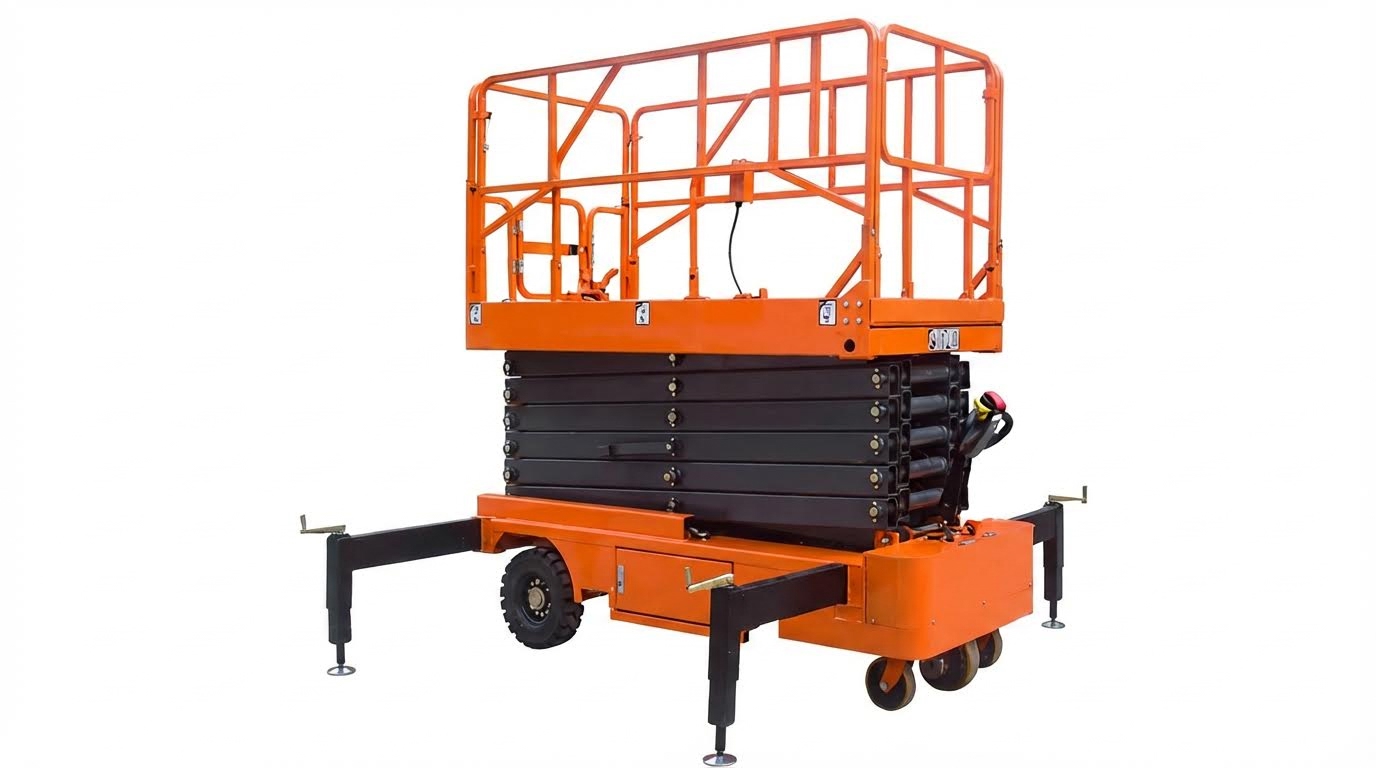
The right electric scissor lift capacity is the smallest model that safely carries your people, tools, and materials with a margin below its rated platform load. Capacity must match both headcount and job environment.
| Lift Type | Typical Platform Capacity | Typical Working Height | Best For… | Operational Impact |
|---|---|---|---|---|
| Compact indoor electric | ≈230 kg capacity data | ≈7.8 m working height height data | 1 person + light tools | Fits narrow aisles; ideal for maintenance in 2.4–3.0 m wide corridors. |
| Narrow electric | ≈250 kg capacity data | ≈10 m working height height data | 1–2 people + light tools | Good for warehouse racking or light install work up to ~8 m platform height. |
| Self‑propelled electric (general) | ≈230–320 kg capacity range | ≈6–12 m lifting height height range | 1–2 people + moderate tools | Drive from the platform; ideal for frequent repositioning in large facilities. |
| High‑capacity electric rough‑terrain | Up to ≈750 kg high‑capacity data | Up to ≈18 m working height height data | 2–4 people + heavy materials | Suited to construction façades and heavy install jobs on slabs or firm ground. |
💡 Field Engineer’s Note: In real jobs, under‑loading a lift by 15–25% of its rated capacity gives you breathing room for “forgotten” tools, heavier PPE, and material swaps without stopping to recalc every trip.
Matching people count and tools to platform load
To match people and tools to platform load, start from the rated kg, subtract people weight, then see what’s left for tools and materials. This is the only safe way to answer how many people can fit on an scissor platform for a specific job.
- Clarify the question: “How many people can fit on an electric scissor lift?” really means “How many people plus tools stay under the platform capacity?” – Headcount alone is meaningless without weight.
- Use realistic body weight: Assume at least 90–100 kg per person with clothing and PPE. – This avoids accidental overload with heavier workers.
- Include tools and materials: Add drills, batteries, cable reels, panels, and small parts bins. – Tools can easily add 40–80 kg for two workers.
- Respect the rated platform capacity: Typical electric scissor lifts offer about 230–320 kg platform capacity for self‑propelled models capacity range. – This usually means 1–2 people with tools, not three.
- Leave a safety buffer: Aim to load to 70–85% of rated capacity, not 100%. – Buffers cover weight variation, extra parts, and scale inaccuracy.
Quick rule‑of‑thumb examples
Example 1 – Compact 230 kg electric scissor lift:
• 2 people × 95 kg ≈ 190 kg
• Tools and materials allowed ≈ 40 kg
• Any more and you are at or above the rating – the safe answer to how many people can fit on an electric scissor lift of this size is “2 with light tools only”.
Example 2 – 320 kg electric scissor lift:
• 2 people × 95 kg ≈ 190 kg
• Remaining ≈ 130 kg for tools and materials
• Realistically still 2 people, but with heavier material loads such as small duct sections or cable drums.
- Watch side‑loading: Even if weight is under the limit, both workers leaning over one side increases tipping risk. – Keep people and materials spread across the platform.
- Plan the job, not just the lift: If the task needs three people at height, choose a higher‑capacity platform, a different access method, or redesign the work sequence. – Do not “sneak” an extra person on.
Indoor vs. rough‑terrain models and use cases
Indoor electric scissor lifts prioritize compact size, zero emissions, and lower capacities, while rough‑terrain models trade size and weight for higher capacities and off‑slab performance. Choosing between them depends on floor conditions, slope, and load requirements.
| Feature | Indoor Electric Scissor | Rough‑Terrain / Outdoor‑Capable Scissor | Operational Impact |
|---|---|---|---|
| Typical power source | Electric, zero‑emission power data | Diesel or high‑capacity electric with rough‑terrain features terrain data | Electric is preferred indoors for air quality and noise control. |
| Typical capacity range | ≈230–320 kg for self‑propelled units capacity range | ≈300–750 kg depending on model general range high‑capacity data | Outdoor units can safely carry more people and heavier materials. |
| Working height | ≈6–12 m lift height, ≈7.8–10 m working height lift data working height data | Up to ≈18 m working height for some rough‑terrain electrics height data | Taller outdoor units support façade work, cladding, and structural installs. |
| Terrain capability | Flat, level, smooth floors within 3° of level stability requirement | Uneven ground, mud, snow, and slopes with 4WD or crawler tracks crawler and cross‑country data | Indoor units must not be used on rutted or sloping ground. |
| Typical use cases | Warehouses, malls, sports venues, factories self‑propelled use | Construction sites, outdoor maintenance, rough yards rough‑terrain use | Choose based on floor type first, then capacity and height. |
- Indoor priority – emissions and noise: Electric units avoid exhaust and reduce noise in enclosed spaces. – They protect workers and comply with indoor air policies.
- Outdoor priority – ground and gradient: Rough‑terrain scissor lifts with 4WD or crawler tracks handle mud, snow, and uneven surfaces terrain data. – This keeps the platform stable when a warehouse slab is not available.
- Capacity vs. access trade‑off: High‑capacity outdoor units are larger and heavier. – They may not fit through 2.1 m doors or on light‑duty mezzanines.
💡 Field Engineer’s Note: When you move from indoor to outdoor work but want to stay electric, check the fine print on “rough‑terrain electric” models. Many still require a firm, level base even if they have chunky tyres.
How to shortlist the right electric scissor lift for your job
Step 1: List maximum working height needed (floor to work point). – This sets the minimum lift height class.
Step 2: Count people at height and estimate total body weight. – Use at least 90–100 kg per person.
Step 3: Weigh or estimate tools and materials per trip. – Include worst‑case loads like glass panes or duct sections.
Step 4: Add a 15–25% buffer below the rated platform capacity. – This is your real‑world usable capacity.
Step 5: Check floor/ground type and gradients against the manufacturer’s limits and OSHA’s requirement for level, unobstructed surfaces during movement stability requirement. – This prevents tip‑over incidents.
Final Considerations For Safe Scissor Lift Loading
Safe scissor lift loading depends on more than a single capacity number. The platform rating, structural design, and stability limits all interact. When you treat the nameplate load and person count as hard limits, you protect both the steel and the people on it.
Engineering choices in the scissor arms, pins, base frame, and hydraulics set the true structural ceiling. Stability rules then tighten that ceiling based on base width, height, terrain, and wind. That is why a lift can have spare floor space but still be full from a safety point of view.
Operations teams should always start with the job, not the machine. Define working height, headcount, and material weight, then select a lift that carries that load with a 15–25% buffer. Indoors, favor compact electric units that match slab limits. Outdoors, pick rough‑terrain platforms with the right capacity and ground capability.
In daily use, supervisors must enforce three habits. Always read the decals before each job. Always count people, tools, and materials against the rated load. Always de‑rate for slopes, wind, and poor floors. Follow those rules, and your Atomoving scissor lifts will run close to design efficiency while keeping tipping and overload risk under control.
Frequently Asked Questions
How many people can fit on an electric scissor lift?
The number of people that can fit on an electric scissor lift depends on its weight capacity and platform size. Most standard electric scissor lifts have a weight capacity of around 227 kg to 454 kg, which typically accommodates 2 to 3 people along with tools or equipment.
- Check the manufacturer’s specifications for exact capacity limits.
- Ensure the combined weight of people and gear does not exceed the rated capacity.
What factors determine how many people can safely use a scissor lift?
Several factors influence the safe use of a scissor lift, including weight capacity, platform dimensions, and intended application. Always adhere to safety guidelines provided by the manufacturer. For more details, refer to Lift Capacity Guide.