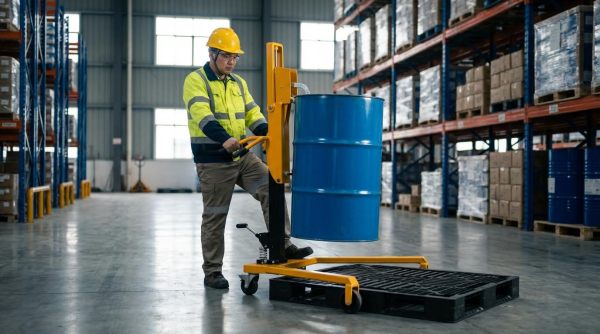
Operations that ask can you transport diesel in a 55 gallon drum face intersecting legal, safety, and engineering demands. This article explains how regulations classify diesel, limit quantities, and separate underground from aboveground storage across industrial sites.
You will see how drum design, sizing, and engineering controls affect sealing, venting, color coding, and secondary containment performance. The handling sections link those design choices to real-world loading, securing, fire protection, inspection, and emergency response routines for mobile and fixed fuel systems.
The final guidance section converts these rules into practical limits for diesel drums, tanks, and buildings, so safety, maintenance, and logistics teams can apply one clear standard. Throughout, the focus stays on compliant transport and storage of diesel in 55 gallon drums within modern regulatory frameworks.
Regulations Governing Diesel In Drums
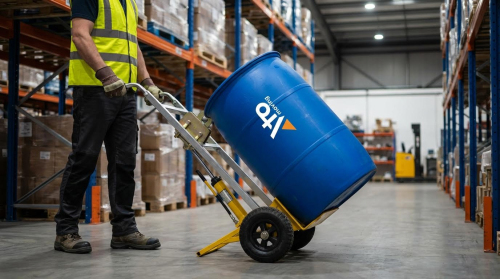
Engineers who ask can you transport diesel in a 55 gallon drum must start with classification and code limits. Diesel in drums sits inside a tight framework of OSHA, DOT, MSHA, and NFPA rules. These rules define what a compliant drum is, how much diesel you can move or store, and where you can place it. This section explains those constraints so designs, permits, and operating procedures stay defensible during audits.
How Diesel Is Classified And Why It Matters
Diesel is a combustible liquid with a higher flash point than gasoline, but it still supports fire. NFPA and OSHA have classified diesel as a Category 2 or Class II combustible liquid, depending on the edition and jurisdiction. This classification drives container design, labeling, and separation distances from ignition sources. It also controls where drums can be used inside buildings and when a dedicated flammable storage room or cabinet is mandatory.
For drum transport, classification links directly to packaging and quantity rules under DOT. Approved metal drums usually fall under UN performance packaging codes and must pass drop, leak, and pressure tests. Regulations generally cap individual drum size around 200 litres to 230 litres, which aligns with the common 55 gallon drum. Designers must check the specific class and packing group for diesel in their region before they select drum type, wall thickness, and closure design.
OSHA, DOT, MSHA, And NFPA Rules Overview
OSHA rules focus on worker safety during storage, handling, and transfer. They limit how much diesel you can keep outside approved cabinets and rooms and require only approved containers and portable tanks. DOT rules cover road transport. They specify performance-tested drums, correct hazard class markings, UN numbers, and shipping papers for diesel loads. DOT also defines when a diesel load becomes a hazardous materials shipment with extra training and placarding.
MSHA rules apply in mines and are stricter. Underground, diesel normally moves only in safety cans or dedicated diesel fuel transportation units with fixed tanks. These units have capacity limits, marking rules, and fire protection requirements. NFPA codes provide design guidance for storage layouts, separation distances, and fire protection features. Facilities usually adopt NFPA standards through local fire codes, so engineers must align drum storage and transport staging areas with those layouts.
- OSHA: worker exposure, indoor quantities, approved containers.
- DOT: packaging, marking, documentation, and vehicle rules.
- MSHA: underground diesel transport and storage controls.
- NFPA: fire loading, separation, and protection criteria.
Quantity Limits For Drums, Tanks, And Buildings
Quantity limits answer the core question can you transport diesel in a 55 gallon drum by setting boundaries. A single 55 gallon drum is usually within container size limits for diesel, but total load matters. DOT rules define thresholds where placards, driver hazmat training, and emergency response information become mandatory. Above certain volumes, diesel transport units must meet tank design and mounting rules instead of simple drum rules.
Inside buildings, OSHA and fire codes cap the total litres of combustible liquid outside approved storage. Typical limits distinguish between what can sit on the shop floor, what must go into listed cabinets, and when a dedicated flammable liquids room is required. Codes also cap the aggregate volume per control area and per building. Engineers must sum drums, day tanks, and bulk tanks when they check compliance.
For fixed tanks, NFPA and environmental regulations define maximum on-site volumes before secondary containment, diking, and spill planning rules tighten. Stacking large portable tanks is often prohibited above 100 litres to 120 litres per container because of stability and impact risk. These quantity caps directly shape fleet fueling strategies, drum delivery schedules, and the number of drums allowed in staging zones.
Underground Vs. Aboveground Storage Compliance
Underground and aboveground diesel storage follow different engineering and legal paths. Underground tanks protect fuel from temperature swings and impact but fall under strict leak detection and environmental rules. Agencies usually require double-wall designs, interstitial monitoring, and regular tightness tests. Diesel drums are rarely used as underground primary storage because inspection access is poor and code paths favor engineered tanks.
Aboveground drums are easier to inspect, move, and replace. However, they face higher exposure to heat, vandalism, and vehicle impact. Fire codes require minimum separation distances from buildings, property lines, and ignition sources. They also require secondary containment sized to capture a defined percentage of total stored volume. When you transport diesel in 55 gallon drums to an aboveground storage area, you must integrate that area with these containment and spacing rules.
MSHA rules add extra controls underground. Diesel must not travel on mantrips or conveyor belts and can only move in approved units or safety cans. When parked, transport units must sit in designated diesel storage areas with fire protection and clearances from energized equipment. For aboveground industrial sites, engineers must coordinate OSHA, DOT, NFPA, and environmental rules so that drum transport, unloading, and storage form one compliant system.
Drum Design, Sizing, And Engineering Controls
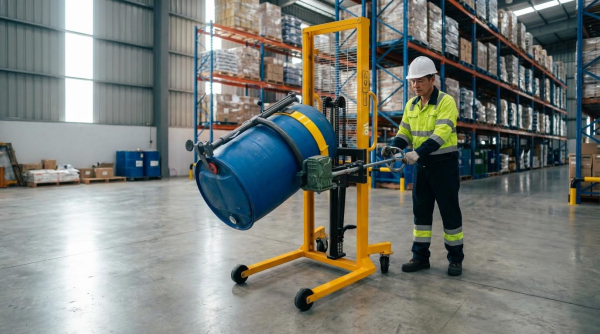
Engineers who ask can you transport diesel in a 55 gallon drum must start with drum design and control features. Approved container types, fill limits, and containment geometry decide if a 55 gallon drum is legal and safe on the road or on site. This section explains which drum constructions qualify, how to manage pressure and expansion, and how color, labels, and secondary containment support compliance. The goal is a practical design basis for diesel drums that aligns with OSHA, DOT, NFPA, and environmental rules.
Approved Drum Types, Materials, And Capacities
For diesel, regulators treated it as a flammable or combustible liquid, depending on flash point. OSHA and DOT required approved containers such as safety cans, portable tanks, or UN / DOT rated drums. Metal drums used for diesel typically had a maximum capacity of about 60 US gallons, which aligned with the common 55 gallon drum.
Engineering teams usually selected between steel and high-density polyethylene (HDPE) drums. Steel offered high mechanical strength, better fire resistance, and low permeability. HDPE offered corrosion resistance and lower weight but needed specific UN markings for fuel service. Typical design checks included:
- UN performance rating for packing group and liquid
- Compatibility of gasket and bung materials with diesel
- Stacking and impact resistance for handling and transport
When users asked can you transport diesel in a 55 gallon drum, the answer depended on this approval. The drum had to be a certified packaging for flammable liquid, not a generic industrial drum. Portable tanks above drum size, up to about 660 gallons, required different design rules and were not interchangeable with drums.
Sealing, Venting, And Thermal Expansion Control
Diesel expanded with temperature, so engineers could not fill a 55 gallon drum to 100%. Industry guidance, including API, recommended a maximum of about 95% of nominal volume. That left expansion space and reduced risk of hydraulic overpressure in sealed drums.
Sealing systems used threaded bungs with fuel resistant gaskets. These prevented evaporation loss, water ingress, and contamination. For transport, closures had to pass leakproofness tests under UN standards. Poorly tightened bungs were a common failure mode, so torque procedures and verification were important.
Venting strategy depended on use case:
- Closed, non-vented drums for normal transport and storage
- Vented caps or pressure relief devices where heating or pumping could raise pressure
Designers also managed solar gain. Orientation east–west and shade structures reduced surface temperature swings on aboveground drums. That helped keep internal pressure lower and limited vapor generation. For mobile applications, engineers often combined approved drums with dedicated dispensing equipment that included flame arrestors and automatic closing nozzles.
Color Coding, Labeling, And Signage Standards
Clear identification answered both safety and regulatory needs. Standard practice used color coding for fuels. Yellow indicated diesel, red gasoline, blue kerosene, and green lubricating oil. Using these colors on 55 gallon drums reduced product mix-up during refueling and maintenance work.
Labels carried more detailed data. A compliant diesel drum typically showed:
| Label element | Purpose |
|---|---|
| Product name and grade | Prevent cross-fueling and misuse |
| Hazard class and pictograms | Meet DOT and NFPA communication rules |
| UN identification number | Support transport documentation |
| Fill date and batch | Support fuel age control and rotation |
| Emergency contact details | Guide responders in case of spill or fire |
Storage and loading areas also needed fixed signs. Typical wording included FLAMMABLE – KEEP FIRE AND FLAME AWAY and NO SMOKING with high contrast lettering. For a user considering can you transport diesel in a 55 gallon drum, inspectors often checked these markings first. Poor or missing labels could make an otherwise compliant drum unusable for legal transport.
Secondary Containment And Spill Control Design
Secondary containment limited the impact of leaks or drum failure. For diesel drums, engineers used spill pallets, curbed concrete pads, or integrated sumps. Design capacity usually targeted at least 110% of the largest single drum or a regulatory percentage of total stored volume, whichever was higher.
Spill pallets for two or four 55 gallon drums often used steel or HDPE construction. Key features included:
- Sufficient sump volume to capture a full drum release
- Grated decks for drum support and visual leak checks
- Four-way forklift access to keep handling controlled
For transport, containment also reduced splash and protected drums from impact. Palletized drums strapped on a spill pallet helped answer can you transport diesel in a 55 gallon drum in a practical way. The drum, pallet, and tie-down system worked as one engineered unit. Site layouts then placed these units away from buildings, drains, and ignition sources, while maintaining access for Atomoving or other handling equipment and emergency response teams.
Safe Handling, Transport, And Storage Practices
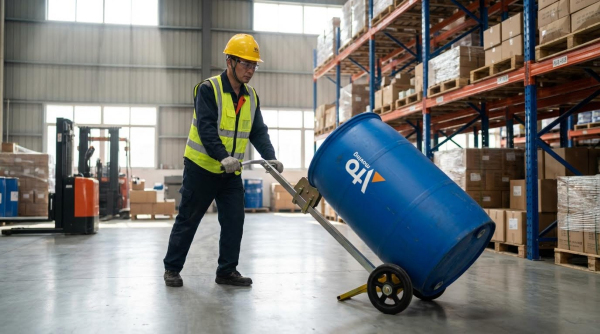
This section answers a core search question for operators: can you transport diesel in a 55 gallon drum while staying compliant and safe. It links handling practices with fire protection, inspection, and training so engineering, EHS, and logistics teams can apply a single standard. The focus stays on approved containers, restrained loads, and disciplined procedures from filling through final storage.
Loading, Securing, And Moving Diesel Drums
You can transport diesel in a 55 gallon drum only if the drum is an approved container, correctly filled, and properly secured. OSHA and DOT rules required metal drums not exceeding about 60 gallons for this duty, with tight closures and no leaks. Drums should be filled to a maximum of about 95% of rated volume to allow thermal expansion and avoid hydraulic overpressure in transit.
During loading, keep drums upright and use mechanical aids instead of manual lifting whenever possible. Operators should check bungs, gaskets, and locking rings for damage before the drum leaves the filling point. The transport vehicle bed should be flat, free of sharp edges, and strong enough for concentrated drum loads.
Securement is critical during braking and cornering. Typical good practice includes:
- Use blocking, chocks, or cradles to stop rolling and tipping.
- Apply ratchet straps or chains rated above the drum mass, anchored to fixed tie-down points.
- Arrange drums in tight rows to reduce movement gaps.
- Keep at least one dry chemical fire extinguisher accessible from ground level.
For short on-site moves, use drum trucks, pallet jacks, or forklifts with drum attachments to keep drums vertical and stable. Never move diesel drums on improvised skids or by rolling them near ignition sources.
Fire Protection, Separation, And No-Ignition Zones
Diesel had a higher flash point than gasoline but still behaved as a flammable liquid under NFPA and OSHA schemes. That meant fire separation and ignition control stayed mandatory whenever you transported diesel in a 55 gallon drum. Storage layouts needed distance from buildings, openings, and other combustibles, often on the order of tens of metres according to common guidance.
Good practice separated diesel drums from open flames, welding, smoking areas, and hot surfaces. Facilities usually marked no-ignition zones with painted lines and signs around drum loading pads and storage racks. Where drums sat outdoors, designers preferred elevated, well-drained pads that kept them out of standing water and away from storm drains.
A simple control set often included:
- Class B or ABC extinguishers sized and placed within easy reach of drum areas.
- Clear “FLAMMABLE – KEEP FIRE AND FLAME AWAY” and “NO SMOKING” signage.
- Bonding and grounding when drums were filled or emptied by pump to limit static discharge.
- Roof or shade to limit solar heating and pressure rise inside drums.
Inside buildings, diesel drum quantities had to respect indoor flammable liquid limits and cabinet requirements. Drums should not block exits, egress paths, or access to emergency equipment.
Inspection, Maintenance, And Leak Detection
Regular inspection kept 55 gallon diesel drums safe for transport and storage. Before each move, operators should check for corrosion, dents on chimes, bulging, wet spots, or fuel odour. Any leaking or badly deformed drum should be removed from service and transferred using appropriate pumping gear into a sound container.
Planned maintenance focused on closures and coatings. Gaskets and bungs wore with repeated use and needed replacement on a defined schedule. Exterior painting or coating reduced corrosion, especially for outdoor drums in coastal or industrial atmospheres. Cleaning and internal inspection were important when drums were reused or switched between products.
For fixed drum storage areas, engineering controls improved leak detection. Typical measures included:
- Secondary containment pallets or berms sized to capture at least the volume of the largest drum.
- Visual level checks or simple dip measurements to spot unexplained losses.
- Moisture or hydrocarbon sensors in sumps where regulations or risk justified the cost.
Documented inspection checklists helped standardize what each shift reviewed. Records supported compliance demonstrations during audits and helped identify recurring problems with specific drum batches or handling steps.
Training, Emergency Response, And Documentation
Answering can you transport diesel in a 55 gallon drum safely always came back to human factors. Personnel who filled, moved, or stored drums needed task-specific training. That training covered container approval rules, fill limits, labeling, PPE, and proper use of handling equipment such as drum trucks or Atomoving systems.
Emergency response plans defined what to do when a drum leaked, fell, or caught fire. Typical plans assigned roles for spill containment, notification, area isolation, and cleanup. Workers practiced using absorbents, drain covers, and portable dikes so they could act quickly under stress. Local hazardous waste rules governed how used absorbents and contaminated soil were collected and shipped off site.
Documentation tied the system together. Key records usually included:
- Training logs and refresher dates for all drum handlers.
- Inspection and maintenance forms for drums, pallets, and containment.
- Transport manifests or internal transfer tickets that traced drum movements.
- Written procedures for fueling, unloading, and emergency actions.
Consistent documentation showed that the facility treated diesel drum transport as a controlled process, not an improvised task. This reduced incident rates and supported compliance during regulatory reviews.
Summary: Practical Guidelines For Diesel Drum Use
 Frequently Asked Questions
Can You Transport Diesel in a 55-Gallon Drum?
Yes, you can transport diesel in a 55-gallon drum, but it must comply with specific safety and regulatory standards. The drum should be made of durable materials like carbon steel and must meet UN-approved packaging requirements for transporting hazardous materials. UK Government Guidelines specify that diesel must be carried in UN-approved containers such as drums or jerricans.
- Use UN-approved steel drums for safe transportation.
- Ensure compliance with DOT hazmat laws and IATA Dangerous Goods regulations.
What Type of Container is Suitable for Storing Diesel?
Diesel should be stored in approved safety containers designed to handle flammable liquids. For small quantities, portable 5-gallon gas cans are sufficient, while larger amounts require specialized storage solutions like 55-gallon drums or standalone tanks. Steel drums are recommended over plastic due to their durability and ability to meet transportation regulations. Fuel Storage Safety Tips.
- Use approved safety cans for small quantities.
- For larger volumes, use 55-gallon steel drums or tanks.