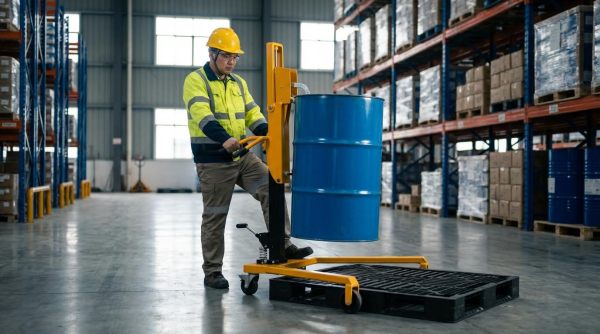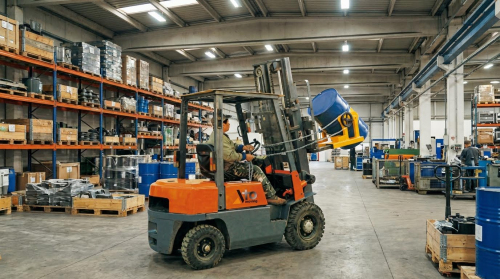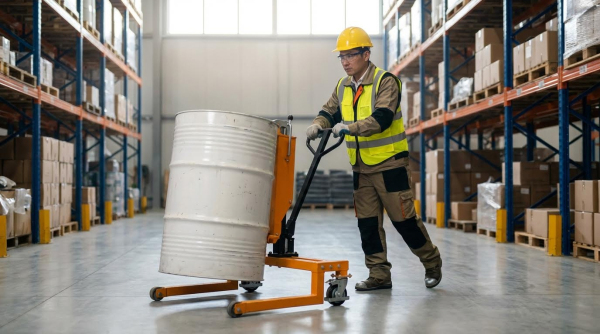
Efficient handling of multiple oil drums required a structured approach that balanced throughput, ergonomics, and safety. This article examined core options for moving drums, from manual and semi-automated solutions to fully powered systems, and related these choices to layout, distance, and regulatory constraints. It then compared vacuum lifters, hoists, drum trolleys, dollies, and forklift attachments, focusing on load capacity, spill control, and corrosion resistance for different industries. Finally, it provided engineers with concise recommendations to specify drum-handling systems that minimized risk, protected product quality, and complied with safety and environmental regulations.
Core Options For Moving Multiple Oil Drums
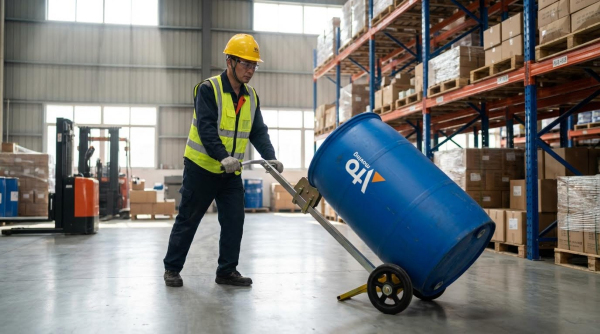
Modern facilities used several technical options for moving multiple oil drums. Engineers typically evaluated manual, semi-automated, and fully powered systems against load, distance, and risk. Each option affected throughput, ergonomic exposure, and compliance differently. A structured comparison helped justify capital expenditure and define safe handling procedures.
Comparing Manual, Semi-Automated, And Powered Methods
Manual solutions included drum trolleys, dollies, and tip carts that used human push or pull force. These devices handled typical 205 litre drums with masses up to about 180 kg, depending on design. They offered low acquisition cost but imposed higher musculoskeletal load and limited batch size. Semi-automated systems combined mechanical leverage with limited power assistance, such as hand-winch hoists or hydraulic lift gates for truck unloading. Powered methods used electric or pneumatic drives, including vacuum lifters, wire hoists, and forklift attachments for palletized drums. These systems supported higher cycle counts, reduced peak push forces, and improved control when handling 450 lb full 55 gallon oil drums or multiple units simultaneously.
Throughput, Distance, And Layout Considerations
Engineers sized drum handling methods around required throughput, travel distance, and floor layout. Short, infrequent moves on smooth floors justified manual dollies or trolleys, provided operators controlled rolling speed and avoided sharp objects that could puncture shells. Repetitive flows between receiving docks, storage, and dispensing areas favored powered or semi-automated solutions. Vacuum lifters and wire hoists supported fast vertical transfers, while fork trucks with pallets moved multiple drums over longer distances. Narrow aisles, ramps, and door thresholds constrained turning radii and ground clearance requirements, for example the 75 mm clearance used on heavy-duty drum trolleys. Layout planning also included designated drum routes, skid positions, and staging near racks to maintain first-in/first-out rotation and minimize double handling.
Regulatory And Insurance Impacts Of Drum Handling
Drum handling choices directly influenced compliance with occupational safety and environmental regulations. Authorities expected employers to control manual handling risks, prevent spills, and protect workers from hazardous contents. Using equipment matched to drum mass, contents, and frequency of movement helped demonstrate compliance with manual handling guidelines and chemical storage standards. Spill-resistant trolleys, bunded dollies, and controlled unloading methods reduced the probability and consequence of leaks, which affected environmental liability. Insurers evaluated incident history, injury rates, and spill controls when setting premiums. Facilities that adopted engineered handling systems, clear procedures, and suitable storage conditions typically reduced lost-time injuries, property damage, and contamination events, supporting lower long-term insurance and remediation costs.
Vacuum Lifters And Hoists For Batch Drum Handling
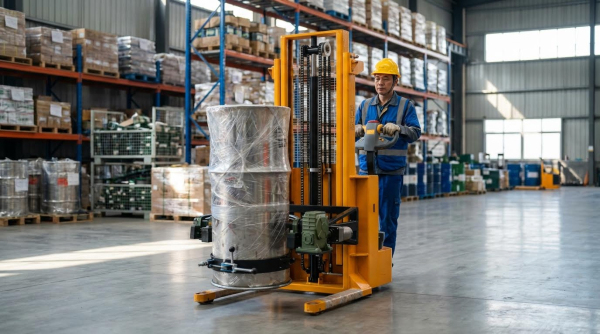
Vacuum lifters and hoists enabled safe batch handling of oil drums with controlled acceleration and deceleration. Engineers used these systems to increase throughput while limiting manual exertion and reducing dropped-drum incidents. Selection depended on drum material, surface condition, batch size, and required lifting speed. Integration with existing floors, mezzanines, and process equipment determined whether a vacuum lifter, wire hoist, or hybrid solution delivered the best lifecycle cost.
Multi-Drum Vacuum Lifters And Suction Foot Design
Multi-drum vacuum lifters used dedicated suction feet with multiple cups to grip each drum individually. Systems like multifunctional vacuum lifters handled up to about 270 kg, allowing simultaneous lifting of several 205-litre drums within that envelope. Engineers specified cup size, pattern, and spacing according to drum diameter, wall stiffness, and surface cleanliness to avoid local denting or loss of grip. Redundant suction circuits and vacuum monitoring increased safety, especially for hazardous liquids. Operators adjusted lifting height with ergonomic handles, allowing precise placement onto pallets, bunds, or filling stations without impact loading.
Wire Hoists For High-Speed, Precision Drum Handling
Wire hoists provided higher lifting speeds and precise vertical positioning compared with most vacuum tube lifters. Typical units carried up to about 120 kg, so designers often limited them to single-drum or small-container handling or paired them with mechanical drum grabs. Variable-speed control allowed operators to approach racks, trucks, or process inlets quickly, then slow down for final alignment. In layouts with frequent vertical travel and constrained floor space, wire hoists reduced cycle time and minimized oscillation when properly tuned. Engineers verified hoist duty class, lifting height, and structural anchorage to comply with local lifting regulations and inspection regimes.
Ergonomics, Training Time, And Operator Fatigue
Vacuum lifters and hoists reduced push–pull forces and manual tilting that previously caused musculoskeletal injuries during drum handling. Ergonomic handles, available in straight, flexible, or extended formats, allowed operators to maintain neutral wrist and back postures while controlling lift, lower, and travel. Training time remained short, because controls typically offered intuitive, fingertip operation with clear feedback on lifting response. Plants that moved from manual trucks to vacuum or hoist systems reported lower fatigue over a shift and more consistent adherence to safe lifting procedures. Engineers still needed to design workflows that avoided awkward reaches, twisting under load, or obstructed escape paths in case of emergencies.
Stainless-Steel Systems For Hygienic Environments
Stainless-steel vacuum lifters and hoists supported drum handling in food, beverage, and pharmaceutical facilities that required hygienic, easy-to-clean surfaces. These systems resisted corrosion from cleaning agents, disinfectants, and occasional product spills better than painted carbon-steel frames. Smooth welds and minimal crevices reduced microbial harborage, helping sites align with HACCP-based hygiene concepts and relevant industry standards. In clean or corrosive environments, engineers paired stainless frames with compatible suction cups, stainless fasteners, and sealed bearings to maintain integrity through frequent washdowns. This configuration allowed efficient multi-drum handling without compromising cleanliness or regulatory compliance.
Drum Trolleys, Dollies, And Forklift Attachments
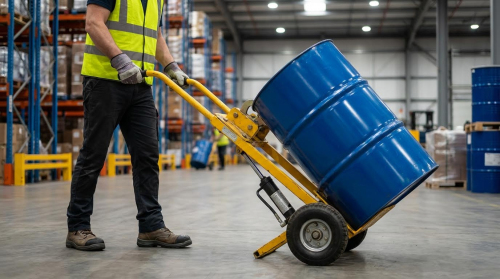
Engineers used drum trolleys, dollies, and forklift attachments to move multiple oil drums efficiently over short to medium distances. These solutions bridged the gap between fully manual handling and fixed conveyor or automated systems. They supported safe movement, controlled tilting for dispensing, and integration with spill containment and storage layouts. Correct selection depended on drum size, fill weight, contents, floor conditions, and regulatory constraints.
Multi-Drum Trolleys, Dollies, And Tip Carts
Multi-drum trolleys and dollies allowed one operator to move several 205-litre (55-gallon) drums in a single trip, improving throughput in workshops and warehouses. Heavy-duty models used 4 mm steel plate, welded frames, and wide polyurethane or rubber wheels to carry drums up to about 180 kg each while maintaining stability on imperfect floors. Tip carts with integrated cradles allowed a single worker to tilt a full drum from vertical to horizontal for rack storage or dispensing, using mechanical leverage rather than direct lifting. Engineers specified multi-drum units where travel distances were moderate, aisles were relatively smooth, and batch moves between receiving, storage, and decanting areas dominated the workflow.
Fork Truck Attachments For Palletized Drum Moves
Fork truck attachments became essential when facilities handled large numbers of drums on pallets or needed to interface with truck tailgates and racking. Standard practice used pallets or dedicated drum pallets so forklifts could move two to four drums per lift without manual rolling. Curved fork jaws or clamp-on drum handlers matched the drum curvature, improving grip and reducing shell damage during transport. Engineers evaluated attachment capacities against worst-case drum mass, including 55-gallon drums at approximately 450 lb (about 205 kg) when full, and verified that truck, mast, and attachment ratings remained within safety factors at the required lift heights.
Spill Control, ATEX, And Corrosion-Resistant Designs
Where oils, chemicals, or hazardous liquids were present, trolleys and dollies often integrated spill control or sat directly on bunded (sumpped) bases. Polyethylene bunded drum trolleys with 225-litre capacities captured leaks from 205-litre drums and resisted acids, alkalis, and weathering. In explosive atmospheres, engineers specified ATEX-compliant drum trolleys with conductive wheels, anti-static finishes, and designs that minimized impact sparks. Stainless-steel or coated steel constructions supported hygienic or corrosive environments, such as food, beverage, or chemical plants, and allowed easy cleaning to prevent cross-contamination between different lubricants or process fluids.
Selecting Equipment By Drum Weight And Contents
Equipment selection started with the maximum drum weight, including fluid, plus a safety margin aligned with local regulations and company standards. For example, engineers matched light-duty trolleys to 50 kg drums and heavy-duty units to 180 kg or 205-litre drums, confirming wheel load ratings and frame stiffness. Contents dictated material choices: stainless steel or polyethylene for corrosive or food-grade products, and bunded designs where leakage or overfill posed environmental or safety risks. Frequency of movement and travel distance influenced whether a simple dolly, a tip cart with dispensing capability, or a forklift attachment offered the lowest life-cycle cost and risk profile for the drum-handling system.
Summary And Key Recommendations For Engineers

Engineering teams that handled multiple oil drums efficiently used a portfolio of solutions rather than a single device. Manual and semi-automated tools suited low-throughput operations and short moves, while powered systems supported high-frequency, long-distance handling. Across all options, the controlling constraints remained drum mass, contents, floor conditions, and regulatory context. Designs that minimized uncontrolled rolling, dropping, and impact consistently reduced incidents and product losses.
Vacuum lifters and wire hoists enabled batch handling where drum surfaces were clean, relatively smooth, and structurally sound. Multi-drum vacuum systems with multiple suction cups per drum provided secure, controllable lifting up to around 270 kg per tool, while wire hoists offered faster vertical travel at lower capacities near 120 kg. Drum trolleys, dollies, and tip carts remained the most practical choice for short horizontal transfers of 205-litre drums, particularly when integrated with spill containment and ATEX-compliant features for flammable or corrosive products. Forklift attachments and pallets proved essential when moving full 55-gallon drums that weighed near 200 kg each over longer distances.
Going forward, plants increasingly integrated drum handling with broader safety, environmental, and insurance strategies. Equipment with built-in spill containment, corrosion-resistant materials, and hygienic designs supported compliance with occupational safety, fire protection, and environmental regulations. Engineers should specify systems that maintain sealed bungs, avoid dropping or uncontrolled rolling, and support FIFO storage at stable temperatures near 21 °C to protect lubricant quality. A balanced approach combined ergonomic, easy-to-train powered lifters where throughput justified them, with robust, low-maintenance trolleys and forklift attachments elsewhere. This mixed-technology strategy allowed facilities to upgrade incrementally while improving safety performance and lifecycle cost.