Knowing how to get 55 gallon drums off a pallet safely required a structured engineering and safety approach. This article outlined key hazards, from drum mass and center-of-gravity issues to spill and fire exposure scenarios, and linked them to regulatory drivers. It then examined engineering controls and handling equipment, including forklifts with drum attachments, drum trucks, dollies, lift tables, and hazardous-area designs. Finally, it translated these principles into step-by-step procedures for removing drums from pallets and closed with a concise implementation roadmap for best practices in industrial environments.
Key Hazards in Drum and Pallet Handling
Understanding key hazards is the first step in learning how to get 55 gallon drums off a pallet without spills or injuries. Full drums weighed between 500 kilograms and 360 kilograms, so even minor errors created serious risks. This section outlined the primary mechanical, ergonomic, and process hazards that engineers and safety managers needed to control. It framed the technical basis for selecting equipment, writing procedures, and meeting regulatory expectations for drum and pallet operations.
Drum Mass, Stability, and Center-of-Gravity Risks
A typical 55-gallon drum weighed between 500 pounds and 800 pounds when full. This mass created high kinetic energy during tipping, sliding, or uncontrolled rolling. The drum’s center of gravity sat above the mid-height, so small horizontal forces could shift it beyond the support polygon of the base. On pallets, gaps between deck boards, damaged stringers, or uneven floors further reduced stability. When operators tried to “walk” or roll drums off pallets manually, contents sloshed and shifted the center of gravity, increasing the likelihood of sudden over-center tipping. Engineering controls therefore focused on maintaining full base support, restraining the drum shell, and keeping the center of gravity inside a controlled stability envelope during every movement phase.
Injury Modes: Strains, Crush, and Impact Hazards
Manual handling of 55-gallon drums exposed workers to high musculoskeletal loading. Awkward postures, such as stooping to chimes at floor level or twisting while pushing from the side, increased the risk of lower back strain, shoulder injuries, and hernias. If a drum slipped off a pallet or went over-center, crush zones developed at the feet, shins, and hands, especially near pallet edges and fork pockets. Impact injuries occurred when operators attempted to “catch” a falling drum or when a rolling drum struck toes or ankles. From an engineering perspective, the task of getting drums off pallets safely required elimination of manual lifting, strict control of pinch and crush points, and clear exclusion zones so no person stood in the fall path or roll path of a drum.
Spill, Contamination, and Fire-Exposure Scenarios
When a 55-gallon drum fell, punctured, or lost its bung seal, the resulting spill could range from nuisance to major incident. Bare forklift forks, protruding pallet nails, or burrs on banding created localized stress concentrations that could tear steel or plastic drum walls. Liquid on pallet decks or trailer floors reduced friction, allowing drums to slide unexpectedly during unloading. For flammable or combustible contents, vapors from even a partial spill could form ignitable mixtures, especially in poorly ventilated loading areas. Contamination hazards also arose when food-grade or pharmaceutical drums contacted residues from incompatible chemicals on pallets or floors. Effective hazard control therefore required compatible pallets, intact closures, secondary containment where needed, and procedures that minimized impact loads and uncontrolled motion while removing drums from pallets.
Regulatory and Standards Compliance Drivers
Legal and standards frameworks strongly influenced how facilities handled 55-gallon drums on and off pallets. Occupational safety regulations required employers to eliminate or reduce manual handling risks so far as reasonably practicable, including the use of mechanical aids and engineered workstations. Transport and packaging rules, such as those enforced by hazardous materials agencies, mandated that drums remained closed, structurally sound, and properly blocked and braced during loading and unloading. Where flammable or hazardous substances were present, electrical classification rules and electrostatic discharge controls governed equipment selection and grounding practices. Standards and guidance on pallet handling, lift tables, and traffic management also addressed separation of pedestrians from powered equipment and required guarding against shearing and crushing. Compliance therefore acted as a design constraint and a driver for systematic risk assessment, equipment specification, operator training, and documented procedures for getting 55-gallon drums off pallets safely.
Engineering Controls and Handling Equipment
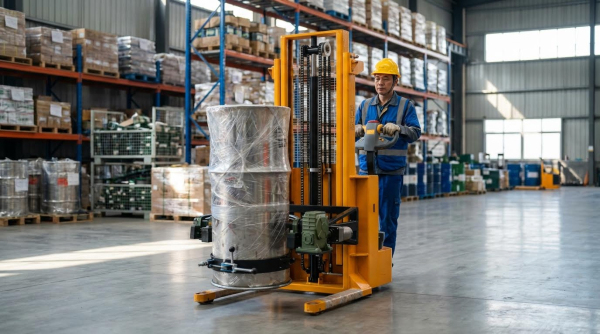
Engineering controls are the primary safeguard when deciding how to get 55 gallon drums off a pallet without spills or injuries. Purpose-built drum handling equipment reduces manual force, stabilizes the load, and keeps operators outside crush and spill zones. Correct selection depends on drum mass, material, pallet configuration, contents, and area classification. The following equipment groups provide a structured way to engineer risk out of drum and pallet operations.
Forklift Drum Attachments and Pallet Interfaces
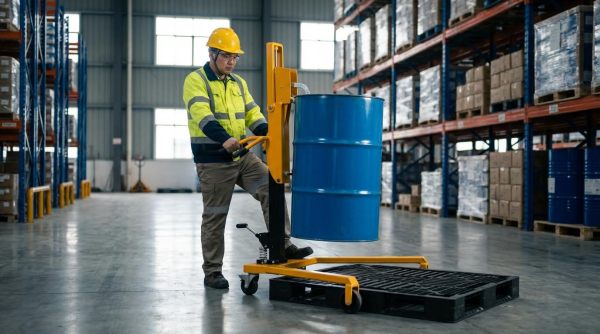
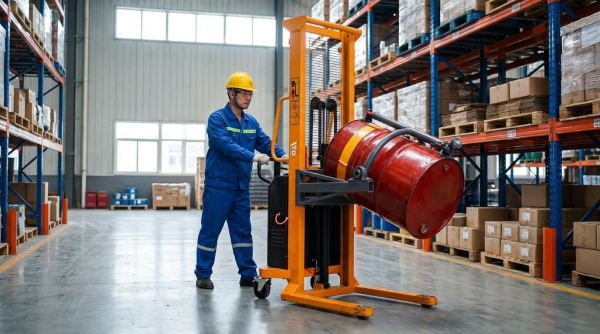
Forklift drum attachments allowed operators to remove 55 gallon drums from pallets without contacting the drum with bare forks. Clamping jaws, rim grips, and saddle cradles captured the drum at the chime or shell, preventing puncture and uncontrolled rolling. When planning how to get 55 gallon drums off a pallet in high-throughput areas, these attachments enabled lifting, tilting, and placing from the driver seat, typically between 150 and 700 millimetres above floor level. Pallet interfaces such as fork pockets, guide frames, and retainer bars centered the load and limited drum shift during acceleration or braking. Facilities improved safety by matching attachment capacity to maximum filled drum mass, locking attachments to the carriage, and applying traffic management to keep pedestrians outside the forklift operating envelope.
Drum Trucks, Dollies, and Mobile Drum Handlers
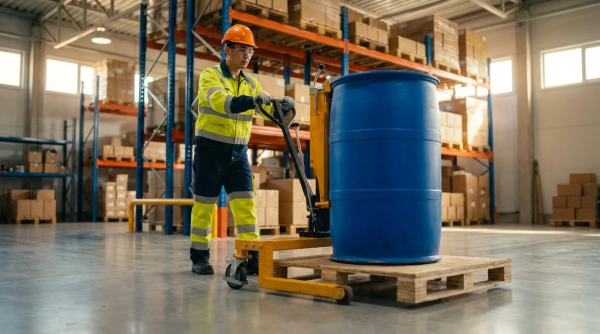
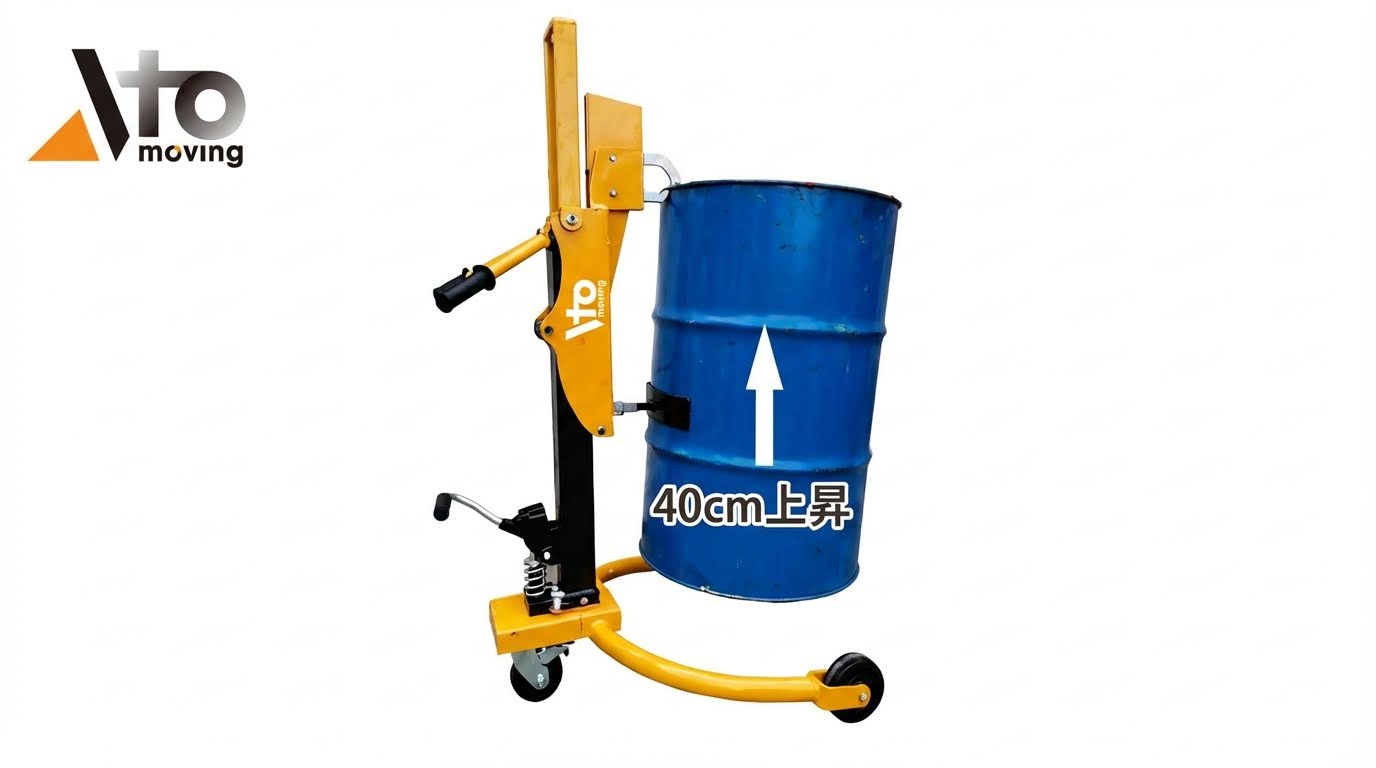
Drum trucks and dollies provided a controlled way to transfer drums once they were off the pallet or lifted clear by a separate device. Two-wheel drum trucks suited steel drums with defined chimes, while four-wheel designs improved stability for plastic drums and longer routes. Drum dollies with low-height platforms and swivel casters allowed operators to land a drum from a pallet onto a rolling base rather than the floor, reducing impact loads and back strain. Mobile drum handlers combined gripping, lifting, and short-distance transport in one unit, often including hydraulic or mechanical tilt for dispensing. When choosing how to get 55 gallon drums off a pallet for short internal moves, engineers evaluated floor condition, route length, turning radius, and drum type, then specified trucks or handlers with adequate rated load, braking capability, and ergonomic handle geometry.
Lift Tables, Turntables, and Pallet Positioners
Lift tables and pallet positioners addressed vertical and reach-related risks during drum removal and placement. Scissor-lift tables with pallet-ring turntables raised the pallet so operators worked near waist height, which reduced bending and twisting when positioning drums or connecting drum handlers. Turntables that rotated 360 degrees kept drums close to the operator, limiting side reaching and awkward postures. In engineered solutions for how to get 55 gallon drums off a pallet in packing or decanting cells, positioners allowed incremental height adjustments as drums were removed, maintaining a constant working envelope. Guarding around pinch points, interlocked controls, and compliance with relevant machinery safety standards were critical, especially for pneumatic or hydraulic units. Routine inspections of hydraulic hoses, structural welds, and anti-slip platforms preserved the designed safety performance over time.
ESD-Safe and Hazardous-Area Drum Handling Designs
For flammable, explosive, or static-sensitive contents, standard drum handling equipment was not sufficient. ESD-safe drum handlers incorporated conductive wheels, bonding straps, and low-resistance paths to dissipate static charges during rolling, lifting, or rotating operations. In classified hazardous areas, designers selected equipment with non-sparking materials, such as bronze contact points, and avoided ignition-capable components. Manually powered or air-driven tilt and lift mechanisms replaced electric drives where regulations restricted electrical equipment. When defining how to get 55 gallon drums off a pallet in these zones, risk assessments considered vapor release scenarios, grounding of pallets, and bonding between drum, handler, and fixed plant. Documented compliance with applicable electrical and process safety standards supported both regulatory approval and safe day-to-day operation.
Safe Procedures for Removing Drums From Pallets
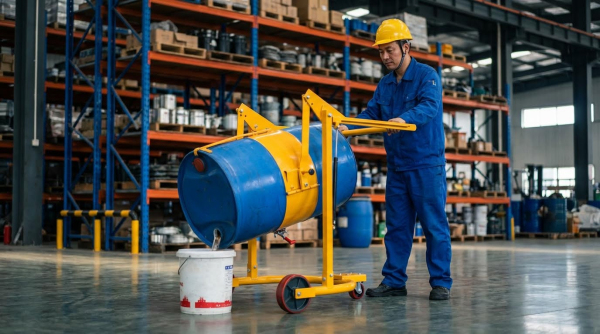
Understanding how to get 55 gallon drums off a pallet without spills or injuries requires structured procedures, not improvisation. This section describes stepwise methods, from pre-use checks to controlled dispensing, that align with safety regulations and ergonomic principles. It focuses on full 55-gallon drums, which typically weighed 500–800 kilograms when filled, where small errors could create high-consequence events. Applying these procedures reduced manual strain, protected packaging integrity, and limited environmental and fire risks in industrial facilities.
Pre-Use Inspection, Checklists, and Route Planning
Before deciding how to get 55 gallon drums off a pallet, operators should complete a short, repeatable checklist. They should verify drum condition first: check for warping, dents, burrs on chimes, corrosion, and any liquid residue on the lid or sidewall. Confirm that bungs and closures seat fully and tighten to manufacturer torque to minimize leak potential during tilting or impact. Inspect pallet integrity, confirming no broken deck boards, protruding nails, or contamination that could compromise footing or puncture drums.
The route from pallet to destination must be clear, dry, and wide enough for the selected equipment. Operators should remove loose wrap, bands, pallet fragments, and absorb any oil or liquid on the floor with suitable sorbent. They should identify slopes, thresholds, and tight turns that could destabilize a 400–800 kilogram drum on a truck, dolly, or attachment. For hazardous contents, planners should confirm spill kits, fire extinguishers, and emergency eyewash locations along or near the route. Finally, they should assign trained personnel, define communication signals, and separate pedestrians from powered equipment using marked walkways or barriers.
Manual Methods: Pull, Push, Drag/Pull, Push/Pull
Manual methods apply mainly to repositioning individual drums over short distances or shifting drums on a pallet before mechanical lifting. For the pull method, the operator grips the near and far chimes, braces one foot across the bottom chime, and pulls the drum toward themselves until it reaches the balance point. Hands, arms, and braced foot should align to reduce pinch points and keep the back relatively neutral. Pulling works best when drums stand close together, such as a 4-drum pattern on a pallet that requires slight separation before attachment engagement.
The push method suits situations with open space in front of the drum. The operator places both hands near the top chime at shoulder-width, keeps shoulders low and close, and pushes with leg power until the drum tips to its rolling or balance point. Drag/pull methods help in constrained spaces where the drum must move laterally while mostly upright, but they increase floor friction and physical load, so they should remain limited in distance. The push/pull method, often used when a drum sits against a wall, uses alternating pushes and pulls on opposite chimes to “walk” the drum sideways. In all manual techniques, one operator should manage the drum to avoid conflicting forces, and no one should try to catch a falling drum; they must step clear and let it fall to prevent crush or exposure injuries.
Removing Drums With Forklifts and Attachments
For most operations evaluating how to get 55 gallon drums off a pallet efficiently, dedicated forklift drum attachments offered the safest and most ergonomic solution. Bare forks under or against drum sides posed puncture and crush risks and should not be used. Instead, clamp, grip, or rim-lift attachments interfaced with the drum chime or shell and locked mechanically or hydraulically. The operator approached the pallet squarely, centered the attachment on the drum, and applied clamping force within the manufacturer’s specified range to avoid deformation.
Once secured, the driver lifted the drum just high enough to clear pallet boards, typically between 150 and 300 millimeters, minimizing potential energy if a failure occurred. They backed straight out, avoiding sharp steering inputs while the drum remained elevated. For multi-drum pallets, they removed edge drums first to maintain pallet stability, especially when pallets rested on uneven surfaces. When attachments could tilt and pour, operators followed defined tilt limits and speed controls, particularly between 150 and 650 millimeters above floor level, where most palletizing and depalletizing occurred. Routine inspection of attachment locking pins, hydraulic hoses, and load ratings ensured compliance with regulatory requirements and internal safety procedures.
Controlled Tilting, Pouring, and Dispensing Methods
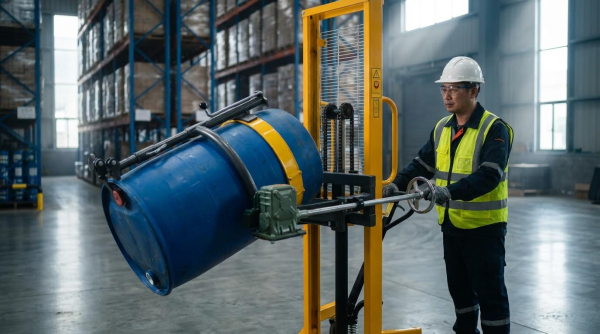
After removing a drum from a pallet, controlled tilting and dispensing methods protected both operators and the environment. Tilt drum pourers, hand-crank or powered, allowed precise angular control, often up to 180 degrees, while maintaining drum restraint via clamps or bands. Operators positioned the pourer close to the receiving vessel, locked casters or brakes, and grounded metallic systems when handling flammable liquids to manage electrostatic discharge. They opened vents or secondary bungs as specified to prevent vacuum formation and erratic flow.
Mobile drum stacker capable of lifting drums to heights around 1.8–2.4 meters enabled dispensing into elevated tanks or process inlets without improvising platforms. For viscous or hazardous liquids, using drum pumps, spouts, or faucets reduced the need for large tilt angles, further lowering spill risk. In classified or static-sensitive areas, ESD-safe designs and non-sparking components reduced ignition likelihood. Throughout tilting and pouring, operators monitored for leaks at bungs and chimes, kept absorbents and containment pallets ready, and followed site-specific spill response procedures if any release occurred. Additionally, a forklift drum grabber double grips ensured secure handling during transport, while a electric drum stacker provided efficient stacking solutions for storage.
Summary of Best Practices and Implementation Steps
Safe, repeatable methods for how to get 55 gallon drums off a pallet rely on engineering controls, structured procedures, and operator training. Full drums typically weighed 400–800 kilograms, so manual handling without equipment created high risks of strains, crush injuries, and spills. Facilities that implemented standardized processes, documented routes, and suitable drum handling equipment consistently reduced incidents and product loss.
From an engineering perspective, the best practice sequence started with risk assessment and planning. Supervisors defined whether drums contained hazardous, flammable, or food-grade contents, then selected compliant equipment such as drum trucks, dollies, mobile handlers, palletizers, or forklift drum grabber instead of bare forks. They verified pallets, trailers, and floor conditions, removed debris and liquid, and separated pedestrian and equipment traffic using marked aisles and restraint systems at docks.
For the actual removal step, operators followed checklists before touching a drum. They wore gloves and appropriate personal protective equipment, checked bungs and closures, inspected for dents, warping, burrs, or residues, and rejected damaged drums for specialist handling. Where manual repositioning was still allowed, they used defined pull, push, drag/pull, or push/pull techniques with controlled body posture, avoided rolling over feet, and never tried to catch a falling drum. For palletized loads, they used pallet positioners or lift tables to keep work at waist height and minimized twisting by rotating turntables instead of the torso.
Implementation also required training, supervision, and continuous improvement. Employers trained operators on equipment-specific controls, hazardous-material procedures, and emergency spill response in line with occupational safety regulations and transport rules. They integrated barcode or RFID tracking with loading and unloading steps to maintain inventory accuracy and to prove process compliance. Periodic reviews of incident data, near-miss reports, and ergonomic feedback drove upgrades such as ESD-safe handlers in flammable zones or powered tilt-pour systems for high-frequency dispensing tasks.
Looking ahead, industry trends pointed toward greater automation and smarter drum handling. Facilities increasingly evaluated drum palletizer, semi-automatic drum dumpers, and integrated dock restraint and sensing systems to further reduce manual effort. However, even with advanced equipment, the core principles stayed stable: plan the move, choose the right tool, control the drum’s center of gravity, protect people first, and treat every step of getting 55 gallon drums off a pallet as a defined, auditable process rather than an improvised task.