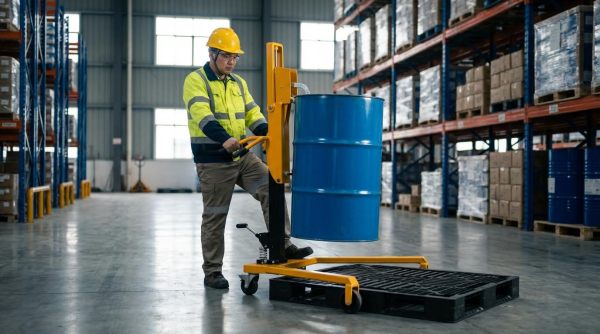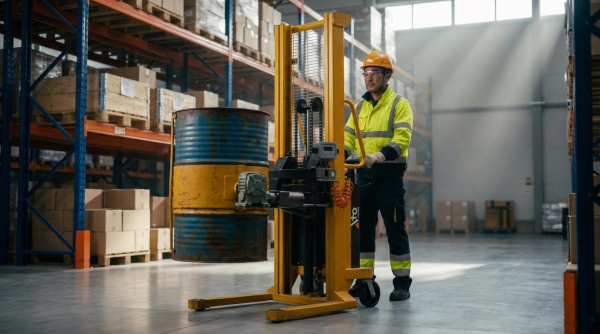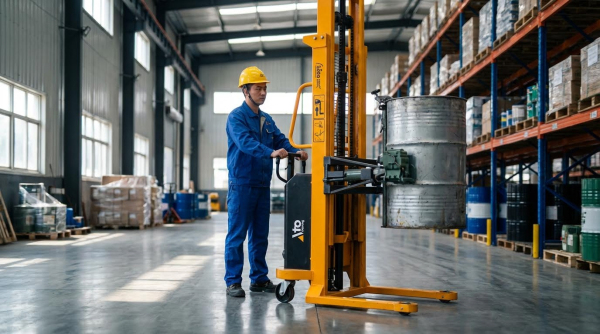
Drum lifters and stackers enabled industry to handle high-mass drums and containers with far lower manual strain and risk. This article covered core equipment types, their components, and how they controlled loads and centers of gravity in real plants and warehouses. It then examined safe operating practices, including pre-use inspection, spill control, and operator training supported by digital checklists and monitoring. Finally, it detailed preventive maintenance, structured troubleshooting of electric stackers, and practical guidelines to implement reliable, compliant drum-handling systems.
Core Functions Of Drum Lifters And Stackers
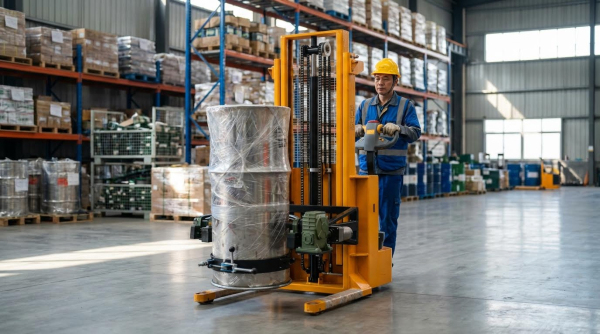
Core functions of drum lifters and stackers focus on lifting, transporting, positioning, and stacking heavy drums with controlled force and repeatable accuracy. These devices replaced manual handling, which exposed workers to musculoskeletal injuries, crush hazards, and chemical contact. Modern designs supported high-throughput operations in chemical plants, warehouses, and distribution centers while maintaining compliance with safety regulations.
Drum Lifter Types And Typical Industrial Uses
Drum handling equipment historically included drum trolleys, hydraulic drum lifters, drum trucks, and drum rotators. Drum trolleys and trucks primarily moved drums horizontally over short distances in warehouses and loading bays. Hydraulic drum lifters added vertical lifting capability, enabling operators to raise drums onto pallets, platforms, or process inlets. Rotators and tilters handled controlled pouring or inverting of drums for decanting liquids or charging mixers and reactors. Industries such as chemical production, coatings, food ingredients, and waste management used these lifters to move filled steel or plastic drums between storage, process lines, and shipping areas. Stackers extended this functionality by lifting drums to racking levels, improving space utilization in high-bay storage.
Key Components: Frames, Hydraulics, Clamps, And Masts
Hydraulic drum lifters used a rigid welded frame that carried all loads from the drum to the floor through wheels or outriggers. A hydraulic circuit, operated by a manual or electric pump, converted low operator effort into high lifting force. The lifting carriage or cradle attached to the hydraulic cylinder and translated vertical motion into drum elevation. Adjustable clamps, belts, or cradles contacted the drum shell and prevented slip, rotation, or drop during travel. Stackers incorporated a mast assembly with rollers and channels to guide the carriage and maintain alignment under load. Locking mechanisms and overload valves protected against accidental release and excessive pressure in the hydraulic system. Consistent terminology for these elements supported clear maintenance and inspection routines.
Load Capacity, Stability, And Center-Of-Gravity Control
Each drum lifter or stacker carried a rated capacity, typically aligned with common drum masses plus a safety margin. Operators had to match equipment capacity to actual drum weight, including liquid contents and any residues. Stability depended on the relationship between the drum’s center of gravity, the wheelbase, and the mast height. As lift height increased, the overturning moment increased, especially when accelerating, braking, or turning. Properly designed lifters used a wide base, low-mounted counterweight, and controlled lift speeds to maintain a safe stability triangle. Clamps and cradles aimed to keep the drum axis vertical or at a defined tilt angle, minimizing dynamic slosh in liquid-filled drums. Clear capacity labels and diagrams helped operators avoid overloading and off-center picks that could exceed design limits.
Integration With Forklifts, AGVs, And Cobot Cells
Drum lifters and stackers increasingly interfaced with other material-handling systems to support automated flows. Forklift-mounted drum attachments converted standard lift trucks into drum handlers without separate dedicated equipment. In automated warehouses, AGVs transported drums on pallets or custom fixtures to fixed drum lifter stations for vertical transfer. Cobot cells used collaborative robots to actuate clamps, operate control panels, or position hoses while humans supervised hazardous tasks such as chemical drum decanting. Integration required standardized interfaces, such as fork pockets, tow points, or digital I/O for status signals and interlocks. Sensors on lifters, including position switches and overload indicators, provided feedback to higher-level control systems. This connectivity enabled coordinated speed limits, zone control, and automated shutdowns when a drum was not correctly secured or a fault occurred.
Safe Operating Practices And Inspection Routines
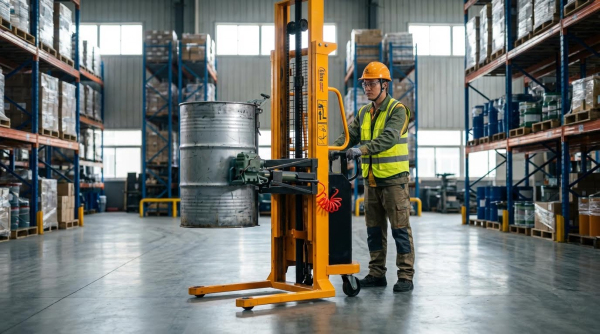
Safe operation of drum lifters and stackers relied on a structured combination of pre-use checks, correct handling techniques, and disciplined documentation. Facilities that embedded these practices into daily routines reduced injury rates, equipment failures, and unplanned downtime. The following subsections outlined a practical framework that aligned with typical regulatory expectations while remaining applicable to chemical plants, warehouses, and manufacturing sites.
Pre-Use Visual Checks And Functional Tests
Operators first performed a walk‑around inspection before energizing or moving any drum lifter or stacker. They checked frames, masts, forks, clamps, and drum cradles for cracks, deformation, corrosion, or weld damage. Wheels, rollers, and tires had to rotate freely, with no flat spots, missing fasteners, or oil contamination that could reduce traction. Hydraulic circuits required inspection for leaks at hoses, fittings, cylinders, and pump housings, as well as verification of intact guards and hose routing.
Visual checks also covered indicator lights, emergency stops, horns, and limit switches on electric or hydraulic stackers. Operators confirmed that in‑position sensors, spreader indicators, and safety interlocks behaved as specified in the manual. A short, no‑load functional test then validated lifting, lowering, tilting, rotation, and travel, checking for abnormal noises, vibration, or delayed response. Any anomaly triggered lockout, documentation, and a maintenance work order rather than continued use.
Drum Securing, Travel Paths, And Spill Prevention
Correct drum securing was critical for stability and spill control. Operators positioned the drum fully within the clamp or cradle, then tightened adjustable clamps, belts, or jaws until the drum no longer wobbled under gentle rocking. They verified that mechanical locks or hydraulic holding valves engaged, and that the drum centerline aligned with the equipment’s rated load axis. For rotators or pourers, they confirmed that locking pins or rotary locks were fully seated before lifting.
Travel paths had to be clean, dry, and free of debris, tight turns, or floor defects that could destabilize a raised drum. Facilities marked designated drum routes, with adequate aisle width, turning radii, and slope limits consistent with the equipment manual. Operators moved at low speed, avoided sudden starts, stops, and sharp steering inputs, and kept drums as low as practical to lower the center of gravity. Spill kits, containment pallets, and emergency drainage plans supported rapid response if a drum leaked or tipped.
PPE, Operator Training, And Safety Compliance
Personnel operating drum lifters and stackers wore task‑appropriate PPE based on the handled material and site risk assessment. Typical baseline protection included safety footwear with toe protection, high‑visibility clothing, and gloves with suitable grip. Chemical drums required additional safeguards such as splash‑resistant goggles or face shields, chemical‑resistant gloves, and in some cases respiratory protection. PPE selection followed safety data sheets and local occupational health regulations.
Only trained and authorized operators used drum handling equipment. Training covered load charts, rated capacities, center‑of‑gravity effects, and the specific controls and interlocks of each model. Refresher sessions reinforced hazard recognition, near‑miss reporting, and adherence to site traffic rules. Compliance programs referenced standards comparable to OSHA or regional equivalents, integrating drum handling into broader material‑handling and hazardous‑substance management procedures.
Digital Checklists, Data Logging, And AI Monitoring
Digital checklists replaced paper forms in many facilities to standardize inspections and reduce missed steps. Tablet or handheld applications guided operators through mandatory items such as structural integrity, hydraulics, brakes, indicators, and clamps, forcing completion before equipment release. Timestamps, operator IDs, and photo attachments created auditable records that supported regulatory compliance and internal safety audits. Automatic alerts notified maintenance teams when inspections flagged defects or when scheduled maintenance intervals approached.
Data logging extended beyond inspections to capture usage hours, lift counts, overload events, and fault codes from electric stackers and drum lifters. Engineers analyzed these datasets to identify high‑failure components and optimize preventive maintenance intervals. Emerging AI‑based systems processed vibration, temperature, and hydraulic pressure signals to detect early patterns of wear or misalignment. This predictive approach reduced unexpected breakdowns, improved availability, and supported lifecycle cost control while maintaining safe operation.
Preventive Maintenance And Troubleshooting
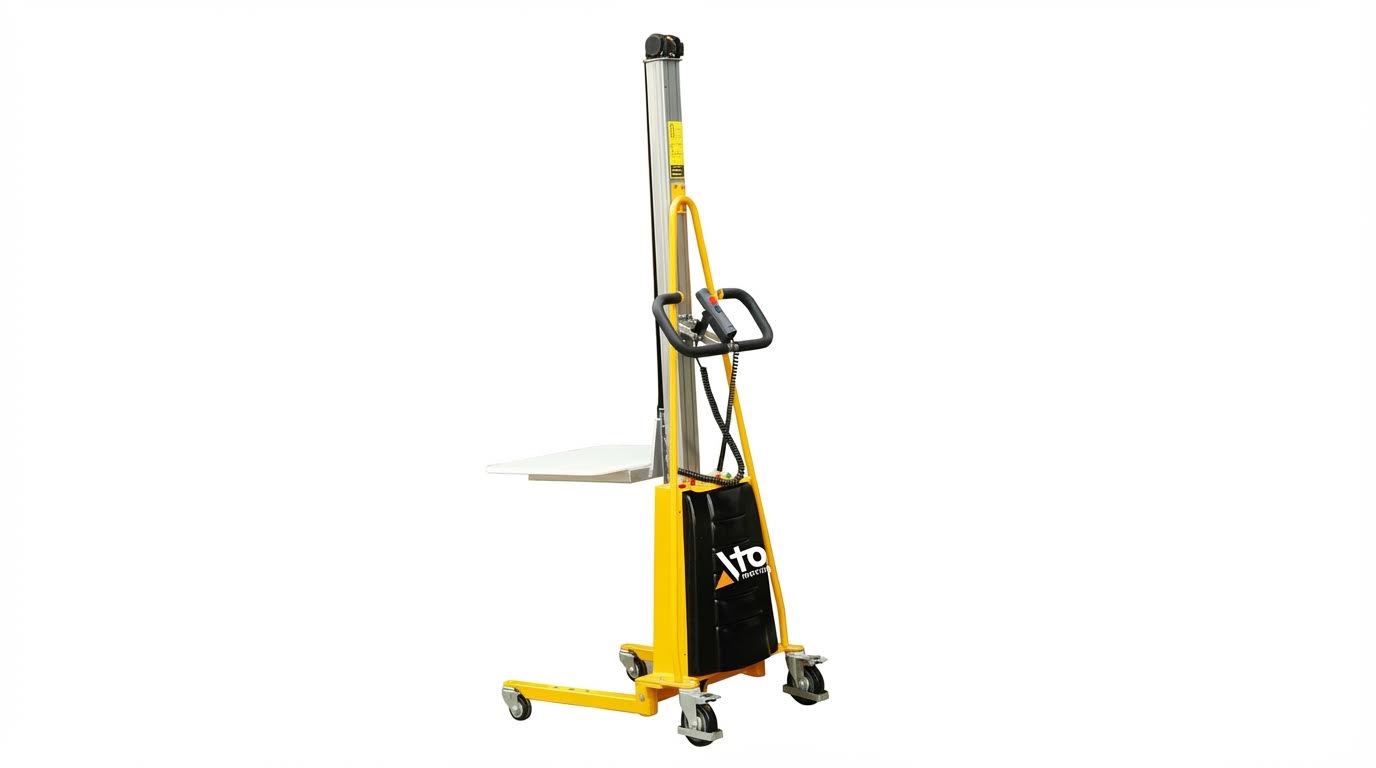
Daily Cleaning, Corrosion Control, And Storage
Daily cleaning removed residues that affected drum lifter and stacker performance. Operators wiped down contact points, wheels, and hydraulic housings to remove dust, aggregates, and product spills. Facilities handling concrete or viscous materials rinsed drums and discharge areas immediately after unloading to prevent hard buildup. This practice preserved internal volume and avoided unbalanced rotating masses.
Corrosion control focused on moisture management and chemical exposure. Technicians inspected painted and plated surfaces around frames, clamps, and mast bases for rust, then treated and recoated affected areas. Plants storing corrosive chemicals kept drum handling equipment in segregated, dry, well‑ventilated areas to protect metal and polymer components. They also avoided storing equipment in cramped spaces where impacts and scratches accelerated corrosion.
Structured storage practices reduced long‑term degradation. Sites used dedicated racks or parking zones to keep drum lifters upright, with masts fully lowered and forks or cradles grounded. Before storage, operators cleaned equipment, checked for leaks, and tagged units needing repair. For extended idle periods, they performed a final comprehensive wash, dried exposed surfaces, and, where applicable, disconnected or maintained batteries according to manufacturer guidance.
Lubrication, Hydraulics, And Structural Inspection
Lubrication regimes targeted rollers, mast channels, pivot pins, and chain systems. Maintenance teams applied compatible greases or oils to clean surfaces only, preventing abrasive contamination from dust or hardened product. Monthly lubrication of rollers and raceways reduced friction, improved tracking, and extended bearing life. Over‑lubrication was avoided because excess grease attracted contaminants and masked early wear indicators.
Hydraulic systems required routine checks for leaks, pressure stability, and fluid condition. Technicians inspected hoses, fittings, cylinders, and pumps for sweating, drips, or damaged outer sheaths. They monitored oil levels and temperature, replacing fluid that appeared milky, dark, or contaminated. Abnormal pump noise, slow lifting, or pressure spikes often indicated worn gear pumps, faulty seals, or partially blocked lines that demanded prompt corrective action.
Structural inspection focused on frames, masts, forks, drum cradles, and welds. Visual checks looked for cracks, deformation, corrosion pitting, and elongation at pin holes. On stackers, inspectors examined lift chains, guide rollers, mast rails, and attachment points for misalignment or excessive wear. Any defect affecting load path integrity triggered immediate tagging out, documentation, and a work order, aligning with safety and regulatory expectations.
Electric Stacker Faults And Systematic Diagnosis
Systematic diagnosis of electric stacker faults started with basic power and safety circuits. Technicians verified battery voltage, connector integrity, and fuse condition before investigating complex faults. Low voltage often caused reduced drive speed, sluggish lifting, or controller errors. Restoring charge, cleaning terminals, or replacing weak batteries resolved many symptoms without invasive work.
Hydraulic performance issues required targeted checks. Failure to lift, slow lifting, or drifting forks indicated worn pumps, misadjusted relief valves, internal cylinder leakage, or contaminated oil. Maintenance teams listened for pump noise, measured lift speed, and checked for external leaks around valves and cylinders. They bled air from systems, replaced damaged seals, and readjusted pressure settings within manufacturer limits.
Drive and steering faults often traced to motor, brake, or control component problems. Symptoms like erratic motion, no travel, or unusual noises prompted checks of micro switches, contactors, brake clearances, and gearboxes. Technicians isolated mechanical from electrical causes by freewheeling tests and component substitution where safe. All abnormal conditions, including intermittent issues, were documented with photos and fault descriptions to support traceable repairs.
Lifecycle Cost Control And Reliability Metrics
Lifecycle cost control relied on preventive strategies instead of reactive repairs. Facilities tracked scheduled cleaning, lubrication, and inspection tasks to reduce unplanned downtime and extend equipment life. They compared the cost of routine maintenance against expenses from failures, such as damaged drums, spill cleanup, and lost production. Data consistently showed that early intervention delivered lower total ownership cost.
Reliability metrics gave objective feedback on maintenance effectiveness. Common indicators included mean time between failures, maintenance cost per operating hour, and availability percentage. Teams analyzed recurrent faults by component class, such as hydraulics, electrics, or structures,
Summary And Practical Implementation Guidelines
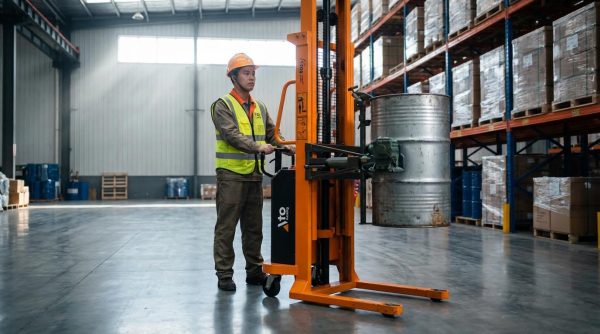
Safe, efficient drum handling depended on aligning equipment capability, operating discipline, and maintenance quality. Drum lifters and stackers provided controlled lifting, rotation, and positioning of heavy, often hazardous contents, but only when operators respected rated capacity, center-of-gravity limits, and the specific design envelope of each device. Hydraulic lifters, electric stackers, and integrated systems with forklifts or AGVs all required pre-use inspection of clamps, masts, hydraulics, and controls to prevent loss of load, tip-over, or uncontrolled motion.
Industry practice showed that preventive maintenance delivered the best lifecycle economics. Daily cleaning, corrosion control, and correct storage limited degradation of wheels, clamps, and hydraulic components. Scheduled lubrication and structural inspections reduced unexpected failures and supported compliance with occupational safety regulations. Systematic diagnosis of electric stacker faults, including drive, lift, and electrical issues, minimized downtime and avoided unsafe improvisation.
Practical implementation worked best through standardized procedures. Facilities benefited from written SOPs for pre-use checks, drum securing, travel routes, and spill prevention, supported by PPE requirements and documented operator training. Digital checklists, data logging, and, where available, AI-based condition monitoring improved traceability and helped detect early trends such as recurring hydraulic leaks or overload events. A balanced strategy combined robust mechanical design selection, realistic capacity planning, and disciplined maintenance, enabling drum handling systems to operate safely, support regulatory compliance, and maintain predictable lifecycle costs as technologies and automation levels evolved.