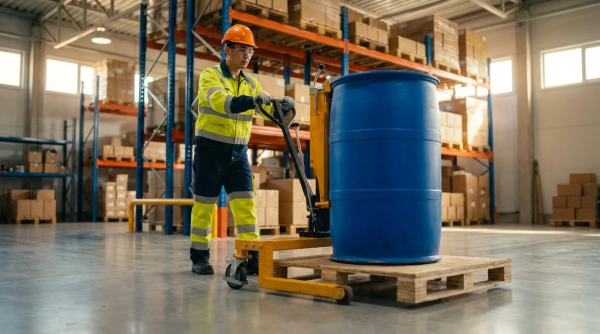
Multi-barrel hand trucks allowed plants to move high volumes of drums and barrels with less manual strain and higher throughput. When a hand truck is used to move two barrels or more, risk exposure increased sharply if operators ignored stability, route planning, and load ratings. This article outlined barrel handling risks and safety standards, specialized barrel truck designs, and safe operation with multiple barrels loaded. It concluded with practical, plant-ready takeaways to cut injuries, protect product integrity, and keep internal audits and regulatory inspections trouble-free.
Barrel Handling Risks And Safety Standards
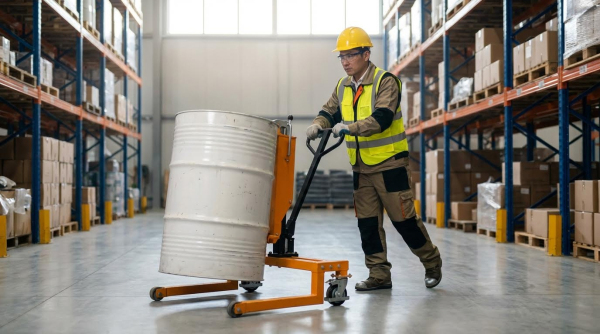
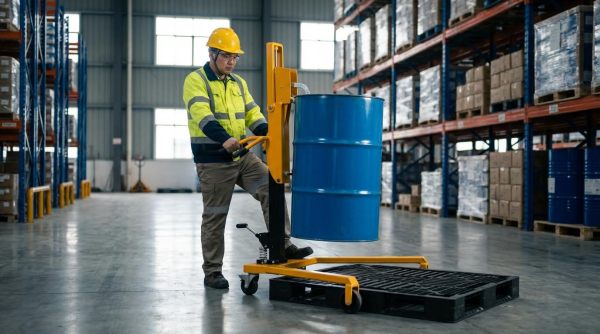
Industrial plants that rely on drums and barrels face specific handling risks that differ from general carton or pallet moves. When a hand truck is used to move two barrels at once, the kinetic energy, impact forces, and tipping potential increase sharply. Safety standards, regulatory frameworks, and ergonomic limits therefore play a central role in defining how operators select, load, and maneuver specialized barrel lifter. This section outlines the primary injury modes, the applicable regulations and typical plant rules, and the manual handling thresholds that should drive engineering and operational decisions.
Typical Injury Modes In Barrel Handling
Barrel handling with hand trucks exposes operators to crush, impact, and musculoskeletal injuries. When a hand truck is used to move two barrels, the combined mass raises the risk of overbalance and uncontrolled roll-away if brakes or wheel conditions are inadequate. Typical incidents included fingers or hands pinched between barrel rims and truck frames, feet crushed by slipping drums, and lower-back strains from improper tilting techniques. Poor load restraint allowed barrels to shift or fall, especially on ramps or uneven floors, causing direct impact injuries and product loss. Vision obstruction from tall or side‑by‑side drums also contributed to collisions with structural elements, pedestrians, or process equipment.
Regulatory Requirements And Plant Policies
Regulatory bodies required employers to assess material handling tasks, including moving one or two barrels on a hand truck, and to control the associated risks. Standards aligned with general occupational safety regulations demanded adherence to manufacturer load ratings, visible capacity marking, and routine inspection of wheels, frames, and brakes. Plants typically added stricter internal rules: mandatory use of suitable hand trucks for pressurized or hazardous-barrel contents, positive restraint using straps or clamps, and prohibition of makeshift equipment. Policies often required operators to push rather than pull, maintain walking speed, and use spotters whenever stacked or paired barrels blocked the line of sight. Facilities usually integrated these rules into toolbox talks, incident reporting systems, and periodic refresher training, tying compliance to permit-to-work or authorization schemes in high‑risk areas.
Ergonomic Limits And Manual Handling Thresholds
Ergonomic guidelines in industrial plants set conservative limits for manual forces when tilting and rolling loaded hand trucks. When a hand truck is used to move two barrels, the static load on the axle might remain within rated capacity, yet the initial tipping and stopping forces could exceed recommended push and pull thresholds. Safety practitioners therefore evaluated handle height, grip spacing, and wheel friction to keep required forces within limits defined by occupational ergonomics standards. Engineering controls included high‑quality bearings, appropriate tire compounds for the floor surface, and layouts that minimized slopes and tight turns. Plants often specified maximum allowable gradients for manual barrel moves and required mechanical assistance or powered equipment once barrel mass, travel distance, or frequency of moves exceeded defined ergonomic exposure limits.
Types Of Specialized Barrel Hand Trucks
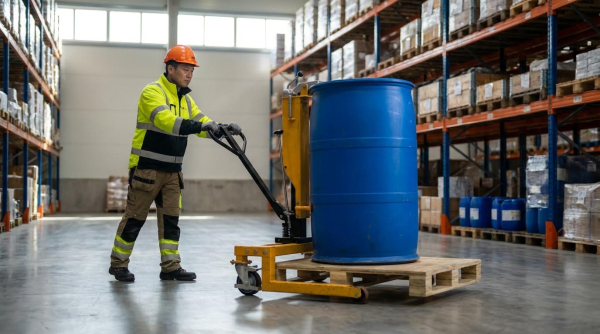
Specialized barrel hand trucks evolved to control heavy cylindrical loads under tight safety margins. Design choices affect stability, ergonomics, and route flexibility, especially when a hand truck is used to move two barrels at once. Engineers must match frame geometry, restraint hardware, and wheel sets to the plant’s floor conditions and drum characteristics. The following subsections compare typical configurations and define when multi‑barrel solutions provide a safer, more efficient option.
Single-Barrel Versus Multi-Barrel Designs
Single-barrel hand trucks supported one drum at a time and prioritized maximum control. These trucks usually had a narrow frame, a deep nose plate, and a curved back to match the drum radius. They minimized tipping risk because the operator only managed one center of gravity. In contrast, multi-barrel designs carried two or more drums in a fixed pattern, often side by side or in-line. When a hand truck is used to move two barrels, the frame required higher stiffness, wider wheel track, and stronger joints to resist torsion. Multi-barrel units increased throughput but demanded stricter loading discipline and operator training to keep both drums stable on uneven floors or ramps.
Drum Cradles, Clamps, And Containment Features
Drum cradles shaped the contact interface between the truck and the barrel shell. Curved cradle profiles distributed contact pressure and reduced local denting on steel or plastic drums. Mechanical clamps or cam-locks engaged drum chimes or ribs to prevent rolling or sliding, which was critical when a hand truck is used to move two barrels simultaneously. Additional containment features included adjustable straps, chains, and crossbars that locked drums together and into the frame. Spill-control trays or lips under the barrel zone helped contain minor leaks in chemical or food plants. Engineers selected cradle and clamp systems based on drum diameter range, surface finish sensitivity, and whether the plant handled pressurized or hazardous contents that required positive restraint under shock loads.
Wheel, Tire, And Brake Options For Barrels
Wheel and tire choices determined how safely operators could move loaded barrel trucks over real plant floors. Solid rubber or polyurethane wheels worked well on smooth concrete and resisted punctures from debris. Pneumatic or foam-filled tires reduced vibration when a hand truck is used to move two barrels over rough or expansion-jointed surfaces, but they required pressure monitoring. Larger wheel diameters lowered rolling resistance and improved obstacle clearance at thresholds. Precision bearings minimized push force, which reduced musculoskeletal strain during long moves. Integrated brakes or wheel chocks were essential on ramps or dock plates, holding the truck while operators positioned or released the drums. Corrosion-resistant wheel materials and sealed bearings extended life in wet or chemical-washdown areas.
When To Use Atomoving Multi-Barrel Trucks
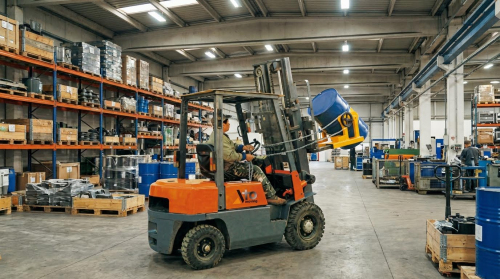
Multi-barrel trucks from Atomoving suited workflows where operators repeatedly moved matched pairs of drums between fixed stations. They were appropriate when route surfaces were level, clear, and wide enough to accommodate the longer or wider footprint without clipping obstacles. Using an Atomoving multi-barrel unit became advantageous when a hand truck is used to move two barrels that had similar fill levels and masses, allowing predictable combined center-of-gravity behavior. Plants gained efficiency by halving the number of trips, while still respecting load ratings and ergonomic push-force limits. However, engineers should specify these trucks only after verifying floor condition, ramp gradients, and turning radii, and after implementing operator training that covered loading symmetry, clamp use, and speed control on inclines. Additionally, specialized equipment like a forklift drum grabber can complement these workflows for heavier tasks. For environments requiring frequent drum handling, a drum dolly may also prove useful for short-distance transport.
Safe Operation With Multiple Barrels Loaded
When a hand truck is used to move two barrels, small errors can create large instability. Safe multi-barrel moves depend on disciplined inspection, planned routes, and strict control of speed and center of gravity. Operators must coordinate as a team, use spotters when visibility drops, and keep the load within rated capacity at all times.
Pre-Use Inspection And Route Planning
Inspect the multi-barrel hand truck before loading any drums. Check wheels and tires for cuts, wobble, low pressure, or flat spots, because dual-barrel loads magnify rolling resistance and steering forces. Verify that axles, fasteners, cradles, and clamps are tight and free from cracks or deformation. Test brakes and parking locks where fitted, and confirm that any straps or chains run freely and latch securely.
Next, walk the route before a hand truck is used to move two barrels. Remove loose debris, hoses, and offcuts that could stop a wheel or shift the load. Identify gradients, expansion joints, drain grates, and tight corners, then choose the flattest, widest path with adequate turning radius. Plan safe zones for stopping, and define pedestrian exclusion around ramps and intersections. If visibility will be restricted, pre-assign a spotter and agree on signals before starting the move.
Loading Patterns And Center-Of-Gravity Control
When a hand truck is used to move two barrels, the loading pattern controls stability. Position the heavier or fuller barrel at the lower, truck-side position to keep the combined center of gravity low and close to the axle. Align both barrels so their vertical centerlines sit symmetrically about the truck’s mid-plane, avoiding any lateral offset that could cause side tipping during turns. Use cradles, curved backrests, or formed frames to maintain full surface contact between drum and truck.
Secure each barrel with clamps, straps, or chains rated for the total drum mass and dynamic loads. Tighten restraints so barrels cannot roll, slide, or rotate when the truck starts, stops, or crosses a threshold. Keep the stack height below the operator’s eye line whenever possible to preserve forward visibility. Before tilting back, confirm that the tongue or toe plate sits fully under both barrels and that the combined load remains within the manufacturer’s rated capacity with a safety margin.
Pushing, Turning, And Ramp Navigation
Operate at walking speed and avoid sudden accelerations when a hand truck is used to move two barrels. Push rather than pull on level floors so body weight stays behind the load and the operator maintains better control. Keep both hands on the handles, elbows close to the torso, and maintain a stable stance to resist any unexpected side force. Watch wheel paths closely at door thresholds and floor joints, because a single stopped wheel can twist the frame and destabilize two loaded barrels.
Use wide, deliberate turns and reduce speed before changing direction. Avoid pivoting sharply on one wheel, which shifts the center of gravity outward and increases tip risk. On uphill ramps, keep the hand truck in front, with the load uphill and the operator behind, pushing steadily without jerks. On downhill ramps, again keep the truck in front of the operator, lean slightly back, and use brakes or controlled resistance to limit speed. Never run on ramps, and stop the move immediately if any wheel hop, brake fade, or loss of control appears.
Team Communication And Use Of Spotters
Two-barrel moves reduce visibility and increase kinetic energy, so structured communication is essential. Before moving, the operator and any spotter should agree on simple verbal commands and hand signals for stop, slow, turn, and emergency. A spotter should walk ahead or to the side in the operator’s blind zone, focusing on floor hazards, pedestrians, and door swings, not on the barrels themselves. The spotter must never place hands or feet between the load and fixed structures.
In congested aisles or near intersections, the spotter should control traffic and confirm that the path is clear before the operator proceeds. Both team members should maintain eye contact when possible and pause the move if line-of-sight is lost. If the load begins to shift, both must prioritize stepping clear rather than trying to catch or physically restrain two full barrels. After the move, the team should review any near misses and adjust route planning, signals, or loading patterns to improve the next operation.
Summary And Key Takeaways For Safer Barrel Moves
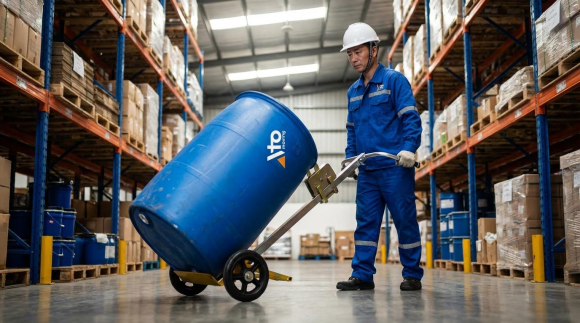
Safe barrel moves require disciplined technique, suitable equipment, and consistent supervision. A hand truck is used to move two barrels only when the rated capacity, geometry, and stability margins all remain within safe limits. Operators must understand how multi-barrel loads affect center of gravity, braking distance, and required push force. Plants that standardize procedures, training, and inspections significantly reduce recordable injuries and product losses.
From the case data on hand truck incidents, the dominant risks involved tip-over, runaway loads on ramps, and hand pinch injuries at tight clearances. These risks increased sharply when operators exceeded load ratings, stacked barrels improperly, or walked backward without spotter support. For two-barrel moves in particular, poor weight distribution and unsecured drums often caused lateral instability during turns. Clear rules about when a hand truck is used to move two barrels versus when a drum transporter is mandatory should appear in plant policy and job safety analyses.
Future practice in industrial plants will likely combine engineered solutions, such as dedicated multi-barrel hand trucks with better containment, and digital tools like route planning and load tracking. However, the fundamentals remain: pre-use inspection, route clearance, controlled walking speed, and preference for pushing rather than pulling. Implementation should focus on simple checklists, visual load diagrams for common barrel configurations, and routine toolbox talks that reinforce limits on slope, speed, and load height. Plants that treat “a hand truck is used to move two barrels” as a defined, controlled task rather than an informal shortcut will maintain safer operations as equipment and layouts evolve. Additionally, investing in specialized equipment like a forklift barrel grabber or a electric drum stacker can further enhance safety and efficiency.