Warehouse order pickup policies defined clear rules for how people, equipment, and inventory interacted from receiving through shipping. Modern operations used engineered layouts, slotting, and automation to shorten pick paths, cut walking time, and increase accuracy. Order management systems and rules engines coordinated picking methods, task assignment, and verification to align with safety and customer requirements. This article outlined how to design pickup workflows and layouts, select and configure picking strategies and WMS rules, implement safety and operator procedures, and build a best‑practice policy framework for safe, efficient warehouse order pickup.
Designing Order Pickup Workflows And Layout
Designing order pickup workflows and layout required a systemic view of material flow, labor, and technology. High-performing warehouses aligned physical zones, storage media, and pick methods with SKU velocity and order profiles. Modern layouts minimized travel, touchpoints, and cross-traffic while enabling automation such as ASRS, conveyors, and goods-to-person systems. Clear separation of returns, consolidation, and picking zones supported accuracy, control, and auditability.
Mapping Facility Flow From Receiving To Shipping
Effective facility flow design started with a value stream from receiving through storage, picking, consolidation, and shipping. Engineers mapped each functional area so inventory moved forward with minimal backtracking or cross-traffic. Receiving areas incorporated scheduled dock appointments, RF-based check-in, and immediate labeling to ensure visibility and traceability. From there, directed put-away rules in the WMS routed goods to reserve or forward pick locations based on velocity and handling unit type.
Pick, pack, and ship zones followed in a logical sequence to reduce walking distance and double handling. Facilities often located fast-moving forward pick areas between reserve storage and shipping to shorten replenishment and outbound paths. Dedicated consolidation areas near outbound docks allowed grouping of picks from different zones into discrete orders. This linear, U-shaped, or L-shaped flow reduced congestion, improved safety, and simplified traffic rules for powered industrial trucks and pedestrians.
Slotting, Pick Paths, And SKU Velocity Management
Slotting policies relied on continuous inventory profiling by SKU velocity, cube, and handling characteristics. Fast-moving SKUs were placed close to shipping and at waist height to reduce travel and ergonomic strain. Slow movers and bulky items were stored higher or deeper in reserve locations, accessed less frequently. Engineers considered cube movement velocity, not only pick frequency, to align storage media with throughput and replenishment patterns.
Optimized pick paths minimized deadheading and cross-aisle travel. WMS-driven routing sequenced locations to follow a one-way or serpentine path, especially for batch or zone picking. Frequently picked-together items were co-located to reduce walking and improve pick density per meter traveled. Carton flow racks, tote flow, and ground-level pick faces supported high-frequency single-unit or case picking with gravity-fed replenishment.
Slotting rules also enforced separation of SKUs to avoid mis-picks, especially for visually similar items. Policies prohibited mixing multiple SKUs for different orders in the same cart compartment where error risk was high. Periodic re-slotting followed demand forecasting, seasonal profiles, and SKU introductions or obsolescence. This kept the physical layout synchronized with evolving order patterns and maintained high pick productivity.
Integrating ASRS, Conveyors, And Goods-To-Person
Automation integration started with a clear definition of pick volumes, order profiles, and space constraints. Automated storage and retrieval systems (ASRS) offered dense storage and automated retrieval, typically recovering up to 85% of floor space. Goods-to-person solutions, including shuttles, vertical lift modules, and mini-load ASRS, brought totes or trays to ergonomic pick stations. This reduced operator travel, improved accuracy, and supported high pick rates with consistent cycle times.
Conveyor systems formed the spine between storage, picking, consolidation, and shipping. Engineers used powered conveyors to move cartons or totes to and from pick zones, reducing manual transport and fatigue. Merge, divert, and sortation points were positioned to minimize accumulation and bottlenecks. Controls integrated with the WMS routed work to the correct zones and supported wave, batch, or zone-based releases.
Layout decisions ensured safe interfaces between automated and manual areas, with guarded transfer points and clear pedestrian routes. Automation projects considered maintenance access, redundancy, and future expansion capacity. ROI analyses typically evaluated labor savings, space utilization, error reduction, and cycle-time improvements over a three- to five-year horizon. Simulation tools and digital twins helped validate throughput and buffer sizing before physical implementation.
Separating Returns, Consolidation, And Picking Zones
Returns handling required physical and process separation from outbound picking to prevent stock loss and uncontrolled inventory. Dedicated returns areas near receiving or a side dock allowed rapid check-in, inspection, and disposition decisions. Quality control stations in the returns zone determined whether items were restockable, scrap, or rework candidates. The WMS updated inventory status in real time to avoid inadvertent allocation of quarantined goods.
Consolidation zones handled sortation of picks from multiple zones into discrete orders or shipments. These areas included staging lanes, scan verification, and packing stations with dimensional data and cartonization logic. Clear policies defined when picks moved from pick carts or totes into
Order Picking Methods, WMS Rules, And Automation
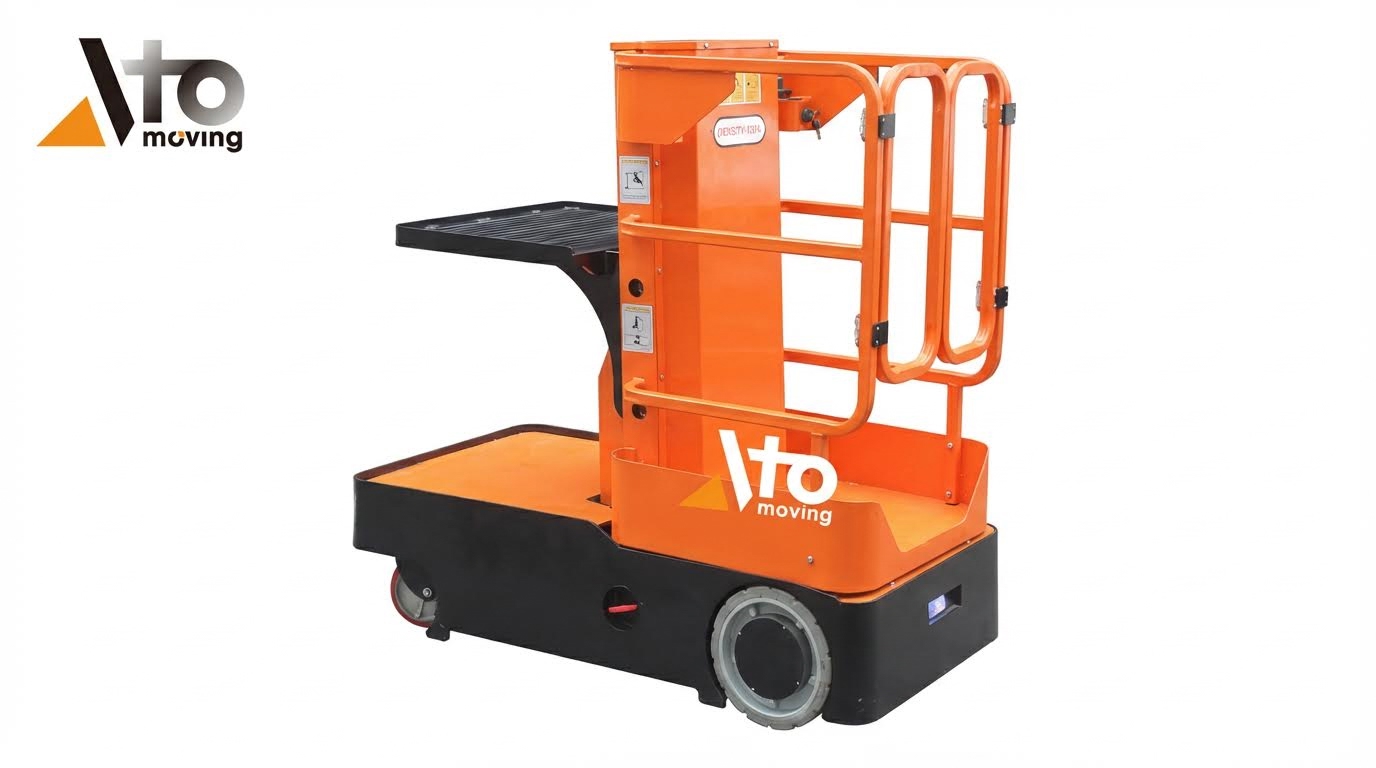
Order picking methods, warehouse management rules, and automation technologies formed the core of modern warehouse optimization. Operations leaders combined process design with software configuration to cut travel, increase accuracy, and stabilize labor productivity. This section described how to select pick strategies, configure WMS rules, deploy assistive technologies, and use data for continuous improvement.
Choosing Batch, Wave, Zone, And Hybrid Pick Strategies
Order picking strategy selection depended on order profile, SKU mix, and service level targets. Batch picking grouped multiple small orders so a picker collected the same SKU once, which reduced travel for high-order, low-line environments. Wave picking released groups of orders based on shipping cut-off, carrier, or route, synchronizing picking with dock schedules and downstream packing capacity. Zone picking divided the warehouse into zones, with pickers staying in their area while orders moved physically or virtually between zones for consolidation.
Hybrid approaches combined these methods, for example zone-batch picking where each zone picked batched orders and a consolidation area merged them into discrete shipments. WMS configuration supported these strategies by sequencing releases, assigning work by zone, and enforcing cartonization rules for direct pick-to-carton. Engineers evaluated internal order cycle time, picker utilization, and error rates when choosing or adjusting strategies. Periodic re-analysis was necessary as SKU velocity profiles, channel mix, or order volumes changed.
Configuring WMS Rules, Directed Picking, And Put-Away
Warehouse management systems used rules engines to direct picking and put-away based on inventory attributes, locations, and customer constraints. Directed picking rules allocated stock using methods such as first-in-first-out (FIFO) or first-expired-first-out (FEFO), while also honoring conditions like lot status, quality hold, or customer-specific requirements. Allocation modes controlled whether the system picked entire license plate numbers (LPNs), allowed mixed LPN and loose picking, or prevented breaking standard pack units to preserve handling efficiency. Strict pick unit-of-measure modes assumed timely replenishment of forward pick faces instead of splitting cases prematurely.
Directed put-away rules suggested optimal storage locations for received goods, considering item velocity, compatibility, and regulatory constraints like non-commingling of lots or projects. Rules could force storage in existing item locators, prohibit commingling of different SKUs, or route inventory to inspection or quarantine zones based on purchase order type or quality results. Strategies ordered sequences of rules; the WMS evaluated them until it found a rule that fully satisfied the task or fell back to a default rule without restrictions. Tools like a rules workbench and simulators allowed engineers to test picking and put-away logic, trace why stock was excluded, and adjust criteria without disrupting live operations.
Scan Verification, Pick-To-Light, Voice, And Cobots
Scan verification using handheld RF or wearable devices increased accuracy by validating item, location, and quantity at the point of pick. Operators scanned locations and barcodes before confirming picks, which reduced mis-picks and simplified root-cause analysis when exceptions occurred. Pick-to-light systems used light modules and displays on storage locations to guide operators to the correct SKU and quantity, which worked well for high-velocity, small-item carton flow racks. Voice-directed picking provided spoken instructions and voice confirmations, enabling hands-free operation and improving ergonomics in environments with long walk paths.
These technologies integrated with the WMS so task assignments, confirmations, and exceptions updated inventory in real time. Cobots and pick-assist robots supported operators by handling cart movement, zone-to-zone transfers, or goods-to-person delivery of totes. Engineers evaluated each technology using metrics such as pick rate per hour, error rate, and training time, and matched solutions to order picking machines and labor skill levels. Safety policies addressed interaction zones, speed limits, and emergency stops when robots shared aisles with pedestrians and forklifts.
KPIs, Cycle Time, And Digital Twin Performance Tuning
Key performance indicators provided quantitative control over order picking and automation performance. Typical KPIs included order picking accuracy, lines picked per labor hour, internal order cycle time, space utilization, and cost per order. Real-time dashboards from WMS and labor management systems tracked queue lengths, picker travel, and bottlenecks in zones, which enabled supervisors to rebalance work or change release rules during the shift. Measuring replenishment timeliness for forward pick locations was critical, because delayed replenishment created idle time and emergency picks.
Cycle time analysis broke the order fulfillment process into steps such as wave release, travel, pick, consolidation, and pack. Engineers used this breakdown to identify non-value-adding activities in line with Lean principles, such as unnecessary walking or double handling
Safety, Compliance, And Operator Procedures
OSHA Training, PIT Classification, And Licensing
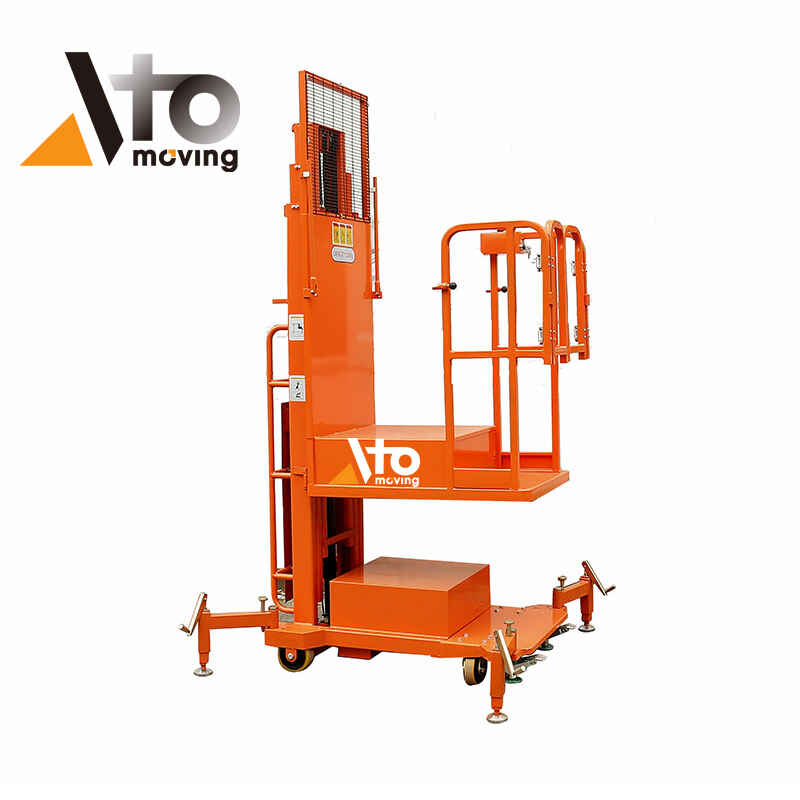
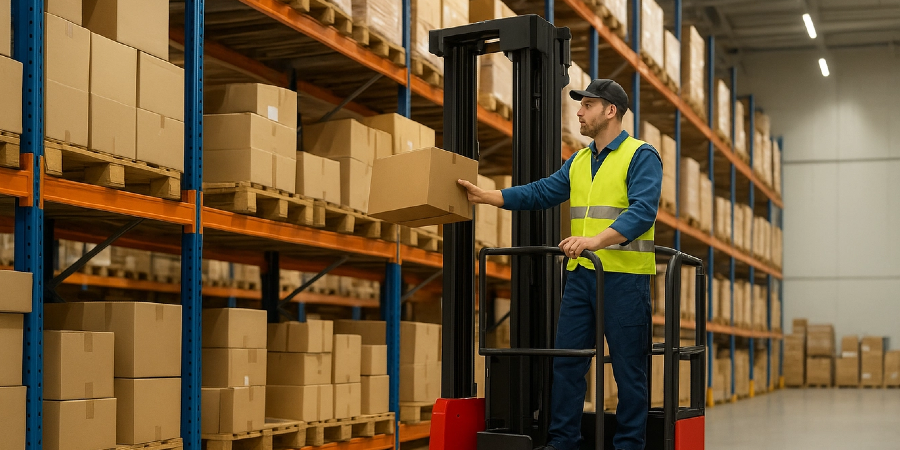
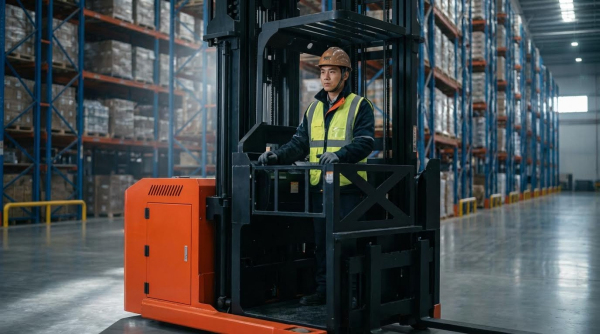
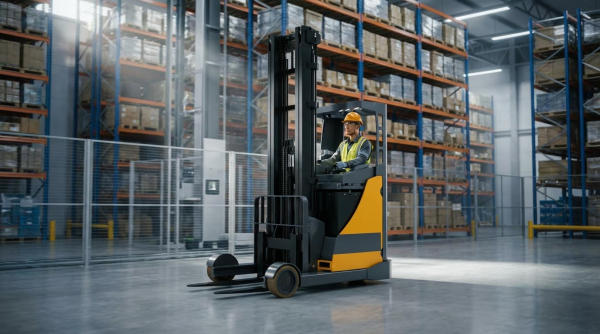
Order pickers fell under OSHA’s Powered Industrial Truck standard as Class II electric motor narrow aisle trucks. Operators required formal training, practical evaluation, and documented certification before independent use. Employers had to train on site-specific hazards, warehouse traffic patterns, and equipment variants, then re-evaluate after incidents or near misses. Untrained operation exposed companies to regulatory citations, fines, and higher incident risk. Facilities typically integrated OSHA requirements into written warehouse policies and standard operating procedures. Third-party or in-house trainers aligned curricula with the Powered Industrial Truck regulation and any local jurisdiction requirements. Refresher training followed role changes, equipment changes, or observed unsafe behavior.
Pre-Use Inspections, Load Limits, And Fall Protection
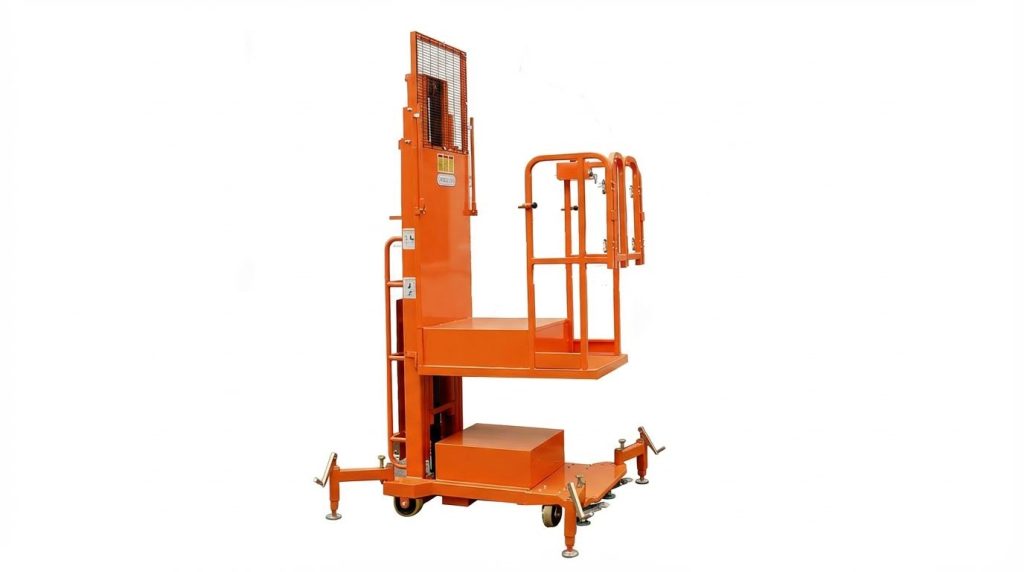
Operators conducted pre-shift inspections that covered structural integrity, hydraulics, controls, brakes, steering, and safety devices. They checked for leaks, damaged forks or platforms, loose fasteners, and tested alarms, interlocks, and emergency stop functions. Management locked out and tagged out defective units until a qualified technician repaired and cleared them. Load rating plates specified maximum capacities, which included the operator, pallet, load, and tools. Policies prohibited exceeding rated capacity or altering center-of-gravity with overhanging or unstable loads. At elevation, operators used approved fall protection such as full-body harnesses connected to designated anchor points. Platforms required intact guardrails, toe boards, and self-closing gates to prevent egress while raised. Supervisors audited inspection checklists and incident reports to confirm consistent application of these rules.
Ergonomics, Travel Reduction, And Workstation Design
Warehouse safety programs addressed cumulative strain and fatigue alongside acute incident risks. Facilities positioned high-velocity SKUs at waist-to-shoulder height to minimize bending and reaching. Goods-to-person systems, carton flow racks, and optimized slotting reduced walking distance and repetitive climbing. Cushioned floor mats, appropriate footwear, and periodic micro-breaks lowered musculoskeletal stress. Workstations for packing, labeling, and documentation placed scanners, printers, and tools within easy reach to avoid awkward postures. Policies required regular review of pick paths and task design to eliminate unnecessary motions. Training emphasized proper lifting techniques and encouraged early reporting of discomfort before injuries developed. Ergonomic improvements typically increased both picking productivity and long-term operator retention.
Traffic Control, Signage, Lighting, And Guarding
Safe order picking depended on disciplined traffic management inside the warehouse. Facilities marked separate pedestrian walkways, PIT aisles, and crossing points with floor striping and posted signs. Speed limits, stop lines at intersections, and right-of-way rules reduced collision risk between lift trucks, order pickers, and pedestrians. Adequate, uniform lighting levels in aisles, rack faces, docks, and mezzanines supported accurate reading of labels and signs while reducing trip hazards. Reflective or high-contrast signage identified storage zones, emergency exits, fire equipment, and restricted areas. Guardrails, rack protectors, bollards, and column guards shielded structural elements and walkways from vehicle impact. Mesh partitions or cages segregated high-risk equipment and created controlled-access areas. Periodic safety walks and incident analyses guided layout adjustments and additional guarding where near misses clustered.
Summary Of Best Practices And Policy Framework
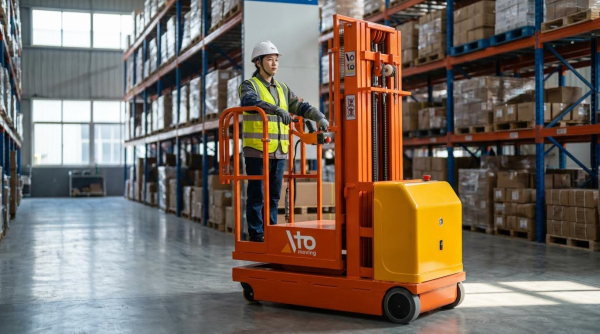
Warehouse order pickup performance relied on an integrated framework covering layout, methods, automation, and safety. Technically robust operations combined flow‑through facility design, engineered pick strategies, and rules‑driven WMS control with disciplined procedures for operators. Evidence from past deployments showed that systematic slotting by SKU velocity, reduced travel paths, and goods‑to‑person or ASRS solutions cut travel and search time while increasing accuracy.
From an industry perspective, the policy baseline included OSHA‑compliant training for order picker operators, formal pre‑use inspections, enforced load limits, and mandatory fall protection at height. Facilities codified process standards for receiving, directed put‑away, replenishment, picking, consolidation, and returns, supported by scan verification and WMS rules for FIFO or FEFO allocation. Best‑in‑class sites monitored KPIs such as pick accuracy, order cycle time, space utilization, and labor productivity, using these metrics to refine pick paths, slotting rules, and staffing models.
Practical implementation required cross‑functional governance. Operations, safety, IT, and maintenance agreed on standard operating procedures, change‑control for WMS rules, and preventive maintenance intervals for order pickers, conveyors, and ASRS. Facilities documented zoning for picking, consolidation, and returns, along with traffic plans, guarding, signage, and lighting specifications. They also defined training curricula and refresher intervals for operators on equipment use, storage systems, and updated layouts.
Looking forward, warehouses increasingly adopted higher levels of automation, including robotics, advanced WMS optimization, and digital‑twin style simulation for pick‑wave design and slotting changes. A balanced policy framework treated automation as an enabler, not a substitute, for engineered processes and strong safety culture. Organizations that periodically reviewed procedures, technology performance, and regulatory requirements maintained safe, adaptable, and high‑throughput order pickup operations over time.