Every facility that needs a machine to lift pallets of stuff faces the same core question. Which mix of pallet jacks, walkie stackers, forklifts, and pallet inverters gives safe, efficient flow at the lowest lifecycle cost? This article walks through the main equipment families, the engineering limits that govern capacity, stability, and energy use, and the safety and compatibility rules that protect both people and pallets.
You will see how to compare manual and electric options, map equipment to travel distance and lift height, and plan maintenance and data systems around real duty cycles. The final section turns these points into practical selection guidelines that help engineers, warehouse managers, and safety teams choose and integrate pallet lifting systems with confidence.
Core Types Of Pallet Lifting Equipment
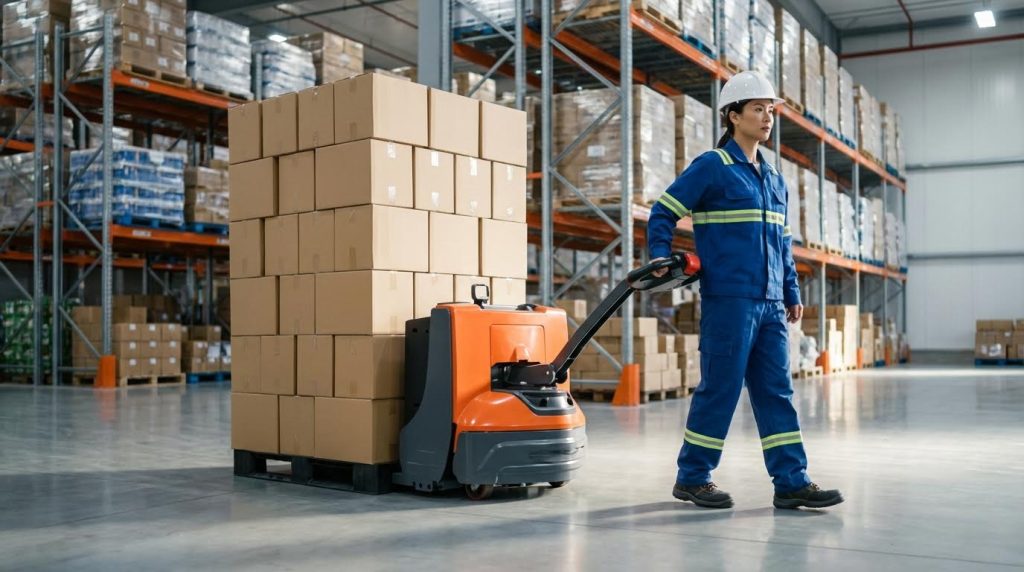
When engineers search for a machine to lift pallets of stuff, they usually mean one of four groups. Manual and electric pallet jacks cover low-level moves. Walkie and straddle stackers bridge the gap to racking. Forklifts handle heavy loads and high bays. Pallet inverters and tilters solve rotation and rework tasks that standard trucks cannot handle.
Manual Vs. Electric Pallet Jacks: Roles And Limits
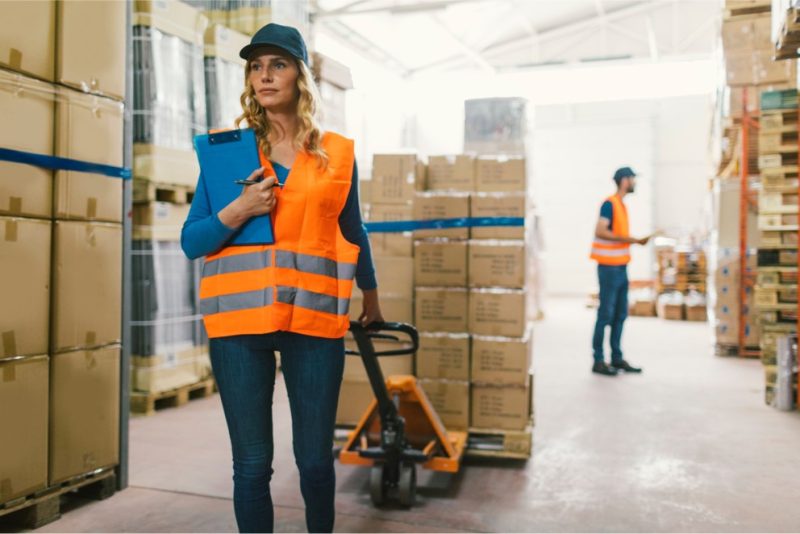
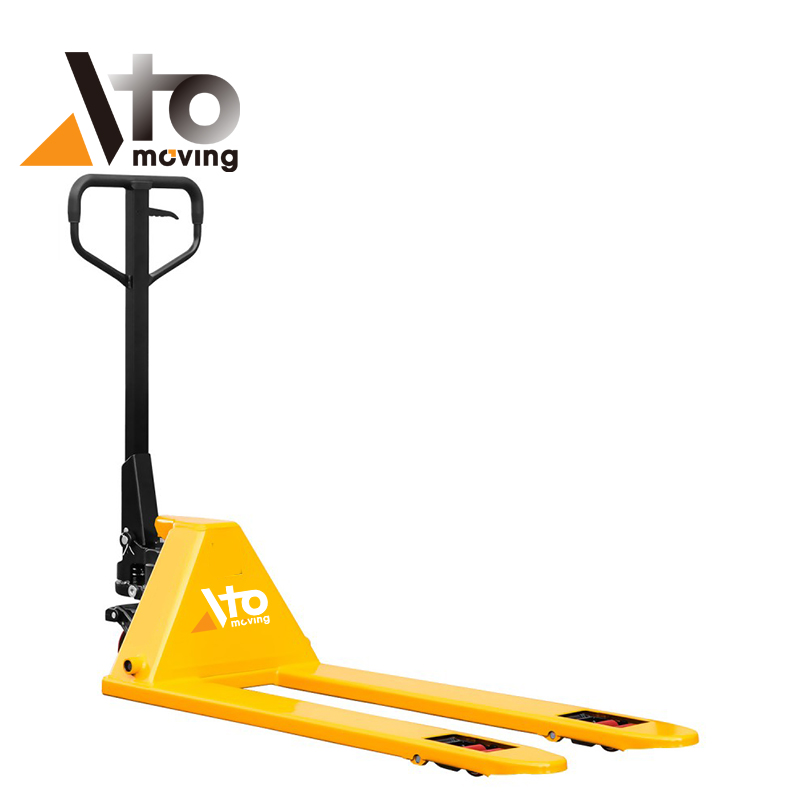
Manual pallet jacks are the simplest machine to lift pallets of stuff at floor level. They use a hand-pumped hydraulic circuit and a drawbar for steering. Typical capacity ranges from 2,000 kilograms to 3,000 kilograms. Lift height is only enough to clear the floor, about 75 millimetres to 210 millimetres for standard models.
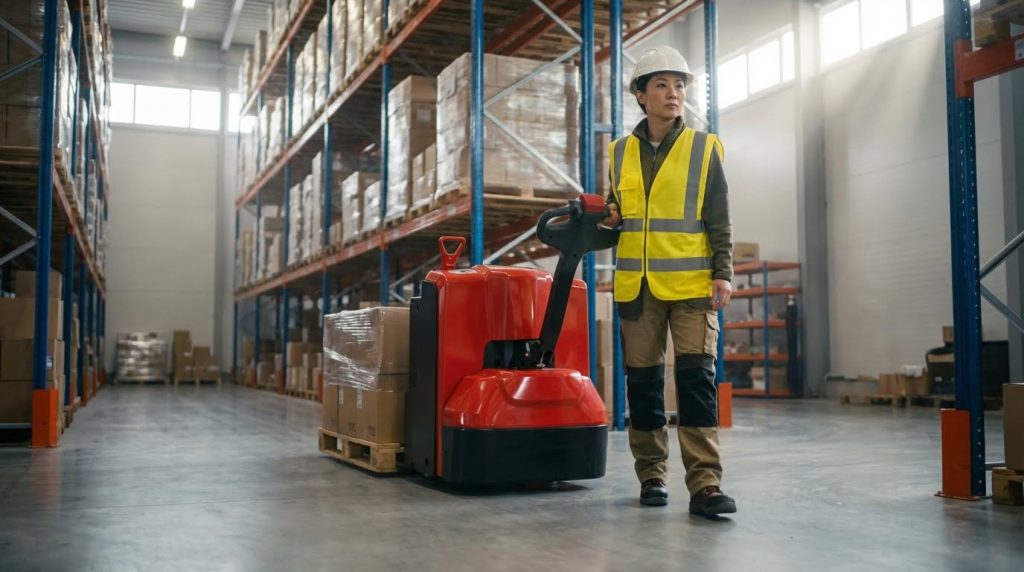
Electric pallet jacks add a traction motor and powered hydraulics. They keep similar capacities but support higher duty cycles and longer runs. Manual jacks suit light to medium loads, short distances, and budget limits. Electric units fit high-throughput docks, cold chain work, and multi-shift use.
Key trade-offs include:
- Capital cost: manual units cost far less to buy.
- Labor: electric units cut operator effort and fatigue.
- Environment: manual units tolerate very low temperatures better.
- Maintenance: manual units need less service and simpler parts.
Both types still operate only near floor level. They do not replace stackers or forklifts for racking work.
Walkie Stackers And Straddle Stackers In Tight Aisles
Walkie stackers are a compact answer when you need a machine to lift pallets of stuff into low to medium racking. Operators walk behind the truck and steer with a tiller arm. Electric lift masts raise loads typically up to about 3 metres to 4 metres. Rated capacity often sits between 1,000 kilograms and 2,500 kilograms.
Straddle stackers add outriggers that straddle the pallet. This design improves stability and allows handling of closed-board pallets. It also reduces the risk of pallet damage at entry. These units work well in narrow aisles where a sit-down forklift cannot turn.
Engineering teams usually compare:
| Aspect | Walkie / Straddle Stackers |
|---|---|
| Typical aisle width | Much narrower than counterbalance forklifts |
| Lift height | About 3–4 m, below reach trucks |
| Operator position | Walking, no cab |
| Best use case | Light to medium loads in tight storage |
Stackers need level floors and controlled slopes. They are not ideal for long runs or outdoor yards.
Forklifts For Heavy Loads And High Lift Heights
Forklifts are the most common machine to lift pallets of stuff in heavy industry. They combine a powered drive train, a counterweight, and a vertical mast. Standard counterbalance trucks usually handle 1,500 kilograms to 5,000 kilograms. Heavy models reach 20,000 kilograms and beyond. Lift heights can exceed 10 metres with high masts.
Different forklift types target different layouts:
- Counterbalance trucks for general warehouse and yard work.
- Reach trucks for narrow aisles and high racking.
- Articulated trucks where turning space is tight.
- Rough terrain units for construction and outdoor sites.
Forklifts demand wider aisles than stackers and strict operator training. They also bring higher purchase and running costs. In return, they offer fast cycle times, strong acceleration, and the ability to work on ramps and mixed surfaces. For high-bay storage and heavy pallets, forklifts are often the only practical choice.
Pallet Inverters, Tilters, And Specialized Lifters
Pallet inverters and tilters handle tasks that normal lifting trucks cannot do efficiently. A pallet inverter clamps the load and rotates it, often 180 degrees. This helps swap damaged pallets, change from shipping to in-house pallets, or recover crushed product without restacking by hand. It is a focused machine to lift pallets of stuff, rotate them, and put them back down in a controlled way.
Pallet tilters tilt loads to a set angle. They improve access for picking, feeding production lines, or handling bags and drums on pallets. This reduces bending and reaching for operators and can cut ergonomic risk. Specialized lifters also include scissor platform lifts and work-positioners. These lift pallets to waist height for assembly or packing.
These devices usually sit at fixed stations near docks or production cells. They integrate with standard pallet jacks, stackers, or forklifts that handle horizontal moves. When specified well, they remove manual rework, cut cycle time, and protect both pallets and product.
Engineering Specs, Performance, And Safety
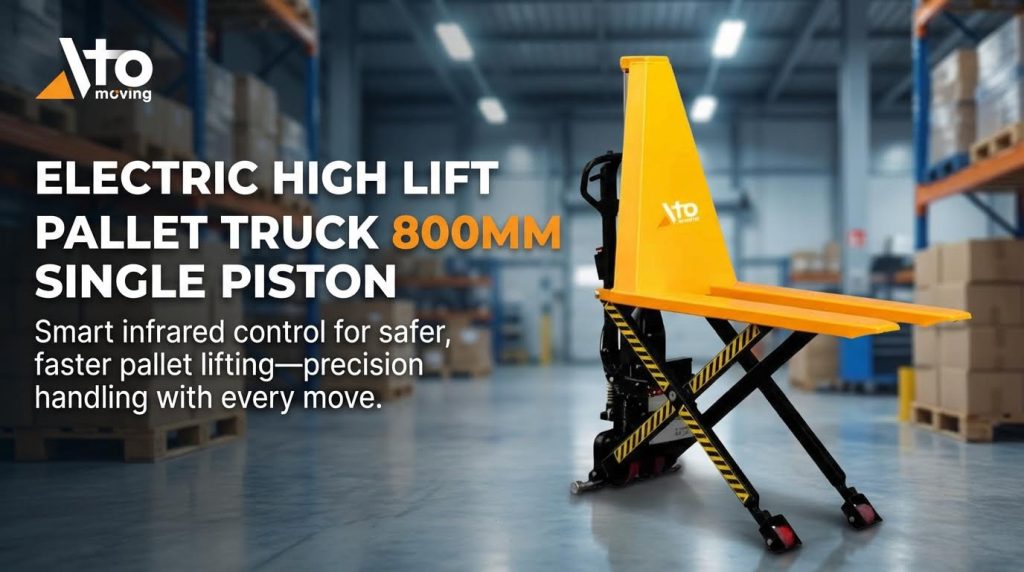
Engineering a machine to lift pallets of stuff starts with clear technical limits. Capacity, geometry, lift system design, and safety devices all interact. Poor matching between equipment and pallet can damage loads, floors, or racking. This section links specs to real warehouse performance and safety outcomes.
Key Capacity, Geometry, And Stability Parameters
Every machine to lift pallets of stuff works inside a defined load envelope. Rated capacity usually ranges from about 1,000 kilograms for light stackers to more than 20,000 kilograms for heavy forklifts. Engineers must compare this rating with the heaviest pallet plus packaging and any attachments on the truck. Dynamic effects from braking, turning, and uneven floors reduce usable capacity at height.
Geometry drives stability. Key dimensions include wheelbase, track width, mast height, and fork length. Typical forks are 1,000–1,200 millimetres long and 100–150 millimetres wide, with spacing adjustable from about 200–760 millimetres. Forks should support at least 75% of pallet depth to avoid tip risk. A longer wheelbase and wider track increase the stability triangle but reduce manoeuvrability in narrow aisles.
Stackers usually lift pallets to 3–4 metres. Many forklifts reach 10 metres or more with reduced residual capacity at top height. Stability depends on the combined centre of gravity of truck and load staying inside the support polygon. Tilting masts, load backrests, and correct fork height during travel all help keep this centre of gravity within safe limits.
Lift Systems, Hydraulics, And Energy Efficiency
A machine to lift pallets of stuff normally uses hydraulic lift with either manual or powered input. Manual pallet jacks use a hand pump and offer low cost and simple upkeep. Typical capacities sit between 2,000 and 3,000 kilograms with lift heights around 190–210 millimetres. High-lift scissor versions reach about 800 millimetres but trade off travel range and capacity.
Electric pallet trucks, stackers, and forklifts use motor-driven hydraulic pumps. Common efficiency ranges for industrial hydraulic systems sit around 80–90%, but real performance depends on valve design, hose routing, and maintenance. Electric pallet trucks have shown labour reductions of about 65% in three‑shift operations when they replace manual units in high-throughput zones. Regenerative braking in modern models can recover roughly 15% of traction energy, which extends battery life and reduces heat load on brakes.
Energy strategy should match duty cycle. Manual jacks work best for short moves, low daily pallet counts, and power-limited areas. Electric pallet trucks and stackers suit medium distances and frequent lifts, including cold chain work down to about −15 degrees Celsius with insulated batteries. For long travel, high lift, or outdoor work, engine or large electric forklifts provide higher speeds and capacities but demand more space, charging or fueling infrastructure, and stricter emissions or ventilation controls.
Safety Devices, Ergonomics, And Compliance
Safety devices turn raw lifting power into controlled handling. A machine to lift pallets of stuff should include reliable braking, load-holding valves in the hydraulic circuit, and parking brakes for ramps. Modern stackers and electric pallet trucks often add anti-tip logic, speed reduction with raised forks, and warning lights or audible alarms for shared-traffic aisles. Load backrests limit rearward shift of stacked cartons or totes.
Ergonomics is critical for injury prevention. Manual pallet jacks with long tillers and low rolling resistance reduce push–pull forces. Electric units add power steering, low-effort controls, and ride-on platforms for longer routes. Good design keeps frequently used controls within comfortable reach and limits hand–arm vibration. These features lower the risk of musculoskeletal disorders during repetitive pallet moves.
Compliance involves more than equipment labels. Operators of forklifts typically need formal certification, while pallet jack and stacker users still require documented training and assessment. Pre-use checks should cover forks, hydraulics, wheels, and safety systems. Facilities must keep clear aisles, mark pedestrian routes, and define speed limits. For hazardous goods or cold rooms, engineers must also align equipment choice with local regulations on explosion risk, hygiene, and noise exposure.
Equipment–Pallet Compatibility And Load Integrity
A machine to lift pallets of stuff must match pallet design and load pattern. Standard forks with a minimum height of about 75–85 millimetres suit most wooden pallets but may not enter low-profile or damaged decks. High-lift and scissor trucks need rigid pallets to avoid deckboard bending. Automated systems such as AGVs and AS/RS usually require pallets with tight dimensional tolerances and consistent entry openings.
Load integrity depends on contact surfaces, fork spacing, and wrap quality. Forks must sit fully under the load, with centre of gravity near the truck centreline. Overhang beyond pallet edges increases damage risk and can interfere with racking beams. Stretch wrap, corner boards, and strapping help keep column-stacked cartons stable during acceleration and braking.
Compatibility also covers environment. In cold stores, hydraulics, seals, and lubricants must tolerate low temperatures. In dusty plants, IP-rated components and sealed bearings protect moving parts. Cleanroom or pharmaceutical areas often use stainless steel electric pallet trucks with smooth surfaces and food-grade lubricants. Matching equipment, pallet type, and load design reduces downtime, product loss, and hidden maintenance costs across the material handling system.
Selecting And Integrating Pallet Lifting Systems
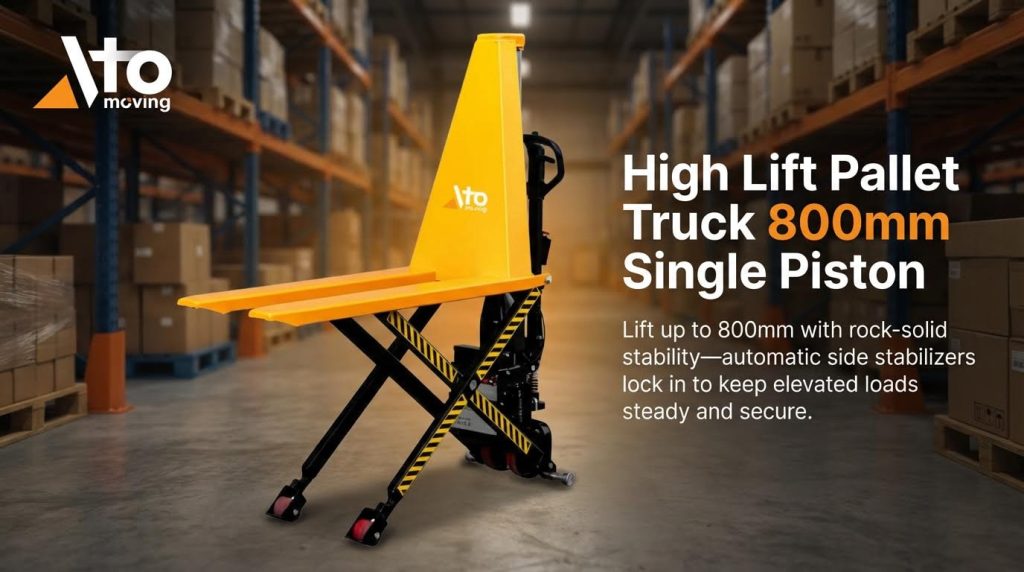
Engineers who search for a machine to lift pallets of stuff rarely need a single device. They need a matched set of pallet jacks, stackers, forklifts, or automated movers that fit distance, height, and duty cycle. This section explains how to map applications, compare manual, electric, and automated options, and plan lifecycle cost and data integration so every pallet move is safe, fast, and traceable.
Application Mapping: Distance, Height, And Duty Cycle
Start with a simple map of how pallets move. Trace each route from dock, to storage, to production, to shipping. For each step, define three core parameters: horizontal distance, lift height, and duty cycle per shift.
Manual pallet jacks suit short runs, typically under 30–40 m per trip, with floor-level lifting only. They fit low-throughput zones where operators move light to medium loads and walk anyway. Electric pallet trucks work better when flows exceed roughly 50 pallets per hour or routes cross several hundred metres. Stackers or walkie stackers become the right machine to lift pallets of stuff when you must lift up to around 3–4 m in tight aisles.
Forklifts cover long runs, high racks, and heavy loads. They justify their cost where you need lift heights above 4 m, mixed indoor–outdoor work, or frequent trailer loading. Document these ranges in a simple matrix so planners can see which equipment class fits each lane and storage zone.
Manual, Electric, And Automated Options Compared
When you compare a machine to lift pallets of stuff, look beyond capacity. Compare human effort, speed, and constraints.
| Option | Best use case | Key limits |
|---|---|---|
| Manual pallet jack | Short moves, light to medium loads, low capital budget | No vertical stacking, operator fatigue on long routes |
| Electric pallet truck | Medium distances, frequent dock work, three-shift use | Higher purchase cost, battery care, charging space |
| Stacker / walkie stacker | Narrow aisles, lifting to low racks, 1,000–2,500 kg | Limited height versus forklifts, indoor focus |
| Forklift truck | Heavy loads, high racks, indoor–outdoor transfer | Needs wide aisles, licensed drivers, higher risk profile |
| AGV / AMR / AS/RS | High volume, repeat paths, labour reduction | High integration cost, pallet quality requirements |
Manual units keep capital expenditure low and work during power outages. Electric units cut labour and strain but need charging and maintenance plans. Automated systems shift cost from labour to assets and software, which suits stable, high-volume flows.
Lifecycle Cost, Reliability, And Maintenance Planning
Selection should treat every machine to lift pallets of stuff as a lifecycle asset, not a one-time purchase. Total cost includes energy, parts, downtime, and training over five to ten years.
Manual pallet jacks have low purchase price and very short annual maintenance time. They use simple hydraulics and wheels that technicians can service quickly. Electric pallet trucks and stackers add batteries, chargers, and electronics. Their higher capital cost is often offset by labour savings in multi-shift operations.
Forklifts carry the highest lifecycle cost. They require scheduled inspections, tyres, and sometimes fuel infrastructure. To manage this, create a tiered maintenance plan:
- Daily pre-use checks by operators with checklists.
- Planned services based on hours run, not only calendar time.
- Critical spare parts on-site for high-usage units.
Track utilisation and breakdowns in a simple database or fleet system. Replace units that show rising repair cost per operating hour, even if they still run.
Automation, Cobots, Digital Twins, And Data Systems
Digital tools now change how engineers select a machine to lift pallets of stuff. Automated guided vehicles and mobile robots move pallets along fixed or flexible routes. They integrate with warehouse management systems to receive tasks and report status.
Cobots and robotic palletizers handle case stacking and de-stacking. They feed or empty pallets for manual or powered trucks. Digital twins model flows and simulate different fleet mixes before any purchase. Engineers can test aisle widths, rack heights, and traffic rules in the model.
Data systems also improve safety and reliability. Telematics on forklifts and electric trucks log speed, impacts, and battery health. This data supports targeted training and predictive maintenance. When you plan integration, define common data standards first. Ensure every device, from a simple electric pallet truck to an automated shuttle, can share status, location, and alarms with your core software stack.
Summary And Practical Selection Guidelines
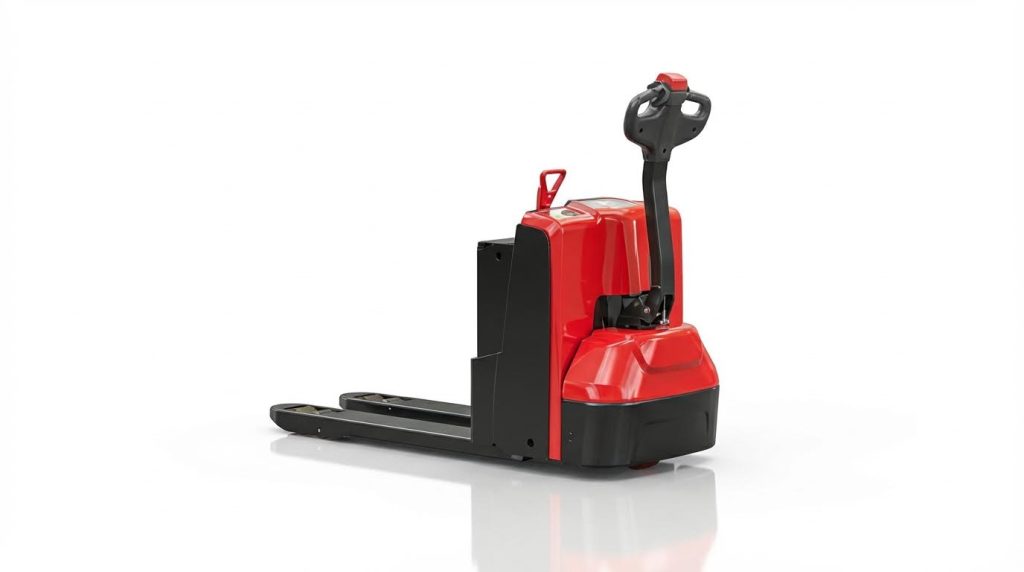
Operations that search for a machine to lift pallets of stuff need clear rules, not guesswork. This summary links engineering limits, safety, and cost so teams can choose between pallet jacks, stackers, forklifts, inverters, and automated systems with confidence.
Start with three core questions: how heavy, how high, and how often. Light to medium loads below about 1,500 kg, short moves, and low lift heights point to manual or electric pallet jacks. Medium lift heights around 3–4 m and tighter aisles usually favor walkie or straddle stackers. Heavy loads, outdoor work, or lift heights above 4 m normally require forklifts with suitable capacity and mast design.
Next, match the machine to pallet quality and layout. Narrow aisles, small turning spaces, and low door heights push designs toward compact trucks and stackers. High-bay racking, dense storage, or 24/7 work justify reach trucks, pallet shuttle systems, or AGV/AMR pallet movers. Automated systems need consistent pallet sizes, good deck condition, and tight dimensional tolerances.
Lifecycle cost matters as much as purchase price. Manual equipment offers low capital cost and simple upkeep but higher labor effort at high volumes. Electric and automated systems cut labor per pallet and improve ergonomics but need charging, software, and planned maintenance. Future layouts should allow upgrades from manual to powered, and later to semi- or fully automated pallet handling, without replacing every rack or pallet type.