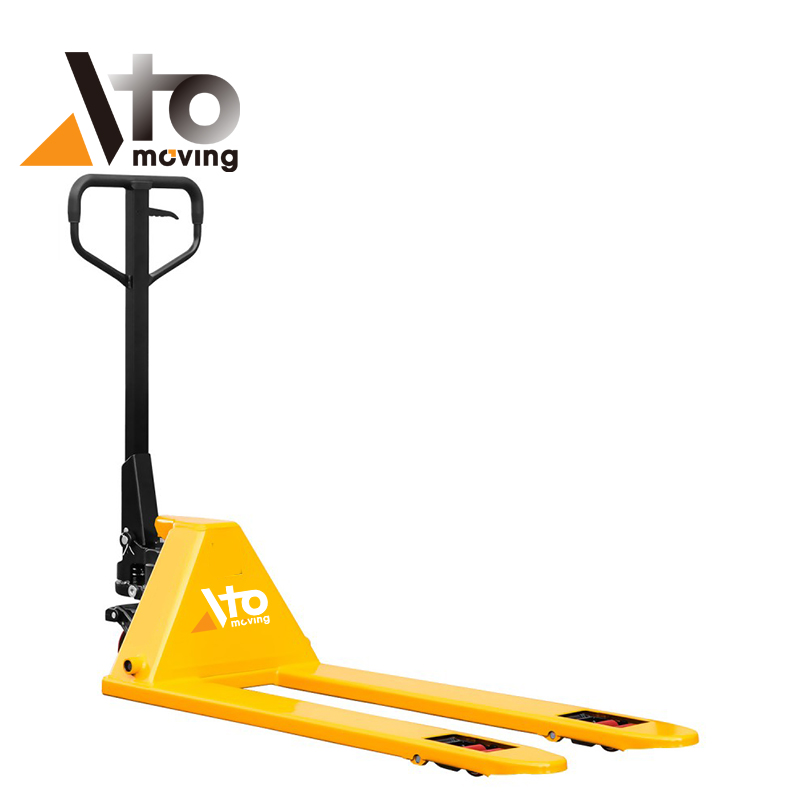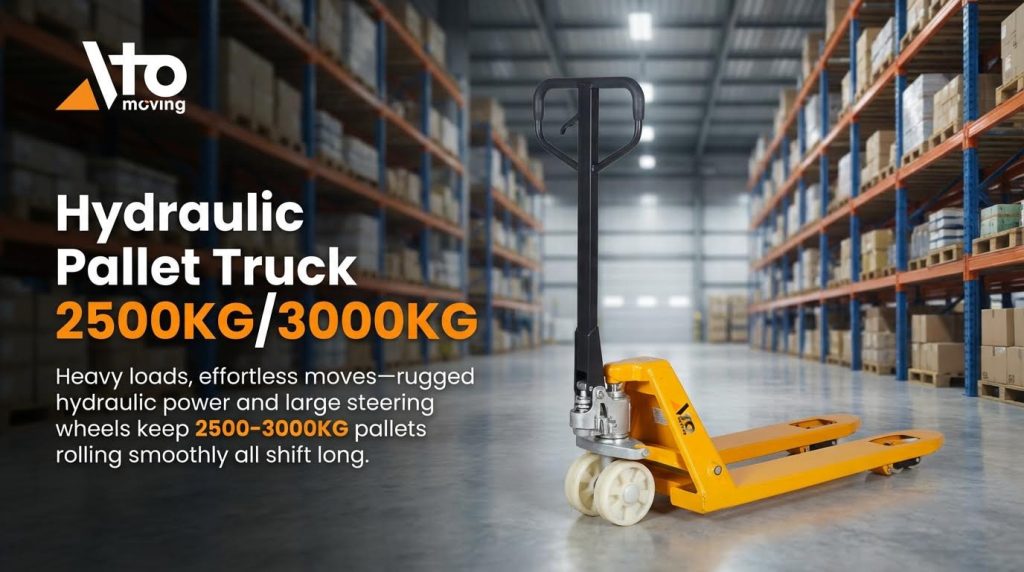
Operators who ask how much can a pallet truck lift need more than a simple tonnage figure. Capacity depends on truck type, load center, geometry, and duty cycle, not just the number on the nameplate. This article explains how manual pallet jack and powered pallet trucks compare on rated load, ergonomics, and application windows across typical warehouse and industrial environments.
You will see how engineering factors such as load center, moment, and the stability triangle define safe capacity, and why attachments or fork changes can derate a truck. The article also links capacity to maintenance, wear, and harsh environments like cold stores or dusty plants, including the role of digital monitoring and smart features. The final section converts these principles into a clear method for selecting the right hydraulic pallet truck capacity for each site and workflow, while considering options like the walkie pallet truck.
Comparing Manual And Powered Pallet Truck Capacity
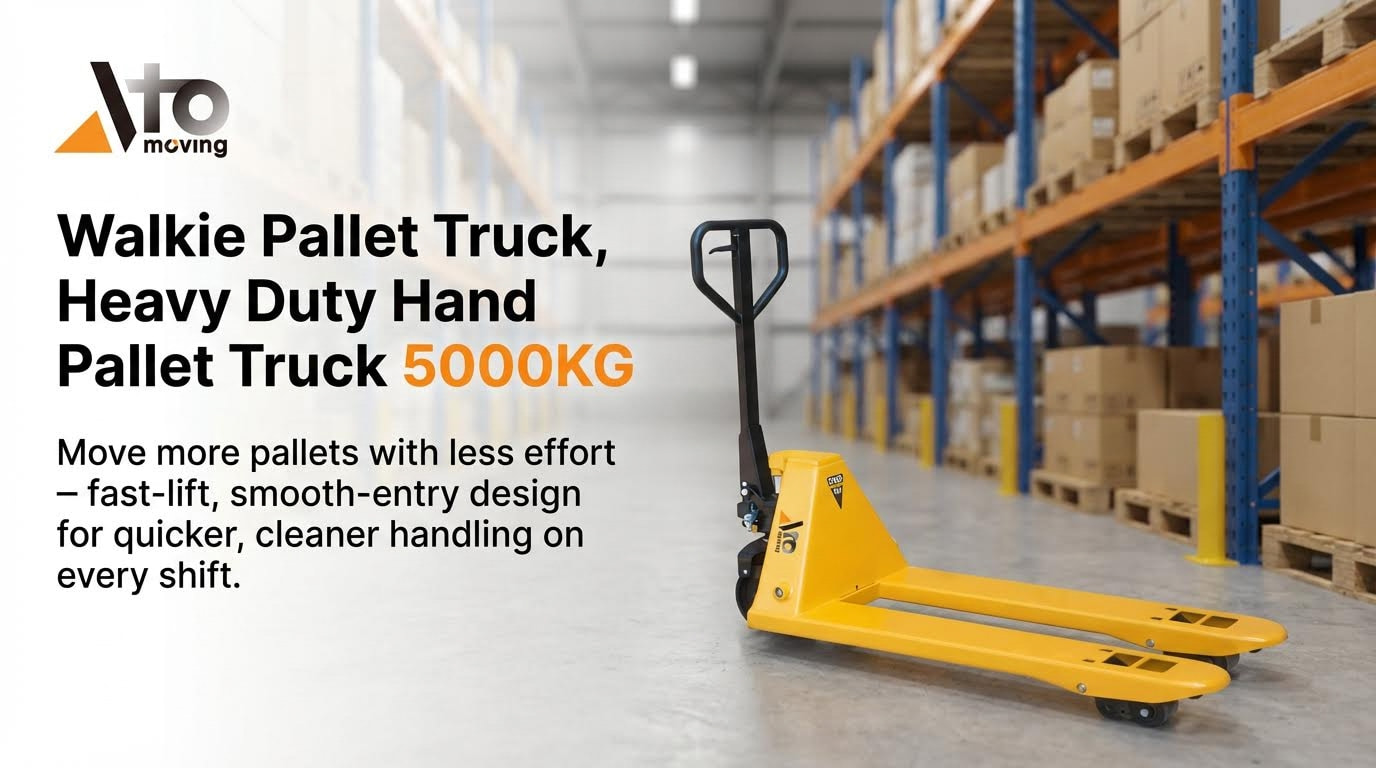
Engineers and buyers who ask how much can a pallet truck lift must look beyond a single tonnage figure. Capacity depends on truck type, duty profile, and how far and how often the load moves. Manual and powered pallet trucks share similar headline ratings, yet behave very differently in real warehouse cycles. This section explains how load ratings, ergonomics, and travel distance shape the correct choice between manual and powered units.
Typical Load Ratings: Tons, Cycles, And Duty Profiles
Most manual pallet trucks lift up to about 2.5 tonnes in standard warehouse use. Typical powered pallet trucks lift around 3 tonnes, although some walkie pallet truck models stay closer to 2 tonnes. In practice, both types usually work below their maximum rating to protect floors, pallets, and operators.
Capacity choice should match duty profile, not just peak weight. For low cycles, such as under 50 pallet moves per shift, a manual truck can handle near its rated load if the floor is level. For higher cycles or mixed gradients, powered units protect operators and maintain speed.
A simple comparison helps frame decisions.
| Aspect | Manual pallet truck | Powered pallet truck |
|---|---|---|
| Typical rated capacity | Up to ~2.5 t | Up to ~3 t |
| Best use | Short moves, low cycles | Long runs, high cycles |
| Lift / travel effort | Human muscle | Electric drive and lift |
| Energy source | Operator only | Battery plus operator |
The key point is simple. Similar ton ratings do not mean similar safe productivity at that rating across a full shift.
Ergonomics, Speed, And Operator Fatigue
Manual pallet trucks transfer almost all push, pull, and steering forces to the operator. As load approaches the rated limit, required tractive force rises sharply, especially on slopes or damaged floors. Over a shift, this increases fatigue and musculoskeletal risk.
Powered pallet trucks add electric traction and usually powered lift. The operator walks or rides while the drive unit supplies most of the force. This keeps heart rate and joint loading lower for the same moved tonnage.
Speed also differs. Manual trucks move at natural walking speed only when loads and floor conditions are easy. As resistance rises, pace drops. Powered trucks maintain more consistent speeds and recover time on long runs or repetitive dock cycles.
From an engineering view, ergonomics directly affects effective capacity. A 2.5 tonne manual rating might be realistic only for occasional moves. Daily design loads might need to stay closer to 60–70% of nameplate to keep fatigue within acceptable limits.
When Capacity Or Distance Favors Powered Units
Powered units usually win when either load mass or travel distance grows. If typical loads exceed about 1.5 tonnes, manual handling becomes slow and physically demanding, even on level floors. If average travel distance per move is long, powered traction cuts cycle time and effort.
Consider three common patterns.
- Heavy dock work: Frequent full-pallet moves between trailer and staging areas favor powered trucks.
- Long cross-dock runs: Distances above 30–40 metres per trip justify powered units for time and fatigue reasons.
- Slopes and dock plates: Any sustained gradient or rough transition quickly overloads manual capability at higher weights.
In these cases, the practical answer to “how much can a pallet truck lift” is lower for manual units than their data plate suggests. Powered trucks keep usable capacity closer to the rated figure across the full route.
Application Windows For Manual Vs. Powered Trucks
Manual pallet trucks still suit many operations when engineers define clear application windows. They work well in compact stores, retail back rooms, and low-volume cold rooms. Typical conditions include short runs, good floors, and pallet weights often below 1.5 tonnes. Here, the lower purchase cost and simple maintenance outweigh speed limits.
Powered pallet trucks fit high-throughput warehouses, cross-docks, and 24/7 logistics hubs. They support higher sustainable throughput, especially when moves exceed 50 pallets per hour or involve mixed gradients. Advanced features like regenerative braking and smart controls further improve energy use and safety.
A simple selection matrix helps.
| Criterion | Prefer manual | Prefer powered |
|---|---|---|
| Typical pallet weight | ≤1.5 t | >1.5 t often |
| Average travel per move | <20–30 m | >30–40 m |
| Daily pallet moves | Low to medium | Medium to very high |
| Floor and gradients | Flat, smooth | Ramps, dock plates |
Within their proper window, both manual and powered pallet trucks can safely lift close to their rated loads. The right choice depends on matching that rating to distance, cycle count, and human limits, not only on the question of how much a pallet truck can lift in theory.
Engineering Factors That Determine Capacity Rating
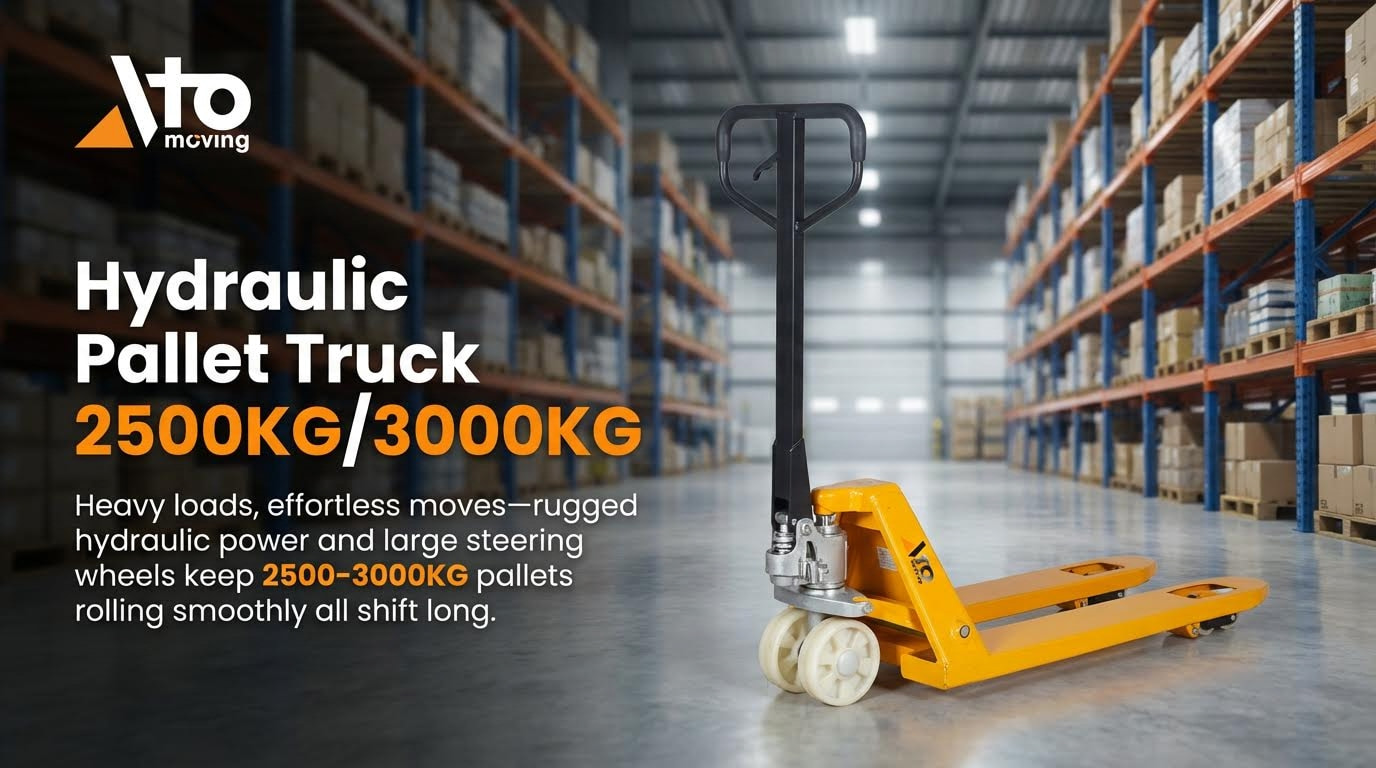
Engineers often ask how much can a pallet truck lift in real conditions, not only on paper. The answer depends on geometry, stability, and dynamic forces, not just the number on the data plate. This section explains how load center, height, and attachments change the real safe capacity of both manual and powered pallet trucks. Understanding these factors helps you avoid hidden derating and tipover risks while keeping productivity high.
Load Center, Moment, And Stability Triangle Basics
The rated capacity of a pallet truck applies only at the stated load center. Typical data plates assume a palletized cube load on forks with a standard load center, often 600 millimetres for a 1,200 millimetre pallet. If the load center increases, the truck can lift less, even though the question how much can a pallet truck lift suggests a single answer.
| Parameter | Typical value |
|---|---|
| Rated capacity | 2,000 kilograms |
| Rated load center | 600 millimetres |
| Maximum load moment | 1,200,000 kilogram-millimetres |
| Safe load at 750 millimetres center | 1,600 kilograms (1,200,000 ÷ 750) |
Capacity is limited by maximum load moment, which equals load times horizontal distance from the front axle. The combined centre of gravity of truck and load must stay inside the stability triangle formed by the wheel contact points. Approaching the triangle edge on paper may look stable, but real operation adds shocks and movement, so engineers keep a safety margin.
Load Geometry, Height, And Dynamic Forces
Load shape and stacking height change how much a pallet truck can lift safely. A compact cube with even weight distribution keeps the load center short and predictable. Long, tall, or offset loads push the centre of gravity forward or sideways, increasing overturning moment.
Lift height also matters. As forks rise, the combined centre of gravity moves upward and often forward. This reduces the lateral and longitudinal stability margin, especially when turning or braking. Manufacturers usually publish capacity curves that show lower allowable loads at higher lift heights for high-lift pallet trucks and stackers.
Dynamic forces further reduce practical capacity. Acceleration, braking, and cornering shift weight and can push the centre of gravity outside the stability triangle, even when the static load is within rating. To control these effects, engineers and supervisors specify conservative speed limits for near‑maximum loads and require operators to keep forks as low as possible during travel, often 100 to 150 millimetres above the floor.
Ramps and dock plates increase risk. A small grade can shift the centre of gravity forward or sideways enough to exceed the allowable moment. For that reason, turning on a ramp or dock edge is normally prohibited in standard operating procedures.
Effects Of Attachments And Fork Configuration
Attachments and fork changes directly affect how much a pallet truck can lift because they add weight and move the load away from the axle. Common examples include extended forks, fork-mounted platforms, or clamp and drum devices on high‑lift pallet trucks and walkie stackers. Every kilogram of attachment weight reduces the remaining payload for the same maximum load moment.
- Extra attachment mass uses part of the truck’s rated capacity.
- Longer forks increase load center for the same pallet.
- Wide platforms shift the centre of gravity sideways during turns.
After fitting any attachment, the manufacturer or a competent engineer must recalculate capacity. The new data plate should show reduced capacity and the new rated load center. As a simple rule, if the distance from the fork heel to the load centre increases by 10%, allowable load drops by roughly 10% to keep moment constant.
Fork configuration also matters without special attachments. Very long forks that carry two pallets at once, or pallets picked from the side, can move the centre of gravity well beyond the design point. In these cases the answer to how much can a pallet truck lift is often far below the nameplate value, and engineering controls plus operator training must reflect that.
Operational Limits, Maintenance, And Lifecycle Impacts
Operators who ask how much can a pallet truck lift often overlook real-world derating. Rated capacity assumes new components, ideal conditions, and correct load geometry. Wear, environment, and maintenance history steadily reduce safe capacity. Understanding these limits helps engineers set conservative working loads and plan lifecycle replacement.
How Wear, Hydraulics, And Wheels Derate Capacity
Wear does not change the number on the data plate, but it changes how much a pallet truck can lift safely. As bushings, pivot pins, and linkages wear, fork deflection increases and load sharing between wheels becomes uneven. This raises local stresses in the frame and forks under the same nominal load.
Hydraulic wear reduces effective capacity in several ways. Internal leakage in the pump or cylinder lowers achievable pressure, so the truck may stall before reaching the rated load. Seal wear can also cause creep-down under load, which is critical near maximum capacity or on gradients.
Wheel condition strongly affects usable capacity and operator effort. Flat-spotted or chipped wheels increase rolling resistance and shock loads when crossing joints. On rough floors, this can push peak dynamic loads above the static rating. A simple rule in engineering practice is to apply a working load limit below nameplate rating when wheels or bearings show visible damage.
For capacity planning, maintenance teams should link inspections to load policy. Typical good practice includes: limiting near-rated lifts to trucks with documented recent service, tagging units with hydraulic or wheel issues to reduced internal capacity, and tracking lift cycles to trigger proactive overhauls before structural fatigue becomes a risk.
Cold Stores, Dust, And Hazardous Area Constraints
Environment changes the real answer to how much can a manual pallet jack lift in daily use. In cold stores, low temperatures increase oil viscosity in hydraulic systems. Manual trucks with low-temperature fluid usually worked down to about −25 °C, but lift speed dropped and operator effort rose at higher loads.
Powered pallet trucks rely on batteries and electronics, so cold derates both runtime and peak current. At around −15 °C, insulated batteries and heated control enclosures helped, but high-load, high-ramp duty still required capacity margins. Engineers often reduced allowed load or limited gradient to keep current draw and thermal stress within safe limits.
Dusty environments add different constraints. Abrasive dust accelerates wear in wheel bearings, pivot points, and hydraulic seals. This can shorten the interval between overhauls and reduce the period during which a truck can safely handle its rated load. Enclosures with IP-rated sealing and regular cleaning slow this degradation.
In hazardous areas with flammable vapors or combustible dust, the question is less how much can a pallet truck lift and more how it lifts it safely. Manual units avoid ignition sources but still need anti-static wheels and proper earthing. Certified explosion-protected powered units carry additional mass from enclosures and barriers, which shifts the stability envelope. Engineers must confirm that the combination of added truck weight and required attachment still meets capacity and stability rules at the specified load center.
Digital Monitoring, AI Maintenance, And Smart Features
Digital tools increasingly shape how facilities manage how much can a walkie pallet truck lift over its life. Embedded sensors can record load estimates, lift counts, travel distance, and impact events. This data supports condition-based maintenance instead of fixed-interval servicing.
AI maintenance systems analyze these data streams to flag abnormal patterns. Examples include rising hydraulic cycle times at similar loads, which indicate internal leakage, or increased current draw for powered units at the same travel speed, which suggests drivetrain or wheel issues. When detected early, technicians can restore performance before safe capacity is compromised.
Smart features such as integrated weighing systems also support safe loading. A simple on-truck scale can warn operators when loads approach or exceed rated capacity at the defined load center. Combined with access control, the system can limit high-capacity operation to trained users.
Lifecycle planning benefits from aggregated digital records. Engineers can compare fleets, identify models that retain capacity better under specific duty cycles, and set replacement thresholds based on measured degradation instead of age alone. This approach aligns technical limits, safety, and cost, and gives a more realistic view of how much a pallet truck can lift throughout its service life rather than only on day one.
Summary: Selecting The Right Pallet Truck Capacity
Capacity choice starts with a clear answer to the question how much can a pallet truck lift. Typical manual trucks lift up to about 2.5 tonnes, while powered units often reach about 3 tonnes within their rated load center. Real usable capacity depends on load center, geometry, lift height, and floor conditions, not just the nameplate value. Engineers should match truck rating to peak pallet weight, cycle rate, and route length, then add a safety margin.
From a lifecycle view, undersized trucks create chronic overloading, high wear, and lost uptime. Oversized trucks increase purchase cost and aisle space needs. Manual trucks fit short routes, low daily pallet counts, and tight aisles. Powered trucks suit long runs, grades, intensive shifts, and cold-chain or dock work with high pallets per hour. Both types lose capacity in harsh environments, with cold, dust, and poor maintenance all driving derating.
Future fleets will rely more on smart features that track load, distance, and overload events in real time. Connected pallet trucks will support condition-based maintenance and capacity monitoring by route. Yet the core decision will still rest on simple engineering checks. Define maximum pallet mass and load center, confirm surface and gradient, then select manual pallet jack or walkie pallet truck models with adequate reserve capacity and a disciplined maintenance plan. For heavier loads, consider options like the hydraulic pallet truck.