For FBA sellers and small warehouses asking “is it worth it to buy pallet stacker for FBA,” the answer depends on throughput, labor cost, and space constraints across your entire operation. This article walks through when a pallet stacker beats a forklift in compact sites, compares manual versus electric stackers over a five-year horizon, and defines the engineering criteria that matter for long-term reliability and safety.
You will see how duty cycle, pallet volume, ergonomics, energy systems, and integration with warehouse software shape the real return on investment. The final section converts these technical factors into a practical 2025 decision guide so you can choose the right pallet stacker configuration, or decide that rental or outsourcing remains the better option.
When A Pallet Stacker Beats A Forklift In Small Sites
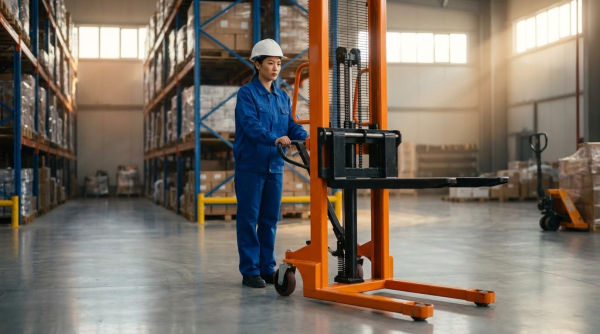
For FBA sellers and small warehouses asking “is it worth it to buy pallet stacker for FBA,” the answer depends on workflow, building geometry, and compliance requirements. In constrained sites, pallet stackers often outperform forklifts on maneuverability, cost, and training burden. Understanding where stackers win helps avoid overspecifying a forklift that never pays back, yet still protects throughput and safety.
Typical FBA And Small-Warehouse Workflows
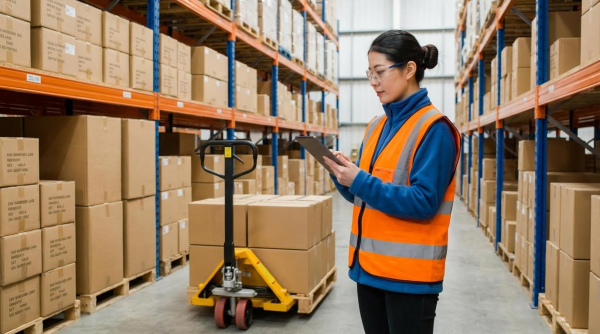
Typical FBA-style operations relied on frequent but relatively light pallet movements. Most pallets stayed below 1,000–1,200 kg, with picking focused on carton-level handling and short travel distances. In these environments, a pallet stacker handled inbound pallet put-away, replenishment to pick faces, and occasional outbound pallet building without the overhead of a full forklift program. The compact chassis and walk-behind control let operators work directly in narrow pick aisles, staging lanes, and packing areas where a counterbalance forklift could not turn safely. For sellers questioning “is it worth it to buy pallet stacker for FBA,” these repetitive, low-distance tasks created strong justification, because the stacker removed manual handling while avoiding the idle time and cost of an underutilized forklift.
Load, Height, And Aisle Constraints Versus Forklifts
Pallet stackers typically offered rated capacities between 1,000 kg and 2,500 kg and lift heights up to about 3–4 m. Forklifts covered a far wider range, reaching 10 m or higher and lifting beyond 20,000 kg in heavy industry. In small FBA prep centers and micro-fulfillment sites, racking heights usually stayed at or below 3–3.5 m, and pallet masses rarely approached heavy-industry levels. Under these conditions, the extra capacity and mast height of a forklift delivered little incremental value. Instead, the limiting factor was aisle width. Stackers operated efficiently in aisles close to 2.2–2.4 m, while typical counterbalance forklifts required significantly more space to turn and right-angle stack. If your building layout already constrained aisle width and you did not plan high-bay storage, a pallet stacker often beat a forklift on both space utilization and cost. Only when the design called for lift heights above roughly 4 m, very heavy pallets, or outdoor yard work did a forklift become technically necessary.
Safety, Training, And Compliance Considerations
Forklifts fell under stricter operator training and certification requirements, adding cost and administrative effort for small sites. Pallet stackers still required formal training and written procedures but generally involved a lower risk profile due to lower travel speeds, smaller masses, and walk-behind operation. OSHA data indicated that manual lowering and uncontrolled descent incidents contributed to a noticeable share of reports, around 12%, while well-specified electric stackers kept incident rates below 2% when operators followed procedures. For FBA-style operations with frequent staff turnover or seasonal hiring, the simpler training path for stackers reduced ramp-up time and compliance risk. Clear rules about speed limits, pedestrian priority, and pre-use checks further reduced the likelihood of tip-overs or struck-by incidents. When evaluating “is it worth it to buy pallet stacker for FBA,” the lower barrier to safe operation often favored stackers over forklifts, especially where only a few operators handled pallets part-time.
When Renting Or Outsourcing Still Makes Sense
Buying a pallet stacker was not always the optimal answer, even for compact FBA warehouses. If your operation handled fewer than about 60 pallets per day on a single shift, total annual pallet movements might not justify owning powered equipment, particularly in early-stage businesses testing product lines. Short-term rental or third-party logistics services could absorb peak volumes without locking capital into equipment that sat idle between campaigns. Rental manual stackers worked well for 1–2 year horizons because their low purchase price and high resale value translated into fast payback for fleet owners, which passed through as low rental rates. Outsourcing heavy or occasional high-bay work to a nearby 3PL while keeping a single stacker on site for daily tasks created a hybrid solution. For sellers asking “is it worth it to buy pallet stacker for FBA,” a rough rule was that consistent, year-round pallet flows and stable SKU counts favored ownership, while volatile, project-based, or highly seasonal activity made renting or outsourcing a rational bridge strategy before committing to a permanent stacker fleet.
Manual Vs Electric Stackers: Five-Year Cost Analysis
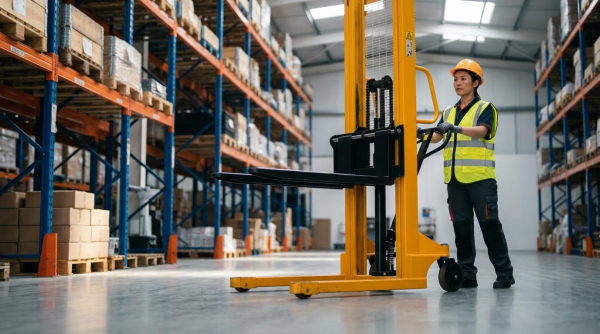
This section compares manual pallet stackers and electric pallet stackers over a five‑year horizon for FBA and small warehouses. It focuses on whether the extra upfront cost of electric units is justified by productivity and labor savings. The analysis helps answer a core search question: is it worth it to buy pallet stacker for FBA when budgets and space are tight.
Purchase Price, Operating Costs, And Maintenance
Manual pallet stackers had a typical 2024–2025 purchase price around $450 ex‑works. Entry‑level electric stackers with lead‑acid batteries cost about $2,150. Over five years, non‑labor cash costs stayed far lower for manual units. Manual stackers incurred about $35 per year in consumables, reaching roughly $625 total including purchase. Electric stackers required electricity, consumables, and a battery replacement in year three, bringing five‑year cash cost near $3,060. Manual units needed about 30 minutes of annual grease and oil service. Electric units demanded scheduled battery checks, hydraulic inspections, and an eventual battery swap costing $220–$350. For a small FBA operation with very low pallet volumes, this cost gap strongly influenced whether a powered stacker was worth it.
Throughput, Cycle Time, And Labor Productivity
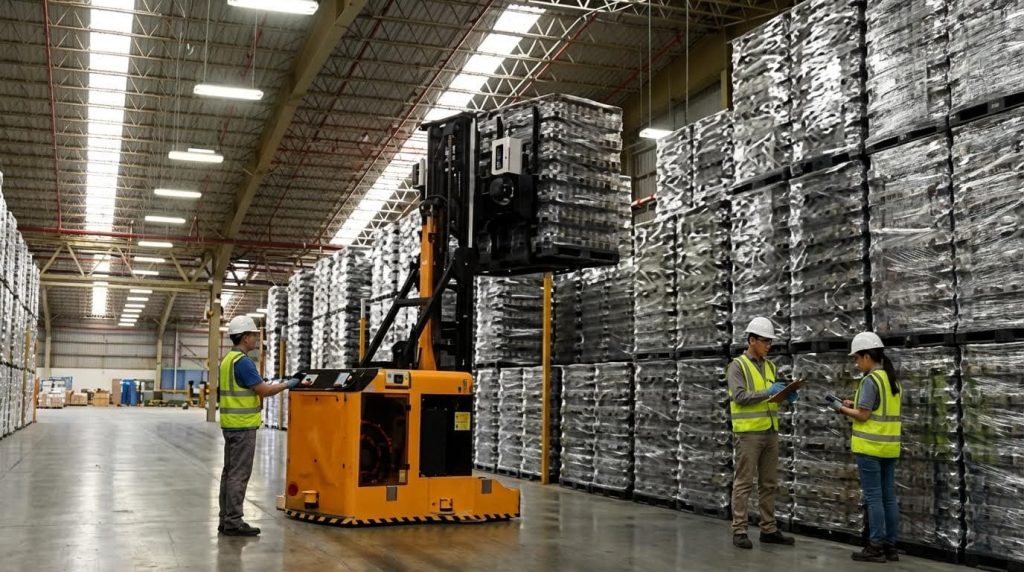
Electric pallet stackers delivered much higher handling capacity. Under full load, typical lift speed reached 0.12 m/s versus 0.08 m/s for manual models. For a 2.7 m rack, an electric stacker completed a lift–lower cycle in about 28 seconds. Manual units needed roughly 55 seconds for the same move. This difference translated into daily throughput of about 180 pallets for an electric stacker in an eight‑hour shift. Manual stackers realistically handled around 60 pallets per day. Electric units also allowed a single operator to cover that workload efficiently. Manual stackers often required two operators over a full shift to avoid fatigue and speed loss. In FBA workflows with frequent inbound and outbound pallet moves, that throughput gap directly affected order cut‑off times and same‑day handling promises.
ROI, Payback Periods, And Utilization Thresholds
Labor dominated the five‑year economics. With a wage of $15 per hour, two shifts per day, and 250 working days per year, annual labor cost for manual stacker use reached about $60,000. An electric stacker performing the same work with one operator cost about $30,000 in labor annually. The $30,000 yearly saving dwarfed the roughly $1,700 incremental capital investment over a manual unit. That saving produced a cash payback of roughly three weeks to one month in high‑utilization scenarios. For smaller FBA sellers handling fewer than about 60 pallets per day on a single shift, the utilization threshold often did not justify electric. In that low‑volume range, manual stackers minimized capital exposure while still improving ergonomics versus pure manual handling. Above 60 pallets per day, especially with two shifts, electric stackers usually answered “yes” to the question: is it worth it to buy pallet stacker for FBA.
Cold Storage, Hazardous Zones, And Special Cases
Environment strongly influenced the manual versus electric choice. In cold storage near −25 °C, hydraulic oils in manual stackers thickened and increased pump effort. Electric stackers with heated lithium‑ion batteries maintained better performance and uptime. However, Zone 2 explosive atmospheres required careful specification. Operators either used manual stackers or certified explosion‑proof electric models, which increased purchase cost and extended payback. Short‑term rental or 1–2 year projects often favored manual stackers because of lower upfront cost and strong resale value. For small FBA sellers starting in shared or temporary spaces, a manual stacker offered a flexible, low‑risk entry. As volumes grew and shift patterns expanded, upgrading to electric became economically compelling, especially where cold environments or long duty cycles made manual pumping inefficient and fatiguing.
Engineering Criteria For Selecting The Right Stacker
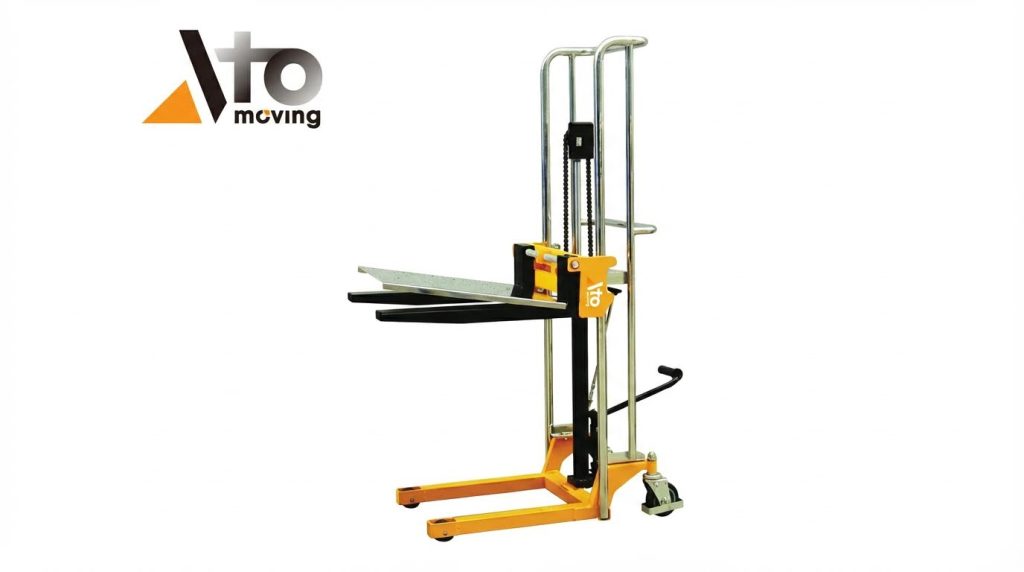
Engineering criteria determine whether it is worth it to buy pallet stacker for FBA operations or small warehouses. A structured approach avoids oversizing equipment and protects ROI. The following subsections translate real workflows into technical specifications that guide stacker selection and long-term cost performance.
Defining Duty Cycle, Pallet Volume, And Shift Pattern
Duty cycle definition starts with pallet count, lift height, and travel distance per shift. For FBA-style operations, engineers should log actual picks and put-aways per hour over at least one week. If daily volume stays below 60 pallets in a single shift, a manual stacker usually covers demand with acceptable fatigue. Between 60 and 180 pallets per day or multi-shift work, electric stackers handle the duty cycle better and protect productivity. Include rack height in the calculation: repeated lifts to 2.7–3.5 m with manual hydraulics increase cycle time and operator strain. For two-shift operations, electric units with quick battery change enable continuous use and maintain consistent cycle times, while manual efficiency tends to drop after several hours. This translation from workflow to duty cycle is central when asking is it worth it to buy pallet stacker for FBA instead of renting or relying on ad‑hoc manual handling.
Ergonomics, Safety Features, And OSHA Risk Factors
Ergonomic performance directly affects labor sustainability and hidden cost. Manual units require repetitive pumping and pushing forces, which rise with pallet mass and floor friction. Over long shifts, this can increase musculoskeletal risk and unplanned breaks. Electric stackers reduce peak push and lift forces, which supports higher throughput with lower fatigue. Safety features also differ. Electric stackers typically include emergency stop buttons, automatic braking, and controlled powered lowering that reduce the risk of manual lowering accidents. Historical OSHA data showed manual lowering incidents represented about 12% of related reports, while electric stacker incidents stayed below 2%. FBA and small-warehouse layouts often mix pedestrians and equipment in narrow aisles, so features like horn, dead‑man tiller, speed reduction in corners, and load backrests become important selection criteria. Compliance with OSHA powered industrial truck rules requires documented training, pre-use inspections, and clear operating procedures, regardless of stacker type.
Energy Systems, Batteries, And Maintenance Strategy
Energy and maintenance strategy strongly influences five-year cost and uptime. Manual stackers use human power, so they avoid electricity and battery costs but transfer the energy burden to labor. Electric units typically use lead-acid or lithium-ion batteries. In 2024–2025, an entry-level electric stacker with lead-acid battery cost about $2,150, versus roughly $450 for a manual unit. Annual electricity cost around $15 and a battery replacement in year three around $220–$350 added to the total. Over five years, cash outlay excluding labor reached about $3,060 for electric versus $625 for manual, based on typical consumables and maintenance. However, electric units delivered roughly triple the pallet throughput and far lower fatigue. For FBA operations with dense picking windows, planning battery charging, equalizing cycles, and spare packs is essential to avoid mid-shift downtime. Cold storage down to about −25 °C favors heated lithium-ion systems, because hydraulic oils in manual stackers thicken and slow response. A preventive maintenance schedule with monthly inspections of hydraulics, brakes, and electrical components keeps reliability high and protects the investment.
Integration With WMS, AGVs, And Future Automation
Integration capability affects long-term value, especially for FBA-style workflows that depend on accurate inventory and fast turns. When evaluating if it is worth it to buy pallet stacker for FBA, engineers should review how the equipment fits into the warehouse management system (WMS). Basic manual stackers usually operate as stand-alone tools with no data interface. Electric stackers can support barcode scanning mounts, on-board terminals, or simple telematics that log operating hours and fault codes. This data supports maintenance planning and utilization analysis. Facilities planning to add automated guided vehicles (AGVs) or autonomous mobile robots should examine aisle widths, rack interfaces, and transfer points. Stackers that can accurately position pallets at consistent heights and offsets simplify AGV handoff later. Selecting standard pallet sizes, fork lengths, and clearances that match AGV specifications avoids future rework. Even without full automation, aligning stacker capabilities with WMS-directed workflows, fixed staging zones, and dock operations improves flow and strengthens the business case for ownership instead of ad-hoc manual handling.
Practical Conclusion: Decision Guide For 2025 Buyers
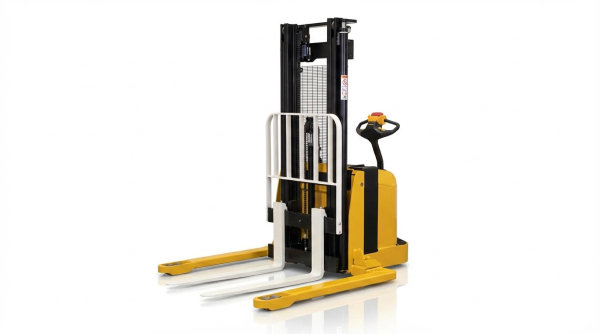
For 2025 FBA operators asking “is it worth it to buy pallet stacker for FBA,” the answer depends on volume, shifts, and labor cost. Manual pallet stackers stayed attractive where daily volume remained below about 60 pallets, single-shift operation dominated, and capital budgets were tight. Their five‑year cash cost around $625, zero electricity expense, and minimal maintenance made them suitable as an entry tool or backup unit. They also fit very narrow aisles and low rack heights up to roughly 3–4 m.
Electric pallet stackers justified their higher five‑year cash cost of roughly $3,060 whenever throughput rose and labor cost mattered. With lift speeds of about 0.12 m/s, cycle times near 28 s to 2.7 m, and daily capacity around 180 pallets per unit, they tripled manual throughput. In two‑shift operations at $15/h labor, the $30,000 yearly labor saving and roughly three‑week payback made the investment compelling. For FBA sellers pushing fast replenishment and strict carrier cut‑off times, that productivity often outweighed the extra energy and battery costs.
Environmental and regulatory constraints also influenced the “is it worth it to buy pallet stacker for FBA” decision. Cold stores down to −25 °C favored electric stackers with heated lithium‑ion batteries, because manual hydraulic oils thickened and slowed operation. Zone 2 hazardous areas required either purely manual units or certified explosion‑proof electrics, which increased capital cost and extended payback calculations. Safety data, with manual lowering accidents near 12% of OSHA reports versus below 2% for electrics, supported upgrading when incident risk or insurance pressure was high.
From an engineering perspective, FBA and small‑warehouse buyers needed to map pallet volume, rack height, and aisle width against duty cycle and operator profile. Where one operator handled low‑to‑medium volume in tight spaces, a manual stacker often remained sufficient and easy to train. Once operations crossed roughly 60 pallets per day or moved to double shifts, electric stackers generally became the rational choice, despite higher list price. Over the decade, trend lines pointed toward more electric units with better batteries, integrated telematics, and smoother WMS connectivity, while manual units continued as low‑cost, low‑complexity tools for niche and backup roles.