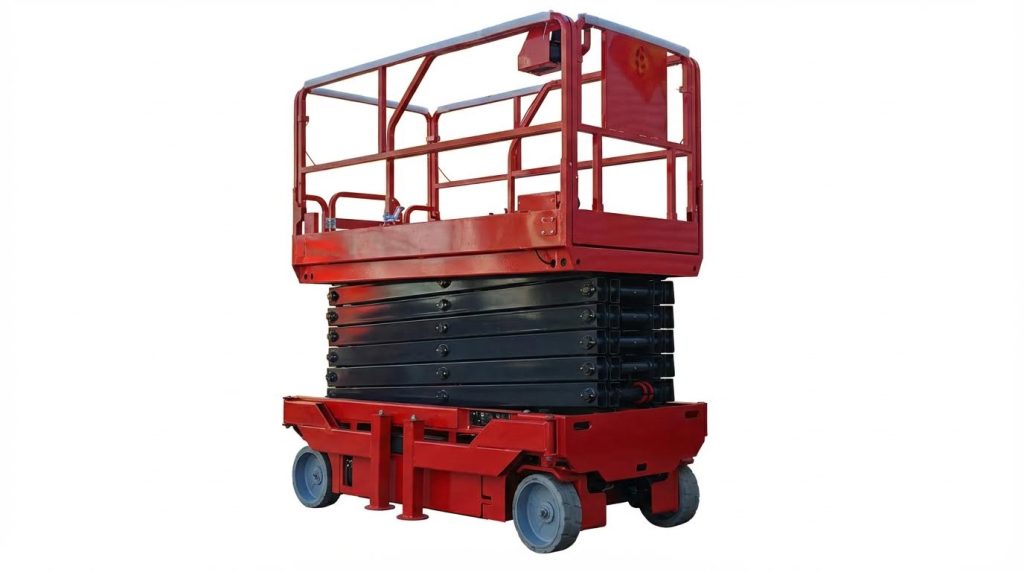
Reducing picking mistakes is one of the fastest ways to cut cost, protect margins, and stabilize service levels. This guide walks through how to prevent picking errors in a warehouse using a mix of engineering controls, process discipline, and smart automation. You will see how small layout changes, better SOPs, and technologies like semi electric order picker and goods-to-person automation can push accuracy toward 99.9% while also improving throughput and ergonomics. The article is structured so operations, engineering, and IT teams can align on practical, low-risk steps that move your facility toward near-zero errors.

Understanding Picking Errors And Their True Cost

Common root causes in manual picking
Manual environments see most picking errors come from a mix of layout, process, and human factors. Poorly organized storage locations, look‑alike SKUs, and unclear labeling make it easy to select the wrong item or quantity, especially when travel paths are long and congested. Inconsistent or outdated SOPs, paper-based lists, and manual data entry increase the risk of transcription mistakes and missed lines, which is why many teams explore how to prevent picking errors in a warehouse by standardizing work and digitizing instructions. Fatigue, high pick pressure, and inadequate training further raise error rates, particularly for new hires and during peak seasons when temporary staff join the operation.
- Unoptimized layouts and slotting that scatter high-velocity SKUs.
- Non-standard or hard-to-read labels and signage.
- Manual keying of item codes, quantities, or locations.
- Insufficient onboarding and lack of refresher training for changes in process or product mix. Standard operating procedures and training programs help reduce these issues by giving operators clear, repeatable steps for each pick and verification action.
How picking accuracy impacts TCO
Even a small manual picking error rate of 1–3% translates into significant hidden costs when multiplied across thousands of order lines per day. Automated and semi-automated systems have shown they can cut error rates to below 0.5% and push order accuracy toward 99.9%, sharply reducing re-picks, reships, and customer service workload. High-accuracy systems also lower inventory write-offs by about 70% through better stock control and traceability, which directly improves working capital and shrink performance.
| Impact Area | Effect of Poor Picking Accuracy | Effect of High Picking Accuracy |
|---|---|---|
| Direct order costs | More rework, repacking, and reshipping activity per error. | Fewer corrections and touchpoints per order line. |
| Inventory and shrink | Write-offs and unexplained stock variances rise. | Write-offs drop significantly with precise tracking and controlled access. Improved inventory accuracy reduces obsolete and lost stock. |
| Labor utilization | Teams spend time fixing mistakes instead of productive picks. | Labor shifts from firefighting to value-added tasks such as exception handling and continuous improvement. |
| Customer and revenue | Late or wrong deliveries drive returns, refunds, and churn. | Reliable, accurate orders support higher customer retention and repeat sales. |
When leaders evaluate how to prevent picking errors in a warehouse, they increasingly look at total cost of ownership, not just labor rates. Accuracy improvements compound across transport, packaging, returns processing, and customer lifetime value, which is why many operations justify automation and process redesign based on the long-term TCO benefits rather than short-term headcount savings. For instance, using tools like manual pallet jack, drum dolly, or even advanced solutions like semi electric order picker can streamline workflows and improve picking precision.
Engineering Controls To Drive Near-Zero Picking Errors

Slotting, layout, and travel path optimization
Engineering controls start with how you design storage locations, travel paths, and slotting rules. An efficient warehouse layout reduces travel time and streamlines workflows by positioning high-demand SKUs closer to packing and shipping areas Warehouse Layout Optimization. To understand how to prevent picking errors in a warehouse, you need to treat slotting as a control system: you engineer locations so that the “wrong” item is physically harder to pick than the right one. This includes separating similar-looking SKUs, using dedicated locations for fast movers, and enforcing one-SKU-per-bin in high-risk zones.
- Place A-velocity items near packing and at ergonomic heights to reduce fatigue-related mistakes.
- Separate look-alike or sound-alike SKUs into different aisles or rack levels to cut mis-picks.
- Standardize aisle direction and one-way travel paths to avoid congestion and distraction.
- Use clear labeling and signage to guide operators and prevent confusion during picks Clear labeling and signage systems.
Engineering tips for layout redesign
Map actual walking paths with time studies before re-slotting. Use heat maps from your WMS to identify congestion and high-error zones. Then re-balance pick zones so each operator has a compact, logically grouped area, which directly supports near-zero-error performance.
Pick-to-light, put-to-light, and barcode/RFID
Light-directed and auto-ID technologies are core engineering controls when you study how to prevent picking errors in a warehouse. Pick-to-light systems use lights and displays on shelving to show the exact location and quantity to pick, reducing cognitive load and forcing confirmation after each pick Pick to Light System. Put-to-light reverses this logic and guides operators to place items into the correct order totes or destination slots, which is ideal for batch picking and sortation environments Put to Light System. When you combine these with barcode or RFID scanning at both location and item level, you create a closed-loop check that can drive pick accuracy toward 99.9% in automated systems 99.9% pick accuracy.
| Technology | Primary control | Main benefit for errors |
|---|---|---|
| Pick-to-light | Guides to pick location and quantity | Reduces search time and mis-location picks |
| Put-to-light | Guides to correct destination tote/slot | Prevents order mixing in batch picking |
| Barcode / RFID | Auto-ID at item and location | Prevents item and lot/serial mismatches |
Engineering design should ensure that a pick is not valid until the system receives a positive scan or light confirmation. Fixed picking stations and picking carts equipped with scanners and light modules further reduce walking and standardize the picking process, improving ergonomics and consistency Picking Stations and Picking Carts. These controls transform order picking from a memory-based activity into a guided, verified sequence with built-in error traps.
Goods-to-person, ASRS, and robotic bin picking

Goods-to-person and ASRS solutions are among the most powerful engineering answers to how to prevent picking errors in a warehouse. By restricting direct access to inventory and delivering the correct tote or tray to an operator, these systems enforce controlled inventory access and track every action for quality control controlled inventory access. Automated systems such as vertical lift modules and shuttle-based ASRS have achieved up to 99.9% order accuracy and cut picking time per job by about 75% by condensing inventory and automating retrieval 99.9% accuracy and 75% time reduction. This not only reduces human error but also lowers inventory write‑offs by around 70% through better tracking and control of stock levels 70% reduction in inventory write-offs.
Robotic bin picking adds another layer of engineering control. Vision-guided robots can reach 400–800+ picks per hour with error rates below 0.5%, compared with manual rates of 100–200 picks per hour and 1–3% errors 400–800+ picks/hour and <0.5% errors. These systems operate 24/7, reduce dependence on manual labor, and shift people toward exception handling and higher-value work reduced reliance on manual labor. When integrated with a WMS and other warehouse automation technologies such as AGVs and IoT sensors, goods-to-person and robotic picking create a tightly controlled environment where physical, logical, and digital checks work together to drive near-zero picking errors Warehouse Automation Technologies.
Process, People, And WMS Strategies For Accuracy
SOPs, verification, and quality control checks
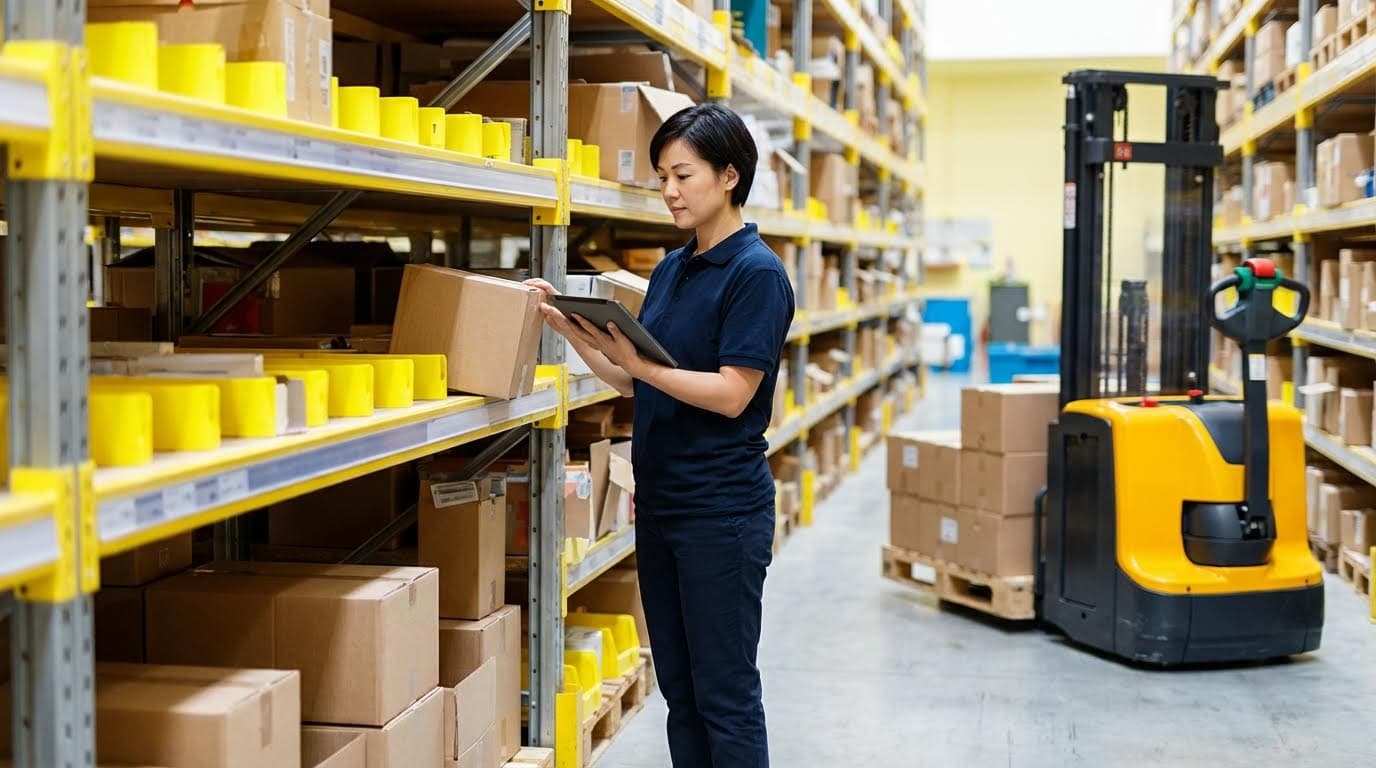
If you want to know how to prevent picking errors in a warehouse, start by standardizing every repeatable task. Document clear Standard Operating Procedures (SOPs) for receiving, put-away, picking, replenishment, and packing, and keep them easily accessible on the floor. SOPs should be reviewed and updated regularly to reflect best practices and feedback from operators and supervisors.
- Use checklists at pick stations so operators confirm item, location, quantity, and batch/lot where relevant.
- Apply two-person verification for high-value, regulated, or customer-critical orders to catch mis-picks before shipping and improve audit trails.
- Run scheduled cycle counts and accuracy audits to identify systemic issues such as mislabeled locations or recurring SKU confusion.
Quality control should be risk-based. High-error SKUs, new product launches, and new customer programs should get tighter sampling and more frequent checks. Clear, standardized labeling that highlights product codes, descriptions, and storage requirements reduces mis-identification at the point of pick and speeds verification.
WMS rules, analytics, and real-time inventory
A modern WMS is central to how to prevent picking errors in a warehouse because it enforces process rules in real time. At a minimum, the system should validate item, location, and quantity via barcode or RFID scan before confirming a pick, which drastically reduces manual data-entry errors and mis-shipments. Real-time inventory visibility allows the WMS to block picking from locations with known discrepancies and to trigger replenishment before stockouts occur, improving both accuracy and service levels across channels.
- Configure WMS rules for batch, serial, and FEFO/expiry control where required, forcing operators to pick the correct lot.
- Use system-directed picking paths to minimize travel and avoid out-of-sequence picks that drive mistakes.
- Integrate pick-to-light, put-to-light, and controlled inventory access with the WMS to support 99.9% accuracy in automated zones and maintain full traceability.
Analytics should track error codes by picker, SKU, location, time of day, and process step. Monitoring KPIs such as order accuracy, pick rate, and inventory adjustments helps you spot patterns and design targeted countermeasures instead of generic training. Over time, this closed-loop approach lets you tune WMS rules, slotting logic, and QC sampling so that the system itself prevents most errors before they occur.
Training, ergonomics, and human–robot workflows

Even the best systems fail if people are not trained and supported. Structured onboarding should cover SOPs, safety, WMS use, and scanning discipline, reinforced with interactive methods like simulations and visual work instructions to improve retention for new hires. Zone assignments with a limited SKU set and two-person verification for new operators reduce early-stage picking errors while they gain experience.
- Design pick stations and carts with ergonomic reach zones, clear displays, and minimal bending or twisting to cut fatigue-related mistakes and injuries.
- Use mobile picking carts with integrated scanners and task displays so operators handle multiple orders with fewer trips and less cognitive overload while maintaining accuracy.
- Define clear human–robot handoff points: robots handle transport and repetitive moves, while people focus on exception handling, quality checks, and complex items in a collaborative workflow.
As automation expands, roles shift toward system supervision, data analysis, and robot maintenance, which require upskilling but also reduce reliance on heavy manual picking and repetitive strain. Aligning training, ergonomics, and human–robot workflows creates a stable, low-stress environment where operators can consistently follow standards, making it much easier to sustain near-zero picking errors day after day.
“”
Turning Accuracy Gains Into Strategic Advantage
Near-zero picking errors do more than clean up daily operations. They change the economics of the warehouse. When you engineer slotting, travel paths, and storage to make the correct pick the easiest pick, you cut rework and stabilize labor planning. When you add guided technologies, ASRS, and robotic bin picking, you turn accuracy into a hard control, not a wish.
Strong SOPs, WMS rules, and risk-based quality checks then lock these gains in. They ensure that every order follows the same verified path, with real-time data catching issues before they hit the dock. Training and ergonomic design keep people accurate under pressure and let them work with robots and tools from Atomoving as a single system, not as separate islands.
The result is lower total cost per order, fewer write-offs, and better service levels that support premium promises and long-term customer loyalty. Operations and engineering teams should build a phased roadmap: fix layout and process basics first, then layer in guided picking and goods-to-person, and finally scale robotics where the data supports it. Treat picking accuracy as a core design target, not a metric to monitor, and your warehouse becomes a durable competitive advantage.
Frequently Asked Questions
What are some effective strategies to reduce picking errors in a warehouse?
To reduce picking errors in a warehouse, consider implementing the following strategies:
- Audit and optimize your warehouse layout to ensure efficient product placement.
- Use technology like barcode scanners and integrate them into your workflow for better accuracy.
- Train employees thoroughly on proper picking techniques and safety protocols.
- Optimize picking routes to minimize travel time and confusion. Warehouse Picking Guide.
What tools or methods can help prevent errors during warehouse operations?
Poka-Yoke is a widely used tool designed to prevent errors by implementing techniques such as shutdown, control, and warning systems. These methods help operators avoid mistakes by correcting errors as they occur or drawing attention to potential issues. Additionally, encouraging clear communication between employees and managers can significantly reduce misunderstandings that lead to errors. Error Prevention Techniques.
How can improving communication help reduce picking errors in a warehouse?
Effective communication plays a critical role in minimizing picking errors. Misunderstandings about processes or rules often lead to mistakes, so fostering open communication between staff and supervisors ensures everyone understands their tasks clearly. Regular feedback loops and team discussions can further enhance clarity and accountability in daily operations. Human Error Prevention Tips.