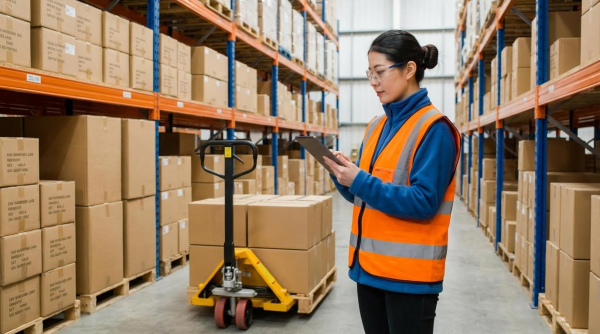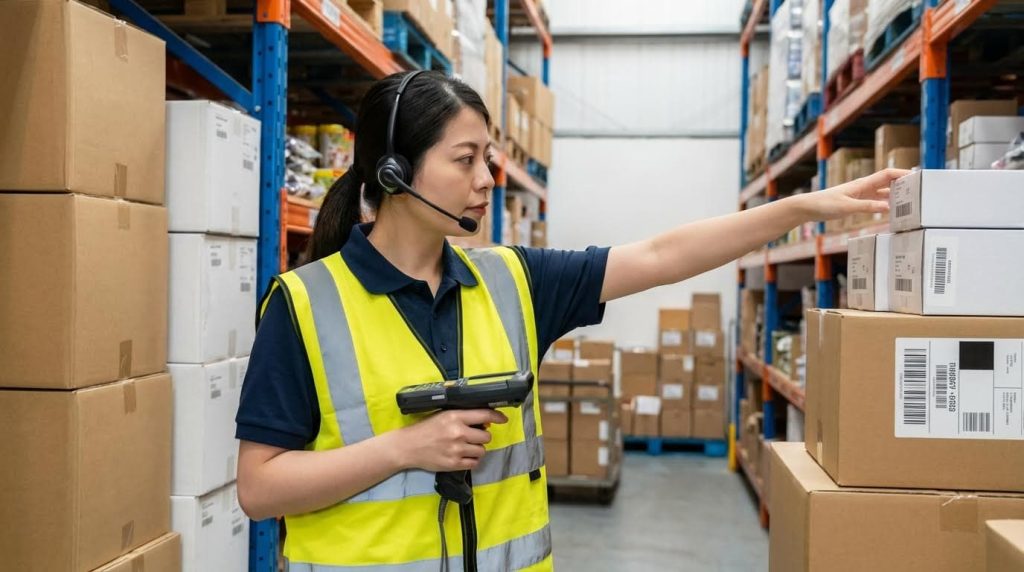
Voice-directed picking has become a core tool for warehouses that want higher throughput, fewer errors, and safer working conditions. This article explains what voice picking is in a warehouse, how the technology works end-to-end, and how it compares with RF and pick-to-light solutions. You will see the technical architecture, performance metrics, and integration options so you can design, size, and justify a system for your own operation. The goal is to give operations, IT, and engineering teams a practical, data-based guide to deploying voice picking in modern warehouses. Consider tools like manual pallet jack, low profile pallet jack, or even advanced equipment such as drum dolly and forklift drum grabber to optimize material handling processes.
What Voice Picking Is And How It Works

Definition And Core Components Of Voice Picking
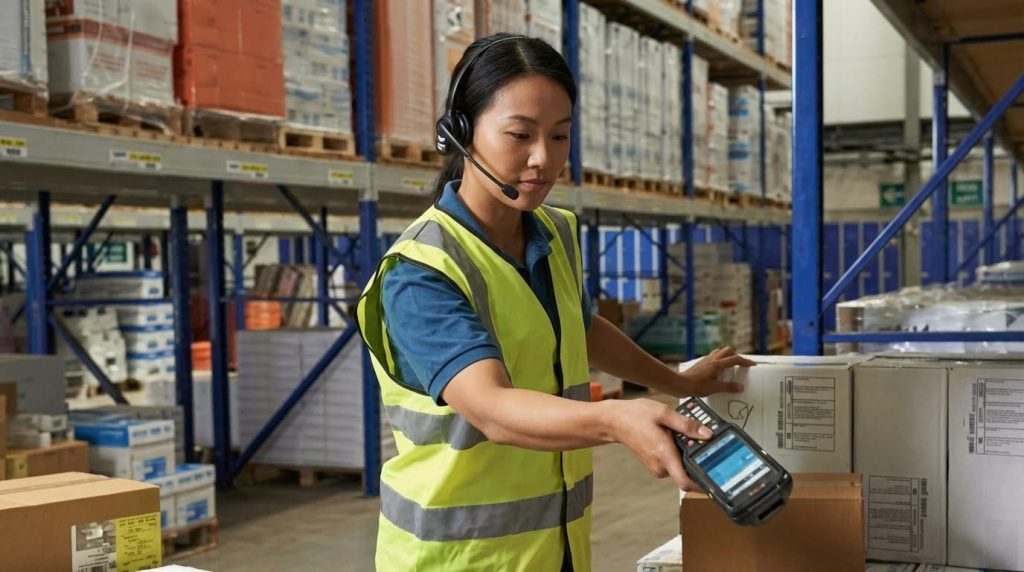
Voice picking is a warehouse order picking method where workers receive and confirm tasks using spoken instructions instead of paper lists or handheld RF screens. When people ask “what is voice picking in a warehouse,” they usually mean a system that combines speech recognition, mobile devices, and a warehouse management system to guide pickers step by step through their work. The core idea is simple: the system talks to the operator through a headset, and the operator talks back to confirm locations, quantities, and exceptions. This hands-free, eyes-up approach improves safety and reduces the time lost to looking at screens or handling paper. Voice-directed systems use automation to cut manual steps and logistics costs.
A typical voice picking solution includes four main components:
- Voice device: A small, wearable or handheld mobile computer that connects to the warehouse network and host systems.
- Headset and microphone: Industrial wireless headset that delivers instructions and captures spoken responses, enabling true hands-free operation. Hands-free operation helps reduce dropped items and improves ergonomics.
- Voice application and speech engine: Software that converts WMS tasks into spoken prompts and interprets worker responses using robust speech recognition, often without user-specific voice training and with support for multiple languages. Modern engines handle accents and dialects without individual voice profiles.
- Host integration: Interfaces to WMS or ERP that send pick waves and receive confirmations in real time, enabling accurate inventory and order status updates. Integration tools allow connection to common enterprise systems and support scalable deployments from a few to hundreds of users.
From an engineering perspective, the value of voice picking comes from reducing non-value-added motion and cognitive load. Operators keep their eyes on the aisle and their hands on the product, while the system handles navigation, confirmation logic, and data capture. This is why well-designed solutions frequently report picking accuracy approaching 99–99.9% when combined with barcode validation and structured workflows. High-accuracy performance reduces rework, claims, and customer dissatisfaction.
Typical Voice-Directed Picking Workflow
In a standard operation, the voice picking workflow starts when the WMS releases orders or waves. Tasks flow to the voice system, which assigns work to logged-in operators based on rules such as zone, priority, or travel optimization. Understanding this workflow is essential when evaluating what is voice picking in a warehouse and how it will change day-to-day operations. Below is a typical end-to-end sequence.
- Login and assignment: The operator logs into the voice device and selects a function (e.g., full-case picking, each picking, replenishment). The system downloads a batch of tasks and may already optimize the route to minimize travel distance. Advanced logic can group orders, manage batch waves, and support direct cartonization so items go straight into the final shipping container.
- Travel and location confirmation: The system speaks the next location (aisle, bay, level). The operator walks or drives there and confirms arrival, typically by reading a check digit or short code. In some AI-enhanced setups, the system can use real-time position data to reduce the number of spoken confirmations when proximity is detected, cutting idle time and unnecessary dialogue. Predictive routing can dynamically recalculate missions based on congestion and KPIs.
- Quantity instruction and pick confirmation: The system announces the item and quantity to pick. The operator picks and then confirms verbally (for example by repeating the quantity or a confirmation code). Many deployments add barcode scanning for high-value or regulated products, which supports reported accuracy rates of about 99–99.9% while still keeping the process largely hands-free. Voice workflows routinely reach around 99% data-entry accuracy.
- Exception handling: If stock is short, the operator states an exception (e.g., “short” and the available quantity). The system records it, updates the WMS, and may immediately reroute the operator or re-plan the remaining tasks. Real-time error detection and correction at this step improve process reliability and reduce downstream investigation effort. Immediate error handling is built into many modern systems.
- Completion, packing, and reporting: Once all lines in the batch are picked, the system directs the operator to a drop or packing point. Because confirmations are captured in real time, supervisors can see progress, bottlenecks, and individual performance in dashboards and reports. Real-time and historical reporting support better labor allocation and continuous improvement.
Typical performance and training outcomes
Well-implemented voice picking workflows often deliver measurable performance gains versus paper or RF. Reported productivity improvements typically range from about 20–35% in many operations, with some sources citing 30–50% gains depending on process design and product mix. Voice workflows have shown 20–35% productivity increases, while other implementations report 30–50% gains. Accuracy can reach 99–99.9% with scan validation, significantly cutting error-related costs. warehouse order picker systems also reduce training time dramatically, with new operators reaching initial picking capability in minutes and full productivity in a few hours, because the interaction is conversational and requires little or no voice profile training.
Technical Architecture, Performance, And System Integration

Hardware, Software, And Network Design
Understanding what is voice picking in a warehouse starts with its technical stack. A typical system combines rugged mobile devices, headsets, and a voice engine connected to the Warehouse Management System (WMS) over a robust wireless network. Operators wear wireless headsets and often a small terminal or wearable computer, enabling hands-free, eyes-free execution of tasks while staying online throughout the shift. Many platforms are hardware-independent and maintain sub‑second response times even with large user bases, which is critical when hundreds of users connect concurrently in a high‑throughput facility. Hardware‑independent voice systems can scale from small teams to hundreds of users while sustaining fast response.
On the software side, the core components include the voice application, a speech recognition engine, and a business rules layer that translates WMS tasks into step‑by‑step voice dialogues. Modern engines eliminate the need for individual voice training and support multiple languages and dialects, which simplifies onboarding and supports multi‑national workforces. Recommended solutions use robust speech recognition without per‑user voice profiles and support several languages. A configurable rules engine allows you to adapt prompts, confirmations, and exception handling to your specific picking strategies and packaging logic. Flexible business rule engines let operations tailor workflows, cartonization, and order release logic.
The network design is just as important as devices and software. Voice traffic is low‑bandwidth but latency‑sensitive, so you design Wi‑Fi coverage for seamless roaming, no dead zones, and Quality of Service (QoS) prioritization of voice packets. In advanced environments, distributed AI engines run within the infrastructure to track operator and device locations in real time over the wireless network, enabling dynamic route analysis and mission recalculation as conditions change. Real‑time operator tracking and distributed AI allow dynamic routing and mission updates based on live KPIs. This architecture turns voice picking into a responsive control layer that continually optimizes paths, resources, and workload balancing across the warehouse.
Accuracy, Productivity, And Safety Metrics
When evaluating what is voice picking in a warehouse from a performance perspective, three metric families dominate: accuracy, throughput, and safety. Well‑implemented voice solutions routinely achieve very high order accuracy, especially when combined with barcode validation at key steps. Voice systems can reach 99.9% or higher picking accuracy when paired with scan validation, which sharply reduces error‑driven rework and customer complaints. Other studies report up to 99% accuracy in data entry tasks, reinforcing the reliability of voice‑captured confirmations. Voice applications have achieved up to 99% data entry accuracy in warehouse environments.
Productivity gains are equally significant. Compared with paper or RF scanning workflows, voice‑directed picking removes constant screen checks and frees both hands, which shortens each pick cycle. Documented improvements show that voice can be 10–25% faster than paper methods and 15–25% faster than RF‑based picking. Voice picking has been reported as 10–25% faster than paper and 15–25% faster than RF picking. In many implementations, total productivity increases of 30–50% are reported, allowing the same workforce to process more orders while controlling labor cost per line. Voice software deployments have delivered 30–50% productivity gains in picking operations.
Training time and ramp‑up are another key KPI. Because modern systems use natural, menu‑driven dialogues and do not require per‑operator voice training, new staff can reach basic picking capability within minutes and full productivity in a few hours. Some operations reported new users becoming productive in about 10 minutes and reaching full rate in roughly 2 hours. From a safety standpoint, the hands‑free, eyes‑free nature of voice lets workers focus on their travel path, lift trucks, and co‑workers instead of screens, which is essential in high‑traffic zones. Hands‑free and eyes‑free operation improves situational awareness and safety around moving equipment. Over time, better ergonomics and fewer distractions can translate into lower incident rates, reduced absenteeism, and more consistent performance across shifts.
Integration With WMS, ERP, And Automation Systems
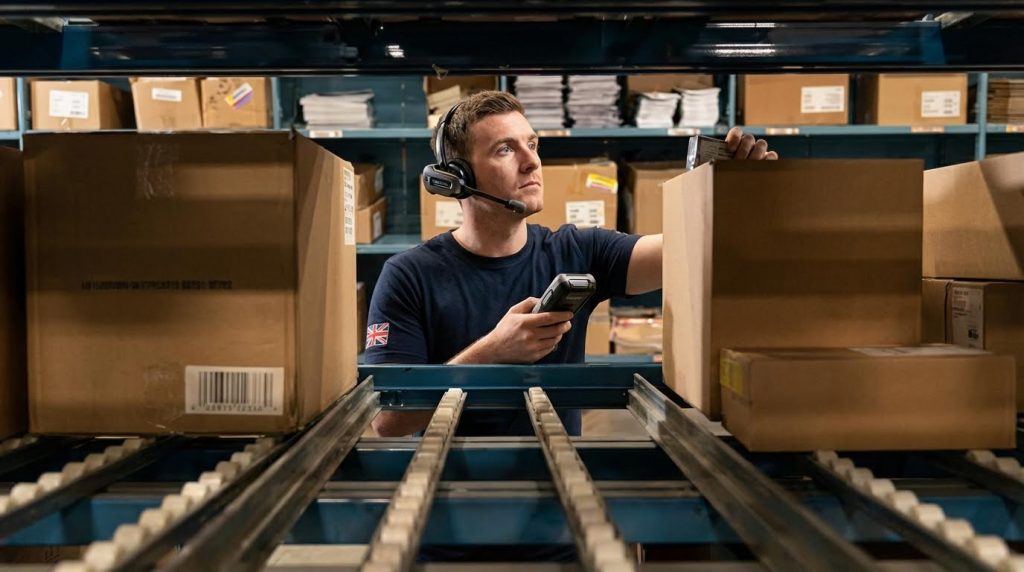
From a systems engineering view, a clear answer to what is voice picking in a warehouse is: a real‑time execution layer tightly integrated with WMS, ERP, and automation. The WMS remains the system of record, generating picks, waves, and replenishment tasks, while the voice layer orchestrates how operators execute those tasks on the floor. Mature platforms provide standard interfaces and toolkits to connect with leading WMS and ERP suites, ensuring that inventory, orders, and task status stay synchronized. Voice solutions commonly include integration tools for major WMS and ERP platforms.
In advanced deployments, integration goes beyond simple task downloads and confirmations. Real‑time data from voice transactions feed back into the WMS, which logs deviations, travel times, and congestion patterns and uses them to refine future mission design. Some integrated WMS–voice platforms historicize field data and apply analytics to continuously improve routing and task composition. Predictive algorithms can then adjust priorities, rebalance work across zones, and recalculate routes in real time when bottlenecks or delays appear. This turns the combined WMS–voice stack into a closed‑loop optimization system rather than a static instruction engine.
Voice also coexists well with other warehouse technologies. Multi‑modal designs combine voice with hands‑free barcode scanning, pick‑to‑light in dense pick zones, conveyors, and sorters, choosing the best interface for each task type. Voice platforms can integrate with 2D scanners, pick‑to‑light, conveyor, and high‑speed sortation systems. In such architectures, the WMS or a higher‑level control layer allocates work between voice and visual systems while the ERP handles order, billing, and customer data. For operators, this integration is seamless: they may receive a voice instruction to move to a zone, then follow lights or scan barcodes, with each confirmation feeding live status updates back into core business systems. This holistic integration is what allows voice picking to support complex, high‑velocity warehouse operations at scale.
Applying Voice Picking: Design, Sizing, And Technology Choices

When Voice Picking Makes Sense Versus RF Or Pick-To-Light
When facility managers ask what is voice picking in a warehouse, they usually compare it to RF scanning or pick-to-light. Voice picking fits best where operators travel long distances, handle many SKUs, and need hands-free, eyes-free operation for safety. It is typically 15–25% faster than RF picking and 10–25% faster than paper-based methods, thanks to continuous, guided workflows and reduced screen interaction reported performance improvements. In contrast, pick-to-light excels in dense, small areas with high order volumes and relatively low SKU counts, where short reach distances and fixed locations allow workers to follow light signals efficiently documented benefits.
- Choose voice over RF when you want higher ergonomics, fewer device touches, and better mobility in large or multi-level warehouses.
- Choose voice over pick-to-light when SKU counts are high, locations change often, or you cannot justify hardware on every slot.
- Combine voice and pick-to-light by using lights in dense fast-pick zones and voice in bulk, reserve, or wide-area zones to balance speed and flexibility recommended hybrid designs.
Typical use-case patterns
Voice picking is well suited to case and each picking in grocery, 3PL, and e‑commerce operations with long travel paths and dynamic slotting. RF works adequately in slower operations or where capital budgets are tight but usually cannot match voice for speed and ergonomics. Pick-to-light is strong in kitting, small parts, and order consolidation zones, where very short travel and high order density justify the rack-mounted hardware.
Key Selection Criteria, TCO, And Implementation Phases
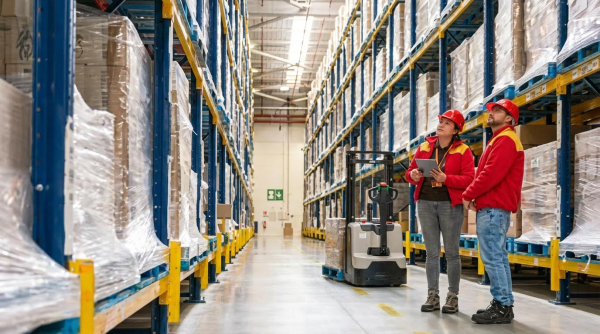
To decide if voice is the right answer to what is voice picking in a warehouse for your operation, you need clear selection criteria and a full TCO view. Mature systems can reach 99–99.9% picking accuracy when combined with barcode validation, sharply reducing error-related costs and customer complaints reported accuracy performance additional accuracy data. Productivity gains typically range from 20–50%, driven by faster walking and picking, shorter search times, and fewer corrections documented 30–50% productivity gains reported 20–35% improvements.
| Selection Area | Key Questions |
|---|---|
| Operational fit | SKU count, order lines per order, travel distances, and safety constraints. |
| Performance | Target accuracy, lines per hour, and required response times under peak loads. |
| Scalability | Ability to grow from a few to hundreds of users without latency issues noted scalability range. |
| Integration | Availability of standard connectors to your WMS/ERP and support for real-time data exchange integration capabilities. |
| Workforce | Training time, language coverage, ergonomics, and change management effort short training times. |
TCO analysis should include not only licenses and headsets but also implementation, integration, wireless upgrades, support, and continuous improvement. Many operations offset these costs with labor savings from 30–50% productivity increases and reduced error handling, plus up to 15% lower logistics costs through automation and better planning logic productivity and workflow gains cost reduction estimates. Intuitive, zero-training or low-training interfaces allow new operators to reach initial productivity in minutes and full performance in a few hours, which reduces onboarding costs in high-turnover environments reported 10-minute startup and 2-hour ramp-up.
- Assessment – Analyze current picking flows, travel, error rates, and system landscape to size the solution and build the business case recommended first step.
- Planning & design – Define process changes, integration scope, device strategy, and pilot areas, including safety and ergonomics standards.
- Setup & integration – Configure business rules, connect to WMS/ERP, and prepare wireless infrastructure for stable, low-latency operation integration tools and hardware independence.
- Testing & pilot – Validate performance, fine-tune prompts and routing logic, and adjust exception handling with a limited user group testing phase.
- Go-live & optimization – Roll out in phases, monitor KPIs in real time, and use collected data to refine routes, priorities, and labor allocation continuous improvement approach.
Risk and change management
Key risks include underestimating integration complexity, weak wireless coverage, and insufficient operator training. These are mitigated by phased rollouts, early IT involvement, and structured training programs that build user confidence and ensure that the safety benefits of hands-free, eyes-free work are fully realized noted challenges and training needs safety improvements.
Strategic Takeaways For Future-Ready Warehouse Operations
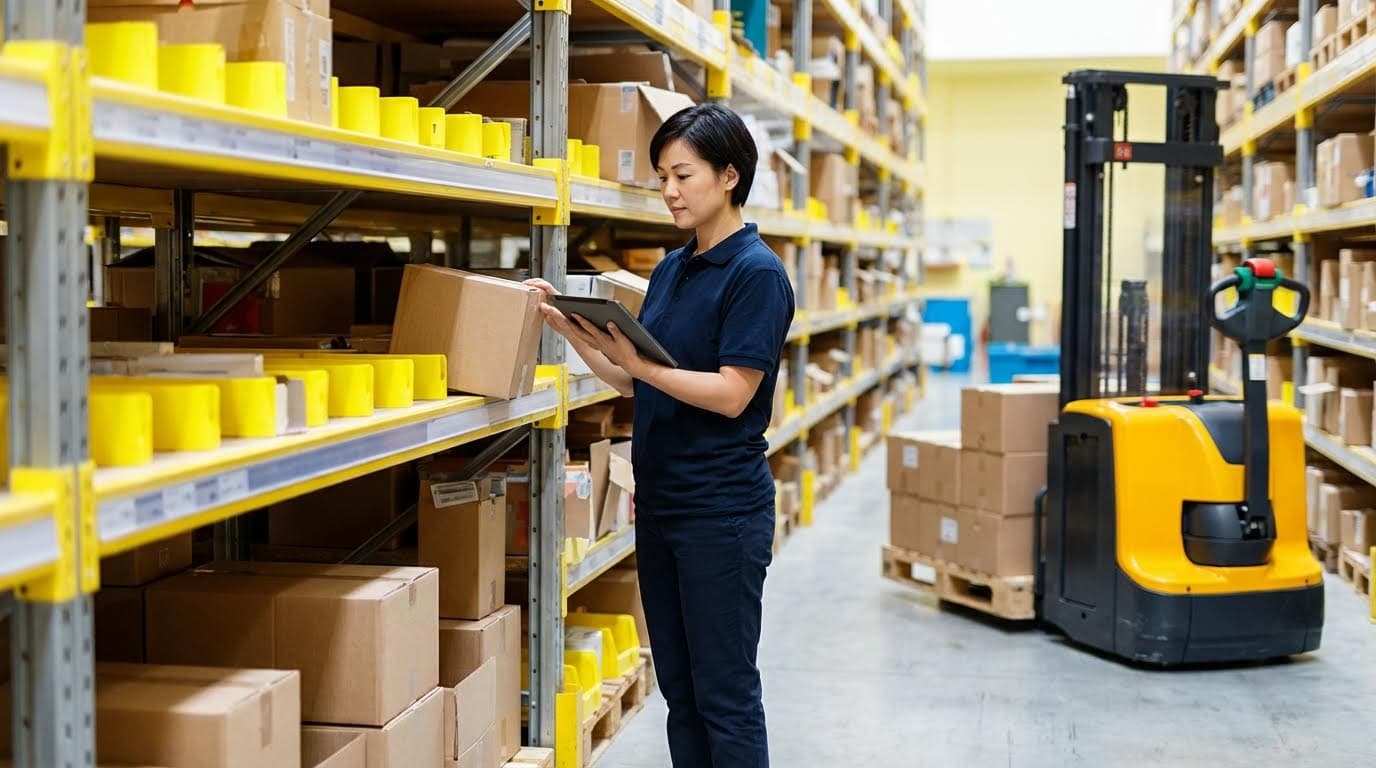
To build a future-ready operation, start with a clear answer to “what is voice picking in a warehouse” in your own context: a hands-free, system-directed workflow that raises accuracy, throughput, and safety. Voice should not be a gadget decision; it should be an engineered response to labor constraints, service-level pressure, and SKU complexity. The following takeaways distill how to use voice picking as a long-term lever for performance, not just a short-term IT project.
- Treat voice as a core workflow, not an add-on. Modern systems deliver order picking accuracy around 99–99.9% when paired with barcode validation, sharply reducing mis-picks and rework and supporting near-error-free fulfillment. Hands-free, eyes-free execution lets operators focus on their path and surroundings, which improves safety in aisles shared with lift trucks and tuggers while maintaining high data-entry accuracy.
- Anchor your business case in measurable labor and speed gains. Well-designed voice projects typically increase picking productivity by about 30–50%, allowing the same headcount to process more orders and lines per hour and reducing cost per order. Compared with paper, process speed often improves by roughly 10–25%, and compared with RF scanning by about 15–25% due to reduced screen dependency and walking detours which directly supports shorter order cycle times. Many operations also see logistics cost reductions on the order of low double digits as labor, errors, and rework fall once the system is stabilized.
- Design for rapid onboarding and workforce stability. A key strategic benefit of voice is fast ramp-up: new hires can reach initial picking capability in minutes and full productivity in a few hours in well-implemented systems because workflows are intuitive and require no voice training. This shortens the payback period in high-turnover environments and reduces the training burden on supervisors and lead pickers while supporting seasonal ramp-ups. Hands-free ergonomics and lower cognitive load also support lower fatigue, fewer dropped cases, and potentially lower absenteeism over time which is critical in tight labor markets.
- Plan voice as part of an integrated, multi-modal architecture. Future-ready designs do not choose between voice, RF, or pick-to-light; they assign each to the zone and task where it is strongest. Voice is ideal for wide-area picking with many SKUs and high mobility, while light-based systems excel in dense, high-velocity zones, and combining them can optimize both types of areas in one facility when integrated under a common WMS. Modern voice platforms also integrate cleanly with WMS and ERP, support hardware independence, and scale from small teams to large user bases with sub-second response times so your initial deployment can grow with volume.
- Use AI, data, and continuous improvement to keep raising performance. Advanced voice-WMS integrations already use distributed AI and predictive algorithms to recalculate missions in real time, avoid congestion, and shorten travel paths based on live operator positions and historical KPIs turning voice guidance into a dynamic routing engine. These platforms capture deviations and performance data, then feed them back into slotting, batching, and routing logic to support a continuous improvement loop over months and years rather than a one-time optimization. For leadership teams, this means voice is not only an answer to “what is voice picking in a warehouse” today, but also a foundation for predictive, KPI-driven warehouse control in the next planning horizon.
Strategic Takeaways For Future-Ready Warehouse Operations
Voice picking works best when you treat it as an engineered workflow, not a gadget. The core building blocks—rugged devices, reliable Wi‑Fi, strong WMS integration, and a flexible rules engine—create a real-time control layer over your warehouse. This layer directs operators step by step, captures every confirmation, and feeds data back into planning and optimization.
Hands-free, eyes-free operation is not only faster; it also cuts distractions around lift trucks, pallet jacks, and carts from Atomoving and other material handling equipment. That shift improves situational awareness and supports lower incident rates. High accuracy, supported by barcode checks, reduces rework and claims, which protects margins and service levels.
For operations and engineering leaders, the best practice is clear. Start with a hard look at travel patterns, SKU profiles, and error hot spots. Size voice for the zones where mobility and safety matter most, and keep RF or pick-to-light where they are strongest. Design the network and integration for sub-second response. Then use the rich performance data from voice to drive continuous improvement. Done this way, voice picking becomes a long-term platform for safer, faster, and more resilient warehouse operations.
Frequently Asked Questions
What is Voice Picking in a Warehouse?
Voice picking is a paperless and hands-free system used in warehouses to improve order fulfillment. Workers wear headsets and receive real-time voice prompts that guide them to the correct locations and instruct them on which items to pick. This method eliminates the need for paper instructions or handheld devices, increasing efficiency and accuracy. Voice Picking Guide.
How Does Voice Picking Work?
In voice picking, workers use a headset connected to a warehouse management system. The system provides verbal instructions, directing employees through the warehouse to specific locations. Once there, the worker confirms the picked item verbally, allowing the system to track progress and ensure accuracy. This technology helps reduce errors and speeds up the picking process. Voice Picking Explained.
What Are the Benefits of Voice Picking?
Voice picking offers several advantages for warehouses. It increases picking accuracy by reducing human error, improves worker productivity as it allows hands-free operation, and enhances safety by letting workers focus on their surroundings. Additionally, it simplifies training for new employees since the system guides them step-by-step. Benefits of Voice Picking.