Operations teams that ask what lifts pallets need a clear view of every option, from simple pallet jacks to fully automated AGVs. This article compares how different pallet lifting systems handle vertical lift, horizontal transport, and storage in real warehouse layouts.
You will see how core functions like lift height, load capacity, and duty cycle shape the choice between pallet jacks, walk-behind stackers, rider stackers, and forklifts. The article then explains how aisle width, racking design, and safety standards drive equipment selection and operator training needs.
Later sections focus on low-to-medium lift solutions, including manual and electric pallet jacks, high-lift pallet trucks, and stackers used for rack storage. The comparison then shifts to forklifts and unmanned forklifts, before closing with AGVs, warehouse digitalization, and a strategic conclusion for long-term pallet handling investments.
Core Functions Of Pallet Lifting Equipment
Engineers asking what lifts pallets must separate vertical lift from horizontal transport. Core pallet handling functions define which tool fits each warehouse zone and workflow. This section explains how lift height, capacity, and duty cycle link to layout, racking, and safety standards. It builds a technical base for later comparisons of pallet jacks, stackers, forklifts, and AGVs.
Vertical Lift Versus Horizontal Transport
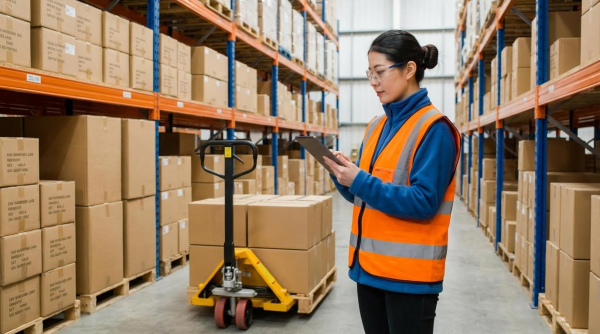
When you ask what lifts pallets, start by splitting tasks into vertical and horizontal moves. Pallet jacks mainly handle horizontal transport with minimal lift, usually less than 0.2 metres. They raise loads just enough to clear the floor, docks, and thresholds. Stackers, forklifts, and AGV stacker cranes provide real vertical lift for rack storage.
Engineers often separate functions as follows:
- Pallet jacks: horizontal transfer between truck, staging, and work cells.
- Stackers: low to medium lift into first rack levels or mezzanines.
- Forklifts: full-range lift, loading, and yard work.
- AGVs: automated horizontal and vertical moves in defined paths.
Clear task zoning avoids using high-cost machines for simple floor moves. It also reduces congestion and improves energy use per pallet moved.
Load Capacity, Duty Cycle, And Throughput
Load capacity answers what lifts pallets safely at a given mass. Typical pallet jacks handle about 1,000 kilograms to 2,500 kilograms. Stackers usually work in the 1,000 kilograms to 2,500 kilograms range as well, but at higher lift heights. Forklifts cover the widest band, from roughly 1,000 kilograms up to tens of tonnes in heavy industry. AGVs and unmanned forklifts match or exceed common manual truck ratings for repetitive flows.
Duty cycle and throughput decide which system is economical. For low daily pallet counts, manual jacks and simple stackers keep costs down. For multi-shift, high-throughput docks and deep racking, electric forklifts or AGVs reduce labour and idle time. Engineers calculate pallets per hour per truck, then include travel distance, lift height, and acceleration limits.
High duty cycles demand robust cooling, battery management, and hydraulic sizing. Undersized systems overheat, slow down, and shorten component life.
Aisle Width, Layout, And Racking Constraints
Warehouse geometry often answers what lifts pallets in each zone. Pallet jacks work in the tightest spaces because operators walk with the load and the chassis is short. Walk-behind stackers need slightly wider aisles due to mast and counterweight envelopes. Rider stackers and reach trucks require planned aisle widths matched to turning radius and fork reach.
Key layout factors include:
| Factor | Design impact |
|---|---|
| Aisle width | Defines if jacks, stackers, or forklifts can turn with a pallet |
| Rack clearances | Set mast height, fork tilt, and side-shift needs |
| Floor flatness | Critical for high-bay AGVs and tall masts |
| Transfer points | Decide handover between manual and automated systems |
AGV systems and unmanned forklifts favour straight, repeatable paths with controlled crossings. Deep, high-density racking may use stacker cranes while pallet jacks feed inbound and outbound buffers. Early coordination between racking design and equipment choice avoids later rework.
Safety, Standards, And Operator Training
Any answer to what lifts pallets must include safety and standards. Manual pallet jacks still need basic training on load balance, slopes, and pedestrian interaction. Stackers and forklifts fall under powered industrial truck rules, which require formal instruction, practical evaluation, and periodic refreshers. Unmanned forklifts and AGVs must comply with automated truck standards that cover emergency stops, obstacle detection, and fail-safe logic.
Good practice links technical features with behaviour. Speed limits, horn use, and right-of-way rules reduce collision risk. Pre-shift checks catch hydraulic leaks, fork damage, and brake faults before failure. For AGVs and unmanned trucks, engineers perform risk assessments, define restricted zones, and tune sensor fields for docks, crossings, and blind corners.
Clear floor markings, traffic lights, and visual alarms support mixed fleets. When humans and robots share aisles, conservative speeds and redundant detection layers are essential design choices.
Pallet Jacks And Stackers: Low-To-Medium Lift
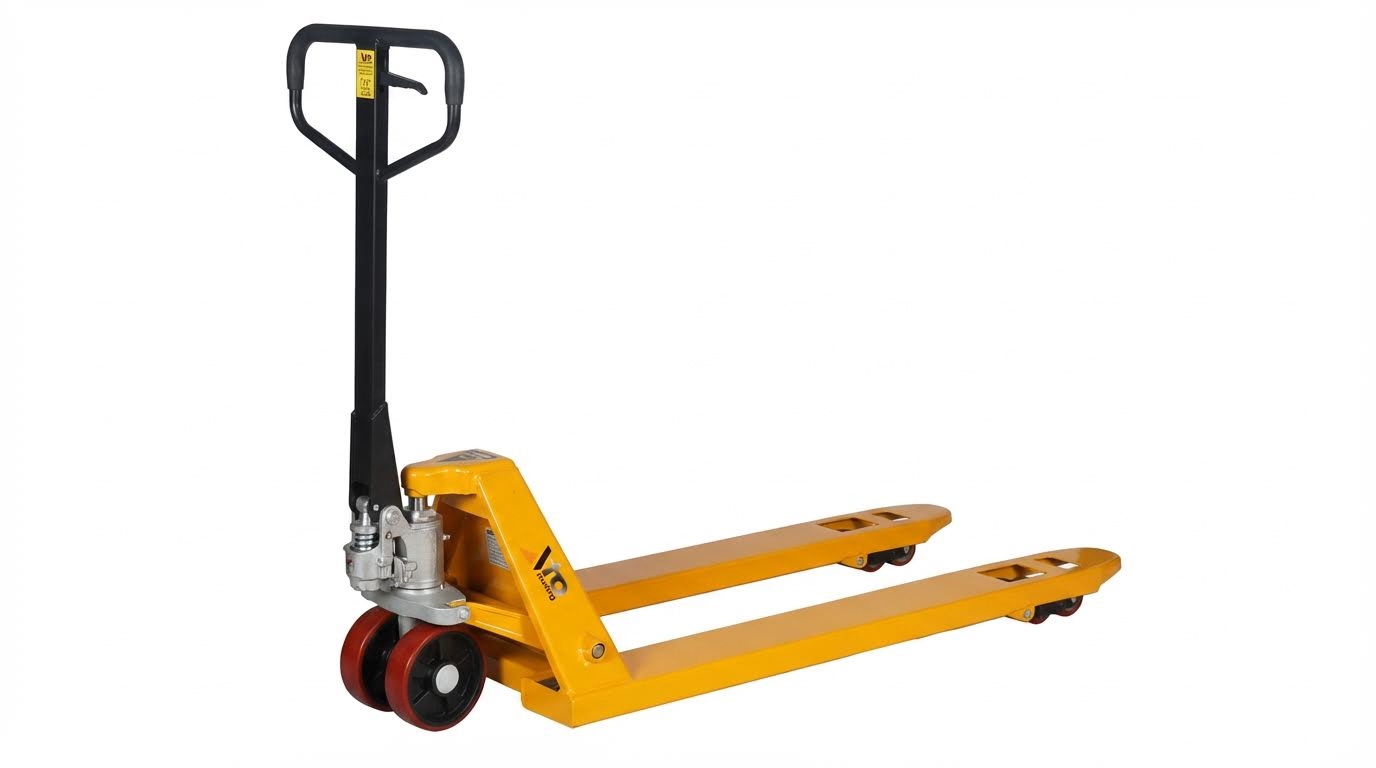
When engineers ask what lifts pallets in low-bay warehouses, pallet jacks and stackers are usually the first tools considered. Both handle standardized pallets, but they target different lift heights, duty cycles, and aisle constraints. This section explains how manual and electric pallet jacks, high-lift pallet trucks, and walk-behind or rider stackers fit into a broader pallet-lifting strategy. It focuses on technical limits, ergonomic impact, and how these machines interact with racking and floor layouts.
Manual And Electric Pallet Jacks In Tight Spaces
Manual and electric pallet jacks answer the basic question of what lifts pallets for ground-level moves. They raise pallets just enough for rolling, usually less than 0.2 metres. This small lift keeps the centre of gravity low and reduces tip risk on uneven floors. Typical load capacity ranges from about 1 000 kilograms to over 2 500 kilograms.
Manual pallet jacks use a hand pump and require operator push or pull force. They suit low-throughput zones, small docks, and retail backrooms. Electric pallet jacks add traction and lift motors, which cut operator effort and strain during long shifts. They handle higher daily cycles with less fatigue and more consistent travel speed.
In tight aisles, compact chassis length and small turning radius matter more than speed. Short-tandem fork designs reduce head length and allow loading inside trucks where forklifts cannot turn. However, low lift height means pallet jacks cannot feed higher rack levels. They work best as horizontal feeders that stage pallets for stackers, forklifts, or AGVs.
High-Lift Pallet Trucks And Ergonomic Workstations
High-lift pallet trucks bridge the gap between simple transport and ergonomic work positioning. They raise pallets to about waist height so operators can pick or pack without bending. Typical rated loads fall between 1 000 kilograms and 1 500 kilograms, lower than standard pallet jacks due to higher load moments.
Most designs include scissor mechanisms or extended hydraulic cylinders. Stability becomes critical once the pallet rises above about 0.4 metres. Engineers specify wide base legs, auto-deploy stabilizers, and reinforced forks to control deflection and sway. These features reduce tip risk when operators work on one edge of the pallet.
From an ergonomics view, high-lift trucks turn a pallet into a height-adjustable workstation. This reduces back strain, improves pick accuracy, and supports lean cell layouts. However, they are not general transport tools. Travel distances should stay short, and operators should lower the load before moving over uneven floors or dock plates.
When deciding what lifts pallets at workstations, high-lift pallet trucks compete with lift tables and small stackers. High-lift trucks win where mobility and low cost matter more than extreme stability or automation.
Walk-Behind And Rider Stackers For Rack Storage
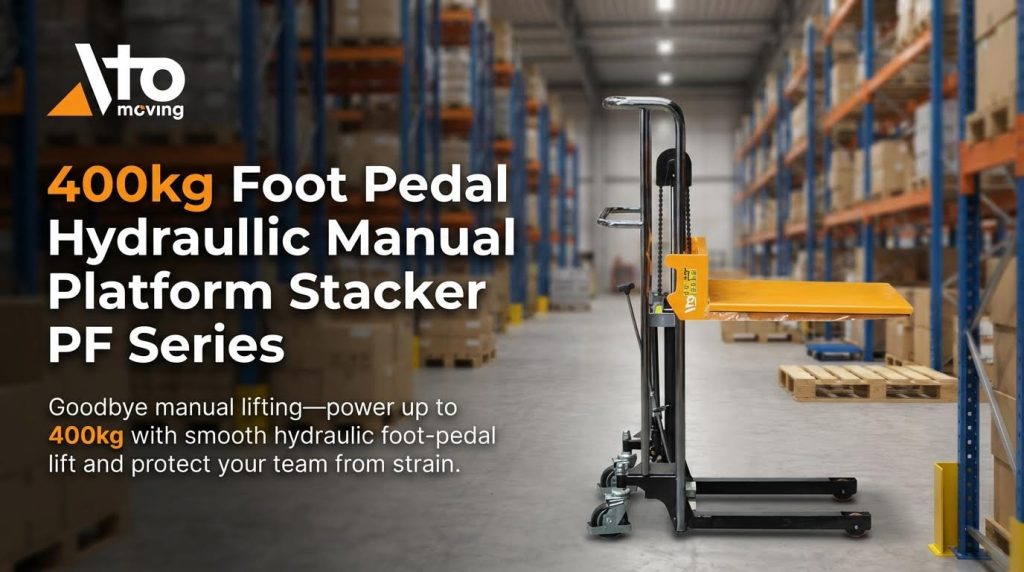
Walk-behind and rider stackers answer what lifts pallets into low-to-medium rack levels without a full forklift. They combine mast, forks, and power drive in a narrower, lighter package. Typical capacities range from about 1 000 kilograms to 2 500 kilograms, with lift heights up to roughly 6 metres for common models.
Walk-behind stackers keep the operator on foot behind a tiller arm. They fit very narrow aisles and short travel routes. Rider stackers add a platform or seat, which improves speed and productivity on longer runs. Both types require careful matching of mast height to clear beam levels plus safety margin.
Engineers must check floor bearing pressure, especially under outrigger legs. Concentrated loads increase with lift height and mast tilt. Stability triangles, load centres, and derated capacity charts guide safe operation near maximum height. Good practice keeps heavy or dense pallets on lower levels and uses stackers for lighter SKUs higher up.
Compared with forklifts, stackers cost less, weigh less, and need narrower aisles. They are strong options in small or medium warehouses that ask what lifts pallets into racks without large capital spend. They also pair well with AGVs or unmanned forklifts by handling exception tasks and low-volume storage zones.
Forklifts And Unmanned Forklifts In Warehouses
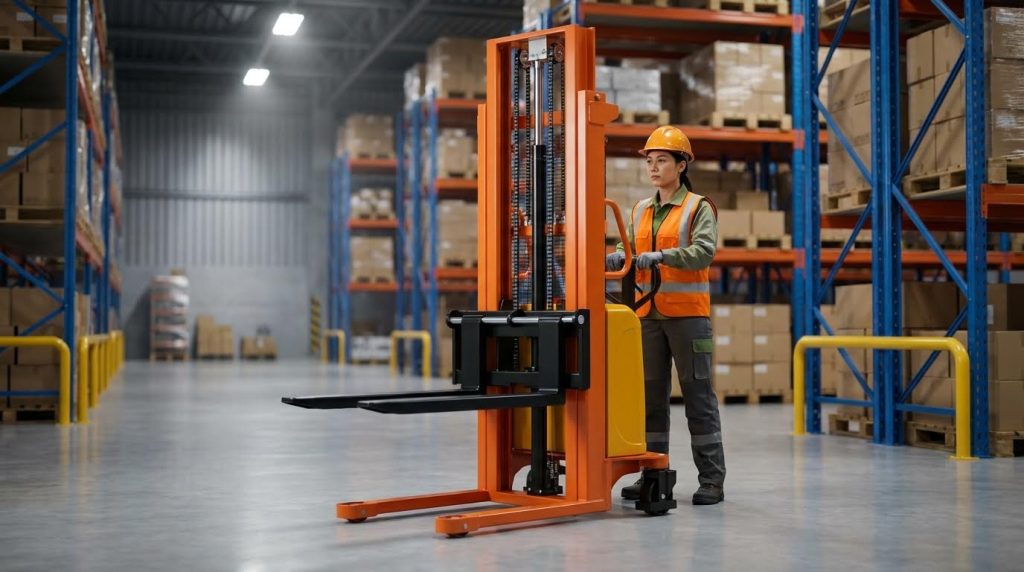
Warehouse teams asking what lifts pallets at higher levels usually end up with forklifts or unmanned forklifts. These trucks handle heavy loads, reach tall racks, and work across long shifts. This section compares truck types, power choices, safety systems, and the upgrade path to automation. It helps engineers match pallet lifting equipment to layout, throughput, and cost targets.
Counterbalance, Reach, And Specialty Forklifts
When engineers assess what lifts pallets beyond stacker range, counterbalance and reach forklifts are the main tools. Counterbalance trucks place a weight at the rear to offset the pallet load. They suit dock work, block stacking, and mixed indoor and outdoor use. Typical lift heights reach about 6–7 metres, with higher masts available in some models.
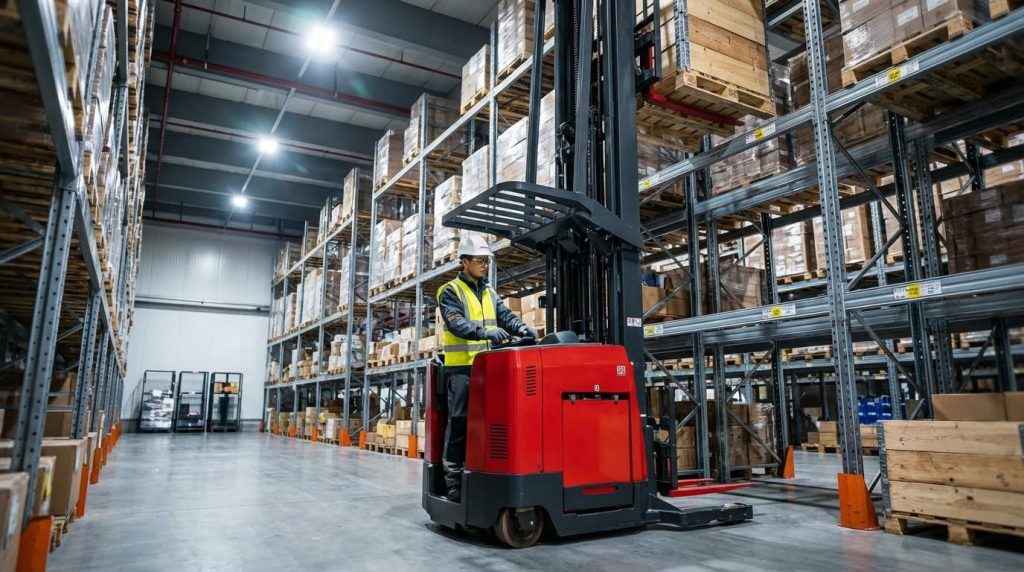
Reach trucks answer a different question in narrow aisles. They move the mast forward to reach into pallet racking, then retract the load back over the chassis. This design cuts required aisle width and lets racks run taller. They are ideal for high‑bay storage where every aisle millimetre matters.
Specialty forklifts fill edge cases where standard trucks cannot lift pallets safely. Rough‑terrain forklifts use large tyres and higher ground clearance for yards and construction supply sites. Very‑narrow‑aisle trucks, including turret trucks, rotate forks to pick pallets from either side without turning the chassis. Engineers should map pallet sizes, rack beam levels, and turning radii before choosing a truck family.
Energy Sources, Efficiency, And Lifecycle Costs
Energy choice strongly affects the long‑term cost of what lifts pallets in a warehouse. Electric forklifts dominate indoor use because they produce no exhaust at the point of use and run quietly. Lead‑acid batteries remain common, while lithium‑ion packs support fast charging and higher availability. Typical overall efficiencies for electric drive and hydraulics reach about 80–90%.
Internal combustion trucks use diesel, LPG, or gasoline. They deliver high peak power and quick refuelling, which suits outdoor yards and heavy, continuous work. However, fuel costs, emissions control, and ventilation needs raise lifecycle cost indoors. Tyre wear and transmission maintenance also increase with high‑duty cycles.
Lifecycle analysis should include more than purchase price. Engineers compare:
- Energy cost per pallet moved
- Planned utilisation hours per year
- Battery or engine overhaul intervals
- Downtime cost from failures
Electric unmanned forklifts shift costs from labour to capital and software. They often justify investment in multi‑shift operations where labour and accident costs are high. A total cost model over five to ten years gives the clearest answer on which truck should lift pallets in each zone.
Safety Systems, Standards, And Best Practices
Forklifts answer the question of what lifts pallets, but they also create the highest warehouse risk. Safety design therefore follows strict standards. For manual trucks, regulations such as OSHA rules and industrial truck standards define training, stability, and inspection needs. For driverless trucks, ISO 3691‑4 and similar standards define emergency stop functions, obstacle detection, and fail‑safe behaviour.
Modern forklifts use layered safety controls. Common features include operator presence systems that disable drive and lift when the seat is empty. Load‑handling aids such as side shifters, tilt control, and wide‑view masts improve stability and visibility. Electronic speed limits and automatic cornering deceleration cut tip‑over risk in tight aisles.
Lighting and warning systems support shared spaces with pedestrians. Blue spotlights and red exclusion zones project on the floor to show approach paths. Reverse alarms, beacons, and optional cameras improve awareness at blind intersections and truck docks. For driverless forklifts, laser scanners and 3D sensors create 360‑degree protection and trigger controlled stops when obstacles enter the safety field.
Safe operation still depends on process discipline. Pre‑shift checks confirm brakes, steering, mast, forks, and hydraulics. Operators keep forks low and slightly tilted back when travelling, and avoid lifting people or driving with unstable loads. Structured training, periodic re‑evaluation, and near‑miss reviews keep risk levels under control as fleets grow.
Transition Path To Unmanned Forklifts And AGVs
Unmanned forklifts and AGVs are changing how warehouses answer what lifts pallets on repetitive routes. These systems follow mapped paths, talk to warehouse software, and move loads without a seated driver. They work best in stable flows such as pallet moves between receiving, buffer storage, and shipping. Typical benefits include 24/7 operation, fewer handling errors, and lower accident rates.
A practical transition rarely jumps from fully manual to fully unmanned in one step. Engineers usually start with clear, low‑complexity routes. Examples include shuttle runs between end‑of‑line packaging and a staging area. Manual forklifts still handle exceptions, tight manoeuvres, and irregular loads. Over time, more routes move to automation as layouts and IT systems mature.
Planning should cover navigation type, traffic rules, and hand‑off points. Laser or vision navigation allows flexible routes without rails or wires. Digital traffic control manages right‑of‑way at crossings and dock doors. Integration with WMS or MES systems lets the fleet receive tasks, confirm pallet IDs, and report status in real time.
Change management is as important as technology. Teams need training on new traffic patterns, safety zones, and emergency stop rules. Clear metrics such as pallets per hour, incident counts, and on‑time task completion help track value. With each phase, the warehouse gains more automated capacity to lift pallets while keeping flexibility for future layout changes.
AGVs, Digitalization, And Strategic Conclusion

Engineers asking what lifts pallets in future-ready warehouses now look beyond manual trucks and forklifts. Automated guided vehicles and unmanned forklifts link physical pallet movement with digital control, data, and optimization. This section explains how AGVs change pallet lifting strategy, how to phase them in, and what this means for long-term warehouse design.
AGVs answer the question what lifts pallets when layouts must stay flexible. They run on defined routes but do not need fixed conveyors or major civil work. This suits brownfield sites where operators cannot stop production for long projects. Integration with warehouse management systems lets AGVs receive tasks, confirm pallet picks, and log time stamps for every move.
Compared with conveyors, AGVs support stepwise scaling. Operations can start with a few vehicles and add units as throughput grows. Energy use links to actual work because each vehicle draws power only when it moves or lifts. This contrasts with continuous conveyor drives that draw power whenever the line runs, even with low load.
Unmanned forklifts extend AGV concepts to higher lift heights and heavier loads. They handle repetitive rack moves, long horizontal runs, and work in harsh areas such as cold stores. Their sensors, safety logic, and compliance with standards like ISO 3691-4 have reduced collision risk. Digital twins and fleet management software simulate routes, balance traffic, and test layout changes before on-site deployment.
Practical rollout needs a clear roadmap,
Frequently Asked Questions
What is the thing called that lifts pallets?
A pallet jack, also known as a pallet pump, is the most common tool used to lift and move pallets. It features forks, wheels, and a handle, allowing you to slide the forks under a pallet and raise it for transport. Types of Pallet Jacks.
How to lift a pallet without a forklift?
If you don’t have a forklift, a pallet stacker or walkie stacker can be used. These machines function similarly to forklifts but are more compact, making them ideal for narrow spaces. They feature an electric mechanism and a 3-stage mast to lift pallets efficiently. Forklift Alternatives.
What safety guidelines should be followed when handling pallets?
When lifting pallets manually, ensure your feet are shoulder-width apart for stability, and keep your upper back straight to avoid injuries. For stacked pallets, OSHA recommends ensuring they are arranged in a way that prevents sliding or collapse. OSHA Pallet Guidelines.