If you are asking what lifts pallets in a warehouse, the answer spans from simple pallet jacks to fully automated systems. This guide compares how jacks, stackers, forklifts, and AGVs actually move pallets in real facilities. You will see typical capacities, lift heights, safety limits, and where each option makes sense. Use it to match the right lifting method to your aisles, racking height, and throughput targets.
Core Ways Pallets Are Lifted And Moved
Core ways pallets are lifted and moved in a warehouse depend on how high you need to go and how far you need to travel. If you are asking what lifts pallets most efficiently, the answer ranges from simple pallet jacks at floor level to stackers and forklifts for vertical storage.
At the most basic level, pallet jacks handle ground transport, while stackers, forklifts, and automated systems take over once you need height, reach, or high throughput.
- Pallet jacks: Ground-level lifting and short horizontal moves – lowest cost, no racking access.
- Stackers: Vertical lifting into low–medium racking – use height without buying a full forklift.
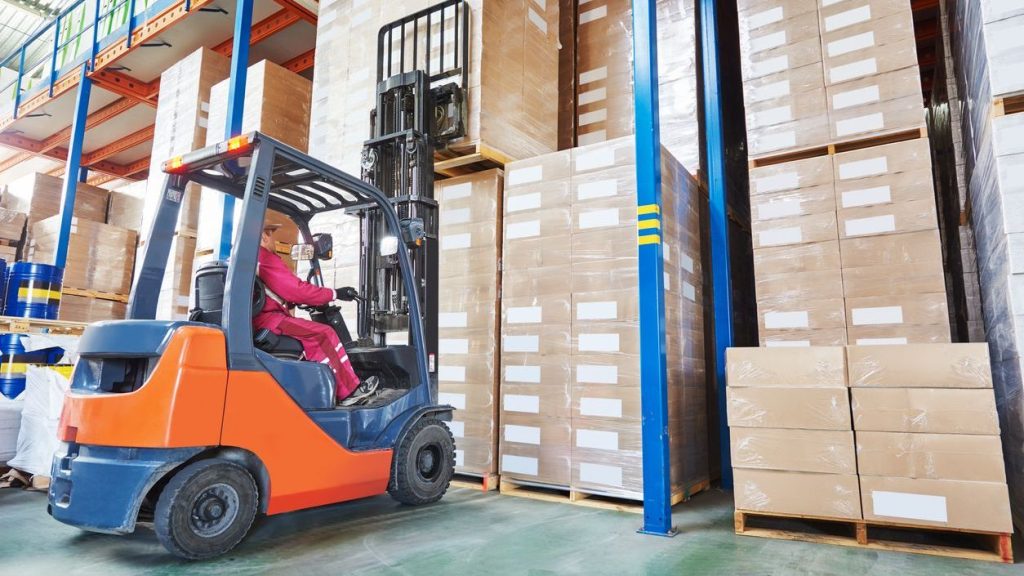
- Forklifts and reach trucks: High racking and mixed indoor–outdoor work – best for heavy loads and tall warehouses.
- AGVs/AMRs/ASRS: Automated pallet lifting and storage – for high-volume, low-touch operations.
💡 Field Engineer’s Note: Decide what lifts pallets in your warehouse by starting with your highest pallet position and your narrowest aisle. Those two constraints usually eliminate half the wrong equipment choices immediately.
How Pallet Jacks Lift And Transport At Floor Level
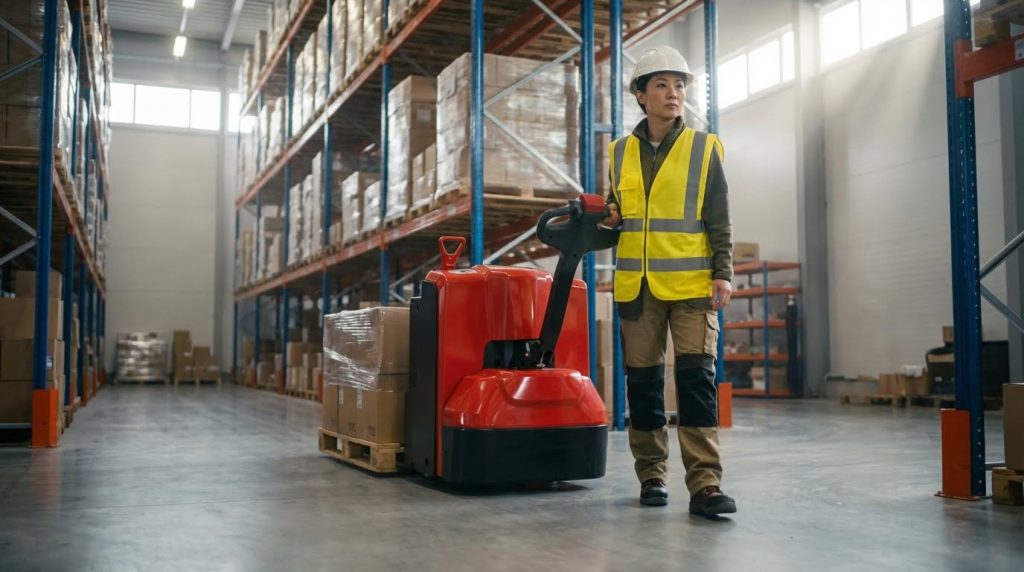
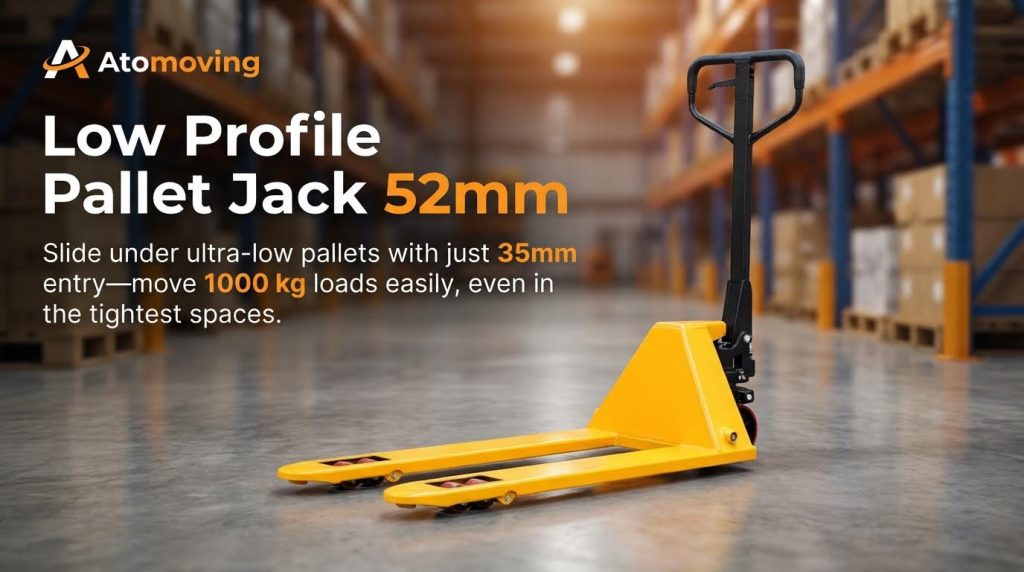
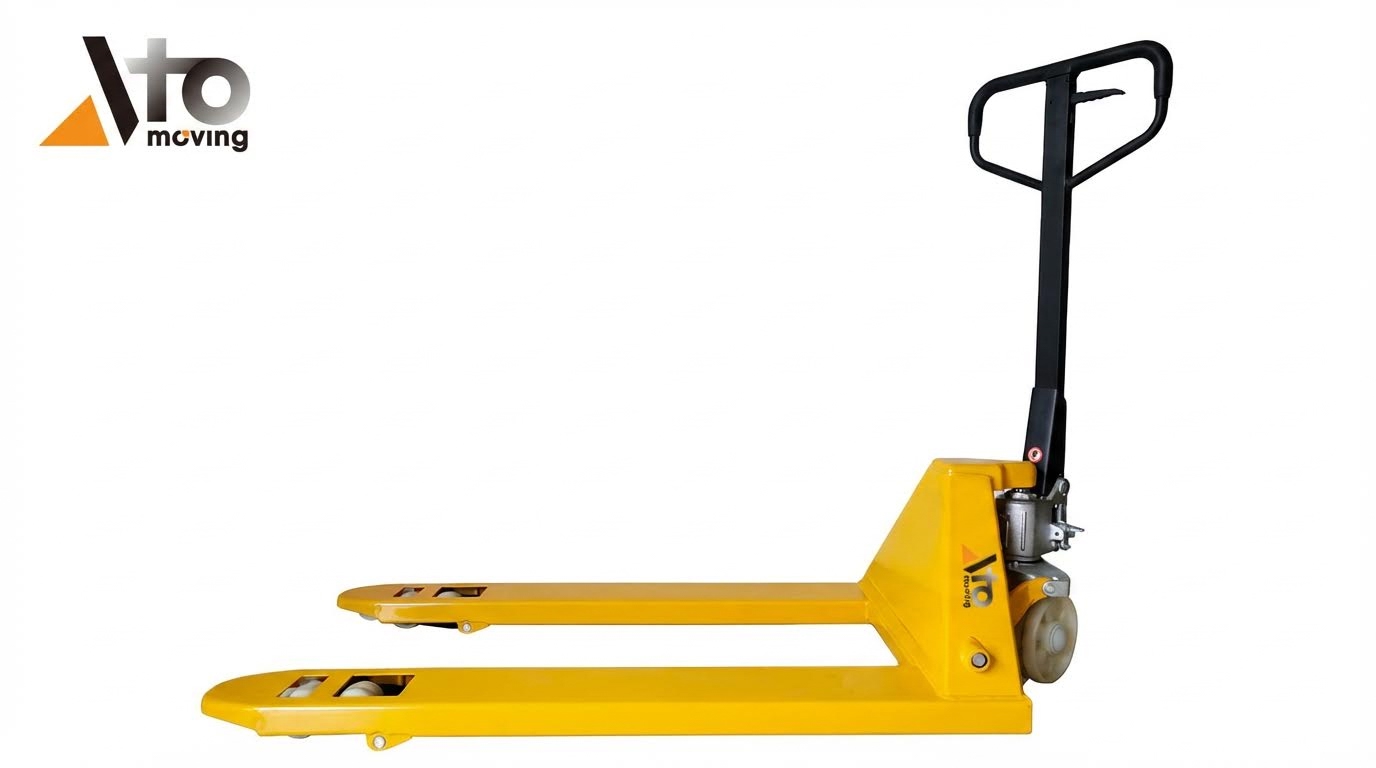
Pallet jacks lift pallets at floor level by raising the pallet just enough to roll, typically 50–200 mm, and then transporting it horizontally. This is the simplest answer when you ask what lifts pallets in short, low-level warehouse moves.
Both manual and electric pallet jacks use a small hydraulic circuit to raise the forks under the pallet, but they differ in power, capacity, and ergonomics.
| Feature | Manual Pallet Jack | Electric Pallet Jack | Operational Impact |
|---|---|---|---|
| Typical lift height above floor | ≈50–200 mm hydraulic lift range | Similar (≈50–200 mm) | Enough to clear floor irregularities and dock plates, not for stacking. |
| Typical capacity | 1,000–2,500 kg rated load | 2,500–3,500 kg rated load | Electric units handle heavier pallets and steeper dock plates. |
| Power source | Human push/pull with manual hydraulic pump | Battery-driven traction and lift motors electric drive | Electric reduces strain on long runs and high shifts. |
| Best application | <50 pallet moves/day, short distances usage guidance | >50 pallet moves/day, medium–long runs usage guidance | Match to throughput to avoid fatigue or underutilised batteries. |
| Stacking ability | None | None | Only ground-level transport; cannot feed high racking. |
Mechanically, pallet jacks answer what lifts pallets by using a compact hydraulic cylinder. Pumping the tiller pressurises oil, which extends the piston and raises the fork carriage by a few centimetres.
Once the pallet clears the floor, polyurethane or nylon wheels carry the full load. This transfers friction from sliding on timber to rolling on bearings, massively reducing push–pull force on level concrete.
- Keep lift minimal: Raise only enough to clear bumps – lower centre of gravity and better stability.
- Center the load: Keep weight over the fork wheels – reduces side-tip risk in turns.
- Full fork insertion: Insert forks fully under pallet deck – prevents broken boards and dropped loads.
- Check pallet condition: Reject cracked or wet pallets – avoids sudden failures under load pallet condition guidance.
How pallet condition affects lifting safety
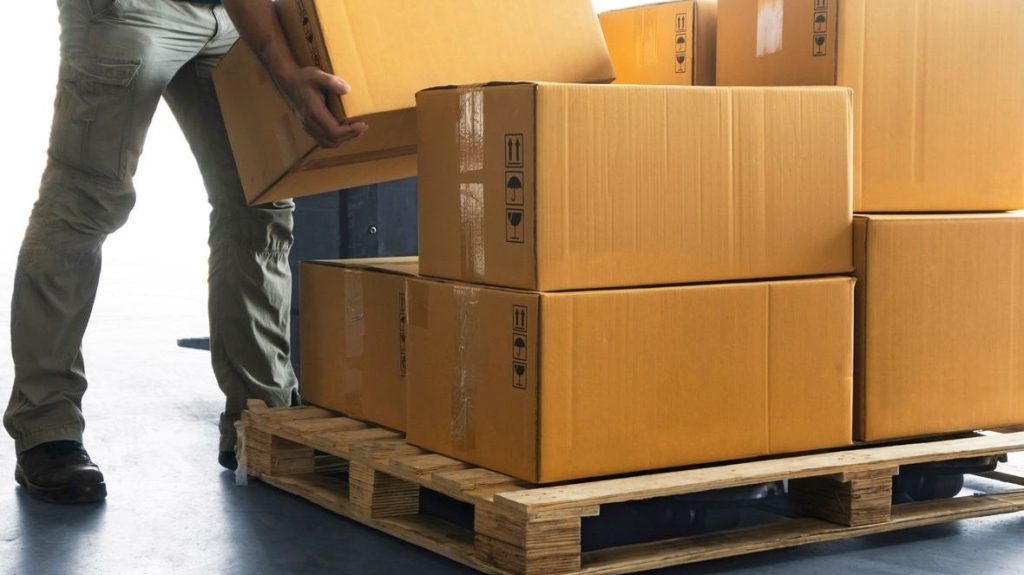
Pallet jacks concentrate load at the fork wheels and under the stringers. Cracked boards, loose nails, or rotten timber can collapse when you jack up 1,500–2,000 kg, so isolating damaged pallets in a marked zone is essential for safe operation. Detailed pallet condition practices
- Manual vs electric choice: Use manual for light, short work; electric for heavy, frequent moves selection criteria – balances CAPEX with operator health.
- Safe driving rules: Pull on level floors, push on slopes, avoid sharp turns operating rules – prevents runaways and tip-overs.
- Pre-use checks: Inspect forks, wheels, hydraulics, and brakes before use inspection checklist – reduces on-shift failures.
💡 Field Engineer’s Note: If operators complain about wrist, shoulder, or back strain, your issue is rarely “training” alone. It usually means you are using manual jacks where an electric pallet truck or a low-lift stacker is now justified by pallet count and travel distance.
Vertical Lifting With Stackers And Mast Design
Stackers lift pallets vertically using a mast and fork carriage, typically up to 4–6 m, bridging the gap between pallet jacks and full forklifts. When people ask what lifts pallets into low or medium racking without buying a forklift, stackers are usually the answer.
They use either manual, semi-electric, or fully electric hydraulics to raise the carriage along a guided mast, while outriggers or counterweights keep the truck stable.
| Feature | Typical Stacker Range | Compared To Pallet Jack | Best For… |
|---|---|---|---|
| Lift height | Up to 4–6 m typical mast height | Far greater (vs 50–200 mm) | Feeding racking 2–5 beam levels high. |
| Load capacity | ≈1,000–2,000 kg rated load | Similar to heavy pallet jacks | Medium–heavy pallets in small warehouses. |
| Mast type | Simple, duplex, or triplex guided mast | None on pallet jacks | Choosing free-lift vs overall height constraints. |
| Stability method | Outriggers and/or counterweight structural design | Low lift, so simpler frame | Keeping centre of gravity inside stability triangle at height. |
| Ergonomics | Power steering, adjustable controls ergonomic features | Basic tiller handle | Reducing fatigue in repeated lift/store cycles. |
From an engineering standpoint, a stacker’s mast converts hydraulic cylinder force into vertical motion of the carriage through chains or direct-acting cylinders. The higher you lift, the more the pallet’s centre of gravity moves away from the base, shrinking the stability envelope.
This is why stackers are usually limited to 4–6 m and 1,000–2,000 kg, while reach and counterbalanced forklifts take over for higher, heavier work.
- Vertical space utilisation: Stackers let you use cubic volume, not just floor area lifting height comparison – ideal in small, high-rent warehouses.
- Better elevated stability: Robust frame and counterweight reduce tip risk at height safety features – safer than “over-lifting” with improvised gear.
- Ergonomic lifting: Powered lift keeps operators out of deep bending zones ergonomic guidance – reduces back and shoulder injuries.
Why mast design matters for your building height
If your warehouse has low doors or mezzanines, overall mast height at full extension can be a constraint. Duplex masts offer moderate height with simpler construction, while triplex masts provide higher lift in a shorter collapsed package, useful where clear height is limited but you still need 4–6 m racking.
- Safety systems: Anti-fall, anti-tip, brakes, and alarms are common on modern stackers safety feature set – protect people around elevated loads.
- Load building: Even weight distribution and no overhang are critical before lifting load building rules – prevents mast sway and product falls.
- Predictive maintenance: Monitoring mast chains, hydraulics, and error codes prevents stuck loads at height predictive maintenance – critical for uptime in busy racking aisles.
💡 Field Engineer’s Note: Once you regularly lift above 3 m, treat every pallet as a potential falling object. Small issues—uneven load, damaged pallet, worn mast chain—become high-risk events, so your inspection and load-building discipline must be far tighter than for ground-only pallet jack work.
Matching Lifting Equipment To Warehouse Applications
Matching what lifts pallets to the right warehouse job means balancing throughput, labour, and safety against capital cost, aisle layout, and racking height. The goal is the lowest cost per pallet moved safely over the system life.
Selecting by throughput, shift pattern, and TCO
Throughput, operating hours, and total cost of ownership (TCO) decide whether you stay manual, go electric, or justify automation for what lifts pallets in your warehouse.
Manual gear works for low pallet counts and short shifts. Electric trucks and forklifts suit multi-shift work. AGVs, AMRs, and ASRS only pay off once pallet volumes and labour costs are high enough.
| Solution Type | Typical Use Case | Throughput / Hour / Unit | Capex Band | Labour Impact | Operational Impact |
|---|---|---|---|---|---|
| Manual pallet jack | Small stores, staging, trucks | Up to ~20 pallets (low intensity) | Very low (hand truck level) | No reduction; fully manual | Best where daily moves <50 and short travel distances. Manual jacks suit light loads and low daily pallet counts. |
| Electric pallet truck | Dock, cross-dock, long runs | 20–40 pallets (operator-dependent) | Low–medium | Reduces push/pull effort, supports higher cycles | Right when daily moves >50 and travel distances are medium to long. Electric units fit higher-frequency handling. |
| Stacker (manual/electric) | Low–medium bay racking up to ~4–6 m | 10–25 pallets | Medium | One operator; some walking time | Good where you must lift pallets into racking but volumes do not justify a full forklift. Stackers lift 1,000–2,000 kg up to ~4–6 m. |
| Forklifts (counterbalance / reach) | Main pallet handling, all shifts | 25–40 pallets | Medium–high | Replaces several manual operators | Best for mixed indoor/outdoor work or high racking. Counterbalanced trucks handle 1,500–5,000+ kg at 3–8 m. |
| AGVs | Fixed, high-volume pallet flows | 15–30 pallets | ~SGD 400,000–1,200,000 per project | Reduce 2–4 operators/shift | Ideal for stable, repetitive routes. AGVs follow fixed paths and fit high-volume, predictable flows. |
| AMRs | Dynamic layouts, mixed traffic | 8–20 pallets | ~SGD 350,000–1,000,000 per project | Reduce 2–4 operators/shift | Suited to changing layouts. AMRs adapt with SLAM and onboard path planning. |
| ASRS | High-density, high-bay storage | 20–60 pallets per aisle | ~SGD 800,000–3,000,000 per project | Reduce 4–8 operators/shift | For maximum storage per m² and 24/7 operation. ASRS delivers 40–60% floor space reduction. |
- Throughput first: Size equipment to peak pallets/hour – this prevents bottlenecks at docks and pick faces.
- Shift pattern: Single-shift, low volume can stay manual; multi-shift or 20+ hours/day favours powered or automated systems – you avoid fatigue and overtime costs.
- TCO, not sticker price: Include energy, maintenance, labour, and downtime in the cost per pallet – this often makes electric or AGV/AMR more attractive than they look upfront.
- Scalability: AGVs/AMRs scale by adding units, while ASRS scales by aisles – this affects how you phase investment as volume grows as noted for automated systems.
- Route stability: Fixed, repetitive flows suit AGVs; changing routes and SKUs suit AMRs – this keeps utilisation high and idle time low.
How to estimate pallets per hour and match equipment
Start with inbound, outbound, and internal transfer pallets per day. Divide by effective operating hours (minus breaks and maintenance). Compare the resulting pallets/hour to the ranges in the table. Add 20–30% headroom for peaks and growth.
💡 Field Engineer’s Note: When you run 2–3 shifts, battery and maintenance downtime become hidden capacity killers. Two smaller electric trucks with staggered charging often move more pallets per day, at lower TCO, than one large unit that constantly waits for a battery or a technician.
Safety, standards compliance, and operator ergonomics
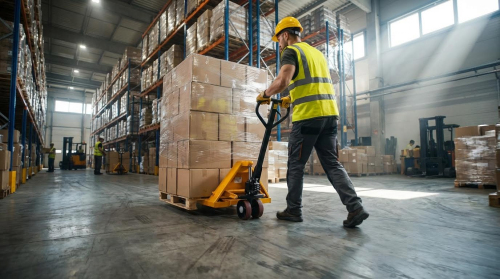
Safety rules, pallet condition, and ergonomics decide whether what lifts pallets actually reduces risk or quietly increases incident rates and compensation claims.
Even the best truck fails if pallets are cracked, loads are badly built, or operators work outside their comfort envelope for 8–10 hours.
- Pallet condition: Keep pallets clean, dry, and free of cracks or nails – this prevents fork hang-ups and dropped loads by isolating damaged pallets for repair or disposal.
- Load building: Center the load with minimal overhang and heavy items low and central – this reduces tipping and wrap failure during travel as recommended for safe pallet handling.
- Equipment choice vs task: Manual jacks fit light loads, short distances, and <50 moves/day; electric trucks fit higher loads and cycles – this aligns physical demands with human limits as outlined for manual vs electric selection.
- Pre-use inspection: Check forks, wheels, hydraulics, and (for electric) batteries and emergency stops – this catches defects before they become accidents with defective units tagged out of service.
- Safe operating rules: Insert forks fully, stay within rated capacity, raise only enough to clear the floor, avoid sharp turns – this keeps the stability triangle intact during motion as emphasised for pallet jack operation.
- Ergonomics: Keep work between mid-thigh and elbow height and minimise twisting – this cuts back and shoulder strain with stackers and lift tables keeping the top layer near waist height.
- Modern safety features: Use ergonomic handles, reliable brakes, foot protection, and access control – this reduces crush injuries and untrained use as recommended for pallet jacks.
- Automation risk reduction: AGVs and AMRs cut manual travel and incidents by 30–60% – this is often the strongest non-financial reason to automate according to automation ROI studies.
Linking safety, standards, and equipment choice
Once you know what lifts pallets in each zone (jacks, stackers, forklifts, AGVs), map it against your safety procedures and any ISO/OSHA requirements. Then add pre-use checks, load-building rules, and ergonomic limits into SOPs and training so the chosen equipment actually delivers the expected safety performance.
💡 Field Engineer’s Note: Most “equipment problems” I saw in warehouses were really pallet and load-building issues. Fixing pallet quality, overhang, and wrap tension often stabilised operations more than upgrading from a manual jack to a powered truck.
Final Thoughts On Pallet Lifting Equipment Choices
Pallet jacks, stackers, forklifts, and automated systems all obey the same physics. Load, height, and geometry set hard limits. Good engineering uses these limits to your advantage instead of fighting them.
At floor level, low lift and short moves keep the centre of gravity low and risks small. As you lift higher, mast design, wheelbase, and counterweight must keep the stability triangle intact. Poor pallets or bad load building can defeat even the best truck, especially above 3 m.
The right choice for what lifts pallets in your warehouse starts with data, not catalogues. Map peak pallets per hour, racking height, aisle width, and shift pattern. Then select the simplest tool that meets those needs with safe margins.
Manual jacks fit light, short, low-volume work. Stackers unlock vertical space without full forklift cost. Forklifts handle heavy, high, mixed-duty tasks. AGVs, AMRs, and ASRS make sense when flows are stable and labour is tight.
The best practice is clear. Treat pallet quality, load building, and pre-use checks as seriously as equipment purchase. Combine sound engineering, realistic ergonomics, and disciplined safety rules. Do that, and whatever lifts pallets in your warehouse will lift productivity and cut risk for years, whether you choose basic trucks or advanced Atomoving solutions.
Frequently Asked Questions
What is the thing called that lifts pallets?
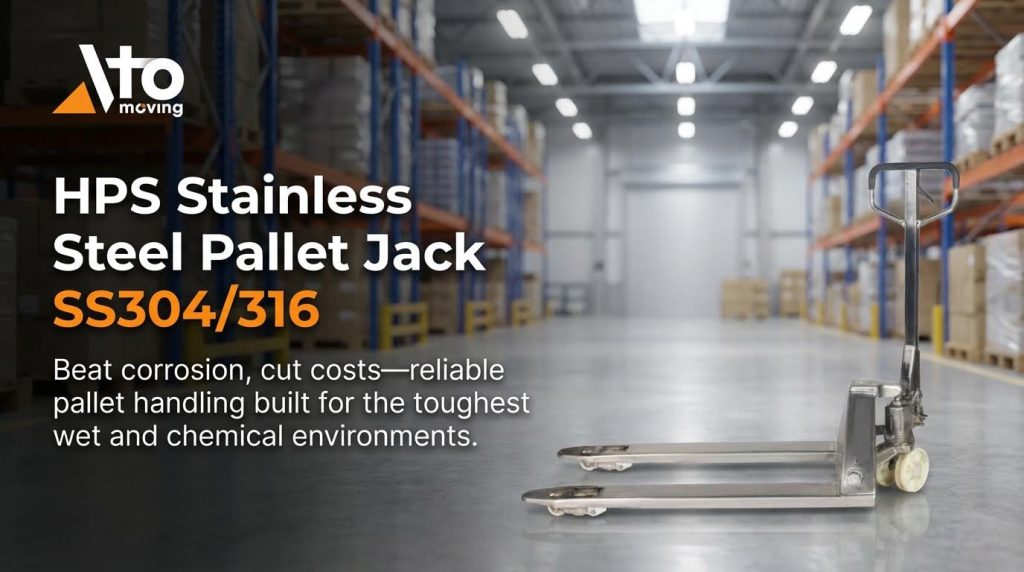
The equipment commonly used to lift pallets is called a pallet jack. It features forks, wheels, and a handle, allowing you to slide the forks under a pallet and raise it for movement. Once lifted, you can push or pull the pallet to its destination. Pallet Jack Types.
How to lift a pallet without a forklift?
If you don’t have access to a forklift, you can use a pallet stacker, also known as a walkie stacker. This machine operates similarly to an electric pallet jack but includes a mast for lifting pallets higher. It’s especially useful in narrow spaces or areas with pedestrian traffic. Forklift Alternatives.
What are the safety considerations when handling pallets?
When lifting heavy pallets, always use proper techniques to avoid injury. Place your feet shoulder-width apart for stability, keep your upper back straight, and avoid bending at the waist. Additionally, ensure pallets are stacked securely to prevent sliding or collapse, as recommended by OSHA guidelines. Safe Lifting Tips.