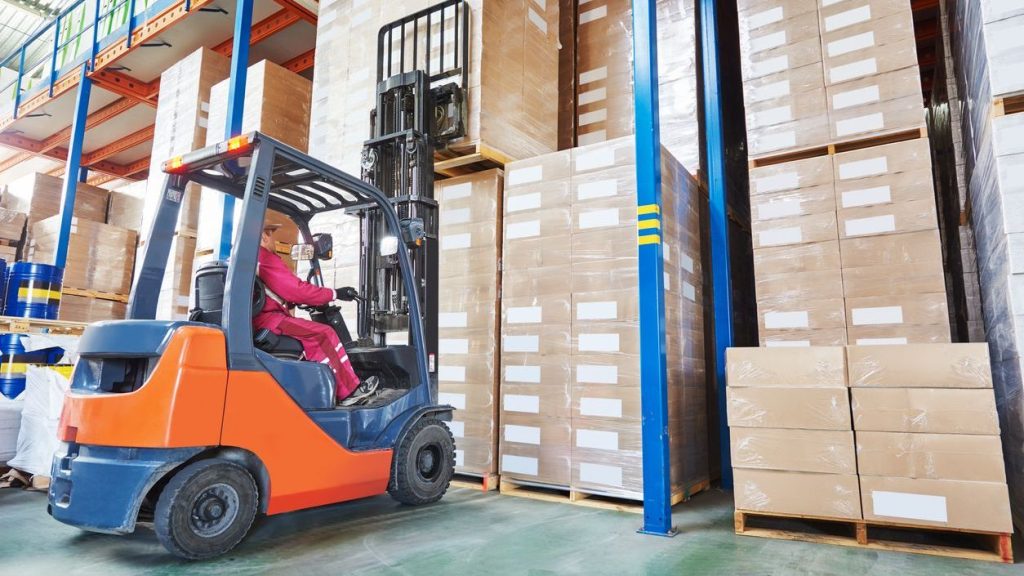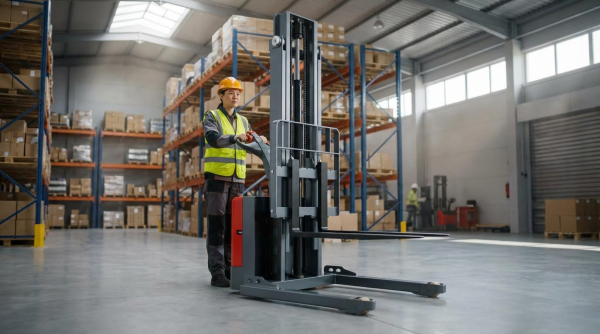
Walkie stackers are a type of powered industrial truck and, in regulatory terms, they sit inside the broader “forklift” family. This guide explains where walkie stackers fit, how they differ from traditional forklifts, and when each is the right tool for your facility.
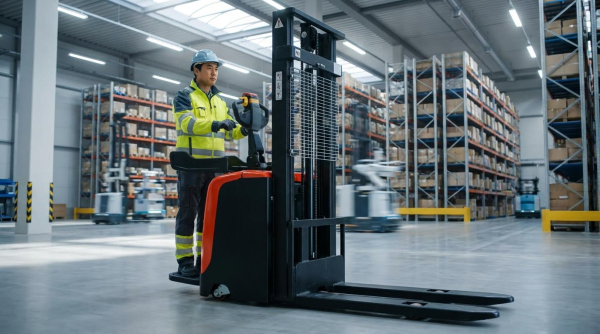
If you are asking “is a walkie stacker a forklift,” the practical answer is yes for OSHA and training rules, but not all “forklifts” behave the same in tight aisles, heavy loads, or long shifts. We will break down engineering differences, safety implications, and selection criteria so you can match the right truck to your layout, load profile, and compliance requirements.
What Walkie Stackers Are In The Forklift Family
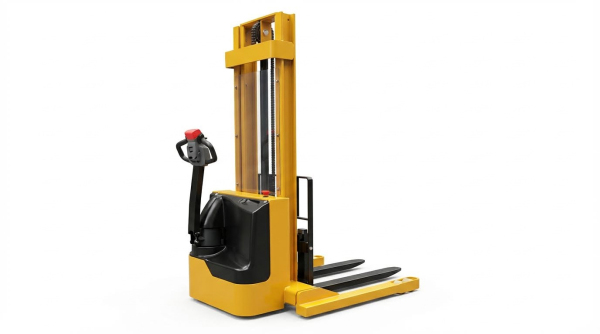
Walkie stackers are a specific type of powered industrial truck, so if you ask “is a walkie stacker a forklift,” the regulatory answer is yes, but in a narrower sub‑category. This section explains how OSHA defines powered industrial trucks and where walkie stackers sit inside that family.
OSHA definition of powered industrial trucks
Under OSHA rules, walkie stackers clearly fall under the powered industrial truck (PIT) umbrella, which is the same regulatory family as forklifts. OSHA defines a powered industrial truck as a mobile, power‑propelled truck used to carry, push, pull, lift, stack, or tier materials, including units controlled by a walking operator. OSHA’s own guidance makes it clear that rider trucks and walk‑behind trucks share the same PIT definition, while earth‑moving and on‑road haulage vehicles are excluded.
- Core definition: Mobile, power‑propelled truck used to move or lift materials – this covers both sit‑down forklifts and walkie stackers.
- Control type: May be ridden or controlled by a walking operator – this wording explicitly includes walk‑behind electric stackers.
- Exclusions: Earth‑moving and over‑the‑road haulage vehicles – your front‑end loader or highway truck is not a PIT under OSHA.
- Common hazards: Tip‑overs, falling loads, collisions, and dock incidents – risks apply whether the truck is a 5,000 kg rider forklift or a 1,200 kg walkie stacker according to OSHA incident data.
Because walkie stackers meet this PIT definition, OSHA expects the same structured operator training: formal instruction, practical exercises, and on‑the‑job evaluation. Employers must implement a training program and only allow trained and evaluated operators to use any PIT, including walkie stackers. OSHA training guidance also requires refresher training after unsafe operation, incidents, or when assigning a different type of truck.
- Training content: Formal theory plus hands‑on practice – operators must show they can handle loads and steer safely in your real aisles.
- Re‑evaluation: At least every 3 years and after refresher – keeps skills aligned with current site conditions and equipment.
- Certification record: Name, training date, evaluation date, and trainer – this applies equally to a walkie stacker operator and a counterbalance forklift driver.
- Age limits: Operators must be 18+ – under‑18 workers cannot legally operate forklifts or walkie stackers under federal rules.
💡 Field Engineer’s Note: Many sites wrongly treat walkie stackers as “just powered pallet jacks” and skip formal PIT training. That usually shows up later as bent racking and pallet collapses when operators raise loads beyond 2–3 m without understanding stability and load‑center limits.
Why the definition matters when you ask “is a walkie stacker a forklift”
From an engineering view, a walkie stacker is lighter, smaller, and usually limited to around 1–1.5 ton loads and 3–5 m lift heights. From a legal and safety view, OSHA treats it as a powered industrial truck, so your obligations for training, inspections, and safe operation are on the same footing as for a sit‑down counterbalance forklift.
Where walkie stackers fit in PIT classifications
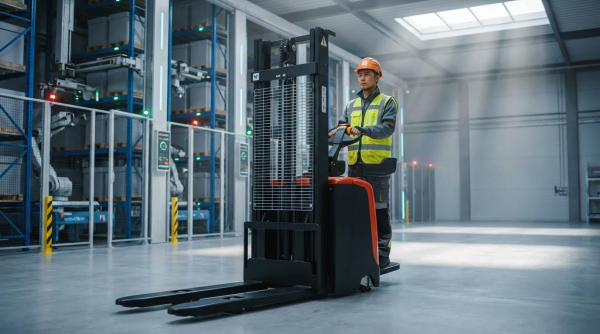
Walkie stackers sit in the “low‑capacity, walk‑behind, electric” slice of the forklift family, optimized for tight indoor spaces rather than heavy outdoor work. They share the same PIT family as rider counterbalance trucks, reach trucks, and powered pallet jacks, but their geometry and duty profile are very different from a 5,000 kg class sit‑down forklift.
Typical electric walkie stackers are compact, walk‑behind or stand‑on trucks with load capacities around 1,000–1,500 kg and lift heights about 3,000–5,000 mm. They use smaller 24–48 V battery systems and are designed for light to medium warehouse duty. In contrast, common rider forklifts carry 1,500–5,000 kg and can reach 6,000–8,000 mm, with larger batteries or internal‑combustion engines, and they need wider aisles and stronger floors to operate safely. Comparative guides and manufacturer data both place walkie stackers firmly in the light‑duty PIT class.
| Truck Type | Typical Capacity | Typical Lift Height | Power Source | Typical Aisle Requirement | Best For / Operational Impact |
|---|---|---|---|---|---|
| light duty electric stacker | ≈1,000–1,500 kg (up to 1.5 tons) | ≈3,000–5,000 mm | Electric, 24–48 V | Narrow aisles, small rooms | Ideal for small to mid‑size warehouses and retail backrooms where you need to stack but cannot spare 3.5–4.0 m aisles. |
| Sit‑down counterbalance forklift | ≈1,500–5,000 kg | ≈6,000–8,000 mm | Electric 48–80 V or IC (gas, diesel, LPG) | Wide aisles, docks, outdoor yards | Best for heavy pallets, loading docks, and outdoor moves where high capacity and speed outweigh maneuverability limits. |
| walkie pallet truck | ≈1,500–2,000 kg | Ground level only | Electric, small battery | Very narrow aisles | Good for horizontal moves only; cannot stack into racking. |
From a classification and application standpoint, this is why the question “is a walkie stacker a forklift” often causes confusion. In a warehouse conversation, people say “forklift” and picture a rider counterbalance truck. In OSHA’s PIT world, that same word covers a spectrum: from heavy IC counterbalance units down to compact walk‑behind electric stackers designed for narrow aisles and lighter loads.
- Function overlap: All PITs lift and move pallets – walkie stackers just do it in tighter spaces with smaller loads.
- Design intent: Stackers trade capacity for maneuverability – you give up 3,000–5,000 kg capacity to work inside 2.4–2.7 m aisles.
- Duty cycle: Stackers suit light to medium shifts – forklifts with bigger batteries or IC engines suit continuous multi‑shift work in high‑volume operations.
- Cost and complexity: Stackers are cheaper and simpler – good entry‑level PIT for small facilities that still must comply with OSHA PIT rules.
💡 Field Engineer’s Note: When classifying equipment for your safety program, group walkie stackers with other forklifts in your PIT policy, but separate them in your procedures by capacity, lift height, and aisle limits. That way operators do not assume a 1,200 kg stacker can safely handle the same loads or gradients as a 3,000 kg counterbalance truck.
How this affects equipment choice and training paths
Because walkie stackers are PITs, operators need PIT training, but the practical modules should focus on walk‑behind steering, short wheelbase behavior, and stability at 3–5 m lift heights. If those same operators later move to rider forklifts, you must treat that as a different truck type and add truck‑specific training and evaluation, as OSHA requires.
“”
Selecting The Right Truck For Your Facility
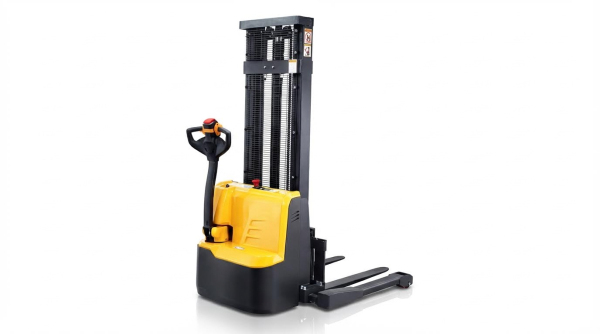
Selecting the right truck means matching counterbalanced stacker or forklifts to your load, layout, and safety rules so you answer “is a walkie stacker a forklift” in a way that fits your actual operation.
In practice, you choose between walkie stackers and forklifts by looking at five things: load weight, lift height, aisle width, hours per shift, and operator skill/training. Cost, emissions, and future growth also matter.
- Start with loads: Know max pallet weight, size, and center of gravity – this protects against tip-overs and mast overloads.
- Map your layout: Measure aisle width, door clearances, and turning areas – this prevents trucks that “fit on paper” but jam in corners.
- Check duty cycle: Estimate hours/day and shifts/week – this avoids underspec’d batteries or overheated motors.
- Align with training: Decide what level of OSHA-compliant training you will maintain – this keeps you legal and reduces incident risk.
- Plan for growth: Consider future racking heights and throughput – this avoids buying a truck that is obsolete in two years.
💡 Field Engineer’s Note: I always walk the floor with a tape measure and a loaded pallet. If a truck cannot turn a full 180° in your tightest aisle with that pallet, it is the wrong truck, no matter what the brochure says.
Matching equipment to load profile and layout
Matching equipment to load profile and layout means you size the truck to your heaviest pallet and tightest aisle before asking “is a walkie stacker a forklift for this job?”.
Walkie stackers and forklifts handle very different combinations of weight, height, and space. Stackers are compact and ideal for narrow aisles and lighter loads, while forklifts suit heavier loads, higher racking, and open areas. Source Source
| Factor | Walkie Stacker (Typical) | Forklift (Typical) | Operational Impact |
|---|---|---|---|
| Load capacity | Up to about 1,000–1,500 kg (1–1.5 tons) Source | About 1,500–5,000 kg (1.5–5 tons) for common models Source | Heavier pallets or long loads usually require a forklift. |
| Lift height | Roughly 4,000–5,000 mm typical max Source | Commonly 6,000–8,000 mm on standard masts Source | Racking above ~5 m usually pushes you to a forklift. |
| Aisle width need | Works well in narrow aisles and small rooms Source | Needs wider aisles due to larger chassis and turning radius Source | Stackers fit backrooms; forklifts suit docks and bulk storage. |
| Typical environments | Small warehouses, retail backrooms, narrow aisles Source | High-volume warehouses, loading docks, outdoor yards Source | Choose by where the pallets actually travel each day. |
| Cost level | Lower purchase and maintenance cost Source Source | Higher truck, battery, and maintenance cost | Stackers suit light/medium work; forklifts pay off in heavy use. |
- Light loads in tight aisles: Choose a battery-powered stacker for 500–1,200 kg pallets in aisles under ~2.5 m – you gain maneuverability and lower cost.
- Heavy loads or long load centers: Choose a forklift when pallets approach or exceed 1,500 kg or have long overhang – you maintain stability and capacity at height.
- Low racking (≤4–5 m): A walkie stacker is often enough – you avoid overspending on mast you never use.
- High racking (≥6–8 m): A forklift is usually mandatory – you keep residual capacity and reduce tip risk.
- Short, indoor runs: Electric walkie stackers shine – you get quiet, zero‑emission operation.
- Long runs and outdoor work: A forklift handles gradients, rougher floors, and dock work better – you avoid stalling and wheel spin.
How to measure your aisles and turning space
1) Measure rack‑to‑rack clear distance in mm. 2) Add pallet length plus 200–300 mm safety clearance. 3) Confirm the truck’s specified right‑angle stack aisle is less than that number.
Safety, training, and regulatory compliance factors
Safety, training, and regulatory compliance factors decide whether a walkie stacker or a “full” forklift is acceptable under OSHA’s powered industrial truck rules.
OSHA defines powered industrial trucks as any mobile, power‑propelled truck used to carry, push, pull, lift, stack, or tier materials, including rider and walking‑operator types. Source That means when you ask “is a walkie stacker a forklift,” from a safety and training standpoint the answer is effectively yes: OSHA treats them all as powered industrial trucks.
- All PITs need training: Employers must run a training program so only trained operators use powered industrial trucks. Source – this applies to walkie stackers and forklifts.
- Formal + practical instruction: Training must include classroom-style teaching and hands‑on exercises with evaluation. Source – you cannot rely on “follow Joe for a day.”
- Qualified trainers only: Trainers must have the knowledge, training, and experience to judge operator competence. Source – this keeps instruction consistent.
- Refresher triggers: Unsafe driving, incidents, new truck types, or changed conditions require refresher training and evaluation. Source – this closes gaps before they become serious accidents.
- Three‑year evaluations: Operators must be evaluated at least every three years. Source – this keeps skills current as layouts and loads change.
- Age restriction: Federal law prohibits anyone under 18 from operating forklifts. Source – plan staffing accordingly.
- Certification records: Employers must certify each operator’s training and evaluation with names, dates, and trainer identity. Source – this is essential during audits or incident investigations.
Different truck types carry different hazard profiles. Sit‑down, counterbalanced high‑lift trucks have higher falling‑load risk than motorized hand trucks because they lift heavier loads to greater heights. Source But walkie stackers still share common risks: docks, trailer interfaces, pedestrian traffic, and falls from elevated pallets.
| Safety / Compliance Aspect | Walkie Stacker | Forklift | Best‑Practice Takeaway |
|---|---|---|---|
| Regulatory category | Powered industrial truck (walking operator) | Powered industrial truck (rider truck) | Treat both under the same OSHA PIT framework. |
| Training depth | Simpler controls but still needs full PIT training and evaluation | More complex controls; full PIT training mandatory | Do not “downgrade” training just because it is a walk‑behind unit. |
| Typical hazards | Pinch points, pedestrian impact, tip‑over at lower heights | Tip‑over, falling loads, dock and trailer incidents | Adjust your toolbox talks to the specific hazard set. |
| Daily inspections | Required; check forks, mast, brakes, emergency stop, horn | Required; add seat restraints, lights, overhead guard checks | Use OSHA‑style daily checklists for all PIT types. Source |
| Operator age | Follow same ≥18 rule applied to forklifts | Must be ≥18 years old | Do not assign any PIT, including walkies, to minors. |
- Indoors with pedestrians: Favor electric trucks with good visibility and horns; enforce marked walkways – this reduces collision risk in retail and e‑commerce spaces.
- High‑risk docks: For dock work, rider forklifts may be safer if operators stay seated with restraints – this lowers fall and crush risk at the edge.
- Documentation culture: Keep training records, evaluations, and daily checklists in one place – this proves compliance
Final Thoughts On Walkie Stackers As Forklifts
Walkie stackers sit inside the forklift family under OSHA rules, but their engineering pushes them toward a different role on your floor. Shorter wheelbases, lower capacities, and modest lift heights favor tight indoor aisles and controlled loads, not heavy, high, or long‑distance work. When you respect those limits, stackers cut cost, reduce emissions, and improve maneuvering without giving up safety.
The same physics governs every powered industrial truck. Load center, mast height, aisle width, and surface condition all drive stability. If you undersize the truck or ignore geometry, you push the combined center of gravity outside the stability triangle and invite tip‑overs, bent racking, and falling pallets. If you oversize the truck for the space, you trade away clearance and visibility and raise collision risk.
The best practice is simple. Classify walkie stackers as PITs in your safety program. Size each truck to your heaviest pallet, highest rack, and narrowest aisle. Match duty cycle to battery and motor ratings. Then back that up with OSHA‑compliant training, daily inspections, and clear rules that separate where stackers work and where forklifts work. Do that, and your Atomoving equipment will run safely, efficiently, and within code.
Frequently Asked Questions
Is a walkie stacker considered a forklift?
A walkie stacker is indeed considered a type of forklift, specifically classified under Class III by OSHA. These are electric motor hand trucks or hand/rider trucks designed primarily for indoor use in warehouses and distribution centers OSHA Forklift Classes.
What are the key differences between a walkie stacker and a traditional forklift?
Walkie stackers differ from traditional forklifts in several ways:
- Size: Walkie stackers are more compact, making them ideal for narrow aisles and smaller spaces.
- Operation: They are operated by an operator walking behind, whereas traditional forklifts have a seat for the operator to ride on.
- Lifting Capacity: Typically, walkie stackers handle lighter loads compared to traditional forklifts.
- Maneuverability: Designed for short-distance transport and stacking, they are perfect for tasks that require frequent stops and starts Stacker vs Forklift Guide.
Do you need certification to operate a walkie stacker?
Yes, according to OSHA regulations, operators must be formally trained and certified to use any powered industrial truck, including walkie stackers. This ensures safe operation and compliance with workplace safety standards CertifyMe Walkie Stacker Safety.
How high can a walkie stacker lift?
Walkie stackers are capable of lifting loads to heights up to 6100 mm (approximately 20 feet). This makes them suitable for mid-level racking applications and ergonomic work positioning Crown Equipment Walkie Stackers.