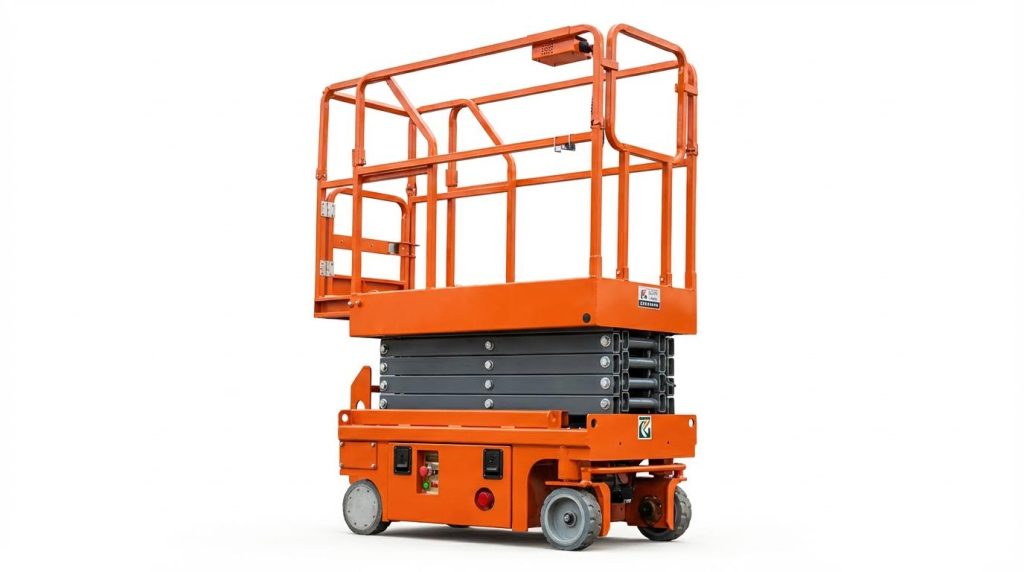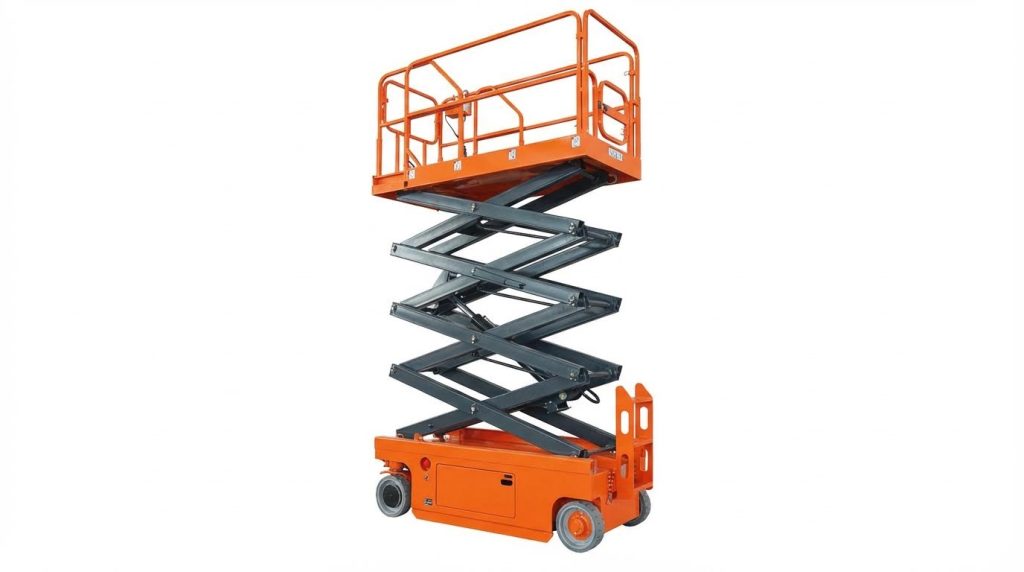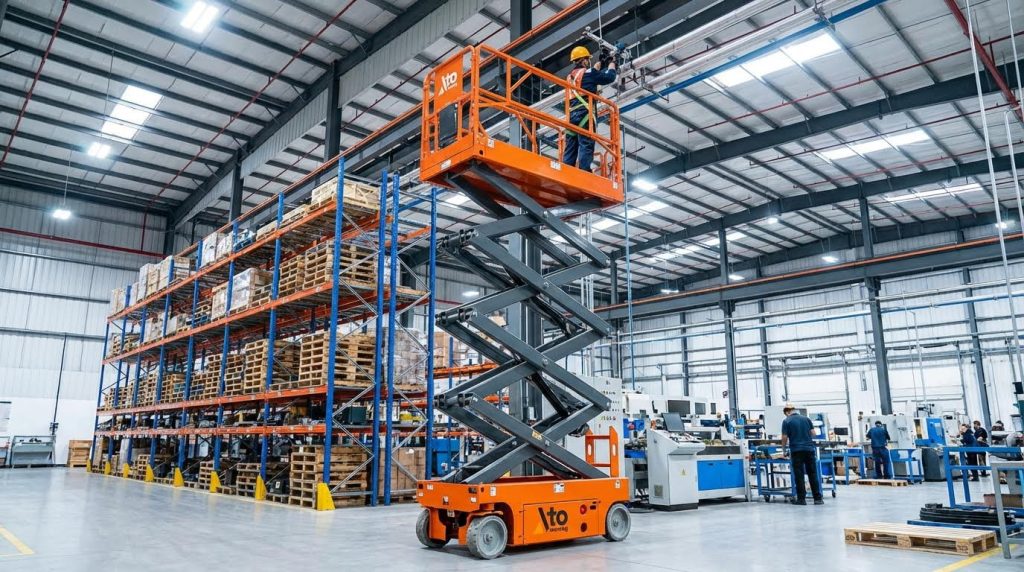
This scissor platform size guide explains what size scissor platform lift are available, how platform dimensions, heights, and capacities are typically ranged, and how those specs affect safety and productivity. You will see where your job fits within real-world capacity bands, working heights, and platform sizes so you can shortlist the right lift before you ever call a dealer or rental yard.
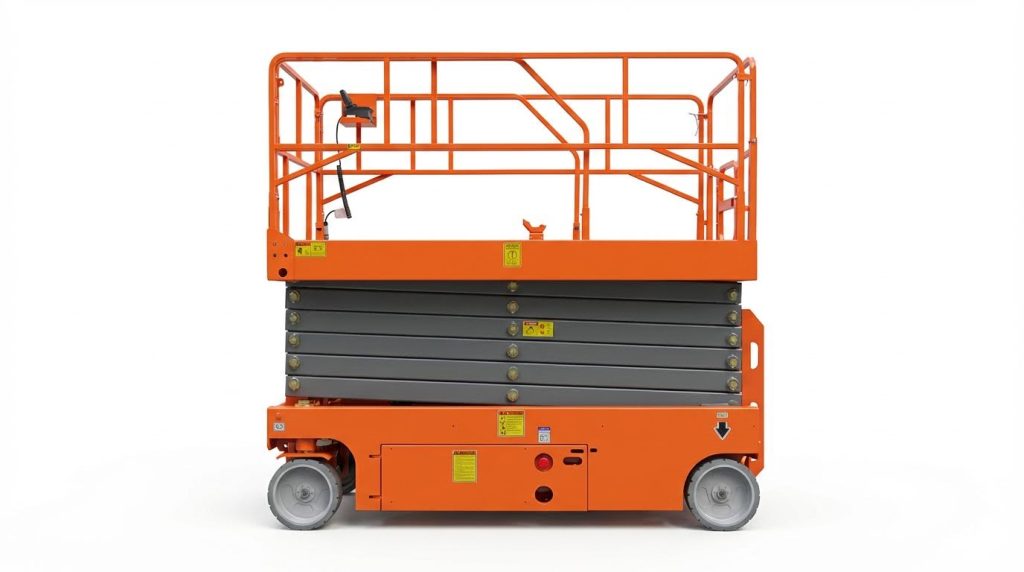
Understanding Scissor Lift Size, Height, And Capacity
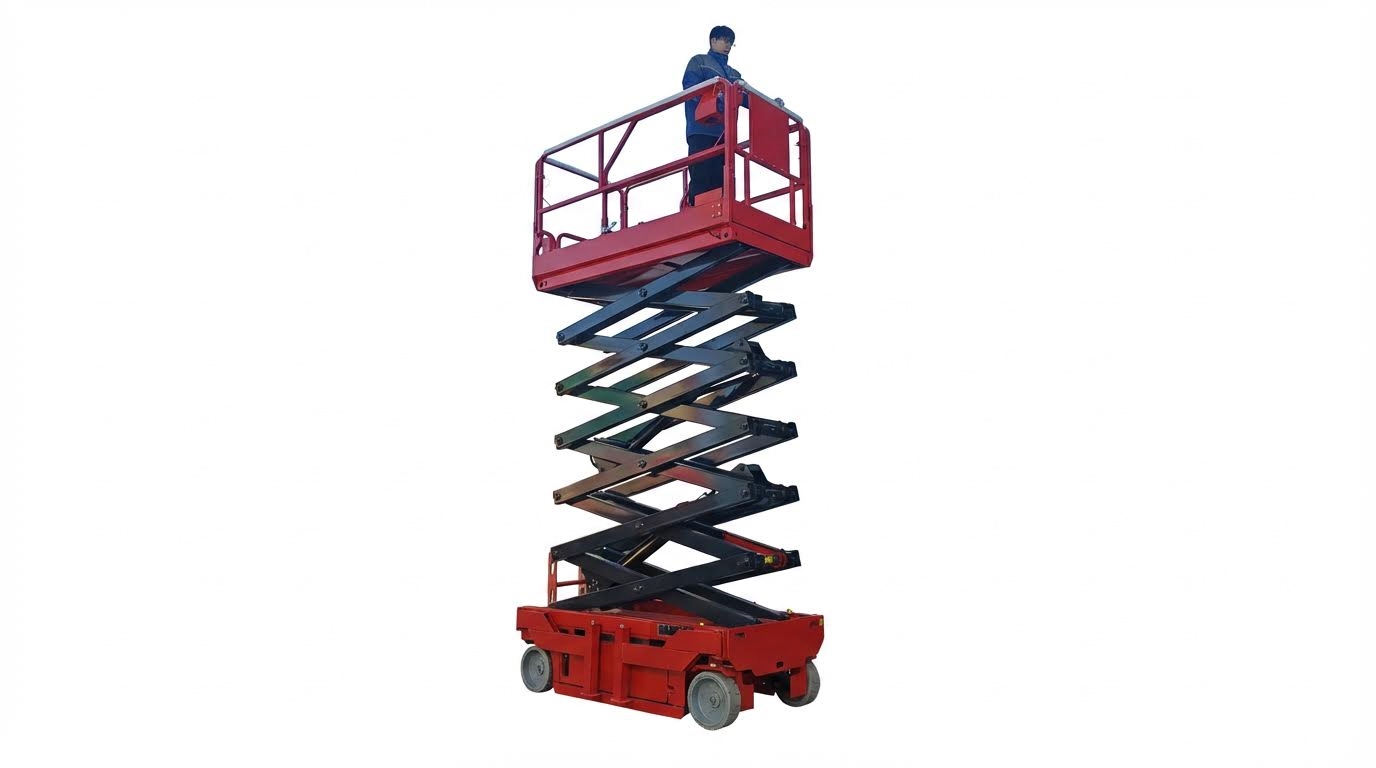
This section explains what size scissor lifts are available by type, working height band, platform size, and capacity so you can quickly match models to real job-site constraints and safety limits.
Key scissor lift types and working height bands
Scissor lifts group into a few clear types, each with typical working height bands and load ranges that define where they are safe and efficient to use.
Across the market, what size scissor lifts are available depends first on type and working height: compact electric slab units for indoor work, larger diesel units for outdoor construction, and rough‑terrain machines for uneven ground. Standard scissor lifts typically cover working heights from about 6 m to 18 m (20–60 ft), while specialized multi‑stage designs can exceed 36 m (120 ft) and handle extremely heavy loads in industrial applications. Electric slab scissor lifts used indoors usually offer working heights of roughly 6–12 m (19–40 ft) with platform capacities around 225–320 kg (500–700 lbs) for light maintenance and installation. Diesel scissor lifts for outdoor firm ground commonly reach about 8–15 m (26–50 ft) and carry 360–565 kg (800–1,250 lbs), while rough‑terrain models push to about 10–20 m (33–66+ ft) with 450–545 kg (1,000–1,200 lbs) capacities for uneven surfaces and heavier tools or materials on construction sites.
| Scissor lift type | Typical working height band | Typical platform capacity | Best for / Operational impact |
|---|---|---|---|
| Electric slab (compact indoor) | ≈ 6–12 m (19–40 ft) | ≈ 225–320 kg (500–700 lbs) typical range | Fits narrow aisles and finished floors; ideal for indoor maintenance and light installs. |
| Diesel scissor (slab / RT) | ≈ 8–15 m (26–50 ft) | ≈ 360–565 kg (800–1,250 lbs) typical range | Outdoor work on firm ground; supports more people and heavier tools. |
| Rough‑terrain (RT) scissor | ≈ 10–20 m (33–66+ ft) | ≈ 450–545 kg (1,000–1,200 lbs) typical range | Uneven or rough ground; construction, steel erection, cladding work. |
| Industrial / custom heavy‑duty | ≈ 6–36+ m (20–120+ ft) | Up to extremely heavy loads (e.g., >45,000 kg / 100,000 lbs) for special applications | Fixed industrial positions, process lines, or custom tasks where travel is limited but load is huge. |
Within any type, manufacturers usually offer “families” of models. For example, one product line might start with a base model reaching about 4–6 m, an advanced model at 8–10 m, and a pro model stretching to 12–20 m, with lift capacities rising from about 100–500 kg up to 5,000 kg (5 tons) as size increases in one typical range. That means answering “what size scissor lifts are available” is not just about height; it is also about how much weight you need to raise at that height, and whether you are on smooth slab or rough ground.
- Electric slab lifts: Low to mid heights, modest capacity – optimized for clean, level floors and tight access.
- Diesel slab / RT lifts: Mid heights, higher capacity – handle heavier trades and materials outdoors.
- Rough‑terrain lifts: Higher reach, strong capacity – mitigate risk on uneven sub‑bases and unfinished sites.
- Custom industrial lifts: Extreme loads and travel – solve niche process or loading problems where standard MEWPs fail.
💡 Field Engineer’s Note: When choosing a height band, always add at least 1.5–2.0 m to your highest working point for comfortable reach; running a lift constantly at its maximum stroke accelerates wear and exposes stability margins.
How “working height” differs from platform height
Working height is usually platform height plus about 2 m, assuming an average person can safely reach that high. If a lift lists 8 m platform height, expect about 10 m working height. Always check the manufacturer’s definition in the manual and avoid “stretching” by standing on guardrails, which major safety standards explicitly prohibit.
Typical platform dimensions and footprint ranges
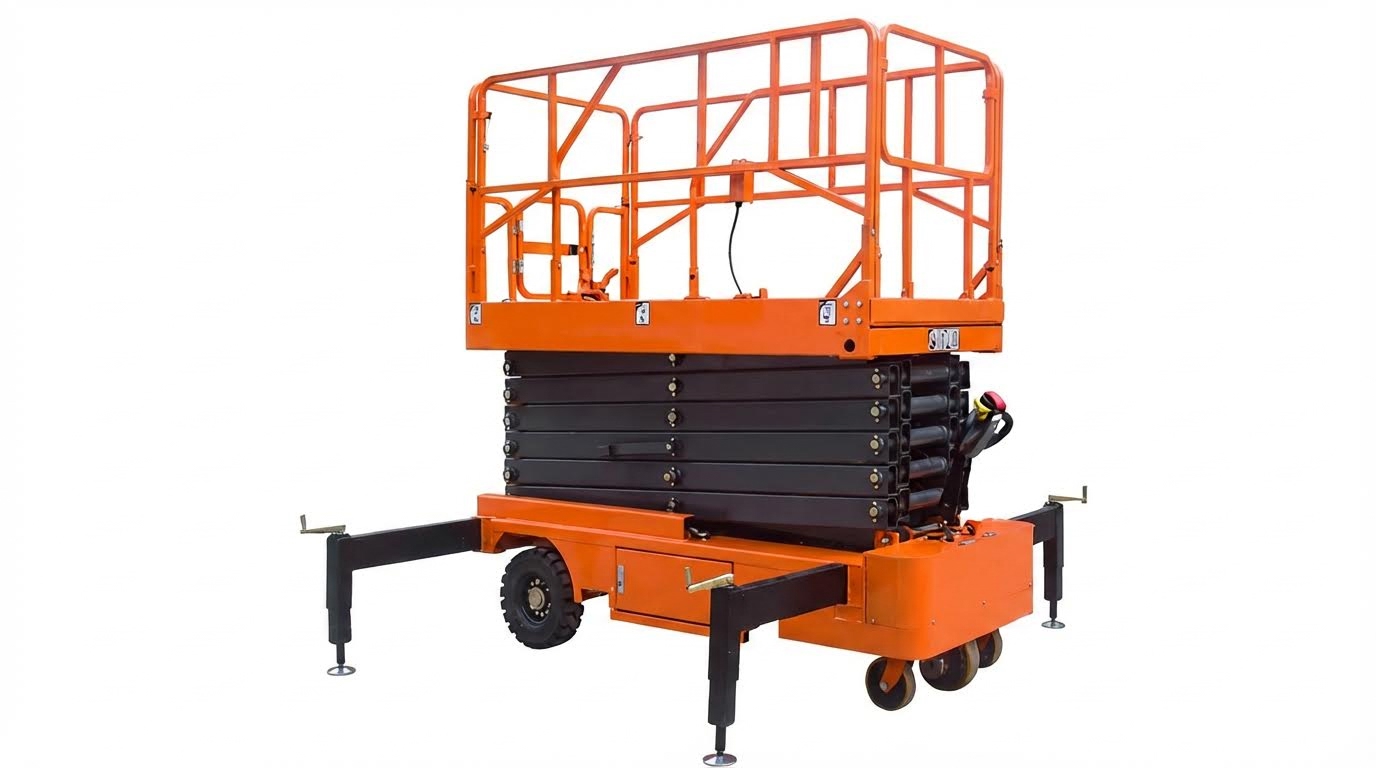
Scissor lift platform dimensions and machine footprint range from very narrow compact units under 800 mm wide to large full‑size platforms over 1,800 mm wide, and this directly controls aisle clearance, turning space, and how many people can work safely.
Compact scissor lifts usually offer platform widths of about 600–900 mm (24–36 in) and lengths of roughly 1.8–3.0 m (6–10 ft), with capacities around 225–450 kg (500–1,000 lbs) for one or two people plus tools. Full‑size units step up to about 1.2–1.8 m (4–6 ft) wide and 2.4–4.3 m (8–14 ft) long, supporting roughly 450–1,600+ kg (1,000–3,500+ lbs) for multiple workers and materials on larger projects. Some industrial scissor tables allow custom platforms up to about 2.0 m by 3.0 m, paired with capacities from 1,000 kg to 5,000 kg and lifts from 6 m up to 20 m for tailored industrial handling. These custom sizes answer the top‑end of the question “what size scissor lifts are available” when standard MEWP footprints do not fit the job.
| Category | Typical platform size (W × L) | Typical overall width / footprint | Operational impact |
|---|---|---|---|
| Compact indoor scissor | ≈ 600–900 mm × 1,800–3,000 mm (24–36 in × 6–10 ft) typical range | Often < 760 mm (30 in) wide; operating weight ≈ 680–1,800 kg (1,500–4,000 lbs) for easy indoor navigation | Passes through standard 800–900 mm doors and narrow aisles; low floor loading. |
| Full‑size construction scissor | ≈ 1,200–1,800 mm × 2,400–4,300 mm (4–6 ft × 8–14 ft) typical range | Width typically > 1,800 mm (6 ft); operating weight ≈ 2,300–5,400+ kg (5,000–12,000+ lbs) for heavy‑duty work | Needs wide aisles and stronger slabs; supports multiple workers and materials at height. |
| Custom industrial platform | Up to ≈ 2,000 mm × 3,000 mm (2 m × 3 m) configurable | Footprint sized to pit or bay; capacity from 100 kg to 5,000 kg depending on design | Integrates into production lines or loading docks; minimizes manual handling and transfer steps. |
- Narrow footprint (< 800 mm): Fits through standard doors – ideal for facility maintenance and fit‑outs.
- Mid‑width (≈ 1,200 mm): Balances reach and maneuverability – suits wider corridors and general construction.
- Wide footprint (> 1,800 mm): Higher stability and capacity – better for cladding, façade, and heavy trades.
- Custom platforms: Sized to load geometry – reduce awkward overhangs and center‑of‑gravity risks.
💡 Field Engineer’s Note: Never size a platform only by “will it fit.” Check slab capacity and finished floor coverings; a 5,000 kg full‑size lift on a thin mezzanine or tiled floor can cause cracking or long‑term deflection even if it physically fits the aisle.
Quick way to pre‑check footprint vs.
Technical Ranges: Platform Size, Height, Capacity, And Power
This section explains what size scissor platform lifts are available in real-world ranges for platform area, height, capacity, and power so you can match specs to duty cycle, safety margins, and job-site constraints.
Across the market, you move from compact indoor electric units through full-size diesel and rough‑terrain models, up to heavy industrial scissor tables with multi‑ton capacities and very high travel.
Platform size and load capacity envelopes
Platform size and capacity envelopes define what size scissor platform lift are available for your people, tools, and materials, and how safely they work at height.
Compact and full-size aerial scissor lifts sit in a very different range to heavy industrial lifting tables, so you must separate “person‑lift” work platforms from “load‑lift” tables when sizing.
| Category | Typical platform size (W × L) | Rated capacity (approx.) | Operational impact / Best for… |
|---|---|---|---|
| Compact slab scissor lift | 600–900 mm × 1,800–3,000 mm (24–36 in × 6–10 ft) platform sizes | 225–450 kg (500–1,000 lbs) capacity range | Narrow aisles and indoor maintenance where 1–2 people plus tools must pass through standard doors. |
| Full-size construction scissor lift | 1,200–1,800 mm × 2,400–4,300 mm (4–6 ft × 8–14 ft) platform sizes | 450–1,600+ kg (1,000–3,500+ lbs) capacity range | Larger crews and materials on slabs and decks; needs wider aisles and stronger floor loading. |
| Custom industrial scissor lift table – base model | Up to about 2,000 mm × 3,000 mm (2 m × 3 m) configurable platform customization | 100–500 kg base range capacity | Light-duty work positioning, packing lines, and ergonomic stations. |
| Custom industrial scissor lift table – advanced | Similar footprints to base but heavier sections | 1,000–2,000 kg (1–2 tons) capacity | Pallet handling, machinery feeding, and mid‑rise construction loads. |
| Custom industrial scissor lift table – pro / heavy | Engineered to suit; often multi-scissor | Up to about 5,000 kg (5 tons) in standard heavy models capacity, with specialized units exceeding 45,000 kg (100,000 lbs) heavy-duty examples | Industrial process lifts, vehicle or roll handling, and very heavy tooling. |
From a sizing standpoint, the key is to add up people, tools, and materials, then add a safety margin so your typical load sits around 60–80% of rated capacity, not right on the limit.
- Define occupants: Count maximum people on the platform – each person usually adds 80–100 kg with PPE.
- Quantify tools/materials: Weigh typical toolkits, fasteners, and components – avoids creeping overloads over time.
- Check plate rating: Compare to the manufacturer’s plate – keeps you within the structural and stability envelope.
- Respect guardrail height: Do not stack above guardrails – prevents a high center of mass and tip‑risk.
- Place loads centrally: Keep heavy items near the platform center – reduces torsion in scissor arms and bearings.
💡 Field Engineer’s Note: When clients ask what size aerial platform are available, I first check door widths, slab loading, and turning radius. A bigger platform is useless if it cannot physically reach the work zone without overloading floors or getting stuck in corridors.
How to interpret platform size vs. job layout
Map your work area, including aisle width, door clear opening, and turning space. Compare to platform width and overall machine width, not just platform dimensions. Always allow at least 150–200 mm clearance each side to account for steering drift and site clutter.
Lift height, speed, and duty cycle considerations
Lift height, speed, and duty cycle define how quickly a scissor lift can cycle through jobs at the working height you need without overheating hydraulics or draining batteries prematurely.
Working height is normally about 2 m above platform height, so check both when you ask what size scissor platform lift are available for your project.
| Range / model band | Max platform / lifting height | Typical working height band | Lift speed (up) | Operational impact |
|---|---|---|---|---|
| Base industrial lift table | About 4–6 m lift height height range | Up to ~8 m working (person on platform) | ≈8 m/min speed | Good for low‑bay warehouses and loading operations. |
| Advanced industrial lift table | About 8–10 m lift height height range | Up to ~12 m working | ≈10 m/min speed | Faster cycle time for mid‑rise construction and mezzanine access. |
| Pro / heavy industrial lift table | About 12–20 m lift height height range | Up to ~22 m+ working | Up to ≈15 m/min (≈87.5% faster than base) speed comparison | High throughput in tall plants; reduces waiting time per cycle. |
| Standard aerial scissor lifts (people lifts) | About 6–18 m platform height (20–60 ft) height band | About 8–20 m working height | Varies by model, often 0.3–0.6 m/s equivalent | General facility maintenance and construction trades. |
| Special multi‑stage industrial lifts | Over 50 m lift (176 ft) in custom designs example | Special engineered working heights | Slower but very heavy‑duty | Niche applications like underwater or deep‑pit lifting. |
- Define working height: Add about 2 m to platform height – this is where the operator’s hands actually work.
- Check structural environment: Confirm height under beams and services – prevents collisions at full extension.
- Match speed to process: High‑cycle tasks benefit from faster lift speeds – cuts non‑productive waiting time.
- Plan duty cycle: Estimate lifts per hour and hours per shift – avoids overheating oil and over‑discharging batteries.
- Allow safety margins: Avoid operating at absolute max height in high winds – improves stability and operator confidence.
💡 Field Engineer’s Note: For repetitive production lifts, I derate catalog cycle times by 20–30%. Real sites have pauses, load variation, and operator delays, so a “fast” 15 m/min spec rarely translates directly into throughput without a buffer.
Duty cycle vs. maintenance impact
High duty cycles mean more heat in hydraulic oil and more charge cycles on batteries. This accelerates seal wear and shortens battery life. If you expect near‑continuous use, specify higher‑capacity power packs, consider oil coolers, and tighten your preventive maintenance intervals instead of running a light‑duty unit flat‑out.
Power sources, batteries, and structural design
Matching Scissor Lift Sizes To Applications
Matching scissor lift sizes to applications means balancing working height, platform size, and capacity with aisle width, floor conditions, and safety rules so the lift fits, reaches, and stays stable in your real workspace.
When people ask what size scissor lifts are available, the real question is which size will safely do the job without jamming aisles, overloading floors, or fighting wind and gradients. This section links typical size ranges to the environments where they actually work.
Indoor vs outdoor and narrow-aisle constraints
Indoor vs outdoor and narrow-aisle constraints decide whether you choose compact electric slab lifts or larger diesel/rough‑terrain models with wider footprints and higher capacities.
Indoor work usually pushes you toward compact electric scissor lifts with low emissions, low noise, and narrow widths that can pass through doors and between racks. Outdoor and rough‑terrain work needs bigger platforms, higher working heights, and more aggressive tires, which all increase footprint and weight.
| Application scenario | Typical lift type | Working height range | Platform capacity range | Typical footprint / width | Operational impact |
|---|---|---|---|---|---|
| Indoor maintenance, finished floors, offices | Electric slab / compact | 6–12 m (19–40 ft) working height data | 225–320 kg (500–700 lbs) capacity range | ≈0.6–0.9 m wide (24–36 in) compact platform widths | Fits narrow aisles and standard internal doors; minimizes floor loading and noise. |
| Warehouses, narrow aisles, racking | Compact electric, narrow-width | 8–14 m typical | 250–450 kg typical | Often under 0.8 m wide; short turning radius | Can turn in 1.8–2.5 m aisles; good for stock-picking and light installs. |
| Outdoor construction on firm, level ground | Diesel / full-size slab | 8–15 m (26–50 ft) diesel working height | 360–565 kg (800–1,250 lbs) diesel capacity | ≈1.2–1.8 m wide (4–6 ft) full-size widths | Needs wider access roads and work zones; higher wind exposure at height. |
| Rough terrain, uneven ground | Rough‑terrain (RT) scissor | 10–20+ m (33–66+ ft) RT height | 450–545 kg (1,000–1,200 lbs) RT capacity | Wide stance; large tires; >1.8 m width typical | Excellent stability off‑road but cannot enter buildings or tight compounds. |
| Compact indoor jobs with door constraints | Very compact electric | Up to ≈8–10 m | Up to ≈200–250 kg | Width often under 0.8 m; length ≈1.8–2.5 m | Passes 2.0–2.1 m doors and small lifts; ideal for fit‑out and MEP work. |
Indoor selection is driven by door clear heights, lift car sizes, and aisle widths more than ultimate working height. Outdoor selection is driven by ground conditions, wind, and how close you can position the machine to the work face.
How indoor aisle width limits scissor lift size
Aisle width must exceed lift width plus a turning allowance, or the lift will “see‑saw” and scrape racks. As a rule of thumb, keep at least 0.3–0.5 m clearance each side of the machine for safe maneuvering and to avoid striking obstacles when the platform is elevated.
💡 Field Engineer’s Note: Many “indoor” concrete slabs near docks are not perfectly level. A compact electric lift that feels fine in a flat showroom can alarm out or feel unstable on a 2–3% slope near dock doors, so always test the route at full height before committing to a model.
- Clarify environment first: Indoor, outdoor, or mixed use – this immediately filters electric slab vs diesel/RT options.
- Measure tightest choke point: Doors, gates, or aisles – this sets your maximum machine width and length.
- Check floor bearing capacity: Mezzanines and tiled floors – heavy full‑size lifts can exceed allowable kN/m².
- Account for wind exposure outdoors: Elevated work on facades – you may need a lower working height or different access method if wind is high.
- Plan access route, not just work zone: Ramps, thresholds, and turns – a lift that fits the work area but cannot reach it is a sunk cost.
Capacity, stability, and safety compliance checks
Capacity, stability, and safety compliance checks ensure the chosen scissor lift size can safely carry your people and materials while meeting standards like OSHA and ANSI/CSA.
Once you know what size scissor lifts are available in terms of height and footprint, you must check whether their rated capacities, safety systems, and certifications align with your loads, procedures, and local regulations.
| Selection factor | Typical ranges from sources | What to verify | Operational impact |
|---|---|---|---|
| Rated lifting capacity | 100–500 kg (base), 1,000–2,000 kg (advanced), up to 5,000 kg (pro) capacity envelopes | Sum of people, tools, and materials vs nameplate rating | Over‑spec adds cost; under‑spec risks structural overload and tip‑over. |
| Maximum lifting height | 3–20 m typical for industrial units height ranges; 6–18+ m (20–60 ft) common in access lifts working height ranges | Required working height plus hand/arm reach vs platform height | Too little height forces unsafe reaching; too much increases wind sensitivity. |
| Platform size | Customizable up to ≈2 m × 3 m platform customization; compact 0.6–0.9 m × 1.8–3.0 m; full‑size 1.2–1.8 m × 2.4–4.3 m platform sizes | Number of workers and material footprint vs platform area and guardrail height | Too small creates crowding and trip risks; too large may not fit the work zone. |
| Safety systems | Autobrake, emergency descent, self‑locking doors, explosion‑proof oil pipes, tilt/incline protection, emergency stop, pit protection, charging protection safety feature list | Presence and correct operation of each safety system for your risk profile | Reduces risk of uncontrolled descent, hydraulic failure, and operator error. |
| Certifications | CE, IMO/IMDG for transport certifications; OSHA/ANSI/CSA use requirements OSHA guidance | Compliance with regional standards and your internal safety rules | Non‑compliant machines can be banned from site or void insurance. |
| Power and duty cycle | Electric or hydraulic, 110–380 V supply options; dual‑power systems offer ≈20% faster deployment vs single‑source lifts power source options | Shift length, number of cycles per hour, and charging infrastructure | Undersized batteries or slow chargers cause downtime and rushed, unsafe use. |
Stability is not just about width and weight; it is also about how you load the platform and how you move the lift. OSHA requires guardrails and forbids standing on them or using ladders on the platform because this shifts the combined center of mass outside the wheelbase and can cause a tip‑over. Guardrail and use rules make this explicit.
- Respect nameplate load: Include people, tools, and materials – never exceed the rated platform capacity.
- Place heavy items centrally: Avoid stacking above guardrail height – this keeps the center of mass low and inside the wheelbase.
- Avoid high winds outdoors: Many outdoor‑rated lifts limit use to winds below about 12.5 m/s (28 mph) to prevent oscillation and tip‑over. Wind guidance
- Do not move while elevated unless allowed: Many manuals prohibit travel at height – moving raised greatly increases overturning risk.
- Keep inspection and training current: Daily checks and annual inspections are mandated under ANSI/CSA, with detailed hydraulic, structural, and electrical tests. This maintains
“”
Final Considerations When Specifying Scissor Lift Size
Choosing the right scissor lift size is a safety‑critical engineering decision, not just a purchasing choice. Platform dimensions, working height, and rated capacity all interact with aisle width, floor strength, and wind to set your real stability margin. If you oversize height or platform area without checking floors and access routes, you increase overturning risk, slab damage, and downtime. If you undersize capacity, operators will overload the platform or reach unsafely, which drives structural fatigue and accident rates.
The most robust approach is to work backwards from the task. Map the work area and access path, define true working height, then calculate total live load with tools and materials. Keep normal loads within 60–80% of rated capacity and avoid running at maximum stroke in exposed conditions. Confirm that safety systems, certifications, and duty cycle match your internal rules and shift patterns.
Operations and engineering teams should lock this into a simple checklist: environment, access, load, height, duty, and compliance. Use that checklist before you talk to suppliers or select an Atomoving model. This disciplined method cuts trial‑and‑error rentals, protects people and structures, and delivers predictable productivity at height.
Frequently Asked Questions
What are the standard height ranges for scissor lifts?
Scissor lifts typically extend to a height range of 20 to 60 feet. However, some of the tallest models can reach heights of over 120 feet. Scissor Lift Size Guide.
What are the typical workspace sizes for scissor lifts?
The average workspace size for scissor lifts is between two and ten feet wide. Most electric models weigh no more than a few thousand pounds, though larger units can exceed 10,000 pounds. Electric Scissor Lifts.
Can smaller scissor lifts fit inside elevators?
Yes, the smallest scissor lifts are compact enough to fit inside elevators and are ideal for narrow or confined working areas. Small Scissor Lifts.