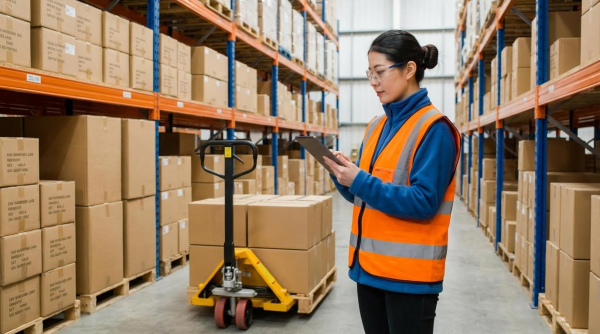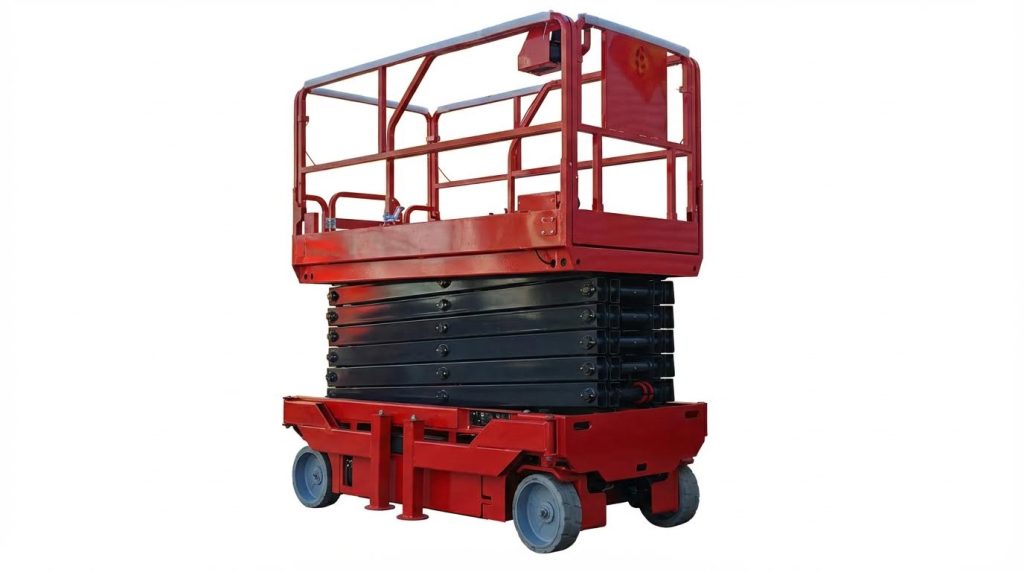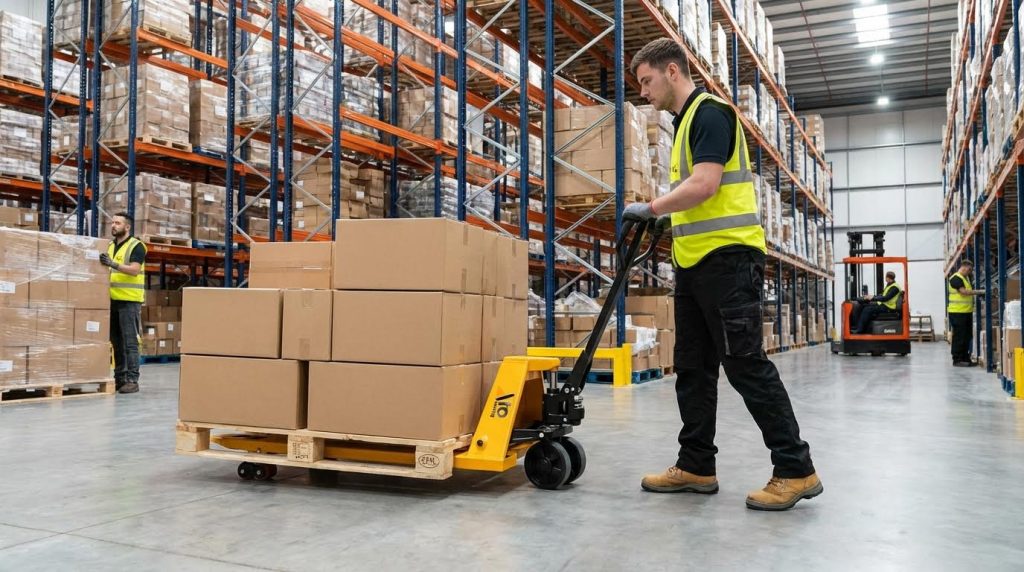
This guide explains how to move and lift pallets safely when pallet jacks or forklifts are not available, using only manual methods and simple mechanical aids. You will learn realistic human weight limits, inspection steps, and tools like levers, rollers, skates, stackers, and lift tables so you can answer “how do you lift a pallet without a jack” in a way that protects people, product, and floors.
Core Safety Limits And Manual Handling Basics
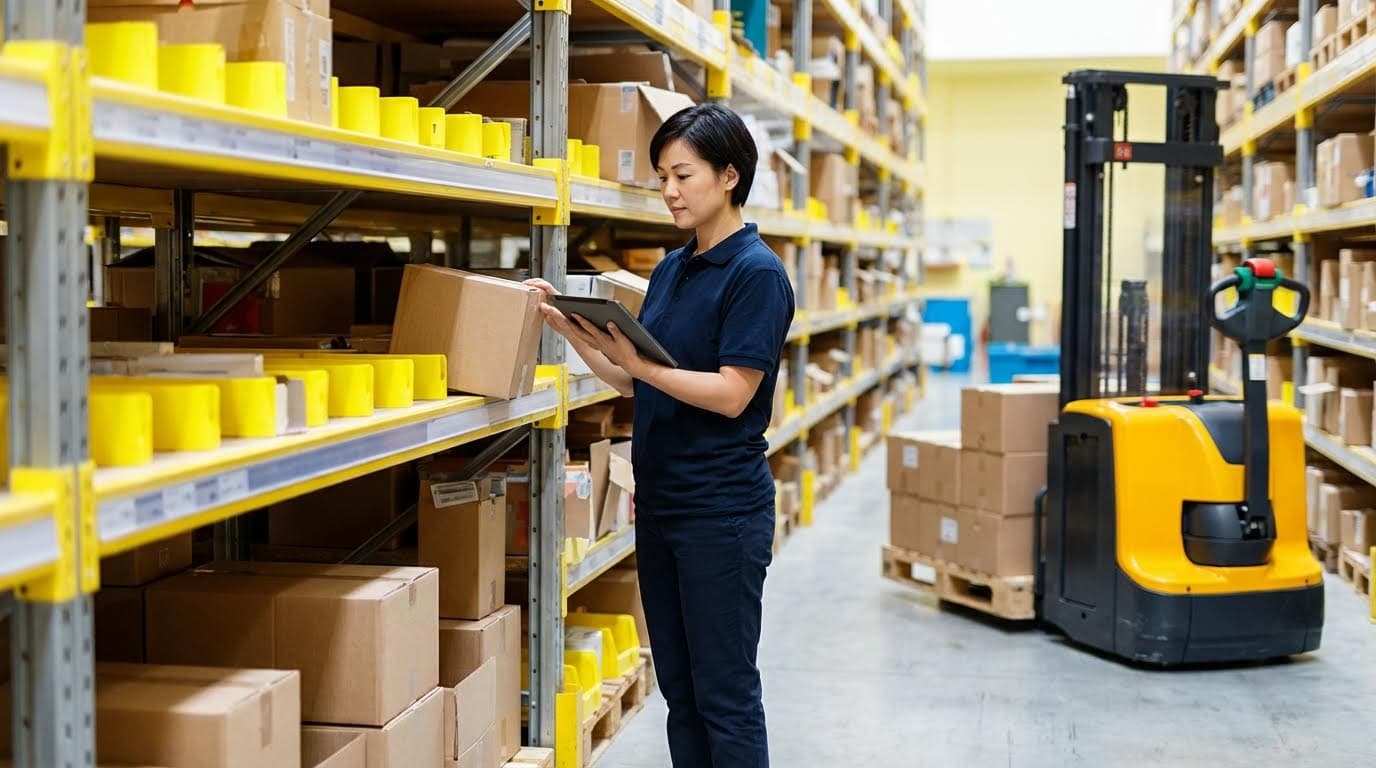
This section explains the absolute safety limits before you even think about how do you lift a pallet without a jack, focusing on human load limits, team lifting, and basic inspection of pallets and floors.
Before any manual pallet move, you must confirm two things: the load is within human capacity, and the pallet plus floor are safe and stable. Ignoring either is how backs, feet, and pallets get broken.
Human load limits and team lifting rules
Human lifting capacity is the first hard stop when deciding how do you lift a pallet without a jack, because the spine and shoulders fail long before the timber or concrete does.
Most pallet loads are far beyond safe single-person limits, so you are rarely “lifting the pallet” itself. You are usually only lifting an edge, a corner, or a small part of the load to get it onto rollers, sheets, or skates.
| Task Type | Typical Safe Limit Per Person | When To Add People / Aids | Operational Impact |
|---|---|---|---|
| Single-person lift of loose items | 20–25 kg per lift | Above 25 kg use team lift or mechanical aid | Keep carton weights low to avoid back strain. Based on pallet safety guidance |
| Regular manual pallet handling | ≈23 kg per person | Above ≈23 kg use team lift and/or aids | Set 23 kg as a planning limit for any repeated lifting task. Manual handling reference |
| Manual handling of full pallet (pushing / pulling) | Light pallets under ≈200 kg total | Above ≈200 kg or >10 m distance, use aids | Reserve pure manual moves for light, short, occasional jobs. Manual pallet handling limits |
- Limit per person: Keep individual lifts in the 20–25 kg range – this keeps spinal compression and disc shear within accepted ergonomic limits. Ergonomic guidance
- 23 kg planning rule: Treat ≈23 kg as the upper design limit for repeated pallet-related lifts – above this, you plan for team lifts or mechanical aids from the start. Manual handling limits
- 200 kg pallet limit for pure manual: Only consider fully manual pallet moves when the pallet plus load is under about 200 kg and travel is under 10 m – this keeps push/pull forces in a range most adults can handle briefly. Manual pallet handling techniques
How team lifting should actually work
Team lifting only helps if everyone moves as one unit. Two or more people should:
- Agree commands: Use clear words like “Lift – 2 – 3” and “Down – 2 – 3” – this synchronizes effort and avoids sudden jerks.
- Balance the load: Stand at opposite sides with similar grip height – this keeps the combined centre of gravity between you, not off to one side.
- Share the weight: Aim for each person staying under 20–25 kg – if a two-person lift still feels heavier than that per person, stop and add an aid.
These principles apply whether you are lifting a stack of cartons off a pallet or raising one pallet edge to insert rollers.
- Posture basics: Bend at hips and knees, keep spine neutral, and hold the pallet or object close to your body – this shortens the “lever arm” on your lower back. Manual lifting techniques
- Avoid twisting: Turn with your feet, not your spine, especially when turning with boxes taken from a pallet – this avoids combined bend-and-twist loading that drives disc injuries.
- Rotate tasks: Alternate between lifting, walking, and other duties – this reduces fatigue and musculoskeletal disorder risk from repetitive pallet work. Preventing MSDs
💡 Field Engineer’s Note: When you ask how do you lift a pallet without a jack, remember: if you need more than two people just to “budge” it, you are past safe manual limits. At that point you redesign the method, not the number of helpers.
Inspecting pallets, loads, and floor conditions
Pre-move inspection of pallets, loads, and floors is the second hard stop before choosing any method for how do you lift a pallet without a jack, because weak timber and bad floors turn safe forces into sudden failures.
You never lever, drag, or roll a pallet you have not inspected. A 1-minute check often prevents a 6-week injury or a full product spill.
- Check pallet structure: Look for broken deck boards, missing blocks, and exposed nails – these are classic failure points when you pry or drag a pallet. Pallet inspection guidance
- Look at the underside: If possible, view the bottom stringers where crowbars, rollers, or pipes will contact – decayed or cracked timber here will crush when you lever.
- Confirm load stability: Ensure cartons or drums are evenly stacked and secured – an uneven or loose stack will shift as soon as you tilt or drag the pallet. Load stability guidance
Quick checklist before moving a pallet manually
Use this 30–60 second mental checklist:
- Step 1: Look at the pallet top and sides – find broken boards, loose wrap, leaning stacks.
- Step 2: Nudge the load by hand – if it wobbles, re-stack or re-wrap before moving.
- Step 3: Check the route – look for slopes, wet spots, debris, and tight doorways.
- Step 4: Confirm PPE – gloves and safety footwear on, no open-toe shoes near pallets.
- Floor condition: Ensure the floor is level, clean, dry, and strong enough for the pallet plus workers – rollers, pipes, and sliding sheets all rely on low friction and good footing. Route and floor checks
- Check for slopes: Identify gradients along the route – even a small slope greatly increases required holding force when you are pulling a pallet on pipes or a sheet.
- Clear the path: Remove obstacles and keep other traffic out of the path – sudden stops while pulling or pushing a pallet cause overexertion and loss of control. Route planning
- PPE basics: Wear safety footwear and gloves for any pallet move – this protects against crushed toes and splinters or sharp edges. PPE guidance
- Inspect any aids you will use: If you plan to use crowbars, rollers, sheets, or tow ropes, check them for damage and remove defective gear from service – a snapped bar or rope under load fails without warning. Pre‑use inspection
💡 Field Engineer’s Note: If a pallet looks “tired” (dark stains, crushed blocks, many patches), treat it as single-use and avoid levering under full load. In the field, most sudden collapses happen on the third or fourth re-use of an already damaged pallet, not the first.
Mechanical Alternatives To Lift Or Shift Pallets

This section explains how do you lift a pallet without a jack by using simple levers, rollers, skates, carts, and ergonomic lifting devices matched to load, distance, and floor conditions.
All methods below assume you stay within manual handling limits, keep floors level and clear, and never exceed the rated capacity of any device.
Lever bars, rollers, pipes, and sliding sheets

Lever tools, loose rollers, pipes, and sliding sheets let you edge-lift and reposition pallets when a full pallet jack or forklift is not available or cannot fit.
- Lever bars (roller crowbars, pry bars): Use the bar with a solid fulcrum to lift one pallet edge by a few millimetres. This creates just enough gap to insert pipes, skates, or dunnage with far less peak force. According to field guidance, roller crowbars can raise one side of a pallet slightly so you can slide rollers underneath on level floors for insertion of pipes or skates.
- Loose pipes or rollers under the pallet: Place at least three strong steel pipes or rollers under the pallet stringers. This converts sliding friction into rolling friction so several people can move heavy pallets across smooth concrete with controlled effort. Roller-based methods significantly reduce friction and work well on smooth, level floors when at least three rollers support the pallet at all times to prevent tipping.
- Temporary roller tracks: Use short roller sections as a bridge between two stations. This is ideal for repeat moves over the same 1–5 m path where you want to avoid lifting entirely. Temporary pallet rollers or fixed tracks are especially effective for repetitive transfers between production and storage areas with reduced friction.
- Sliding sheets or tarps: For lighter pallets (typically under about 200 kg and short distances under 10 m), place the pallet on a strong sheet or tarp and drag it as a unit. This spreads the load and reduces snagging on rough floors, but still relies on human pulling force. Guidance notes that sliding on sheets should be limited to lighter loads and occasional moves with team handling and good posture to minimise strain.
- Ropes or tow straps as pull aids: Attach ropes or straps through pallet openings, then pull from a distance. This improves leverage and keeps hands away from pinch points, especially when combined with low-friction sheets or smooth floors. Ropes must be strong, never wrapped around hands, and are limited by floor friction and human pulling capacity so posture and team work are critical.
| Method | Typical Use Case | Key Limits / Conditions | Operational Impact |
|---|---|---|---|
| Lever bar + fulcrum | Edge-lift pallet a few mm to add rollers or dunnage | Sound pallet boards, clear floor, hands clear of pinch points before prying | Works in tight spaces where jacks cannot fit; ideal first step when asking how do you lift a pallet without a jack. |
| Loose pipes / rollers | Shift heavy pallet a few metres on smooth concrete | At least three rollers under pallet, level floor, multiple workers to guide load and prevent tipping | Massively reduces push force; suitable for 3–10 m moves between stations. |
| Sliding sheet / tarp | Occasional move of light pallet over rough floor | Load typically under 200 kg, short distance, team pull with good posture to minimise strain | Cheap, flexible option for ad-hoc moves where no wheels are available. |
| Ropes / tow straps | Pull pallet on smooth, low-friction surface | Strong attachment through pallet openings, no wrapping around hands, good footwear and posture | Keeps operators away from pinch zones; best for short straight pulls. |
💡 Field Engineer’s Note: With pipes and rollers, the real risk is sudden acceleration on even a slight slope. Always test with a partial load first and block the downhill side with chocks before committing a full pallet.
How to set up a simple pipe-roller move safely
Position three to four pipes at 300–500 mm spacing under the pallet, perpendicular to travel. Use a lever bar to edge-lift and slide the first pipe under. As the pallet rolls off the rear pipe, leapfrog it to the front so at least three pipes always support the load. Keep one person steering at each corner to prevent skewing.
Skates, dollies, tow carts, and gravity rollers

Skates, dollies, tow carts, and gravity rollers put the pallet on wheels or roller beds so you can move heavy loads with minimal push force over defined routes.
- Pallet skates and heavy-duty dollies: Place the pallet directly onto a skate or set of dollies so the weight transfers to multiple wheels. This is ideal in tight aisles where a mast or pallet jack cannot swing. Typical units carry about 1,000–3,000 kg when used on smooth floors, and should be chocked or braked when stationary to prevent runaways.
- Towable pallet carts: Load the pallet onto a cart that you can tow by hand or with a tug. This suits medium to long internal routes when you repeat the same path many times per shift. Tow carts often carry multiple pallets and rely on correct wheel sizing, brakes on slopes, and defined safe towing speeds for mixed-traffic aisles on repeat routes.
- Gravity roller lanes: Install slightly sloped roller tracks so pallets roll from load to unload under their own weight. This removes most of the manual push effort over distance but demands strong controls at both ends. Good practice is to keep slopes gentle, maintain clean rollers, and add physical stops and guarding at transfer points to prevent uncontrolled movement and impacts.
- Conveyor systems (live or chain-driven): For high-throughput areas, use chain-driven live roller (CDLR), drag chain, or turntable conveyors. These convert manual pallet transfers into automated, timed flows. CDLR handles rugged main pallet highways, drag chain manages non-standard bases, and turntables rotate pallets where space is tight; automation can cut manual transfer times from roughly 10–15 minutes to about 2 minutes and reduce labour by around 30–40% in suitable environments based on reported improvements.
| Equipment | Typical Capacity Range | Best For… | Operational Impact |
|---|---|---|---|
| Pallet skates / dollies | 1,000–3,000 kg (depending on model) for heavy pallets on smooth floors | Tight spaces, short to medium runs, low door heights | Turns a static pallet into a “low trolley”; easy to spot-move within a 2–3 m working zone. |
| Towable pallet carts | Single or multiple pallets per cart (varies by design) for repeat internal routes | Medium–long routes, milk-run logistics, repetitive loops | Consolidates many small pallet trips into fewer, larger moves; reduces foot traffic congestion. |
| Gravity roller lanes | Dependent on roller and frame rating | Short sloped runs between two fixed points | Almost zero push force after loading; requires strong stops to catch pallets safely. |
| CDLR / drag chain conveyors | Engineered to process high pallet volumes | Automated lines, docks, and main pallet highways | Cuts transfer time from 10–15 min manual to about 2 min automated with 30–40% labour reduction in suitable layouts. |
💡 Field Engineer’s Note: With skates and dollies, wheel selection is everything. Hard small wheels jam in 5–10 mm floor joints, while oversized soft wheels deform under 1,000+ kg loads; always walk the route and match wheel diameter to the worst gap or threshold.
Practical checklist before using skates or dollies
Confirm the combined pallet weight is within the rated capacity of the skate or dollies. Inspect wheels for flat spots or cracks and verify that brakes or chocks are available at the destination. Walk the route to check for slopes, expansion joints, and door thresholds, then assign one spotter at the front and rear to control speed and direction.
Stackers, lift tables, and high-lift pallet trucks
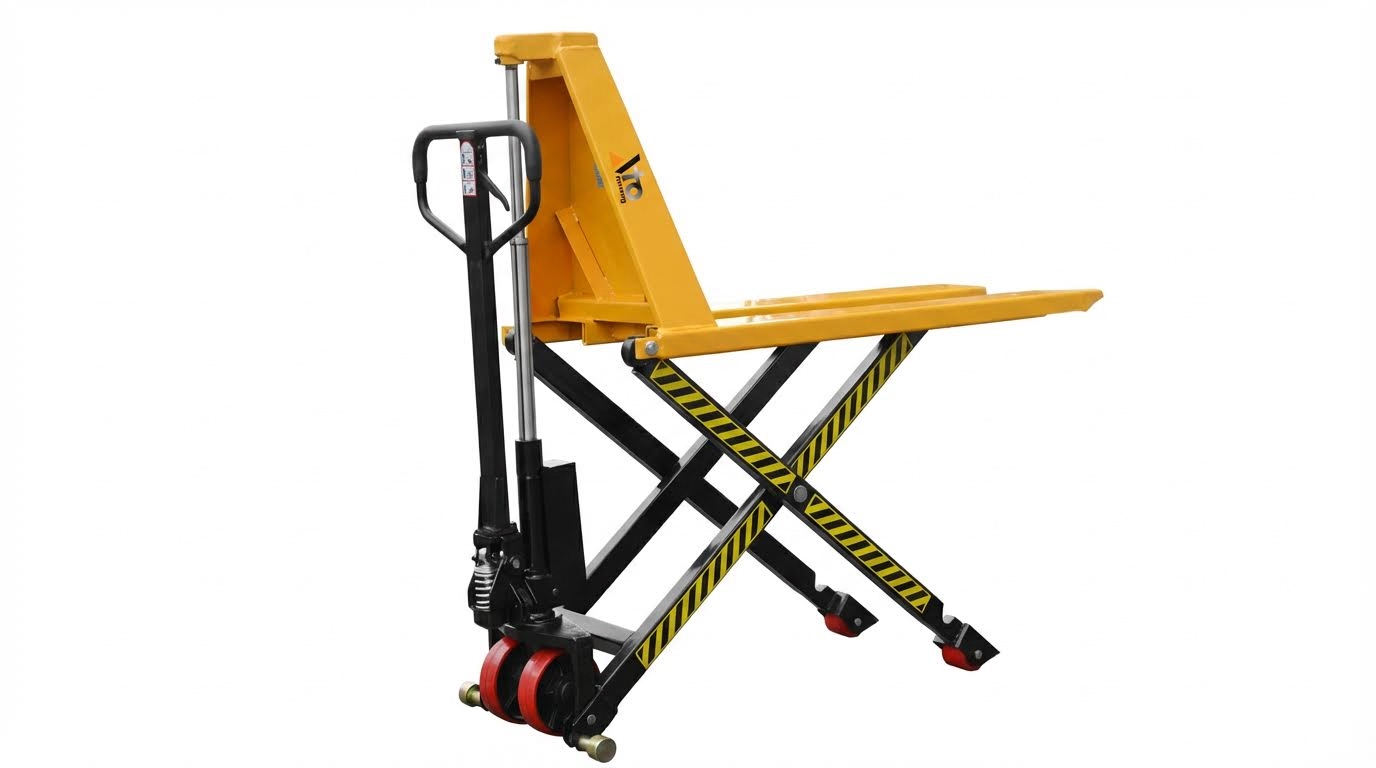
Stackers, lift tables, and high-lift pallet trucks do not just move pallets; they raise them to ergonomic heights so workers avoid bending, twisting, and unsafe manual lifts.
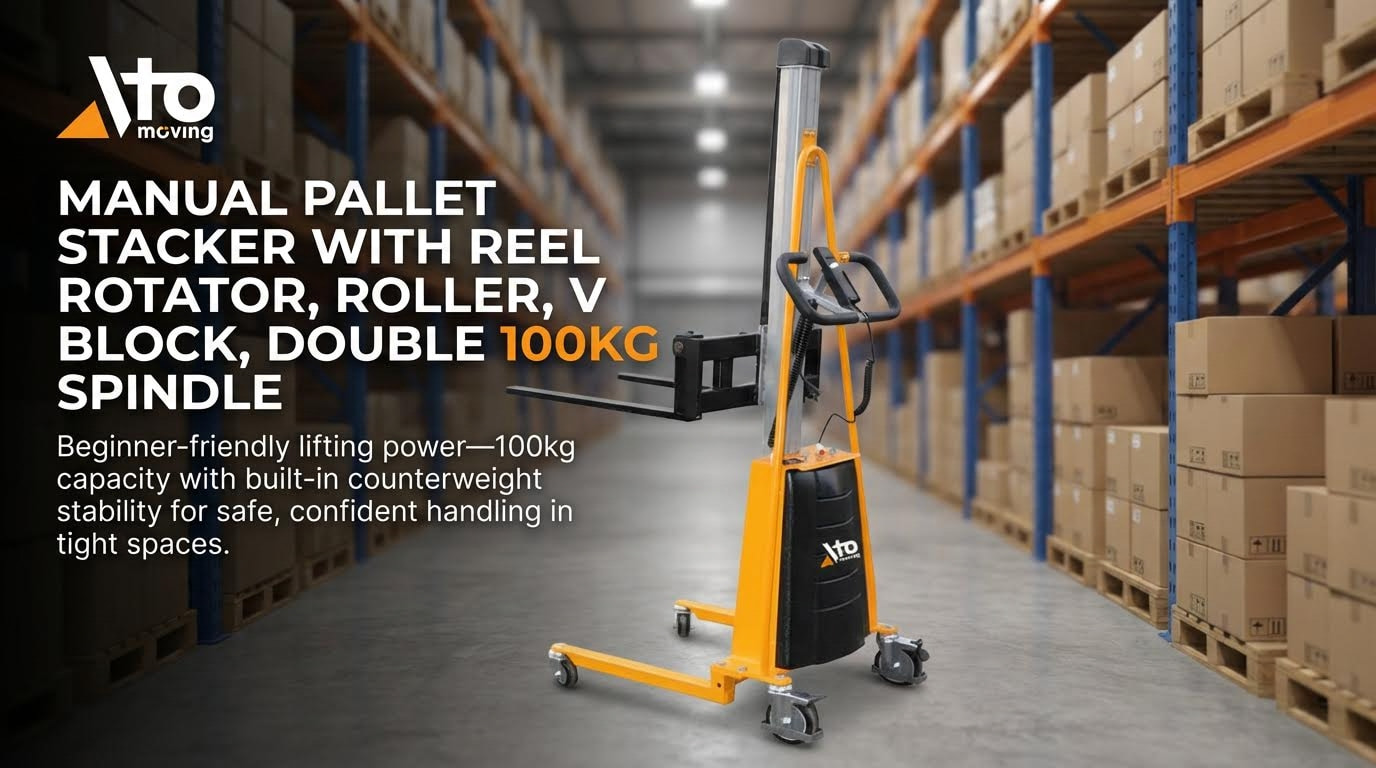
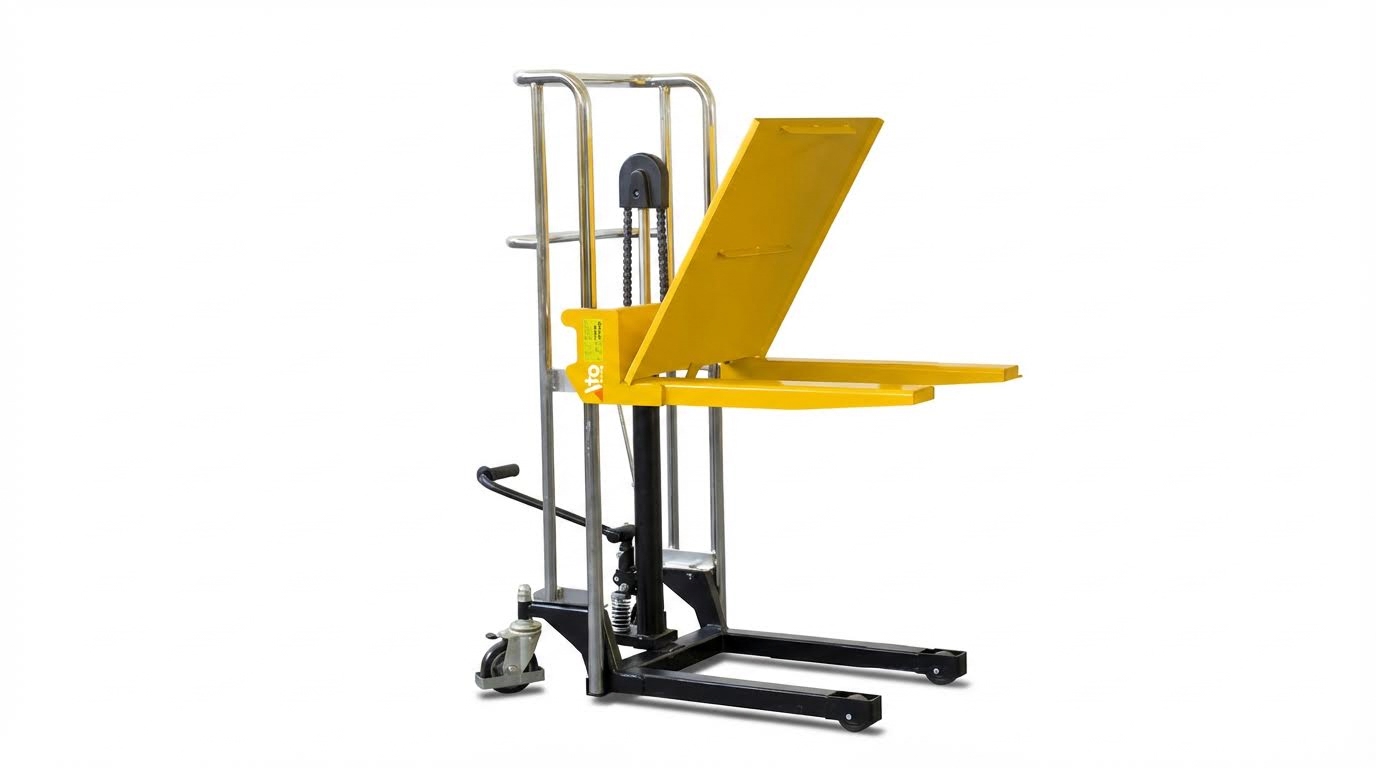
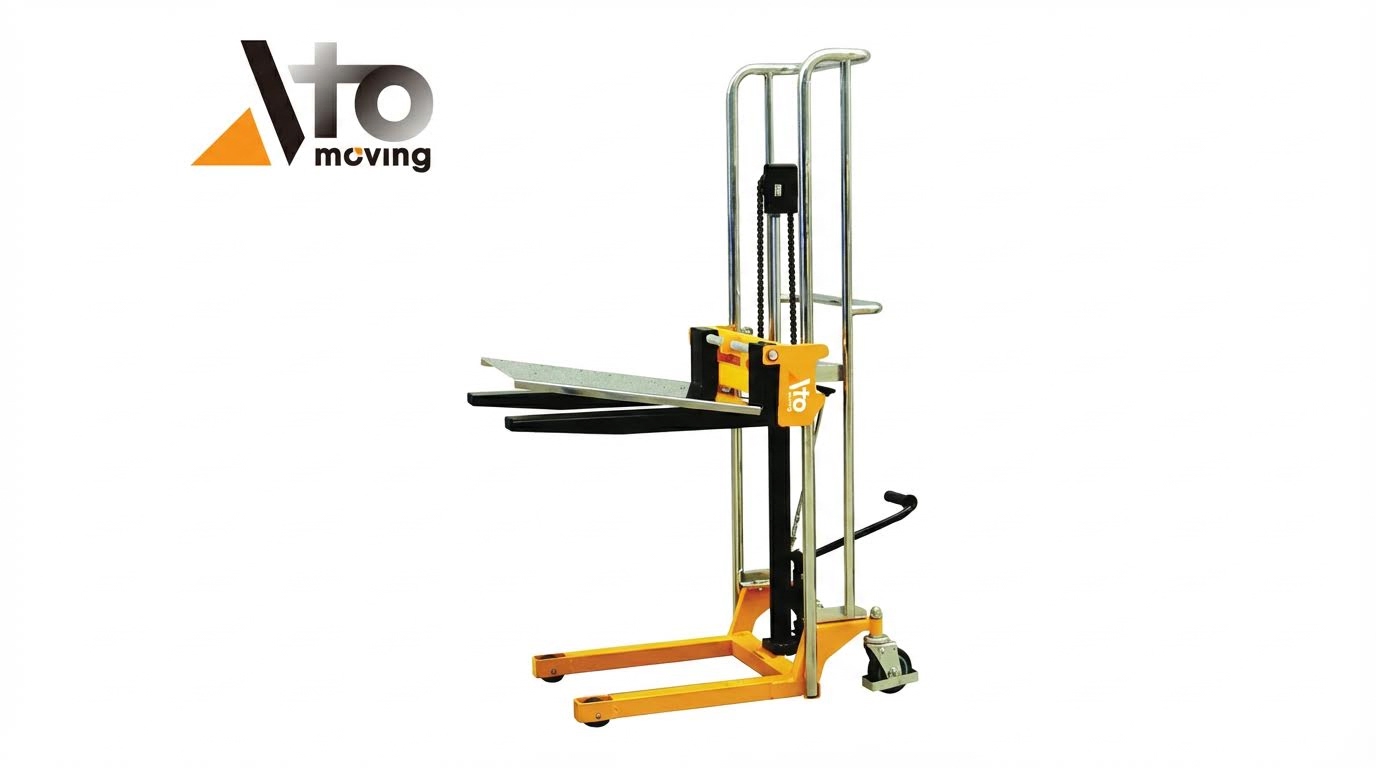
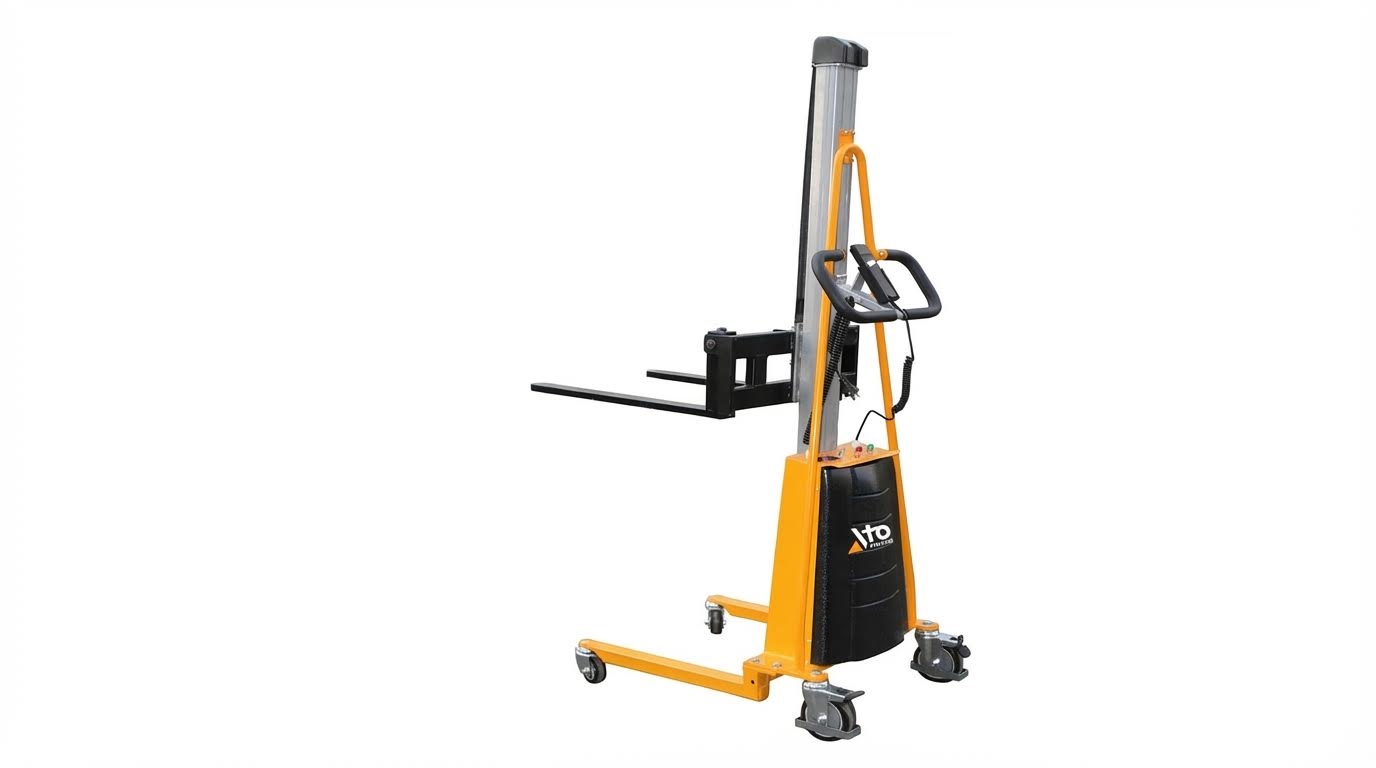
- Manual stackers: Use a walk-behind mast with forks or a platform to lift pallets up to several metres. This is ideal for occasional stacking, racking, or feeding mezzanines where a full forklift is not justified. Manual stackers commonly handle up to about 1,500 kg when used within their rated capacity and on level floors, with regular hydraulic inspections to prevent failures under load for safe occasional stacking.
- Lift tables: Position a scissor lift table under the pallet area so the top deck sits between roughly 700–1,000 mm during work. This keeps most handling between mid-thigh and elbow height, which strongly reduces back and shoulder strain. Lift tables with capacities up to about 2,000 kg and lift heights around 1,000–1,500 mm turn floor-level picking into waist-height work and must never be overloaded, with hydraulic systems inspected regularly Choosing Methods For Different Loads And Routes

Choosing how to move a pallet without jacks or forklifts starts with weight, distance, floor quality, and how often you repeat the task. The safest method is the one that keeps forces low and routes controlled.
Scenario Typical Load (kg) Distance (m) Recommended Method Operational Impact Light, occasional pallet repositioning <200 kg <10 m Manual handling, tow straps, sliding sheets Works for rare moves; avoid overusing manual force Medium load, short move on smooth floor 200–1,000 kg 5–20 m Pipes/rollers, skates, dollies Reduces friction; 2–3 workers control alignment Heavy load, repeated route in a day 1,000–2,000 kg 10–50 m Tow carts, pallet skates, gravity rollers Cuts push force and fatigue on repeat runs Feeding a workstation at waist height Up to 1,000–1,500 kg <10 m Lift tables, high-lift pallet trucks, stackers Turns floor work into waist-height work; fewer back injuries High-throughput, fixed path 500–2,000 kg per pallet 10–100+ m Gravity or powered roller/conveyor Automates flow; removes most manual travel effort This framework answers “how do you lift a pallet without a jack” in practice: you combine low-friction support (rollers, skates, sheets) with short, well-planned routes and strict manual handling limits.
- Start with the load: Under about 23 kg per person, limited manual lifting is acceptable – above that, add more people or mechanical aids. Manual handling guidance
- Check frequency: Occasional moves can tolerate more manual effort – repeated moves demand rollers, carts, or conveyors to prevent fatigue and MSDs.
- Measure distance: Very short shunts (a few meters) tolerate sliding or pipe rollers – long runs need rolling gear or towable carts.
- Assess floors: Smooth, level concrete suits rollers and skates – rough, sloped, or contaminated floors need bigger wheels or route changes.
- Control peak forces, not just weight: Reducing friction with rollers matters as much as the load mass – if you must “heave,” the method is wrong.
💡 Field Engineer’s Note: When you are close to the limits of manual force, changing floor friction (cleaning, adding plates, or using rollers) usually gives a bigger safety gain than adding more people to push.
Matching techniques to weight, distance, and frequency
Matching techniques to weight, distance, and frequency prevents you from “over-using” manual muscle where a simple roller, skate, or cart would control risk better.
Load / Task Pattern Suitable Methods Unsuitable / High-Risk Methods Best For… Single light pallet, under 200 kg Manual lift and reposition, sliding on sheet or tarp, tow strap on smooth floor Stackers, lift tables (overkill unless height needed) Small shops doing rare rearrangements Medium pallet, 200–1,000 kg, short move Lever bar + pipes/rollers, pallet dollies, skates Pure dragging on concrete Shifting stock a few meters to clear space Heavy pallet, 1,000–2,000 kg, repeated Tow carts, multi-wheel dollies, gravity rollers Manual pushing directly on pallet Regular runs from receiving to storage Feeding a workstation all shift Lift table, high-lift pallet truck, stackers Floor-level picking from pallets Packing, assembly, or kitting cells High-volume, fixed routes Gravity or powered conveyors, roller beds Ad-hoc manual moves each time Production-to-warehouse “highways” - Weight bands: Under 200 kg and rare moves can be manual with aids like sheets or tow straps – above that, use wheels or rollers as standard. Manual pallet handling limits
- Distance: If you walk more than 10 m regularly with a pallet, design a rolling solution – pipes, skates, tow carts, or conveyors.
- Frequency: A “once a week” move can accept slower, more manual methods – a “10 times per hour” move needs engineered aids to avoid MSDs.
- Direction changes: For frequent 90° turns, skates or turntable conveyors reduce side forces – dragging sideways chews up pallets and backs.
- Height changes: If you must lift above mid-thigh, specify lift tables, high-lift pallet trucks, or stackers – do not free-lift pallets above 25 kg per person.
How to pick a method if you have mixed loads
Group tasks into “light/occasional,” “medium/repeat,” and “heavy/high-frequency.” Size your equipment for the heaviest, most frequent case. Use simple aids like sheets or tow straps only for true exceptions, not everyday work.
Lever bars and pipes are ideal when the question is “how do you lift a pallet without a jack” in a tight spot: you only raise one edge a few millimeters, then roll on pipes instead of carrying the full mass. Lever and roller techniques
Planning routes, PPE, and compliance with OSHA/ANSI
Planning routes, PPE, and compliance means you treat each pallet move like a controlled operation, not an improvised shove through crowded, uneven floors.
- Route survey first: Confirm floors are smooth, dry, and strong enough for load plus equipment – fix potholes, lips, and loose tiles before moving heavy pallets. Route planning and floor conditions
- Control slopes: Treat gradients as hazards; add brakes, chocks, or alternative paths – even a 2–3% slope can overpower manual control with heavy pallets.
- Clearances: Measure door widths and aisle widths against pallet + equipment + helpers – allow at least 100–200 mm side clearance where possible.
- Traffic management: Keep routes free of other pedestrians and vehicles during moves – temporary barriers or spotters reduce sudden stops and collisions.
- PPE basics: Safety footwear and gloves are non-negotiable – they protect against crush injuries and splinters from damaged pallets. PPE for pallet handling
- Equipment checks: Inspect rollers, skates, crowbars, and lift tables before use – remove cracked welds, flat wheels, or leaking hydraulics from service immediately.
- Training and standards: Train workers in ergonomic lifting, safe use of aids, and hazard spotting, aligned with OSHA manual handling and material handling guidance – refresh regularly, not just at induction. Training and compliance
💡 Field Engineer’s Note: Most pallet incidents I have seen did not come from extreme weights; they came from bad routes: wet patches, unexpected slopes, or tight turns that forced people to twist under load. Fix the path, then pick the tool.
Quick compliance checklist for a new pallet route
1) Inspect pallets and loads for damage or instability. 2) Walk the route empty and mark hazards. 3) Confirm equipment SWL ≥ pallet + load. 4) Brief team on signals and stopping points. 5) Enforce PPE and keep the route exclusive during the move.
When you combine the right method for the weight and distance with a clean, well-controlled route and basic PPE, you effectively answer “how do you lift a pallet without a jack” in a way that respects both physics and safety law.
Final Engineering Considerations And Best Practices
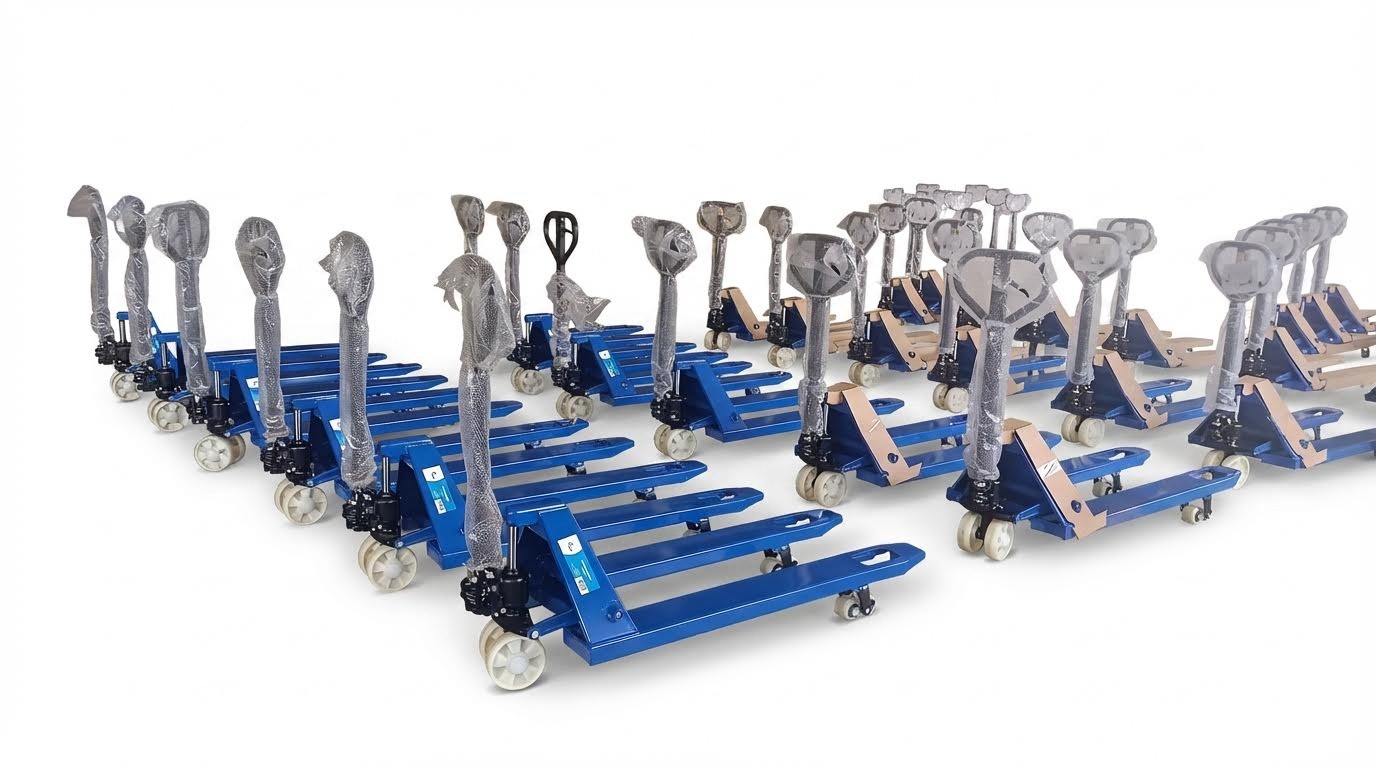
This section gives a practical engineering checklist so every method for how do you lift a pallet without a manual pallet jack stays within safe human limits, equipment ratings, and legal requirements over the long term.
1. Respect Human Limits Before Any “No‑Jack” Method
Any method to move a pallet without a jack must start from human load limits and task design, not from improvising with brute force.
- Limit per person: Keep individual lifts around 20–25 kg – Beyond this, spine and shoulder risk rises sharply. Manual lifting guidance
- Team lifting trigger: Above about 23 kg (50 lbs), use two or more people – Shares load and reduces peak joint forces. Human load limits
- Distance limit: Reserve pure manual handling for light loads under roughly 200 kg, travel under 10 m, and occasional moves – Prevents fatigue and cumulative strain. Manual pallet handling
- Body mechanics: Bend at hips and knees, keep the pallet or object close, and avoid twisting – Reduces lumbar disc loading and knee shear. Manual lifting techniques
- Task rotation: Rotate workers between pallet handling and lighter tasks – Controls MSD risk from repetitive bending and pulling. MSD prevention
💡 Field Engineer’s Note: If you need more than two people or more than one short, controlled effort to shift a pallet a few meters, you are beyond safe manual handling. At that point, redesign the task or introduce proper mechanical aids rather than “just adding more bodies.”
2. Decide If Manual, Levered, Or Mechanical Is Justified
Engineering good practice is to match the method (manual, lever-based, or mechanical aid) to weight, distance, and frequency instead of treating all pallets the same.
Scenario Typical Load / Use Preferred Method Operational Impact Light, occasional move Up to ~200 kg, <10 m Team lift, tow strap, or sliding sheet Low cost, but only for rare tasks; relies heavily on technique. Medium, short distance 200–1,000 kg, flat floor Lever bar + pipes/rollers, skates, or dollies Great where jacks cannot fit; needs trained crew and clear floor. Heavy, frequent moves 1,000–3,000 kg, repeat routes Pallet skates, tow carts, gravity rollers, or conveyors Minimizes push/pull force; higher capex but big injury reduction. Height access (packing) Up to 1,000–2,000 kg at 800–1,500 mm High-lift trucks or lift tables Turns floor work into waist-height work; strong ergonomic gain. - Use levers for access, not transport: Crowbars and pry-bars are ideal to raise a pallet edge a few millimeters – Allows you to insert rollers or skates with low force. Lever techniques
- Use rollers to beat friction: Pipes or roller tracks cut sliding friction to rolling friction – Makes controlled movement possible with realistic human push forces. Roller systems
- Use skates/dollies for tight spaces: Multi-wheel skates carrying 1,000–3,000 kg are ideal where mast equipment will not fit – Lets you “shrink” the footprint to almost pallet size. Pallet skates
- Use gravity where you can control it: Gravity rollers reduce push force over distance – Excellent for repeat flows, but only with proper stops and guarding. Gravity roller use
How to choose between tow carts and conveyors
Towable pallet carts suit flexible, medium-distance routes and changing layouts, especially where pedestrian and cart traffic share aisles. Conveyors (CDLR, drag chain, turntables) fit fixed, high-throughput routes where pallet transfer time and labor must drop sharply, often cutting manual transfer time from 10–15 minutes to about 2 minutes and reducing labor by 30–40%. Tow and conveyor options
3. Treat Every Pallet And Floor As An Engineering Structure
Before you apply any “how do you lift a pallet without a jack” trick, you must confirm that the pallet and floor can safely carry the real loads and contact points.
- Inspect the pallet first: Look for broken deck boards, missing blocks, and exposed nails – Weak boards can fail suddenly under point loads from rollers or crowbars. Pallet inspection
- Check load stability: Verify the load is evenly stacked and secured before you drag, roll, or tilt – Prevents toppling when you change direction or stop. Load stability
- Verify the floor: Confirm the floor is level, clean, and strong enough for pallet plus helpers and equipment – Reduces trip, slip, and point-load failures. Floor conditions
- Control slopes: Even small gradients can overpower human braking on rollers or skates – Always add chocks, stops, or brakes where there is any incline. Slope control
💡 Field Engineer’s Note: When using pipes or loose rollers, keep at least three rollers under the pallet at all times. Two rollers behave like a rocking chair and can suddenly shift the center of gravity outside the pallet footprint, especially with uneven loads.
4. Enforce Equipment Ratings, Even Without Forklifts
Even when you are not using a forklift, you must still respect safe working load (SWL) ratings and design limits of every tool involved.
- Check SWL on every aid: Skates, dollies, lift tables, and high-lift trucks often range from 1,000–3,000 kg – Never guess; read the plate and compare with pallet mass. Capacity ranges
- Lift tables and stackers: Manual stackers can handle up to about 1,500 kg; lift tables up to about 2,000 kg at 1,000–1,500 mm – Use them to keep work between mid-thigh and elbow height. Lift devices
- High-lift pallet trucks: Typically rated around 1,000 kg and 800 mm lift – Great for feeding benches but sensitive to off-center loads. High-lift use
- Manual pallet trucks (when used): Common SWL is 2,000–2,500 kg; lift only about 50 mm clear of the floor – Extra height adds no benefit and increases instability. Pallet jack safety
- Pre-use inspections: Check wheels, forks, handles, hydraulics, and welds; quarantine defective gear – Prevents sudden failures under full pallet load. Inspection practice
Why center of gravity matters on high-lift devices
High-lift pallet trucks and small stackers have a narrow base. If the pallet load is offset or overhanging, the center of gravity can move outside the support polygon as you raise it, especially above 800 mm. Keeping the load centered and within the leg footprint maintains a stable overturning moment.
💡 Field Engineer’s Note: If you must derate anything, derate height before derating mass. Many tip-over events happen at partial load but near maximum height because the lever arm, not just the weight, drives the overturning moment.
5. Lock In Route Planning, PPE, And Training
Safe pallet movement without jacks or forklifts still depends on planned routes, correct PPE, and formal training aligned with OSHA and ANSI principles.
- Plan the path: Confirm door widths, aisle clearances, and turning radii before you move the pallet – Prevents awkward re-positioning under load. Route planning
- Control traffic: Keep other pedestrians and vehicles out of the route during the move – Reduces sudden stops and side impacts.
- Use basic PPE: Safety footwear and gloves are non-negotiable – Protects against crush injuries, splinters, and sharp edges. PPE guidance
- Standardize commands: For team lifts or rope/tow moves, agree clear verbal commands – Prevents uneven lifting and sudden jerks. Team lift practice
- Formal training: Cover ergonomic lifting, hazard recognition, and equipment use, with refreshers – Aligns practice with OSHA-style expectations and reduces variability between shifts.
Final Engineering Considerations And Best Practices
Safe pallet movement without jacks or forklifts depends on one simple rule: design the task around human limits and physics, not around force or improvisation. Weight, distance, and frequency set hard boundaries for what people can push, pull, or lift. Geometry, friction, and centre of gravity then decide whether a method stays stable when you tilt, roll, or raise the load.
Lever bars, pipes, skates, carts, stackers, and lift tables all work because they cut friction, shorten lever arms on the body, and keep the load within a stable support base. Floors, pallets, and routes act as structural parts of the system. If any of them are weak, dirty, sloped, or crowded, otherwise “safe” forces can turn into sudden slips, runaways, or collapses.
Operations and engineering teams should lock in a simple approach: set clear weight and distance limits, standardise approved methods for each band, and back them with route design, PPE, inspections, and training. Use manual effort only for light, short, rare moves. Use wheels, rollers, or Atomoving lift solutions for heavier, higher, or repeated work. When in doubt, lower friction, shorten the route, or upgrade the equipment instead of asking people to push harder.
Frequently Asked Questions
How do you lift a pallet without a jack?
Lifting a pallet without a jack can be done using proper manual techniques or alternative equipment. If no equipment is available, you can tip the pallet onto your thighs while maintaining a wide stance and using your legs to lift. Always avoid using your back to prevent injury. For more details on safe lifting practices, refer to Pallet Handling Safety Guide.
What are some alternatives to a pallet jack for lifting pallets?
If you don’t have access to a pallet jack, consider using manual tools like low-lift pallet trucks or electric pallet trucks. These are efficient and safer options for moving pallets in a warehouse setting. For a comprehensive list of forklift alternatives, check out Forklift Alternatives.
How can you move a pallet safely by hand?
To move a pallet safely by hand, use proper lifting techniques: keep your back straight, bend at the knees, and lift with your legs. Avoid twisting your torso while carrying heavy items. These methods help reduce strain and prevent injuries. For additional tips, visit Heavy Furniture Moving Tips.