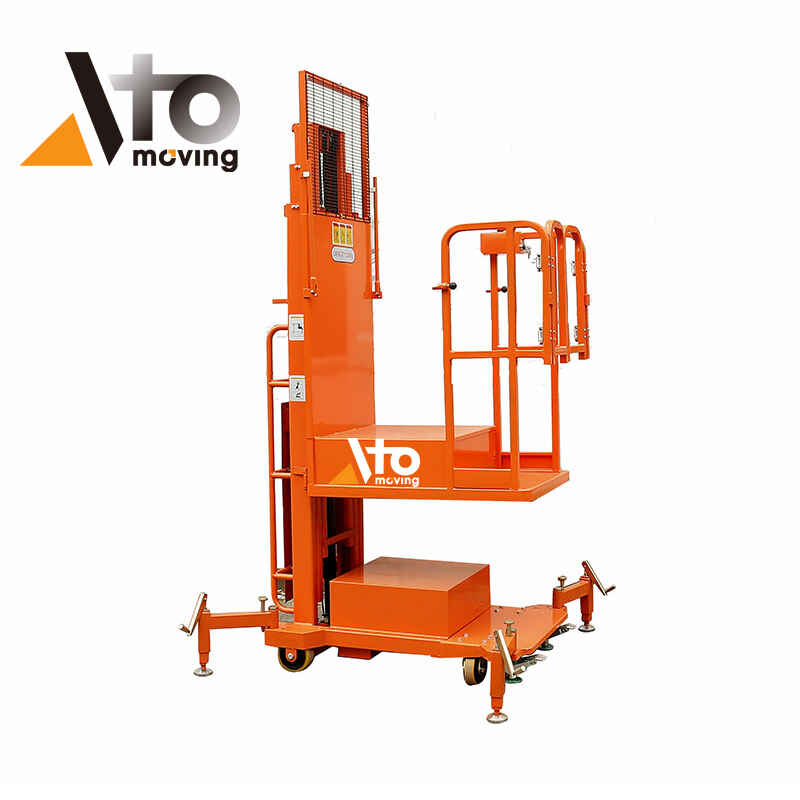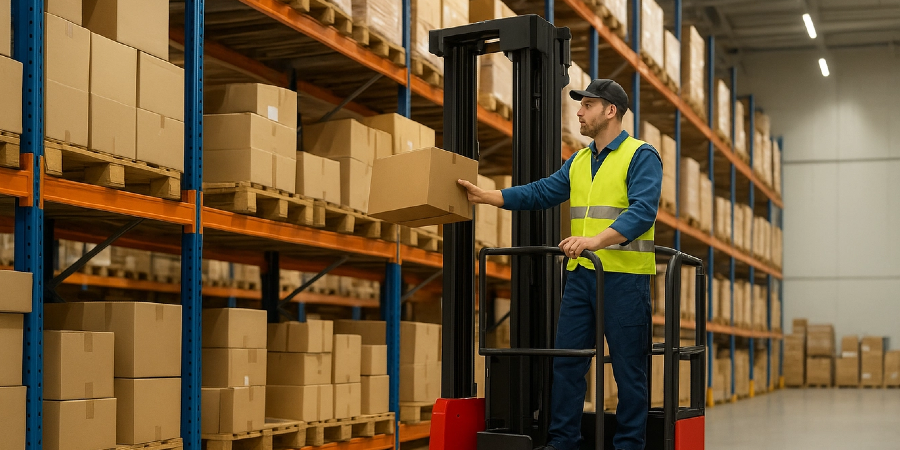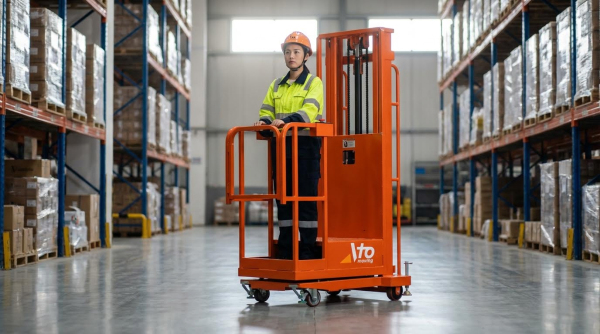
Warehouse cherry picker machines are vertical lifting trucks that let operators ride up with the load to pick or place items directly from racking. This guide explains how to use a cherry picker machine warehouse setup safely, select the right specs, and train operators for reliable daily operation. It focuses on real-world limits: load, height, aisle width, batteries, and maintenance.
Core Functions And Safety Fundamentals
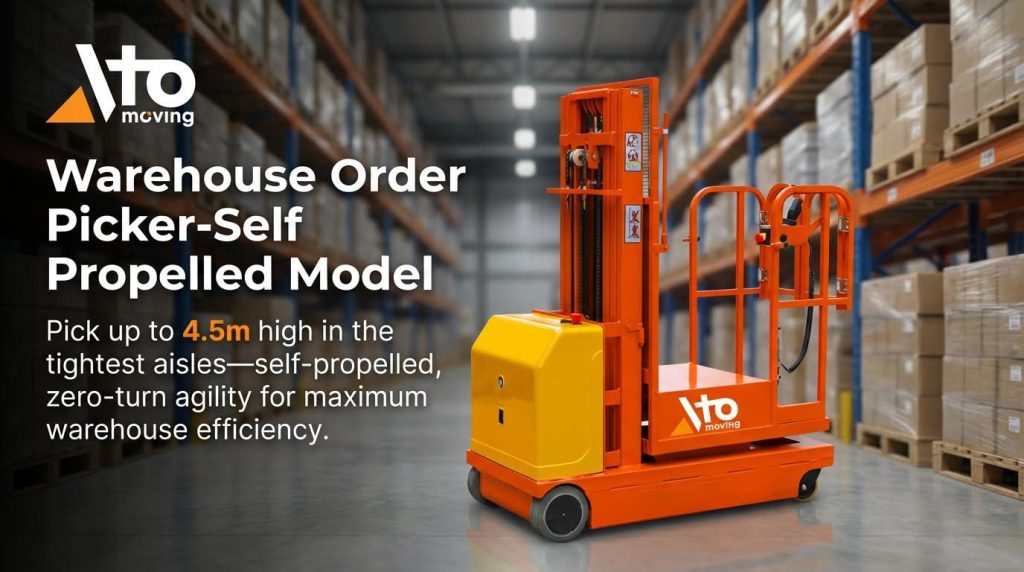
This section explains what a warehouse order picker actually does and which core safety features make it suitable for narrow-aisle, high-level picking work.
What A Warehouse Cherry Picker Actually Does
A warehouse cherry picker is a powered machine that lifts the operator and load together to pick or place items directly from racking. It combines vertical lifting, horizontal travel, and precise positioning in narrow aisles.
- Primary function: Lift an operator plus cartons or small pallets to 4–11 m rack levels – enables person-up order picking instead of full-pallet handling.
- Integrated platform: Operator stands on a guarded platform with controls – they drive, lift, and steer from height with full visibility of the pick face.
- Fine positioning: Proportional lift and travel controls – allow millimetre-level alignment with cartons, reducing strain and mis-picks.
- Very narrow aisles: Compact chassis and guidance options – let the truck work in aisles often around 1.5–1.8 m wide, increasing storage density.
- Frequent stop–start duty: Designed for many lift–lower cycles per shift – matches high-frequency e‑commerce and piece-pick operations.
How a cherry picker differs from a standard forklift
A standard forklift keeps the operator at floor level and lifts only the load, usually on forks. A cherry picker lifts both the operator and the load together, so the operator can manually handle items from each shelf location. This makes cherry pickers ideal for case or piece picking, not just full pallets.
💡 Field Engineer’s Note: When planning workflows, assume real pick rates drop sharply above about 8–9 m because of operator fatigue and longer lift times. Use the highest rack levels mainly for slow-moving SKUs to keep cherry picker cycles efficient and safer.
Key Design Features For Narrow-Aisle Work
Narrow-aisle cherry picker machines use specific design features to stay stable, avoid rack impacts, and protect the operator while working at height in tight spaces.
- Compact chassis width: Truck body typically just narrower than aisle clear width – keeps clearance to uprights small but workable, maximizing storage while allowing safe travel.
- High, rigid mast or scissors structure: Engineered to limit deflection at 6–11 m – reduces platform sway so operators feel stable when picking.
- Guarded work platform: Top rail around 1.1 m, with mid-rail and toe board – prevents falls and stops cartons or tools dropping onto lower levels.
- Deadman and guarded controls: Travel and lift only operate while a presence pedal or switch is held – stops unintended movement if the operator slips or releases controls.
- Speed reduction at height: Drive speed automatically reduced when platform rises – limits dynamic forces that could destabilize the truck or alarm the operator.
- Low travel height rule: Platform lowered close to floor for turning or crossing intersections – keeps centre of gravity low and improves visibility to pedestrians.
- Aisle guidance options: Rail, wire, or electronic guidance keeps the machine centred – prevents side-swipe damage to uprights and pallets in very narrow aisles.
- Integrated fall protection anchor: Certified tie-off point for a full-body harness – adds a second safety layer beyond guardrails.
- Warning lights and alarms: Beacons and audible alerts when travelling or elevated – increase pedestrian awareness in busy warehouse zones.
| Design Feature | Typical Specification (Indicative) | Operational Impact in a Warehouse |
|---|---|---|
| Platform rail height | ≈ 1,100 mm top rail | Prevents step-through and gives operators a solid barrier at chest/waist level. |
| Minimum safe aisle width | Often about 1,500–1,800 mm | Allows the cherry picker machine warehouse unit to run between racks with minimal wasted space. |
| Effective picking height range | ≈ 4.5–11 m | Covers most warehouse rack beams from mid-level to top, enabling person-up picking. |
| Guarded platform width | ≥ 500 mm | Gives enough standing and turning room while staying inside rack clearances. |
Why guidance systems matter in very narrow aisles
In aisles close to truck width, even a 20–30 mm steering error can cause the platform or chassis to clip uprights or pallets. Rail or wire guidance keeps the truck automatically centred, so the operator focuses on picking rather than steering corrections, reducing rack damage and near-misses.
💡 Field Engineer’s Note: When you tighten aisle widths to gain more pallet positions, always budget for guidance systems and impact protection. Without them, minor mast sway or steering corrections at 8–10 m height can translate into costly rack strikes and downtime.
Engineering Limits, Power Systems, And Maintenance
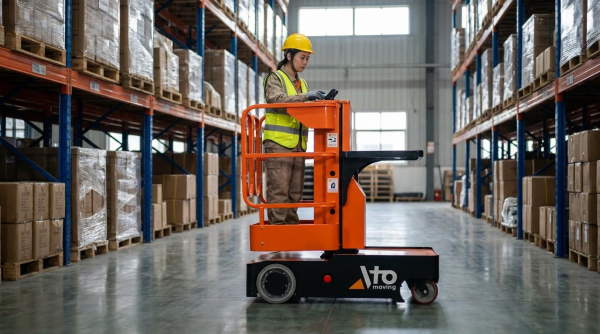
Engineering limits, power systems, and maintenance set the safe working envelope and lifecycle cost of any semi electric order picker warehouse fleet. This section explains how load, height, batteries, and inspections control uptime and accident risk.
Load Ratings, Height, And Stability Envelopes
Load ratings, lift height, and stability envelopes define how high and how heavy you can safely work with a warehouse order picker. Staying inside these limits is what prevents tip-overs and structural failures.
| Parameter | Typical Range | What It Includes | Operational Impact |
|---|---|---|---|
| Rated load (platform + load) | Up to about 1,000–1,500 kg | Operator, tools, pallet or carton cluster | Sets max pallet weight you can pick at full height |
| Mid-level lift height | 4,500–7,500 mm | Medium racking (often 3–4 beam levels) | Covers most standard warehouse racking |
| High-level lift height | 6,000–11,000 mm | High-bay storage | Required for deep, high-density storage aisles |
Always treat the rated capacity as including the operator, tools, and any attachments. If your heaviest pallet is 800 kg and your operator plus tools are 120 kg, you are already near 920 kg before adding safety margin.
- Rated Load Plate: Check the load plate on the truck – it tells you the maximum safe load at a given height and load center.
- Load Center: Keep loads tight to the backrest – moving weight outward shifts the center of gravity and reduces stability.
- Height vs. Capacity: Understand that capacity usually drops at higher lift – never assume ground-level capacity applies at 10 m.
- Dynamic Effects: Avoid sharp steering or braking at height – sudden lateral forces can push the truck outside its stability envelope.
How to size load and height for your warehouse
List your heaviest pallets, add operator and tools, then add at least 10–20% margin when selecting capacity. For height, measure the top beam level, add pallet height plus 200–300 mm for clearance and comfortable working posture.
💡 Field Engineer’s Note: In very narrow aisles, even a slight floor slope or a low rack impact can matter at 10 m height. Always keep travel speed low when elevated and avoid turning with the platform raised; lateral sway and mast deflection stack up fast in real warehouses.
Battery Systems, Charging, And Energy Management
Battery systems, charging, and energy management determine how many hours per shift your order picking machines warehouse fleet can run without unplanned stops or premature battery failure.
| Battery System | Typical Voltage | Usage Profile | Operational Impact |
|---|---|---|---|
| Small / compact units | 24 V | Lighter duty, shorter travel distances | Good for light picking and low-height work |
| Standard warehouse units | 36 V | Medium duty, typical single-shift use | Balanced runtime and truck weight |
| Larger / high-duty units | 48 V | Heavy duty, long travel or multi-shift | Better performance with higher energy demand |
- State of Charge Checks: Operators should verify charge level before each shift – prevents mid-aisle shutdowns at height.
- Avoid Deep Discharge: Do not routinely run batteries flat – deep discharges shorten service life and increase heat.
- Correct Charger Match: Use the right voltage and charge curve – wrong chargers overheat cells or undercharge them.
- Terminal Care: Keep terminals clean and tight – poor connections waste energy and can cause arcing.
Practical charging strategy tips
For single-shift use, schedule full overnight charging. For multi-shift operations, plan either battery exchange or controlled opportunity charging during breaks, keeping within manufacturer limits to avoid overheating or accelerated wear.
💡 Field Engineer’s Note: In cold storage or unheated warehouses, battery performance drops sharply. Plan extra capacity or warmer charging rooms, and expect reduced runtime below about 0°C unless you use batteries and chargers rated for low-temperature service.
Inspections, Preventive And Predictive Maintenance
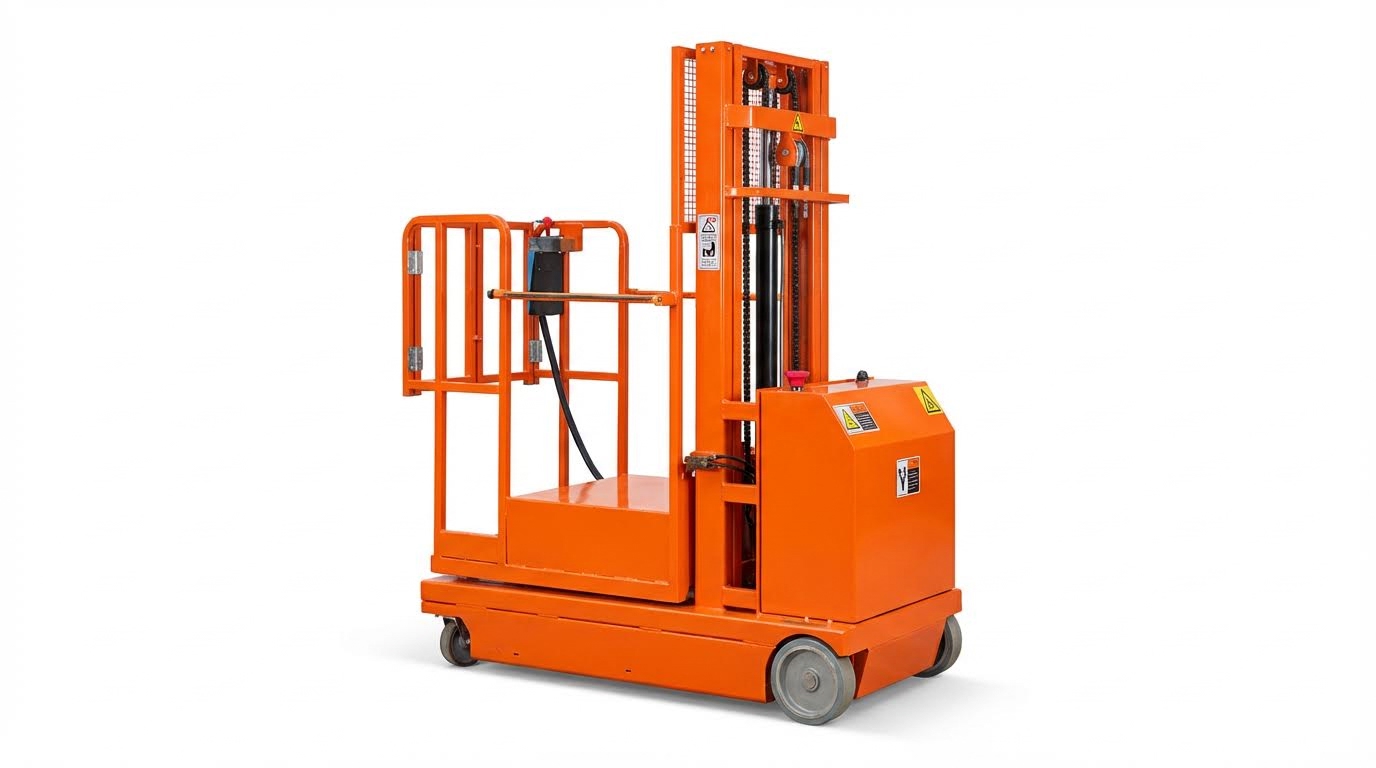
Inspections, preventive maintenance, and predictive tools keep a aerial platform warehouse fleet safe, legal, and available, instead of parked with faults or involved in avoidable incidents.
- Daily Pre-Use Checks: Operators inspect batteries, connectors, hydraulics, wheels, guardrails, and controls – any critical defect means the machine is taken out of service.
- Scheduled Maintenance: Technicians group tasks by operating hours – chain lubrication, brake checks, oil and filter changes, and control system tests.
- Hydraulic Integrity: Inspect hoses, fittings, and cylinders for leaks or creep – prevents sudden loss of lift or uncontrolled lowering.
- Fall Protection Hardware: Check guardrails, gates, and anchor points – ensures platforms still meet structural and safety requirements.
Typical daily inspection routine
Walk around the machine, look for leaks or damage, check wheels and steering components, confirm battery and cable condition, then test lift, lower, steering, and braking in a safe area. Log all findings and tag out any unsafe unit until repaired by a competent technician.
- Maintenance Planning: Use operating hours and fault history to schedule service – avoids both over-maintenance and breakdowns.
- Lifecycle Costing: Budget for battery replacement, charger servicing, and major overhauls – gives a realistic total cost of ownership over 5–10 years.
💡 Field Engineer’s Note: Most serious faults show up first as “small” issues in daily checks: minor oil mist, a soft brake pedal, or a slow lift. Treat these as early warnings. Fixing them early is far cheaper than dealing with a failed truck blocking a critical aisle at peak time.
Typical Warehouse Applications And Equipment Selection
This section explains how to match a warehouse order picker to your racking, aisles, and workload so you avoid under-specifying capacity, height, and battery life while keeping total cost of ownership under control.
Matching Cherry Picker Specs To Racking And Aisles
Correctly matching cherry picker specs to racking and aisles means sizing height, capacity, and aisle width to your actual layout so operators can work safely without constant compromises.
Start with your storage geometry, not the brochure. Measure the highest beam level, pallet overhang, and the narrowest aisle, then work backwards to the minimum platform height, capacity, and chassis size you need.
| Design Factor | What To Measure | Typical Engineering Target | Operational Impact |
|---|---|---|---|
| Top rack height | Distance floor to top beam (mm) | Platform height ≥ top beam + 1,000–1,200 mm | Gives headroom for pallet overhang and safe reaching posture |
| Pallet overhang | Pallet + load depth beyond beam (mm) | Add to load center in capacity calcs | Prevents surprise derating at height from longer load center |
| Heaviest pick load | Max pallet or carton cluster mass (kg) | Rated capacity ≥ load + operator + tools + 10–20% | Maintains stability margin and avoids nuisance overload trips |
| Narrowest aisle | Clear distance between rack uprights (mm) | Truck “VNA” spec ≤ aisle – 100–150 mm safety each side | Allows turning and travel without clipping uprights |
| Door and tunnel clearances | Lowest lintel / tunnel height (mm) | Truck collapsed height ≤ clearance – 50–100 mm | Prevents mast or guardrail strikes at transitions |
- Height margin: Add at least 1,000 mm above top beam – Operators can see labels and handle cartons without stretching.
- Aisle strategy: Decide “wide aisle” vs “very narrow aisle” early – It locks in truck type, guidance, and throughput.
- Pick face design: Keep heavy or bulky SKUs below about 5–6 m – Reduces time at extreme height and fatigue risk.
- Traffic pattern: Separate pick aisles from pallet infeed aisles – Cuts collision risk with reach trucks and manual pallet jack.
How to field-check minimum aisle width
Measure between the rack uprights at floor level at multiple points. Use the smallest value. Subtract at least 200–300 mm to allow clearance for truck sway, pallet misalignment, and minor floor deviations, then compare to the cherry picker’s required aisle width from the data sheet.
💡 Field Engineer’s Note: When aisles are “just big enough” on drawings but the floor is uneven, trucks tend to brush uprights and damage racks. I recommend a real-world survey with a tape and laser after the racking is installed, then locking in the cherry picker model.
Selection Criteria: Duty Cycle, TCO, And Future Automation
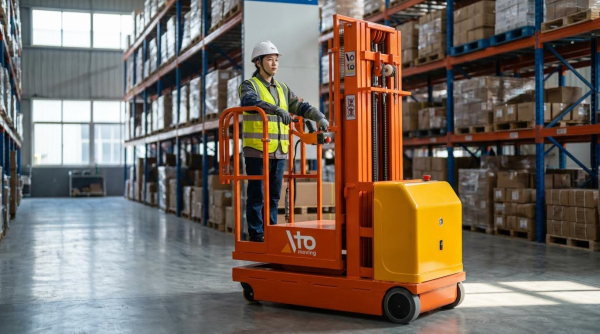
Selecting a order picking machines fleet means balancing duty cycle, energy system, and maintenance costs so the trucks last 5–10 years without becoming a bottleneck or a cost sink.
Think of each machine as a production asset, not a forklift. You want enough capacity and battery to cover peak hours, but also predictable service intervals, a clear replacement plan, and options for later automation or telematics.
| Selection Criterion | What To Quantify | Typical Engineering Range | Best For… |
|---|---|---|---|
| Daily duty cycle | Hours per shift, shifts per day, % time at height | Light: <3 h; Medium: 3–6 h; Heavy: >6 h per shift | Defines battery size, charger type, and maintenance intensity |
| Battery system | Required runtime and charging windows | Single battery for 1-shift; change-out or fast charge for 2–3 shifts | Ensures trucks finish shifts without limp-home mode |
| TCO horizon | Planned life (years) and annual hours | 5–7 years at moderate use; 7–10 years at low use | Helps compare higher purchase price vs lower energy and service |
| Service model | In-house techs vs external contracts | Preventive visits every 250–500 operating hours | Keeps unplanned downtime and parts failures under control |
| Automation readiness | Need for telematics, geo-fencing, or semi-auto | Start with CAN-bus, data logging, impact and height sensors | Lets you add fleet management or partial automation later |
- Duty cycle mapping: Log current picking for at least one week – Hard data avoids under-sizing batteries and motors.
- Energy strategy: Align charging with breaks or shift changes – Maximizes uptime without abusing batteries.
- Lifecycle planning: Budget one full battery replacement in the life of the truck – Prevents “surprise” mid-life performance collapse.
- Data and safety: Specify trucks with event logging and height/speed limiting – Makes it easier to enforce safe behavior and analyze incidents.
Key TCO elements beyond purchase price
Total cost of ownership usually includes: energy (electricity), scheduled maintenance, unscheduled repairs, tires and wheels, batteries and chargers, training time, and any racking or floor repairs from impacts. When you compare models, normalize costs per operating hour, not per year.
💡 Field Engineer’s Note: The lowest-price truck often becomes the most expensive after 3–4 years because of battery and downtime issues. For a busy cherry picker machine warehouse, I prioritize robust battery systems, easy service access, and good telematics over saving a few thousand on day one.
Final Thoughts On Safe, Efficient Cherry Picker Use
Safe, efficient cherry picker use starts with respecting engineering limits and matching the machine to your warehouse geometry. When you size height, capacity, and aisle width from real measurements, operators can work at speed without fighting tight clearances or overload alarms.
Stability depends on more than rated load. Teams must control load center, travel speed at height, and floor quality, and must keep platforms low when turning or crossing intersections. These habits turn the theoretical stability envelope into real safety.
Battery choice and charging strategy directly set daily throughput. If you align voltage, runtime, and charging windows with duty cycle, you avoid mid-shift shutdowns and slow, tired trucks. Planned maintenance and disciplined daily checks then lock in uptime and protect operators from hidden faults.
The best practice is clear. Design racking and aisles with cherry picker geometry in mind. Select Atomoving equipment with enough capacity and battery for peak demand. Enforce strict operating rules at height, and treat inspection data as early warning. When layout, engineering limits, power, and maintenance all align, cherry pickers stay productive, safe, and cost-effective over their full life.
Frequently Asked Questions
What is a cherry picker in a warehouse?
A cherry picker, also known as an aerial work platform (AWP) or boom lift, is a mechanical device used to provide temporary access for people or equipment to inaccessible areas, usually at height. It is commonly used in warehouses for tasks like inventory management and maintenance. Aerial Work Platform Guide.
What’s the difference between a cherry picker and a forklift?
A cherry picker is designed primarily for lifting personnel to heights, while a forklift is used for moving materials. Cherry pickers are ideal for reaching high shelves or performing maintenance tasks, whereas forklifts focus on transporting goods within a warehouse.
- Cherry pickers are better suited for accessing hard-to-reach areas.
- Forklifts are more focused on material handling and transport.
Is a warehouse picker job physically demanding?
Yes, working as an order picker can be physically demanding. The role involves operating machinery like cherry pickers or other material handling equipment safely and efficiently, as well as lifting and carrying items throughout the warehouse. Order Picker Job Details.
What factors differentiate cherry pickers from boom lifts?
Boom lifts generally complete jobs faster than cherry pickers and are suitable for more complex tasks. However, they tend to be more expensive and require additional training to operate. Cherry pickers are typically less costly and easier to use for simpler tasks. Boom Lift Comparison.