Warehouse voice picking systems answered the question “how does warehouse voice picking work” by combining speech recognition, mobile devices, and tightly integrated WMS or ERP workflows. These systems guided pickers through tasks using spoken instructions, while workers responded verbally to confirm locations, quantities, and exceptions. The complete topic covered core concepts of voice-directed picking, detailed workflow and system architecture, engineering and integration considerations, and strategic implications for modern warehouses. This structure helped technical and operations teams understand not only how the technology worked, but also how to design, deploy, and scale it effectively in real facilities.
Core Concepts of Voice-Directed Warehouse Picking
Core concepts explain how warehouse voice picking works at the intersection of software, hardware, and process design. This section contrasts voice with RF and paper, describes voice-only and multimodal workflows, and details key devices and speech technologies. Understanding these principles helps engineers design robust solutions and operations teams evaluate whether voice-directed picking fits their warehouse profile.
Voice Picking vs RF Scanning and Paper Lists
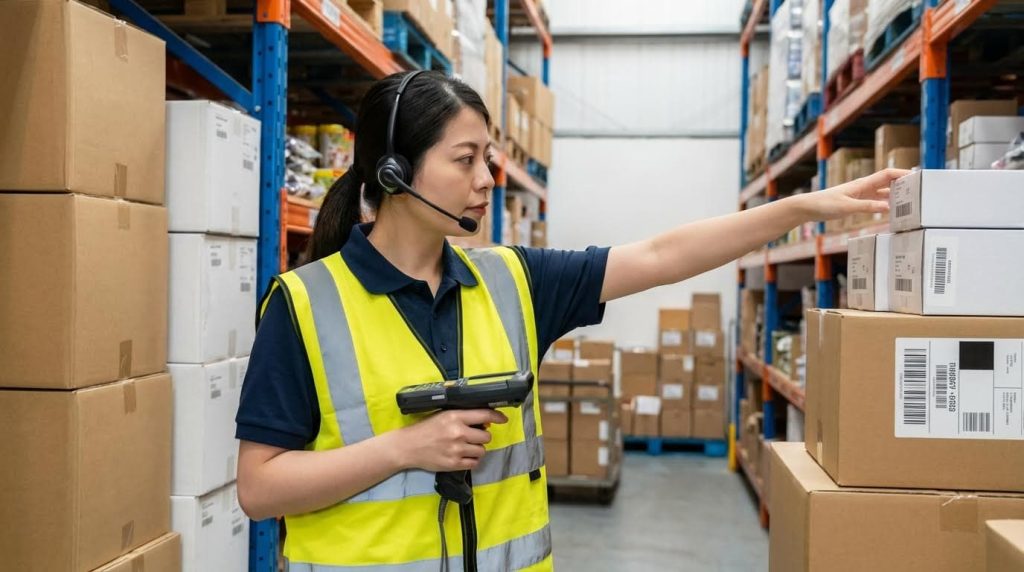
Warehouse voice picking works by replacing paper lists or RF terminal screens with spoken instructions and verbal confirmations. Traditional paper-based picking relied on printed pick lists, manual line-by-line reading, and handwritten confirmations, which created error rates up to 1.5% and slow feedback loops. RF scanning improved data capture with barcodes and wireless terminals but still required workers to hold devices, look at screens, and manually key or scan data. Voice-directed systems instead push tasks from the WMS or ERP to a mobile voice application that communicates via headset, enabling hands-free, eyes-up operation.
In a voice workflow, the picker receives audio prompts describing location, product, and quantity, then confirms actions verbally through an industrial microphone. The speech engine converts these responses into digital events and sends them back to the warehouse system in real time. This closed loop supports accuracy rates around 99.9% and error rates near 0.08%, significantly outperforming typical paper or basic RF processes. Compared with RF, voice reduces device handling, minimizes screen navigation, and shortens scan sequences, which cuts walking delays and cognitive switching. For engineers, the key difference is interaction modality: RF and paper are visual-manual, while voice is auditory-verbal, which reshapes ergonomic design, safety analysis, and system throughput calculations.
Voice-Only, Vision, and Multi-Modal Workflows
Voice-only picking uses audio instructions and verbal feedback as the sole interface between worker and system. This mode suits high-volume, repetitive case or piece picking where location logic is simple and visual references are easy to identify in the aisle. Workers keep both hands on cartons or pallets, improving ergonomics and safety in fast-moving environments. Route logic and task logic live in the voice application, which orchestrates the pick sequence without requiring screens or scanners.
Vision-augmented workflows overlay information through smart glasses or wearable displays while still using voice commands. The system might speak the task while simultaneously showing location, image, or quantity, which is valuable for dense SKU storage or visually similar products. Multi-modal designs combine voice with barcode scanning, RFID, or on-device screens, allowing double validation for high-value or regulated items. Engineers can configure when the system requests a scan, voice check digit, or both, balancing speed and risk.
How warehouse voice picking works in multi-modal setups depends on task complexity and quality requirements. For example, piece picking of pharmaceuticals may use voice for navigation and quantity, plus a scanner for lot or serial capture. In contrast, pallet moves might stay voice-only to maximize speed. Proper modality selection requires time-motion studies, error-cost analysis, and attention to worker cognitive load. Multi-modal configurations also influence network bandwidth, device selection, and software integration patterns.
Key Hardware: Headsets, Wearables, and Mobile Devices
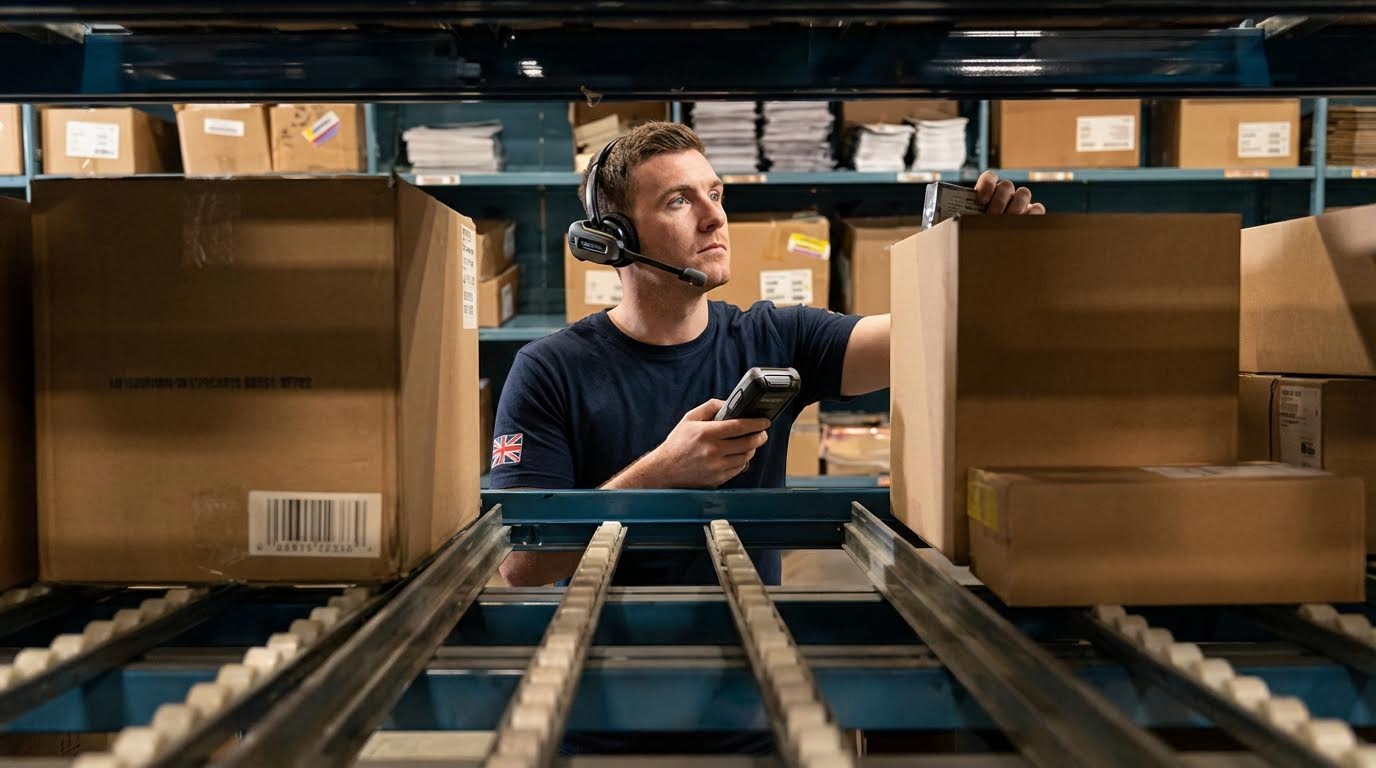
Hardware defines how reliably voice picking works on the warehouse floor. The core device set usually includes a rugged mobile computer, wired or wireless headset with noise-cancelling microphone, and optional wearables such as smart glasses or ring scanners. The mobile computer runs the voice client, handles Wi-Fi communication with the server, and interfaces with peripherals over Bluetooth or cable. Engineers must size processor, memory, and battery capacity for continuous speech processing and shift-long operation.
Headsets must withstand industrial noise, dust, and temperature variations while maintaining consistent audio quality. Noise-cancelling microphones and sealed earcups help isolate operator speech in environments with conveyors, forklift barrel grabber, and compressors. Wear-style affects ergonomics: over-the-head models distribute weight, while behind-the-neck variants fit better with hard hats. For cold storage or freezer zones, materials and cabling must remain flexible at low temperatures and resist condensation.
Wearables extend the voice workflow when visual or scanning steps are necessary. Smart glasses can show slot images, check digits, or exception messages without requiring handheld terminals. Ring scanners allow quick barcode confirmation while keeping hands largely free for lifting. Device management software tracks battery health, firmware, and asset location, which is crucial when fleets scale across multiple zones. When specifying hardware, engineers must consider ingress protection ratings, drop resistance, glove operation, and compliance with safety and radio standards in relevant jurisdictions.
Speech Recognition, Noise Handling, and Multilingual Use
Speech recognition technology is central to how warehouse voice picking works reliably in harsh acoustic conditions. Modern systems use server-side or on-device engines that map audio streams to commands, numbers, and confirmation phrases with low latency. They often combine phonetic and word-based models to handle structured vocabulary, such as aisle codes, bin identifiers, and quantities. Response times must remain within a few hundred milliseconds to keep workflows fluid.
Noise handling strategies include directional microphones, digital signal processing, and adaptive noise suppression tuned to warehouse sound profiles. Dual speech engines or parallel recognition strategies increase robustness against background noise and non-standard accents. Systems typically require minimal or no per-user voice training, enabling rapid onboarding and seasonal workforce scaling. For very noisy areas, engineers may configure constrained grammars or shorter command sets to reduce misrecognition probability.
Multilingual support allows instructions and confirmations in different languages while maintaining consistent process logic and KPIs. The same workflow definition can run in English, Spanish, or other languages, selected per user profile. This capability improves inclusion and reduces training time for international or temporary staff. From an integration perspective, speech engines must align with WMS data formats and code sets, ensuring that spoken confirmations map unambiguously to locations, SKUs, and tasks. Proper design of check digits, phrase lists, and error-handling dialogs is essential to keep accuracy high and picker frustration low.
Inside the Voice Picking Workflow and System Architecture
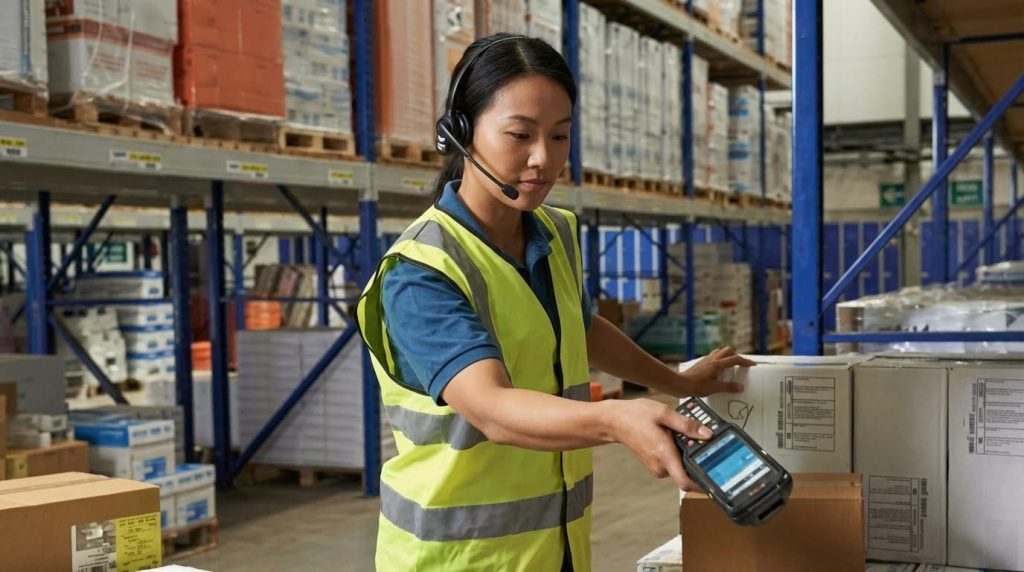
Understanding how warehouse voice picking works requires looking beyond headsets and commands. The core is an integrated workflow that links WMS or ERP order data with real-time guidance, speech recognition, and optimization algorithms. This section explains how orders become voice tasks, what happens step by step in the aisle, how the system reduces travel, and how managers gain visibility through KPIs and dashboards.
From WMS/ERP Orders to Voice Tasks
Voice picking starts with structured order data in the WMS or ERP. The host system groups lines into waves or batches based on carrier cut-offs, service level, and zone. An integration layer or middleware converts each pick line into a voice task with location, SKU, unit of measure, and quantity. The system assigns tasks to pickers using rules such as zone, skill level, equipment type, or shift. It then sequences tasks and downloads them to mobile devices over Wi-Fi or a secure cellular link. Standard interfaces and APIs keep order status, inventory balances, and task progress synchronized in real time.
Step-by-Step Voice Picking Process in the Aisle
When a picker logs in, the voice application authenticates the user and loads assigned work. The device plays a spoken instruction that identifies the next location, often by aisle, bay, and level. To prove arrival at the correct slot, the picker reads a check digit or short code printed on the location label. The system verifies the code, then announces the required quantity and unit, such as “pick eight each.” The picker counts items, places them into the correct container, and confirms verbally, usually by repeating the quantity picked. If stock is short or a discrepancy appears, the picker uses voice commands to record an exception, which updates inventory and triggers follow-up workflows.
After each confirmation, the system immediately records the transaction and closes or partially closes the order line. It then issues the next instruction without the picker touching a screen or paper list. This eyes-up, hands-free interaction reduces context switching and maintains walking and picking rhythm. In multi-modal configurations, the same workflow can add barcode scans or visual cues for high-value or regulated items. The underlying logic remains voice-centric, with additional modalities used as validation layers rather than replacements.
Route Optimization, Batch Picking, and Travel Reduction
To answer “how does warehouse voice picking work” from a productivity standpoint, route optimization is critical. The system analyzes location coordinates or slot sequences from the WMS to minimize total walking distance. It groups compatible orders into batches based on zone, temperature class, order type, and carrier. Algorithms calculate a pick path that follows a logical travel pattern, such as serpentine or one-way aisle flows, to avoid backtracking. AI-based engines can re-optimize paths dynamically as new rush orders arrive or congestion patterns change.
Batch picking instructions tell the worker which container or position to use for each order within the batch. The voice application references container IDs or positions during each pick, for example “place in tote three.” This enables simultaneous picking for multiple orders while keeping segregation clear. Systems have achieved travel reductions of 30–50% when combining intelligent batching with optimized routing. Reduced travel not only increases lines per hour but also lowers operator fatigue and improves consistency across shifts.
Real-Time Data Flow, KPIs, and Management Dashboards
Every interaction between picker and system generates time-stamped events. The device streams confirmations, exceptions, and status changes to the server layer in real time. The server updates the WMS or ERP through message queues, web services, or database interfaces. This continuous data flow maintains accurate on-hand inventory and order status without manual reconciliation. Supervisors access dashboards that aggregate this data into operational KPIs. Typical metrics include lines picked per hour, picks per labor hour, error rates, travel time ratio, and pick density by zone. Dashboards highlight bottlenecks, such as slow-performing zones or frequent exception codes, enabling targeted process changes.
Drill-down views show performance by user, shift, and work type, supporting incentive programs and training plans. Real-time alerts notify managers about missed cut-offs, abnormal pick times, or spikes in short picks. Historical data supports engineering studies, such as slotting analysis and workforce planning. Because the same architecture can support multiple workflows, managers can compare picking against replenishment, cycle counting, or loading processes on a single analytics layer. This closed feedback loop between execution and analytics explains why voice-directed workflows reached productivity gains above 25% and accuracy levels near 99.9% in deployed warehouses.
Engineering, Integration, and Implementation Considerations
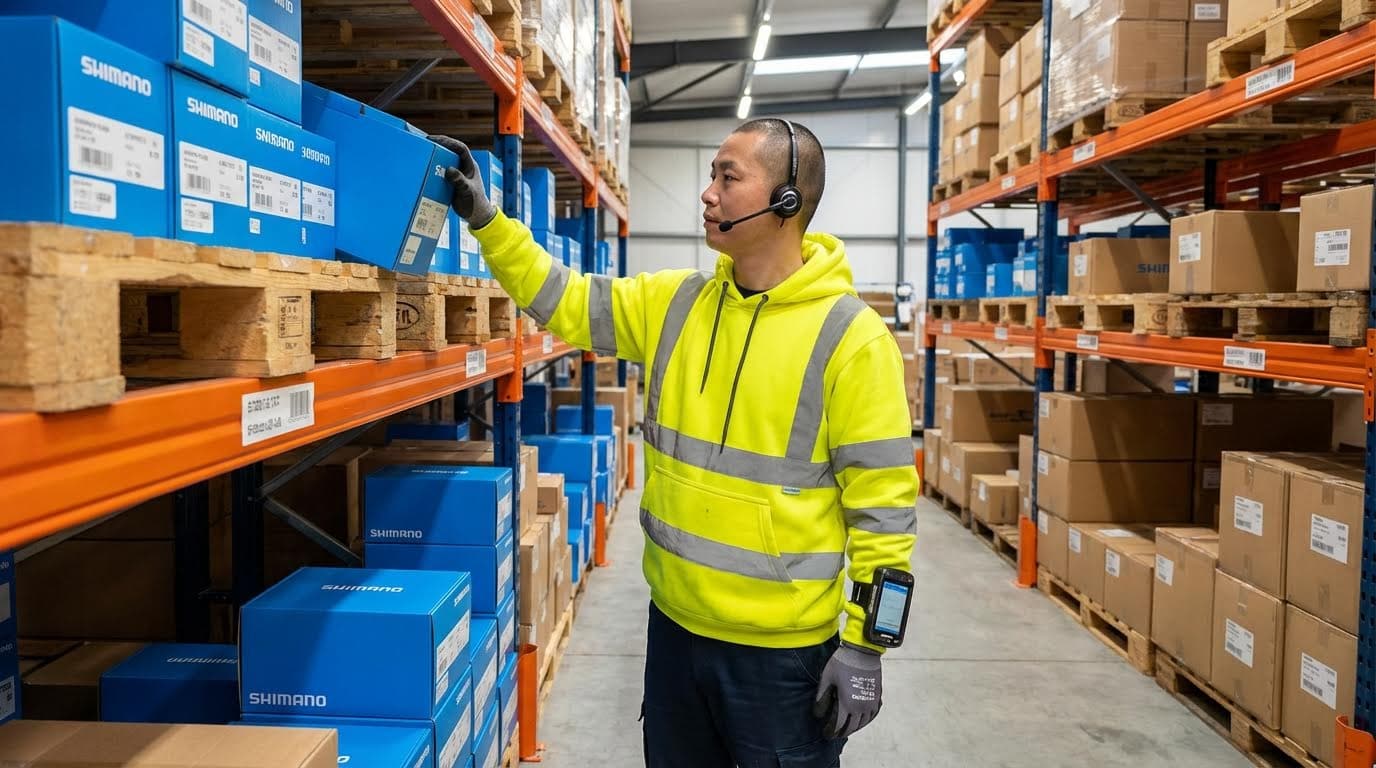
Engineering, integration, and implementation decisions determine how well warehouse voice picking works at scale. This section focuses on translating voice concepts into robust, secure, and maintainable systems that align with existing warehouse processes and IT landscapes.
System Design: Process Mapping and Use-Case Definition
Engineers started by mapping current-state material and information flows before deploying voice-directed picking. They documented every step from WMS order release to confirmation of shipment, including exceptions such as short picks and substitutions. This analysis revealed where hands-free, eyes-up workflows provided measurable value and where traditional RF or automation remained preferable. Typical use cases included picking, replenishment, cycle counting, loading checks, and quality inspections. For each use case, designers defined target KPIs such as pick lines per hour, error rate per thousand picks, and travel distance per order. Clear use-case definition allowed configuration of prompts, confirmation logic, and check digits so that voice dialogues matched real aisle layouts, location schemas, and packaging units.
IT Integration, Interfaces, and Cybersecurity Controls
Voice systems typically interfaced with WMS or ERP platforms via web services, message queues, or standardized connectors. Engineers designed near real-time interfaces so pick confirmations, exceptions, and inventory adjustments flowed back to core systems within seconds. They validated that the interface supported batch picking, wave picking, and on-demand order release without manual intervention. Cybersecurity controls followed the same principles as other operational technology. Teams implemented encrypted communication between mobile devices, voice servers, and back-end systems using TLS. Role-based access control restricted who could change pick strategies, routing rules, or voice templates. IT staff enforced device hardening, mobile OS patching, and mobile device management with remote lock and wipe. Regular penetration tests, audit logging of user actions, and integration with security information and event management platforms reduced the risk of unauthorized access or data manipulation.
Hardware Selection for Harsh and Cold Environments
Hardware selection determined whether warehouse voice picking worked reliably in demanding environments such as freezer storage or outdoor yards. Engineers specified industrial headsets with noise-cancelling microphones designed for 80–100 dB ambient noise. They checked ingress protection ratings, typically targeting IP54 or higher for dust and splash resistance. For cold stores operating at −25 °C, they selected mobile devices with heated or insulated batteries and displays rated for low-temperature operation. Connectors, cables, and headset cushions had to remain flexible and intact under thermal cycling. In heavy-duty or explosive-risk zones, teams considered intrinsically safe certified devices. Mechanical engineers evaluated mounting options for wearables on belts, vests, or forklift barrel grabber to avoid snag points and to maintain ergonomic load distribution. Field tests in representative aisles validated audio intelligibility, Wi‑Fi roaming performance, and battery endurance over full shifts.
ROI Modeling, Lifecycle Costs, and Scalability Planning
ROI models for voice-directed picking combined productivity, accuracy, and labor flexibility metrics. Engineers and operations leaders estimated baseline pick rates and error levels for paper or RF workflows, then applied realistic improvement factors observed in prior deployments, such as 25–35% productivity gains and error reductions to near 0.1%. They converted these gains into annual labor savings, reduced rework, and lower claim costs. Lifecycle cost models included hardware depreciation, software licenses, support contracts, network upgrades, and device replacement cycles of three to five years. Sensitivity analyses tested scenarios such as seasonal volume peaks, SKU proliferation, and expansion to additional workflows beyond picking. Scalability planning ensured the architecture could support more concurrent users, new sites, and future multi-modal extensions like vision or RFID without redesign. This structured approach showed where warehouse voice picking worked best economically and defined thresholds for phased rollouts or pilot-to-plant-wide transitions.
Summary and Strategic Implications for Modern Warehouses

Warehouse operators who ask “how does warehouse voice picking work” increasingly view it as a core execution technology rather than a niche add‑on. Voice-directed systems connected to WMS or ERP platforms converted digital orders into sequenced, spoken tasks, guided pickers through optimized routes, and captured confirmations in real time. This closed the loop between planning and execution, enabling hands-free, eyes-up picking with accuracy levels above 99.9% and productivity gains that often exceeded 25%.
Strategically, voice picking reshaped warehouse labor models, layout decisions, and IT roadmaps. Sites that adopted voice-only or multi-modal (voice plus scanning or vision) workflows reduced miss-picks from paper or RF-based processes, shortened training curves for seasonal staff, and supported multilingual workforces without redesigning core systems. Integration through standard interfaces to leading WMS and ERP platforms allowed phased rollouts, where high-volume, error-sensitive zones such as e-commerce, grocery, or pharmaceuticals gained priority. This approach limited disruption while building a data set for KPI tracking, including pick rate, travel time, and error cost per line.
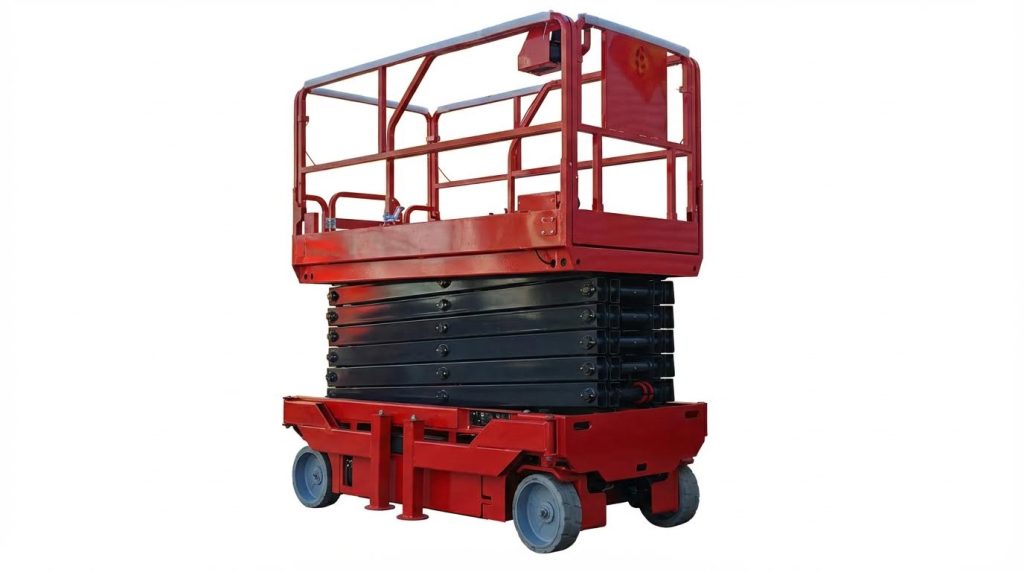
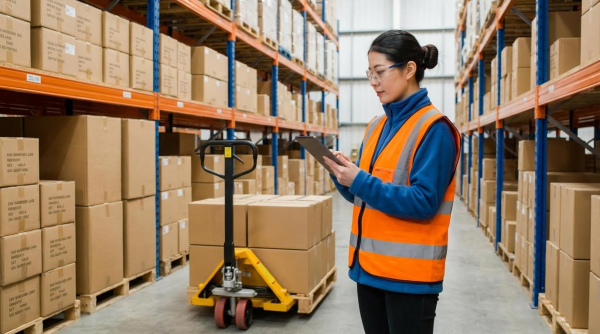
Future trends pointed toward deeper use of AI for dynamic slotting, batch formation, and travel optimization, as well as broader use of voice across receiving, replenishment, cycle counting, and quality control. Engineering teams needed to treat voice as part of a wider automation stack that might also include robotics, AMRs, and vision systems, not as a standalone tool. Practical implementation required robust wireless coverage, hardened or cold-rated mobile devices where necessary, clear cybersecurity controls, and lifecycle cost modeling that included device management and software maintenance. Overall, voice-directed picking represented a mature, scalable technology whose role would expand as warehouses pursued higher throughput, tighter service levels, and safer, more ergonomic work environments. For operations requiring additional support, solutions like warehouse order picker, scissor platform lift, and manual pallet jack can further enhance efficiency and safety.