Operations teams that ask how to improve picking in warehouse environments need a joined-up approach. This article covers how data-driven layout design, velocity-based slotting, and process redesign work together to cut travel time, raise pick accuracy, and stabilize labor productivity.
You will see how to map current flows, build velocity zones, set aisle widths, and separate picking from returns and consolidation. The slotting section explains ABC analysis, seasonal re-slotting, and how WMS rules and AI forecasts keep fast movers near dispatch. The process redesign section compares single, batch, zone, and wave picking, then links them with lean methods, ergonomic golden zones, and scan, voice, and light-directed systems. The final roadmap turns these ideas into a staged implementation plan that supports continuous improvement and scalable warehouse growth.
Data-Driven Warehouse Layout for Faster Picking
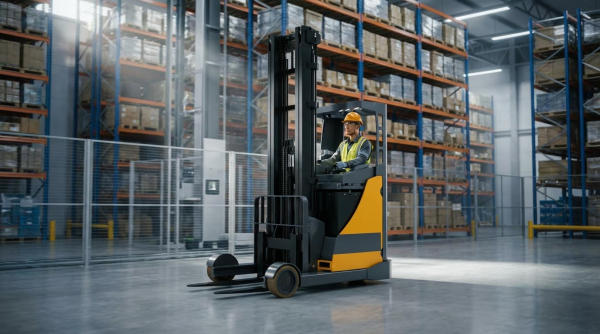
Engineers who ask how to improve picking in warehouse operations usually start with layout. A data-driven layout cut walking distance, removes conflict points, and supports clear flows from receiving to shipping. The goal is short, predictable picker paths with minimal backtracking. This section explains how flow mapping, velocity zoning, aisle design, and area separation work together.
Mapping Current Flows and Identifying Bottlenecks
Layout redesign should start with a factual picture of current flows. Use at least 6–12 months of order history to map where pickers actually walk, not where they should walk. Overlay heat maps on the floor plan to highlight high-traffic aisles, dead zones, and frequent cross-overs.
When studying how to improve picking in warehouse layouts, typical bottlenecks appear at: receiving–put-away intersections, narrow cross-aisles, and shared picking–returns areas. Time studies help quantify impact. Track metrics such as average meters walked per order, queuing time at choke points, and congestion during peaks. Use this data to rank issues by lost seconds per pick, not by opinion.
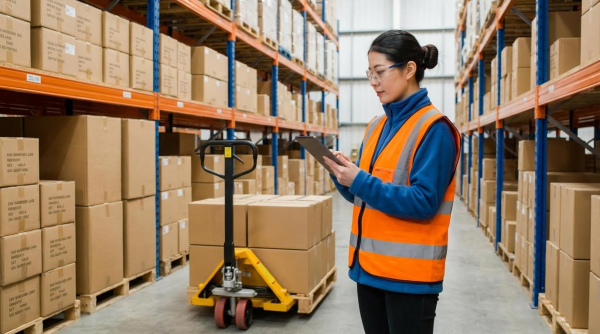
A simple improvement roadmap often includes: removing U-turns in main flows, eliminating “islands” that force detours, and aligning pick paths with pack and dispatch areas. Involve operators in walk-throughs. Their feedback often reveals micro-delays like waiting for manual pallet jack to be moved or scanners to reconnect.
Designing Velocity Zones and Travel Paths
Velocity zoning is one of the highest-impact answers to how to improve picking in warehouse operations. Classify SKUs by picks per period and create A, B, and C zones. Place A items closest to packing and dispatch to cut travel time.
A practical structure can use:
- A-zone: highest pick frequency, shortest paths, wider working space.
- B-zone: medium movers with standard access.
- C-zone: slow movers and bulky items, further from dispatch.
Design travel paths to minimize cross-traffic. One-way main aisles often reduce congestion and decision time. S-shaped or serpentine routes work well for batch and wave picking because they avoid backtracking. Ensure replenishment trucks use different paths or time windows than pickers to avoid interference.
Recalculate velocity zones regularly, at least quarterly or by season. Demand patterns shift, and static layouts slowly lose efficiency. Use WMS reports to trigger re-slotting tasks when SKUs cross velocity thresholds.
Aisle Widths, Racking Types, and Vertical Storage
Aisle and racking choices strongly affect how to improve picking in warehouse environments. They set the physical limits for travel speed, equipment type, and storage density. Engineers should balance throughput against capacity, not chase density alone.
| Configuration | Typical aisle width | Main use |
|---|---|---|
| Conventional forklift | 3.6–4.3 m | Mixed pallet and case pick |
| Reach truck | 2.4–3.0 m | Higher racking, moderate density |
| Very narrow aisle (VNA) | ≈1.8 m | High density, guided trucks |
Use single-deep racking for high-access SKUs and fast picking. Apply double-deep, drive-in, or push-back racking to reserve or slow-moving stock where selectivity is less critical. This mix keeps prime pick faces free for high-velocity items.
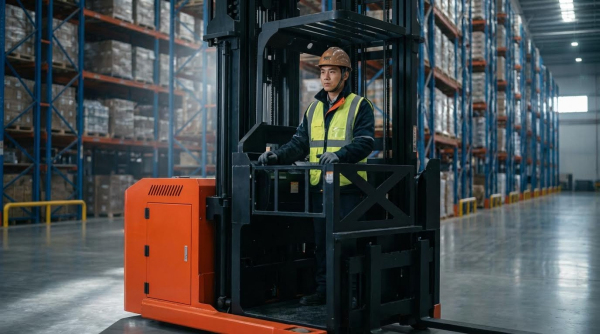
Vertical storage is essential where floor space is expensive. Place fast movers in the “golden zone,” roughly between 0.7 m and 1.6 m above the floor, to reduce bending and reaching. Store lighter, slow movers higher and heavy pallets lower. Verify that semi electric order picker, ceiling height, and sprinkler clearances support the chosen beam levels.
Separating Picking, Returns, and Consolidation Areas
Mixed flows are a hidden enemy when studying how to improve picking in warehouse operations. Returns, quality checks, and consolidation often steal space from primary pick paths. This creates confusion, mis-slots, and extra walking.
Design dedicated, clearly signed areas for:
- Picking: forward pick faces, ergonomic access, short routes to packing.
- Returns: inspection benches, quarantine locations, and rework space.
- Consolidation: staging for multi-line orders, sortation, and load building.
Physical separation does not always require walls. Floor markings, different rack colors, and distinct numbering ranges usually work. The key is to stop returns pallets or consolidation cages from blocking pick aisles.
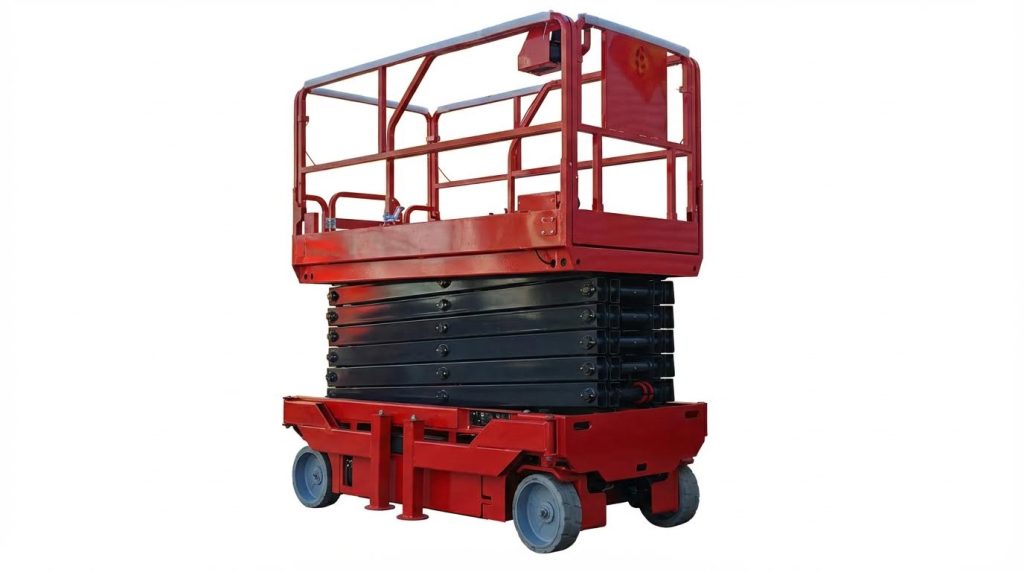
Link these areas with simple, one-direction flows. For example, returns move from dock to inspection to put-away, never through active pick aisles. Consolidation should sit downstream of picking and upstream of loading, with enough buffer space for peak waves. This structure keeps pickers focused on value-added walking and reduces error risk from mixed activities. Additionally, integrating tools like the scissor platform lift can enhance operational efficiency.
Slotting Strategy Using Velocity and Demand Patterns

Slotting design strongly affects how to improve picking in warehouse operations. A good slotting strategy cuts walking time, reduces search time, and raises pick accuracy. Engineers use demand data, SKU velocity, and handling method to place each item. This section explains how to build and maintain a slotting model that supports fast, flexible picking.
ABC Classification and Seasonal Re-Slotting
ABC analysis groups SKUs by movement speed and order frequency. A items generate the majority of picks and usually represent about one fifth of SKUs. B items move at a moderate rate, while C items move rarely and may include dead stock. This simple structure gives a clear base for how to improve picking in warehouse layouts.
Engineers place A items in the best locations. They sit close to dispatch, at waist to shoulder height, and in easy to reach pick faces. B items use secondary locations, while C items move to higher levels or deeper storage. This keeps prime locations free for the work that drives most labor time.
Seasonal demand changes the ABC mix. Operations teams should re-slot at least yearly, and often quarterly in seasonal sectors. They review one to two years of order history to see peaks and dips by SKU. Items that move from C to A during peak season shift into forward pick zones before demand rises.
Structured review cycles keep slotting current. A simple practice is to export WMS pick data, rank SKUs by lines picked, and compare against current locations. Any A item outside the primary pick zone becomes a relocation candidate. This routine limits travel and supports stable pick rates as the catalog evolves.
Positioning Fast Movers Near Dispatch Zones
Location of fast movers is central to how to improve picking in warehouse environments. Travel time often consumes most of a picker’s shift. Placing high velocity SKUs near packing and shipping areas cuts wasted walking.
Good layouts create clear velocity zones. The A zone wraps around the dispatch area with short, direct paths and minimal cross traffic. B and C zones sit further away and higher in the racking. Heavy but slow movers can sit low yet distant, while light fast movers hold the true golden positions.
Designers also match slot type to order profile. For high line-count e‑commerce, each-pick modules with small bins near dispatch work well. For case or pallet picks, fast movers belong in floor or lower-level pallet locations close to outbound docks. Mixed facilities often build separate forward pick areas for each pick mode.
Teams should measure average travel distance per order before and after re-slotting. A drop in steps per order or minutes per pick confirms gains. Simple heat maps of scan activity help validate that the hottest SKUs sit in the shortest paths. Over time, this supports higher throughput with the same labor.
Integrating WMS and Slotting Software Rules
Modern WMS platforms store the data needed for smart slotting. They track picks, replenishments, cube, and weight for every SKU. Slotting rules in the WMS or in add-on software then turn this data into location assignments. This digital layer is now a core part of how to improve picking in warehouse networks.
Rule sets usually combine velocity, cube, and handling needs. Typical rules include: keep A items in forward pick zones, keep heavy SKUs below shoulder height, and keep fragile items away from high-traffic corners. The system proposes locations that satisfy these rules while respecting rack capacity and pick method.
Many sites use a simple rule hierarchy: first assign A items to golden zone locations, then fill remaining golden slots with B items, then push C items to reserve. The WMS flags mis-slotted SKUs when their velocity class changes. Planners can then approve or adjust the suggested moves.
Integration also supports dynamic re-slotting. When demand shifts, the system updates velocity classes and highlights relocation tasks in the work queue. This avoids large, disruptive re-slot projects. Instead, small moves happen weekly as part of normal operations. The result is a layout that stays aligned with real demand.
AI and Machine Learning for Predictive Slotting
AI tools extend slotting beyond simple historical averages. They predict future demand by SKU and use that to suggest locations. This predictive view is powerful for how to improve picking in warehouse operations that face strong seasonality or frequent product launches.
Machine learning models read order history, promotions, and product life cycle data. They forecast which SKUs will become A movers in coming weeks. Planners can pre-position these items in forward pick zones before the volume spike. This reduces urgent re-slotting and protects service levels during peaks.
Advanced systems also consider congestion and path patterns. They spread very fast movers across multiple aisles to avoid traffic jams. Some algorithms group SKUs that often appear together on orders, reducing zigzag movement. Others support wave building by aligning slotting with route patterns.
To apply AI safely, engineers should treat it as decision support, not a black box. They validate forecasts with KPIs such as lines per hour, travel distance, and dock to stock times. Periodic reviews compare predicted and actual velocity classes. When tuned and governed well, AI-based slotting can lift pick productivity and space use without major physical changes.
Redesigning Picking Processes and Technologies
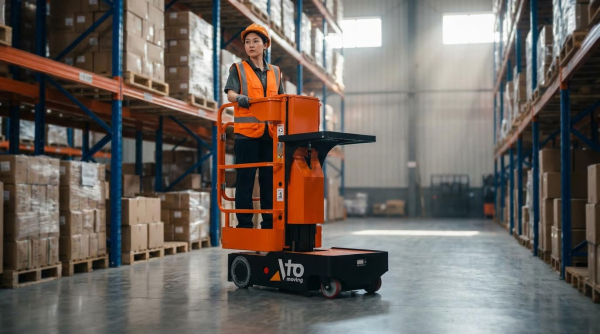
Knowing how to improve picking in warehouse operations required a full redesign of processes and technology. Engineers first analyzed order profiles, SKU velocity, and labor patterns. They then matched picking methods and tools to those patterns. The aim was higher units per hour with stable accuracy and safe ergonomics.
Choosing Between Single, Batch, Zone, and Wave Picking
Choosing the right method started with order structure and SKU commonality. Single order picking worked best for low-volume, high-value orders that needed very high accuracy. Batch picking reduced travel when orders shared many SKUs, especially in e‑commerce each-pick. Zone picking limited walking by fixing pickers in defined areas and handing orders between zones.
Wave picking grouped orders by carrier cut-off, shipping method, or area. This helped control dock workload and reduced congestion in hot zones. Engineers often combined methods, such as batch picking within zones or waves. The best mix depended on SKU count, order lines per order, and service level targets.
Lean Methods, Ergonomics, and Golden Zone Design
Lean methods focused on removing non-value steps from every pick. Teams mapped the pick path and removed double handling, waiting, and backtracking. They shortened walking distance by placing high-velocity SKUs in forward pick faces. Replenishment teams then fed these faces from reserve storage on a fixed schedule.
Ergonomics was central to how to improve picking in warehouse operations. Heavy or high-rotation items stayed between roughly 0.75 and 1.6 meters, the golden zone. This reduced bending, reaching, and shoulder strain. Engineers added simple aids such as tilt shelves, gravity flow racks, and cushioned flooring. These changes usually cut fatigue and error rates while keeping pick speed stable across shifts.
Scan, Voice, and Light-Directed Picking Systems
Digital guidance made picks faster and more accurate than paper lists. RF scan picking used handheld or wearable scanners to confirm location and SKU. This reduced mis-picks and fed real-time data to the WMS. Voice picking used headsets and microphones, leaving both hands free. It worked well in high-velocity case or each picking where operators repeated similar moves.
Light-directed systems used LEDs and displays at locations. They showed quantity and confirmed picks with a simple button press. These systems cut search time in dense pick modules. Selection between scan, voice, and light depended on order volume, SKU density, and budget. Hybrid setups were common, for example scan picking in reserve storage and light-directed picking in fast-mover zones.
KPIs, Dashboards, and Continuous Improvement Loops
Data closed the loop on how to improve picking in warehouse operations. Teams tracked core KPIs such as lines per hour, units per hour, and pick accuracy. They also watched order cycle time and labor cost per order. Dashboards made these metrics visible by shift, area, and picker. This revealed bottlenecks like slow zones or unbalanced work allocation.
Engineers then ran small trials, such as new slotting rules or different batch sizes. They compared before-and-after KPI trends instead of relying on opinion. Regular reviews with supervisors and operators turned this into a continuous improvement loop. Over time, these cycles locked in gains from new processes and technology and guided the next redesign phase. For instance, implementing tools like semi electric order picker, warehouse order picker, and order picking machines became essential in optimizing workflows.
Summary and Practical Roadmap for Implementation

Operations teams that ask how to improve picking in warehouse environments need a structured roadmap. The goal is to cut travel time, lift pick accuracy, and support higher throughput without chaos on the floor. This summary links layout, slotting, and process redesign into a practical sequence that engineers and managers can execute.
First, stabilize the physical flow. Map current travel paths, congestion points, and touchpoints from receiving to dispatch. Redesign the layout around velocity zones so A-movers sit closest to packing and shipping, with clear one-way paths and separated picking, returns, and consolidation areas. Use vertical storage and the right racking types to gain capacity before expanding footprint.
Next, industrialize slotting. Apply ABC analysis based on at least 12 months of demand where possible. Re-slot fast movers into golden-zone locations and near dispatch, and push C and D movers to higher or more remote positions. Integrate WMS rules so slotting logic stays dynamic, and plan seasonal or quarterly re-slotting cycles.
Then, redesign the picking method and technology stack. Match single, batch, zone, or wave picking to order profiles and SKU counts. Add scan, voice, or light-directed systems to reduce search time and verification errors. Track core KPIs such as lines per hour, travel time share, and mis-pick rate on live dashboards, and drive weekly improvement actions.
Finally, treat optimization as continuous. Use data to test small layout changes, new slotting rules, and revised waves before full rollout. Combine lean methods, ergonomic design, and selective automation such as warehouse order picker or dynamic racking where labor, space, or service levels justify investment. This balanced approach keeps the warehouse responsive as demand, product mix, and technology continue to evolve. For instance, integrating tools like an scissor platform lift or manual pallet jack can further enhance operational efficiency.