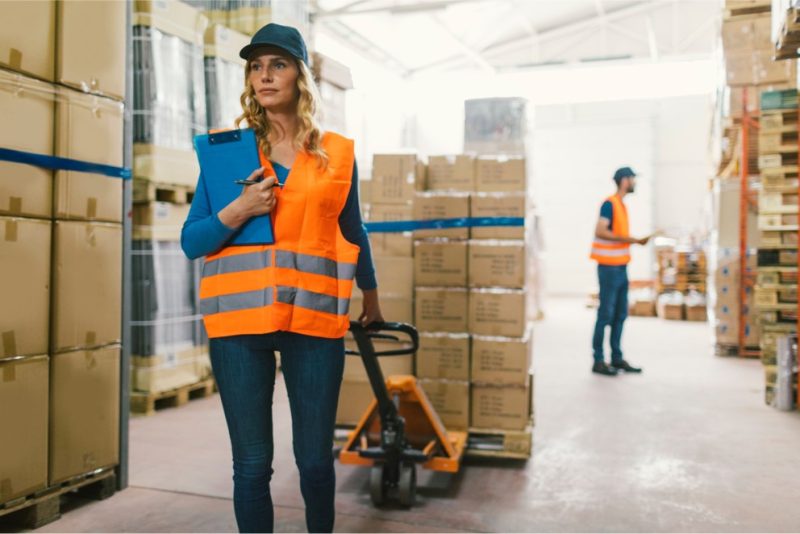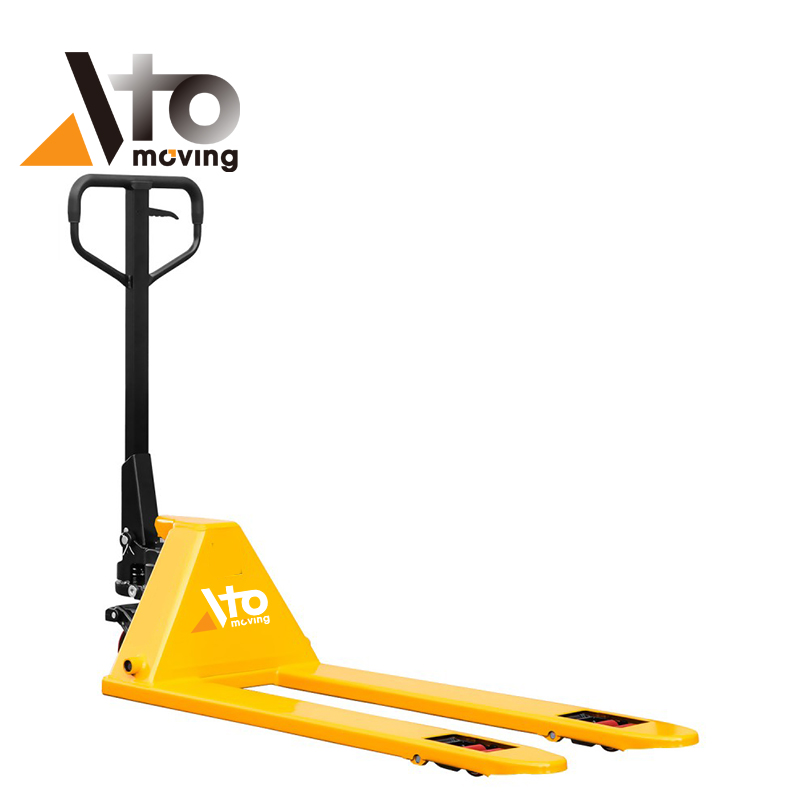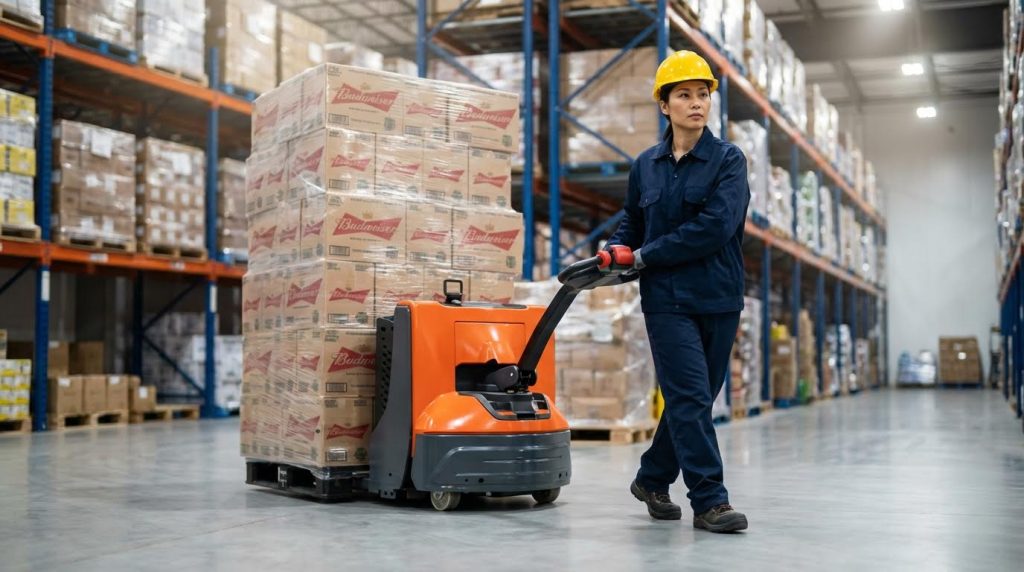
Facilities that ask how do you lift a pallet without a jack usually face tight budgets, space limits, or access constraints. This article explains how to judge when a pallet can be moved by people only, which low-tech tools work, and how to keep loads stable and workers safe.
You will see how to assess pallet weight, size, and floor conditions before any move. The methods section compares dollies, skates, roller crowbars, ropes, sheets, and DIY caster platforms to depalletizing and moving items one by one. A dedicated ergonomics section links body mechanics, task rotation, and load securing with OSHA and ANSI expectations. The final summary shows how to choose simple, repeatable pallet solutions that avoid forklifts and pallet jacks while staying within sound engineering and safety limits.
When You Can Safely Move A Pallet Manually
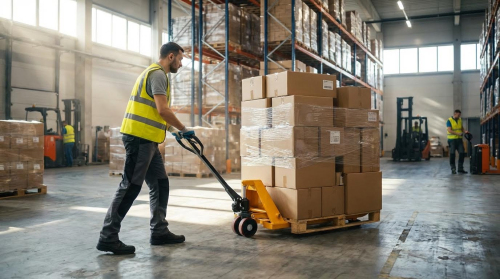
Supervisors often ask how do you lift a pallet without a jack while still meeting safety rules. The answer depends on load weight, pallet condition, floor quality, and travel distance. This section explains how to decide when manual movement is acceptable and when you must stop the job. It gives clear engineering-style checks that health and safety, maintenance, and warehouse teams can apply on the floor.
Assessing Load Weight, Size, And Stability
You cannot safely lift a full pallet by hand. Focus on sliding or rolling it instead. First, estimate pallet mass using known item weights or shipping data. If the total exceeds typical team lift limits, treat it as a push or pull task only.
Most ergonomics guidance treated 20–25 kg per person as a reasonable upper range for lifting. For horizontal pushing or pulling, safe limits depended on floor friction and handle height. Large pallets increased risk because the centre of gravity sat farther from the body. You should also check stability. Look for overhanging cartons, damaged boards, and stacked loads higher than the shortest handler’s shoulder. Unstable loads could topple even if the total weight seemed modest.
Use a simple rule set:
- Do not try to dead-lift a loaded pallet.
- Allow manual sliding only for short moves and moderate weights.
- Refuse movement if the load leans, bulges, or shifts when pushed.
Floor Conditions, Gradients, And Travel Distance
Even a light pallet becomes unsafe on a poor floor. Friction and slope change the required push force. Smooth, clean concrete allowed easier movement than rough or dirty surfaces. Wet, oily, or icy floors sharply increased slip risk and push effort.
Before you decide how do you lift a pallet without a jack, walk the full route. Check three points: surface, slope, and distance. Small gradients that looked harmless could double or triple the force needed to start and stop the pallet. Long routes increased fatigue and made loss of control more likely, especially on ramps.
Use practical limits:
- Keep manual pallet moves on level floors whenever possible.
- Avoid ramps unless you use mechanical aids like walkie pallet truck or skates.
- Keep manual travel distances short, for example within the same bay or nearby aisle.
Block off broken or uneven areas for pallet moves until repaired. Plan alternate routes rather than “making it work.”
Regulatory And Company Policy Constraints
Safety rules limited when you could move pallets by hand. OSHA required employers to keep workers free from recognized hazards such as overexertion and struck-by loads. ANSI and ITSDF standards gave guidance on safe manual truck and material handling practices, which also applied by analogy to low-tech pallet movement.
Most companies set internal weight and task limits that were stricter than laws. Typical rules included maximum load per person, mandatory team handling above set thresholds, and bans on manual handling for certain product types, such as fragile or hazardous goods. These policies often answered how do you lift a pallet without a jack by stating you do not, above a defined risk level.
Supervisors should:
- Know the site manual handling policy and numeric limits.
- Apply lower limits for new staff or workers with restrictions.
- Document exceptions and near misses to refine rules.
Local regulations could add extra constraints, especially on repetitive handling and young workers. Always treat the strictest rule as the standard.
When To Refuse Manual Movement Altogether
Some pallets are not candidates for manual movement at all. You should stop and request equipment in these cases. Clear refusal criteria prevent injuries and disputes on the floor. They also give a defensible answer when someone insists on “just dragging it.”
Refuse manual movement when:
- The pallet weight is unknown and could exceed safe push or pull limits.
- The load contains hazardous, high-value, or unstable materials.
- The route includes ramps, tight turns, or cluttered paths you cannot clear.
- The pallet is broken, wet, or visibly distorted.
- Only one worker is available for a clearly two-person job.
If you must still ask how do you lift a pallet without a jack in these conditions, the correct answer is that you do not. Instead, you bring in low-tech aids like manual pallet jack, roller crowbars, or depalletize and move items in smaller units. This approach aligns real-world practice with ergonomic guidance and regulatory duty of care.
Practical Methods To Move Pallets Without Trucks
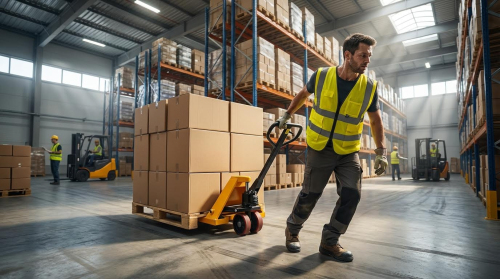
This section explains how to move pallets when you do not have forklifts or pallet jacks. It focuses on simple tools and low-tech methods that still control risk. The aim is to answer the search question how do you lift a pallet without a jack using practical engineering logic. Each method includes limits, typical use cases, and safety points.
Using Dollies, Skates, And Roller Crowbars
Dollies and machinery skates work well when the pallet is already raised slightly off the floor. They use sealed bearings to spread the load and cut rolling resistance. A roller crowbar can first lift one pallet edge by a few millimetres. You then slide a dolly or skate under the corner or side.
For light pallets, a single pallet dolly under the centre can carry the full load. For heavier pallets, place two skates under opposite sides to control stability. These tools work best on smooth, level floors with no gaps or drains. Avoid slopes because the low rolling resistance makes runaway loads more likely.
Roller crowbars give a strong mechanical advantage. The long handle converts small input force into enough lift to clear floor irregularities. Always keep feet clear of pinch points under the pallet and bar. Never exceed the rated capacity of the dolly, skate, or crowbar.
Rope, Sheets, And Other Low-Tech Pulling Methods
Low-tech pulling methods answer part of the question “how do you lift a pallet without a jack” by avoiding lifting altogether. You convert sliding friction into controlled pulling effort. A heavy-duty rope tied to the pallet stringers allows one or two workers to drag the load. This method suits short distances on flat, clean floors.
Sheets or heavy moving blankets under the pallet reduce friction. Furniture movers often used this trick for heavy items. For pallets, this only works if the underside is relatively smooth and the load is stable. The sheet must fully cover the footprint to avoid snagging.
Use these methods only for moderate weights that match your manual handling limits. Keep the pull line low to the floor to reduce tip-over risk. Workers should pull with their legs, not their backs, and avoid sudden jerks. Stop if the pallet starts to skew, dig into the floor, or damage packaging.
DIY Platforms With Castors And Lever Aids
DIY platforms with castors create a temporary low-height cart for pallets. A common approach uses a thick plywood board with four swivel castors fixed near the corners. The board must be stiff enough to limit bending under the pallet weight. Castors must have a combined rating above the full pallet mass with a safety margin.
To get the pallet onto the platform without a jack, use a lever such as a pry bar or roller crowbar. Lift one side just enough to slide the platform or a ramp edge under that side. Then repeat on the opposite side until the pallet sits fully on the board. Keep the lift height minimal to reduce drop risk.
This method is useful in tight rooms where trucks cannot enter. It also helps when you need to rotate or reposition a pallet during assembly or packing. However, it introduces extra steps and potential finger crush points. Only use high-quality castors suited to the floor type, and lock wheels during loading.
Depalletizing And Piece-By-Piece Transfer
When no safe lifting or rolling method exists, depalletizing is often the only defensible option. You break down the pallet and move items individually or in small units. This avoids the need to answer “how do you lift a pallet without a jack” at the full pallet weight. Instead, you design the task around safe manual handling limits.
Depalletizing works best when goods are in cartons, bags, or pails that one person can handle. You can then restack them on a new pallet closer to the destination. This method is slow and labour intensive, but it reduces catastrophic failure risk such as pallet collapse or tip-over. It also avoids dragging that could damage product or flooring.
Plan the sequence before you start. Keep the stack stable by working from top layers and opposite sides. Use simple aids such as step platforms for higher tiers and gloves for grip. If loads are irregular, strap or wrap them on the new pallet before any further movement.
Ergonomic And Safety Controls For Manual Handling

Ergonomic controls decide if you can answer “how do you lift a pallet without a jack” safely. Good technique, smart job design, and clear rules reduce strain when workers drag, lever, or unload pallets by hand. This section focuses on how to protect the spine, avoid fatigue, control unstable loads, and comply with OSHA and ANSI expectations.
Proper Body Mechanics And Team Lifting Rules
Workers should never try to lift a full pallet as one unit. Instead, they lift corners slightly for levers, shift boxes, or depalletize. The spine must stay as neutral as possible. Knees bend, hips flex, and the worker keeps the load close to the body. Feet stay shoulder width apart to keep balance and allow small steps instead of twists.
Twisting with a bent back is the fastest way to create back injuries. Workers should turn with their feet, keeping shoulders in line with hips. When a load or pallet section feels heavier than roughly 20–25 kilograms for one person, team lifting should be the default. Clear rules help. For example, any object above a defined site limit, or any awkward load wider than shoulder width, must use two or more people.
Team lifts need one leader who counts the lift and sets pace. Each worker grips firmly and keeps similar posture. This reduces uneven load sharing and sudden jerks that strain muscles.
Task Rotation And Fatigue Management
Even perfect technique fails if workers repeat heavy pulls or corner lifts for hours. Fatigue slowly reduces muscle control and reaction time. That increases the risk of slips, missed steps, and poor posture. Task rotation spreads high-strain work across the shift. For example, a worker may spend one period depalletizing, then switch to order picking machines or packing.
Supervisors should watch for early fatigue signs. These include slower movements, more “micro breaks,” and complaints of tight backs or shoulders. Short planned pauses are better than long injury absences. A simple pattern works well. After a block of intense manual pallet work, schedule a lighter task that uses different muscle groups.
When workers ask “how do you lift a pallet without a jack” late in a shift, the safe answer may be “you do not.” If fatigue is high or the path is long, managers should delay the task, add helpers, or choose a lower-force method such as using dollies or roller crowbars.
Securing Loads And Preventing Tip-Over
Unstable loads turn low-tech pallet moves into high-risk jobs. Before any manual move, workers should inspect the pallet. Look for broken boards, missing deck boards, or skewed stringers. Check if boxes, drums, or bags lean or overhang. If the stack looks uneven, depalletize the top layers until it is stable.
Key controls to prevent tip-over include:
- Keep heavier items low and centered on the pallet.
- Avoid tall, narrow stacks that raise the center of gravity.
- Use stretch wrap, straps, or nets when possible.
- Do not pull a pallet diagonally around tight corners at speed.
When workers drag pallets with rope or sheets, they must keep the line low to the ground. A high pulling point increases tipping risk. Workers should pull with steady force and avoid sudden tugs. If the pallet begins to skew or the load shifts, they must stop, re-center the load, and reassess the route.
Clear, dry floor paths also reduce tip-over risk. Clutter or wet patches can stop one corner of the pallet suddenly and create a pivot point.
Training, PPE, And Compliance With OSHA/ANSI
OSHA required employers to keep workplaces free from known hazards. That applied when workers asked “how do you lift a pallet without a jack” and then tried to drag or unload it by hand. ANSI and related standards described safe material handling practices and equipment use. Together, these frameworks pushed employers to control manual handling risks with training, procedures, and suitable aids.
Effective training programs cover:
- Risk assessment before touching a pallet: weight, stability, path, and distance.
- Neutral spine posture, knee flexion, and avoiding twists.
- Team lift rules and when to refuse a manual move.
- Correct use of simple aids such as roller crowbars, dollies, and ropes.
PPE supports, but does not replace, good technique. Typical items include gloves for grip and splinter protection, safety shoes with toe protection, and sometimes lumbar support belts if company policy allows. Regular refreshers keep skills sharp. Facilities that ran structured training and audits in the past reported fewer strains and fewer load shift incidents.
Written procedures should state when loads require mechanical help or service support. If no hydraulic pallet truck or truck is available and safe manual options do not exist, policy should allow workers to stop the job. This aligns with OSHA’s expectation that safety comes before speed or convenience.
Summary: Choosing Safe, Low-Tech Pallet Solutions
Safe answers to the question how do you lift a pallet without a jack always start with risk control. Workers should first check pallet weight, load stability, floor condition, and travel distance. If any factor looks marginal, they should switch to load reduction or mechanical aids instead of pure muscle power. This mindset keeps manual handling within safe limits and aligns with OSHA and ANSI guidance.
Low-tech tools can handle many light or moderate loads. Roller crowbars, dollies, skates, and DIY caster platforms can raise one pallet edge and then support the full load on wheels. Rope, sheets, or drag methods should stay as last-resort options and only on short, flat routes. For dense or awkward loads, depalletizing and moving items piece by piece is slow but often the safest method.
Future practice will rely more on ergonomic thinking than new gadgets. Facilities will set stricter manual weight limits, use team lifts more, and rotate tasks to cut fatigue. Simple aids like chocks, straps, and corner boards will stay important to prevent shifting and tip-over. Low-tech handling will still have a role, but engineers will keep pushing heavy and repetitive work toward powered or semi electric order picker solutions.