
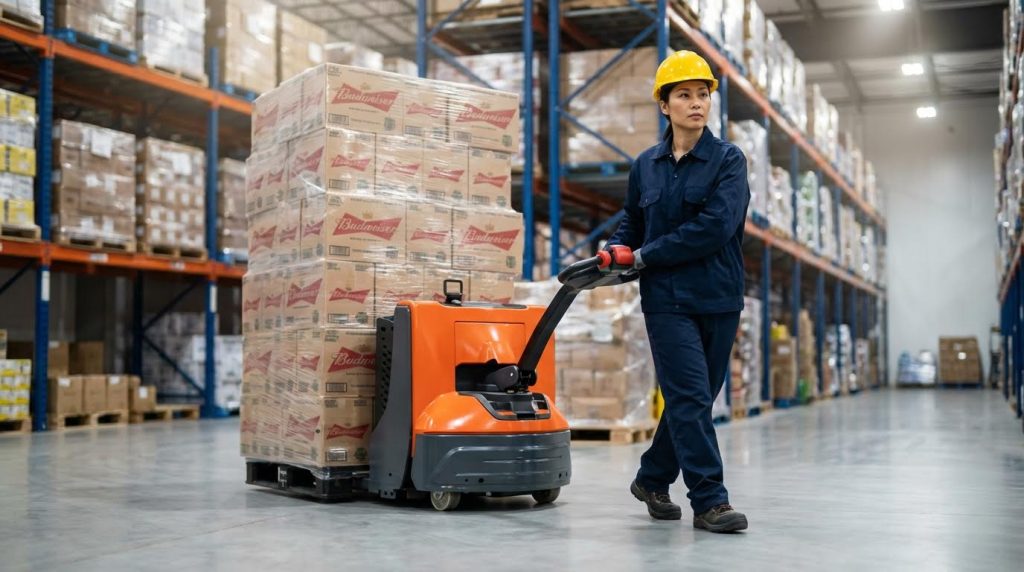
Whether a pallet jack is treated as “powered industrial equipment” depends on how it is built and driven. OSHA’s rules distinguish between simple hand pallet jacks and power‑propelled pallet jacks under its powered industrial truck standard, 29 CFR 1910.178. Understanding when a pallet jack becomes a powered industrial truck affects your training, inspections, and compliance strategy. This article explains how OSHA classifies pallet jacks, what that means for safety and certification, and how to choose the right unit for your facility. Along the way, it answers the key compliance question many safety managers ask: is a pallet jack considered a powered industrial truck under OSHA, and what changes when it is?
How OSHA Classifies Pallet Jacks And PITs
OSHA definition of a powered industrial truck
OSHA defined a powered industrial truck (PIT) as a mobile, power‑propelled vehicle used to carry, push, pull, lift, stack, or tier materials. This definition excluded equipment intended mainly for earth moving or over‑the‑road hauling. In practice, this meant that any pallet jack with an onboard power source for travel or lifting fell under the PIT rules in 29 CFR 1910.178. Understanding this definition is the first step in deciding “is a pallet jack considered a powered industrial truck” for your specific equipment mix. OSHA and related guidance also grouped powered industrial trucks into designations (D, E, G, LP, etc.) based on fuel type and their suitability for hazardous locations, with special EX‑rated units required where flammable vapors or combustible dusts were present under normal conditions powered industrial truck classifications and hazardous-location restrictions. These same PIT rules also tied into requirements for operator training, inspection, load handling, and stability, including the well‑known “stability triangle” concept for keeping the combined center of gravity within a safe support area during lifting and travel stability and operating rules in 1910.178.
Manual vs. electric pallet jacks under 1910.178

Under OSHA’s enforcement practice, a key distinction for “is a pallet jack considered a powered industrial truck” is whether the jack is powered or purely manual. A manual pallet jack relied entirely on the operator’s physical effort for both travel and lifting, so OSHA did not treat it as a powered industrial truck and did not require PIT operator certification for its use, even though basic safety training was still recommended for handling loads and avoiding strain injuries manual pallet jacks not classified as PITs. In contrast, electric pallet jacks (including walkie and rider types) used an onboard electric power source for travel and/or lifting, which brought them squarely under OSHA 1910.178 as powered industrial trucks PIT definition and scope. As a result, operators of electric pallet jacks had to complete PIT training and evaluation that combined formal instruction, hands‑on practice, and a documented performance evaluation, with refresher training at least every three years or sooner if conditions or performance changed training content and refresher requirements. Facilities therefore needed to classify each pallet jack type correctly—manual versus electric—so they could apply the right mix of PIT certification, daily inspection, and battery‑related safety controls required under 1910.178 for powered equipment.
Technical And Safety Implications Of PIT Classification
Design differences: manual, electric, rider pallet jacks
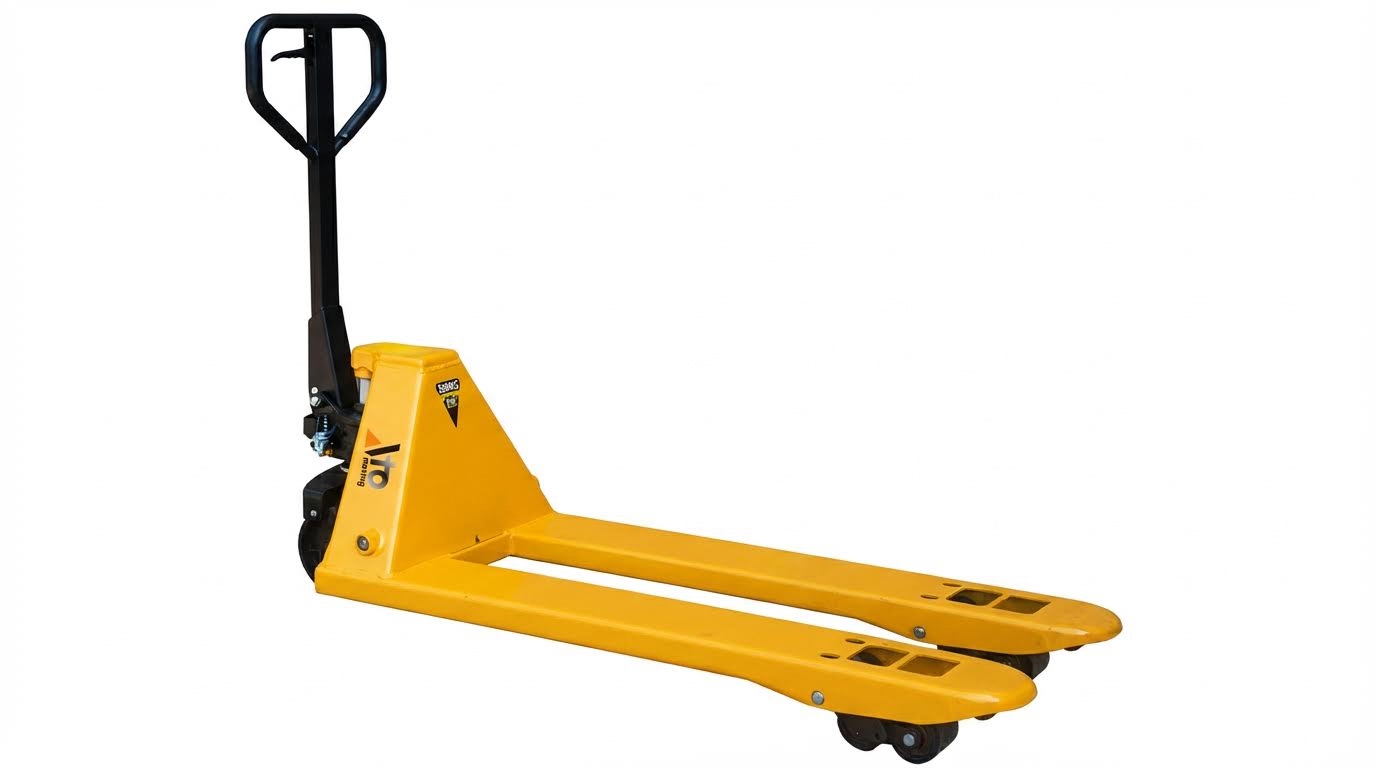
Whether is a pallet jack considered a powered industrial truck depends mainly on how it is propelled and controlled. Manual pallet jacks use a hand pump and human push/pull force, so they are not power‑propelled and fall outside OSHA’s powered industrial truck definition, which covers mobile, power‑driven vehicles used to carry, push, pull, lift, stack, or tier materials powered industrial truck is defined as a mobile, power-propelled vehicle. Electric pallet jacks add an onboard electric drive motor and battery, so travel and often lift are power assisted; this makes them powered industrial trucks under 1910.178. Rider pallet jacks extend this concept further with a standing platform, higher travel speeds, and more mass, which increases kinetic energy and braking distance.
- Manual pallet jacks: Human-powered travel and lift, simple hydraulics, low travel speed, and minimal electrical components.
- Electric walkie pallet jacks: Electric traction and usually powered lift, integrated control handle, electronic braking, and battery pack.
- Rider pallet jacks: Operator platform, higher-speed traction system, more complex controls, and greater stability and visibility demands.
Because electric and rider pallet jacks are PITs, they must also meet design and use restrictions that apply to powered equipment in hazardous atmospheres and classified locations powered industrial trucks are categorized into eleven designations.
Training and certification requirements by equipment type
OSHA’s PIT rule requires that any operator of a powered industrial truck receive formal instruction, practical training, and an evaluation of competence before operating the equipment in the workplace operators must receive training that includes both formal instruction and practical exercises. Because electric and rider pallet jacks are powered industrial trucks, employers must certify operators on each type and model they will use. Training must cover truck-related topics (controls, capacity, stability, stopping distance) and workplace conditions (aisle layout, grades, dock edges, pedestrian traffic) and be refreshed at least every three years or sooner if conditions or performance change refresher training is required every three years or sooner.
| Equipment type | PIT status | OSHA certification required? | Typical training focus |
|---|---|---|---|
| Manual pallet jack | Not power‑propelled | No PIT certification, but safety training recommended | Ergonomics, load stability, pedestrian awareness |
| Electric walkie pallet jack | Powered industrial truck | Yes, under 1910.178 | Controls, braking, turning radius, ramps, docks |
| Rider pallet jack | Powered industrial truck | Yes, under 1910.178 | Speed control, visibility, platform position, traffic rules |
In practice, this means that when a facility asks “is a pallet jack considered a powered industrial truck,” the answer splits by design: manual units need documented safe-use instruction, while electric and rider units require full PIT certification. Proper training reduces collision and tip risks and helps maintain compliance, avoiding citations and unplanned downtime.
Inspection, maintenance, and battery safety for electric jacks
Because electric pallet jacks are PITs, OSHA expects the same inspection and maintenance discipline used for forklifts. Powered industrial trucks must be inspected at least daily, or at the start of each shift if used around the clock; any unsafe condition must be reported and corrected before the truck returns to service industrial trucks must be inspected at least daily. Typical pre‑use checks for electric and rider pallet jacks include:
- Controls, horn, and emergency reverse button.
- Brakes and deadman features.
- Forks, wheels, and load backrest (if equipped).
- Battery charge level, cables, connectors, and visible leaks or damage.
Battery charging areas for electric pallet jacks must be designated and equipped to control electrolyte and gas hazards, with spill neutralization materials, fire protection, and ventilation to disperse fumes; smoking and open flames are prohibited in these zones battery charging installations must be located in designated areas with facilities for neutralizing spilled electrolyte. Good practice includes securing batteries against movement, keeping metallic tools away from uncovered terminals, and training operators on emergency response for leaks and exposures safe charging practices include banning smoking near battery charging areas. These inspection and battery-safety requirements are a direct consequence of the equipment’s PIT classification and are central to safe, reliable operation in any warehouse or production environment.
## Selecting The Right Pallet Jack For Your Facility
Matching pallet jack type to load, aisle, and duty cycle
Start selection by clarifying how the pallet jack will actually work: load, distance, and hours per shift. Manual jacks suit lighter loads, short moves, and low daily hours. Electric walkies and riders handle heavier loads, higher throughput, and longer travel distances, and in that context is a pallet jack considered a powered industrial truck becomes a key compliance question because powered units fall under OSHA’s powered industrial truck rules for mobile, power‑propelled vehicles used to carry, push, pull, lift, stack, or tier materials.
- Load and pallet characteristics
- Define typical and peak load weights and pallet types (stringer, block, CHEP-style, etc.).
- Keep a safety margin between rated capacity and your heaviest expected load.
- For frequent near-capacity handling, prefer electric units to reduce operator strain.
- Aisle width and layout
- Measure clear aisle width at the narrowest points (racks, columns, dock edges).
- Manual and walkie jacks fit tighter aisles; rider jacks need more turning radius.
- In congested docks or trailers, short-head walkies often provide the best control.
- Duty cycle and environment
- Estimate hours of operation per shift and number of shifts.
- High-duty, multi-shift operations usually justify electric jacks with spare batteries and charging areas, which must meet OSHA requirements for safe battery charging installations including ventilation, fire protection, and electrolyte spill control.
- In classified hazardous locations, only trucks with appropriate designations (such as EX for continuous flammable atmospheres) are permitted under 29 CFR 1910.178.
Quick comparison: manual vs. electric pallet jacks
| Factor | Manual pallet jack | Electric pallet jack (walkie / rider) |
|---|---|---|
| Typical use | Light–moderate loads, short runs | Heavier loads, longer runs, higher throughput |
| OSHA PIT status | Not a powered industrial truck; no PIT certification required but training still recommended | Classified as a powered industrial truck; full PIT training and evaluation required under 1910.178 |
| Capex | Low | Higher |
| Operator effort | High at heavier loads | Low–moderate |
Safety, TCO, and compliance considerations in procurement
When you evaluate total cost of ownership (TCO), include much more than purchase price. For powered units, factor in batteries, chargers, periodic replacement, and planned downtime for inspections and preventive maintenance, which OSHA required employers to complete at least daily or once per shift in continuous-use operations with defects corrected before the truck is returned to service.
- Safety and training costs
- For electric pallet jacks, budget for initial and refresher PIT training that combines formal instruction, hands-on practice, and evaluation as required by OSHA.
- Training time is an investment but reduces injuries and improves productivity for powered pallet trucks.
- Even though manual jacks are not PITs, include basic handling and ergonomics training to cut strain injuries.
- Compliance and environment
- Verify whether your electric pallet jacks will ever operate in enclosed or poorly ventilated areas, where OSHA required employers to control carbon monoxide and other emissions from powered industrial trucks within regulated limits.
- Plan compliant charging areas with spill control, fire protection, and “no smoking” controls for battery installations.
- Confirm truck classification (e.g., EX, EE, etc.) if you handle flammable vapors or combustible dusts because only specific designations are allowed in hazardous atmospheres.
- Lifecycle and utilization
- Size the fleet so utilization stays high but not so high that maintenance backlogs grow.
- Track hours and conditions to schedule preventive maintenance before failures and unplanned downtime.
- Revisit whether each powered pallet jack is a pallet jack considered a powered industrial truck under your current use case, and keep documentation of operator certifications aligned with that status.
Key Takeaways On Pallet Jacks As Powered Equipment
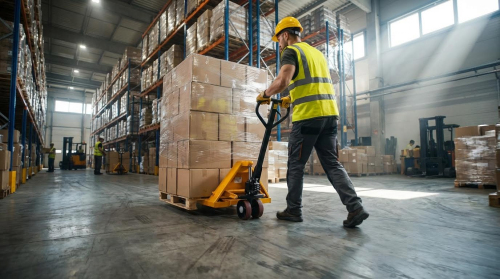
OSHA’s line is clear. The moment a pallet jack uses onboard power for travel or lift, it becomes a powered industrial truck. That change drives everything that follows. You must provide PIT training and evaluation, daily inspections, and battery‑safe charging areas. You must also match truck designations to any hazardous locations on site.
Manual pallet jacks sit outside 1910.178, but they still carry risk. Poor load handling and bad ergonomics lead to strains, crush points, and product damage. Basic training, clear traffic rules, and realistic load limits keep these risks under control.
For electric and rider pallet jacks, speed, mass, and stored energy raise the stakes. Good practice links equipment choice, operator training, and layout design. Wide enough aisles, marked pedestrian routes, and controlled dock areas help operators keep the combined center of gravity stable and avoid tip or collision events.
The best approach is simple. Classify every pallet jack in your fleet. Tie each type to the right training, inspection, and maintenance program. Then select new equipment on total cost of ownership, not price alone. Facilities that follow this method turn OSHA’s PIT rules into a framework for safer, faster, and more reliable material flow with Atomoving pallet jacks.
Frequently Asked Questions
Is a pallet jack considered a powered industrial truck?
Yes, a pallet jack is considered a powered industrial truck (PIT) according to OSHA standards. Electric pallet jacks fall under the same category as forklifts and require certification and training under OSHA regulation 29 CFR 1910.178. Pallet Jack Certification Guide.
What is included in the term “powered industrial truck”?
Powered industrial trucks (PITs) include equipment like forklifts, tractors, platform lift trucks, motorized hand trucks, and other specialized industrial trucks powered by electric motors or internal combustion engines. However, they exclude compressed air or nonflammable compressed gas-operated trucks and farm vehicles. Powered Industrial Truck Definition.
What is the difference between manual and electric pallet trucks?
Manual pallet trucks are operated by hand, while electric pallet trucks are powered by electric motors. This distinction determines whether they are classified as non-powered or powered industrial equipment. Manual vs. Electric Pallet Trucks.