Understanding how long a pallet truck license remains valid is critical for safety, legal compliance, and smooth warehouse operations. This guide explains exactly how long a pallet truck license typically lasts, what “certification” really means in OSHA terms, and how global standards handle validity and renewal. You will see how long does a pallet truck license last under different regulations, what events can cut that period short, and how to structure renewals so operators stay competent and audits stay clean.
What A Pallet Truck License Covers And How Long It Lasts
Pallet truck license vs. OSHA “certification”
In most facilities, a “pallet truck license” is really the employer’s proof that an operator completed OSHA-compliant training and evaluation for powered industrial trucks, including manual pallet jack. OSHA does not issue licenses or cards; it requires employers to train, evaluate, and then certify in writing that each operator is competent for the specific equipment and conditions. For powered pallet trucks, that training must cover truck-specific topics such as controls, capacity, and stability, as well as workplace topics like surface conditions, load types, and pedestrian traffic OSHA powered industrial truck training. When people ask “how long does a pallet truck license last,” they are really asking how long this employer-issued certification remains valid before OSHA requires re-evaluation.
What the employer’s certification must show
OSHA requires the employer to keep a record confirming the operator’s name, the training date, the evaluation date, and the name or identity of the person who performed the evaluation OSHA certification documentation. This record is what most companies refer to as the “license” for pallet truck operation.
Standard validity periods by country and standard
Under OSHA rules for powered industrial trucks, including powered pallet jacks, the certification is valid for a maximum of three years, provided there are no trigger events that require earlier retraining and evaluation 3‑year PIT certification validity. A formal performance evaluation must occur at least once every three years to keep that certification current OSHA 29 CFR 1910.178(l)(4)(iii). This three‑year cycle is the practical answer in the U.S. when deciding how long does a pallet truck license last for compliant operators.
| Region / Standard | Typical validity for pallet truck / PIT certification | Notes |
|---|---|---|
| United States (OSHA) | Up to 3 years | Performance evaluation required at least every 3 years; earlier retraining after incidents or unsafe operation Pallet jack certification period |
| Canada (CSA B335) | About 3 years | Re‑evaluation recommended every 3 years, with earlier retraining after accidents or workplace changes Canadian recertification guidance |
| United Kingdom | 3–5 years (typical practice) | No fixed legal expiry, but refresher training is commonly scheduled every 3–5 years or after an incident UK refresher practice |
| Australia (HRW licence) | 5 years | High Risk Work licences for similar equipment are valid 5 years and must be renewed, with reassessment if lapsed over 12 months Australian HRW licence period |
| Spain (UNE standards) | About 5 years (recommendation) | Renewal recommended every 5 years for similar industrial equipment, or earlier after role or machinery changes UNE renewal recommendations |
Across these regions, the common engineering and safety principle is that pallet truck skills and site conditions change over time, so certifications cannot be treated as lifetime credentials. Most employers therefore adopt a three‑year internal cycle for pallet truck licenses, even where local law allows longer intervals, and bring operators back sooner if there are accidents, near misses, or major changes in equipment or layout.
Renewal Triggers, Refresher Training, And Compliance Control
OSHA 3‑year cycle and early renewal events
For anyone asking how long does a pallet truck license last, OSHA ties the maximum validity of powered industrial truck certification, including powered pallet jacks, to a three‑year cycle. A formal performance evaluation is required at least once every three years for each operator to confirm continued competence under OSHA 29 CFR 1910.178(l). Certification for powered industrial trucks is valid for a maximum of three years. In practice, many safety managers align all pallet truck evaluations on a rolling three‑year matrix to simplify scheduling and audit readiness.
However, the full three‑year term only applies if no “trigger events” occur. OSHA requires immediate refresher training and re‑evaluation when there is unsafe operation, an accident or near miss, assignment to a different type of truck, or significant changes in workplace conditions that affect safe operation. These trigger events can shorten the practical life of a license well below three years. This means the real answer to how long does a pallet truck license last is “up to three years, unless risk or performance issues force earlier renewal.”
Typical early renewal triggers for pallet truck operators
- Documented unsafe driving or near‑miss behaviour.
- Involvement in an incident causing damage or injury.
- Move from manual/low‑level pallet trucks to ride‑on or high‑lift models.
- Reconfiguration of racking, aisles, or traffic routes changing risk profile.
Technical content of refresher training and evaluation
Refresher training for pallet truck operators must be task‑specific and truck‑specific, not just a generic safety talk. OSHA expects coverage of both truck‑related topics (controls, instrumentation, rated capacity, stability) and workplace‑related topics (surface conditions, load types, stacking patterns, and pedestrian interaction). Training for powered pallet trucks must be specific to each type of truck and the conditions of the workplace. This is critical when operations change from low‑throughput to high‑density, high‑traffic environments.
The refresher process usually has three technical components that determine how long does a pallet truck license last in practice:
- Theory update: Short classroom or e‑learning session on stability principles, capacity plates, speed control, and current site rules.
- Written test: A knowledge check that confirms the operator understands safe operating limits and new procedures. Renewal processes typically include a written exam.
- Practical evaluation: Hands‑on assessment in the real or simulated workplace to verify low‑speed control, load handling, parking, and pre‑use checks.
OSHA requires that operator performance be evaluated at least once every three years, and that any deficiencies trigger targeted retraining before the operator continues work. The three‑year evaluation rule is set out in 29 CFR 1910.178(l)(4)(iii). Well‑designed refresher programmes therefore focus on the specific gaps observed in behaviour, incident reports, or near‑miss data, rather than repeating a full novice course.
Example refresher content map for pallet truck operators
| Module | Focus | Typical Duration |
|---|---|---|
| Stability & capacity | Load centres, gradients, stacking height limits | 30–45 minutes |
| Site‑specific rules | Routes, speed limits, pedestrian zones, charging areas | 30 minutes |
| Practical skills | Maneuvering, tight aisles, pallet entry/exit, parking | 1–2 hours |
Recordkeeping, audits, and avoiding OSHA violations
From a compliance standpoint, how long does a pallet truck license last is only as good as the employer’s documentation. OSHA requires employers to certify that each operator has been trained and evaluated, and to keep records showing the operator’s name, training date, evaluation date, and the identity of the trainer or evaluator. Certification records are mandatory proof that training and evaluation occurred. Without this paper trail, even a recently trained pallet truck operator may be treated as “untrained” during an inspection.
Recent enforcement data showed that the top forklift‑related OSHA violations included failures to ensure competency training, failures to certify training, and failures to evaluate operator performance every three years. Hundreds of violations were issued for missing or inadequate training documentation in a single fiscal year. To avoid similar issues, safety managers should:
- Maintain a central register of all pallet truck operators with certification and evaluation dates.
- Use automated reminders 60–90 days before the three‑year mark to plan refresher sessions.
- Log all trigger events (accidents, near misses, role changes) and link them to retraining records.
Robust recordkeeping not only protects against fines and legal exposure; it also provides hard data to answer how long does a pallet truck license last in your specific facility. When auditors can see a clear pattern of three‑year evaluations, prompt post‑incident retraining, and competent trainers, they are far less likely to escalate findings or question the integrity of your pallet truck safety programme.
Engineering, Operations, And Technology Factors In License Strategy
Matching license scope to truck types and duty cycles
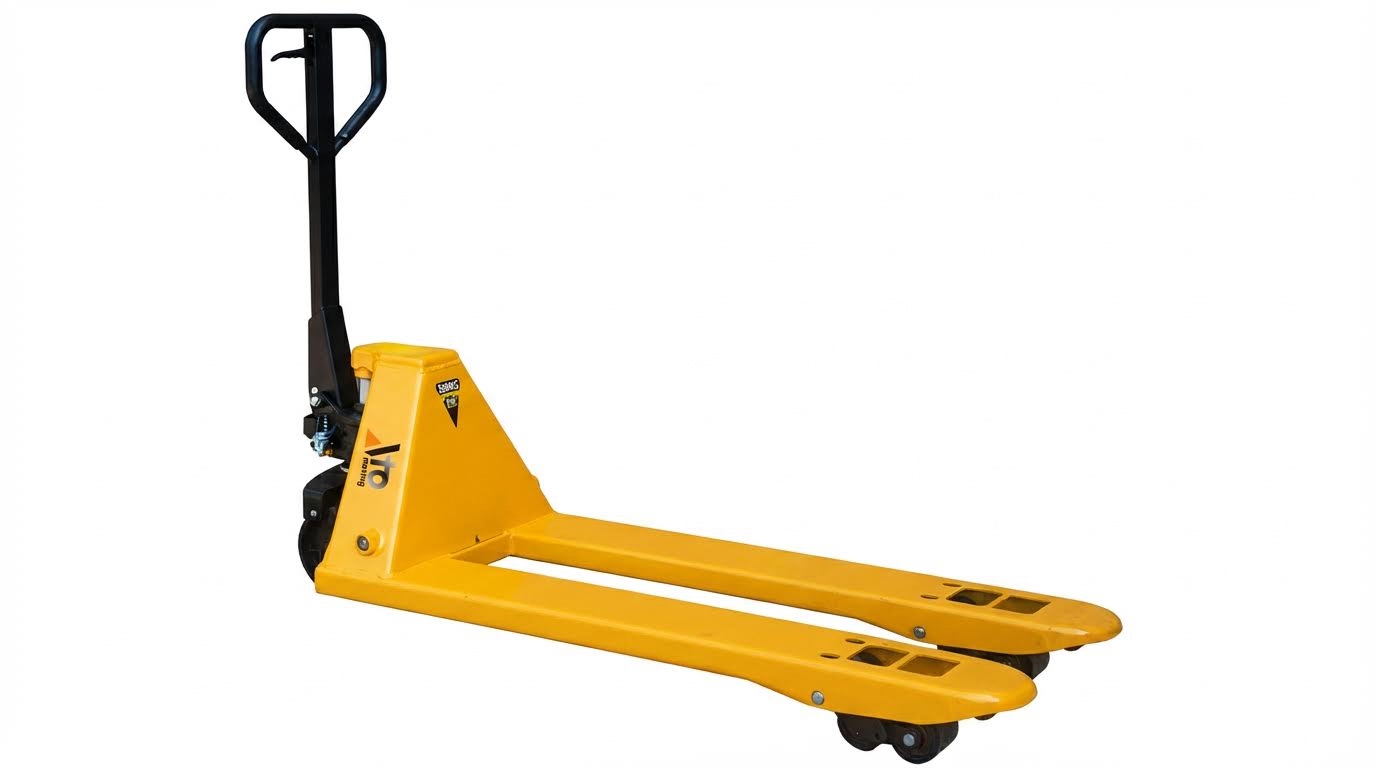
When companies ask how long does a pallet truck license last, the better engineering question is whether the license actually matches the risk profile of the equipment and duty cycle. OSHA treats pallet trucks as powered industrial trucks, so certification must be specific to each type of truck the operator uses, including differences in controls, capacity, and stability characteristics. Training must cover both truck-related and workplace-related topics, so a “generic” license that ignores gradients, floor conditions, or load types is not technically adequate.
- Use separate license scopes for key classes such as walkie pallet trucks, rider pallet trucks, and high‑lift pallet stackers with different centers of gravity.
- Increase training depth and renewal frequency for high-duty applications such as multi‑shift cold storage, cross‑dock operations, or tight‑aisle loading where fatigue and congestion raise incident probability.
- Trigger early re‑evaluation when operators move to trucks with different steering geometries, braking characteristics, or rated capacities, even if the nominal three‑year certification period has not expired. Assignment to a different type of powered industrial truck is an explicit retraining trigger.
Practical structuring tips
Define internal “license categories” that align with your fleet, for example: low‑level order picking, dock work, in‑rack handling, and yard transfer. Map each job to the minimum category and duty cycle, then align evaluation intervals so that high‑risk categories are observed and refreshed at the short end of the 3–5 year guidance window recommended for powered pallet trucks.
Impact of Li‑ion, AGVs, and high‑density storage on training
Modern powertrains and storage systems change the answer to how long does a pallet truck license last because they introduce new behaviors and hazards that did not exist in older fleets. Lithium‑ion trucks typically have different acceleration, regenerative braking, and opportunity‑charging patterns, which affect stopping distances, cornering behavior, and traffic around charging points. Automated and semi‑automated guided vehicles reduce direct driving tasks but add interface risks around hand‑off zones, maintenance modes, and mixed traffic with pedestrians and manual trucks. High‑density storage systems, such as very‑narrow‑aisle or deep‑lane layouts, increase the consequences of minor operator errors due to tighter clearances and higher racking.
- Build technology‑specific modules into initial and refresher training whenever you introduce new energy systems or automation, rather than waiting for the three‑year maximum certification interval allowed for powered industrial truck operators.
- Treat significant changes in storage layout, aisle width, or traffic patterns as “workplace condition changes,” which are recognized triggers for immediate retraining and re‑evaluation, not just for forklifts but also for powered pallet trucks. OSHA guidance lists workplace changes as events requiring refresher training.
- Include human‑machine interaction topics in your license scope for sites using AGVs: safe crossing rules, visual and audible warning systems, and procedures for stopping or isolating vehicles during jams and maintenance.
Adapting refresher depth to technology level
Where fleets rely mainly on conventional lead‑acid walkies in simple floor‑storage layouts, a standard 3‑year evaluation cycle with concise refreshers may be sufficient. As Li‑ion, AGVs, and high‑density systems are added, increase practical exercises on speed control, visibility, and emergency procedures, and shorten internal refresher intervals toward the lower end of the 3–5 year range commonly used for pallet truck training.
“”
Summary: Building A Robust Pallet Truck Licensing Policy
A robust pallet truck licensing policy treats “how long the license lasts” as a risk decision, not just a date on a card. OSHA and global standards give a three‑ to five‑year outer limit, but engineering practice shows that truck type, duty cycle, and site complexity must tighten that window. High‑duty, tight‑aisle, or cold‑store operations need deeper, more frequent evaluations than low‑risk dock work.
Safety and compliance depend on three pillars working together. First, truck‑ and site‑specific training that matches controls, capacity, gradients, and traffic patterns. Second, a structured renewal model that combines the three‑year OSHA cycle with automatic retraining after incidents, near misses, equipment changes, or layout changes. Third, disciplined recordkeeping that proves every operator was trained, evaluated, and re‑evaluated on time.
Operations and engineering teams should define clear internal license categories, map them to each Atomoving pallet truck type and application, and set default three‑year evaluations with shorter intervals where risk is higher. They should also embed technology‑specific modules for Li‑ion systems, AGVs, and high‑density storage. When you align training scope, renewal triggers, and documentation with real operating risk, the “license duration” becomes a controlled safety tool rather than a compliance guess.
Frequently Asked Questions
How long does a pallet truck license last?
A pallet truck certification typically remains valid for three years. Before it expires, operators must undergo an employer-led evaluation to renew their certification. It is recommended that operators complete retraining every three years to ensure safety and compliance. Pallet Jack Certification Guidelines.
Do you need training to use an electric pallet truck?
Yes, proper training is essential for using an electric pallet truck safely. Operators should be trained on the equipment’s controls, load capacity, and safety protocols to prevent accidents in the workplace. Electric Pallet Truck Training Tips.
What factors affect the lifespan of an electric pallet truck?
The lifespan of an electric pallet truck depends on several factors:
- Frequency of Use: Daily use in high-demand environments leads to more wear and tear.
- Maintenance: Regular servicing can extend the equipment’s operational life.
- Battery Type: Lithium-ion batteries last longer (up to 10 years) compared to lead-acid batteries (5 to 8 years).