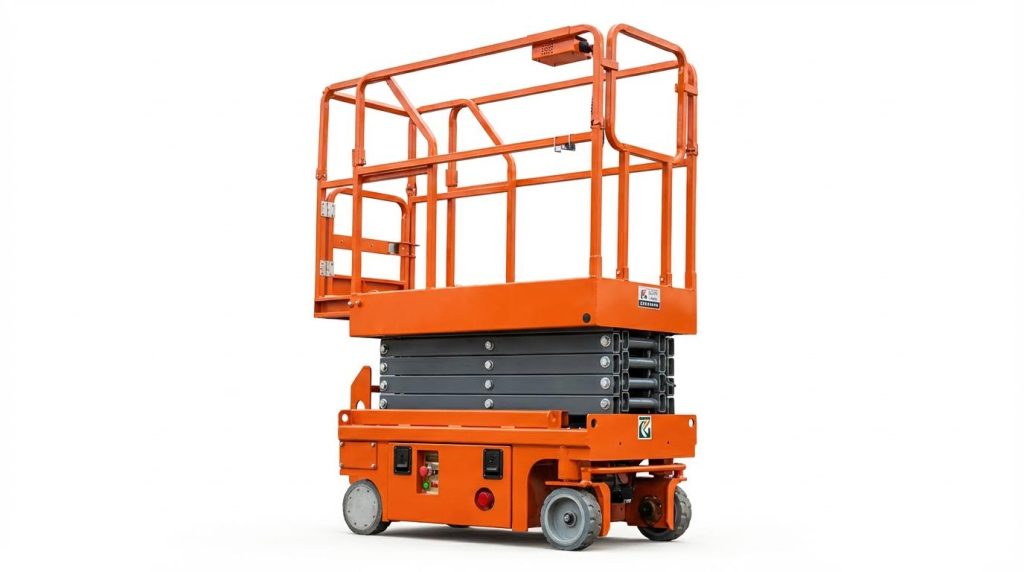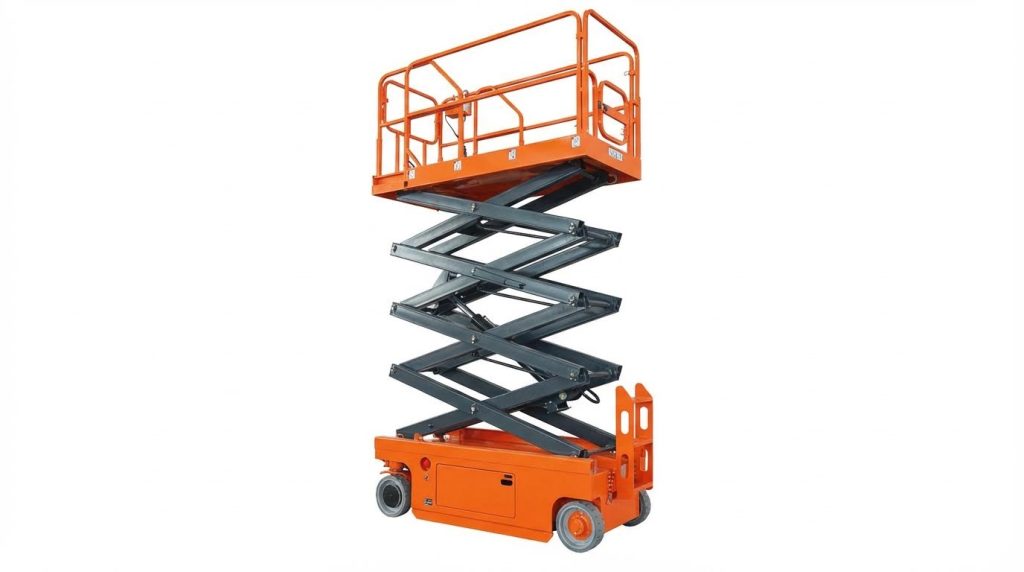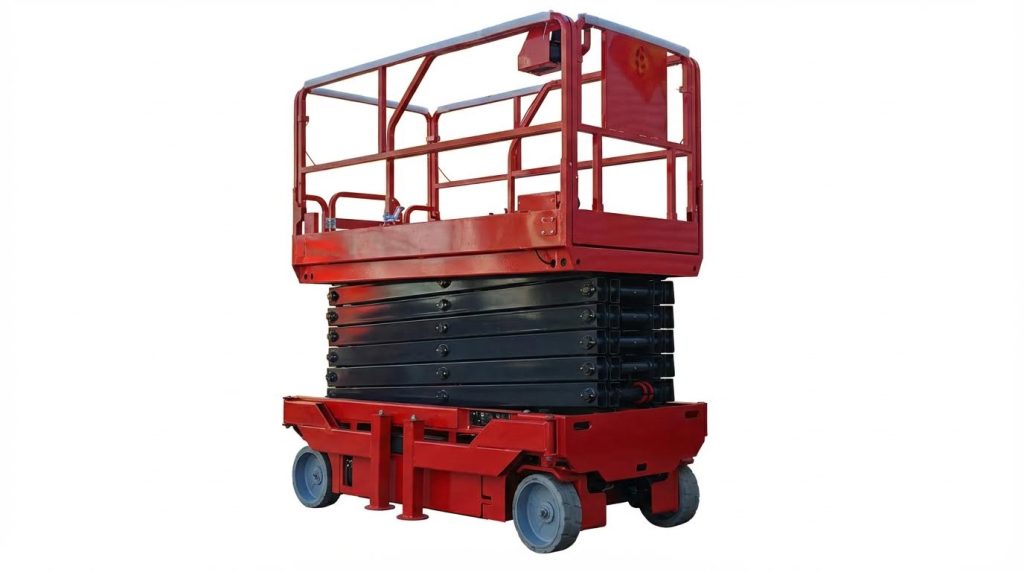
Scissor lift tables can handle standard pallets safely when platform size, interface geometry, and load capacity are correctly matched to pallet dimensions and handling equipment. This guide explains how to specify and operate lift tables so standard pallets stay stable, ergonomic, and compliant in real-world warehouses and production lines. You will see how platform sizing, ramps, U-shaped decks, and loading methods affect safety, and how to decide if scissor lifts can work with standard pallets in your specific operation. By the end, you will know exactly when and how can scissor lifts work with standard pallets without compromising safety or throughput.
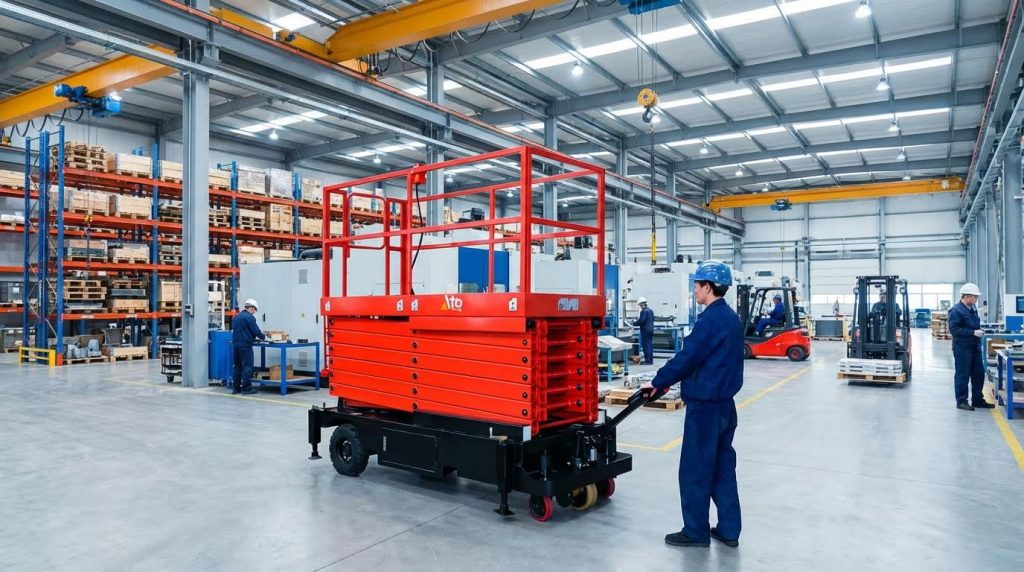
Core Design Factors For Pallet Compatibility
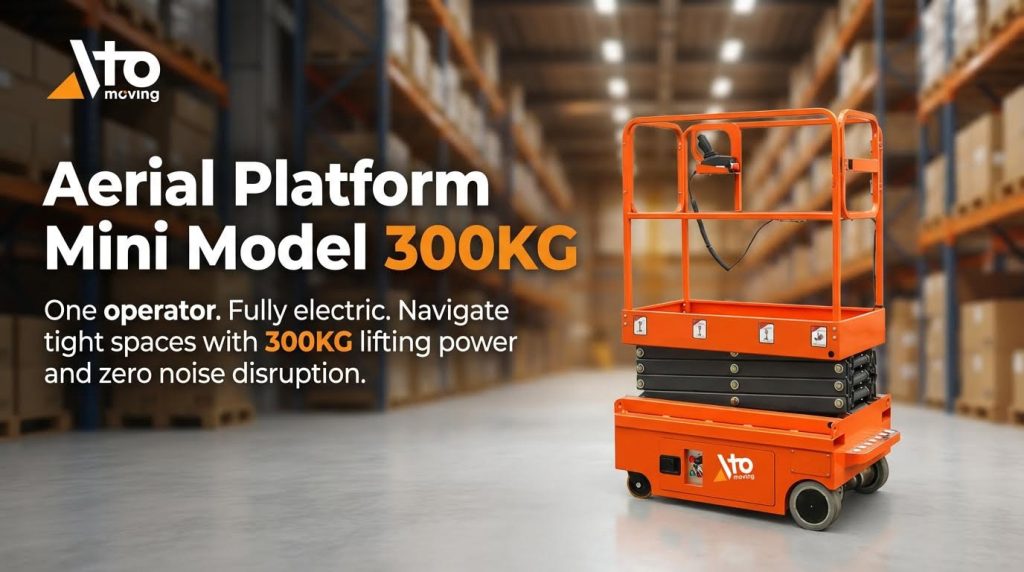
Core design factors for pallet compatibility define whether scissor platform lift tables can work with standard pallets safely, consistently, and without damaging pallets, loads, or the lift itself.
When people ask “can scissor lifts work with standard pallets,” the real answer depends on platform geometry, edge design, and structural stiffness, not just the nameplate capacity.
Matching platform size to pallet standards
Matching platform size to pallet standards means sizing the deck so common pallet footprints fit with controlled clearance and remain fully supported under load.
Standard pallets give you a clear design target, but you must leave space for steering errors and misplacement while still keeping the center of gravity inside the scissor base frame.
| Pallet Type | Typical Pallet Size (mm) | Recommended Platform Size Range (mm) | Typical Side Clearance (each side) | Operational Impact |
|---|---|---|---|---|
| EUR / Euro pallet | 800 × 1,200 | 1,000–1,120 × 1,200–1,300 | 50–100 mm | Easy centering by hand pallet jack; fits most 1.0–1.1 m wide aisles. |
| ISO / North American pallet | 1,016 × 1,219 | 1,120–1,270 × 1,220–1,370 | 50–100 mm | Accommodates steering drift and AGV stop tolerances while keeping load fully supported. |
| Mixed pallet fleet | 800–1,000 × 1,200–1,250 | 1,200–1,400 square or rectangular | Up to 150 mm on smallest pallet | Covers multiple pallet types but needs attention to off‑center loading and overhang. |
- Fit the footprint, not just “a pallet”: Size the platform to the largest pallet you expect – avoids overhang and edge loading on deck boards.
- Keep at least ~50 mm clearance per side: Allow some “slop” for operators and trucks – reduces collisions with toe-plates and side frames.
- Limit excessive clearance: Avoid platforms much larger than the pallet – keeps the center of gravity close to the scissor center and improves stability.
- Respect loading direction: Prefer loading over the short side tied to the fixed scissor base – minimizes bending of the top plate and scissor pins.
How to check your existing platform quickly
Measure platform length and width in mm. Measure your largest pallet. Subtract pallet size from platform size in each direction and divide by 2 to get side clearance. If you see less than ~30 mm or more than ~150 mm on any side, review positioning accuracy, AGV docking, and stability margins before assuming the table is pallet-compatible.
💡 Field Engineer’s Note: In tight warehouses, I often see platforms only 20–30 mm wider than the pallet. That looks neat on drawings, but in reality pallet jacks snake, forks twist, and pallets arrive skewed. Give yourself at least 50 mm per side unless you have positive mechanical guides or automated positioning.
Edge clearance, tolerances, and deck stiffness
Edge clearance, tolerances, and deck stiffness define how forgiving the table is to real-world misplacement while still keeping standard pallets stable and undamaged.
Even if platform size is correct, poor edge design or a flexible deck can make a scissor platform lift feel unsafe with tall pallet stacks or heavy point loads.
- Edge clearance: Maintain a visible gap between pallet and fixed guards – prevents snagging and crushing pallet stringers when raising or lowering.
- Position tolerances: Assume ±50–75 mm pallet placement error by humans – ensures the pallet still sits fully on the load-bearing deck.
- Deck thickness and ribs: Use a plate and rib layout that limits elastic deflection under full pallet load – keeps tall stacks from rocking at full height.
- Local vs global loading: Check wheel loads from pallet jacks or AGVs, not just total kg – avoids “dishing” the deck where wheels cross the same line all day.
- Overhang control: Keep pallet overhang below about 50 mm if unavoidable – reduces risk of tipping and pallet deck failure at the edges.
| Design Aspect | Typical Engineering Target | Risk If Ignored | Best For… |
|---|---|---|---|
| Edge clearance to guards/toe-plates | 10–30 mm visual gap | Pallet scraping, broken boards, trapped debris | High-throughput docks with mixed pallet quality. |
| Placement tolerance (manual) | ±50–75 mm allowed from nominal center | Off-center loading, uneven scissor wear | Hand pallet truck loading, busy operators. |
| Deck deflection under rated load | Small, “barely visible” at mid-span | Rocking stacks, operator loss of confidence | Loads with high center of gravity (tall pallets). |
| Wheel line reinforcement | Extra ribs under common wheel tracks | Grooved deck, premature plate cracking | AGV or powered pallet truck approaches. |
Quick field test for deck stiffness
Load the table with a typical maximum pallet stack. Raise to full height. Try to rock the stack gently by hand from each side. If you feel noticeable springiness from the platform (not just the pallet), ask for a structural check. Excess flex usually shows up first as cracked paint along welds or around rib lines.
💡 Field Engineer’s Note: Many users upgrade to heavier pallets or denser loads over time but keep the same table. The first symptom is not collapse; it is subtle deck “dishing” and increasing shim use under pallets to stop rocking. When you change product density or stacking height, re-check deck stiffness and eccentric-load ratings before assuming your old table still suits standard pallets.
Interface Geometry, Loading Methods, And Stability
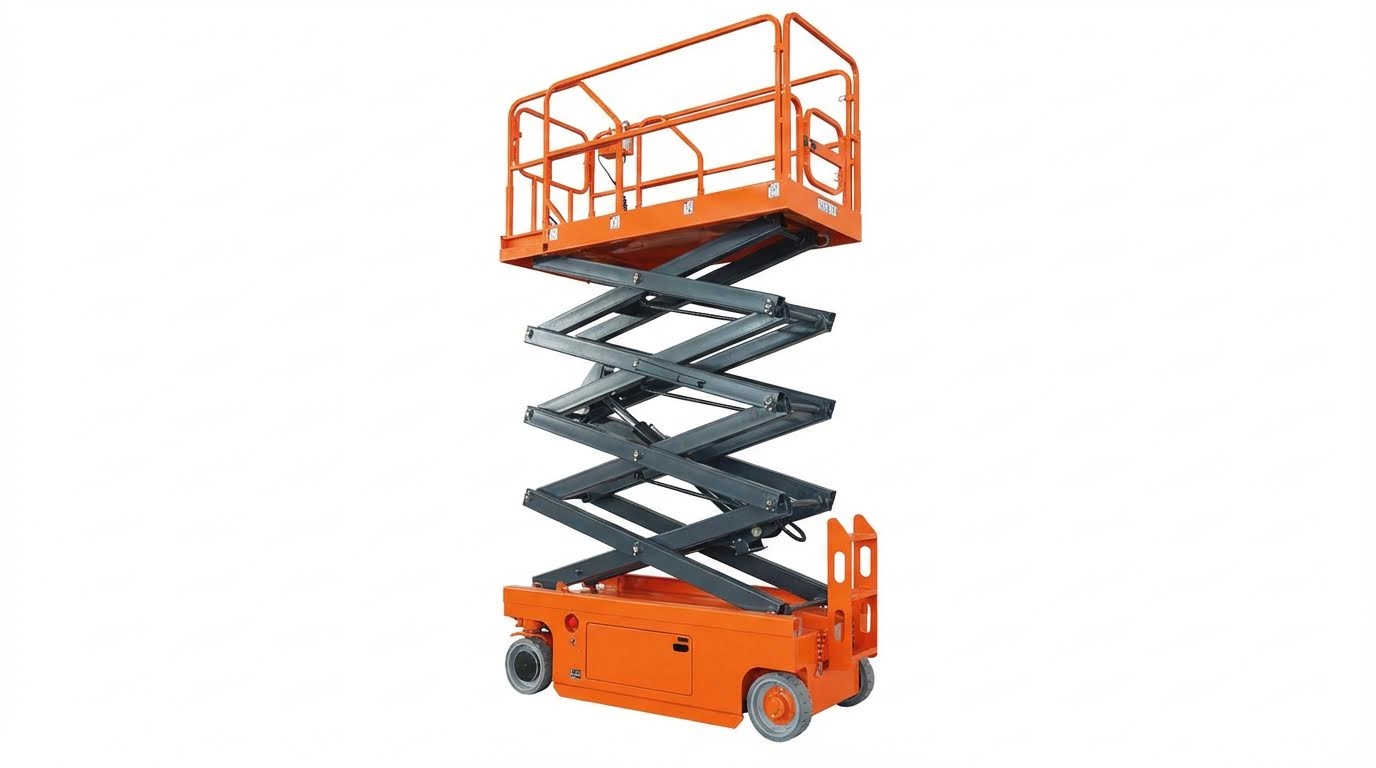
This section explains how interface geometry, loading methods, and stability determine whether scissor lift tables can work with standard pallets safely and efficiently in real warehouses and logistics operations.
When people ask “can scissor lifts work with standard pallets,” the real answer depends on three things: how trucks or AGVs physically enter the platform, how the pallet load sits on the deck, and how stable the system stays through the full lift stroke. Geometry and load paths matter as much as rated capacity.
Ramps, beveled fronts, and U-shaped platforms
Ramps, beveled fronts, and U-shaped platforms are the main interface options that let scissor lifts work with standard pallets at floor level without excessive impact or push force.
The front edge design decides how hard pallet trucks and AGVs hit the platform and how much effort operators need to push loads on and off. A square, sharp front edge creates a hard “step” that small wheels struggle to climb, especially under 800–1,500 kg pallets.
- Beveled / chamfered front edge: The platform edge is ground or formed to a ramped profile – reduces wheel impact and rolling resistance when entering with pallet jacks or AGVs.
- Bolt-on or welded ramps: Low-angle ramps bridge from floor to platform – allow surface-mounted tables to take manual pallet trucks without needing a pit.
- U-shaped platforms: Platform has an open center with two support “legs” – pallet sits on the legs while the pallet truck or AGV rolls through the middle, so no separate ramp is needed.
- Toe-guard / kick-plate edges: Formed skirts or plates around the base – protect feet and prevent objects entering the scissor mechanism during loading.
- Tapered or guided side edges: Slightly flared or chamfered sides – help AGVs self-center and reduce collision risk during docking.
For manual pallet jacks, ramp angle is the critical ergonomic parameter. Keeping the ramp below about 10–12° limits push forces when moving 1,000 kg+ pallets, especially on small polyurethane wheels. Longer ramps reduce angle but need more floor space, so you balance footprint against operator effort.
| Interface Type | Typical Use | Key Geometry | Operational Impact |
|---|---|---|---|
| Simple ramp | Hand pallet trucks, electric pallet trucks | Closed height ~80–90 mm; ramp angle ≤10–12° | Allows floor-level loading; needs clear floor space in front of table. |
| Beveled front edge | AGVs, powered trucks, conveyors | Short chamfer at front edge | Reduces impact at transition; good where full ramp is not possible. |
| U-shaped platform | EUR / ISO pallets with pallet jacks | Two outer legs, central opening | Direct pallet jack entry; no ramp; good for retrofits and tight spaces. |
| Flat rectangular deck | Forklifts, conveyors, work positioning | Full solid deck, no cut-outs | Best for top loading by forklift or conveyor transfer; usually needs pit or ramp. |
How to choose between a ramp and a U-shaped platform
Use a ramp if you handle mixed pallet sizes, need a solid deck for other loads, or expect occasional forklift loading. Choose a U-shaped platform if nearly all loads are standard EUR or ISO pallets on pallet jacks and you want the lowest possible closed height without a long ramp.
💡 Field Engineer’s Note: In cold rooms or freezers, hard polyurethane wheels on pallet jacks become less compliant. A small floor step that seems harmless at 20°C can feel like a curb at -10°C. In these areas, I specify longer, lower-angle ramps and generous bevels to keep push forces and wheel shock under control.
Low-profile vs. pit-mounted pallet access
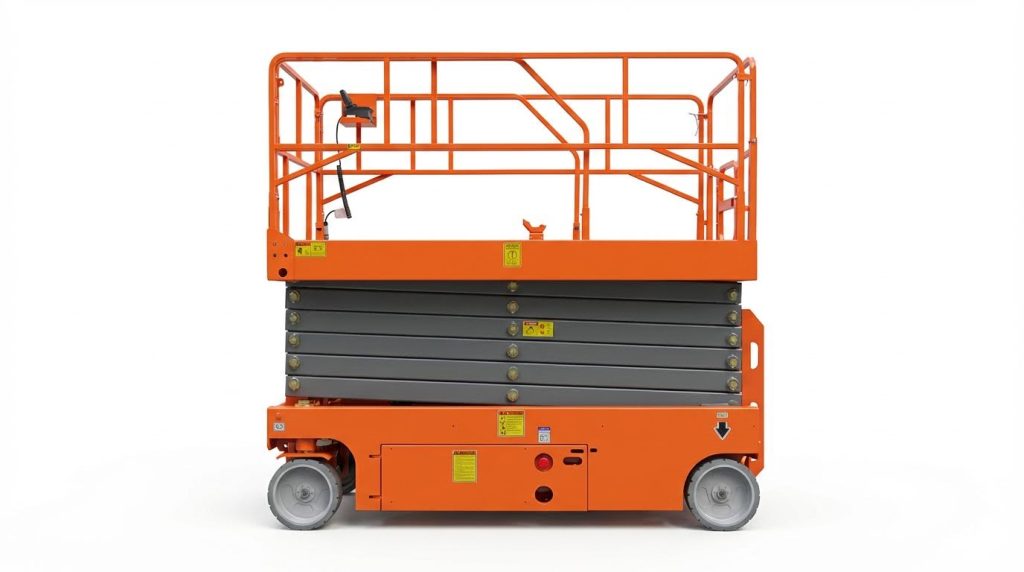
Low-profile and pit-mounted scissor lift tables both can work with standard pallets; the difference is whether you solve the floor height step with steel (ramps/U-shapes) or with concrete (a pit).
Low-profile tables have a small closed height, often around 80–90 mm. That keeps the step low enough that a ramp or U-shaped cut-out can bridge it for pallet jacks. Pit-mounted tables sit with the platform flush to the floor, so trucks and AGVs roll straight on with no ramps at all.
- Low-profile, surface-mounted: – Best for retrofits, leased buildings, or where cutting a pit is not allowed.
- Pit-mounted, flush-to-floor: – Best for high-throughput docks, AGV systems, or where space is tight and ramps would obstruct traffic.
- Hybrid approaches: Shallow recess plus short ramp – used where full pit depth is not possible but you want a gentler ramp.
- Pit sizing margins: Pits are typically built slightly larger than the lift footprint – allows installation tolerances and prevents concrete from binding the structure.
- Drainage and contamination: Pits collect water, dust, and debris – need drainage and cleaning access to protect hydraulics and electrics.
| Configuration | Closed Height / Floor Interface | Loading Method | Best For… |
|---|---|---|---|
| Low-profile, ramped | Top ~80–90 mm above floor | Ramp + pallet jack / powered truck | Simple installation, no civil work; flexible warehouse layouts. |
| Low-profile, U-shaped | Top ~80–90 mm above floor, central cut-out | Pallet jack enters center; pallet on legs | Standard EUR pallets; no long ramp; compact footprint. |
| Pit-mounted, flush | Platform level with floor | Direct roll-on with pallet trucks, AGVs, or conveyors | High traffic, AGV systems, or dock lifts needing flat transitions. |
When you ask if a given scissor lift can work with standard pallets in your building, start by mapping traffic flows and door clearances. A low-profile ramp might block a fire exit or reduce aisle width below 2.5 m, while a pit-mounted flush deck keeps aisles clear but adds construction cost and downtime during installation.
Key checks when designing a pit for pallet lift tables
Confirm pit length and width exceed the table by at least about 30 mm each way, and depth by around 20 mm, to allow shimming and leveling. Plan for drainage or a sump if washdown or outdoor water ingress is possible. Add edge protection (angle frames or curbs) to prevent floor damage and trip hazards at the pit perimeter.
💡 Field Engineer’s Note: I have seen more downtime from poorly built pits than from the lift tables themselves. If the pit is not square, level, and slightly oversize, the base frame can twist, causing uneven scissor loading, noisy operation, and premature bearing wear. Always check pit dimensions and flatness before dropping the table in.
Load distribution, deflection, and tipping limits
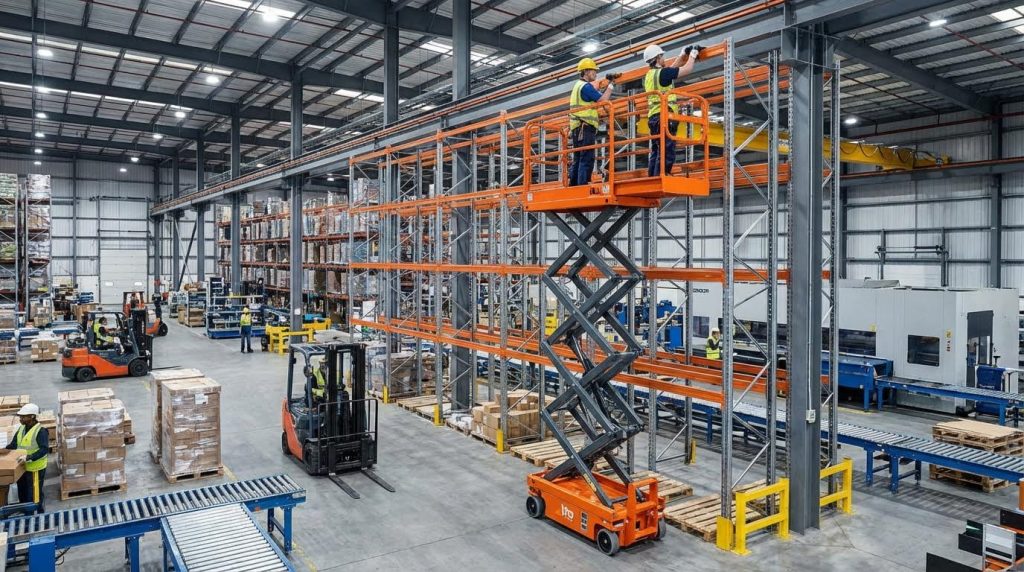
Load distribution, deck deflection, and tipping limits decide whether a scissor lift can handle standard pallets safely, especially when loads are tall, off-center, or not perfectly stacked.
A pallet may be “standard,” but the load on top rarely is. Drums, totes, machinery, or mixed cartons create point loads and high centers of gravity. The platform and scissor set must handle not only the total mass (for example 1,000–3,000 kg) but also how that mass sits in plan view and height.
- Uniform vs. point loading: – Deck plate thickness and under-deck stiffeners must prevent local denting under pallet stringers or concentrated loads.
- Centering of pallets: – Operators should place pallets roughly centered on the platform or U-legs to avoid excessive eccentric loading.
- Allowable eccentric load: – Manufacturers specify how far the load can shift from center along long and short sides without exceeding stability margins.
- Deflection limits: – Total deck sag under rated load must stay small enough that pallets do not rock or slide, especially at full height.
- Tipping and side-load limits: – High stacks or side impacts from trucks can create overturning moments that the base frame and scissors must resist.
| Design Aspect | What to Check | Typical Engineering Approach | Operational Impact |
|---|---|---|---|
| Rated capacity | Heaviest pallet incl. packaging | Select table ≥20–25% above max load | Handles overweight or uneven pallets without overstressing structure. |
| Eccentric load rating | Offset in long and short directions | Compare to worst case pallet misplacement | Prevents surprise tipping when pallets are not perfectly centered. |
| Deck deflection | Sag at mid-span under load | Limit to a few mm at full load (design-specific) | Keeps pallet stable; avoids rocking of stacked goods. |
| Stack height and CoG | Height of load above platform | Check overturning moment vs. base support | Defines safe maximum stack height for that table. |
| Side impacts | Truck or AGV nudging the load | Structural stiffness + guard devices | Reduces risk of slow “walk” of the pallet toward the edge. |
In practice, I advise treating the rated capacity as a starting point, not the whole story. You want a table sized for your worst-case pallet weight plus at least 20–25% margin, but you also want to confirm that the eccentric load and deflection ratings match your real loading habits and stack heights.
Simple field checks for stability with standard pallets
Load the heaviest typical pallet, raise to full height, and gently push at the top layer from each side. You should see minimal sway and no feeling of “walking” at the base. If the platform deflects enough that the pallet rocks, or if the structure feels soft, review capacity, eccentric load limits, and deck stiffness before approving that configuration for daily use.
💡 Field Engineer’s Note: Many tipping incidents have started with a tall, light but bulky load placed slightly off-center, not with the heaviest pallets. Because the center of gravity is high, even a small horizontal shift or bump can create a big overturning moment. I always set conservative stack height rules and mark “safe loading zones” on the deck when introducing new palletized products.
Specifying The Right Lift Table For Your Operation
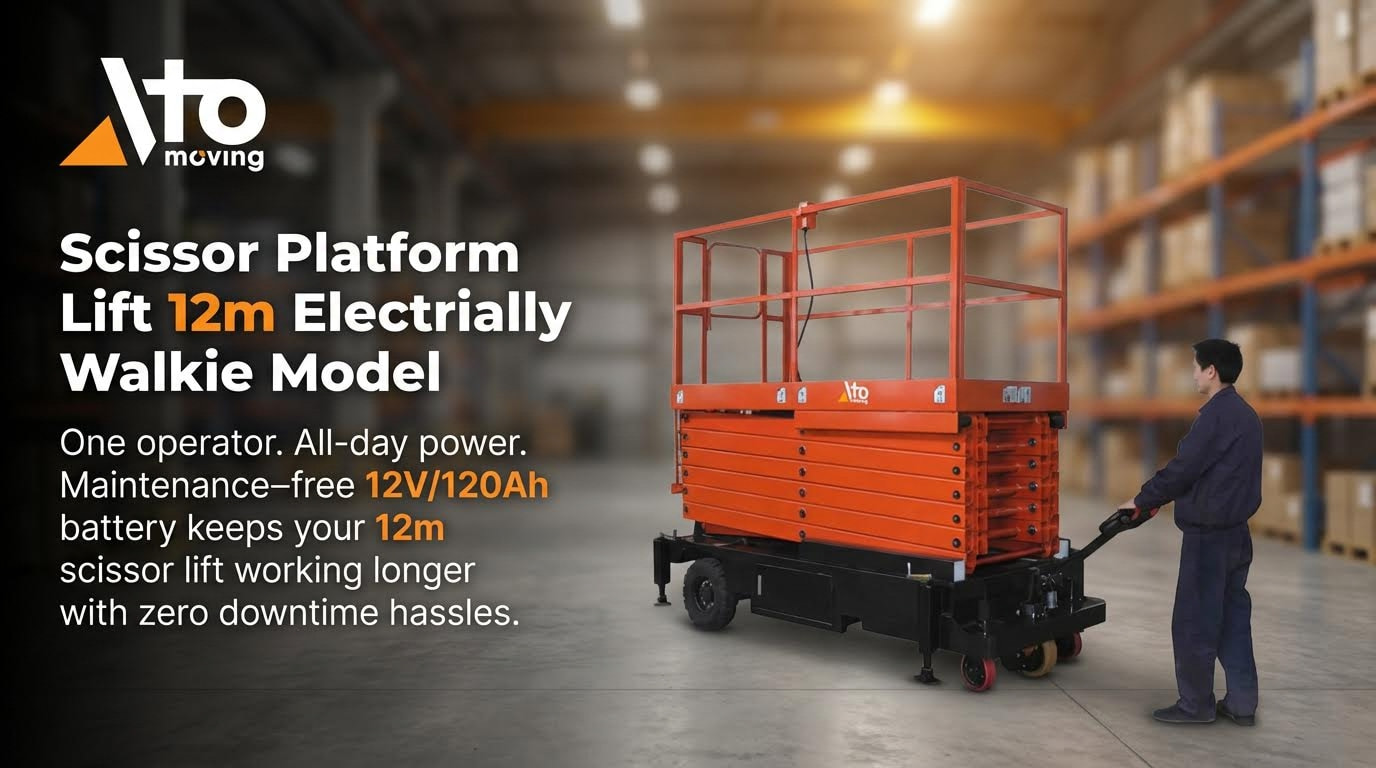
This section explains how to specify a scissor lift table so it can scissor lifts work with standard pallets safely, reliably, and efficiently in your exact workflow.
When people ask “can scissor lifts work with standard pallets?”, the honest answer is: only if you size capacity, duty cycle, travel height, and equipment interfaces correctly for your loads and traffic.
Capacity, duty cycle, and travel height definition
Correctly defining capacity, duty cycle, and travel height ensures the lift handles standard pallets without overloads, overheating, or awkward working postures.
For pallet work, you design from the load backwards: pallet mass, stacking height, lift frequency, and target ergonomic height all drive the specification.
| Design Parameter | Typical Engineering Guidance | Why It Matters For Standard Pallets | Operational Impact |
|---|---|---|---|
| Rated capacity | At least 20–25% above heaviest palletized load capacity recommendation | Absorbs uneven stacking, impact loading, and unknown weight variations. | Reduces risk of overload trips and structural fatigue when pallets are slightly heavier than expected. |
| Typical pallet capacities | About 1,000–3,000 kg for EUR/ISO pallet tables pallet table range | Covers most warehouse and manufacturing pallet loads with margin. | Choose 1,500–2,000 kg for mixed warehouse loads; 3,000 kg+ for heavy process or steel pallets. |
| Duty cycle | Defined by lifts per hour, hours per shift, shifts per day duty cycle factors | High cycling heats hydraulic oil and accelerates wear. | High-throughput docks or sortation lines need heavy-duty cylinders, bearings, and oil cooling. |
| Collapsed height | Low-profile tables ≈ 80–90 mm closed height low-profile info | Determines if you can load from floor with a ramp or manual pallet jack. | Enables surface-mounted installations where pits are not possible, still compatible with pallet trucks. |
| Travel height | Common pallet tables ≈ 900 mm travel, ≈ 980 mm top height example heights | Must reach ergonomic “power zone” and any downstream conveyor or work surface. | Lets operators keep carton layer between ~750–1,200 mm, reducing bending and overreach. |
| Maximum lifting height (special cases) | Standard tables available up to ≈ 4 m lift height high-lift info | Used where pallets must interface with mezzanines or high lines. | Requires stricter stability checks for tall pallet stacks with high centre of gravity. |
- Define worst-case pallet: Include pallet weight, product, dunnage, and any fixtures – This ensures the rated capacity reflects real loads, not catalogue assumptions.
- Add safety margin: Target ≥25% above maximum pallet mass – Mitigates dynamic loads from sudden stops or uneven fork placement.
- Quantify duty cycle: Count cycles per shift and per day – Supports selecting industrial vs light-duty components and motor sizing.
- Set ergonomic height band: Aim for 750–1,200 mm working height – Keeps manual palletizing in the low-risk “power zone.”
- Check stack height vs travel: Compare pallet stack height to max platform elevation – Prevents top-heavy conditions at full lift.
How to estimate pallet weight realistically
Start from shipping documents, then add a contingency. For mixed SKUs, weigh several “typical” pallets, record the heaviest, and add at least 20–25% on top. If loads change seasonally, design for the worst season.
💡 Field Engineer’s Note: In high-duty palletizing cells, undersized power units often show up as slow lift speeds after a few hours as oil heats up. If you expect more than ~30–40 full-load cycles per hour, specify a larger reservoir, cooling provision, and industrial-duty pump from day one to avoid chronic overheating and seal failures.
Integration with pallet trucks, stackers, and AGVs
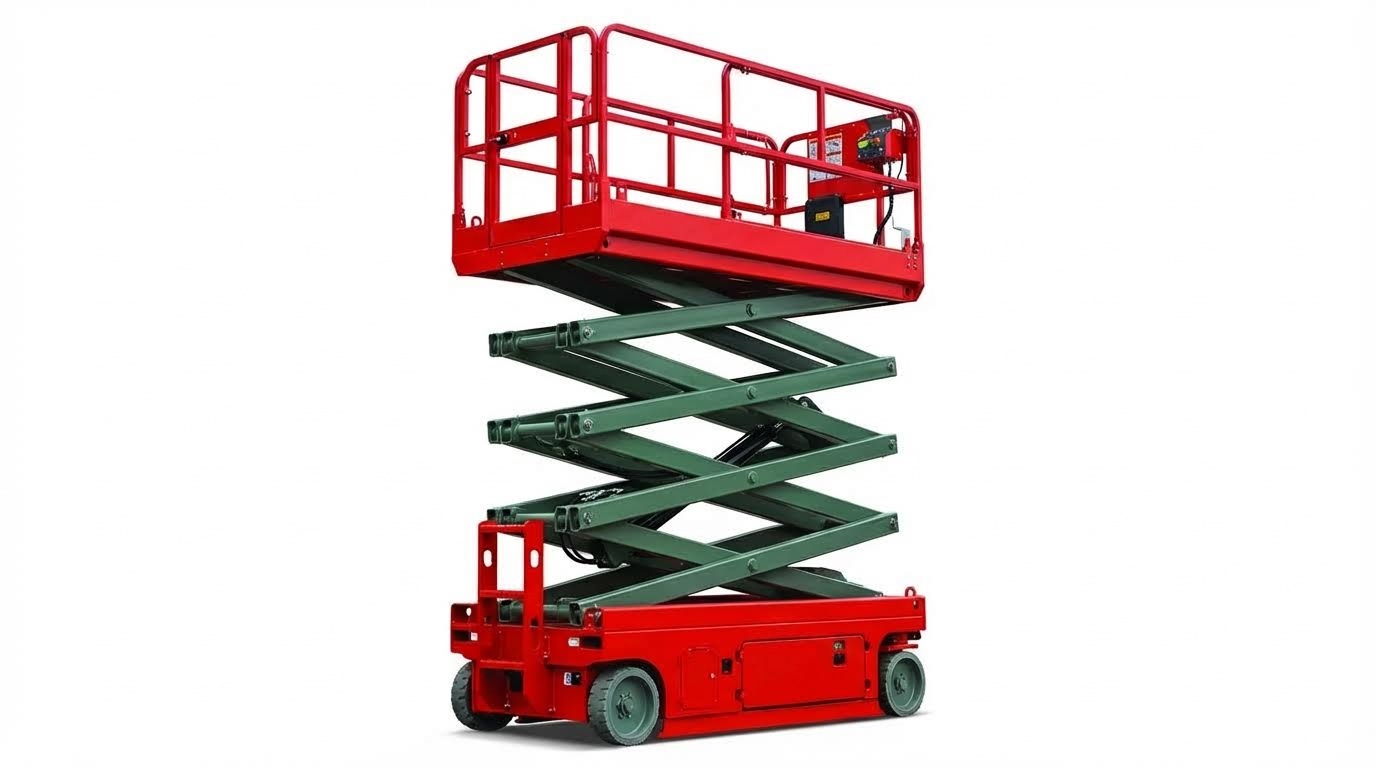
Correctly matching lift geometry to hydraulic pallet trucks, stackers, and AGVs is what truly lets scissor lifts work with standard pallets in day-to-day operation.
Even if capacity is right, poor interface design (wrong ramp angle, tight clearances, weak deck under wheel paths) will cause impacts, hang-ups, and stability risks.
| Interface Aspect | Key Specification / Practice | Why It Matters For Standard Pallets | Best For… |
|---|---|---|---|
| Low-profile surface-mounted tables | Closed height ≈ 80–90 mm; use ramp or U-shaped deck low-profile geometry | Allows manual and electric pallet trucks to load from floor without pit. | Retrofits, leased sites, or buildings where pits are not allowed. |
| Pit-mounted tables | Pit slightly larger than lift: typically +30 mm L/W, +20 mm depth pit sizing | Platform sits flush with floor for smooth pallet truck or AGV entry. | New builds, docks, or conveyor lines needing zero-step transitions. |
| Ramp design | Keep ramp angle below ≈ 10–12° for pallet jacks ramp guidance | Controls push force and avoids pallet jack bottoming out. | Manual pallet-jack loading with frequent operator use. |
| U-shaped platforms | Two outer legs support pallet, central opening for truck forks U-shaped description | Pallet jack or AGV rolls between legs; pallet rests on outer frame. | EUR pallets and operations wanting no separate ramp, reduced tilting. |
| Platform size vs pallet | Platform must match or slightly exceed largest item size platform sizing | Too small risks overhang; too large can encourage off-centre loading. | Standard 800 × 1,200 mm and 1,016 × 1,219 mm pallets with modest overhang. |
| AGV wheel loads | Check local deck capacity under wheel tracks, not just global rating AGV integration notes | AGVs can impose high point loads on thin decks. | Automated pallet movers docking repeatedly in fixed positions. |
- Match deck geometry to equipment: Measure pallet truck fork length, wheelbase, and ground clearance – Prevents trucks from striking deck edges or grounding on ramps.
- Use beveled or chamfered leading edges: Soften the transition into the platform – Reduces impact loads and rolling resistance at the entry point.
- Align for straight-through traffic: Keep approach and exit paths in line – Minimizes steering corrections that cause side loading and pallet skew.
- Provide guides for AGVs: Add rails or tapered locators – Improves repeatable docking and reduces collision risk from navigation tolerances.
- Respect loading direction: Prefer loading over the short side where scissors fix to base loading direction advice – Avoids overstressing the top plate when loads come from the long side.
Choosing between low-profile and pit-mounted for pallets
Use low-profile surface-mounted tables when you cannot cut a pit, need quick installation, or may relocate the lift. Choose a pit-mounted table when you want completely flush floor access, heavy AGV traffic, or integration with conveyors at the same level.
💡 Field Engineer’s Note: When integrating AGVs with scissor lifts, the most common failure is not the lift but misalignment: the AGV stops 30–40 mm off, hits the deck edge, and slowly bends it. Specify mechanical centring features and slightly overbuild the deck edge in the wheel impact zone to survive thousands of small hits over the lift’s life.
Final Considerations For Safe, Efficient Pallet Handling
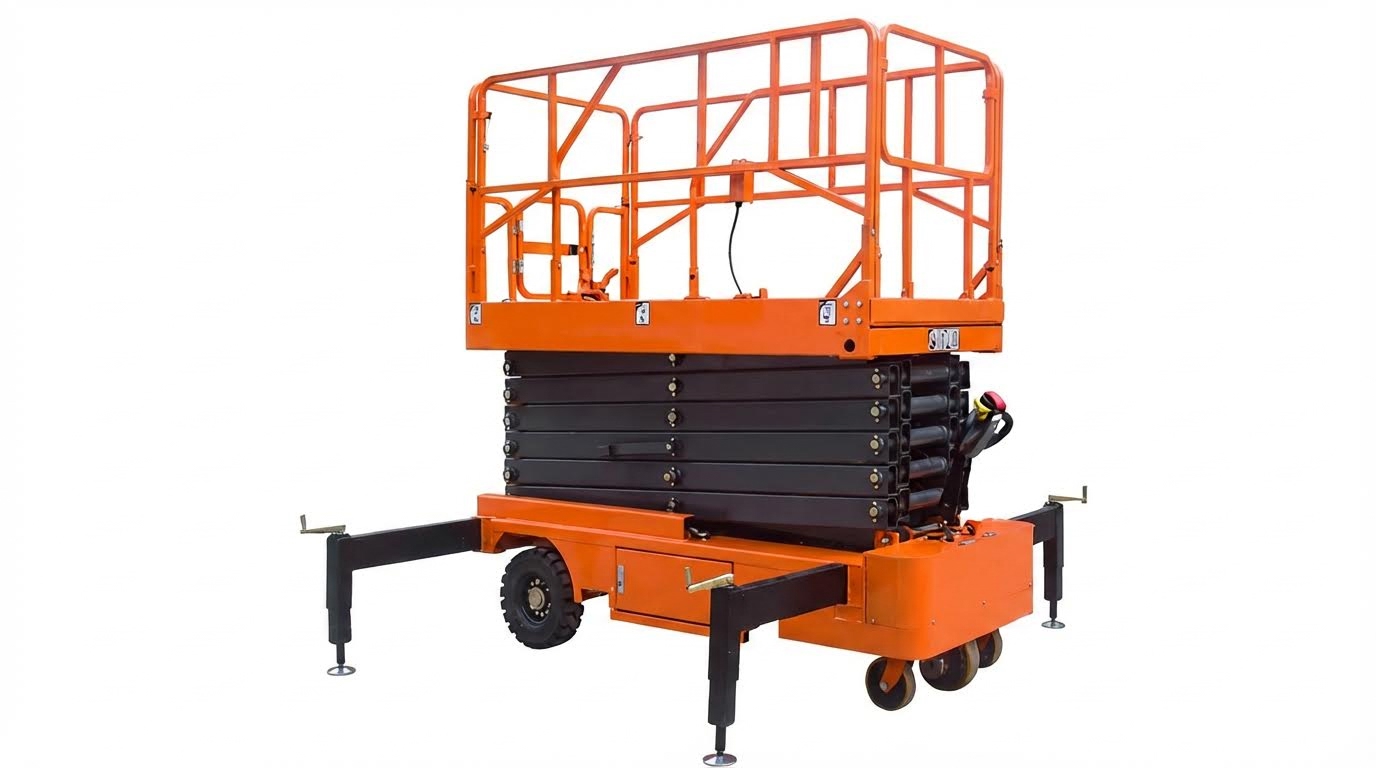
Scissor lift tables can work with standard pallets safely when you treat them as part of a full handling system: platform size, loading geometry, power, environment, and maintenance must all align with your pallets and traffic.
- Confirm the basics first: Platform, capacity, and travel – This is the core of “can scissor lifts work with standard pallets” for your site.
- Then tune the interface: Ramps, U-shapes, and pit design – These define how easy and safe pallet trucks or AGVs can dock.
- Finally, lock in lifecycle factors: Environment, power, ergonomics, and maintenance – These decide long‑term cost and uptime.
1. Translate “Can Scissor Lifts Work With Standard Pallets?” Into A Checklist
The most reliable way to answer “can scissor lifts work with standard pallets” is to run through a short engineering checklist before you buy.
- Platform vs. pallet: Confirm the top plate comfortably covers your largest pallet with at least ~50 mm clearance each side for 800 mm × 1,200 mm or 1,016 mm × 1,219 mm pallets. Prevents edge damage and mis‑dock incidents.
- Capacity margin: Choose a table rated at least 20–25% above your heaviest pallet load. Handles uneven stacking and dynamic loads without overstressing the mechanism.
- Access method: Decide between ramp, U‑shaped low‑profile table, or pit‑mounted flush deck. Determines if manual pallet trucks, powered trucks, or AGVs can load safely.
- Travel height and ergonomics: Check that the lift keeps working levels between roughly 750 mm and 1,200 mm for manual handling. Reduces bending and shoulder strain during palletizing.
- Duty cycle: Estimate lifts per hour and shifts per day. Ensures cylinders, bearings, and power unit are sized for your throughput.
- Environment and hygiene: Match paint vs. stainless steel, IP rating, and washdown compatibility to your area. Prevents corrosion, contamination, and premature failures.
- Safety and guarding: Verify toe protection, emergency stops, overload protection, and interlocks as required by EN 1570 / local rules. Mitigates crush and fall risks around the platform.
💡 Field Engineer’s Note: When you retrofit lift tables into existing pallet flows, walk the route with a loaded pallet truck or AGV and measure real turning radii and floor slopes; even a 2–3% gradient or tight corner near the lift can turn a “compatible” table into a daily near‑miss point.
2. Decide Between Low-Profile, Ramp, Or Pit For Your Pallet Flow
The way pallets reach the platform often matters more than the lift model itself for safety and throughput.
- Low-profile surface-mounted: Closed heights around 80–90 mm let you avoid civil work. Best where you can accept a short ramp or U-shaped layout for pallet jacks.
- Ramp-fed platforms: A shallow ramp (ideally under 10–12°) lets manual pallet trucks roll on without excessive push force. Good for retrofits and mixed manual/powered traffic.
- U-shaped platforms: Pallet truck or AGV enters the central gap while the pallet rests on the outer legs. Excellent for EUR pallets and low closed height with no separate ramp.
- Pit-mounted flush tables: The platform sits level with the floor, ideal for straight-through pallet truck or AGV traffic. Best for high‑throughput docks and conveyor interfaces, but needs accurate pit construction and drainage.
Key pit-planning points for standard pallet handling
Allow extra length/width (often around +30 mm) and depth (~+20 mm) over the lift’s closed dimensions for shimming and alignment, and plan drainage or sump points so water or debris does not accumulate under the scissor mechanism.
3. Lock In Safety, Ergonomics, And Maintenance For Long-Term Use
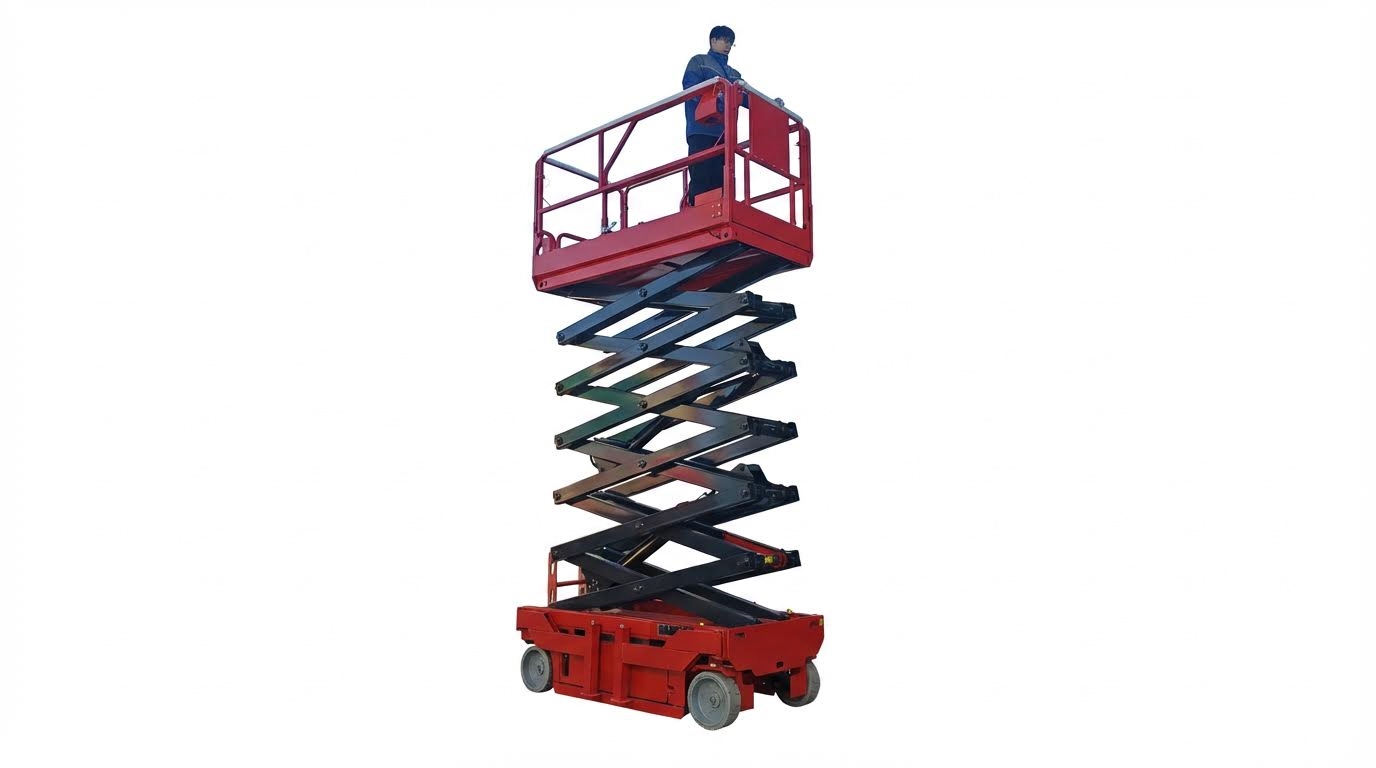
Once you know scissor lifts can work with your standard pallets, long-term safety and cost depend on how you operate and maintain the system.
- Safe stacking and center of gravity: Keep tall pallet stacks within the platform footprint, heavier cartons low, and avoid big overhangs. Reduces rocking and tipping risk at full lift height.
- Operator behavior: Train staff not to ride on the platform, not to step between pallet and edge, and to keep hands and feet clear of scissor pinch zones. Prevents the most common injuries.
- Daily inspections: Check for leaks, damaged hoses, cracked welds, and any unusual noises or slow travel. Catches early failures before a pallet load is at height.
- Lubrication and oil care: Follow the manufacturer’s schedule for greasing pins and changing hydraulic oil. Maintains smooth motion and consistent platform level under load.
- Component replacement: Replace high‑stress parts such as valves, bushings, and contactors on a cycle or hour basis, not only after visible failure. Protects against sudden downtime during peak pallet flows.
- Power and mobility choices: Choose fixed three‑phase power for stationary, high‑duty tables; use battery-powered mobile tables where you must move the lift to different aisles. Aligns energy use and flexibility with your warehouse layout.
When to upgrade instead of repair
If your table approaches 8–12 years of heavy service, with frequent hydraulic leaks or structural wear, a modern replacement with better guarding, efficiency, and pallet interfaces often costs less over the next decade than continued patch repairs.
In practice, the answer to “can scissor lifts work with standard pallets” is yes for most warehouses and production lines, provided you engineer the full system: match platform and capacity to your pallet loads, choose the right access geometry for your trucks or AGVs, and enforce disciplined safety, ergonomics, and maintenance around the lift zone.
Final Considerations For Safe, Efficient Pallet Handling
Scissor lift tables can handle standard pallets safely when you treat platform geometry, structure, and interfaces as one system. Platform size, edge clearance, and deck stiffness keep pallets fully supported and stop rocking or damage. Correct ramps, U-shaped decks, or pit-mounted designs then control how pallet trucks and AGVs enter, so wheels do not strike edges or overload local deck areas.
Load distribution, eccentric load limits, and deflection rules protect against tipping, even with tall or off-center stacks. Capacity, duty cycle, and travel height sizing protect the mechanism from fatigue and keep operators working in an ergonomic band. Integration with trucks, stackers, and AGVs aligns wheel paths, ramp angles, and guides so docking stays repeatable and low-impact.
For engineering and operations teams, the best practice is clear. Start from your worst-case pallet and traffic pattern, then select a table with at least 20–25% capacity margin, proven eccentric-load ratings, and a platform matched to pallet footprint plus controlled clearance. Choose access geometry that fits your building and equipment. Finally, enforce training, inspections, and maintenance. If you follow this full-system approach, Atomoving scissor lift tables can handle standard pallets safely while supporting high throughput and long service life.
Frequently Asked Questions
Can scissor lifts work with standard pallets?
Scissor lifts are not typically designed to handle standard pallets like forklifts. Their primary function is to provide a stable elevated platform for workers and tools. However, some scissor lifts come with attachments or modifications that allow them to carry materials. It’s essential to check the lift’s load capacity and ensure it has the necessary attachments for handling pallets safely.
What are the main disadvantages of using a scissor lift?
One of the main disadvantages of using a scissor lift is its stability on uneven or soft ground. Operating on such surfaces can increase the risk of tipping, especially when the platform is elevated. Common Scissor Lift Problems.
- Uneven or unstable ground conditions can compromise stability.
- Deformable or inclined ground increases the risk of tipping.
Do you need certification to use a scissor lift?
Yes, OSHA requires workers to be trained and certified before operating a scissor lift. Training must cover safe operation, recognizing hazards, and following OSHA standards to prevent accidents and ensure workplace compliance. OSHA Certification Guide.